Kazakhstan — Underexposed by Design

Fearlessness is helpful in a journalist. For photojournalists – especially those working abroad – it is mandatory. This is becoming clearer every day here in Kazakhstan, a place where cameras seem as welcome as American robber-barons would have been in Moscow in 1917.

Our photojournalism students are having their mettle tested here. Repeatedly, as they try to shoot in seemingly public places, they are waved off. Scary-looking security guards pop out of buildings, flailing their arms and jabbering away in Russian or Kazakh to tell them “no pictures.” The other day, as all eight students and I approached an indoor market area, a guard radioed to a colleague perched on a rooftop high above us. Roofman formed X signs with his arms to make it clear that no snapping was allowed. And all we wanted was lunch!

Fortunately, the students are rising to the challenge. They are using friendly smiles, charm and a certain fearlessness to disarm reluctant subjects and persuade them they mean no harm. Yesterday, as Patrick Breen was shooting fortune-tellers near the Green Market he managed to stave off some character who was accusing him and Elizabeth Gamez of being from the FBI and somehow helping foment a Kyrgyzstan-style revolt. They also persuaded a fortune-teller to let Patrick photograph her (in a scarf above) even though many of her colleagues protested the attention. (Patrick’s fortune looks bright, by the way, she told him).

People do usually welcome our students once they understand what they’re up to. With the help of one of our guides, Travis Beck got one of the photos attached here at a “family home,” a kind of orphanage located in Talgar, 20 kilometers east of Almaty. Director Eskozhina Tuyak, smiling over the bread, was happy to tell him about the place – called “Nur,” Kazakh for sunlight – which houses some 66 college students, some married couples and others. Some 110 people aged 4-25 live at the place, which Tuyak started in 1998 by selling her personal apartment. She worked in the state’s ministry of education for 43 years.

This is a country of many contradictions. On the one hand, people could not be more hospitable. Our waitress in an Internet coffeeshop, for instance, went out of her way yesterday to help us get a ride to our next appointments, visits to the Internews press-advocacy group and the Kazakh Stock Exchange. And folks there, similarly gracious, helped us get back on an exchange bus. We wander about at will, with no one holding us back or shadowing us. Travis was also able to photograph a group of children at play, below.

On the other hand, it’s a place where security concerns loom large, often pointlessly so. The hostility to cameras, for example, is widespread. Signs in restaurants bar photography. People in cafes gesture “no” with their hands and shake their heads when our students point cameras at them. No photographs are permitted, we were told, during trading hours at the stock exchange – only shots of the empty trading floor after hours.

Theft is not uncommon, we’re told. Don’t hand your cameras over to anyone to shoot your picture because they’ll take a flier with your gear. And yet, the common way of getting around is taking what our kids call “random cabs,” standing in the street and holding your hand low until some random person picks you up and you negotiate a ride around the city – always under 500 tengey (about $3.25). It’s common for women to accept such rides well into the evenings, and we took a couple random cabs yesterday.

It’s as if there’s a blend of Central Asian tribal hospitality and Soviet-style state paranoia. Since the country was a part of the USSR until the early 1990s and remains heavily Russified, worries about security and a need for control seem to be woven into the cultural DNA. Why does our nearby indoor supermarket have three guards, one stationed near the entrance and two just outside the cash register area, even as one or two more stand sentry at the mall entrance? Why do buildings under construction need guards in their lobbies? Why do police cruise the streets at night, pulling people over for U turns on deserted stretches of road or checking IDs? And why is Google’s eblogger seemingly jammed?

Certainly, security worries are a big part of the American experience, especially since 9/11. Think about how guards now roam with abandon across all areas of American life and security has become a huge industry, going far beyond the airports. New Yorkers are considering putting virtually every street under surveillance. And plenty of American institutions, such as corporations and government bodies, bar press photography on their premises unless it’s under tight control. Here, though, it’s security on steroids, whether justified or not, and without the newest technology.

Another thing that has struck us is the lack of homeless people. This plague, rife in American and European cities alike, seems not to be an issue here in Almaty. We have seen none. Partly, we’re told, this is because people are family oriented here and take care of their own. Partly it may be because mentally incompetent people are confined by the state, as they once were in the U.S. There are a few scattered beggars – see Patrick’s photo of one unfortunate footless man – but no bedrolls in the parks or people pushing grocery carts. Poverty is an issue, to be sure, but its human face in the city seems less obvious.

So I must admire our student photographers. They are managing through these challenges, finding fresh ways to show life in this fascinating society. Our work, of course, should be helpful to the place, as we tell readers about how ordinary Kazakhs go about their days – whether they run apple orchards and brokerage operations or pray in the mosque or, as in Patrick’s photo below, play with pigeons.

As they rove around, cameras in hand, the students are surmounting all sorts of obstacles. Language difficulties, transportation challenges and persuasion of reluctant sources. It all demands a bit of nerve, and they are summoning it in spades.

Kazakhstan — Day One!

Call it a Kazakh stew (or borscht maybe?) Our opening day yesterday in Kazakhstan was marked by Third World confusion, a string of encounters with police and a short struggle with sleep in an overcrowded apartment I’ve taken to calling our Pink Palace. This was followed by a plunge into a sprawling open-air bazaar (see Travis Beck’s pix right and below and Patrick Breen’s fabulous goat head pix at the bottom of this post), visits to an ill-maintained cathedral-like mosque and a discreet Mormon church, and finally dinner with some really intriguing folks. All this in under 20 hours.

The beginning was anything but auspicious. Shortly after midnight, we all got off a wonderful Lufthansa flight where crisp, cheerful attendants plied us with free wine and spoiled us with us damp towels after surprisingly good meals. (Those efficient Germans have it all over the folks at United). Outside the gate, our hosts met us, bleary-eyed but excited after we’d been in the air or in terminals for over 24 hours straight. (This included a few hours at O’Hare and a couple more in Frankfurt’s airport, which is an overblown Ikea, decorated in bright colors and naked industrial ceilings and equipped with odd little smoking booths). After our endless time “Up in the Air,” we were like kids who badly needed naps but were jumpy from too much sugar.

Then the confusion began. Our hosts – remarkably accommodating and genuinely nice folks who all are Kazakh members of a Mormon church here – didn’t know exactly where our four apartments were. So we set out to find them and the police adventures began. First, our three-car convoy was stopped when we came upon a minor car accident and one of our drivers had to sign papers agreeing to be a witness. Then we were pulled over when another driver made an illegal U turn and was ticketed for it, a 45-minute ordeal. Finally, in two separate groups, we were quizzed on foot outside the apartments and had to produce our documents for curious police who wear really odd up-tilting oversized caps. It all felt very Soviet.

And, ah, the apartments. The first was in a crumbling Soviet-era concrete tower block where the elevator didn’t work, leaving us to walk up nine floors of unlighted steps and broken floor tiles. Thank G-d for flashlights and cell phone lights. A second place was too far away from the others. The final two were decent, though oddly appointed (the Pink Palace, in the “Deluxe” tower, features textured tinted swirls on the ceiling, dotted with little spotlights, and an inner support wall that rises to the ceiling in 10-foot high S curves. Kinda Vegas-y, but we now call it home). It has a wonderful East-facing window that overlooks a hilly stretch of the city.

After shuttling from one apartment to the next in the pre-dawn hours, we decided to change plans. We dumped the idea of four places for the 10 of us – four girls in one, four boys in the other and Bruce and me in one each. Instead, we squeezed into two one-bedroom places. Two of the boys and I share a living room and two of the girls have the bedroom in the Pink Palace. Same for Bruce.

It’s actually worked out fine. As Elizabeth Gamez, Sarah Tenorio and Patrick Breen and I all chatted chummily last night, it occurred to me I’d feel mighty lonely in an apartment by myself. That would be especially true if it was a lot further than just down the hall away from the others. The only downside is we need to be discreet as we stumble around the lone bathroom at shower and bedtime.

Our body clocks are totally screwed up, understandably since we’re 11 hours earlier here than Lincoln. We are literally on the other side of the globe. We got set up in the final apartments shortly before sunrise and some of us managed just about three hours of sleep, if that, before our hosts arrived at noon to take out us on the town. Nonetheless, our visits to the street market and mosque went well. We stopped, too, for lunch in an odd place where they served a deceptively appealing pink lemonade-looking drink that turned out to be an oozy paste made with potatoes. Uck! Pastries were tasty, though.

Dinner was fascinating at the Edom restaurant. Our 10 were matched by 10 or local and expat folks, including a saucy and pleasant BBC reporter, an Uzbek, I think, and her British Al Jazeera stringer hub, a former UNL exchange student and two girlfriends who work for an agency that helps poor kids, a couple Internews gents who work to liberalize media laws here, our driver-translators, a journalism instructor here who hails from Washington state and a few other folks who had some good story-idea advice for us. Talk of politics, disabled-rights activists and the revolution in nearby Kyrgyzstan dominated my end of the very long table.
Some of the folks seemed to like making connections with one another almost as much as with us.

Almaty is exotic, to be sure. In places it resembles photos I’ve seen of Ho Chi Minh City with stretches of odd-looking shack-like houses hemmed in by high sheet-steel fences. In other places, top-flight stores offer pricey designer-name brands but the shops are often garishly lighted with a lot of neon. Signs with racy images of girls pitch perfume and such in English, Russian and Kazakh. The place is an odd admixture of Russian culture (the Russians have dominated here since the early 1900s at least) and American influences, with a touch of local flavor. Internet addresses pop up on billboard ads, showing how small the world is becoming.

Clearly, there is a lot of money here. Fancy new buildings are replacing the tumbling-down Soviet concrete piles that still sprawl three or four stories up on many of the streets. Indeed, a big real-estate bubble here, fueled by easy lending and high oil prices, has gone bust. Our Pink Palace, luxurious by Kazakh standards, isn’t even finished, but people are living in it and renting out places to the likes of us. And the streets are jammed with Mercedes-Benzes, Peugeots and BMWs, along with beaten-up old Soviet cars. We’re told people who can’t afford to buy houses buy status cars instead.

There are lots of trees, lots of Soviet monuments (visionaries gazing into the revolutionary future) and flags marking the recent 65th anniversary of the end of World War II. The war-end celebration, last weekend, was a big deal here, since Kazakhstan contributed lots of soldiers and industrial might to quash the Germans. It also seems to give people a chance to salute the pervasive Soviet influence, which independence has apparently not diminished much. Red Stars and hammer-and-sickle symbols are dotting the city.

The place is heavily Muslim with a dash of Russian Orthodox. Islam here, the Sunni variety, is on the light side, though. When we visited the mosque, the folks there made accommodations for us – Sarah and Elizabeth didn’t have scarves, but they still were let in and allowed to take photographs. First, like everyone we had to go to washing areas in an outbuilding where we were told to use little stalls to wash our ears and tushes, then to another outbuilding where men sat in front of faucets to wash their hands and feet and, if needed, clear their noses. Then we went into the mosque, removed our shoes and were allowed to shoot pictures. Travis Beck and Patrick both shot a fellow outside who complained that they were stealing part of his soul, and then he demanded $10 (which he didn’t get).

Inside, scattered guys prayed. Their style: touching the ears, kneeling, prostrating themselves and then getting up again to repeat the standing, kneeling and prostrating – all that before a giant greenish mural with prayers on it. Overhead, a giant chandelier hung from the high ceiling and the beautiful carpets graced the floor, but otherwise mosques are surprisingly empty places, with no chairs and a curious staircase-structure next to the big mural in the front for the imam to lead group prayers.

On our way back, fortune-tellers spun their tales to individual clients in a wide park-like median strip not far from the big market area. Fascinating place, Almaty. It has the feel of what I imagine New Delhi to be like, with thriving market areas, too many people and cars going every which way. It’ll be a grand spot to spend the next four or five days.

Kazakhstan: The Tale Begins

So today, the adventure begins. We head off to Kazakhstan. E-tickets in hand, bags packed, passports in our secret waistband pouches (designed to never leave our bodies to stave off pickpockets and such). This will be a once-in-a-lifetime trip for eight high-energy journalism students from the University of Nebraska-Lincoln, a colleague here and me.

But what a headache getting to this point. First there was that nasty business in Kyrgyzstan. Even though we had read up on the country, listed stories we planned to tell and developed contacts for them, mapped out a detailed travel plan, etc., the folks there decided to go and have a revolution. It’s that “hopey, changey thing,” I guess, since the economy there was in the Dumpster and corruption reigned. Bottom line for us: fascinating stories there, sure, but it’s a no-go on safety grounds.

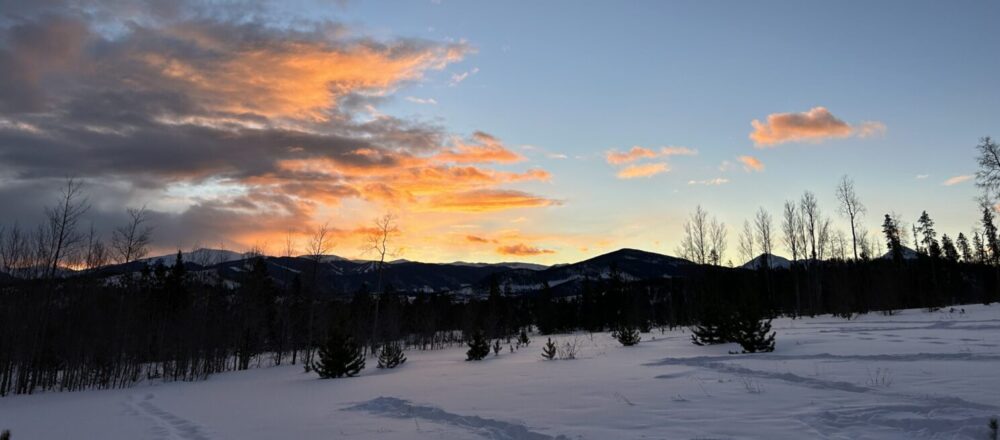
So, we’re going next door. We’ll pop in on a country akin in size to Western Europe, a place of forbidding desolation on the steppe and remarkable beauty, in places such as the Red Canyon of the Charyn River. Ah, doesn’t that sound like something out of a fantasy! Just check out the image of Lake Kaindy on the top of this post. Much of the country, in fact, sounds like something out of “Lord of the Rings.” One imagines traveling the countryside like Hobbits on a crucial mission. Certainly, Kazakhstan sounds nothing like the place Sacha Baron Cohen satirized in “Borat,” an image Kazakhs are understandably keen to erase.

We’ve moved fast to get up to the speed on the country. Replicating our Kyrgyzstan research, we’ve reached out to contacts in the last couple weeks, developed tentative story lines and done our best to nail down an itinerary. There will be much to tell: unlike Kyrgyzstan, Kazakhstan is relatively well-off, enriched by natural resources including oil and uranium. It has modern cities in Almaty, the financial capital hard by China, and in Astana, the political capital, more centrally located. Urban wealth and rural poverty should make for intriguing contrasts.

There’s also a ton of history there that influences the place today. As a longtime Soviet Union member, until independence in the early 1990s, the place was a favorite dumping ground for Stalin. The remnants of Gulags endure not far from Astana and Russian survivors of the exile camps and their descendants still live in the area. A bit further from Astana is Semey, a place where the Russians tested nuclear weapons, leaving a population that to this day exhibits the genetic problems and deformities spawned by radioactive contamination. It’s the reason Kazakhstan has renounced nuclear weapons, selling its uranium for peaceful uses, it says.

Politically, the country is run by a former Soviet Kazakh leader who remains remarkably popular. Nursultan Nazarbayev, we’re told, has brought economic stability and a general level of comfort that has some folks calling Almaty the Singapore of Central Asia. While not as free a place as many countries in the West – with restrictions on the press and little political debate– it is nonetheless a thriving state-directed capitalist economy that seems to do right by most of its citizens. It has a stock exchange that I’m hoping to visit in Almaty and its capital, Astana, rose Brasilia-like by design at the instigation of the national leader.

Religiously, it sounds like a fascinating place, too. As far as I can tell, the people follow a modernized version of Islam. We intend to visit Saudi-funded mosques to test this theory. I suspect the radicalism that infects other stans, notably Uzbekistan, is missing from Kazakhstan. It sounds something like Turkey.

We’re not as well-prepared as I’d like to be, though, given the short prep time we’ve had, we’re better off than we might be. We have apartments reserved in Almaty, have made contacts there and in other cities we intend to visit and have a general itinerary. But we will make a lot of decisions on the fly, based on the guidance of folks we meet. Essentially, we will ask where the most intriguing stories are and pursue them. This will be a journalism of discovery.

My colleague, Bruce Thorson, is nonplussed by the lack of a detailed roadmap. His experience in South Africa and Kosovo, on prior reporting trips, involved thorough preparation and then the need to toss it all out once on the ground. As in wars, battle plans prove useless once the fracas begins. We’ll meet folks in Almaty and Astana, he says, who will lead us where the news is. And, indeed, we both have reached out to a good number of folks who are amenable to helping.

So, unless the volcano in Iceland gets in the way – a lingering cloud, ahem, on our route through Germany — we’re off shortly to Omaha, Chicago, Frankfurt and Almaty. We leave in the early afternoon today and arrive a bit after midnight Almaty time on Wednesday. United and Lufthansa will carry us literally half-way round the world from Nebraska. Should be a great ride.

Quotron, E.F. Hutton and the Future of Newsweek


[another piece from the Tabb Forum series:]

For folks in finance, change is nothing new. They’ve long watched technology race ahead and markets shift, long been subject to tectonic changes that left stock exchanges and investment banks to adjust or die. Their world is littered with such relics as stock-quote tapes and Quotron devices, along with fading memories of once-titanic names (remember E.F. Hutton and Paine Webber). Wall Streeters have learned to roll with the punches.

But for those in the media business, change is surprisingly difficult. Newspapers, magazines and even TV networks become “venerable” after a few decades, and they are thought to be immortal, at least by others in the biz. Most of the scribblers who people the offices of the leading media outfits believed – until recently at least – that their institutions would far outlast them. Storied names, such as Newsweek or BusinessWeek, would never go away.

As the Washington Post Co.’s move to put Newsweek on the block shows, however, nothing in any business really lasts forever. Creative destruction is the way of capitalism, whether on the floor of the New York Stock Exchange or in the offices of a weekly news magazine. Newsweek has been eclipsed by the Net, just as the historic role of specialists has been made all but irrelevant by electronic trading. The weekly could easily go the way of Life and Look magazines, pubs done in by TV and the popularization of cameras.

Will Newsweek survive under a new owner? Maybe. Surely, some wealthy character eager to burnish his or her global rep will snap it up for the power and influence it still commands – at least for now. It will likely become a plaything for some mogul, perhaps a Chinese or Middle Eastern potentate, who wants the access to political leaders the media still brings. Almost surely, it will have to be someone who doesn’t mind losing a lot of money on the mag as a tradeoff for the benefits that come along with a big media property.

But will the product be the same? And will it endure? Certainly, a new owner would make a mark on the magazine, for good or ill. In Newsweek’s case I fear that it will be for ill, since the folks there now have a pretty good idea of how to produce a quality newsweekly. Adding to what they already do well – or, more likely, cutting – could be problematic. The people there now are pros and tinkering with their approaches seems doomed to come to grief.

Of course, it all depends on the owner. Bloomberg bought BusinessWeek last fall and, so far, has managed to make some notable improvements. The editors, by reaching into BW’s past and adding some nifty contemporary touches, are turning out a product that boasts of lots of promise again. It’s a far better book than the thin glossies that have marked the last few years. Editorially, Bloomberg’s market-savvy journalists add value, and the parent’s financial backing may just see the pub through until advertisers want in again. However, it’s an open question whether BW’s cachet and exposure to 4.5 million readers – taking the Bloomberg name to more places than the outfit reaches through its 300,000 terminals – will need to be underwritten forever.

Newsweek is a tougher case. So many news organizations are so hard-pressed that it’s tough to see which could be a natural buyer. The synergy issue is crucial. And non-news owners – the moguls – may tire of their toy quickly, especially if they add no real value. Worse, its readership could fast erode, as the Net’s inexorable march proceeds. Yes, the staff will produce versions for the iPad, Kindle or Nook that readers can buy. But will the public want the book even then? While BW does add value for a specialized audience – folks in the capital markets can attest to that – Newsweek by definition serves a broad audience. The mass market seems far less interested in its kind of journalism anymore. Instead, it prizes immediacy and multi-media approaches.

In the end, imagination and technology will dictate the future for people in finance and media alike. The adjustment can be brutal – just ask the scores of talented people BW and Newsweek have lost in the last couple years. Or ask all those bright folks who once populated the mighty investment banks that no longer stride the earth, gone the way of the dinosaurs. Standing outside the process, it becomes clear that the public is better served after the system’s creative destruction has reshaped things. But, now, in the middle of it, it’s hard to see little but rough road ahead for a while. To the good folks of Newsweek, godspeed.

The New BW: Something Old, Something New, Something Borrowed …

The new BusinessWeek, rechristened Bloomberg Businessweek, surged into mailboxes and onto newsstands in the last few days. Months in the making, the newest version of the magazine reflects the strengths of both the pub’s 80-year history and its new 1,700-journalist supporting staff. It also boasts a knockout layout, in some ways a return to the substance and elegance of the mag’s heyday of the 1990s with a contemporary gloss.

Indeed, the book overall is a refreshing mix of what made BW a winner in the past and some nice new touches. The Back to the Future treatment includes savvy analysis, depth and graceful writing, combined with a renewed focus on corporations, the finance world and politics. It’s a must-read once again! After too many years of thin books with too little to dine on, this new offering is a full-course meal again – complete with dessert (read on for that).

The new BW isn’t perfect. The Global Economics pages are a confusing jumble, the small-biz section needs work and at least one columnist is off the mark. But the mag overall is sleek and smart and gives readers some insights they won’t get elsewhere – which in the end has always been BW’s drawing card. After all, if the fish isn’t fresh, the wrapper hardly matters, no?

For a page-turning look, check here.

Overall, give this effort a B+, with expectations that As are on the way in future issues. Here are some specifics from a close review by an admittedly biased veteran:

COVER – Clean, dramatic, inviting. Love the powerful photo of Blankfein looking at once like he has only contempt for his critics even as he sorely needs a shot of Pepto-Bismol. “Hard Target” is a great Cover Line. All the white in the boxes and flag at the top seems a bit busy, though. Giving “Bloomberg” equal play with “Businessweek” in the flag is understandable politically, but it makes for a lot of crowded type in the top half of the cover. Grade: B+

CONTENTS PAGE – Knockout presentation. Well-arted and conveys substance.Grade: A

MASTHEAD – Nice to see it back after too long of an absence. The editor’s letter should appear regularly to draw attention to stories behind the stories. It lets readers connect with the writers and editors. Sadly, the staff is a shadow of the force it once was, but the Bloomberg global correspondent system is already bringing some depth not apparent from the masthead. Grade: B

INDEX – what is the point of the Robot Bully? Cartoon is a great idea. This execution is pointless. Find something original. Grade: C

OPENING REMARKS – Well done. This Economist takeoff, an editorial commentary on a story developed later in the book, brings to bear one of the key strengths of magazines: a clear point of view. The pieces here take readers beyond the daily paper – further beyond even than the stories — giving them a reason to read yet another piece about the big news of the day. Props, too, on the future spin in the Weil piece. Love both the Weil and Lewis treatments. Grade: A

GLOBAL ECONOMICS – Disappointing. It seems like a catch-all, a section in newspapers we used to call the “slop page.” Yes, variety can be intriguing. But the Iraq piece is flat and the timeline ridiculously thin and pointless, though nicely colorful. Loved the volcano and Greek crisis pieces, which had the virtue of timeliness. Seems like a more coherent focus on the economically oriented news of the week would work. But it’s hard to see any focus in the section – certainly economics is not what it’s about. And just why is a tractor cruising at the top of page 19? Seems to invite you to look ahead if you are bored with this page. Grade: D

COMPANIES & INDUSTRIES – Heart of the book. BW’s core franchise has been corporate coverage, though it got short shrift in recent years. It’s what employees, managers, shareholders and business partners of companies care about; a natural reader base. You’ve given the section its due here. Intriguing pieces about brand-name companies, with lots of variety, makes this a winning area. BW’s dismantled bureau network – a sad loss — would have been a key asset in putting this section together, and the job now falls to Bloomberg folks and skilled editors in NYC. Grade: A

POLITICS & POLICY – Smart and lively. Again, a core strength of the old BW given its due anew. Love the Emanuel Q&A and the Reshuffle in Obama Land. Why, though, is Zynga overlooking page 38? And James Warren’s column seems to come out of nowhere. Grade: A

TECHNOLOGY – A core franchise of the old BW, reborn. Yes, yes, yes, give us more, since this is the engine of the American economy. Traditionally, BW led the pack in tech and it would be nice to see it do so again. Grade: A

MARKETS & FINANCE – Another franchise area. Top-flight coverage of this crucial sector of the economy is central. Should be mandatory every week, along with Tech and Corp. Smart takes on Goldman here. Would have been nice to have a takeout on the new regulatory bill, however, since it looms large and scary on the horizon. Maybe next week. Grade: A-

ENTERPRISE – Winning idea. But the focus on the lede story is problematic. Is this about B&J or principles or payouts or what? Seems to stray. Whole section does, in fact. Small-biz is often a mixed-bag. Seems like a good idea, but it will be tough to execute well. Don’t get the point of Wadhwa’s column at all: does it just celebrate Boulder or offer a skimpy roadmap on how to duplicate it? Topic deserves a whole section, not just the once-over-lightly here. Grade: B-

FEATURE WELL – Whitman piece is interesting but could have been twice as good at half the length. Apple piece by Burrows, a pro, is superb and takes us well beyond the news – a classic BW treatment. And The City That Got Swapped is excellent, top-drawer psychedelic, as we once said. Love the Cooking with Gas piece, too. Grade: A

ETC – Wonderful, fresh stories, well-executed, well-arted. Not so sure about the Office Sneaker, but the rest hits the target. Nice break from the seriousness that went before. The Mulcahy piece is uneven, with a bit too much cliché for my taste. Hard to avoid pabulum in such pieces, even while you like hearing the voice of the subject. Every good meal needs dessert and this section is savory indeed. Grade: A

Can’t wait to see next week’s book.

Quick Study — Charms of Kazakhstan

Well, it won’t be Kyrgyzstan after all.

The State Department took the difficult decision out of our hands and slapped a travel warning on the country. University of Nebraska policy dictates that we don’t go somewhere with a warning label on it. So Bruce Thorson and I will take our eight journalism students next door to Kazakhstan.

We’ve got two weeks to figure out an itinerary, a list of story ideas to pursue, and all the logistics that go with it. Plus, we’ve got to educate ourselves on the place, coming up to speed fast. We’ve got to learn about things like Navruz, a spring equinox celebration depicted in the wonderful Reuters photo above.

You’d think we were in the news business!

This is, of course, a good thing in many respects. Something happens and your editor says, “get on a plane and get the story.” You rarely have time to do more than a quick Google search, make a few calls and pack your luggage. That’s the way it can be in the biz.

So our students are getting a taste of the chaos that is life in journalism. News happens and you have to be there, ready or not. And, of course, you’ve got to produce well-informed, lively and – most of all – accurate work.

On the other hand, rarely do journalists have to worry about shipping over teams of 10. Everything from accommodations to parceling out story assignments gets far more complicated this way.

Where will we go? Who will go where? Who will Bruce take? Who do I take? While we’ll be hashing out a lot of this in coming days, before our May 9 departure, I suspect we’ll be still hashing on the long plane flight.

Happily, we’re getting some sophisticated help. We’ve been in touch with news folks from organizations as diverse as Reuters, the New York Times and AP about Kyrgyzstan, and folks there have a sense of what’s newsworthy about Kazakhstan, too. So they’ll help.

Sheri Prasso, a former colleague at BUSINESS WEEK, also may know just about everything about most of the world’s interesting places. One of the more well-traveled journalists I know, Sheri kindly talked over some story ideas with me a few days ago. She also gave me the lay of the land about what sounds like a fascinating place.

Yes, we won’t have a post-revolution tale to tell, as we would have with the Kyrgyz. But we still have a post-Soviet “stan” tale to tell.

This will be complete with the remnants of gulags, a dried-up Aral Sea that features stranded boats and an oil-rich country that must steer a tough course between China’s economic prowess and Russia’s ingrained cultural and political influence. The place also produces uranium for the world but – given an awful legacy as the site of Cold War Soviet bomb tests – abhors nuclear weapons. It’s been a favorite of the non-proliferating Obama Administration lately as a result.

We’re told, too, that the cities there are fascinating. Almaty, the business center, is as pricey as NYC and perhaps even more cosmopolitan. Astana, the centrally located capital, is Central Asia’s Brasilia, a town designed by top global architects and built in the middle of nowhere to serve beautifully as the seat of government.

Indeed, in many respects Kazakhstan sounds like the Singapore of the region, a place that shuns some western-style freedoms but where prosperity makes people comfortable. It’s a place, too, that carries its Islamic history lightly though Saudi-funded mosques may make for fascinating visits. And it’s a place where one of the tastiest national dishes includes horsemeat as its main ingredient – this will be a different experience.

We’ll be learning a lot in coming days about the place. The crash course will be fascinating and the trip even more so.

Kyrgyzstan — here we come?

Who would have thought a revolution was in the offing? But the unexpected upheaval and government ouster in distant Kyrgyzstan is making us sit up and take notice in Nebraska.

A colleague and I have been preparing for several months to take eight students there for a reporting trip. The 20-day stay has been designed to produce a book and Web site entries, giving our kids a chance to photograph and write about the country.

At this point, we’re scheduled to depart for Bishkek May 9 and return at the end of the month. Tickets have been lined up, lodging arrangements made, contacts put in place. The kids have been reading about the place, reaching out to Kyrghese and even developing stories on immigrants from there in Lincoln.

So, do we go?

If it were just me and Bruce, our main photography professor, we’d go – like planeloads of other journalists who have rushed there. We’d be apprehensive, of course. But as newsmen, who could resist such a story? The chance to document the post-revolutionary rebuilding, to tell the story of what drove people to toss out the regime, to look into what this means for the U.S. (which counts on the country as a major transit point for troops to Afghanistan) – all that would be too enticing to avoid.

But we’ve got eight students to care about. These kids, some still in their teens, say they want to go – even if some do cast aside the machismo of their age and confess to apprehensions. They, like us, are newshounds after all. But, unlike us, they are also kids – youngsters with parents who couldn’t care a fig about a big story, but care a lot about safety. We, too, care about the kids’ safety – above all else.

If we had to make the call today, it would be problematic. The U.S. State Department on April 9 issued a travel alert urging Americans to defer visits to the place. The military contacts I have made at Manas air transit center say to hold off. The president hasn’t abdicated and it’s not clear whether he’ll try to regain power.

So why is this problematic? Isn’t it a no-brainer to not go? Well, an alert is a step down from a warning – with a warning by State, we don’t go. That’s university policy. Oddly enough, a group from our J School can’t now go to Cozumel for a planned visit because State has a warning in place about Mexico – though the drug killings are a continent away from the beaches. With a mere alert from State, however, we would have the option of still going.

What’s more, the U.S. State Department officials say things are getting better in the country. Asst. Secretary Phillip J. Crowley, meeting with reporters in the daily briefing on April 9 said “the situation appears to be improving in Bishkek. We note today that police have been deployed. There is still some violence, but order is gradually being restored.” Specifically on the local press there, he added, “We also welcome relaxation of recent restrictions on media coverage there.”

Still more confusing is the timing. By the time we got there, in early May, the Kyrghese could be singing kumbaya in the streets. The alert could be history. In three weeks time, the government could be picking up the pieces and planning the election it says it wants in six months. The stores, damaged by looting, could be rebuilding. And the Russian and U.S. leaders could be adapting to the new regime. We’d be fine, indeed embraced as we’d document the changes. Reporters there now have had wonderful access and that’s likely to grow.

(The geopolitics are fascinating, making this a rich story. There’s some suspicion that the Russians urged on this upheaval, for instance. Certainly, they’ve welcomed the new leadership enthusiastically, with a call between Putin and the new acting leader, Roza Otunbayeva. The Russians don’t like our transit base, since they have a base of their own there – making Kyrgyzstan reportedly the only country where both the U.S. and Russians have military bases. Moscow ran the country until the early 1990s and nostalgia for those days may be fueling the current popular sentiment. The U.S., by contrast, is grudgingly accepting the new order and is a bit late to the party.)

(The country is not unfamiliar with revolutions. The ousted president, Kurmanbek Bakiyev, took power in 2005 in the Tulip Revolution. He tossed out the prior president, Askar Akayev, who has some interesting things to say about his successor and the country’s future.)

For us, the go/no-go decision won’t be made by Bruce or me. Our academic sequence head, our dean and university policy will dictate our course. It would surprise me if those folks prove willing to subject our kids to the risks involved, even if they are radically diminished. I’m not keen on subjecting them to such risks, no matter how big the story. Being responsible for myself is one thing; caring for eight kids is another.

We’re considering a Plan B, and we need to make a call in the coming week. This could include visiting nearby Kazakhstan and, if conditions permit, popping in on Kyrgyzstan. For now, though, the situation has us on tenterhooks and has the kids paying attention to a distant spot and complex political maneuvering. Already, they’ve learned something, regardless of how our travel plans turn out.

Should Girls Rule?


(To stay in touch with the financial world, I chip in occasional pieces — gratis — for the Tabb Forum, a site for trading folks. Usually, the themes are market-specific, dealing with banking issues, regulation and executive-pay matters. Sometimes, I have a little fun with them. Here’s a piece from today that falls into the latter group.)

Researchers tell us that men are up to two times as likely as women to be involved in fatal car crashes. This raises an interesting question: if there were more women on Wall Street, would we have fewer economic crashes?

Sexist pap, feminists might argue. But the data on female versus male behavior on the road are too substantial to ignore. Check out the post on the Freakonomics blog for details.

Compelling studies cited there explain, as the headline writer said, “why you’d rather ride with a woman than a man.” It seems that men break the rules more often, are too aggressive for their own good and tend to court danger. (Sound like those guys in your trading room at times?)

Look at the evidence. A study by Washington State sociologist Jennifer Schwartz showed that in 2004 more than four times more men than women were arrested for drunk driving. Another case in point: research by Fran H. Norris of the National Center for Disaster Mental Health Research and others showed men are less likely to obey traffic laws.

Why the difference? Testosterone, perhaps. Socialization, maybe. Whatever the reason, other research by Dana Yagil of the University of Haifa suggests that women look at traffic laws as necessary and just, while men tend to think them optional. Anyone who has driven in Israel (or Italy for that matter) knows that guys tend to think even red lights are advisory, at best.

The question is whether behavior on the road is likely to be mirrored in the markets. There is some reason to believe this is so: New York Magazine, in a provocative piece headlined What If Women Ran Wall Street?, points to a study by Vanguard that suggests that men are more likely than women to sell stocks at the bottom of the market. One has to wonder whether women traders are less likely to jump foolishly into bad deals or to be guided by internal flashing yellow lights more than men.

But are there enough women in the game to make a difference? Personal impressions tell me that there are far more men than women in the markets. Women were absent – altogether absent – in most trading rooms for derivatives that I spent time in while covering the Chicago markets. And they are far outnumbered by guys on the exchange floors there. Indeed, writer Cari Lynn in 2004 did a dandy memoir of her days as one of the few women on the floor at the Chicago Merc from 2000-2002, “Leg the Spread: A Woman’s Adventures Inside the Trillion-Dollar Boys’ Club of Commodities Trading.” (Read the review.)

It could be that women are particularly underrepresented in derivatives because of the math bias. People drawn to such arenas tend to be math geeks and more of them tend to be guys. It could also be that many women don’t share the bloodlust the trading world sometimes requires – all those “animal spirits” that John Maynard Keynes famously talked about. And, in part, it may be simple sexism that has kept the doors barred.

Whatever the case, however, few would argue against the idea that appropriate caution and level-headedness are too often missing in the markets. The last few years couldn’t demonstrate that more. And instinct tells me that more women in the arena might bring a needed touch of prudence and good judgment, a sense of when not to leap into the void.

If your trading room doesn’t include a goodly number of women, gents, it might be time to get the recruiters out knocking on doors. And, once the ladies are there, you might want to make sure that they don’t get shouted down by the guys. Listen to them, just as you should listen to your wives in the car. And, judging by the studies, you might want to let your wives take the wheel a bit more often, too.

Business Journalism: Is There a Tomorrow?

A cynic might say that Steve Shepard, my old boss at BUSINESS WEEK, has to believe there is a future for the scribbler’s art. He runs the graduate school of journalism at City University of New York after all.

But it’s more than just where he sits that determines where he stands. Steve is a star in the field. The inveterate New Yorker — betrayed by both his accent and his misguided love of the Yankees — has collected just about every award available to magazine journalists. He knows what readers need.

The best proof of that is how he resuscitated the BW franchise. He turned the magazine into a growth vehicle, in the ’80s, after long-time parent McGraw-Hill had begun treating it as a cash cow, an aging brand that had plateaued in the market. In fact, Shepard later saw the book grow so fat that we had to turn away ads because the page count was busting the staples. That happy time was less than a decade ago. Sadly, of course, it is far thinner today.

Steve offered his views on the future of business journalism in this intriguing interview. He’s upbeat about BW’s future under Bloomberg. He’s convinced, too, that there is a future for business news reporting, though it will have to adapt to new formats. Take a gander:

The Future of Business Journalism from CUNY Grad School of Journalism on Vimeo.

Steve, I believe, is spot on that business journalism will endure. The information that business journalists report — whether up-to-the-minute on the wires or in more long-form settings — is too important for people who have money on the line. Can you imagine if Wall Street ran only on rumors (something that sometimes happens already)?

Of course, the issue is how business journalism will support itself. Bloomberg is an intriguing model, since the biggest consumers of its news service pay a lot for it, something on the order of $20,000 a year for access to the famed Bloomberg terminal. Problem is, that’s a limited market, chiefly serious traders on Wall Street.

Bloomberg’s purchase of BW last fall was designed, in part, to expose the outfit’s news and information to a broader audience. BW brought it some 4.5 million readers in print and even more users of the BW Web site. The pub, with its 80-year-old brand name, is quite a crowd-broadener.

But plenty of questions loom. Steve argues, for instance, that there’s room for one long-form business mag. So, does that mean that Forbes and Fortune disappear? And will Bloomberg subsidize BW if it can’t grow fat again with ads? Is it sufficient that it be a marketing vehicle for the name and terminals or other outlets Bloomberg may develop for its products? Can the product succeed as a loss-leader?

Some folks argue that the general news service at Bloomberg is a big loss-leader already. Former colleagues of mine, such as Steve Baker, contend that traders pay for relatively narrow slices of information relevant to their work and ignore the bulk of the news on the machine. Of course, since Bloomberg is private, outsiders can’t know for sure how the news service fares financially.

For fans of long-form business journalism, the question is whether the format can survive only if it has a Big Daddy like Bloomberg. Will analytic and insightful work, the kind that made BW great, pay its own way? Will consumers pay anywhere near what it costs, now that so many advertisers have found other more cost-effective vehicles? Is the current slump more a reflection of economic stress or something deeper? Will business pubs prove to be niche operations serving elite audiences, much in the way that Harper’s or The Atlantic do?

At the end of the day, it seems clear that people who need financial and economic news will be served. They may be served over cell phones, iPads, the Net or someday by brain implants — who knows? — but their demand for information will be met. The challenge for business journalists is to figure out how to make sure these folks pay the freight so they can keep churning out top-quality work. And, for budding journalists, the challenge is to make sure that they can serve up the goods in whatever form the market requires.

Business Journalism Can Shake Your World


It has been almost 30 years since an economist and a business journalist used reason, logic and some savvy reporting assignments to lead me into a new worldview. Those two teachers at the Columbia Grad School of Journalism unsettled a quarter-century of woolly-headed thinking fostered by Vietnam-era radicalism, an English-major’s naivete and too much rock ‘n roll. In its place, they instilled something closer (on the good days) to a cold-eyed and clear view of how things work.

Now, as I map out a course in business and economic journalism for undergrads at the Nebraska J School this fall, the question is, can I hope to equal the work of Ron Krieger and Chris Welles?

Krieger, a union leader as a young reporter for the Denver Post, earned an economics Ph.D that led to teaching positions at Goucher College, an editor’s spot at BUSINESS WEEK and later a World Bank job. His keen grasp of how labor markets and global economics functioned shook off any sentimental red-tinged leanings that I and most of my dozen fellow students felt – at least in economic matters, if not social ones. From monetary policy to global development, Krieger knew his stuff.

For his part, Welles brought a skeptic’s eye to business. He wrote books about oil companies that rattled their cages so much that they shunned the Bagehot program, the midcareer biz-econ operation he ran at Columbia. He had a take-no-prisoner’s attitude toward business coverage, holding CEOs responsible for silliness and greed that got their companies in trouble. He later went on to serve as a hard-hitting finance editor at BUSINESS WEEK, where we wound up working together on smart stories about such luminaries as Donald Trump.

Over the course of the academic year 1980-81, this pair crammed enough business and economic knowledge into our heads that most of us went on to fairly impressive careers in the field. We made our marks at places such as the Wall Street Journal, the Asian Wall Street Journal, Institutional Investor, The Economist and the Globe and Mail. One fellow grad, Jan Wong, had been a gushy fan of Chinese communism until harsh experience in China and her economics training under Krieger cast her experience in a new light. She wrote a couple books, including the fascinating Red China Blues, about her personal political and economic evolution.

Can I hope to leave any such legacy, to make such a mark in my students? If so, I must give them a solid dose of economics that is both academically sound and real-world enough to overcome the distaste they get for the field in most classroom studies. I must show them how the Fed works, how business cycles occur, how government policies affect the economy – all in a lively way. I must make topics such as comparative advantage and supply-demand curves come alive, much as they, as journalists eventually, will have to for their readers.

On the business front, I must get them revved up about deconstructing corporate strategies, analyzing competitive markets, understanding Wall Street and the commodities bourses. I’ve got to teach them how to write basic earnings stories, how to understand financial statements, how to deal with analysts. I’ve got to show them how to put human faces on their work in these areas, whether by understanding CEO personalities or the all-too-personal consequences of business missteps on jobs. I’ve got to teach them how to appreciate entrepreneurs.

This is a tall order. Fortunately, I will have some help. Friends who teach biz-econ journalism at places such as SMU and the University of North Carolina (Chris Roush publishes the excellent blog, Talking Biz News, from there) have already kindly shared their syllabi. Another friend, former Forbes Chicago bureau chief Mark Tatge, has written a textbook about the field, cleverly using pieces from the New York Times to show students how to do their work. That and works like Freakonomics will help mightily to translate abstractions into newsroom reality.

Perhaps more important, I will also have assists from the business school at Nebraska. Thanks to some foundation funding lined up by our acting dean, I will be able to get assistance for course development from economists and business instructors at the business college. I’m hoping to tap these folk, too, for guest lectures. Busy as they are, some folks there already have offered useful guidance.

For my budding journalists, this will be crucial. Even as mainstream journalism shrinks, biz-econ coverage remains essential. Outfits such as Bloomberg and Reuters are providing vital up-to-the-minute news and information that readers pay for. The Economist, for various reasons, has a lock on business-magazine coverage that hard-pressed rivals such as BUSINESS WEEK, Forbes and Fortune, envy. Successful outfits in these fields will provide opportunities that mainstream mass-media no longer seem to, and I’m determined that my students leave the class skilled enough to take advantage of these chances.

For me, the move into biz-econ was a life-changer in addition to allowing me to see the world anew. I hope I can come close to making it work in the same way for my students.