“Time and tide wait for no man”

Chaucer was onto something there

Joseph Weber

Source: Vecteezy

If you’ve been a member of Facebook for a while, you know that one of the bittersweet features is the Memories area.

Why bittersweet? Well, glancing over the old posts and photos – especially when in reels – offers a sobering reminder of how quickly everything passes. Today, for instance, the site shared a look at a celebration of the arrival of our first grandchild, who now is 9 years old.

As the cliché goes, that seemed like just yesterday. And yet, the hair styles, wrinkle-free faces and, for some of us, trimmer waistlines, suggest it was actually something of an age ago. Older posts, of course, can make one feel older still.

When one breaks life into (nearly) decade-long chunks, you get a deep sense about the fleeting past. One decade, long gone, was the time when our children were as old as some of their kids now. The next was one when college took those children off into different lives. And the one following was where they set up their own households, complete with spouses.

Those days flew by. That never seemed so at the time, of course. Hindsight differs from foresight, something we don’t really appreciate when we’re young, when we’re in the mix of countless changes.

But now that there are fewer days ahead than behind for some of us, one’s appreciation of time changes. When you break down the decades into the impossible-to-know future, things get more pressing, more urgent in some ways.

We know that we have only X number of years left to cram in so many things, to appreciate so many things. Or, better said, we hope that we have X number of years left to us for things such as spending time with kids and grandkids, travel, sports and such. Just how much longer can we ski, hike, walk the dog, etc.?

The flip side, perhaps, is that we can appreciate those things even more, knowing their days are numbered.

Tempering things further, though, is the idea that we don’t really know what those numbers are. A decade? Five years? Ten minutes?

When I attended my 45th grad school reunion recently, I had hoped to see a few particular classmates. Sadly, most didn’t stop in, perhaps because we’re all flung far and wide now and a trip to New York can be a burden.

But then, not long after the reunion, we got word that one of the guys – a wonderful fellow who had enjoyed a stellar career in journalism and then in financial research – had died in a car accident after a possible medical problem. He was 74 and passed his final years boating, fishing, trading stocks, tennis, golf, and spending time with his granddaughters in Washington, D.C., and siblings in Michigan, California, New York and Pennsylvania, as a colleague wrote.

So, we never know when our ticket will be punched, do we? As the Yiddish phrase goes, “Der mentsh trakht un got lakht” or “man plans, G-d laughs.”

Still, we must plan, though, right? We must face each day, paradoxically, as if it could be our last but more likely will be the first of a decent string left to us. We must try to live those days well, heads held high even if our backs or knees twinge a bit.

The New York Times recently reported that a positive mindset — including optimism and a sense of purpose – can help in one’s health and longevity. These things can be as important as exercise, diet and sleep.

That’s kind of a “no-shit, Sherlock” observation, of course. But sometimes it helps to state and restate the obvious, especially when there is science to back it up.

Source: Stanford Lifestyle Medicine

One Columbia researcher noted in the piece that people who volunteered increased their activity levels and felt physically stronger after several months of service. They also modestly improved their scores on tests of cognition and scored higher on a questionnaire assessing their feelings on legacy and making a difference in their community.

The Times piece also reported on a 2022 study, which found that women over 50 who scored highest on a measure of optimism lived, on average, 5 percent longer and had a greater chance of making it to age 90 than those who scored lowest. Another study reported that adults 50 and up who had a positive attitude about getting older — saying they felt as useful or as happy as they did when they were younger — were more likely to maintain, or even slightly improve, on tests of physical and cognitive ability when tracked over 12 years.

Encouragingly, other researchers have found that many of us, as we age, tend to feel a lot younger than our years.

“Sixty-year-olds felt like they were 46,” one researcher told The Washington Post about a study of his. “Seventy-year-olds felt like they were 53. Eighty-year-olds felt like they were 65. It looks like this is pretty consistent across age groups. People know that they are aging, but they are evaluating themselves and their lives and reporting feeling about 20 percent younger than their current age.”

Were these folks deluding themselves? Did they believe, perhaps, that they could continue doing things as they did 20 years before? Well, maybe the attitude isn’t bad, so long as one recognizes the limits.

For my part, the days of running marathons are long gone. But, for now at least, bicycling around Europe (and the Rockies at home) still remains in the toolbox. Spending quality time with my wife and with the young-uns, sometimes in far-flung places, is mandatory.

Even if we live no longer thanks to a bevy of activities, or even to an upbeat attitude and efforts such as volunteering, those things surely will make the time we have left far better. Sadly, I recall the elderly mother of a college friend who alarmed her family when they overheard her praying for her own death – weeping at times – in her room. This woman, who didn’t seem to have any physical ailments or pain, kept a brave and cheery face when with the family, but not when on her own.

I imagine a time comes – perhaps when one outlives all one’s friends and when cherished activities are denied us – when such an attitude may be tough to avoid. As for me, well, let’s put that off as long as possible.

Much as it stirs mixed emotions, the Memories feature is one I hope to enjoy for a long while yet.


An age-old hatred revived

Or, perhaps, never-departed antisemitism is just convenient again

Joseph Weber

The “Jewish Hat,” on the right, became mandatory in some European countries in the 12th century. Source: The Public Medievalist

It’s well-trod ground, an often told and always ugly tale. When political leaders want a scapegoat to either gain or hold power, some resort to an age-old trope: blame the Jews.

Thus, Edward I exiled Jews from England in 1290, as The Public Medievalist tells us. Philip II of France—in serious debt at the age of 15—kidnapped Jews and held them for ransom, then confiscated Jewish property and expelled them from France. Phillip II let Jews return to France in 1198 but imposed heavy taxes on them. In 1306, Philip IV of France arrested 100,000 Jews, seized their property, and expelled them on the grounds that they represented “a state within a state.” French Jews were banished and then readmitted in repeated cycles for nearly 200 years.

Are we seeing much of the same sentiment — albeit toned down and dressed in different clothing — today? Are traditional friends of the Jews in the Democratic Party, for instance, spurning them as they seek power? Consider the election in New York City in which the whipping boys are wearing yarmulkes. In the city’s congressional primaries, three candidates backed by anti-Zionist Mayor Zohran Mamdani vaulted to victory by attacking Israel.

One, Darializa Avila Chevalier, had attended a pro-Palestinian rally in the city on Oct. 8, 2023, where some cheered the Hamas savagery of the prior day. As The Times of Israel reported, near the end of her victory speech this week, her supporters started chanting “free, free Palestine.” Chevalier, who had helped organize pro-Palestinian demonstrations at Columbia University, won in a district that includes Jewish institutions, including Yeshiva University. She defeated a steadfast supporter of Israel who served as a congressman for a decade.

Another Mamdani ally, state Assembly Member Claire Valdez, beat the handpicked successor of a retiring congresswoman. As she addressed backers, Valdez promised, “We will stand up to the genocide.”

And the third, former city Comptroller Brad Lander, bested U.S. Rep. Dan Goldman, a two-term incumbent, after lambasting Goldman as insufficiently critical of Israel, as The New York Times reported. Lander slammed Goldman for not backing legislation to block arms sales to Israel and for refusing to call its war in Gaza a “genocide.” Both men are Jews and Lander calls himself a “liberal Zionist” who just opposes Israeli government policy.

While there’s little question that these pols advanced in large part by pillorying Israel, the bigger question is to what extent they represent an anti-Israel swing among Democrats. Indeed, to what degree do they mirror such a swing among young people in both parties, something polls suggest is widespread?

Certainly, in many respects New York is an outlier, the bluest of the blue cities on the East Coast, one where Democrats vie to be further left of one another. All three victorious candidates, for instance, embrace Mamdani’s Democratic socialism, though Lander quit the Democratic Socialists of America after the Oct. 7th massacre.

And it may be that the relatively small numbers of primary voters who chose them reflect only a fraction of voters (though in New York a primary win is tantamount to a general election victory). As the New York Post chortled, just 7 percent of voters cast ballots for the trio and the backers were predominantly under 30, folks it called “The Young and The Clueless.”

Source: X

But such candidates are not alone. In Denver, voters on June 30 will choose among candidates including Melat Kiros, a 29-year-old political naif who is leading in the polls against veteran incumbent Diana DeGette, 68. DeGette is Colorado’s longest-serving congresswoman, taking office in 1997, four months before Kiros was born. While DeGette has taken a pro-Israel stance, she tempered it with opposition to selling offensive weapons to Israel.

Kiros’s main qualification for office seems to be that, in 2023, she was fired from her job as a lawyer at New York’s Sidley Austin firm after she wrote an open letter in response to such firms signing a letter of support for Israel. In her response, she garnered attention by calling Israel an apartheid state while rebuking antisemitism alongside Islamophobia. Calls to eliminate Israel are anti-Zionist, not antisemitic, she insisted, as she accused Israel of a “colonial role in Palestine.”

Kiros, who was born in Ethiopia and came to the U.S. as an infant, earned a law degree from the University of Notre Dame. Most recently, she worked as a barista while studying for a doctorate in public policy.

Some in Colorado’s Jewish community have blasted her for her comments about Israel. In May, the Jewish Community Relations Council of Colorado released an open letter accusing her of reinforcing “many of the same reductive and dehumanizing dynamics that are making many Jews feel increasingly unsafe and alienated,” as The Colorado Sun reported.

More recently, in an interview with a local TV station, Kiros declined to call a deadly 2025 firebombing of a group of Jewish demonstrators in Boulder an act of antisemitism. Asked about the Oct. 7th assault in Israel, she said the attack, which left about 1,200 mostly civilians dead, was an “inevitable consequence.” And she also said the Sept. 11, 2001, attacks in the U.S. were similarly inevitable.

Rabbi Rachel Kobrin, source: Facebook

Liberal Denver Rabbi Rachel Kobrin, who has little use for Israel’s current government and publicly prays weekly for the safety of both Israelis and Palestinians, wrote in The Denver Post that, nonetheless, she is “deeply troubled” by Kiros.

“When she can’t even name the antisemitism Jews in Colorado are experiencing every day, how can we believe that she will work for our safety?” the rabbi asked. “I have deep concerns that the ‘just’ world she claims to want to create does not include Jews like me and my community. She considers Israel an illegitimate, colonialist state and appears to have closed her mind to all other opinions and, indeed, to the human consequences of her rhetoric.”

The rabbi added: “When Kiros speaks about dignity and justice for all people, I want to believe she means it. But dignity that excludes Jews and denies the safety of Israelis is not universal dignity.”

Still, the question remains: to what extent are Kiros and the New York Democrats representative of their party? High profile as they are, they are outnumbered by pro-Israel candidates whom voters backed. These include House Democratic Leader Hakeem Jeffries (who ran unopposed in New York) and Adrian Boafo in Maryland, as well as New Yorkers Yvette Clark, Laura Gillen, Gregory Meeks, Tim Kennedy and others, along with several other incumbents from Maryland, all backed by the American Israel Public Affairs Committee.

An incumbent congressman from New Jersey who ran unopposed in early June, Josh Gottheimer, has been unsparing in criticizing fellow Democrats for their blinkered approaches to Israel.

“The Democratic condemnation piled on Israel’s government is overwhelming in comparison to other allies,” he wrote in a May commentary in The New York Times. “It’s also louder than Democrats’ condemnation of Iran’s regime for the slaughter of thousands of Iranians in December and January. Israel has been decried by some leading Democrats as an ‘apartheid’ state. But I haven’t heard any of them claim apartheid when it comes to how women and L.G.B.T.Q. people are treated across the Middle East.”

He continued: “Democrats have justly denounced the Trump administration for its broadsides — in some cases, threats — toward some of America’s closest allies. But many increasingly excuse, or join, feverish denunciations of Israel, our longstanding, democratic and strategic ally.”

No doubt, such incumbents will be taken to task in some quarters for their support of Israel as the general election approaches. Consider some observations by Brad Goverman, the Boston-area former technology consultant and college lecturer who runs The Jew News Review. This longtime Democrat says he has “no difficulty criticizing Israeli governments,” as he says most Israelis do, but …

“For decades, support for Israel occupied a secure place within the Democratic coalition,” Goverman wrote in a recent piece bemoaning changes in his party. “Today, criticism of Israel has become not merely acceptable but, in some circles, politically advantageous. Positions that would once have been considered well outside the party’s mainstream increasingly shape primary campaigns, activist organizations, and the language of rising political leaders.”

To be sure, some candidates may have a point in slamming Israeli Prime Minister Benjamin Netanyahu, as many of his countrymen do. After all, a government responsible for the deaths of more than 70,000 people in Gaza -– even if in response to the massacre of 1,200 of its own citizens — has much to account for. This is especially true because Israel has failed to vanquish Hamas, as it aimed to do.

And yet, it all seems terribly convenient for politicians who have no difficulty assailing Zionists – read Jews – and suggesting that Jews, unlike other peoples of the world, don’t deserve a state of their own after all. Do we hear echoes of those medieval rulers who loved to whip their populations up into frenzies with attacks on those they deemed to be foreigners in their midst?

Sadly — tragically — it all seems too familiar.

Not journalism, but maybe better

Ann Patchett’s latest offering is packed with insight

Joseph Weber

Source: WBUR

As every journalist knows, facts can both reveal and mask reality. Reporters telling stories of disasters, of human failures and frailty — and even of triumphs — can go only so far in explaining the personal motivations and deep emotions that may afflict or engage us.

Tethered by facts, journalists rarely can delve into human psyches. Even the weightiest quotes or most touching anecdotes can just scratch the surface.

For real depth, however, we can be thankful for fiction. Novelists – including some who launched their careers as reporters (think Hemingway, Didion and Orwell) – have the power to pick up where straightforward reportage leaves off. They can round out a tale, put flesh on the bones of a story, give a character depth beyond the stark outlines of news accounts.

All this springs to mind thanks to some fresh work by a national treasure, Ann Patchett. Her new novel, Whistler, tells the story of a fiftysomething private school English teacher, Daphne Fuller, who by happenstance runs into a stepfather she hasn’t seen in 44 years. We then read of broken marriages, closeted sexuality, affairs, too much drinking and more – essentially a parade of human comedy and tragedy.

Along the way, Patchett shares a wealth of truth. Facts? Well, there are some, it turns out – but she deftly uses them to get to deeper things.

Patchett, in the way of most authors, drew on personal experiences for parts of the book. For instance, Daphne’s stepfather, Eddie Triplett, stoically endures cancer and Daphne ministers lovingly to him. This echoed the sad death of a real-life friend of Patchett’s, Jim Fox, to whom she dedicated the book.

She wrote, journalistically but passionately, about her time with Fox in nonfiction form in The New Yorker just last year.

“In the last week I would ever spend with one of the best friends I’ve ever had, I was given the gift of being supremely useful,” Patchett wrote. “I brought him vanilla ice cream and black coffee. I emptied the urinal, found the remote and the hearing aids, changed the sheets, tended to the sacral ulcer, greeted other helpful visiting friends. When, three days later, Jim was discharged into my care without a single thing relating to his health having been resolved or discovered, I got him dressed and wrapped in a blanket, then pushed him the three blocks home in his wheelchair, because I couldn’t imagine how I would get him into and out of a taxi. We spent our final day together making lists, organizing bottles of pills, and cleaning out the linen closet. I located, purchased, and installed a riser on the toilet seat. I soaked his feet and cut his toenails. He gave me the small china dog that his father had won for him at a fair in Ellwood City, Pennsylvania, when he was a child. ‘I’ve had that dog with me everywhere I’ve lived,’ he said.”

Source: karma

So, it’s no wonder, perhaps, that some of the wisdom in Whistler comes from Eddie Triplett.

Consider this jewel that he utters:

“There is so much randomness to youth. The person assigned to share your room becomes your friend, the girl you pass on your way out the door becomes your wife, and from these random encounters our entire lives are built, four beautiful children came into the world and they, in turn, found the people they were meant to spend their lives with.”

And, as you ruminate on that paragraph, ponder the accidents that may have shaped your life. Of course, we all have such things.

A friend from my childhood, for instance, met his wife of nearly 50 years when she happened to be in a car that picked him up while he was hitch-hiking. For my part, I met my wife thanks to a mutual friend who just happened to take a Henry James class in college with me and thought we’d be a good match.

That proved right and for us that was three children and eight grandchildren ago.

While randomness plays a role in the book, Patchett is hardly just about happy happenstances, though. Daphne and her sister, Leda, a therapist, root around in their psyches and those of others in the book in ways journalists would be hard-pressed to do.

“I knew what Leda would say,” Daphne reflects at one point. “She would say it was because childhood never leaves us. We seal the room up and cover it in sheetrock. We dry and sand and paint, but the pocket of history remains, and sooner or later someone always winds up tapping on the wall, commenting on the way it sounds strangely hollow in there, and then the whole thing comes tumbling down.”

Such wonderful and wise turns of phrase there. Such a great and simple metaphor, gently delivered.

Source: Chabad.org

The wounds and scars of childhood are one of Patchett’s major themes in Whistler. At another point, Daphne’s husband, Jonathan, sorts through his deceased mother’s belongings. He is helped by his sister.

“I wonder what Leda would think about that – put two siblings in their childhood home and let them go through every single object in the house, see what comes up,” Jonathan says. “Memory, loss, love, anger, all the usual suspects.”

Indeed, don’t we all know siblings who seem to have lived entirely different childhoods – even under the same roofs? One can only wonder what varying recollections a bit of domestic archeology in the family home would produce for many of us. Certainly, the experience of reliving those years could be a joyous, funny and awful experience, all at once.

And in Whistler some of that experience, of course, inevitably is ugly. In a basically upbeat book, Patchett delicately digs into that, too. She offers a savvy insight into the purpose and style of psychotherapy in the process.

Referring to less pleasant experiences in her young life while talking with Leda, Daphne says: “I packed it away … I put the whole thing in a box and shoved it behind the hot water heater in the basement. Then I forgot about it. Isn’t that what people do? They pack things up and then years later they hire you to unpack it for them.”

And then Patchett also offers some eloquent musing about children and parents, and how they might see one another with blinkers on. “Our parents did not depend on us for their sense of identity. They had their lives and we had ours,” Leda tells Daphne at one point. “Bless them.”

Of course, didn’t we all see our parents through very narrow prisms?

Those folks were our protectors, providers, guides, perhaps. Or maybe they were the banes of our existences. But they were also characters and personalities in their own right, wholly separate of us. If we were lucky, maybe, we’d see a bit of those interesting people when they visited with friends and relatives.

Not surprisingly, Patchett gives Eddie Triplett a bevy of great lines. His important backstory is revealed only slowly, so I will share no spoiler here. But the griefs he suffered through gave him potent insights.

“Your mother and I both have a small shard of glass in our hearts where the other is concerned: her disappointment, my shame, her regret and my regret,” Triplett says. “This helps to pry it loose. All these years later, you can still pry something loose. There’s no sense carrying shame and regret into the next life.”

A similar gem: “… I have found that when you start to wonder about who you’ve hurt in this life, you can easily lose your mind.”

And still another, from a conversation with young Daphne: “Everybody’s got to be vigilant against the bad people. I get that. But there are so many more people who are going to want to help you … it’s mostly good people out there, with a few bad people around the edges.”

Finally, Triplett shares a touch of what may be Buddhism. He says: “… no one wants to change even though change is the never-ending engine of existence. We are attached to our life, so we want to stay alive even though we know we’re going to die …. So by practicing nonattachment and recognizing impermanence, we might have a happier life, and we might have an easier death.”

These selections – little homilies, one might say — pop up unobtrusively along the way as Patchett sketches out a difficult but ultimately redeeming family history. It’s filled with warm and intriguing characters we’d all love to know.

In these cynical and dark times, perhaps we should all be blessed to know such figures.

“Is there a place in serious literature for kind, happy characters and kind, happy stories?” a New York Times reviewer wrote of the book. “This intimate and entertaining novel makes the strong case that there is; as demonstrated across her work, such sturdiness of spirit is part of Patchett’s generous worldview.”

Now, when we need it so badly, let’s be thankful for that worldview. It’s not journalism. Maybe it’s something better.

Gordon Gekko is having a moment

Where has generosity gone among the megawealthy?

Joseph Weber

Michael Douglas as Gordon Gekko, source: New York Times

In the 1987 movie “Wall Street,” corporate raider Gordon Gekko infamously praises what some religious thinkers peg as near to the top of the list of the seven deadly sins, one behind only pride.

“The point is, ladies and gentlemen, that greed – for lack of a better word – is good,” says the character, portrayed by Michael Douglas. “Greed is right. Greed works. Greed clarifies, cuts through, and captures the essence of the evolutionary spirit. Greed … has marked the upward surge of mankind.”

Perhaps Elon Musk is proof that Gekko was speaking truth — or, maybe, he proves something else entirely.

This week Musk graduated from being the world’s richest man to becoming our first trillionaire, logging in with a net worth of about $1.1 trillion thanks to the initial public offering of SpaceX. He owns the lion’s share of the company’s stock – variously calculated at 42 percent or 46 percent – and its shares altogether are now worth $2.1 trillion.

So, given all that wealth, we might expect that Musk might also be the world’s most generous man, right? After all, he has only 14 children and doesn’t currently have a wife. He has plenty of money to give away, of course, and he’s no Gordon Gekko, right?

Curiously, however, it seems Musk routinely makes the stingy lists.

Even before SpaceX’s offering padded his pockets still more, he was reported by Forbes early this year to have given away just 0.06 percent of his net worth over his lifetime so far. Granted, that’s a half-billion dollars out of a net worth then totaling $780 billion, but everything’s relative, right? To Musk, that’s a few coins in one of his no-doubt many sofas.

Source: Forbes, February 2026

By contrast, Warren Buffett has donated nearly 32 percent of his $146 billion, or $68.3 billion. And Buffett, who is 95, has pledged to give away 99 percent of his wealth during his life or upon his death. Together with Bill and Melinda Gates, in 2010 he set up the Giving Pledge, an outfit that encourage the megarich to give away most of their money to charity.

“The reaction of my family and me to our extraordinary good fortune is not guilt, but rather gratitude,” Buffett has said. “[T]hat … 99% can have a huge effect on the health and welfare of others. That reality sets an obvious course for me and my family: Keep all we can conceivably need and distribute the rest to society, for its needs.”

Musk, it seems, has far bigger needs.

As it happens, Musk is also a signatory of The Giving Pledge – but he seems to have a long way to go to fulfill that. And some friends, such as billionaire Peter Thiel, have been urging the trillionaire to opt out of the nonbinding pledge. In recent transcripts and audio lectures given by Thiel to Reuters, Thiel warned Musk that his donations would go “to left-wing nonprofits that will be chosen by Bill Gates.”

Indeed, Thiel, who has preferred giving his money to Donald J. Trump and JD Vance, has been pressing the 250-plus megamonied on The Giving Pledge list to back away from it. “I’ve strongly discouraged people from signing it, and then I have gently encouraged them to unsign it,” said Thiel, who derides the GP outfit as an “Epstein-adjacent, fake boomer club” – whatever that means.

Musk may be heeding his rich buddy’s advice, as he finds it tough to find needy – and deserving – folks to share the largesse of his namesake foundation with. “The biggest challenge I find with my foundation is trying to give money away in a way that is truly beneficial to people,” he told interviewer Nikhil Kamath. “It’s very easy to give money away to get the appearance of goodness. It is very difficult to give money away for the reality of goodness.”

The Musk Foundation is enormous. Its resources were pegged at $14 billion in a 2025 New York Times report. “But unlike some other billionaires who have dedicated their nonprofits to broader social or political causes, Mr. Musk in recent years used his nonprofit in ways that narrowly track the interests of his for-profit businesses,” the Times noted.

For instance, more than three-fourths of the $474 million the foundation gave away in 2024 – some $370 million — went to a nonprofit in Texas led by Musk’s top aide, the newspaper reported. That nonprofit appears to provide a benefit to Musk’s business empire: It operates an elementary school in a rural area where many of his employees live, near many of Musk’s companies.

Self-interested philanthropy? Perhaps there are other words for it, and they arguably don’t meet his test of “the reality of goodness.” That is, unless goodness is defined as benefitting both some of his workers and himself. It appears it’s not in Musk’s nature to give money selflessly to needy people. Selflessness seems not to be part of his vocabulary.

Source: Dan Perry

In some respects, Musk mirrors the times, reflecting a new Gilded Age that – literally – emanates from the Trump White House. It’s as if the megawealthy don’t need to bother with the little people or those in need anymore.

“This is an era of a more voracious capitalism, of billionaires trending right and getting ahead by embracing an administration that is happy to dole out favors,” The New York Times recently reported in a piece headlined The Billionaire Backlash Against a Philanthropic Dream. “Many of today’s ascendant billionaires are dismissive of philanthropy as nothing more than public relations.”

The piece quoted sociologist Aaron Horvath as calling the Giving Pledge a “time capsule” of a bygone era, albeit just 16 years ago. “It feels old school,” he said. Billionaires, he said, now think: “I can keep my head down and keep making money. I don’t have to put up with this charity charade anymore.”

Perhaps they are following Trump’s lead. Recall that the Donald J. Trump Foundation was forced to close down in 2018 after New York’s Attorney General at the time said it functioned “as little more than a checkbook to serve Mr. Trump’s business and political interests,” and engaged in “a shocking pattern of illegality” that included unlawfully coordinating with Trump’s 2016 presidential campaign.

The Trump foundation had been charged with “improper and extensive political activity, repeated and willful self-dealing transactions, and failure to follow basic fiduciary obligations or to implement even elementary corporate formalities required by law.” A couple of notable examples cited by the Times: the foundation bought a $10,000 portrait of Trump that was displayed at one of his golf clubs. And one transaction was revealed by a note in Trump’s handwriting that said $100,000 of foundation money should be directed to another charity to settle a legal dispute between the Town of Palm Beach and Trump’s Mar-a-Lago resort.

To be sure, there is a reasonable argument that one of the best ways for wealthy people to give back to society is by running successful, growing businesses that create jobs. Some 150,000 or more people work for Musk companies, for instance. With such a job base, it’s not surprising that he has said that his businesses “are philanthropy,” according to the Times.

But where does this leave people who can’t work? People with disabilities, inadequate skills or education, people who aren’t going to be software engineers or, literally, rocket scientists? Where does this leave children in disadvantaged families? Are the rich just blind to them?

Studies have shown that as people get wealthier, they not only lose touch with those on society’s margins, but they lose empathy for them. “Wealthy people are less likely than poor ones, in lab settings at least, to relate to the suffering of others,” The Atlantic reported in 2021, in a piece headlined “Research Proves It: There’s No Such Thing as Noblesse Oblige.”

Researchers hooked volunteers up to ECG machines and showed them two short videos: a “neutral” video of a woman explaining how to construct a patio wall and a “compassion” video of children receiving chemotherapy treatments for cancer, the magazine reported. Compared with wealthier subjects, poorer subjects not only reported feeling greater compassion for the kids but also exhibited a significantly larger slowdown in heart rate from one video to the next. It seems our hearts slow down when people experience compassion.

Yes, wealthy families donate significantly more money to charity on average than poor families do, but they tend to give away a smaller share of their income. “As wealth goes up, the stinginess seems to increase,” one researcher said.

And people such as Musk are unembarrassed by their lack of fellow feeling.

Notoriously, he told podcaster Joe Rogan in 2025 that “the fundamental weakness of Western civilization is empathy.” Citing a Canadian marketing professor who has written on the topic, Musk warned against “civilizational suicidal empathy,” explaining “I think you should care about other people, but you need to have empathy for, for civilization as a whole, and not commit to a civilizational suicide.”

Civilizational suicide, it seems, means having too much compassion for the less fortunate. That’s not a problem for Musk and his buddies, especially his on-again, off-again friend in the White House. Even though he’d be committing the worst of the sins, Gekko would be proud.

Paranoia abounds

The left has taken up the mantle from the wackos on the right

Joseph Weber

Katie Glueck, source: NY Times

When he was an up-and-coming singer in 1963, but hadn’t hit the big time, Bob Dylan famously walked off the set of the Ed Sullivan Show during a rehearsal because a network exec wouldn’t let him sing the “Talkin’ John Birch Paranoid Blues.” Rich with biting cracks about right-wing fear, the tune mocked the anti-Communist sentiments of the day, but CBS feared a libel suit.

Here are a few of the lyrics:

Well, I was feelin’ sad and feelin’ blue
I didn’t know what in the world I wus gonna do
Them Communists they wus comin’ around
They wus in the air
They wus on the ground
They wouldn’t gimme no peace . . .

So I run down most hurriedly
And joined up with the John Birch Society
I got me a secret membership card
And started off a-walkin’ down the road
Yee-hoo, I’m a real John Bircher now!
Look out you Commies!

Now we all agree with Hitler’s views
Although he killed six million Jews
It don’t matter too much that he was a Fascist
At least you can’t say he was a Communist!
That’s to say like if you got a cold you take a shot of malaria

Well, I wus lookin’ everywhere for them gol-darned Reds
I got up in the mornin’ ’n’ looked under my bed
Looked in the sink, behind the door
Looked in the glove compartment of my car
Couldn’t find ’em . . .

I wus lookin’ high an’ low for them Reds everywhere
I wus lookin’ in the sink an’ underneath the chair
I looked way up my chimney hole
I even looked deep down inside my toilet bowl
They got away . . .

Today, some of the more troublesome paranoia comes from the left, particularly about the media coverage of Graham Platner, a Senatorial hopeful in Maine. For instance, a very bright progressive friend shared a Facebook post, seemingly oblivious to its paranoia, journalistic ignorance and borderline antisemitism.

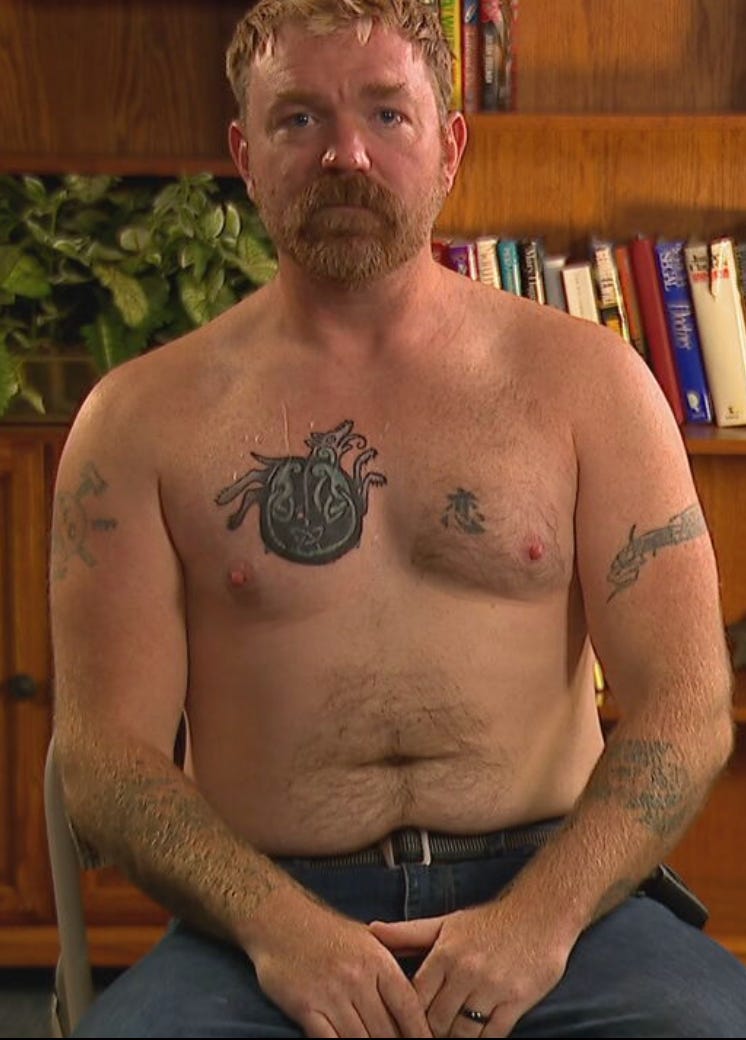
Platner, with the tattoo that covers the skull and crossbones; source: WGME

Platner, readers of this Substack may recall, is a deeply flawed Democratic candidate who also is an outspoken critic of Israel. Recall that for years, until he covered it up, he sported a tattoo linked to Nazis, a skull and crossbones image resembling a specific symbol of Hitler’s paramilitary Schutzstaffel, or SS. And he appeared on a podcast whose host had basked in antisemitic conspiracy theories; Platner said he was a longtime fan of the host.

In 2014, combat veteran Platner praised the tactics of a Hamas raid that killed Israeli soldiers.

The Facebook entry, attempting parody or satire, gives us a fictitious letter from the New York Times to “it’s [sic] readership,” explaining the paper’s critical coverage of Platner.

“OK, we sent a team of reporters to Maine, led by crack reporter Katie Gluek [sic, it’s actually Glueck], an ardent Zionist whose parents are part of the Israeli settler movement, to scour the state for anything that might derail the Platner campaign,” the piece begins. “We’ve been there for months and have spent thousands of dollars on the story.

“We are now publishing a lengthy piece of ‘investigative’ journalism which introduces no new facts at all. But we do have some juicy gossip for you. We found three ex-girlfriends that told us he drank too much, was ‘volatile,’ and sexist, even misogynistic at times. We also found bunch of exes that said he was loving and that they felt safe with him.

“The most damning allegation is that he was physically threatening, and that he knew that the skull and crossbones tattoo on his chest was a Nazi tattoo. These allegations come from a Republican political operative, which we mention.”

So, let’s break that down a bit. Glueck, it turns out, has covered politics for more than a decade. By her own description, she wrote “about extraordinary presidential elections, battles for control of Congress and governor’s mansions across the country, and two wild New York City mayor’s races, serving as the chief metro political correspondent in 2021.”

Glueck covered Ted Cruz for Politico in 2016 and was the Biden beat reporter for The Times during the 2020 presidential campaign. She graduated from the Medill School of Journalism at Northwestern University, worked in Washington at Politico and in McClatchy’s D.C. bureau before moving to New York. Before joining the Times in 2019 as a politics reporter, Glueck had been published in The Wall Street Journal, Washingtonian magazine and the Austin American-Statesman.

So, in other words, Glueck is a seasoned reporter.

But, to the critic, she is “an ardent Zionist.” The evidence of that? Well, at Northwestern 17 years ago, she was a co-president of Students for Israel. Is she still a supporter of Israel or, more precisely, the Netanyahu government? Guess we don’t really know that, do we? No real evidence there.

Of course, she is a Jew, though. For the critics, that seems to be enough. That’s enough to disqualify her from covering a Maine Democrat, apparently.

As for her parents being part of the Israeli settler movement, well, turns out there’s no evidence of that either, even though this claim and the “Zionist” charge against the reporter have spread across the Net like a virus. In fact, at last report, in 2018, her parents – Dr. Robert M. Glueck, a cardiologist, and Miriam Glueck – lived in Haifa, where he directed the clinical operations at the Technion American Medical Program and Mrs. Glueck was a volunteer fundraiser for a health program.

The critics readily found that info, drawn from the journalist’s marriage announcement years ago. But are the parents settlers? Perhaps in some antisemite’s imagination.

Source Google

Still, the attacks on Glueck and the Times can be found in a bevy of sites. And some of the posts go well beyond the Facebook poster in their slams, damning Israel and “the Israel lobby” for Glueck’s work on Platner.

The post my friend cited is particularly pernicious in a way that, despite its leftist cast, is reminiscent of the Birch Society attacks from the right. They were fear-filled, laced with unsubstantiated innuendo, and ultimately baseless.

The FB comment contends that Glueck’s reporting on Platner is “basically a gossip column dressed up as news. Shameful,” for instance. It goes on to attack the Times as “a ruling class, pro-capitalist, pro-imperialist institution. Have we forgotten their coverage leading up to the Iraq war, or the [sic] their long record of coverage on Israel-Palestine?”

First, can anyone seriously call the coverage in the Times pro-Israel? Perhaps such folks have missed all the Gaza coverage, as well as the Lebanon coverage of late. Guess they missed headlines such as “Gazans are dying of starvation” and “As Israel Pounds Gaza City, and Overwhelming Exodus.” Maybe they were absent when the paper ran “Israeli Expansionism is Shaking the Middle East.”

Certainly, many of the editors at the Times would consider themselves “pro-capitalist,” as most Americans would. “Pro-imperialist?” That’s a hard one to prove and the poster doesn’t bother to offer any backing for that.

And then, is it gossip when a political journalist digs into a candidate’s background and finds some disturbing stuff? Is it gossip when other media outlets find similar problems, such as the sexually explicit texts Platner exchanged with numerous women while he was married, as the Wall Street Journal reported? Or that various women came to Platner’s former campaign political director to share what she called “their own disturbing stories” about him, as she recounted in The Washington Post.

It’s the job of news outlets to uncover and report on the baggage politicians and would-be politicians carry. That’s not motivated by political bias, by Zionism, by partisanship or by capitalism even. It’s what reporters do so voters can see their candidates, warts and all – some of which Platner has acknowledged.

“Throughout this campaign, I’ve been open about what was a very dark period of my life where I struggled with undiagnosed PTSD, too often self medicated with alcohol, and was a far from perfect boyfriend,” Platner said in a statement to CNN. “I take responsibility for all of that, and wish I had been better. Any characterization beyond that is false, and I believe, politically motivated. I’m not proud of who I was then, but I am proud of the work I’ve done since, and the movement we are building in Maine.”

Despite the flaws slowly becoming apparent, voters very likely will choose Platner in the June 9 primary and he’ll likely run against Susan Collins in the fall. Then, it will be up to Mainers to make yet another choice. Will they see him as a flawed but reformed character? Or will they look at a 41-year-old political naif’s past and be unsettled?

If more voters had looked at Donald J. Trump’s sordid past more critically, would he have become president, twice? Lord knows, that was amply covered by the Times and the other publications. Was that “gossip?”

Some critics have suggested the best course for Democratic leaders would be to put as much distance between themselves and Platner as possible.

“To defend Platner, Democrats will have to choose between two strategies: denouncing as liars a possibly growing number of women—or else accepting the stories, but then arguing that twisting a woman’s arm and locking her in a room is not quite the same as beating her,” David Frum wrote in The Atlantic. “Do they want to haggle over just how inappropriate these romantic relationships were, even as they argue that wearing an SS tattoo throughout most of one’s adult life does not prove that one is a literal Nazi?”

In the meantime, we’ll likely hear lots from the conspiracists who don’t understand the role of the press, who feel free to attack reporters who happen to be Jews, and who warm to baseless information just because it floats around on the Net. To them, no doubt, there are plots everywhere “in the air, on the ground,” as Dylan might have said.

Instead of “gol-darned Reds,” however, the offenders whom these Birchers of the left see are journalists. They are reporters doing their jobs on behalf of voters.

Watch the parkin’ meters

Why do so many politicians disappoint us?

Joseph Weber

Source: Goodreads

In 1965, Bob Dylan released “Subterranean Homesick Blues,” a nod to the Beats of the 1950s, particularly Jack Kerouac’s novel, The Subterraneans. The stream-of-consciousness autobiographical book explores a deeply flawed writer struggling in an ill-fated romance.

In Dylan’s hallucinatory, fast and wonderful song, many of the lyrics are memorable, but perhaps none more than these:

Look out kid
You’re gonna get hit
But users, cheaters
Six-time losers
Hang around the
theaters
Girl by the
whirlpool
Lookin’ for a new
fool
Don’t follow leaders
Watch the parkin’
meters

Let’s pounce on the “leaders” lines for a moment. When we look at the number of politicians – i.e., leaders – with serious personal flaws, Dylan’s libertarian final lines in that verse seem prescient and, sadly, all too enduring.

From awful presidents, such as Donald J. Trump, to accomplished ones, such as William J. Clinton, to many in lesser offices, we see people who use their power and various professional positions for sexual manipulation and dishonesty of all sorts. In some cases, we see financial misdealings and political malfeasance.

One key question is: why do such deeply flawed people – often individuals with tortured personal psyches — seek public office? What is it that they seek in politics? And, perhaps more important, why do voters elect them (though not always, as we’ll see below)?

Certainly, many of us are not paying mind to Dylan’s caution.

Everyone knows that the dirt in the lives of the people with feet of clay has a way of coming out. Surely, folks in media know that all too well.

Just as Trump and Clinton’s sometimes sordid misadventures with many women were front-page news, so, too, were those of John F. Kennedy (at least, after his presidency and assassination) and Ted Kennedy. Same with former Colorado Sen. Gary Hart, whose presidential hopes were shattered by the “Monkey Business” scandal.

More recently, we had former Rep. George Santos, who was expelled from Congress in 2023 after repeated scandals came to light, including colorfully falsifying his background. A prodigious liar, the Republican congressman made up stories about his college education, his employment, his real estate, his religious background, his athletic achievements, his wealth and even his mother’s death (he claimed it was on 9/11). What nailed his career were convictions on wire fraud and aggravated identity theft.

Santos was sentenced to 87 months for his criminal convictions but served just three months because Trump commuted his sentence. Trump said the fraudster had been “horribly mistreated.” Birds of a feather, perhaps?

Recall that Trump is a felon, convicted on 34 counts of falsifying business records. He was also civilly found to be liable for sexual abuse and defamation of the writer E. Jean Carroll, on whom he has sicced his Justice Department for alleged perjury. Trump is on the hook for more than $80 million in the Carroll affair.

Trump also just pardoned the unfortuitously named Stephen Buyer, a former Republican congressman from Indiana who served nearly two years in prison for making illegal stock trades based on inside information after he left office, as The Guardian reported. Buyer was sentenced in 2023 for trades he made while working as a consultant and lobbyist. He was released in 2025, and the Supreme Court in May rejected Buyer’s appeal without comment or noted dissent.

Even though three of the six conservative justices on the court are Trump appointees, the president in effect overruled them in granting a full, complete and unconditional pardon to this convicted felon.

Again, birds of a feather, it seems.

Graham Platner, source: Maine Public

Of course, plenty of Democrats have much to answer for, too. Now, we have a Senatorial aspirant, Maine’s Graham Platner, a 41-year-old political naif who is expected to win the Democratic primary and to run in the fall against the 73-year-old Republican stalwart Susan Collins.

Platner brings a steamer trunk full of personal baggage. Among his offenses are making demeaning social media posts about women, sporting a since-covered up Nazi tattoo and alleged (but denied) reports of physical intimidation of at least one woman he dated. His wife has said he sexted with several women early in their marriage, as she suggested that “no marriage is perfect.”

For his part, Platner has said that recent reporting about him “struggling, not being a good boyfriend, certainly self-medicating with alcohol,” is something he’s been “very up front since the beginning of this campaign that that was a pretty dark period of my life after I came back from my combat service,” as Forbes noted. He added there are things in media reports that he “absolutely will take responsibility for…But those serious allegations are just not true.”

Nonetheless, his chances of beating Collins have “plummeted,” as the news outlet reported. “Bettors on Kalshi predict the race is now a toss up with the Democratic candidate’s odds falling from 72 percent last month to 54 percent early on Saturday [June 6]. On the crypto betting platform Polymarket, Platner’s odds have a similar drop, falling from 78 percent on May 23 to 60 percent …”

The stakes in the Maine fight are enormous, though. A win by Platner could tilt the balance in the Senate toward Democrats, putting party officials in a precarious position. Do they hold their noses and support a tainted candidate? Or do they shun him, offended by the stench of a senator sitting with them for the next six years (at least) with much to apologize for?

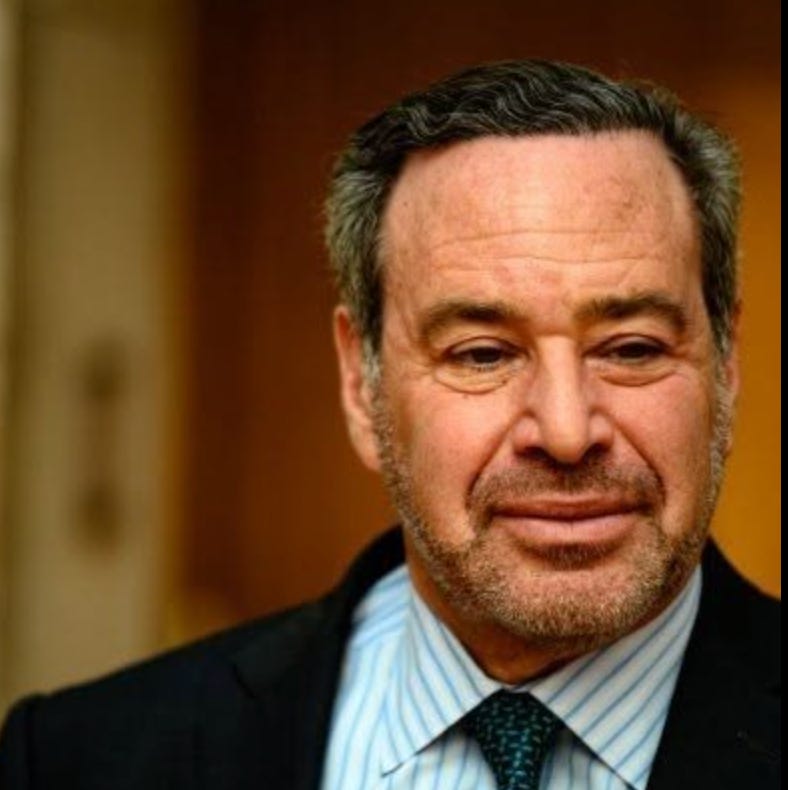
David Frum, source: Facebook

David Frum, writing in The Atlantic, posed the matter as a choice between “character and power.” He compared the Platner quandary to the choice Republicans faced in 2017 with Roy Moore, a Senatorial candidate from Alabama who, as a 32-year-old assistant district attorney had “initiated sexual contact” with a 14-year-old girl, as well as three other women, whom he pursued when they were underage.

GOP leaders including Sen. John McCain and two dozen other Republican senators as well as then-Senate Leader Mitch McConnell urged Moore to quit the race, even though the Republicans had hung onto the Senate by a thread. Moore refused to quit but ultimately lost the race to a Democrat.

“Not as paragons of moral virtue but as pragmatic politicians, the Senate Republicans of 2017 made and executed a calculation: We are better off sacrificing the Alabama Senate seat for three years than enduring Roy Moore as a Senate colleague for who knows how long,” Frum wrote. “To defend Platner, Democrats will have to choose between two strategies: denouncing as liars a possibly growing number of women—or else accepting the stories, but then arguing that twisting a woman’s arm and locking her in a room is not quite the same as beating her.”

Certainly, the l’affaire Platner knocks the Dems on the back foot.

“Do they want to haggle over just how inappropriate these romantic relationships were, even as they argue that wearing an SS tattoo throughout most of one’s adult life does not prove that one is a literal Nazi?,” Frum asked. “These are not conversations that Democrats should wish to prolong in a year that might otherwise deal with Trump’s abuses of power, corruption, and economic mismanagement.”

Whether Platner could serve as a perfectly fine legislator, despite his dubious past, is an open question. Some argue that personal foibles, especially sexual ones, are irrelevant to an elected official’s ability to do a decent job in office. After all, the argument goes, we’re not choosing someone for sainthood, but just to do a decent job for constituents.

But the problem is that character outs, it seems. It seems likely that the citizens of New Jersey would have been better off if Robert Menendez, now a felon residing in a prison in Pennsylvania, had not been elected. He was convicted in 2024 of multiple corruption and bribery charges involved gold bars, cash and luxury cars and is now serving an 11-year sentence.

And, certainly, the nation would have been better served if Vice President Spiro Agnew hadn’t accepted hundreds of thousands of dollars in bribes and kickbacks while serving in various offices before the White House. He resigned in disgrace but avoided jail time even as he paid back hundreds of thousands of dollars.

For Menendez and Agnew, their mendacity didn’t go public before they attained their electoral heights. It took a while for their dirty laundry to get aired. With others, such as Clinton and, certainly, Trump, the flaws were well known and apparently forgiven by the electorate. Now, with Platner, the smudges on his escutcheon are slowly becoming apparent.

But the question remains: why do such flawed people seek the limelight, even when it can sear them? Is there something in their tortured psyches about seeking redemption or justification? Do they turn to public adoration as a way to fill holes in their character and mental makeup?

Perhaps more important, though, why do voters look past their sometimes obvious faults? Have our standards plunged so much that character is irrelevant now?

For Dylan and for plenty of journalists long accustomed to covering political scandal, the lesson is clear. Keep a skeptical eye on all politicians and would-be politicians. Don’t fall in love with them, especially those whose views align with yours. Vote for those who seem to speak for you but recognize that they’ll usually disappoint you in the end.

And, even as you watch their often troubling antics, be sure to watch your parkin’ meters. Perhaps happily, there’s no doubt that the stuff of our ordinary workaday lives deserves more attention than many of the people we choose to represent us.