Can the courts save us?

So far, many have shot down Trump’s foulest efforts
Joseph Weber

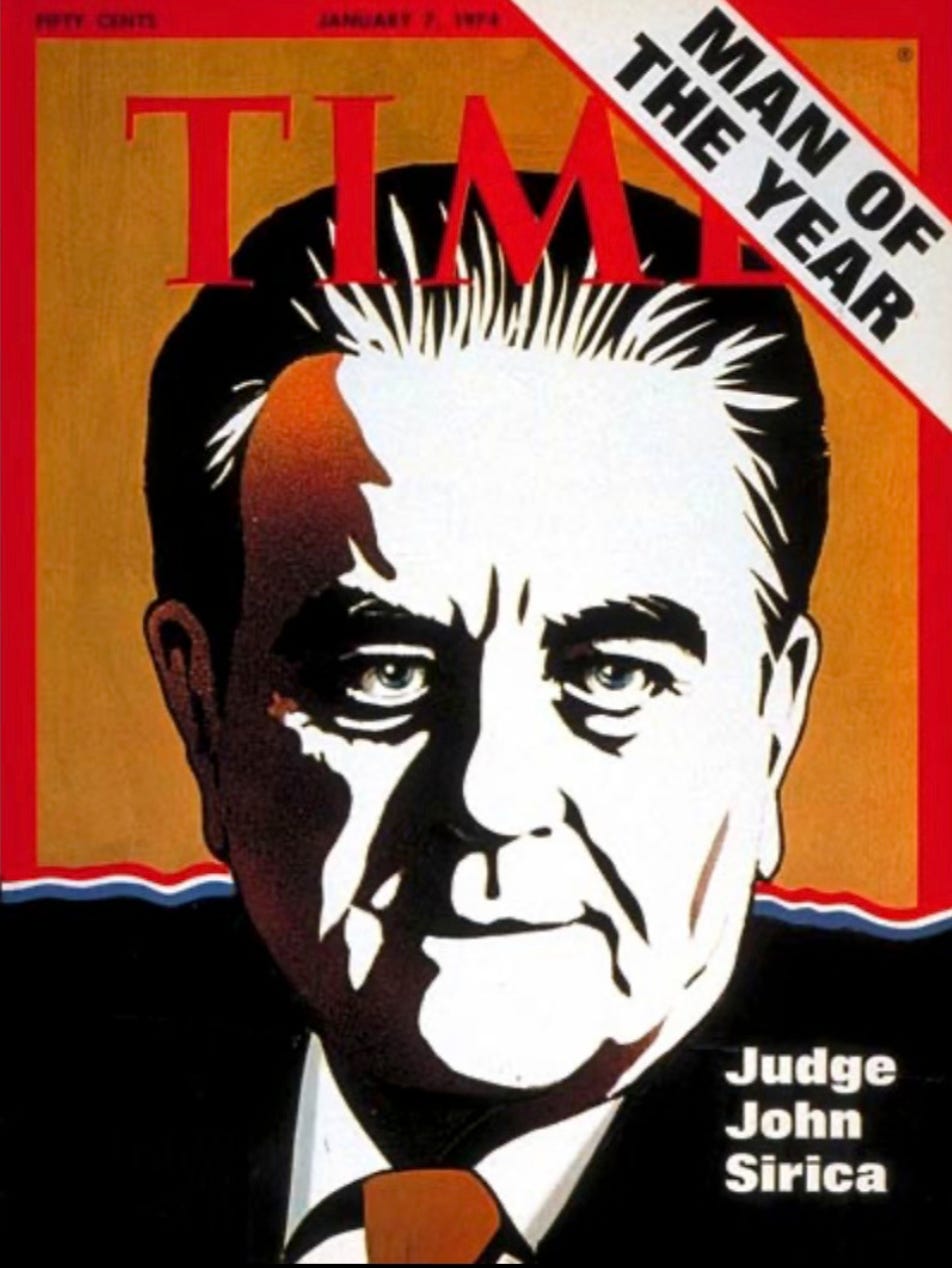
Just over a half-century ago, a federal judge appointed by an honest Republican president stood up to a corrupt Republican president and made history.

John J. Sirica, a son of Italian immigrants who put himself through law school by boxing, demanded in 1973 that Richard Nixon cough up secret Oval Office recordings. On one, Nixon plotted with aides to quash the infamous Watergate burglary investigation. The late judge’s subpoena – and later release of the tapes, as well as the trials of the Watergate burglars over which Sirica presided – led to Nixon’s humiliating resignation.

Ah, if only humiliation worked on this shameless White House.

But, today, we again see other courageous judges taking on a far more corrupt president and setting him back on his would-be regal heels. Donald J. Trump and his minions have been scorched by one court decision after another in their long parade of efforts to twist, stretch and violate the law.

Trump has lost decisions ranging from one damning a company’s blacklisting from defense contracts to proof-of-citizenship requirements for voting. He’s been slapped down in areas as diverse as tariffs and deportations, as well on his efforts to dismantle the U.S. Agency for Global Media. The administration lost a big vaccines case, was forced by a court to pull back on National Guard deployments in cities and suffered setbacks on revenge cases he brought at critics.

The list of judicial defeats goes on and on. The president and his colleagues have lost cases dealing with congestion pricing in city streets, withholding federal funds from schools in diversity, equity and inclusion cases, and on cuts in funding to sanctuary jurisdictions.

And the judges involved have been withering in their rulings against the administration.
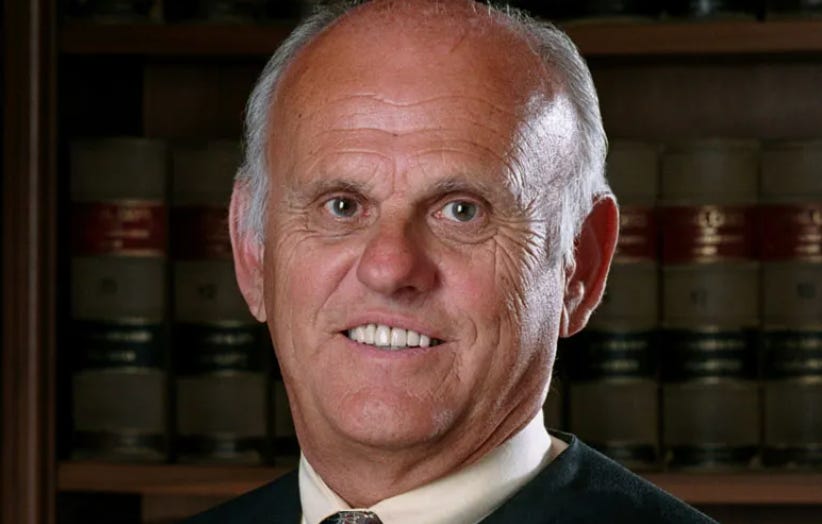
Judge Coughenour, source: Seattle Times

Senior U.S. District Judge John Coughenour in Seattle, a Ronald Reagan appointee, called Trump’s executive order ending birthright citizenship “blatantly unconstitutional,” for instance. Another Reagan appointee, Appeals Court Judge J. Harvie Wilkinson III, said of the illegal deportation of Kilmar Armando Abrego Garcia: “There is no question that the government screwed up here.” The judge, sitting in Virginia, added: “This should be shocking not only to judges, but to the intuitive sense of liberty that Americans far removed from courthouses still hold dear.”

Even deep in Trumpland, judges have been blistering.

Judge Fred Biery, source: TexasMonthly

District Judge Fred Biery, serving in Texas and ordering the release of a 5-year-old illegally detained by immigration authorities, didn’t hold back, for example. “Observing human behavior confirms that for some among us, the perfidious lust for unbridled power and the imposition of cruelty in its quest know no bounds and are bereft of human decency,” Biery, a 78-year-old Clinton appointee and grandfather, wrote in a three-page ruling. “And the rule of law be damned.”

Still other judges have taken aim directly at Trump.

U.S. District Judge William Young railed against the administration in a free-speech case involving pro-Palestinian protesters such as the Columbia student Mahmoud Khalil and Tufts student Rümeysa Öztürk. In his 161-page opinion, the Reagan appointee accused the president of violating “his sacred oath” to faithfully execute the Office of President of the United States, and . . . to the best of [his] Ability, preserve, protect and defend the Constitution of the United States … by ignoring the Constitution’s command that the president take care that the laws be faithfully executed.”
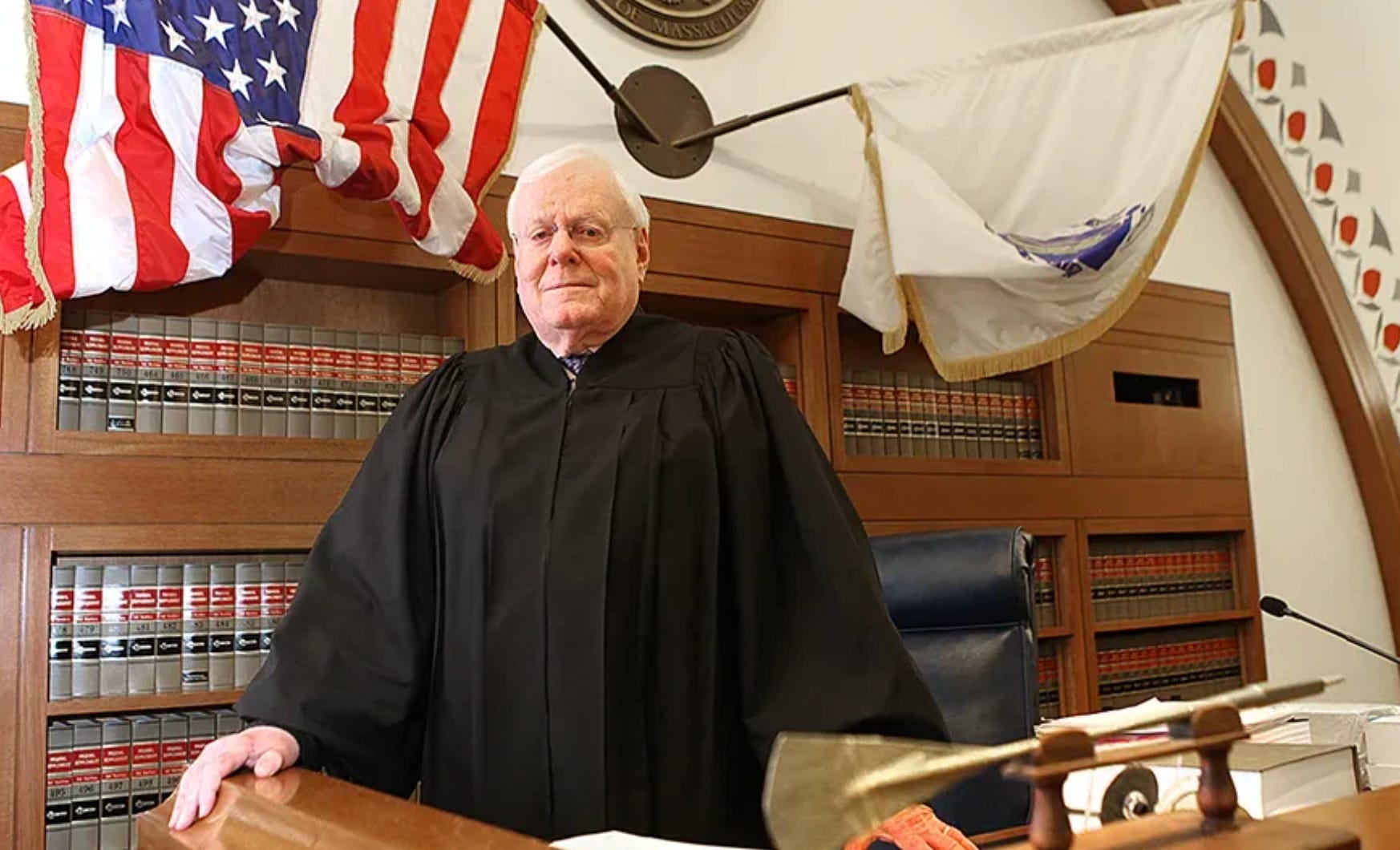
Judge Young, source: Massachusetts Lawyers Weekly

Indeed, Young wrote that Trump favored muzzling free speech. “After all, the facts prove that the President himself approves truly scandalous and unconstitutional suppression of free speech on the part of two of his senior cabinet secretaries,” the judge thundered.

Young, who sits in Massachusetts, also took aim at Trump’s Immigration and Customs Enforcement agency, particularly its love of masks.

After hearing from a top ICE official, Young wrote that the court “rejects this testimony as disingenuous, squalid and dishonorable.”

“ICE goes masked for a single reason — to terrorize Americans into quiescence,” he contended. “Small wonder ICE often seems to need our respected military to guard them as they go about implementing our immigration laws. It should be noted that our troops do not ordinarily wear masks. Can you imagine a masked marine? It is a matter of honor — and honor still matters. To us, masks are associated with cowardly desperados and the despised Ku Klux Klan. In all our history we have never tolerated an armed masked secret police.”

Ouch.

Of course, to Trump the law is just an annoyance, a small obstacle to be overcome. And judges, to him, are lackeys in a system that just gets in his way. Beating the system and the judges is a kind of game that, if stretched out long enough, he is sure he can win or sidestep.

“The time has also come for Republicans to pass a tough new crime bill that imposes harsh penalties for dangerous repeat offenders, cracks down on rogue judges. We got rogue judges that are criminals. They are criminals, what they do to our country. The decisions that they hand down and hurt our country,” Trump said at a March 25 National Republican Congressional Committee event in Washington.

He previously called Supreme Court Justices who had ruled against him in a tariffs case “fools and lap dogs” for political opponents. “They’re very unpatriotic and disloyal to our Constitution. It’s my opinion that the court has been swayed by foreign interests and a political movement that is far smaller than people would ever think.”

He recently ratcheted up his language, saying that Justices Neil Gorsuch and Amy Coney Barrett “sicken me.” He had appointed both of them, but they joined four other Justices in ruling against him in the tariffs case. The majority held that Trump had illegally sought to authorize some levies under an emergency law that was not suited to the charges.
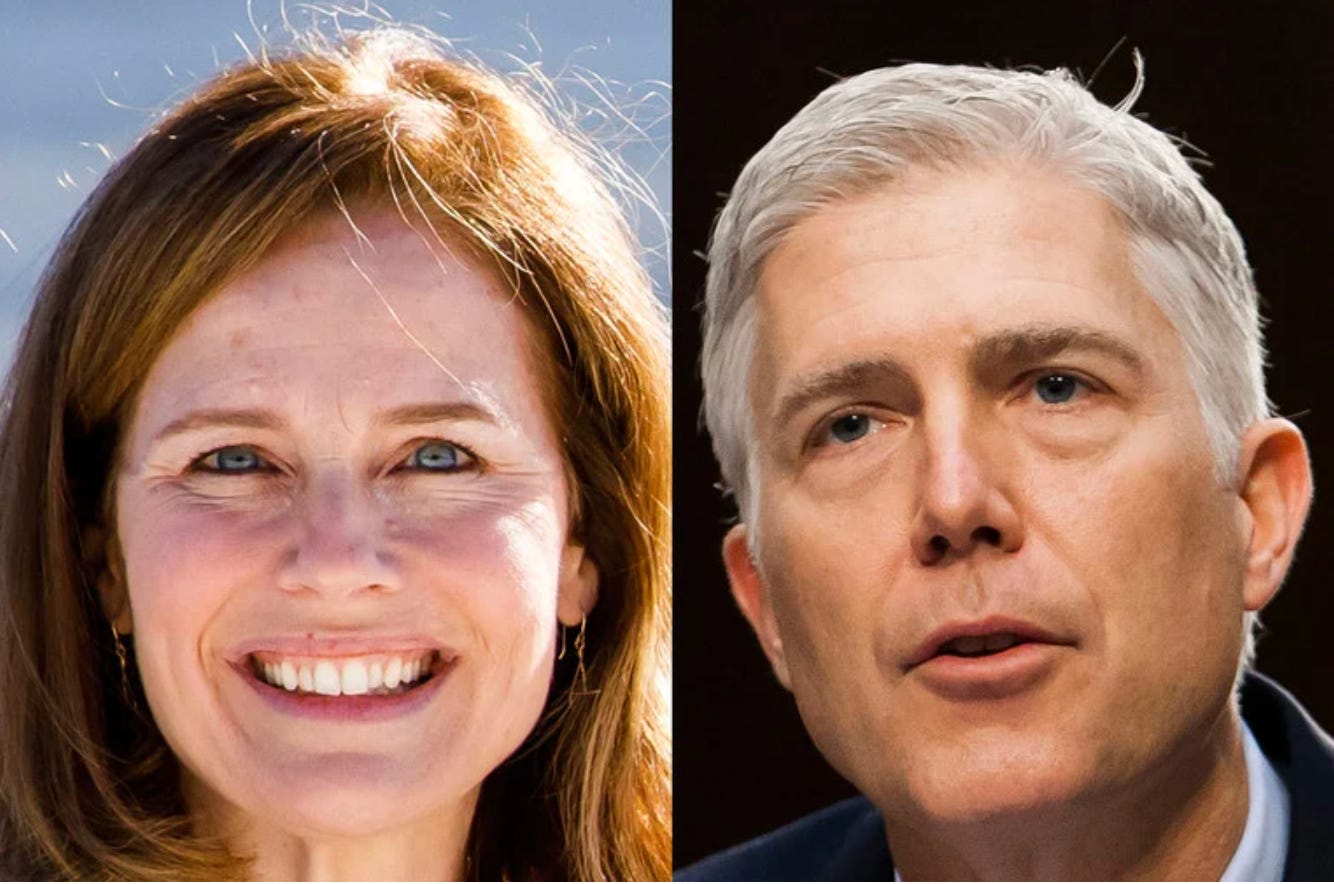
Justices Barrett and Gorsuch, source: National Law Journal

Such tariffs are a mainstay of Trump’s 18th century view of economics. After he lost that Supreme Court case, Trump just found other rules to rationalize the charges, albeit temporarily.

So much for respect for judges and the laws they are upholding.

The “lap dog” judges that “sicken” him on April 1 will be among the nine who will hear oral arguments on one of the hobbyhorses Trump rides to limit the rights of immigrants, birthright citizenship. Recall that the 14th Amendment to the Constitution, ratified in 1868, grants citizenship to everyone born in the U.S. (with a few exceptions, such as for children of diplomats).

Ever since then, it has been understood that the language of that amendment is clear and inarguable. Nonetheless, Trump on his first day back in office in January 2025 issued an executive order aimed at overturning that, holding that a child born to parents in the U.S. unlawfully is not entitled to citizenship.

Several judges have shot down Trump’s so-called EO.

“The plain language of the Citizenship Clause—as interpreted by the Supreme Court more than a century ago and routinely applied by all branches of government since then— compels a finding that the plaintiffs’ challenges to the EO are nearly certain to prevail,” one such judge, Leo Sorokin, wrote in enjoining enforcement of the order. “The Citizenship Clause speaks in plain and simple terms.”

As quoted by the judge, the amendment says: “All persons born or naturalized in the United States, and subject to the jurisdiction thereof, are citizens of the United States and of the State wherein they reside.” And the judge then wrote: “The words chosen by the drafters and ratified by the states, understood ‘in their normal and ordinary’ way, United States v. Sprague, 282 U.S. 716, 731 (1931), bestow birthright citizenship broadly to persons born in the United States.”

Now, it will be up the Supreme Court to rule on whether Trump has the power to, in effect, rewrite the amendment.

Praising Sorokin’s ruling last July, former New Jersey Attorney General Matthew Platkin said he was “thrilled the district court again barred President Trump’s flagrantly unconstitutional birthright citizenship order from taking effect anywhere.” Platkin, who helped lead the suit the judge considered, added: “American-born babies are American, just as they have been at every other time in our Nation’s history … The President cannot change that legal rule with the stroke of a pen.”

Decades ago, an appeals court considering one of Judge Sirica’s orders about the Watergate tapes rejected efforts by Nixon’s lawyers to “refashion the Constitution” to suit him.

“Though the President is elected by nationwide ballot and is often said to represent all the people, he does not embody the nation’s sovereignty,” the court wrote. “He is not above the law’s commands. Sovereignty remains at all times with the people, and they do not forfeit through elections the right to have the law construed against and applied to every citizen.”
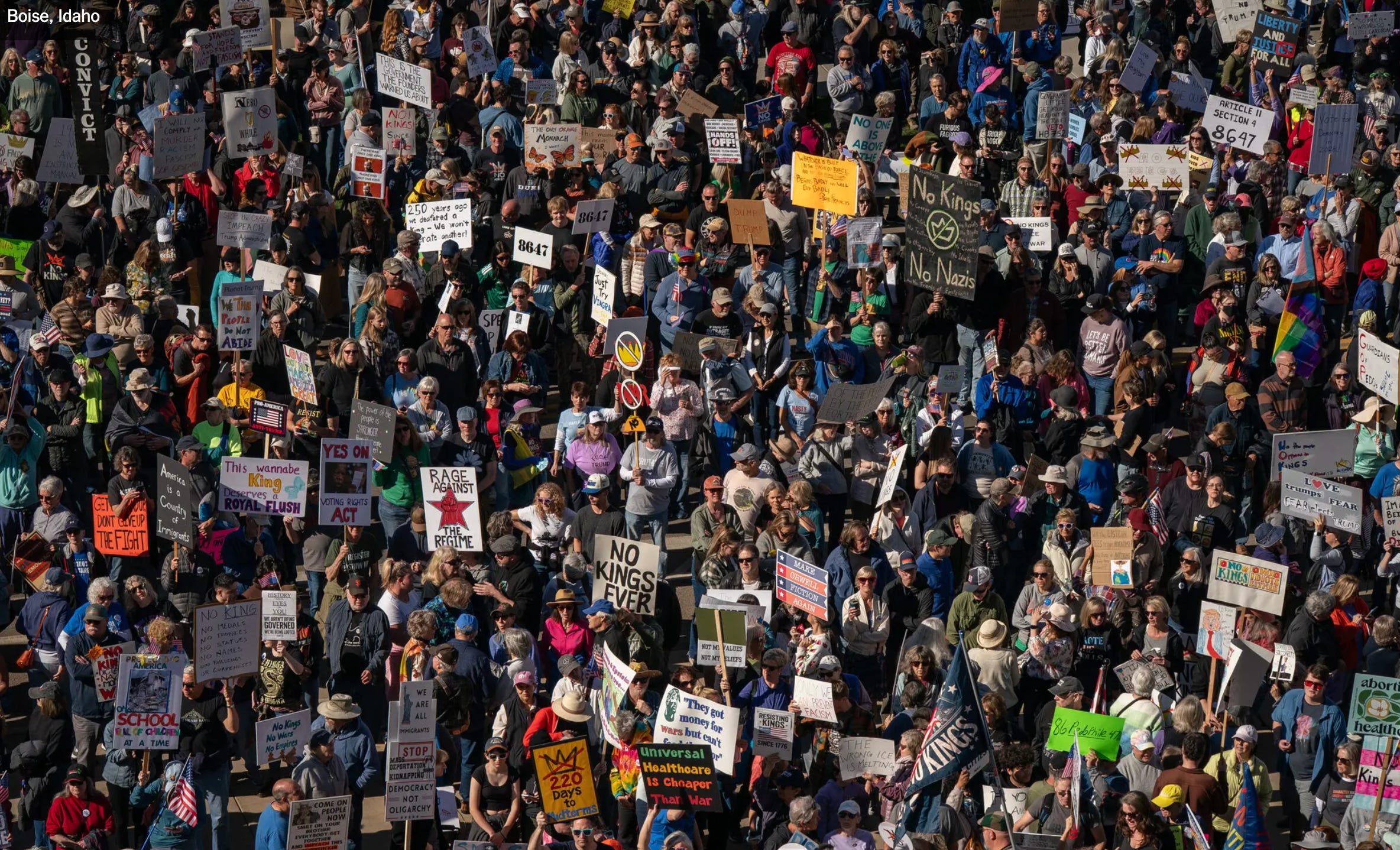
A No Kings Day protest, source: The New York Times

These days – and today happens to be the nation’s third “No Kings Day “– we are seeing once again whether a president is “above the law’s commands.” Sirica, one imagines, would be appalled by this president but likely would take heart from the many judges standing in the way of Trump’s monarchical impulses.
This dictator cosplay is tiresome

Trump’s scowling images make him look a bit ayatollahish, but also like a clown

Joseph Weber

Sources: iranintl.com

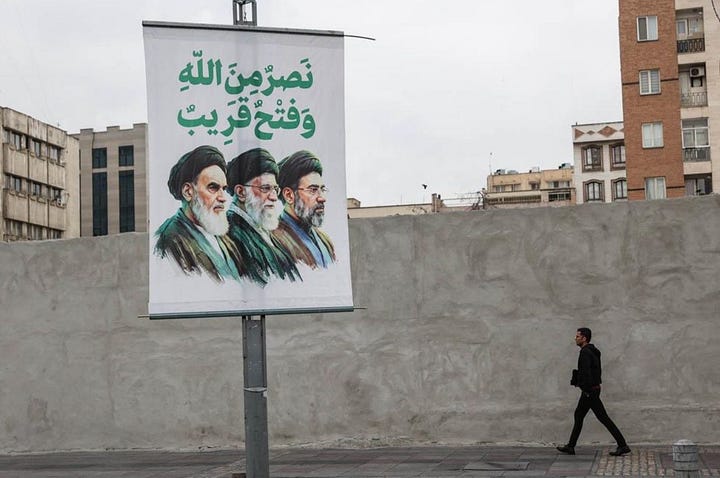
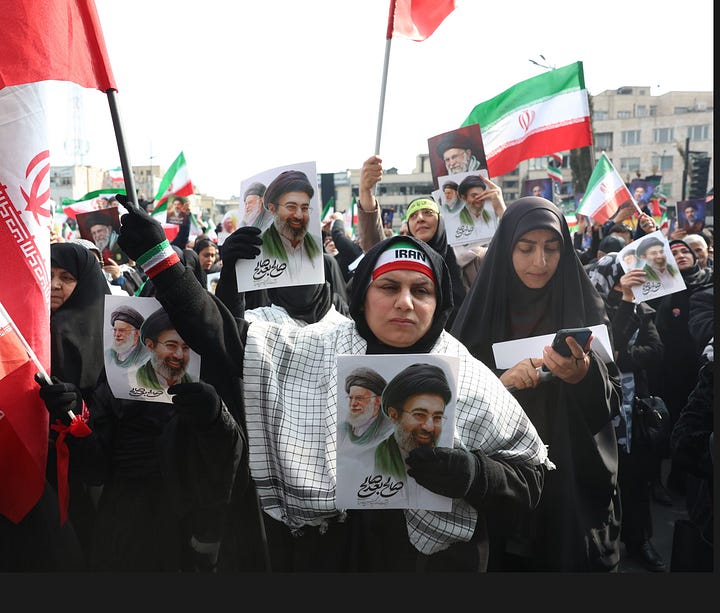
Perhaps Donald J. Trump and the new supreme leader of Iran, Mojtaba Khamenei, have more in common than they think.

Images of the younger ayatollah started flooding Tehran soon after he was anointed to succeed his assassinated father. Now, they seem to be ubiquitous, appearing in photos carried by demonstrators and on lightpoles. Soon, no doubt, we’ll see them on buildings, much as happened with the earlier two ayatollahs.

Sources: The Guardian

But Trump isn’t to be outdone. Posting his photo on buildings in Washington, D.C., isn’t enough for him. Now, he wants to project his strength and dominance on a commemorative gold coin and a circulating $1 coin.

Planned commemorative coin

Isn’t all this dictator cosplay just a bit tiresome?

Apparently not for Trump, whose egomania stretches back decades, perhaps to his damaged youth. Recall that the president’s niece, psychologist Mary Trump, described his upbringing as “malignantly dysfunctional,” calling his father, Fred Trump Sr., a”high-functioning sociopath” who crippled Donald emotionally. She argued Fred Sr. bullied Donald into becoming a “killer” before sending him off to military school at 13. There, instructors struck him if he misbehaved.

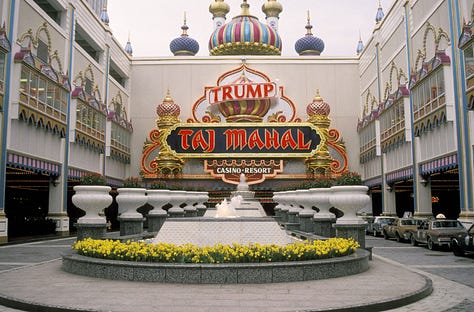
So, perhaps in some desperate bid for adulation, Trump strewed his name over all his businesses. He affixed it to casinos and hotels, even to steaks that his company unsuccessfully marketed (the casinos also went bust).

Source: ABC News

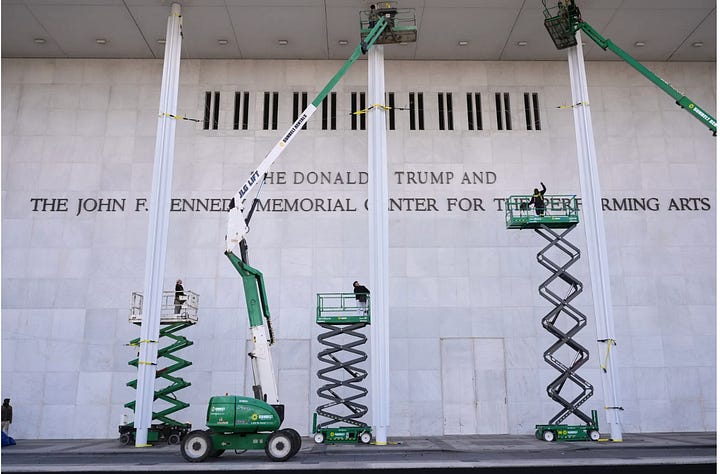
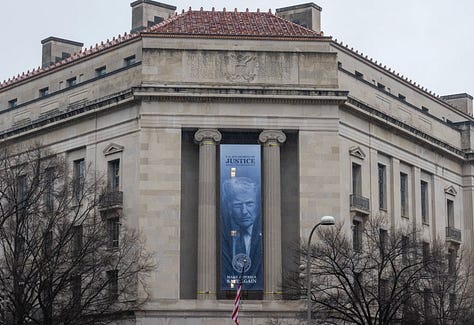
And, since he’s been in the White House — the second time — he has scattered his visage and name all over D.C. There’s the “The Donald J. Trump and The John F. Kennedy Memorial Center for the Performing Arts,” which is closing for a couple years amid defections of performers. We also have the “Donald J. Trump U.S. Institute for Peace,” which seems like an Orwellian joke these days (and which is defunct, with the building now serving mainly as a backdrop for ceremonies with foreign leaders). We also have glowering banners of Trump hanging on the Departments of Labor, Justice and Agriculture, something that the Daily Beast mocked as “Going Full North Korea.”

Source: NPR
Source: The New York Times

We have Trump’s likeness on National Park Passes, which the National Park Service warns will be voided if visitors paste stickers on Trump’s face. Less tangibly, his name graces TrumpRx, the pharmacy program that he promised would deliver the lowest prices in the world for patients. As The New York Times and three German news outlets found, however, drugs listed on TrumpRx “can cost American patients up to hundreds or thousands of dollars, while a patient walking into a German pharmacy pays next to nothing.”

Source: E&ENews PM

All this is more than just ego. Whether it’s an Iranian ayatollah, a North Korean dictator or the totalitarians of Germany and the Soviet Union of old, plastering the great leader’s image on buildings, coins and pretty much anywhere where much of the citizenry can’t avoid it is about power. If the leader is everywhere, he must be all-powerful, right?

On the other hand, it also shows how weak the figure might be. Steve Heller, a former art director for The New York Times and author of “Iron Fists: Branding the 20th Century Totalitarian State,” argued that even despots were dependent not only on brute force, but on harnessing popular support (or acquiescence) to preserve their monopolistic hold on power, as a scholar for Florida International University’s Wolfsonian Library has written. They need to stir the masses to keep up the illusion of their unassailable strength

“Consequently, totalitarian regimes created, reproduced, published, and distributed images of ‘the leader’ so ubiquitously as to transform these heads of states into venerated ‘brands,’ the FIU Library scholar wrote. That library holds thousands of items of propaganda from Soviet Russia, Fascist Italy, and Nazi Germany.

Of course, Trump was a brand as much as a person when he first coasted down the escalator into the presidency. His image as a tough guy and demanding boss was forged in his TV days in “The Apprentice.” As he ran for the White House, he added anger to the mix and that now largely defines him.

Consider “Operation Epic Fury,” the name Trump chose for the Iran War. As Peter Baker of The New York Times writes, the term captures much about how Trump seems to see himself and wants to be seen. “Everything Mr. Trump does, at least as he sees it, is epic — the biggest, the most, the first, ‘like we’ve never seen before,’ as he likes to say,” Baker notes. “And much of what he does seems to be driven by fury, a deep and abiding enmity toward the forces arrayed against him or those he blames for what he considers the downfall of the country under other presidents.”

And now, with the severe look he casts in the imagery on his posters and planned coins, he’s driving home this “take no prisoners” style. No grandfatherly smiles for Trump. A scowl is his preferred expression.

As Washington Post Style writer Philip Kennicott writes, the coin imagery reflects “recurring themes of resolution, anger and determination.” This contrasts with earlier displays in Trump’s digital trading cards and elsewhere that projected “vitality, competence, vision and sometimes even humor or irony.”

Trump’s Digital Trading Card Collection, Source: The Washington Post

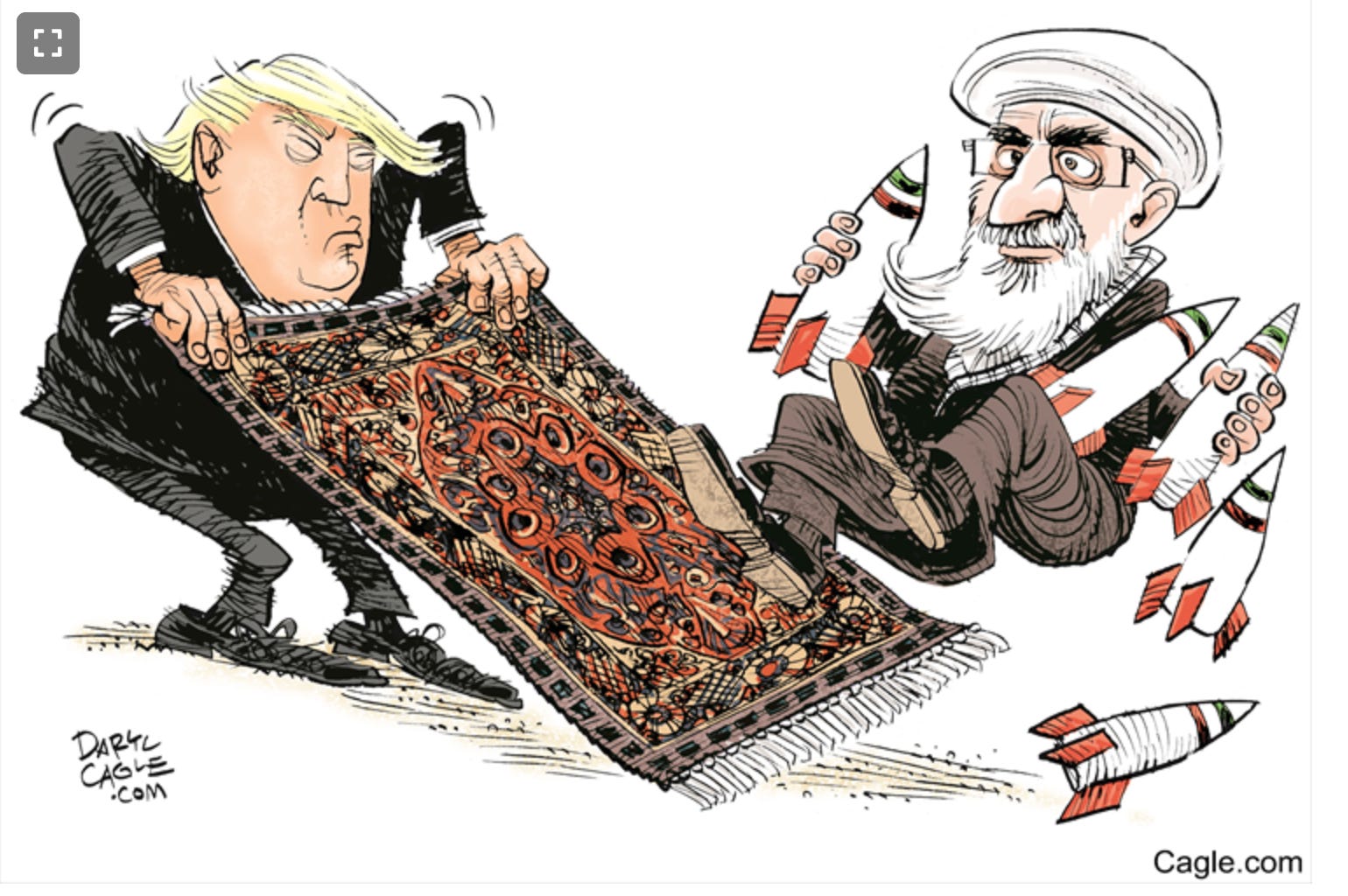
Warrior and man-in-charge Trump has little use for humor, it seems. For the rest of us who are subjected to this cartoonish narcissism, humor may be the healthiest response. Really, all that’s missing from some of the Trump images is a dunce cap — or, perhaps, an ayatollah turban.

History’s oldest hatred

Jews in the U.S. are in danger because of people like Joe Kent

Joseph Weber

Source: Good Authority

For Joe Kent, who just quit as Donald J. Trump’s counterterrorism chief, it’s all about the Jews.

“I cannot in good conscience support the ongoing war in Iran,” he wrote in resigning as director of the National Counterterrorism Center. “Iran posed no imminent threat to our nation, and it is clear that we started this war due to pressure from Israel and its powerful American lobby.”

Then he went further. In his March 17 letter, which he posted on X, the Trump appointee blamed Jews – especially Israelis — for the 2003-2011 Iraq War, as well as the current Iran war.

“Early in this administration, high-ranking Israeli officials and influential members of the American media deployed a misinformation campaign that wholly undermined your America First platform and sowed pro-war sentiments to encourage a war with Iran,” he argued. “This echo chamber was used to deceive you into believing that Iran posed an imminent threat to the United States, and that should you strike now, there was a clear path to a swift victory. This was a lie and is the same tactic the Israelis used to draw us into the disastrous Iraq war that cost our nation the lives of thousands of our best men and women.”

It’s tempting, of course, to dismiss Kent’s diatribe as the ranting of yet another conspiracy theorist. That’s what critics called Kent during his confirmation hearing, after which he squeaked into his job on a 52-44 Senate vote.

After all, he argued that federal agents had instigated the Jan. 6, 2021, insurrection at the Capitol and supported Trump’s claims that the 2020 election was stolen. Also, he was quite chummy with white supremacists, paying a Proud Boys member for consulting work when he ran for Congress in 2022.

There’s little doubt that Kent is a few fries short of a Happy Meal. With a sensible president and a less supine Senate, he wouldn’t have gotten past the Capitol Rotunda, much less into an important Administration position.

But, on the other hand, like too many in the tinfoil-hat set who have come out of the woodwork in recent years, Kent also is an antisemite, casually invoking longstanding anti-Jewish tropes. Somehow, the Jews manipulate non-Jews into wars with shadowy “misinformation,” he holds. Operating behind the scenes, they form an “echo chamber” that bends the ears of national leaders.

“His reference to Israel and claims about Jewish Americans’ political influence highlight Kent’s previous ties to antisemitism and right-wing extremism,” reported the Associated Press. “It’s an antisemitic trope to suggest Jewish Americans have disproportionate control of media narratives.”

To be sure, an aggressive approach to Iran is something that Israeli Prime Minister Benjamin Netanyahu has urged on American presidents for years, dating back at least to George W. Bush. It’s clear, too, that more recently the Israeli leader stepped up the pressure with an obliging Trump, pressing for military action at least as far back as last December, as The New York Times has reported.

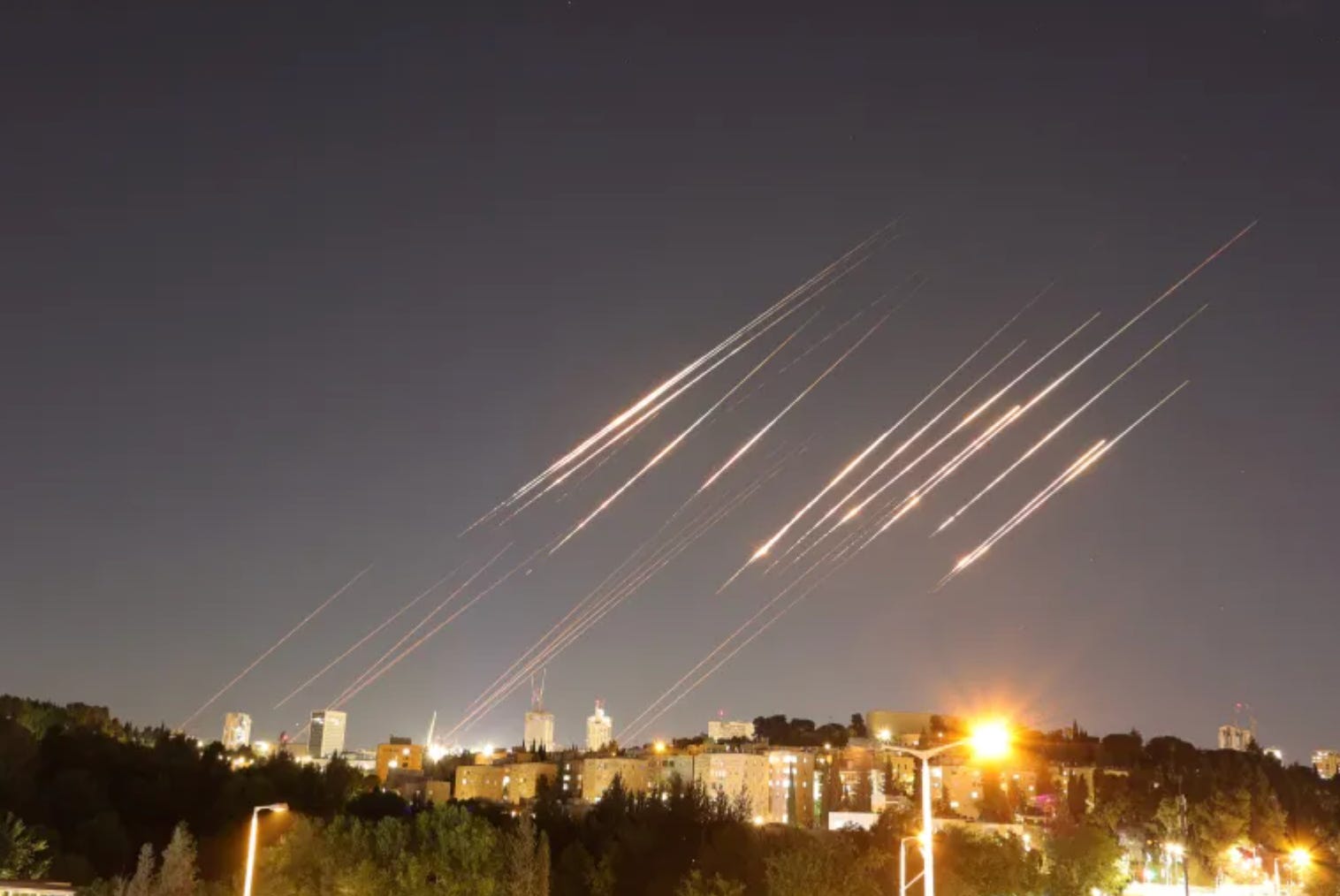
Iranian missiles fired at Israel last June; source; Al Jazeera

And there’s no surprise in that. For Netanyahu and Israel, Iran has long been an existential threat. If the viciously antisemitic regime had a nuclear bomb, Israelis have every reason to believe it would use it against them. Indeed, that – and general nuclear deterrence – is why presidents going back to Bush have tried to contain the country’s nuclear efforts.

But don’t ignore the reality that the U.S. has long had skin in this game, too. Beyond the risks to the world of a theocratic repressive regime getting a nuclear bomb, the U.S. has long been a victim of Iran’s hatred of what it calls “the Great Satan,” with Israel as “the little Satan.” Since the 1979 revolution, the Iranians have badly bloodied America’s nose.

Recall that Iran supplied the I.E.D.s, or roadside bombs, that killed or maimed over 1,000 American troops during the war in Iraq. Consider its plots to assassinate former senior U.S. officials, including John BoltonMike Pompeo and Trump himself. And remember that Iran backed the terrorists who in October 1983 killed 241 American Marines, sailors and others, and 58 French paratroopers who were in Beirut to keep the peace. The Iranians were also behind bombing the barracks for the United States Air Force 4404 Provisional Wing in Khobar, Saudi Arabia, killing 19 American airmen in 1996.

Iran has been acting out a slow-moving war against the U.S., as well as Israel, for decades, even as it sowed tumult across the region. “From Lebanon to Yemen and Syria to Iraq, the regime has armed, trained and funded terrorist militias that have soaked the earth with blood and guts,” Trump said in announcing his recent attack.

So, even if Netanyahu encouraged this war, the suggestion by Kent – and like-minded antisemites – that the Israeli leader is a puppet-master pulling Trump’s strings is crapola. Given reasonable fears about the country’s well-shielded nuclear research efforts, Trump had ample reason last June to attack Iran’s fortified facilities. And, with diplomatic moves to contain those efforts faltering, he had reason to attack again even more decisively.

In fact, Trump has been on Iran’s case for decades, as The Atlantic reported. In 1980, during the Iran hostage crisis, Trump agreed with a TV interviewer that “we should have gone in there with troops.” In 1987, The New York Times reported that Trump had told a New Hampshire audience that “the United States should attack Iran and seize some of its oil fields in retaliation for what he called Iran’s bullying of America.” In 1988, Trump told a Guardian interviewer that if he were a political leader, he’d be “harsh on Iran,” Later, in 2013, Trump tweeted “maybe we should knock the hell out of Iran and their nuclear capabilities?”

Soon after assuming the Presidency the first time, he scrapped the Obama administration’s nuclear deal (2018) and then assassinated Qassem Soleimani, a notorious leader of Iran’s Islamic Revolutionary Guard Corps (2020).

Admittedly, when Trump announced the current series of attacks in a far-too-short and unpersuasive video, he pointed to the 2023 atrocities in Israel to help make his case. “And it was Iran’s proxy, Hamas, that launched the monstrous Oct. 7 attacks on Israel, slaughtering more than 1,000 innocent people, including 46 Americans, while taking 12 of our citizens hostage,” Trump said. “It was brutal, something like the world has never seen before.”

But recall that it was Israel, of course, that responded with extraordinary force against Hamas in Gaza after the Oct. 7th monstrousness, losing many Israeli lives and taking far more Palestinian ones in the process. And it now is responding with force against another Iranian proxy, Hezbollah, in Lebanon, putting more Israelis at risk. It can shoulder its own burdens, albeit with plenty of American military materiel.

The problem, however, is that people like Kent will fuel the already feverish antisemitism on the rise in the U.S. He and his ilk will drive the notion that Americans are being put at risk to fight Israel’s battle, a fight in which they don’t see a stake for America. That notion could put Jews across the country at even greater risk.

And that risk has been growing. The troubles in the Middle East have put every synagogue – indeed, every American Jew — in the crosshairs for anyone seeking to lash out.

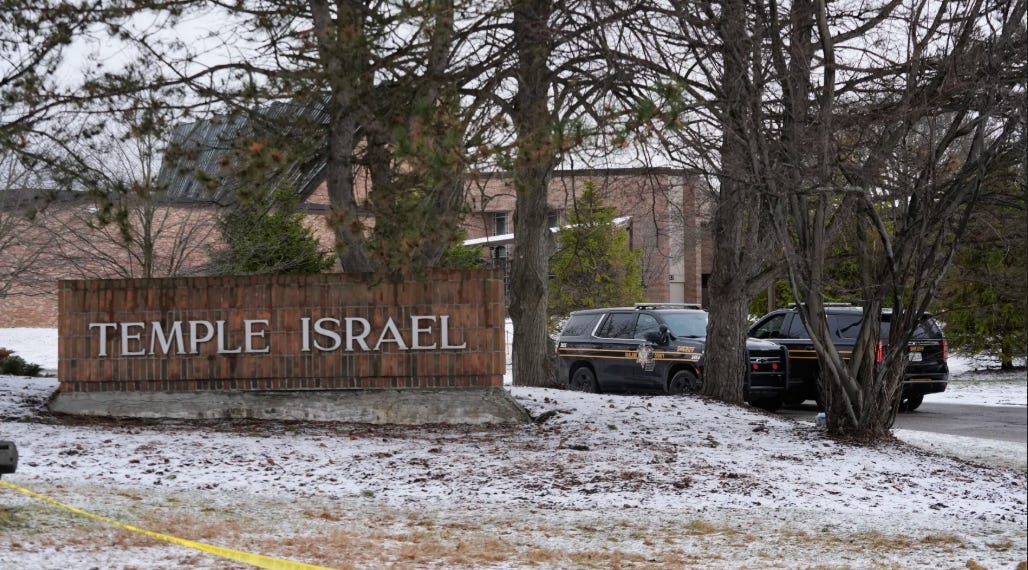
Michigan synagogue attacked by Ghazali; source KTLA

Consider Ayman Mohamad Ghazali, a naturalized U.S. citizen born in Lebanon. He drove a truck on March 11 into a Michigan synagogue filled with young children, apparently to avenge the deaths of four of his relatives who were killed in an Israeli airstrike on March 5. One of Ghazali’s brothers, it turned out, was a Hezbollah commander.

Last June, in Boulder, Colorado, a man hurled homemade incendiary devices and used a flamethrower to attack people gathered at a rally supporting the release of Israeli hostages held in Gaza. Fifteen people were hurt and one later died. The suspect, 45-year-old Mohamed Sabry Soliman, said he’d been planning the attack for a year and that he had no regrets, instead “wished they were all dead.”

Less than a month before, on May 21, two Israeli embassy employees—Yaron Lischinsky, 30, and Sarah Lynn Milgrim, 26—were shot and killed outside the Capital Jewish Museum in Washington, D.C., shortly after attending an event hosted by the American Jewish Committee. The murderer, Elias Rodriguez, said “I did it for Gaza” and “Free Palestine,” a witness told CNN.

According to the State of Antisemitism in America 2024 report, published in February 2025, 33 percent of American Jews said they have been the personal target of antisemitism, in-person or virtually, at least once over the prior year.

The rise of reported antisemitic incidents in the U.S. has followed a wider trend, as Time reported. According to the Anti-Defamation League, surveys show that “anti-Jewish sentiments are at an all-time high globally.” A report published in January 2025 found that 46 percent of the world’s adult population “harbors deeply entrenched antisemitic attitudes,” equating to an estimated 2.2 billion people worldwide.

Much of such antisemitism is not physical. Much has come in antisemitic hate speech on social media platforms such as TikTok and Instagram.

“However, we shouldn’t be surprised that in a climate where all kinds of hatred and harassment are being normalized, eventually it spills over into deadly violence. It’s horrifying,” Mark Oppenheimer, a professor of practice at Washington University and editor of Arc: Religion, Politics, Et Cetera, told Time.

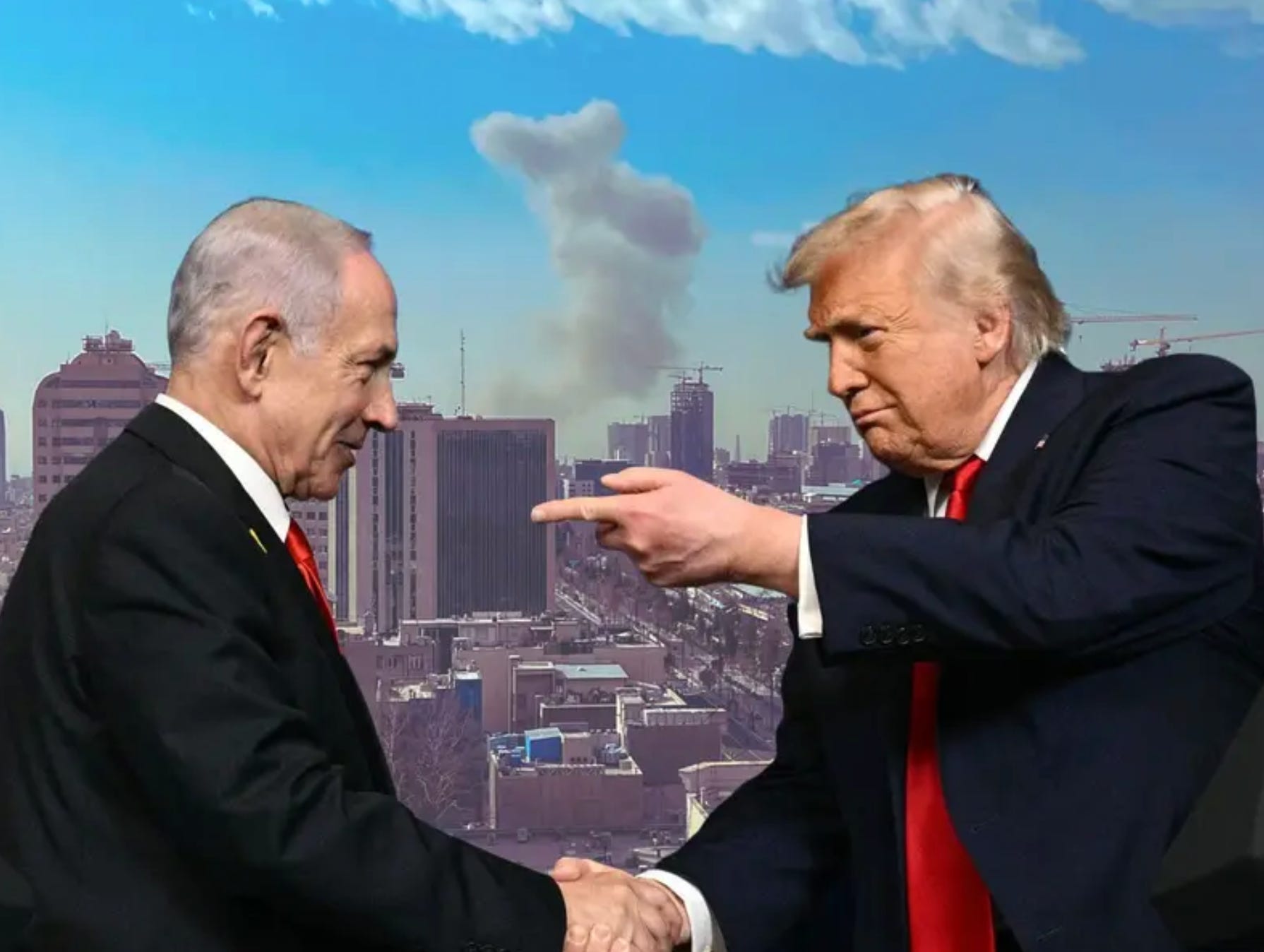
Whether Trump acted precipitously in joining with Netanyahu to launch this war is something we won’t know for a long time. Their endgame hasn’t been clear, with shifting explanations and goals. And we don’t know how long Trump – and war-averse Americans – will keep up the effort to get to some such endgame.

But, in the meantime, Jews around the world – and particularly in the U.S. and Israel – are in danger. And such peril begins with attitudes such as those of Joe Kent.

The cost of hubris

Trump’s war on Iran so far has failed to deliver his expected quick win

Joseph Weber

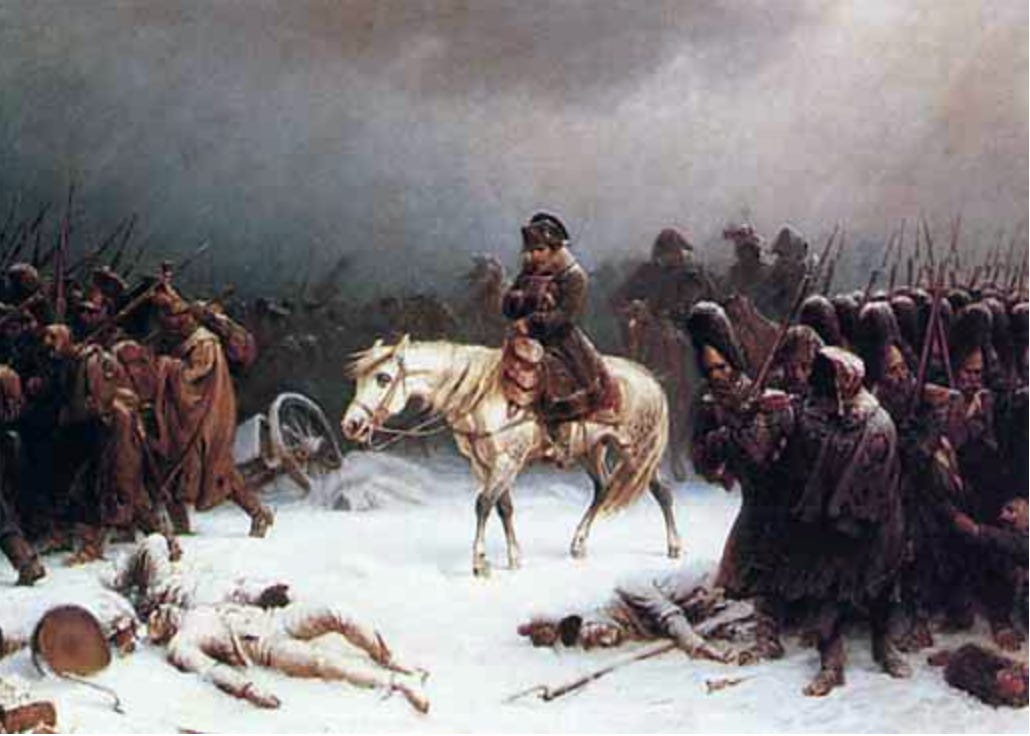
Bonaparte’s retreat from Russia, source: Not Even Past

When Napoleon Bonaparte drove his “Grande Armée” – Europe’s most powerful military force – into Russia in 1812, it seemed impossible that the continent’s seemingly invincible leader could fail.

Surely, Russia’s Tsar Alexander I would comply with Bonaparte’s economic blockade of longtime enemy England. Certainly, Russia would give up its designs on Poland. The war, Napoleon bet, would last maybe a month and would leave France towering above all its enemies.

Sound familiar?

Donald J. Trump on March 1 suggested that his war on Iran would last “four to five weeks.” Just under halfway into that timeline, on March 13, the president struck a different tone, saying the war would end “when I feel it, feel it in my bones.” He added that the U.S. has “virtually unlimited ammunition…. We can go forever.”

“Forever?” Is that what he has in mind now?

Bonaparte’s excursion – a term Trump now uses, calling the Iran War a “little excursion” – ultimately led to the loss of much of his army, his abdication and his exile to Elba in 1814. The French leader had leveled much of Moscow, but the Russians in time rebuilt the city and their country. France was humbled.

Such are the miscalculations of hubris.

Nobody knows how Trump’s war on Iran will turn out, of course. Maybe he’ll wind up with a pliable government, à la Venezuela, as he has speculated. But, with the selection of Mojtaba Khamenei, the son of the assassinated Ayatollah Ali Khamenei, as Supreme Leader, that seems unlikely in the short run. Certainly, the “unconditional surrender” Trump demanded hasn’t happened.

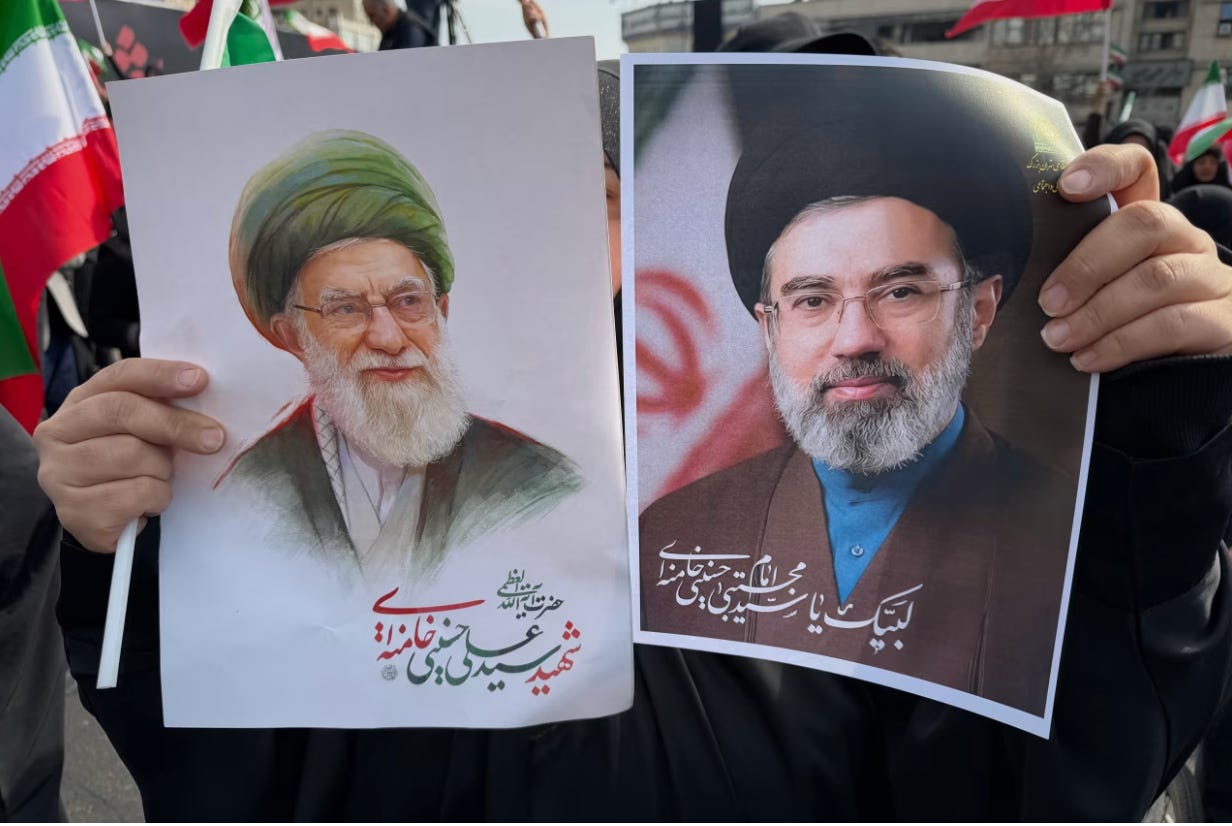
Posters of the father-and-son ayatollahs, source: Wall Street Journal

Indeed, as analyst Karim Sadjadpour of the Carnegie Endowment for International Peace has written in The Atlantic, the Iranians are digging in. Trump has “spawned a budding Iranian Kim Jong Un” in the younger Khamenei, creating “a hereditary dictatorship poised to double down on ideology and repression.”

In fact, Sadjadpour argued, this Khamenei may prove more intransigent and bloodthirsty now that Trump and Israeli Prime Minister Benjamin Netanyahu have killed his family. For this new leader and his governing circle, this war will be deeply personal.

Of course, it may be that the Israelis will kill off the new leader, just as they were able to destroy his family. When asked about what actions Israel might take against Ayatollah Mojtaba Khamenei and Hezbollah chief Naim Qassem, Netanyahu issued a not-so-veiled threat, as Reuters reported: “I wouldn’t issue life insurance policies on any of the leaders of the terrorist organization … I don’t intend ​to provide an exact report here about what we are planning or what we are going ​to do.”

The reason the younger Khamenei survived the assault on his family by Israeli weapons appears to have been accidental. He was taking a walk in the garden when the bombs and missiles fell, perhaps suffering a leg injury.

It may be that Iran’s leaders, feeling as crippled by the war as Khamenei may be, will ultimately yield to relentless air assaults by the U.S. and Israel. But, so far, they’ve shown no sign of capitulating, denying even any interest in a truce or some sort of “deal,” as Trump has suggested. Trump told NBC News on Saturday that Iran was ready “to make a deal, and I don’t want to make it because the terms aren’t good enough yet.”

But on Sunday, Iranian Foreign Minister Abbas Araghchi denied that. “No, we never asked for a ceasefire, and we have never asked even for negotiation. We are ready to defend ourselves as long as it takes,” Araghchi told CBS News’s Face the Nation.

For both sides in this fight, words are cheap, of course. And bluster is part of the game.

At least for now, though, the Iranian public hasn’t risen up in revolution, as Trump urged in the war’s opening days. And the Iranian military is busy sending missiles across the region, attacking an array of Arab states that are allied with the U.S. Tehran’s leaders also likely greenlighted the Hezbollah attacks on Israel from Lebanon, rocket assaults that have triggered a fierce Israeli response – opening a second front in this war that now includes a ground assault by Israeli soldiers.

What’s more, the Iranians are striking the U.S. and the West economically. Their shutdown of ships carrying oil and natural gas through the Strait of Hormuz has thrust oil markets into a maelstrom, driving up gas prices for Americans and others. Europeans, whom Trump has long scorned and alienated for other reasons, so far have not taken up his call to help unblock the strait. “This is not our war, we have not started it,” German Defense Minister Boris Pistorius told reporters Monday.

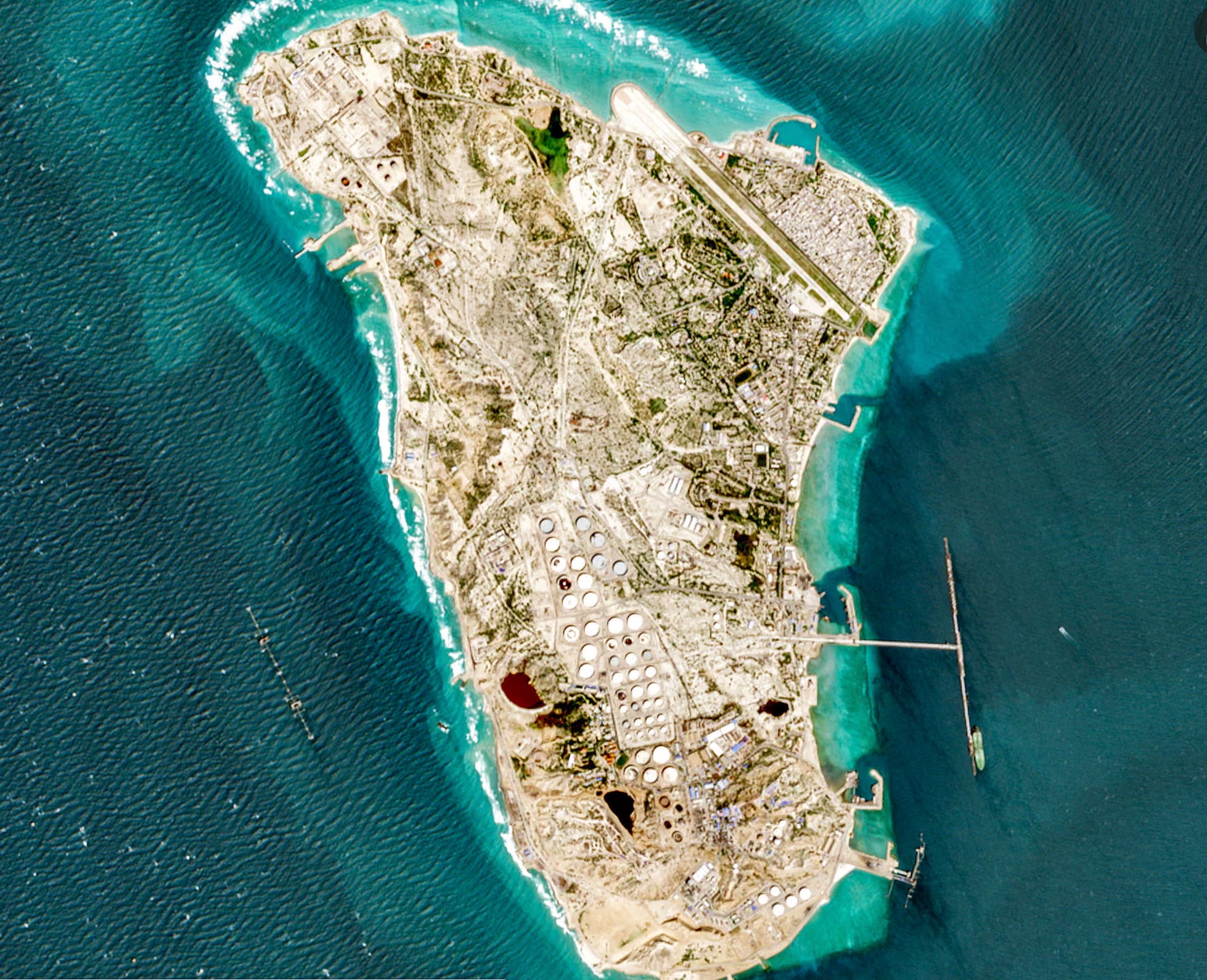
So, just how this all will play out is far from clear. Journalist Bret Stephens has suggested that regime change or “modification” isn’t impossible, that a cease-fire could yet be agreed on, or that Iran could descend into a civil war like Syria’s, complete with refugees spread across the region. He has suggested more American force may be needed, perhaps in seizing a critical Iranian asset, Kharg Island, which serves as the terminal for roughly 90 percent of Iran’s oil exports.

Kharg Island, source: The Guardian

“American control would give the administration the whip hand over most of the regime’s remaining revenues, including its ability to pay salaries for soldiers and civil servants alike,” Stephens has argued. “That could help clarify to even the most hard-line elements in the regime whether it is really worth it to enrich uranium or send more munitions to Hezbollah in Lebanon so they can be destroyed by Israel.”

So far, Trump has resisted sending American forces into Iran. But the Pentagon has deployed as many as 2,500 Marines to the Middle East in what suggests a change in Trump’s approach. They could soon find themselves battling an Iranian military backed by a regime convinced this is an existential fight to stay in power.

Could the Iran War devolve into a quagmire akin to Iraq, which led to a long costly occupation? Or worse, Afghanistan, the failed war that lasted two decades? Or will this “little excursion” of Trump’s end in his hoped-for three weeks or so? Will it end with some sort of stalemate, akin to the Korean War, with a Kim Jong Un clone at the helm of an implacable enemy?

The truth, of course, is that no one has a clue. And perhaps the most clueless of all is Donald J. Trump. Even as he remains sequestered in Washington or Mar-a-Lago, he may find that bluster, bravado and even the most powerful military in the world can’t deliver his expected quick win. Certainly, that’s what the consummately arrogant French leader of long ago found out.

Videogames?

Trump’s marketers are falling short in selling the Iran war

Joseph Weber

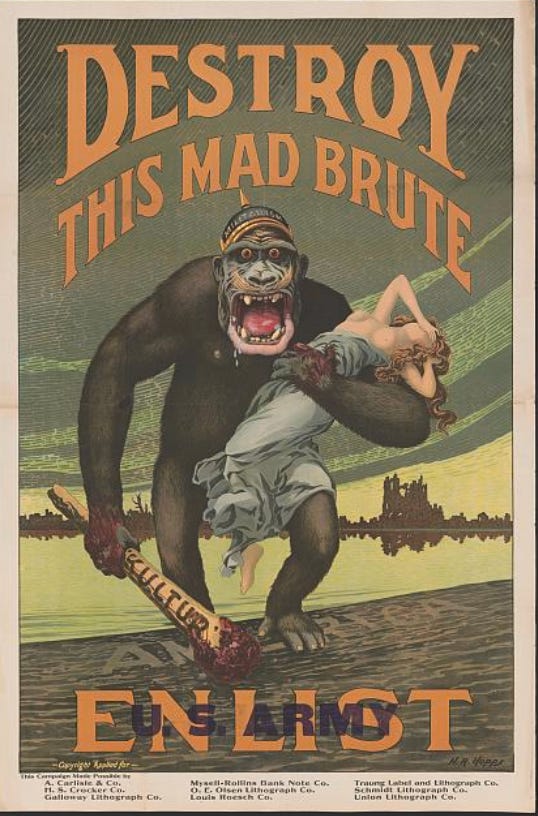
Source: The Library of Congress

Convincing Americans that war in distant lands is necessary has often been a tough job.

World War I posters urged citizens to enlist in the Army to “destroy this mad brute,” the German who threatened civilization, and to “Halt the Hun!” by buying bonds. World War II posters delivered similar messages, depicting fists smashing swastikas. And, of course, Uncle Sam encouraged enlistments with the classic “I Want You” imagery.

Source: Chicago Tribune

Today, the Trump Administration faces an especially tough job in selling Americans on its war against Iran. More than half of our countrymen oppose the war (56 percent in a new Marist poll, nearly six out of 10 in a slightly older CNN poll). Marist found that only 36 percent of U.S. residents approve of how Donald J. Trump is dealing with Iran. That’s down from January of 2020, during a period of heightened tension, when 42 percent of Americans approved of the president’s approach.

So, how is the administration marketing its new war effort? It seems to be a matter of conflicting language from Trump and his acolytes, a bizarre sense of theatrics and a reliance on videogames — yes, videogames.

In one video released on X, the administration uses clips from the videogame “Call to Duty” interspersed with imagery of the destruction of Iranian facilities. In another, called “Justice the American Way,” it features scenes from Ironman, Gladiator, Braveheart, Top Gun Maverick, Better Call Saul, John Wick, Tropic Thunder, Superman, Breaking Bad, Transformers, Deadpool, Star Wars and Mortal Combat, along with real bombing scenes.

Nothing about the real threats Iran poses to the West. Nothing invoking patriotism or asking Americans to sacrifice or chip in. Just macho imagery that shows war as a game, something thrilling that is led by the most manly men of them all.

The “Justice” clip opens with a scene from Iron Man with Tony Stark played by Robert Downey Jr. in his lair. “Wake up, daddy’s home,” Downey says. If you aren’t sure who “daddy” is, the clip ends with a logo for “The White House” and “President Donald J. Trump.”

Dunderheaded? Self-glorifying? Juvenile? These are just some of the words that come to mind. There are others, of course:

“War is not a video game,” Joshua Reed Eakle, a board member of Project Liberal, wrote on X. “The parents of the half a dozen American service members who already lost their lives can attest to that.” He called the “Call to Duty” ripoff “morally abhorrent” and “despicable messaging from the White House.”

And there was this from a commenter on TMZ: “Such poor taste. This is not a game or a joke. Can’t wait until this administration is just an ugly mark on US history.”

But it’s more than just a matter of bad taste. Trump and his minions are either blind to the human misery they cause or even exult in it. More than 1,000 Iranians have died already, according to some reports. They include a reported 175 people, many of whom were schoolgirls, at a school that it appears American weapons destroyed. Not a whisper of regret has come from Trump or Defense Secretary Pete Hegseth, who merely said the attack is under investigation.

At least a half-dozen Americans have been killed in Iranian military responses, which occasioned bizarre comments from both Trump and Hegseth (who styles himself as the far more gladiatorial “Secretary of War.”)

After the first three American deaths were reported, Trump told NBC News: “We have three, but we expect casualties, but in the end it’s going to be a great deal for the world.”

“A great deal?” Spoken like the true dealmaker who sees human costs as just another line item.

Then in a video posted to social media, as CNN reported, Trump again seemed to ask for people’s understanding about the need for such deaths. “And sadly, there will likely be more [deaths] before it ends,” Trump said, before adding: “That’s the way it is. Likely be more.”

“That’s the way it is?”

During a briefing at the Pentagon, Hegseth criticized the media for supposedly focusing too much on the dead soldiers in an effort to make Trump “look bad.” He suggested those deaths were getting disproportionate play, compared to the military’s successes.

“But when a few drones get through or tragic things happen, it’s front-page news,” Hegseth said. “I get it; the press only wants to make the president look bad. But try for once to report the reality.”

It’s as if they both are gamer bros, for whom casualties are just parts of videogame kill tallies – certainly not worth even reporting. The administration seem to have stacked its propaganda arms with twentysomethings who spend their lives in front of computers, out of touch with reality. Their aim, it seems, is less to gin up support for an unpopular war and more to glorify its perpetrators, themselves.

But can this media strategy – such as it is — succeed? And who are they reaching beyond the incels whose blinkered lives don’t include much real human contact? Are they trying to recruit them into our military?

Certainly, many in the West — and in Israel — would like to see real change in Iran. A government that rejects terrorism, accepts a multi-religious and multi-ethnic Middle East and ends any nuclear ambitions would be an ideal outcome. But how likely is that? How likely is this war to drive such fundamental change?

Bizarre as the Trump media approach is, in its confusion and naivete it seems to mirror a similar befuddlement about the objectives of the war itself. Seeking regime change, Trump has repeatedly urged Iranians to rise up and overthrow their government. But Hegseth has denied that aim, instead saying it’s all about destroying “the missile threat” from Iran, obliterating its navy and leaving it with “no nukes.”

And Trump more recently has argued that Iran would “soon” have missiles that could hit targets inside the United States. As he did so, Secretary of State Marco Rubio suggested that administration officials knew Israel was going to strike Iran, which would lead to counterattacks against U.S. forces and potential casualties. So, it decided to strike first to minimize the risk.

“We knew there was going to be an Israeli action, we knew that that would precipitate an attack against American forces, and we knew that if we didn’t preemptively go after them before they launched those attacks, we would suffer higher casualties,” Rubio said.

Rubio later backtracked, saying “I was asked very specifically… did we go in because of Israel? I said no, this had to happen anyway.”

Of course, the war has given antisemites plenty of ammunition to paint Israeli Prime Minister Benjamin Netanyahu as the Rasputin who pushed Trump into the war, as the prime minister unsuccessfully tried to do with prior presidents.

Source: Aish

The Anti-Defamation League warned that “antisemitic and anti-Zionist groups are framing the U.S.-Israel operation against the Iranian regime as the latest evidence of the so-called ‘Zionist war-machine’s’ efforts to co-opt American foreign policy to advance Israeli and/or Jewish interests.” The ADL added that “Influencers who regularly traffic in antisemitic or anti-Zionist rhetoric are leveraging the U.S.-Israel operation… to promote longstanding conspiracy theories about Israel, such as blaming Israel for 9/11.”

As the Times of Israel reported, “These accusations are coming from far-right and far-left accounts as well as anti-Israel groups, such as Students for Justice in Palestine, that are inclined to discredit Israel. An SJP Instagram post read: ‘Imperialism and Zionism are one enemy — the common enemy of the entire region, and indeed, the people of the world.’”

Such accusations build on statements by both Democrats and Republicans that the war serves Israel’s interests more than America’s.

“A war between Israel and Iran may be good for Netanyahu’s domestic politics, but it will likely be disastrous for both the security of Israel, the United States, and the rest of the region,” Sen. Chris Murphy, a Connecticut Democrat, said. “We have no obligation to follow Israel into a war we did not ask for and will make us less safe.”

Republican influencer Tucker Carlson, who reportedly met with Trump three times in the weeks preceding the war, implied in an interview with U.S. Ambassador to Israel Mike Huckabee that Trump was threatening to strike Iran at the behest of Israel — a sentiment Huckabee slammed as “offensive.” The New York Times later reported that Carlson urged Trump to “restrain” Netanyahu, saying that Israel’s desire to attack Iran “was the only reason the United States was even considering a strike.”

For his part, Trump has said the drive for the war came the other way around. Asked if Israel had pushed the U.S. into the strikes, he said, “No, I might have forced their hands,” referring to Israel. The Iranians, he said, “were going to attack. If we didn’t do it, they were going to attack first. I felt strongly about that.”

Meanwhile, Trump drew on his experience in his quick-hit strike on Venezuela to sketch out how a post-war Iran should look. He told Axios that “I have to be involved in the appointment” of Khamenei’s successor, and that the late leader’s 56-year-old son “is unacceptable to me,” and “a light weight.”

“We want someone that will bring harmony and peace to Iran,” Trump said. He added that he must “be involved in the appointment, like with Delcy in Venezuela.” The acting president of Venezuela is Delcy Rodríguez, who Trump says is “doing a great job.”

“Harmony and peace,” sure.

Just how this war will turn out remains a huge question, of course. But it is likely that many more people will die and that Trump and his minions will remain just as callous to that as they have been so far.

Despite how the Trumpies see it, this war is no game. Real people are dying. Real uncertainty clouds the future. A bit more reality would be welcome in Washington.

Shed no tears

But Khamenei’s death is just the beginning of this Iran War

Joseph Weber

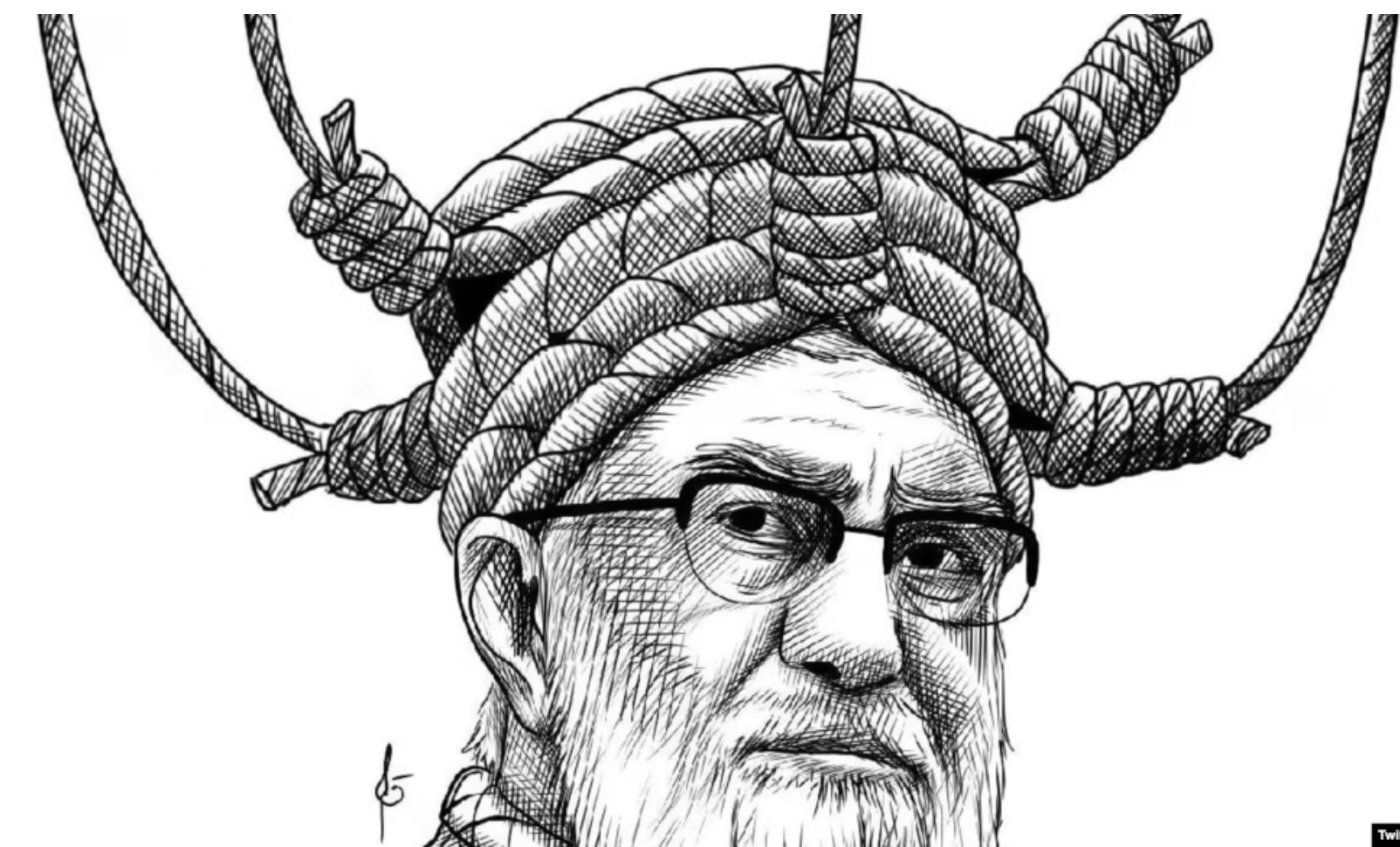
Source: Charlie Hebdo

Few in the West will shed a tear for Ayatollah Ali Khamenei. And it is little wonder that even in Tehran cheering broke out as news of the murderous 86-year-old cleric’s death spread.

But it’s far from clear that the missiles from Israel that did him in — along with a good cross-section of the country’s top leadership — will bring revolutionary change or, ultimately, peace.

Consider the many unknowns various commentators say now face the Middle East and the world as a result of this ongoing joint U.S.-Israeli assault on Iran.

“U.S. intelligence officials have assessed that the power vacuum could result in hard-line factions of the Revolutionary Guards seizing control,” The New York Times editorialized. “The risks of civil war, internal slaughter and regional instability are profound.”

And reflect on this insight from a longtime observer quoted in The New Yorker:

“Khamenei’s death creates a moment of genuine uncertainty, but it does not automatically translate into immediate regime collapse,” said Hamidreza Azizi, an Iranian political scientist at the German Institute for International and Security Affairs in Berlin. “The Islamic Republic anticipated a day-after scenario for a long time and built overlapping institutions capable of maintaining continuity, particularly within the security and military establishment.”

Even the hawkish editorialists at The Wall Street Journal acknowledge the looming uncertainties: “The larger gamble is regime change, and no one knows if this will happen.”

Source: WION

Gamble, indeed.

Still, Donald J. Trump and Benjamin Netanyahu, through their extraordinary militaries, have rid the world of a vile tyrant whose quiet gardener’s demeanor belied an exceptional viciousness, both toward his own people and outsiders, especially Americans and Jews.

Give some thought to just a few of the many atrocities Iran’s government perpetrated under Khamenei, who claimed direct descent from the Prophet Muhammad and held himself out as a devout and learned holy man but who commanded legions of thugs.

  • Just recently, in January, Iranian gunmen killed at least 7,000 anti-government protesters in Iran, though some sources say the number could top 30,000.
  • Four years ago, when the “Woman, Life, Freedom” Movement began after a woman who declined to wear the hijab died in “morality police” custody, Khamenei’s regime killed up to 551 people, including 68 minors, when they protested. On just one day, September 30, 2022, “Bloody Friday,” 104 people were killed during the protests following Friday prayers in the city of Zahedan.
  • Iran also supplied the I.E.D.s, or roadside bombs, that killed or maimed over 1,000 American troops during the war in Iraq, as New York Times columnist Bret Stephens reported. It also sought to assassinate former senior U.S. officials, including John BoltonMike Pompeo and, according to a 2024 report in Politico, Trump himself.
  • In 2004, the regime erected a monument in Tehran commemorating the “martyrs” — whom it had bankrolled — who in October 1983 killed American Marines and French paratroopers who were in Beirut to keep the peace. One killer crashed an explosives-laden truck through the front gates of a U.S. Marine barracks. In all, 241 Marines, sailors and others died, representing the largest loss of life in a single day for the Marine Corps since the Battle of Iwo Jima in 1945. Then, within moments, a second suicide bomber drove into the barracks of a French paratrooper detachment nearby. The explosion killed 58 soldiers. Khamenei’s predecessor presided over these obscenities.
  • Under Khamenei, in 1996 terrorists set off a bomb outside the barracks for the United States Air Force 4404 Provisional Wing in Khobar, Saudi Arabia. Nineteen American airmen were killed and 498 people were wounded, most of them Saudis and foreign guest workers. A U.S. court in 2020 ordered Iran to pay $879 million to survivors (fat chance of collecting on that).
  • Over decades, Iran has spent hundreds of millions of dollars bankrolling terrorist groups including Hezbollah, Hamas and militant groups in Iraq, Syria, Bahrain, and elsewhere throughout the Middle East.
  • And, of course, until the U.S. attacked its nuclear facilities last June, Iran had boosted its stockpile of highly enriched uranium. It had enriched some 972 pounds of uranium up to 60 percent purity, according to estimates from the International Atomic Energy Agency. It wasn’t far from developing enough for multiple bombs.

Trump wasn’t off the mark when, in a Truth Social post, he wrote that Khamenei was “one of the most evil people in history.”

Source: Caledonian Record

Surely Trump was right, moreover, in saying: “This is not only Justice for the people of Iran, but for all Great Americans, and those people from many Countries throughout the World, that have been killed or mutilated by Khamenei and his gang of bloodthirsty THUGS.”

But how realistic are Trump and Netanyahu about how this all will play out?

They both have called on the Iranian people to overthrow the Islamist regime that has ruled them since the 1979 revolution. But how can a public without weapons — beyond their lives — do that? Can they resist — or, better, turn — an army believed to number more than a half-million men? Can they win over deeply entrenched intelligence forces who know they’ll be strung up from the lampposts if the public prevails?

“Despite early tactical achievements, the central question remains unresolved: what is the endgame?” asked Danny Citrinowicz, a former longtime Israel Defense Intelligence officer now with the Atlantic Council’s Middle East programs. “Can external military pressure realistically rely on an Iranian public that lacks cohesive leadership, particularly when facing a regime that has operated for forty-seven years under the disciplined control of the Islamic Revolutionary Guard Corps (IRGC)?”

It’s likely that the Iranian regime, confronting an existential threat, won’t be timid in responding. Already, it has sent scores of missiles into Israel and into Arab states that aid the U.S. It could easily activate its proxies to inflict hefty costs on Westerners in Europe and, perhaps, even in the U.S.

Does Trump, a man given to impulsive actions, have what it takes to prosecute what could be a long and far bloodier war? And what happens if it touches the American home front?

“Trump’s targeting of Iran’s leadership will almost certainly lead to attempts to target Trump and other top U.S. officials,” wrote Thomas S. Warrick, a nonresident senior fellow in the Scowcroft Middle East Security Initiative and a former deputy assistant secretary for counterterrorism policy in the U.S .Department of Homeland Security. “The Secret Service, the Federal Bureau of Investigation, and the U.S. Capitol Police will all be tested in the coming weeks and can afford zero failures. Iran will try every cyber trick it can mount, testing the Department of Homeland Security, the private sector, and U.S cyber defenses.”

Naively, perhaps, Trump is looking toward a far shorter war. As he told The New York Times, “Well, we intended four to five weeks.”

“It won’t be difficult,” Trump added. “We have tremendous amounts of ammunition. You know, we have ammunition stored all over the world in different countries.”

But Trump said he hoped Iran’s elite military forces — including hardened officers of the IRGC — would simply turn over their weapons to the Iranian populace. As the newspaper pointed out, however, those same security forces — in particular, the Basij, which organizes local militia — opened fire on protesters in January, killing thousands.

Trump seems to think Iran will turn out to be like the quick fix he engineered in Venezuela. Never mind that Venezuela’s defense infrastructure was weak while Iran still holds a massive, diverse missile stockpile, a sophisticated drone network and a military that can reach far around the region. Or that the theocratic state has a highly motivated ideological base.

Unlike Trump — whose military experience consisted of dodging the draft during the Vietnam War — the Prussian military theorist Carl von Clausewitz in the 1800s knew a lot about international conflict. “War is the realm of uncertainty; three quarters of the factors on which action in war is based are wrapped in a fog of greater or lesser uncertainty,” he said.

And then there is a tart comment attributed to Niccolò Machiavelli: “Wars begin when you will, but they do not end when you please.”

Someone will take Khamenei’s place, of course. And he will control a weakened but still well-armed country whose regime now has its back against the wall. Just how that will turn out — both in the short and long run — is a massive unknown.

It is true, as the Times’s Stephens wrote, that it is impossible to imagine anything like Mideast peace without the end of this regime. But will that be the way this all goes?