Divinely ordained?

In a flap between Trump and the pope, guess who takes the high road

Joseph Weber

Henry VIII meets Anne Boleyn, source: World History Encyclopedia

Popes and kings have often rubbed one another the wrong way.

Consider Henry VIII. When Catherine of Aragon couldn’t produce a male heir for the obese British king, he grew infatuated with one of her ladies-in-waiting, Anne Boleyn. Pope Clement VII stalled for years on granting a divorce. So, the monarch broke with the Roman church, appointed a Protestant clergyman as the Archbishop of Canterbury, got his divorce from him and married the heavily pregnant Anne.

Then, in 1534, Parliament passed a law making Henry the Supreme Head of the Church of England. The randy ruler also soon had Boleyn beheaded and married four more times. The fates of the six were not happy: “divorced, beheaded, died, divorced, beheaded, survived.” For his sins, Clement’s successor excommunicated Henry in 1538 and the king died nine years later.

Three centuries earlier, Holy Roman Emperor Frederick II went to war twice against papal armies, battling them in 1229 and 1230 and again in the 1240s. Pope Gregory IX had excommunicated Frederick a couple times and taken his lands in Italy while the king was off on crusades. His successor, Pope Innocent IV, later again excommunicated the emperor. In their war of words, the popes called Frederick “the antichrist,” and he, in turn, labeled Innocent the same, adding that the pope’s name was “the mark of the beast,” arguing that his initials equaled the Roman letters for the Satanic 666.

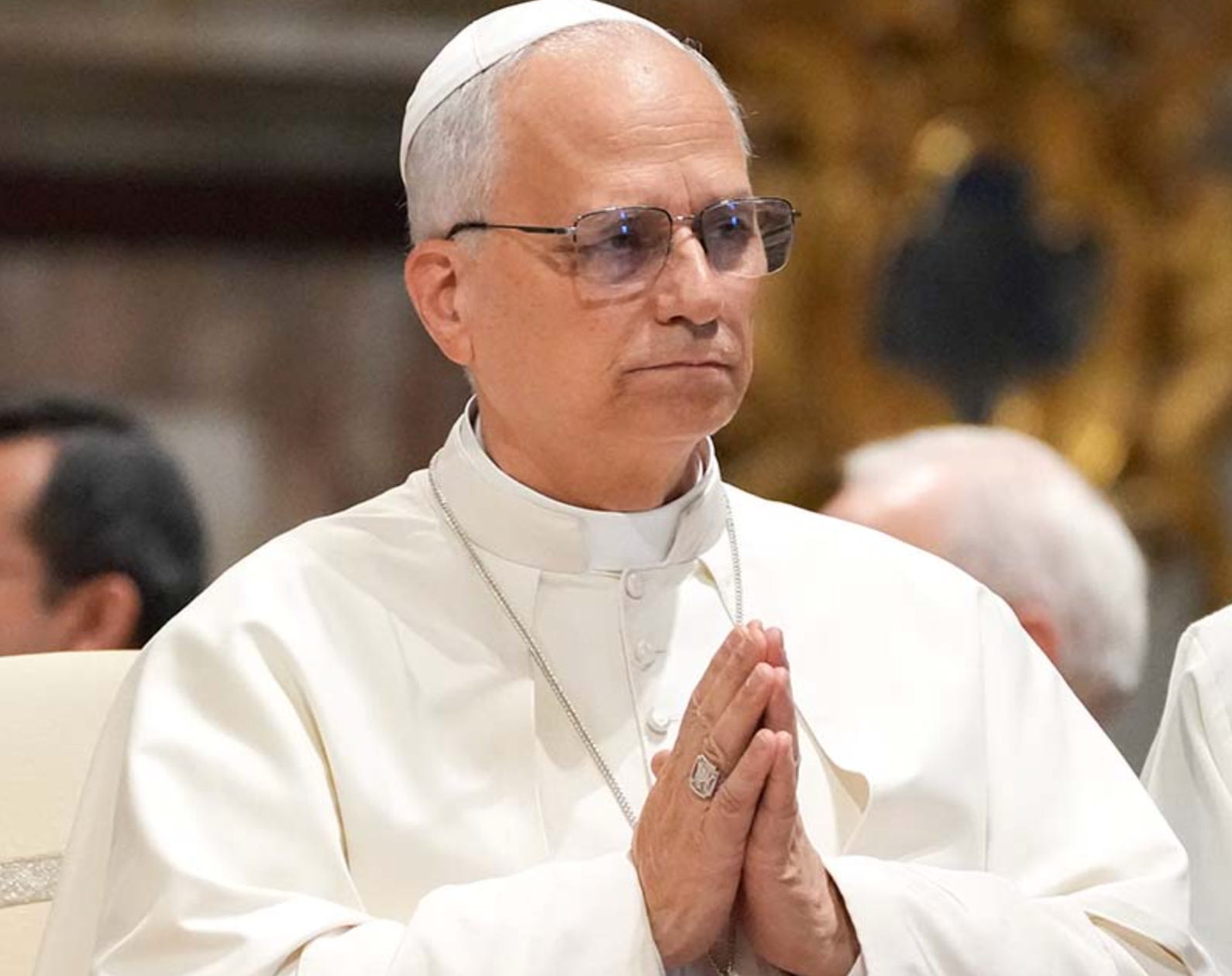
Pope Leo, sourceL OSV News

So, in comparison, the contretemps between the obese would-be monarch, Donald J. Trump, and Pope Leo XIV seems like small beer. Certainly, it’s as paltry and petty as Trump himself, who demonstrated his anger, irrationality and knack for non-sequiturs as he took on the leader of 1.4 billion Catholics in a Truth Social post.

While Trump hurled personal insults, calling Leo “WEAK on crime and terrible for Foreign Policy,” and accusing him of “catering to the Radical Left,” the pope preferred to take a higher road. Speaking to reporters at the beginning of a 10-day tour to four African nations, Leo said: “I have no fear, neither of the Trump administration, nor of speaking out loudly about the message of the Gospel. And that’s what I believe I am called here to do.”

Leo said he had “no intention to debate” Trump. “I am not a politician,” he told reporters, as he defended his earlier remarks asking the world to end “the madness of war.” He added: “The message is the same: to promote peace.”

The pope did offer a slight jab, however. When he was asked specifically about Trump’s comments on Truth Social, Leo said: “It’s ironic — the name of the site itself. Say no more.”

For all the small-mindedness in Trump’s blast, though, what is astonishing – if consistent – is his egocentrism. It’s all – and always – about him, of course.

Leo, the first American-born pope, was chosen by the global College of Cardinals last May not because he headed the worldwide Augustinian order of priests or because he is an expert on canon law who taught as a seminary professor while ministering in Peru for a decade. No, according to Trump, the now-70-year-old was “a shocking surprise” who owes his appointment to Trump.

“He wasn’t on any list to be Pope, and was only put there by the Church because he was an American, and they thought that would be the best way to deal with President Donald J. Trump,” the president posted. “If I wasn’t in the White House, Leo wouldn’t be in the Vatican.”

The pope, Trump added, should be “thankful” to him – though this randy and often-philandering royal wannabe made it clear he doesn’t “want” the Chicago-born pontiff leading the Church (as if he has the say-so).

“And I don’t want a Pope who criticizes the President of the United States because I’m doing exactly what I was elected, IN A LANDSLIDE, to do, setting Record Low Numbers in Crime, and creating the Greatest Stock Market in History.”

Never mind that Trump was elected his second time with less than half the popular vote, 49.8 percent to 48.3 percent for Kamala Harris, a margin of less than 2.3 million votes. And just what crime and stock markets have to do with the pope is a mystery, one perhaps clear only in Trump’s unsettled mind.

Leo, for his part, has avoided direct criticism of Trump in most of his admonitions about the president’s military adventurism.

In his opening months as pontiff, he quietly dodged an early invitation from Trump to visit Washington. But in January, Leo delivered a speech voicing concern about the Trump administration’s capture of President Nicolás Maduro of Venezuela.

As The New York Times reported, his admonishments on the war in Iran have grown more pointed as the conflict has continued, and as Trump administration officials began invoking theology to justify the war that Trump ordered up.

Pete Hegseth, source: The Guardian

First, he appeared sour on efforts by Pete Hegseth, the defense secretary, to portray the U.S.-Israeli campaign against Iran as a Christian mission. Hegseth, a supporter of a peculiar Christian sect, asked the American people to pray “every day, on bended knee” for a military victory in the Middle East “in the name of Jesus Christ.”

The pope saw things differently. In a homily during a Mass on the Thursday morning before Easter, the pope said that the Christian mission had often been “distorted by a desire for domination, entirely foreign to the way of Jesus Christ.”

Then, on Easter Sunday, he renewed his call for peace. “On this day of celebration, let us abandon every desire for conflict, domination and power, and implore the Lord to grant his peace to a world ravaged by wars,” Leo told tens of thousands of faithful gathered in St. Peter’s Square.

“We tend to consider ourselves powerful when we dominate, victorious when we destroy our equals, great when we are feared,” the pope said at the Basilica of St. John Lateran, the cathedral of the bishop of Rome. “God has given us an example — not of how to dominate, but of how to liberate; not of how to destroy life, but of how to give it.”

In late March the pope warned against invoking the name of Jesus for battle, saying in a Sunday homily that Jesus “does not listen to the prayers of those who wage war, but rejects them.”

After Trump threatened to wipe out “a whole civilization” in Iran, the pope said that “this threat against the whole population of Iran” was “really not acceptable.” He urged citizens to contact their political leaders to ask them to “to work for peace and to reject war always.”

As the Times noted, Trump’s angry reaction to the soft-spoken Leo, who was born Robert Francis Prevost in Chicago, showed “how differently two of the world’s most powerful Americans handle conflict.” The paper noted: “One pleads for resolution, while the other reflexively increases the temperature.”

While the pope mostly kept his comments focused on issues, Trump has preferred to make them personal.

“I like his brother Louis much better than I like him, because Louis is all MAGA,” the president posted. “He gets it, and Leo doesn’t!”

Lou Prevost, the eldest brother of the pope, has repeatedly praised Trump in online posts, applauding his attacks on the trans community and the Democratic Party, and once even shared a video that referred to former House Speaker Nancy Pelosi as a “c–t.”

“These f—ing liberals crying about tariffs is just unreal,” read the caption under the video, posted by someone else and reported on by the Daily Beast. “Do they not know that there is a thing called video? Just listen to what this drunk c— has to say in the mid-90’s long before her husband had grindr dates.”

Prevost’s efforts, first noted by the Daily Beast last May 2025, quickly earned him an invitation to the White House, and to a Mar-a-Lago bash hosted by the president in December.

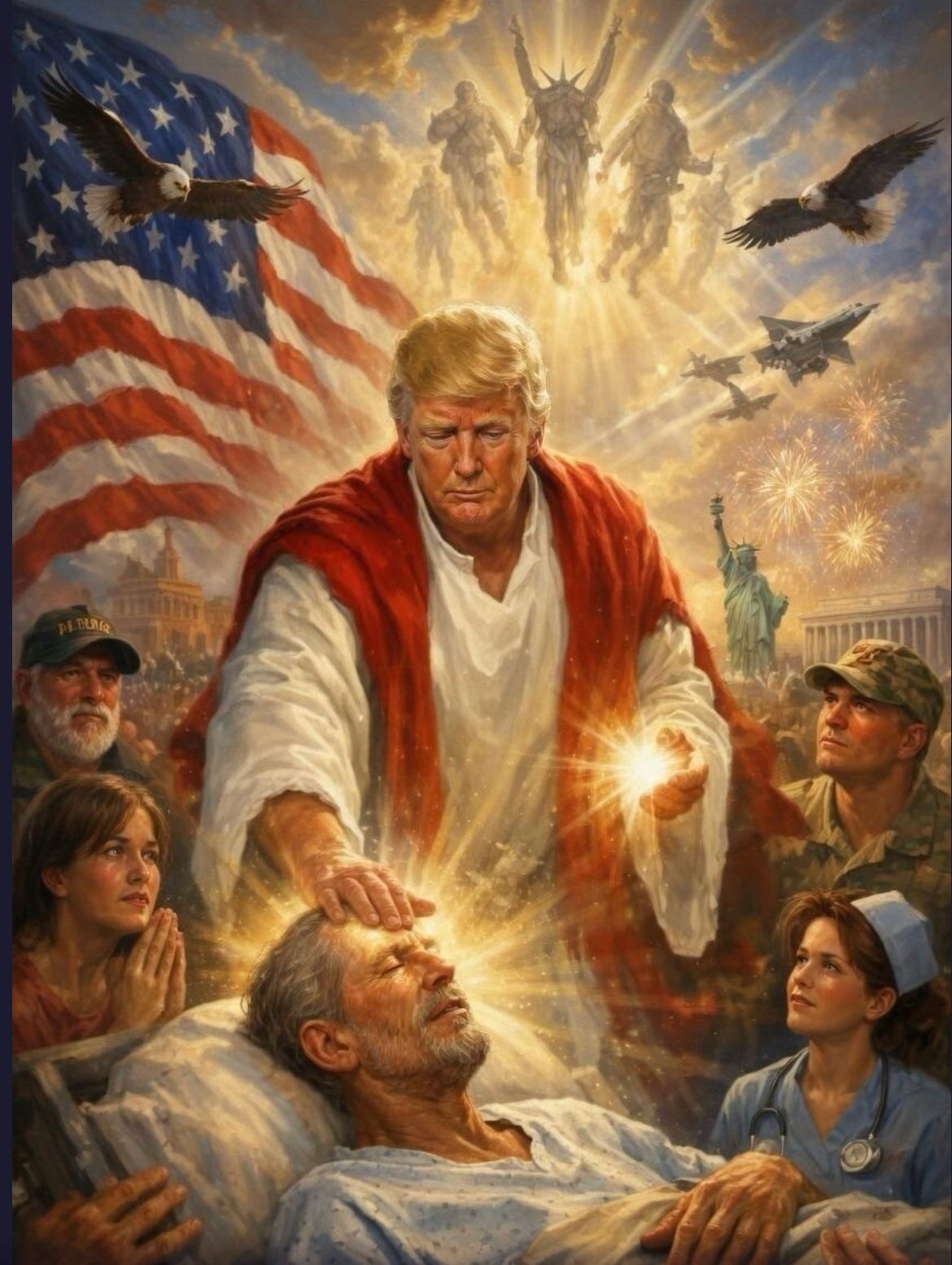
Source: Truth Social

But today some of Trump’s latest postings are not sitting well with others in the MAGA base, as The Washington Post reported. Several were offended by Trump’s post of an image depicting him in Christ-like robes, holding a glowing orb and blessing an ailing man.

“I don’t know if the President thought he was being funny or if he is under the influence of some substance or what possible explanation he could have for this OUTRAGEOUS blasphemy,” wrote Megan Basham, a prominent conservative Protestant Christian writer and commentator. “But he needs to take this down immediately and ask for forgiveness from the American people and then from God.”

The president has since had the image removed.

Isabel Brown, a Catholic podcaster with the Daily Wire outlet and a conservative influencer allied with the Trump White House, also spoke out against it. “This post is, frankly, disgusting and unacceptable, but also a profound misreading of the American people experiencing a true and beautiful revival of faith in Christ in the midst of our broken culture,” Brown wrote.

David Brody, an evangelical journalist with the Christian Broadcasting Network, blasted the image, as the Times reported. “This goes too far. It crosses the line,” Brody wrote on social media. “A supporter can back the mission AND reject this simultaneously.”

The newspaper also noted that Representative Debbie Dingell of Michigan, a Catholic Democrat from the Detroit suburbs, called the image “deeply offensive and disrespectful.” She added: “This is not a matter of politics or humor — it touches the core of our faith. Our Lord represents humility, sacrifice, compassion, empathy and truth. Everything he is not.”

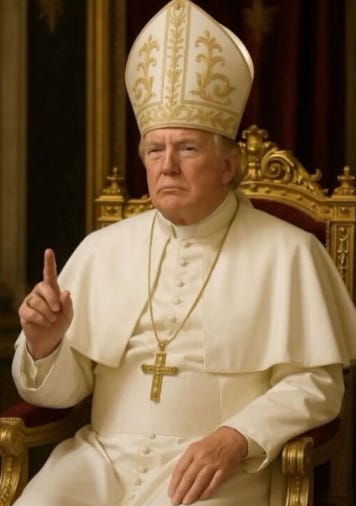
After Pope Francis died last spring, Trump kicked up similar dust when he posted an image of himself as pontiff. He had a ready answer when reporters asked who he would like to take the job in Rome, according to the Times. “I’d like to be pope,” he joked to reporters at the White House. “That would be my number one choice.”

Source: Truth Social, via The New York Times

For the notoriously humorless Trump – now clearly stung by Pope Leo — the joke was likely more than half-serious.

Do we need hope and change again?

With Trump’s rage going too far, Americans could be ready for something better

Joseph Weber

Source: WBUR

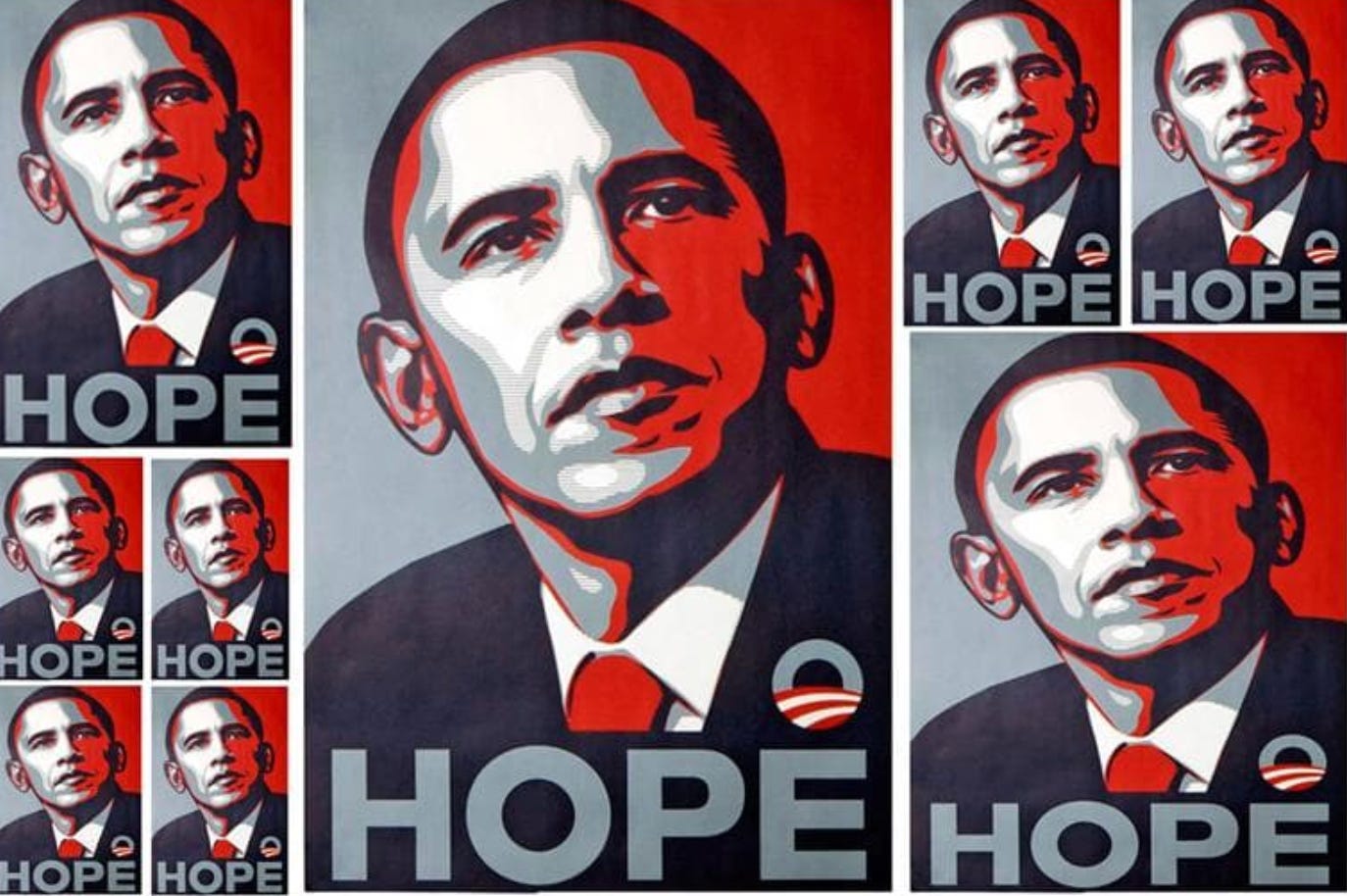
When Barack Obama won the presidency in 2008, he was a fresh face offering “hope and change,” his signature campaign message. He vowed to help the middle class, then struggling in one of the nation’s worst modern recessions, promised an end to the Iraq War, and pledged to install ethical government.

Obama pioneered the use of social media, data-driven voter targeting, and grassroots, small-dollar fundraising. Using platforms such as MyBarackObama.com, his team mobilized 2.2 million volunteers for ground-level organizing and personal outreach. The “campaign team used social media and technology as an integral part of their campaign strategy, not only to raise money, but also more importantly, to develop a groundswell of empowered volunteers who felt that they could make a difference,” academics at Stanford reported.

The technology allowed the junior Illinois senator to deliver an upbeat message, one surprisingly like Ronald Reagan’s “shining upon city on a hill,” his 1980 campaign theme.

“Yes, we can” – a phrase Obama borrowed from the Spanish version used by Cesar Chavez and Dolores Huerta of the United Farm Workers – became his rallying cry. It worked at a time when Americans craved hope and optimism, successful enough to give Obama two terms.

But when Donald J. Trump came to power – in his two successful presidential campaigns – much of the electorate wanted something far different. They were angry and feeling unheard. White voters, in particular, seemed to feel like they were losing their grip on the country, a message Trump delivered with no embarrassment. The undereducated, especially, felt sidelined economically.

Trump reflected, channeled and ultimately rode to power on their rage at a system that seemed to leave many of them out.

But now that we’re seeing the effects of rage as a governing principle, are many Americans feeling differently? With murderous attacks on alleged drug dealers, followed by military raids on foreign countries and war in the Middle East, as well as masked and armed federal agents rounding up tens of thousands within our borders (and killing some), are growing numbers of Americans appalled by their choice?

And, starting with the midterms and then in the presidential contest of 2028, will they seek a different message?

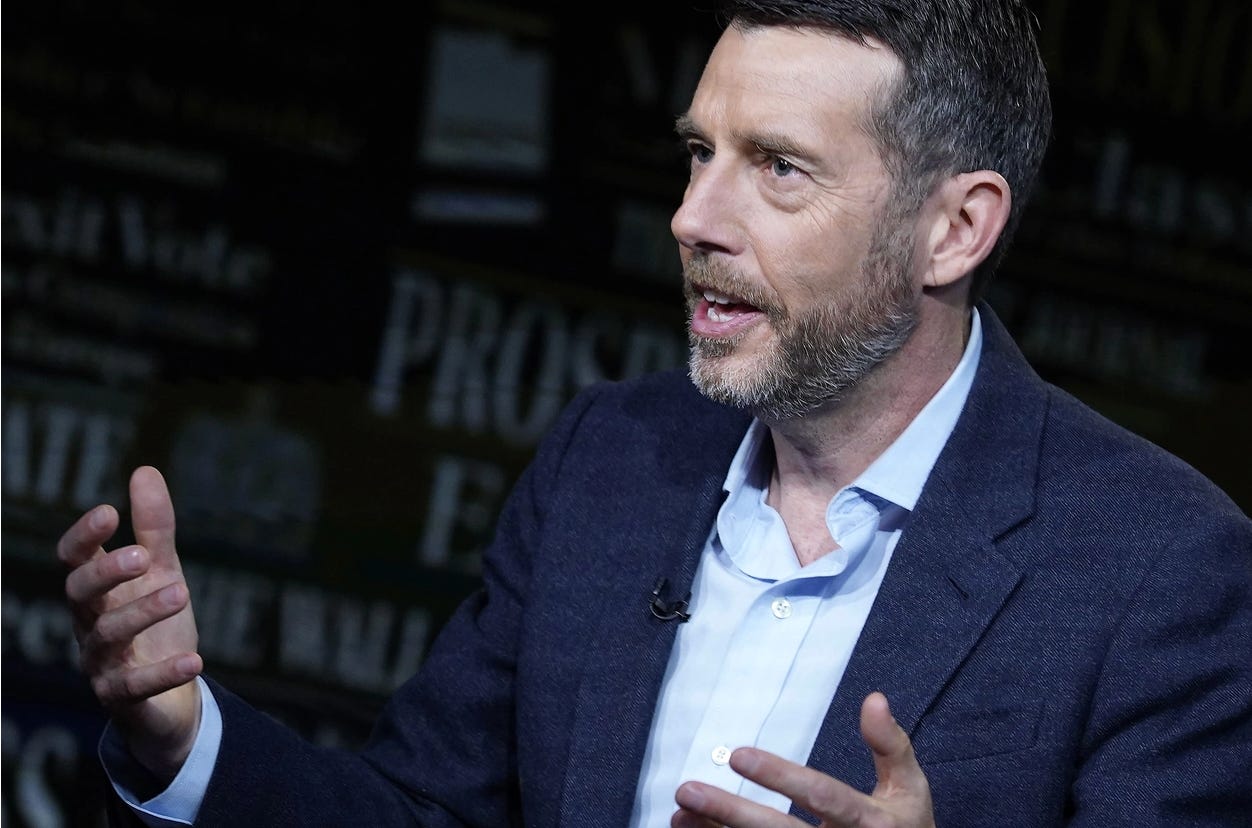
Will they want that delivered, moreover, in less conventional ways than the old techniques of position papers, local media tours and debates? Perhaps a daily “permanent show” distributed on “traditional TV, connected TV, Instagram, Facebook, YouTube, TikTok, Reddit, podcasts, Snapchat, radio, video games, community events, door-to-door canvassing, phone calls and texting,” as former Obama political adviser David Plouffe contends in a New York Times commentary.

And will they respond once again to upbeat messaging or something else?

David Plouffe, source: Politico

Plouffe, backed by some academic research, holds that anger will carry the day once again – this time disgust at Trump’s legacy. “The messaging must focus squarely on making vulnerable G.O.P. candidates, not the president, the face of the things voters are angry about: higher prices, local businesses closing, farm community devastation,” he argues.

At least one presidential hopeful, California Gov. Gavin Newsom, has embraced both some of the technology and some of Trump’s messaging style. He has gotten a lot of ink with constant posts on social media that troll the president. Newsom has used what Politico called “an inescapable, smashmouth, all-caps-laden and meme-filled X account” to counter Trumpism.

“There’s Newsom on Mount Rushmore,” the news outlet reported last year. “There’s Newsom getting prayed over by Tucker Carlson, Kid Rock and an angelic, winged Hulk Hogan. There’s Newsom posting in all caps, saying his mid-cycle redistricting proposal has led ‘MANY’ people to call him ‘GAVIN CHRISTOPHER ‘COLUMBUS’ NEWSOM (BECAUSE OF THE MAPS!). THANK YOU FOR YOUR ATTENTION TO THIS MATTER.’”

But I wonder. Do we really want a Trump-style alternative to the president, especially someone who strikes many as just a bit too slick?

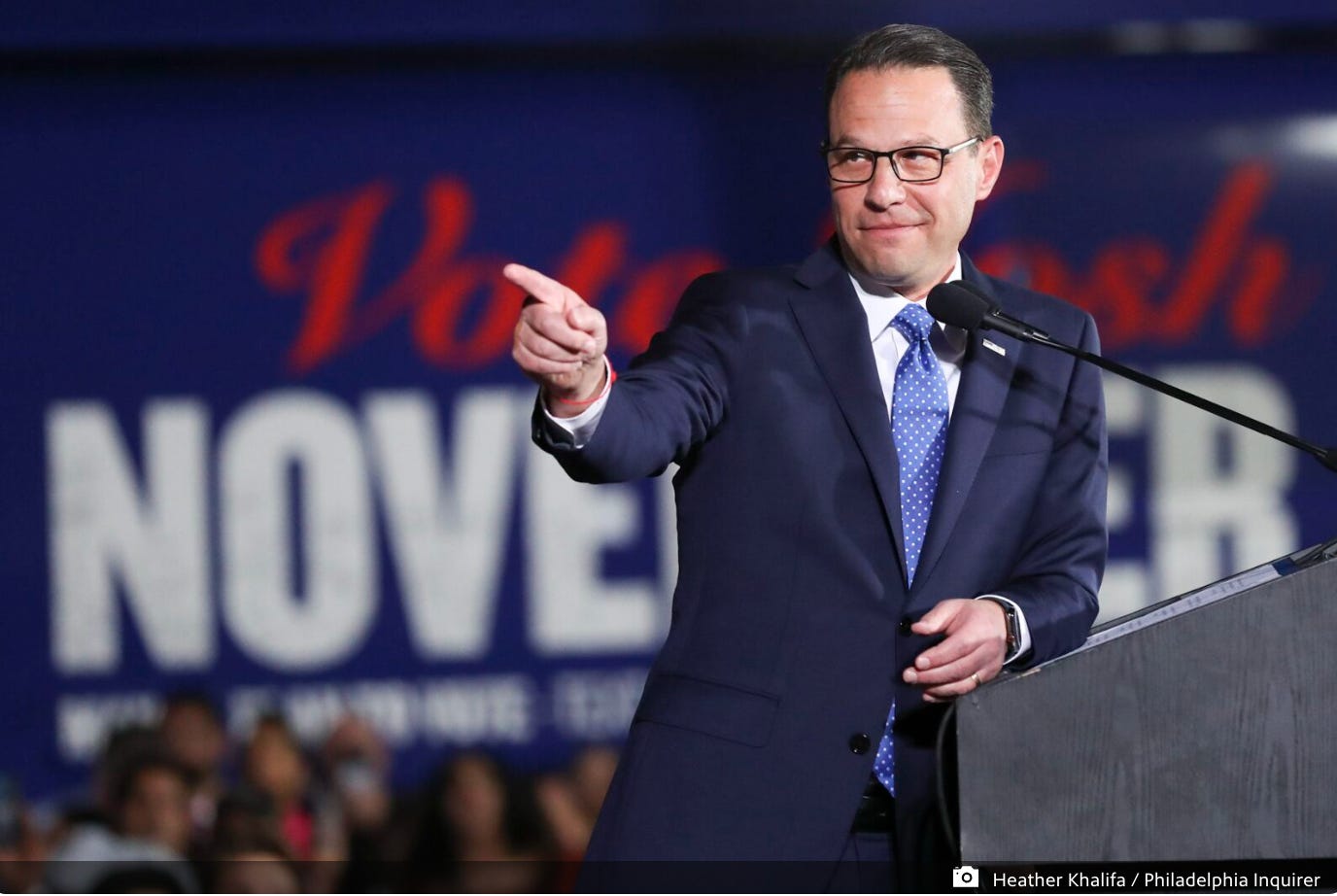
Maybe we’re better off with a cooler head, a less everywhere candidate such as Josh Shapiro, perhaps. “He doesn’t host a podcast or spend much time on cable news,” The Atlantic reported. “Even as he engages in regular skirmishes with the White House over policy matters, the governor goes out of his way to not antagonize the MAGA base. Shapiro, who is expected to run for president in 2028, believes that his party’s prospects of regaining power depend less on combatting Donald Trump than on courting the president’s supporters.”

Pennsylvania Gov. Josh Shapiro

Or would Pete Buttigieg, Rahm Emanuel, J.B. Pritzker, Chris Murphy, Mark Kelly, Andy Beshear or someone else be best? The pundits are split, of course, and both the messenger and the message will be crucial.

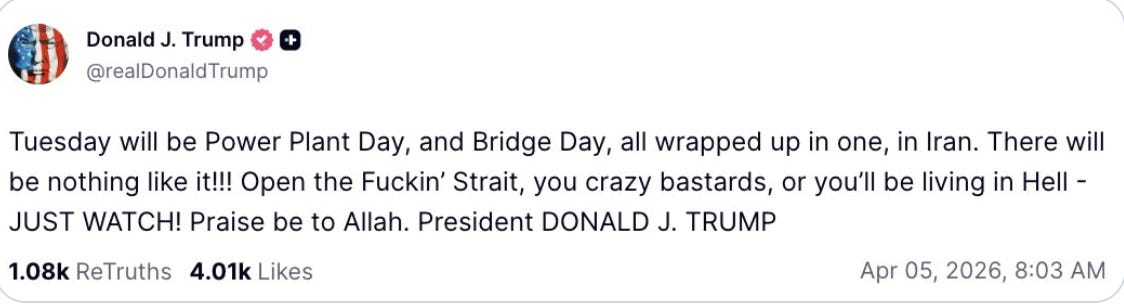
Do Trump and MAGA make us more angry or just more exhausted by ugliness, self-dealing and rampant institutional disrespect in the top reaches of government? It seems likely that many of us — perhaps most – are offended by such unhinged and unpresidential messages as “Tuesday will be Power Plant Day, and Bridge Day, all wrapped up in one, in Iran. There will be nothing like it!!! Open the Fuckin’ Strait, you crazy bastards, or you’ll be living in Hell — JUST WATCH! Praise be to Allah.”

In time, polls will help us get a handle on public reaction. But, for now, we have the disparate responses of politicians.

For instance, Marjorie Taylor Greene, a former staunch ally turned Trump critic, said everyone in the Trump administration who claims to be a Christian needed to “beg forgiveness from God” and intervene in the president’s “madness,” as The Guardian reported. In a lengthy post on X, the former Republican congresswoman wrote: “I know all of you and him and he has gone insane, and all of you are complicit. I’m not defending Iran but let’s be honest about all of this.”

Bernie Sanders, an independent senator, said on X: “One month after starting the war in Iran, this is the statement of the President of the United States on Easter Sunday. These are the ravings of a dangerous and mentally unbalanced individual. Congress has got to act NOW. End this war.”

And Democratic Senator Chris Murphy also called it completely unhinged. He wrote on X: “If I were in Trump’s Cabinet, I would spend Easter calling constitutional lawyers about the 25th Amendment. This is completely, utterly unhinged. He’s already killed thousands. He’s going to kill thousands more.”

Even some Republicans have been appalled by Trump’s rhetoric, especially his so-far delayed threat to destroy Iranian civilization. Sen. Lisa Murkowski (R-Alaska) also criticized Trump’s latest threat, arguing on X that “This type of rhetoric is an affront to the ideals our nation has sought to uphold and promote around the world for nearly 250 years.”

Rep. Kevin Kiley (I-Calif.), who recently switched from a Republican to an independent, wrote on X that the U.S. “does not destroy civilizations… Nor do we threaten to do so as some sort of negotiating tactic. We should all desire a future of freedom, security, and prosperity for the people of Iran.”

It’s an open question whether Trumpism will in time burn out, its rage spent. Economic disenfranchisement, especially among the undereducated, seems likely to grow as income inequality widens. And racial strains may be an ever-present reality in our politics (see Kamala Harris’s fall).

But, given the lurches between extremes that now define our system, the time may be ripe in the coming couple years for candidates who embrace and eloquently deliver more positive messages. As Plouffe suggests, they’ll have to tap into all the many channels available now. Forget detailed policy papers and gauzy ads celebrating commitments to family and country. Surely, modern voters will need plenty of sizzle, along with the steak.

Still, decency, morality, a sense of presidential propriety and a promise akin to Reagan’s “shining city upon a hill” or Obama’s “hope and change” — two eminently successful pitches — may offer a much-needed alternative to the anger-driven, self-dealing and self-deluding politics of the moment.

When do editors say “wait a minute?”

Iran war coverage raises tough questions

Joseph Weber

Source: Ethical Journalism Network

Eons ago, Fred Friendly, who worked as a reporter for an Army newspaper during WWII and later rose to serve as president of CBS News, posed a few interesting questions in a seminar in my journalism graduate program.

Should journalists withhold news during a war? Or, are they obliged to abide by the ethic that a reporter must air even difficult facts — if they are important — as soon as possible, wherever they may lead?

Friendly, who died in 1998, then told of a real-life case where a reporter learned of plans to sneak endangered children out of a European war zone. The journalist held back on reporting on the effort until the mission was complete. Releasing any word beforehand could have cost the children their lives, he reasoned.

Of course, the journalist was right to stay mum.

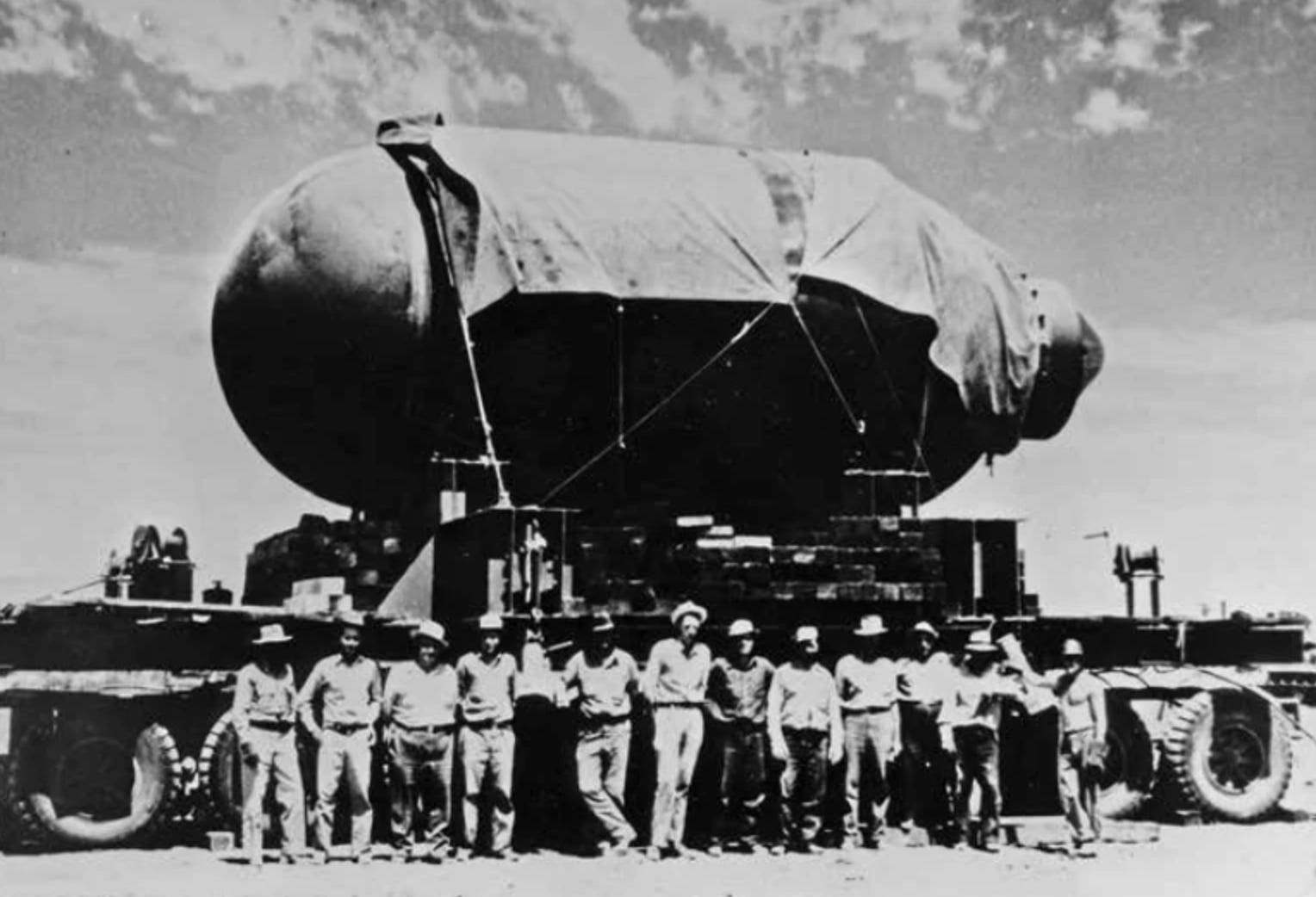
With that example it became apparent to us all that when lives are at stake, a journalist’s first responsibility is not to his or her audience, but rather to preserve life. This idea was demonstrated repeatedly in WWII, when news organizations withheld information they knew about the Manhattan Project, as well as on troop and ship movements, so as not to tip off enemies about sensitive matters.

The Manhattan Project, source: Arcadia Publishing

But does this principle mean, as Donald J. Trump has argued, that reporters broke the law – and their own sense of ethics, though Trump didn’t mention that – when they disclosed that an F-15 fighter had been shot down in Iran? When they learned that one aviator had been rescued while another remained unaccounted for?

As matters of life and death, the questions multiply.

Should the outlets have kept quiet on that, as the government did for more than 24 hours after the shootdown? Should journalists have withheld the news from their audiences until the second airman was rescued? Did they jeopardize his life—and those of his rescuers—by alerting Iranian authorities about the search-and-rescue mission?

And, now, as Trump has threatened, should journalists be interrogated and jailed if they refuse to disclose sources that tipped them to the details?

Trump blamed an unknown “leaker” for sharing the information, vowing to haul in reporters to find the source. “We’re going to go to the media company that released it and we’re going to say, ‘national security, give it up or go to jail,’” Trump said. He added that whoever shared the information is “a sick person.”

But this may not be easy, which may be why Trump refused to point his finger at a single news outlet. Multiple news organizations had reported on the crash, including the Israeli TV outlet N12AxiosThe Washington PostThe New York TimesNBC News and Reuters. Several referred to unnamed “U.S. officials” – plural — as sources.

And just which media outlet broke the news first is not clear, though a few Israeli journalists appear to have gotten the news out before any the others.

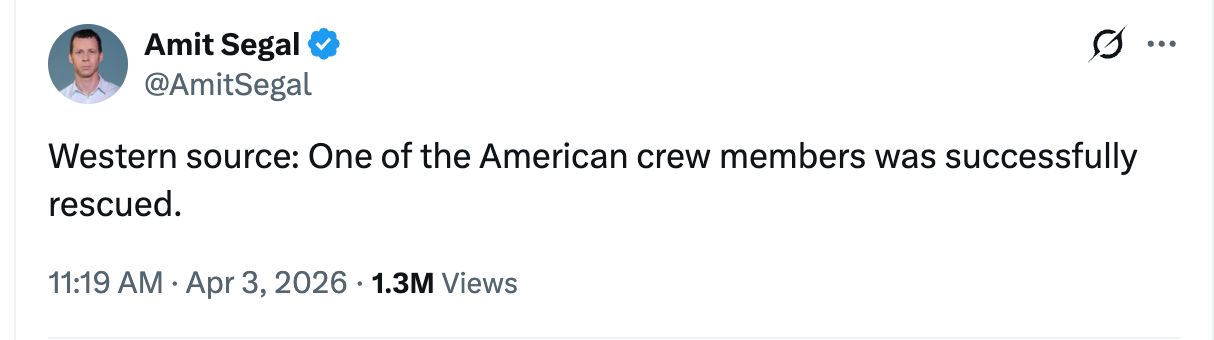
Ariel Kahana of Israel Hayom and Haaretz columnist Amir Oren appear to have posted the news on Telegram before their rivals, according to another Israeli journalist who jumped on the story, Amit Segal. Segal and Axios’s Barak Ravid had both posted early on about the shootdown, the New York Post reported.

The Military Times credited Israel’s Channel 12 with being the first to report that a second American pilot was missing, according to the New York newspaper. But Segal and Ravid were among the earliest to post the information to Telegram and X, respectively.

“An American fighter jet was shot down by Iranian fire. A search is underway to locate the two crew members, according to a source familiar with the details. Read my article at @axios,” Ravid wrote at 8:54 a.m. on Friday. Similar posts by Kahana and Oren appeared a half-hour earlier, Segal told the Post.

It is also possible, however, that Iranian state media beat them all on the news. Iranian media circulated photographs and video footage on Friday that purportedly depicted debris from the downed aircraft, Israel Hayom reported.

Images of debris from Tasnim, source: Israel Hayom

The Tasnim news agency, affiliated with Iran’s Revolutionary Guards, reported that at least one pilot apparently ejected. It incorrectly claimed he was captured by Iranian forces following a failed American rescue attempt. The agency also published an image of an ejection seat.

So, the responsibilities and ethical challenges of the American and Israeli media are not clear here, not to mention their legal risks, despite Trump’s certainty about the irresponsibility of their actions. If it was just a matter of preserving an American’s airman’s safety by keeping quiet, that would have been an easy call: of course, you hold back, just as the reporter in Friendly’s case study did.

But this all was far murkier.

First, did the Israeli reporters, who seem to have gotten the first word out on the F-15 shootdown, get their tipoff just by monitoring Tasnim? Had Tasnim really gotten the information first, even if incorrectly so? And, if so, did the Israelis just get confirmation from the Israeli military with the crucial detail that no one had been captured?

But then, when American media outlets got confirmation of various details, should they have withheld all of that, even though the others had released fragmentary or flawed information on Net? Did the U.S.-based outlets, in fact, do the public – if not the military — a service by providing correct information, even if only from anonymous sources?

Or was that the tipoff that, as Trump claimed, told “the entire country of Iran” that a pilot was “somewhere on their land,” making it “much more difficult for the pilots and the people going into search for him? Did they “put this mission at great risk,” as he insisted?

While lots of questions remain, we do know that the Net, with its power to instantly share information – and misinformation – has changed the calculation for media. They now must add a key element to decisions on publishing sensitive information – what if bad information is out there? Is there not a responsibility to set things right, and quickly?

Government leaders always want war information to serve their interests, not necessarily the larger public interest. Certainly, when journalists reported on the My Lai Massacre in Vietnam in 1968, U.S. authorities were unhappy. But that savagery prompted a rethinking of the war and of the behavior expected of American soldiers, alike.

And now, with Trump threatening to bomb every bridge and power plant across Iran, accurate reporting is essential.

The media need to cover the president’s statements, ranging from the recent Truth Social post saying “A whole civilization will die tonight, never to be brought back again. I don’t want that to happen, but it probably will” to his earlier one: “Tuesday will be Power Plant Day, and Bridge Day, all wrapped up in one, in Iran. There will be nothing like it!!! Open the Fuckin’ Strait, you crazy bastards, or you’ll be living in Hell — JUST WATCH! Praise be to Allah.”

To the extent possible, journalists must report in detail on the destruction in Iran, should that occur. Already, they are covering the moral and legal questions involved in Trump’s threats.

“Such seemingly unrestrained statements have alarmed legal experts and former military officials, who argue that the president’s threat to conduct broad attacks on civilian infrastructure — ‘very little is off-limits,’ he said Monday — could undermine America’s aims in Iran and create legal jeopardy for military leadership,” The Washington Post reported.

As the newspaper reported, Secretary of Defense Pete Hegseth has long supported U.S. military members accused or convicted of war crimes. He has claimed that the U.S. would take its “gloves off” in military conflict and show “no quarter” to its enemies, alarming some legal experts.

For American generals and even lower-level service members, who have the right to refuse to follow illegal orders, the orders that may come from both men are particularly problematic. All that needs to be covered by the press.

Trump, of course, has long been at war with the press, usually for covering him accurately. In his blinkered and hostile world view, the media just complicated a search-and-rescue operation, endangering hundreds of people involved. But for the news outlets interested in reporting thoroughly and correctly, as well as doing things ethically and properly, the issues are anything but simple.

April is what we make of it

Though this one seems more Eliot than Chaucer

Joseph Weber

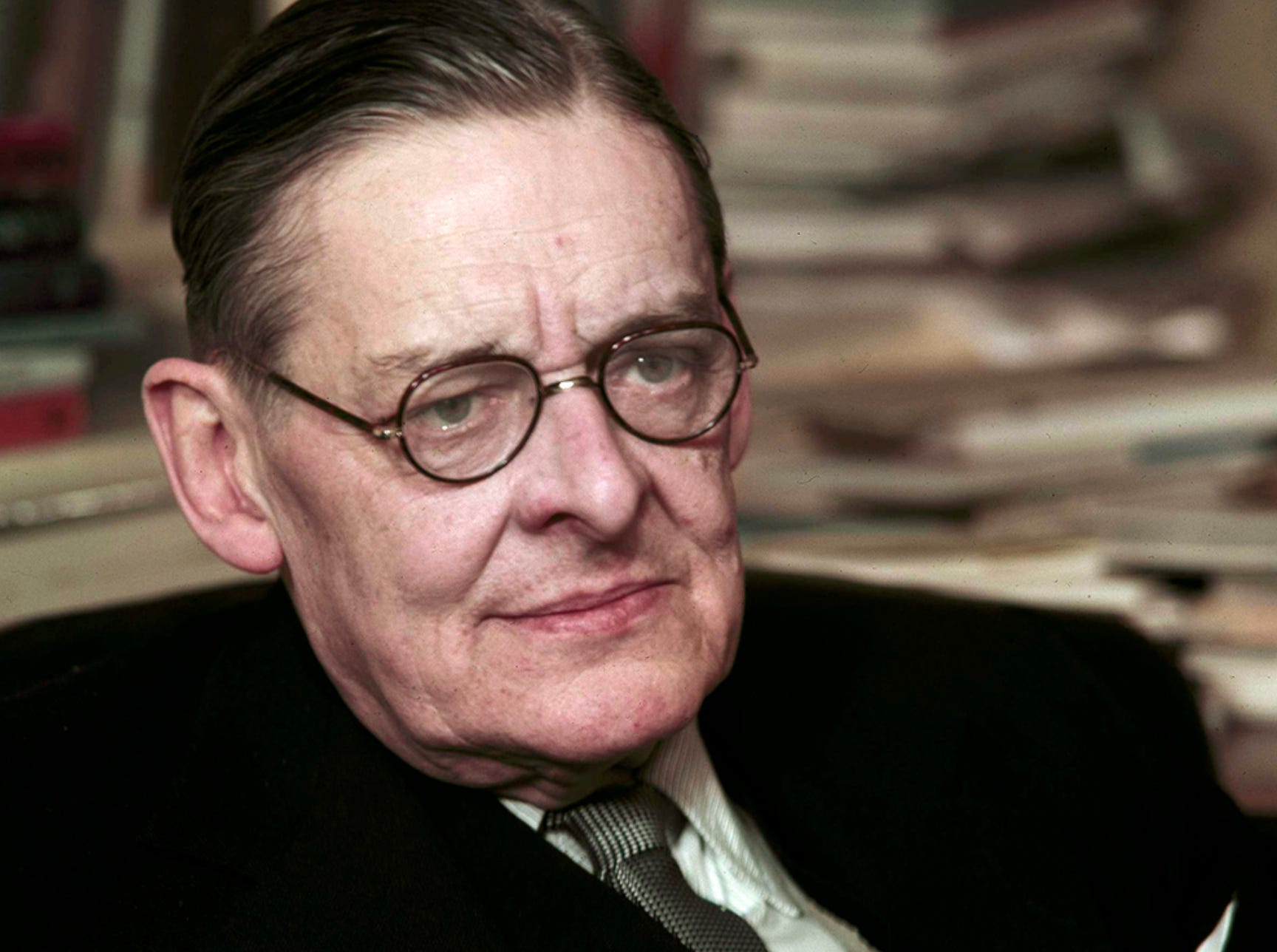
T.S. Eliot in 1956, source: National Catholic Reporter

April is the cruellest month, breeding/Lilacs out of the dead land, mixing/Memory and desire, stirring/Dull roots with spring rain./Winter kept us warm, covering/Earth in forgetful snow, feeding/A little life with dried tubers.

So begins The Waste Land, where T.S. Eliot wrestled with his personal demons in shellshocked post-WWI Europe. Unhappily married, toiling away in a bank despite his studies at Harvard, the Sorbonne and Oxford, and perhaps feeling at 33 that he was midway through an unfulfilled life, the poet suffered a breakdown and was recovering in a Swiss sanatorium when he wrote the work.

Rife with classical references, The Waste Land’s opening inverts the meaning Geoffrey Chaucer infused into springtime in his General Prologue to The Canterbury TalesAs Tyler Malone notes in a guide to Eliot’s poem, Chaucer paints April as a month of restorative power, when spring rain brings nature back to life:

Whan that Aprille with his shoures soote/The droghte of March hath perced to the roote,/
And bathed every veyne in swich licóur/Of which vertú engendred is the flour 
… In modern English, that’s: “When April with its sweet showers has pierced the drought of March to the root, and bathed every vein (of the plants) in such liquid by which power the flower is engendered/created.

By contrast, of course, Eliot gives us an April (in 1921) whose promise is little but hollow and mean-spirited deceit in a world rendered barren by war, a civilization ruined by cultural and physical desolation. His depressing spring reflected both widespread sentiment about a Western world gone awry and his personal mental crisis.

I’m reminded of all this because on the eve of Easter and midway through the Jewish celebration of Passover – both of which are all about hope and rebirth – we also seem immersed in a modern Waste Land.

Guided by an inept president who underestimated the enemy and a self-styled Secretary of War who is busily firing experienced military leaders, we are in a war whose course seems impossible to predict. An unsettling New York Times piece suggests that Iran could well become yet another of our country’s unresolved battlegrounds.

Writer Charles Homans notes that “never-ending wars” have become “the dominant condition of American foreign policy throughout the 21st century.” He holds that this is “a once-dystopian-seeming possibility that, somewhere in the long shadow of Sept. 11, became a quietly accepted reality.” Homans adds that the United States has been actively involved in military conflicts at home or abroad for most years of the 19th and 20th centuries and in the quarter-century since the Sept. 11, 2001, attacks.

Pete Hegseth, source: Feminist Giant

And with the Christian nationalist Secretary of Defense, Pete Hegseth, at the helm, the current battle has taken on perverse messianic overtones. Of course, the former Army National Guard Major and ex-TV host not only knows better than his generals, but he’s happy to take on the foremost global leader of Christianity. Hegseth, a supporter of a peculiar Christian cult, has asked the American people to pray “every day, on bended knee” for a military victory in the Middle East “in the name of Jesus Christ.”

Pope Leo XIV, the first American-born pope, has been having none of that. In a homily during a Mass on the Thursday morning before Easter, the pontiff said that the Christian mission had often been “distorted by a desire for domination, entirely foreign to the way of Jesus Christ.” Earlier, in late March, the pope warned against invoking the name of Jesus for battle, saying in a Sunday homily that Jesus “does not listen to the prayers of those who wage war, but rejects them.”

Meanwhile, there are plenty of other troubles to fret about both globally and in the U.S. The post-WWII order, particularly regarding NATO, is at risk. Democracy at home is in danger and our economy hangs in the balance, with 72 percent of Americans rating economic conditions as fair or poor and only 31 percent expecting better conditions in a year.

Oh, and masked and armed federal agents continue to round up immigrants across the U.S., shipping them off to detention camps by the tens of thousands (over 68,000 so far, many with no criminal backgrounds). So far, in such custody, at least 46 people have died. Two others, of course, were murdered by such agents in Minneapolis.

It is, indeed, difficult to see this as a hopeful spring.

Heather Cox Richardson, source: The Guardian

Somewhere, no doubt, a modern Eliot is writing verse that captures this gloomy time (or perhaps he or she is doing a podcast about it all). Of course, we do have Substacker Heather Cox Richardson, the Boston College academic who regularly puts all this in historical context and calls out lies from Donald J. Trump. As she discussed it, his recent TV address about Iran marked a new low.

“Sounding tired and speaking in a monotone, Trump reiterated his claim that the U.S. doesn’t need the oil that travels through the Strait of Hormuz and demanded that other nations who need the oil more force Iran to reopen it,” Richardson wrote. “In reality, the U.S. is tied into international oil markets, and prices not only of oil, but also of products that use oil to get to market, are already rising.”

She also noted Trump’s skewed priorities of late, referring to his comments about his new budget at an Easter lunch reception. “I said to [Office of Management and Budget director] Russell [Vought], ‘Don’t send any money for daycare because the United States can’t take care of daycare,’” Trump said. “That has to be up to a state. We can’t take care of daycare. We’re a big country. We have fifty states, we have all these other people. We’re fighting wars. We can’t take care of daycare.”

As Richardson suggested, kids are low on his list. Like Trump’s budget requests for 2026, his new budget calls for an enormous boost to the nation’s military spending, $1.5 trillion, to be paid for with cuts to domestic programs, the academic noted.

Of course, we’re very much in the early days of this Trumpian catastrophe. It’s as if we’re not even through the early German advances in the four-year-long world war that thrust Eliot and many of his generation into their funks. Things may yet turn upward for the U.S., perhaps with November elections that will repudiate the bleak national course Trump has set.

As for Eliot, his understandable pessimism about humanity never disappeared, though his personal life and attitudes did undergo big changes. Some years after writing The Waste Land, he dismissed the poem as “the relief of a personal and wholly insignificant grouse against life…just a piece of rhythmical grumbling.”

By then, his first wife had died and he was happily married to a second woman. He also had given up the Unitarianism of his American youth and converted to Anglo Catholic Christianity, while also becoming a British subject. His writing at that point focused on religious themes, notably The Four Quartets, regarded by some as the major Christian poem of the last century.

Redemption, in whatever form it will take, seems a long way off for us now. Still, Chaucer’s April is a far more welcome one than Eliot’s.

To everything, there is a season

A time to laugh, a time to weep

Joseph Weber

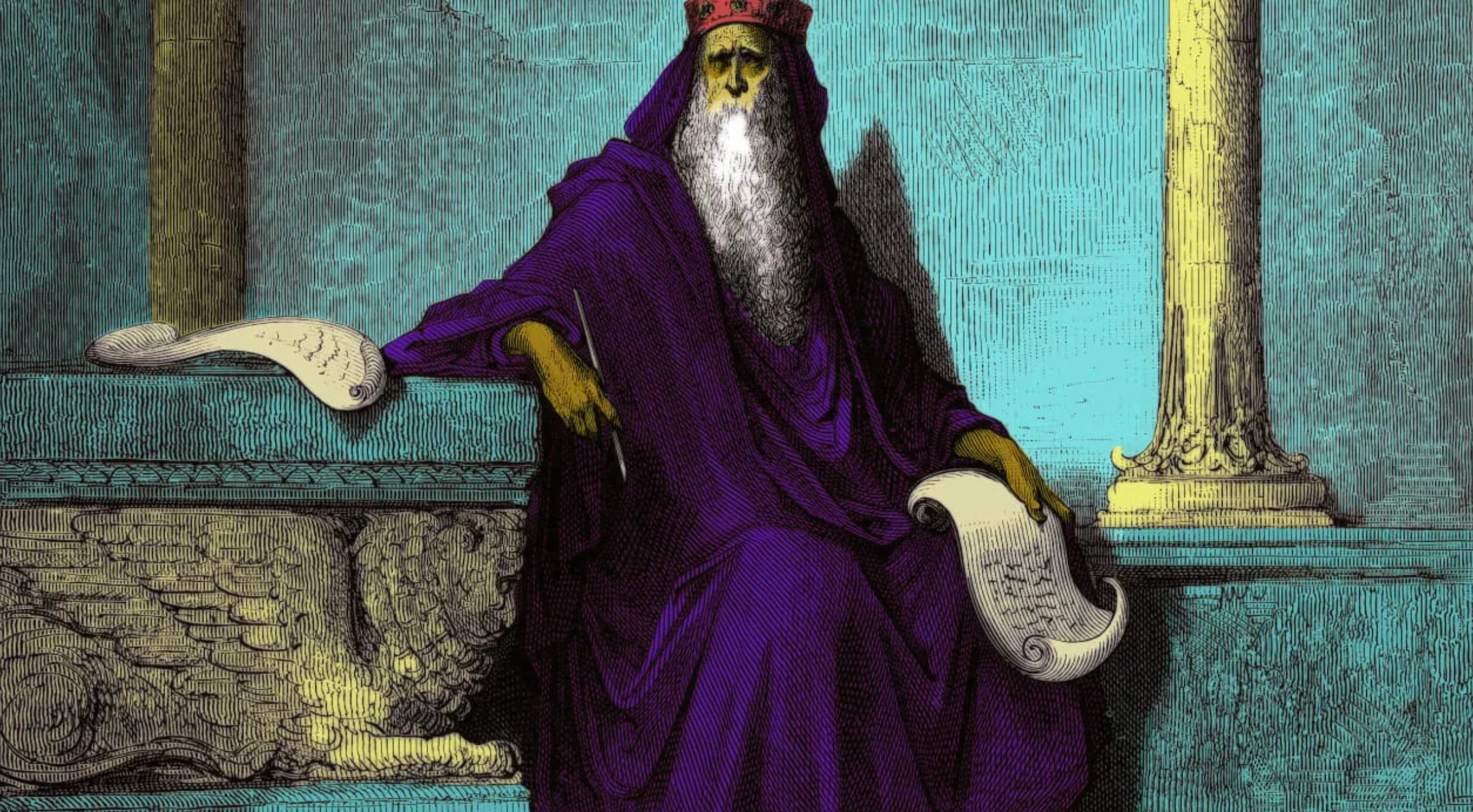
A rendering of King Solomon, source: The Jerusalem Post

Vanity of vanities, said Koheleth; vanity of vanities, all is vanity/What profit has man in all his toil that he toils under the sun?/A generation goes and a generation comes, but the Earth endures forever./The sun rises and the sun sets, and to its place it yearns and rises there.

So goes the gloomy opening of Kohelet, the well-known Biblical book also called Ecclesiastes, from the Greek. I’m reminded of these words today after meeting a fellow who was struggling with grief and uncertainty.

The man just lost his wife and now is deciding whether to stay in Philadelphia — in our building here, as it happens — or whether to go to a place with what I’ll call fewer contradictions and challenges. He mentioned, for instance, that he misses looking out his window and seeing grass and deer, as he and his wife would in nearby Bucks County. And he noted the sadness one feels while stepping around homeless people lying on the sidewalks outside pricey restaurants and exclusive condo buildings.

It’s as if his grief and misery are reflected in the grievous states he sees among the unfortunates on the streets here. His inner world, it seems, is mirrored by the outside world (as it so often can be for us all).

The words of Kohelet resonate with me because the book — a poem, really — addresses loss, sadness and so many contradictions. It says, for instance: I saw all the deeds that were done under the sun, and behold, everything is vanity and frustration./What is crooked will not be able to be straightened, and what is missing will not be able to be counted.

To be clear, “vanity,” or the Hebrew word huvel in the poem, differs from our modern understanding the term. The word can be translated variously as air, vapor, meaninglessness, vanity, folly, futility, absurdity, or nothingness. For such a little word, it packs quite a punch.

And, as The Seforim Blog explains, huvel is repeated as a motif, describing aspects of human endeavor and life experience. The author, said to be King Solomon, the son of David and a former king of Jerusalem, mourns the inevitable passing that we all face, our disappearances even from memory. He says: [But] there is no remembrance of former [generations], neither will the later ones that will be have any remembrance among those that will be afterwards.

Hardly upbeat. And, throughout the opening, it gets worse, as even wisdom proves ultimately disappointing:

And I applied my heart to know wisdom and to know madness and folly; I know that this too is a frustration./For in much wisdom is much vexation, and he who increases knowledge, increases pain.

Source: Chabad.org

But, as the poem proceeds, the dreariness dissipates. It’s balanced by the verve of life when it’s well and righteously lived:

And I praised joy, for there is nothing better for man under the sun than to eat and to drink and to be merry, and that will accompany him in his toil the days of his life that God gave him under the sun.

The author drives home the point:

Go, eat your bread joyfully and drink your wine with a merry heart, for God has already accepted your deeds./At all times, let your garments be white, and let oil not be wanting on your head./Enjoy life with the wife whom you love all the days of the life of your vanity, whom He has given you under the sun, all the days of your vanity, for that is your portion in life and in your toil that you toil under the sun.

Yes, all is fleeting. But that’s the very reason to enjoy it while one can, the book tells us. Amplifying this, of course, the famous section, earlier on, reminds us of the inevitable turning of time.

Everything has an appointed season, and there is a time for every matter under the heaven./A time to give birth and a time to die; a time to plant and a time to uproot that which is planted./A time to kill and a time to heal; a time to break and a time to build./A time to weep and a time to laugh; a time of wailing and a time of dancing./A time to cast stones and a time to gather stones; a time to embrace and a time to refrain from embracing./A time to seek and a time to lose; a time to keep and a time to cast away./A time to rend and a time to sew; a time to be silent and a time to speak./A time to love and a time to hate; a time for war and a time for peace.

Judy Collins & Pete Seeger,

Is there anyone (of a certain age, that is), who isn’t reminded of Pete Seeger’s “Turn, Turn, Turn,” a 1959 tune recorded by Judy Collins, as well as The Byrds and others? Sadly, Seeger’s closing lyric — which became a Vietnam War protest anthem — has long resonated through many wars since then. It speaks to our day yet again.

The Seeger verse goes: A time for love, a time for hate/A time for peace, I swear it’s not too late.

The fellow now in mourning mentioned that he has several grandchildren and a couple sons in Philadelphia. That, of course, may ultimately sway his choices about where to settle for at least much of each year.

He mentioned how the children now proudly introduce him to their teachers at school and how delighted they are in his company. As he noted, there will come a time — all too soon — when they will prefer to hang with their buds rather than a grandparent.

I’m sure that day will come for us and our eight grandkids, all now 8 or younger. That’s part of the reason we spend as much time with them as possible now. We are determined to enjoy their youth and, by helping them do so, to relive our own.

For if a man lives many years, let him rejoice in them all, and let him remember the days of darkness, for they will be many; all that befalls [him] is vanity./Rejoice, O youth, in your childhood, and let your heart bring you cheer in the days of your youth, and go in the ways of your heart, and in the sight of your eyes, but know that for all these God will bring you to judgment./And remove anger from your heart, and take evil away from your flesh, for childhood and youth are vanity.