
Do we need hope and change again?

With Trump’s rage going too far, Americans could be ready for something better
Joseph Weber

Source: WBUR

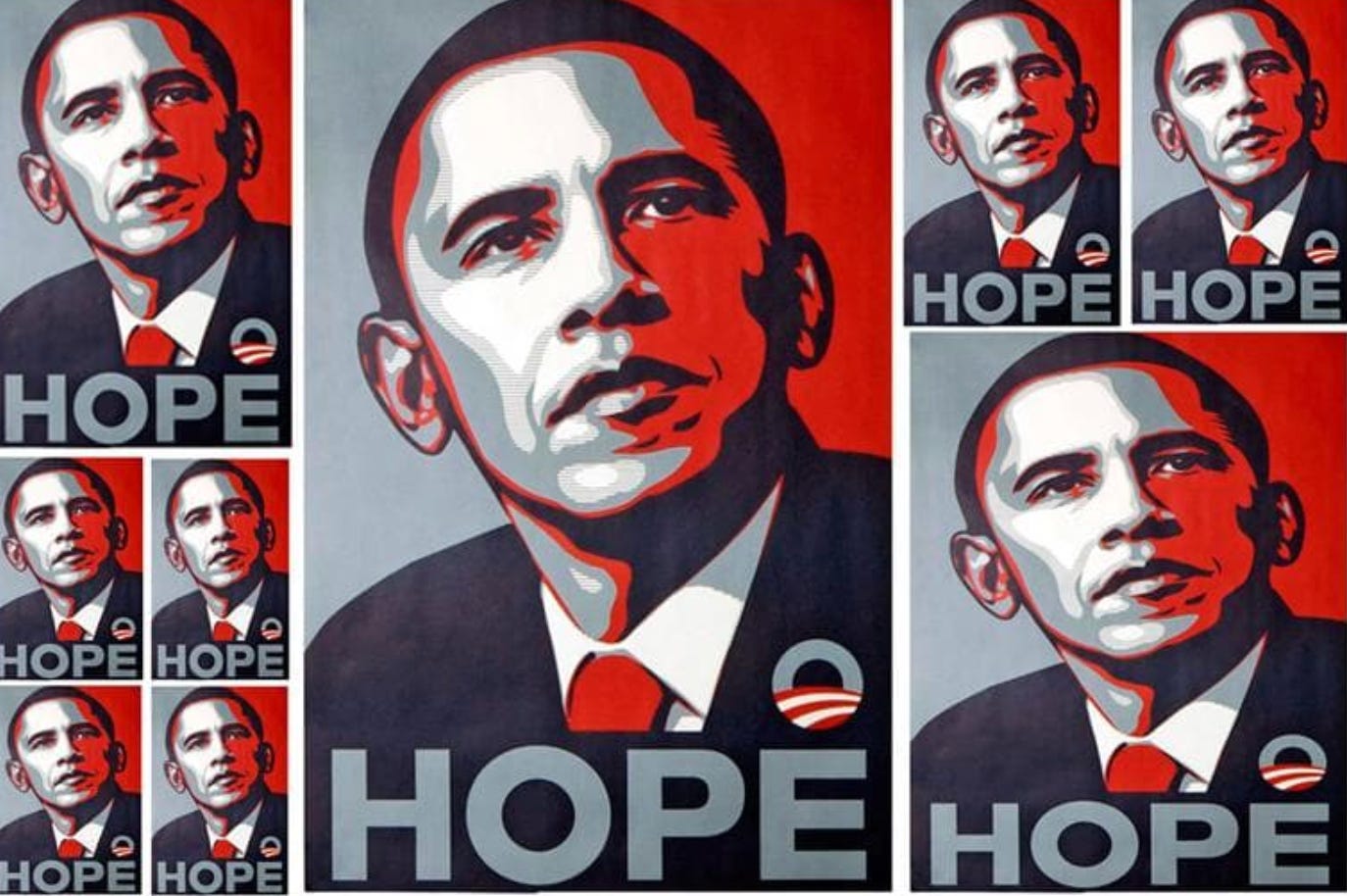
When Barack Obama won the presidency in 2008, he was a fresh face offering “hope and change,” his signature campaign message. He vowed to help the middle class, then struggling in one of the nation’s worst modern recessions, promised an end to the Iraq War, and pledged to install ethical government.

Obama pioneered the use of social media, data-driven voter targeting, and grassroots, small-dollar fundraising. Using platforms such as MyBarackObama.com, his team mobilized 2.2 million volunteers for ground-level organizing and personal outreach. The “campaign team used social media and technology as an integral part of their campaign strategy, not only to raise money, but also more importantly, to develop a groundswell of empowered volunteers who felt that they could make a difference,” academics at Stanford reported.

The technology allowed the junior Illinois senator to deliver an upbeat message, one surprisingly like Ronald Reagan’s “shining upon city on a hill,” his 1980 campaign theme.

“Yes, we can” – a phrase Obama borrowed from the Spanish version used by Cesar Chavez and Dolores Huerta of the United Farm Workers – became his rallying cry. It worked at a time when Americans craved hope and optimism, successful enough to give Obama two terms.

But when Donald J. Trump came to power – in his two successful presidential campaigns – much of the electorate wanted something far different. They were angry and feeling unheard. White voters, in particular, seemed to feel like they were losing their grip on the country, a message Trump delivered with no embarrassment. The undereducated, especially, felt sidelined economically.

Trump reflected, channeled and ultimately rode to power on their rage at a system that seemed to leave many of them out.

But now that we’re seeing the effects of rage as a governing principle, are many Americans feeling differently? With murderous attacks on alleged drug dealers, followed by military raids on foreign countries and war in the Middle East, as well as masked and armed federal agents rounding up tens of thousands within our borders (and killing some), are growing numbers of Americans appalled by their choice?

And, starting with the midterms and then in the presidential contest of 2028, will they seek a different message?

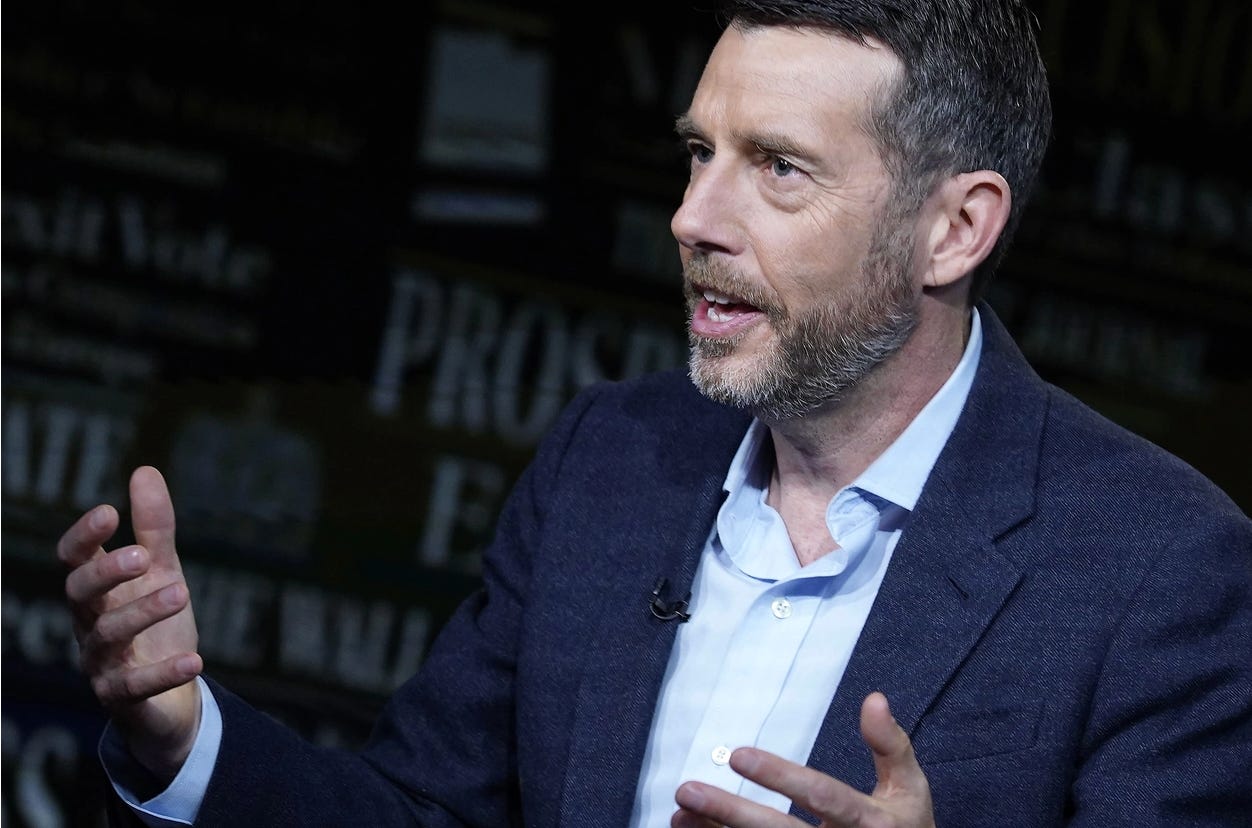
Will they want that delivered, moreover, in less conventional ways than the old techniques of position papers, local media tours and debates? Perhaps a daily “permanent show” distributed on “traditional TV, connected TV, Instagram, Facebook, YouTube, TikTok, Reddit, podcasts, Snapchat, radio, video games, community events, door-to-door canvassing, phone calls and texting,” as former Obama political adviser David Plouffe contends in a New York Times commentary.

And will they respond once again to upbeat messaging or something else?
David Plouffe, source: Politico

Plouffe, backed by some academic research, holds that anger will carry the day once again – this time disgust at Trump’s legacy. “The messaging must focus squarely on making vulnerable G.O.P. candidates, not the president, the face of the things voters are angry about: higher prices, local businesses closing, farm community devastation,” he argues.

At least one presidential hopeful, California Gov. Gavin Newsom, has embraced both some of the technology and some of Trump’s messaging style. He has gotten a lot of ink with constant posts on social media that troll the president. Newsom has used what Politico called “an inescapable, smashmouth, all-caps-laden and meme-filled X account” to counter Trumpism.

“There’s Newsom on Mount Rushmore,” the news outlet reported last year. “There’s Newsom getting prayed over by Tucker Carlson, Kid Rock and an angelic, winged Hulk Hogan. There’s Newsom posting in all caps, saying his mid-cycle redistricting proposal has led ‘MANY’ people to call him ‘GAVIN CHRISTOPHER ‘COLUMBUS’ NEWSOM (BECAUSE OF THE MAPS!). THANK YOU FOR YOUR ATTENTION TO THIS MATTER.’”

But I wonder. Do we really want a Trump-style alternative to the president, especially someone who strikes many as just a bit too slick?

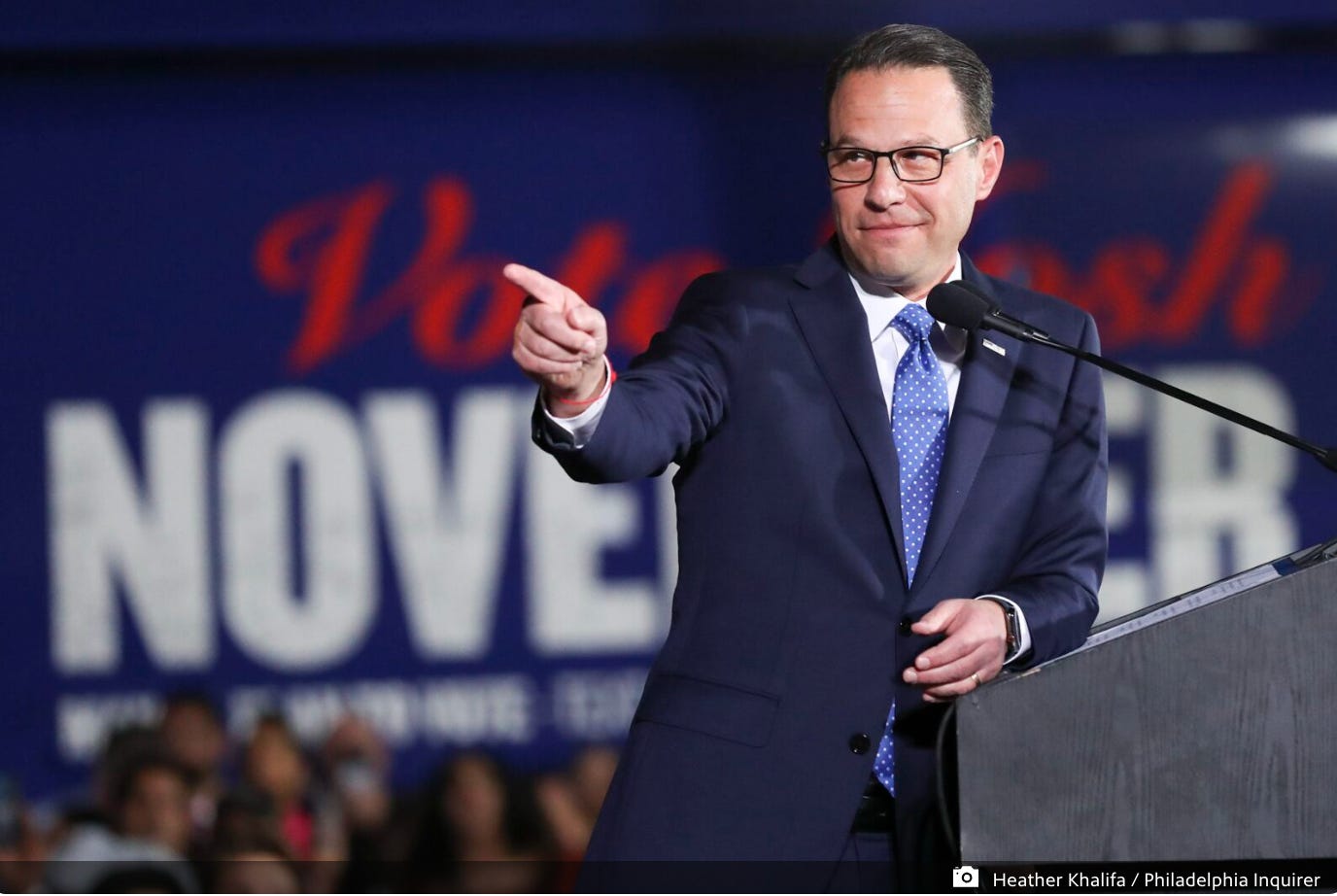
Maybe we’re better off with a cooler head, a less everywhere candidate such as Josh Shapiro, perhaps. “He doesn’t host a podcast or spend much time on cable news,” The Atlantic reported. “Even as he engages in regular skirmishes with the White House over policy matters, the governor goes out of his way to not antagonize the MAGA base. Shapiro, who is expected to run for president in 2028, believes that his party’s prospects of regaining power depend less on combatting Donald Trump than on courting the president’s supporters.”
Pennsylvania Gov. Josh Shapiro

Or would Pete Buttigieg, Rahm Emanuel, J.B. Pritzker, Chris Murphy, Mark Kelly, Andy Beshear or someone else be best? The pundits are split, of course, and both the messenger and the message will be crucial.

Do Trump and MAGA make us more angry or just more exhausted by ugliness, self-dealing and rampant institutional disrespect in the top reaches of government? It seems likely that many of us — perhaps most – are offended by such unhinged and unpresidential messages as “Tuesday will be Power Plant Day, and Bridge Day, all wrapped up in one, in Iran. There will be nothing like it!!! Open the Fuckin’ Strait, you crazy bastards, or you’ll be living in Hell — JUST WATCH! Praise be to Allah.”

In time, polls will help us get a handle on public reaction. But, for now, we have the disparate responses of politicians.

For instance, Marjorie Taylor Greene, a former staunch ally turned Trump critic, said everyone in the Trump administration who claims to be a Christian needed to “beg forgiveness from God” and intervene in the president’s “madness,” as The Guardian reported. In a lengthy post on X, the former Republican congresswoman wrote: “I know all of you and him and he has gone insane, and all of you are complicit. I’m not defending Iran but let’s be honest about all of this.”

Bernie Sanders, an independent senator, said on X: “One month after starting the war in Iran, this is the statement of the President of the United States on Easter Sunday. These are the ravings of a dangerous and mentally unbalanced individual. Congress has got to act NOW. End this war.”

And Democratic Senator Chris Murphy also called it completely unhinged. He wrote on X: “If I were in Trump’s Cabinet, I would spend Easter calling constitutional lawyers about the 25th Amendment. This is completely, utterly unhinged. He’s already killed thousands. He’s going to kill thousands more.”

Even some Republicans have been appalled by Trump’s rhetoric, especially his so-far delayed threat to destroy Iranian civilization. Sen. Lisa Murkowski (R-Alaska) also criticized Trump’s latest threat, arguing on X that “This type of rhetoric is an affront to the ideals our nation has sought to uphold and promote around the world for nearly 250 years.”

Rep. Kevin Kiley (I-Calif.), who recently switched from a Republican to an independent, wrote on X that the U.S. “does not destroy civilizations… Nor do we threaten to do so as some sort of negotiating tactic. We should all desire a future of freedom, security, and prosperity for the people of Iran.”

It’s an open question whether Trumpism will in time burn out, its rage spent. Economic disenfranchisement, especially among the undereducated, seems likely to grow as income inequality widens. And racial strains may be an ever-present reality in our politics (see Kamala Harris’s fall).

But, given the lurches between extremes that now define our system, the time may be ripe in the coming couple years for candidates who embrace and eloquently deliver more positive messages. As Plouffe suggests, they’ll have to tap into all the many channels available now. Forget detailed policy papers and gauzy ads celebrating commitments to family and country. Surely, modern voters will need plenty of sizzle, along with the steak.

Still, decency, morality, a sense of presidential propriety and a promise akin to Reagan’s “shining city upon a hill” or Obama’s “hope and change” — two eminently successful pitches — may offer a much-needed alternative to the anger-driven, self-dealing and self-deluding politics of the moment.

How far we have fallen

Simple meanness seems to abound in America on the brink of her 250th birthday

Joseph Weber

When the Indiana state legislature was considering whether to bow to a pressure campaign by Donald J. Trump to redistrict the state to disenfranchise its few Democrats, Republican State Sen. Greg Goode pointed to the climate of fear and intimidation the president generated.

The Spirit of Indiana, a mural in the state capitol

“Misinformation. Cruel social media posts. Over the top pressure from inside and outside the statehouse. Threats of primaries. Threats of violence. Acts of violence,” Goode said on the Indiana Senate floor. “Friends, we’re better than this, are we not?”

But are we? Just what is Trump’s America on the brink of the country’s 250th birthday? Is it a country of decent people who treat one another with respect, who live their personal lives trying to do the right things, who open their hearts and wallets to the needy, who help to create opportunity for all regardless of color or creed, who work toward fairness and justice, who live in a land that acts as a moral beacon for the world?

Well, consider the president’s actions in trying to manipulate the nation’s electoral system to entrench his minority party’s power.

As Mother Jones reported, Trump summoned Republican state legislators to the White House and sent Vice President JD Vance to Indiana twice to lobby the legislature to rejigger the electoral map to eliminate the state’s two Democratic congress members. Trump vowed to primary Republicans who opposed his election-rigging redistricting plan, calling out individual state legislators by name. He called the leader of the state Senate, Rodric Bray, a “weak and pathetic RINO” after Bray said the body didn’t have the votes to pass the measure.

In a social media rant, Trump called the Senate leader “either a bad guy, or a very stupid one!” and threatened “a MAGA Primary” against “anybody that votes against Redistricting.” That same night, a Republican member of the state House was the victim of a bomb threat at his home. Another GOP state senator opposed to gerrymandering who received a pipe bomb threat at her home posted on X that it was the “result of the D.C. political pundits for redistricting.”

As the magazine reported, the intimidation efforts, which included warnings of a pipe bomb and fake threats against lawmakers designed to produce a law enforcement response, had ugly echoes. Recall that Trumpist rioters on Jan. 6, 2021, threatened to hang Mike Pence, the former vice president and former Indiana governor, because he wouldn’t go along with the president’s unconstitutional plan to overturn the 2020 election.

But now, instead of overturning an election, Trump wants to rig and predetermine the next one. The new map was designed to eliminate all Democratic representation at the congressional level in Indiana, giving Republicans 100 percent of seats in a state where Trump won 58 percent of the vote in 2024. While Indiana’s current map received an A from the Princeton Gerrymandering Project, the proposed one got an F.

In the end, the Indianans did the right thing. The Republicans among them stood up to their party’s president and shot down the redistricting effort 31-19, with 21 Republicans joining 10 Democrats in opposition. But they did so with worry.

“I fear for this institution,” said Republican state Sen. Greg Walker, chair of the Senate Committee on Elections, in an emotional speech. “I fear for the state of Indiana and I fear for all states if we allow intimidation and threats to become the norm.”

But across the country, are intimidation and threats not becoming the norm now? As Trump exemplifies sheer meanness in his dealings with the press (“Quiet, Piggy”) and others, are we not evolving into a nation dominated by heartlessness, violence and greed? Indeed, while Trump champions such things, is he not both a symptom of as well as the arch-crafter of much that has grown ugly in our country?

Source: ABC News

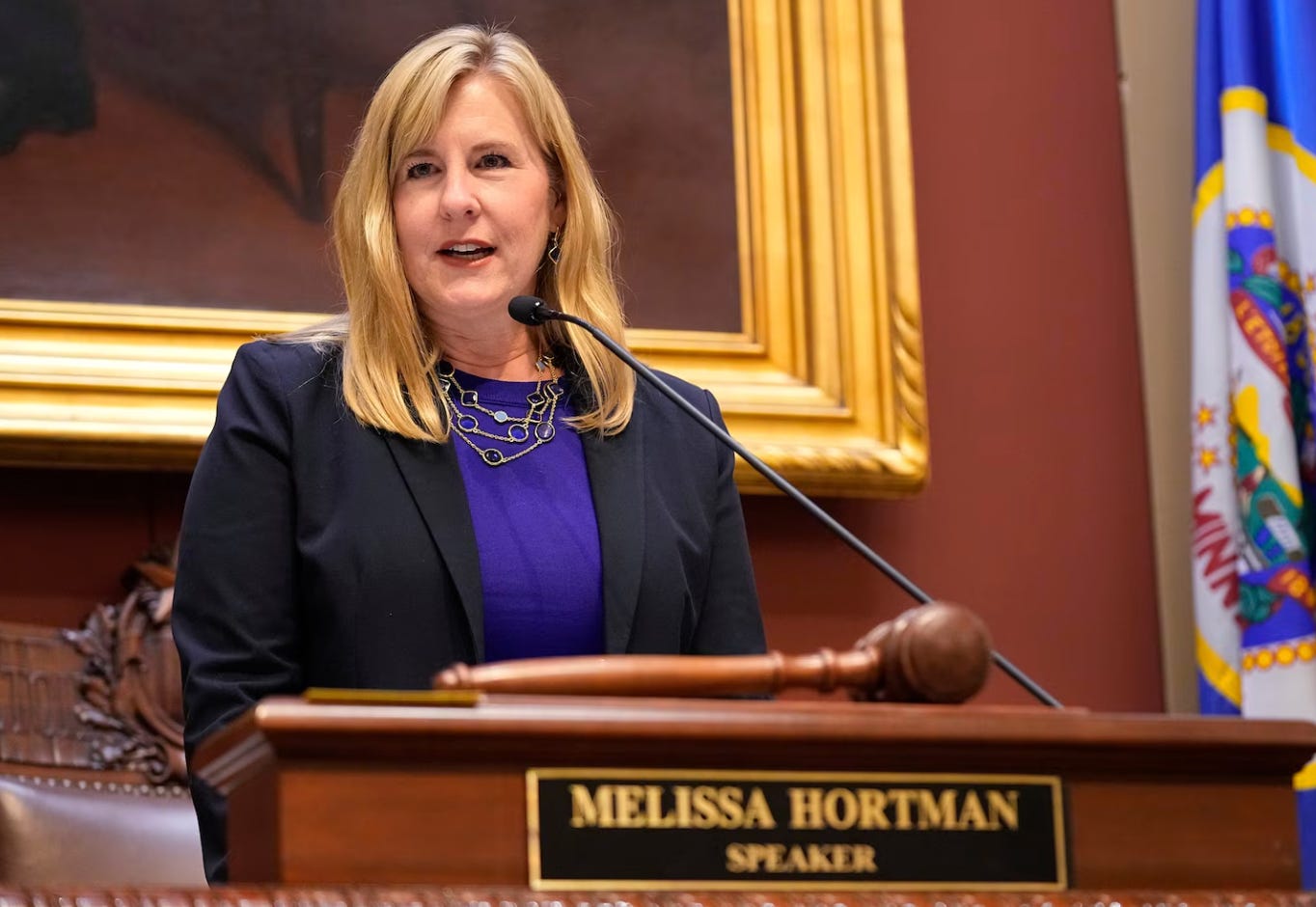
Politicians have a lot to fear nowadays beyond just electoral retaliation. Recall the assassination in June of Minnesota Democratic state Rep. Melissa Hortman and her husband in their home, as well as the shooting of Democratic state Sen. John Hoffman and his wife, Yvette, in their home. The shooter carried a hit list of 45 Democratic elected officials he was gunning for.

Remember, too, the attempt on the life of Pennsylvania Gov. Josh Shapiro, a Democrat. An arsonist invaded and set fire to the governor’s residence in April in an antisemitic attack. More recently, a Utah man was arrested for threatening to shoot Gov. Spencer Cox, a Republican, and other leaders. Shapiro and Cox joined forces at a Dec. 10 meeting at the National Cathedral to condemn political violence.

“We need to begin by saying that all leaders must condemn all political violence — not cherry-pick which violence to condemn and which violence to accept,” Shapiro said, according to The Washington Post. “When you’re a governor, when you’re a president of the United States, you are looked to for that moral clarity. And we have a president of the United States right now that fails that test on a daily basis.”

Of course, Trump himself was the target of two assassination attempts. One killed a Trump supporter in the crowd and wounded two others. Rather than condemn the rising political violence, Trump’s post-shooting immediate response was to suggest that he was spared because he had God on his side. “Nothing will stop me in this mission because our vision is righteous and our cause is pure,” he said at one point.

The national pathology goes beyond the politicians, though.

Trump and his minions exult in the murders of at least 87 people so far – essentially summary executions without trial – in attacks on alleged drug boats. Meanwhile, at home, gun violence continues to take American lives at ghastly rates, with nearly 47,000 such deaths reported in 2023, the latest year for which figures are available (while 58 percent were suicides, 38 percent were murders).

And masked armed men stalk our cities, pursuing immigrants. In their deportation frenzy, ICE agents have rounded up some 220,000 people across the country since Trump took office. More than a third of those grabbed have no criminal records, contradicting the administration claim that is trying to purge the U.S. of dangerous migrants.

By another analysis in The New York Times, less than 30 percent of those seized in major cities had been convicted of a crime, with a far smaller share convicted of violent crime. The most common non-violent convictions were for driving under the influence and other traffic offenses.

In their simple-minded meanness, the ICE agents have assaulted non-migrants and hauled in the wrong people. Consider two incidents in Minneapolis, for instance.

Sue Tincher, source: Sahan Journal

Sue Tincher, a 55-year-old grandmother, was thrown into the snow, handcuffed, hauled off in a van and then detained for five hours with shackles on her legs. Officials cut off her wedding ring. Her offense: she showed up at the scene of an immigration arrest about 10 blocks from her home, asked whether the officials were from ICE, and refused to move on the street when ordered to. Did the 5-foot-4-inch Tincher pose a threat to the agents?

And then there’s the 20-year-old Somali American man who was harassed by ICE. Mubashir, who declined to share his full name for fear of his safety and that of his family, was tackled, arrested and held for about two hours. He had just stepped out onto the sidewalk during his lunch hour when two masked men approached him, followed him into a restaurant, handcuffed him, forced him to his knees in the snow and drove him off to a federal building. Only then did they let him turn on his phone and show him his ID.

“What we saw by these ICE agents that clearly did not know what they were doing was violence and unwillingness to hear the simple truth, which he was repeating again and again, which is, ‘I’m an American citizen,’” said Mayor Jacob Frey.

Modern American meanness takes other forms, too.

Our leaders seem content to let healthcare costs soar both for the neediest and middle-class folks, for instance. Insurance premiums are tripling (or worse). CBS, in reporting on the failure in the Senate of a couple recent health bills, shared the anecdote of a New Jersey woman, earning $72,000 a year, whose monthly insurance cost will rise from about $400 to more than $1,100.

And the Colorado Division of Insurance offered the example of a family of four with an annual income of $128,000. Their health insurance premium will rise some $14,000 for a standard silver plan if they live in the Denver area. If that family of four lives on the Western Slope, Grand Junction, southwest Colorado, the San Luis Valley, or the eastern plains, they will see premium increases of between $16,000 and nearly $21,000.

Where has compassion gone? Yes, healthcare is complicated and an overhaul is long overdue. But don’t politicians owe Americans intelligent efforts to fix the broken system, instead of letting citizens be fleeced or forced to go without coverage? Are we getting sincere efforts at reform?

And don’t they owe their fellow citizens basic fairness in taxes? Instead, the ultrawealthy thrive while others struggle. It’s no wonder that billionaires have lined up to kiss Trump’s, ahem, ring.

Over the next decade, Trump’s Big Beautiful Bill (BBB) will cut taxes for the richest 10 percent of Americans by more than $14,700 per year per household and cut taxes for the richest 1 percent of Americans by more than $50,000 per year, according to estimates from the nonpartisan Congressional Budget Office (CBO) and Joint Committee on Taxation (JCT). Meanwhile, according to the Center for American Progresstiny tax cuts for the working class will be outpaced by changes that will reduce the incomes of the poorest Americans.

Overall, CAP reported that the BBB cuts taxes by $4.5 trillion over the next decade, primarily with $2.3 trillion of provisions that deliver most of their benefits to the richest 10 percent of Americans by income. It delivers $1 trillion in tax cuts to the top 1 percent while cutting more than $1.1 trillion from the Supplemental Nutrition Assistance Program (SNAP), Medicaid, and other health programs used by the poorest Americans.

Is that in any way fair? Does it reflect the sense of common decency that many of us like to believe animates most Americans?

Decades ago, former President Ronald Reagan repeatedly invoked American virtues and ideals in his talks. We’re still a nation comprised of good and decent people whose fundamental values of tolerance, compassion, and fair-play guide and direct the decisions of our government,” he said in one 1984 speech in Ireland, for instance.

It’s mind-boggling to think about how far we’ve descended in four decades. But, maybe the courage shown by the good Midwesterners in Indiana is a harbinger of something better. Maybe, starting next November, the America of Ronald Reagan (and Jimmy Carter, Barack Obama, George H.W. Bush and others) will rise again and reclaim the virtues such men exalted.