Juiced in it

Does private schooling help or hurt one’s chances in life?
Joseph Weber

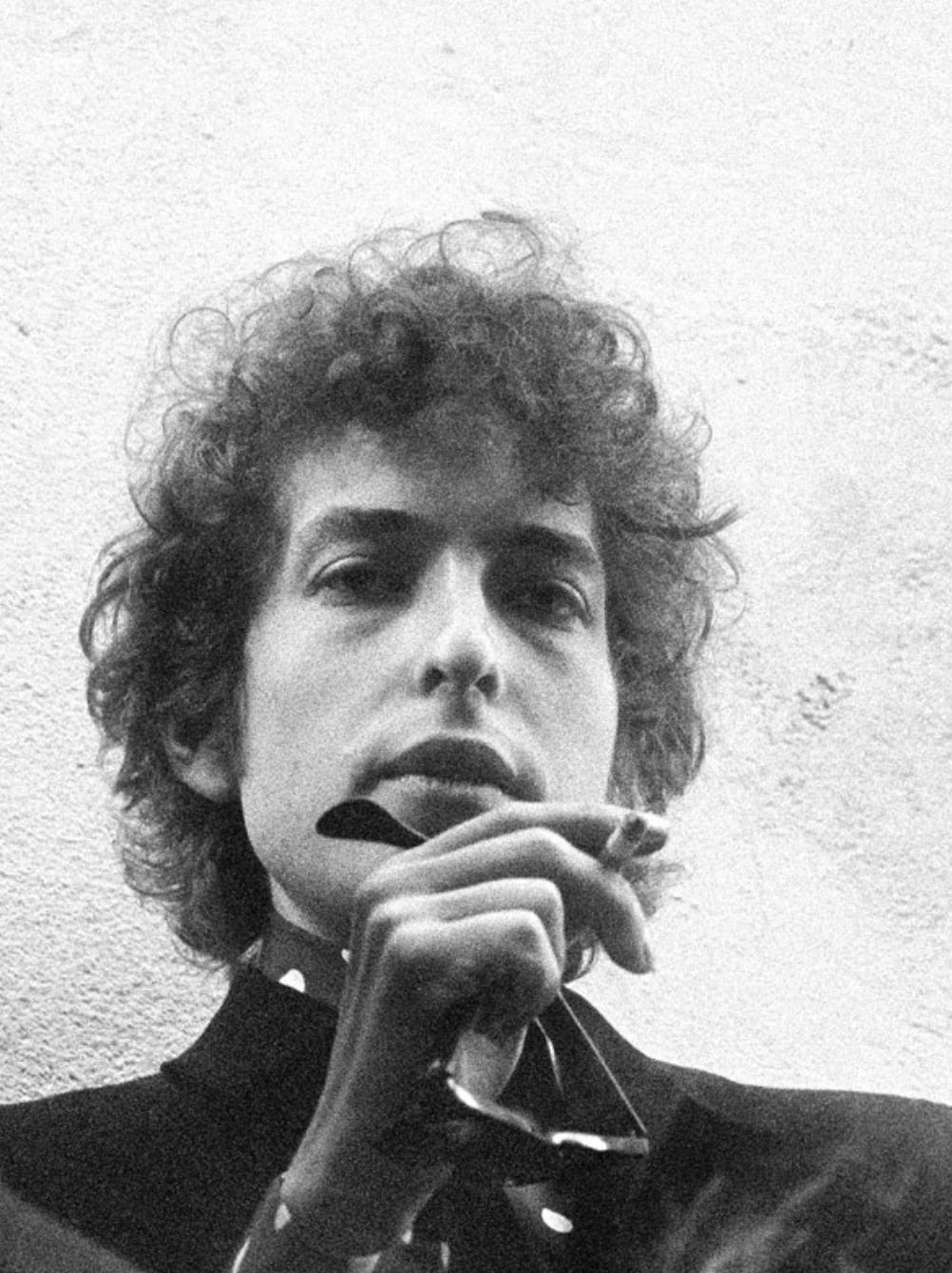
Dylan, source: San Francisco Art Exchange

A bit over a half-century ago, Bob Dylan debuted the extraordinary “Like a Rolling Stone,” a song that helped cement his standing in music and culture. Its scorching lyrics still resound:

Ahh you’ve gone to the finest schools, alright Miss Lonely
But you know you only used to get juiced in it
Nobody’s ever taught you how to live out on the street
And now you’re gonna have to get used to it
You say you never compromise
With the mystery tramp, but now you realize
He’s not selling any alibis
As you stare into the vacuum of his eyes
And say do you want to make a deal?

The song raises the question of whether going to “the finest schools” is really a plus. Do you get the best education – one that lets you deal with all the challenges of life – in elite schools? Or are you better off with a reasonably good public education at, say, Hibbing High School, where Dylan graduated, or the University of Minnesota, where he attended for just a year?

Certainly, Dylan’s modest schooling didn’t hold him back. His work is packed with literary and poetic allusions that seem to have come from either his self-education or dealings with writers such as Allen Ginsberg. It’s also heavily informed by his life as a struggling singer and then as a superstar.

This all occurs to me now as, over several days, my wife and I have dropped grandchildren off at a Department of Defense school on a U.S. military base in Germany. From the outside, the daily routine looks like what critics have dubbed “factory education,” with hundreds of kids filing off some 40 buses on cue to file into their K-12 classrooms.

Those arrivals are reminiscent of workers entering factories in films such as Chaplin’s 1936 classic, Modern Times. or the more troublesome Metropolis, Fritz Lang’s dystopian 1927 view of the future.

To be sure, order is important in such a system and the kids respond. At lunchtime, when a proctor hails them, otherwise lively and loud second-graders go silent, for instance. They raise their hands to count down a few seconds and then remain quiet for a few announcements. And lines are ubiquitous when they enter or leave classrooms.

But, unlike their parents (and differing from some private school systems), the students don’t wear uniforms. And their classrooms are colorful places, alive with lots of the imagery of education, just like most public schools back in the U.S. Yes, there’s regimentation, but there isn’t sterility.

Much as is the case in the U.S., moreover, the schooling the kids get depends a lot on the quality of a particular teacher. A good teacher makes all the difference, my daughter-in-law here – a teacher herself – tells me. Also, because their parents move around every couple years, the military kids often get shifted around among various schools, making continuity a challenge.

Still, as with Dylan, the chances for self-education are extraordinary for these kids. They can visit a bevy of European cities, getting varied cultural experiences their U.S. peers could find only in books. Whether it’s at the Louvre or in the Vatican, they can see first-hand the art that reflects the West. And in hearing the cacophony of languages or tasting so many different foods, they can sample immense variety.

I’m reminded of all this because of a discussion I had with another daughter-in-law in the States. We were debating the merits of private and public schooling.

This daughter-in-law, a neuroscience professor at Princeton, suggested that bright children will succeed whether they are in good public schools or good private ones. The cream rises to the top, she contended. In her view, it’s not necessary – and in some ways may be harmful – for kids to go to often-homogenous private religious day schools or other private academies.

This is a big contrast with the arguments a friend back in the States, a prof at the University of Nebraska-Lincoln, makes for Jewish day school education. Yes, there may be a sameness about the kids, but they also typically are quite bright and their dual-language education gives them a lift, he argues.

This fellow, himself a product of such day schooling, wants his kids to have a richest possible Jewish cultural immersion. He also wants them to get the best secular training available.

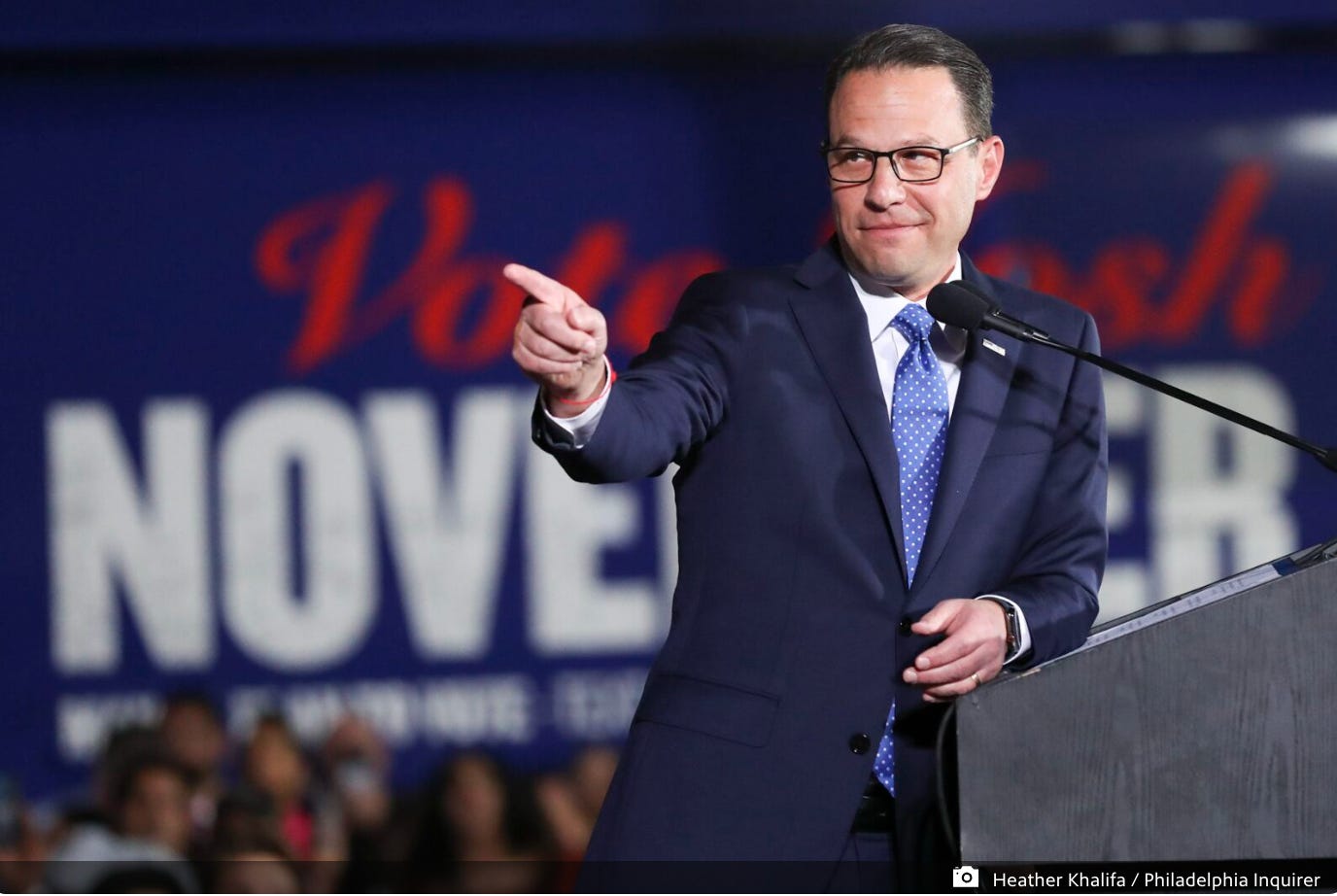
Josh Shapiro, Jake Tapper

His kids are getting educations similar to those a couple prominent folks have gotten. Josh Shapiro, the governor of Pennsylvania and a potential presidential candidate, and Jake Tapper, the CNN anchor, both are religious day-school system graduates – including in the high school they both attended.

They both went on to private universities. Shapiro attended the University of Rochester and Georgetown Law. Tapper graduated from Dartmouth.

Is either man poorer or better off for the exclusivity of their schooling, either early or later on? Certainly, the training didn’t hurt their careers. Whether it will help or hurt Shapiro’s chances for the White House is an open question.

Often, such Jewish day-school kids later move onto public high schools. There, my UNL friend argues, they get to experience more diversity among their fellow students than they did in the earlier years. That time, he suggests, makes up for any earlier shortcomings.

By contrast, here in the military system, the racial and cultural diversity among the families plays out in the schools from kindergarten on through. The rainbow of backgrounds gives kids a chance to mingle with others from all across the U.S. and beyond.

My U.S. daughter-in-law’s view in favor of public schools is an intriguing an understandable one. She is a very smart person who excelled in good public schools and later shone at a couple elite private universities, Brown and Harvard. And her view will bear on the education her daughters receive, of course. Her kids will start out at good public schools.

(As a proud grandpa, I must acknowledge that all eight of my second-generation progeny, of course, are brilliant, as well as delightful. They all already excel at everything they do.)

But I wonder about what the best route is for most students.

Throughout their K-12 years, two of our three kids experienced both private and public schooling; one had only public schooling, though very good public schooling. All wound up getting very good private university experiences later on (an interesting challenge for our finances). And all have done well professionally and personally and grew into intellectually and culturally intriguing people.

Was their schooling responsible for that? Were they examples of the cream rising to the top in any system?

Edie Sedgwick, source: Vintage Leisure

Edie Sedgwick, the privileged socialite and Andy Warhol muse who may have inspired “Like a Rolling Stone,” may or may not have been intimately involved with Dylan (he denied reports of an intense relationship). She seems to have been the spark for a couple other Dylan standards, “Just Like a Woman” and “Leopard-Skin Pillbox Hat.”

Sedgwick, who came from a Massachusetts blueblood family, attended exclusive private elementary schools and went on to Radcliffe. Ironically, her acting credits included starring in “Poor Little Rich Girl.” But she had a host of psychological problems and died of a drug overdose at 28.

Certainly, Sedgwick’s exclusive schooling didn’t help her all that much. In the end, perhaps, we’re all responsible for our successes and failures. The training we get may be less important than who we are.
Do we need hope and change again?

With Trump’s rage going too far, Americans could be ready for something better

Joseph Weber

Source: WBUR

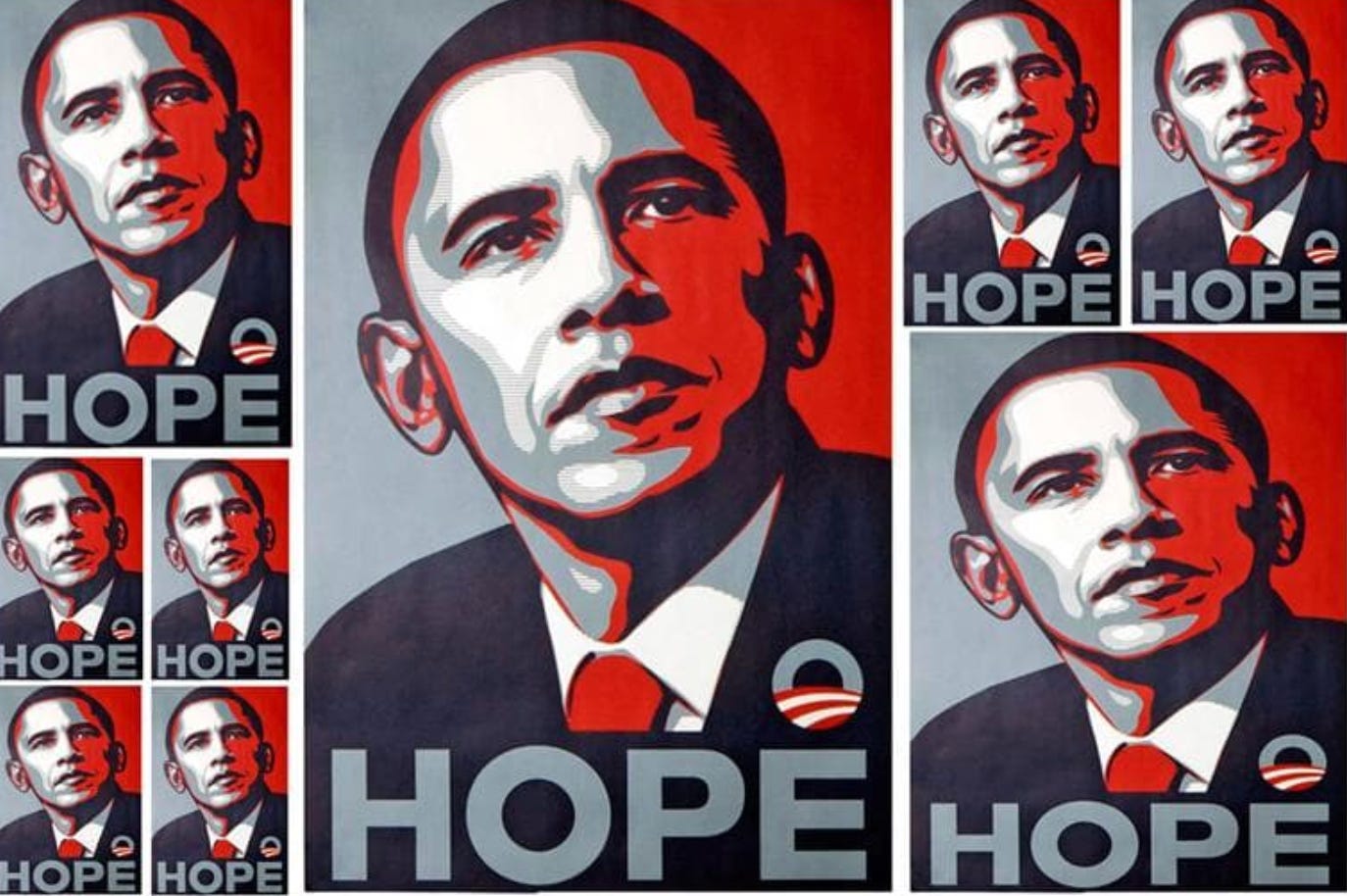
When Barack Obama won the presidency in 2008, he was a fresh face offering “hope and change,” his signature campaign message. He vowed to help the middle class, then struggling in one of the nation’s worst modern recessions, promised an end to the Iraq War, and pledged to install ethical government.

Obama pioneered the use of social media, data-driven voter targeting, and grassroots, small-dollar fundraising. Using platforms such as MyBarackObama.com, his team mobilized 2.2 million volunteers for ground-level organizing and personal outreach. The “campaign team used social media and technology as an integral part of their campaign strategy, not only to raise money, but also more importantly, to develop a groundswell of empowered volunteers who felt that they could make a difference,” academics at Stanford reported.

The technology allowed the junior Illinois senator to deliver an upbeat message, one surprisingly like Ronald Reagan’s “shining upon city on a hill,” his 1980 campaign theme.

“Yes, we can” – a phrase Obama borrowed from the Spanish version used by Cesar Chavez and Dolores Huerta of the United Farm Workers – became his rallying cry. It worked at a time when Americans craved hope and optimism, successful enough to give Obama two terms.

But when Donald J. Trump came to power – in his two successful presidential campaigns – much of the electorate wanted something far different. They were angry and feeling unheard. White voters, in particular, seemed to feel like they were losing their grip on the country, a message Trump delivered with no embarrassment. The undereducated, especially, felt sidelined economically.

Trump reflected, channeled and ultimately rode to power on their rage at a system that seemed to leave many of them out.

But now that we’re seeing the effects of rage as a governing principle, are many Americans feeling differently? With murderous attacks on alleged drug dealers, followed by military raids on foreign countries and war in the Middle East, as well as masked and armed federal agents rounding up tens of thousands within our borders (and killing some), are growing numbers of Americans appalled by their choice?

And, starting with the midterms and then in the presidential contest of 2028, will they seek a different message?

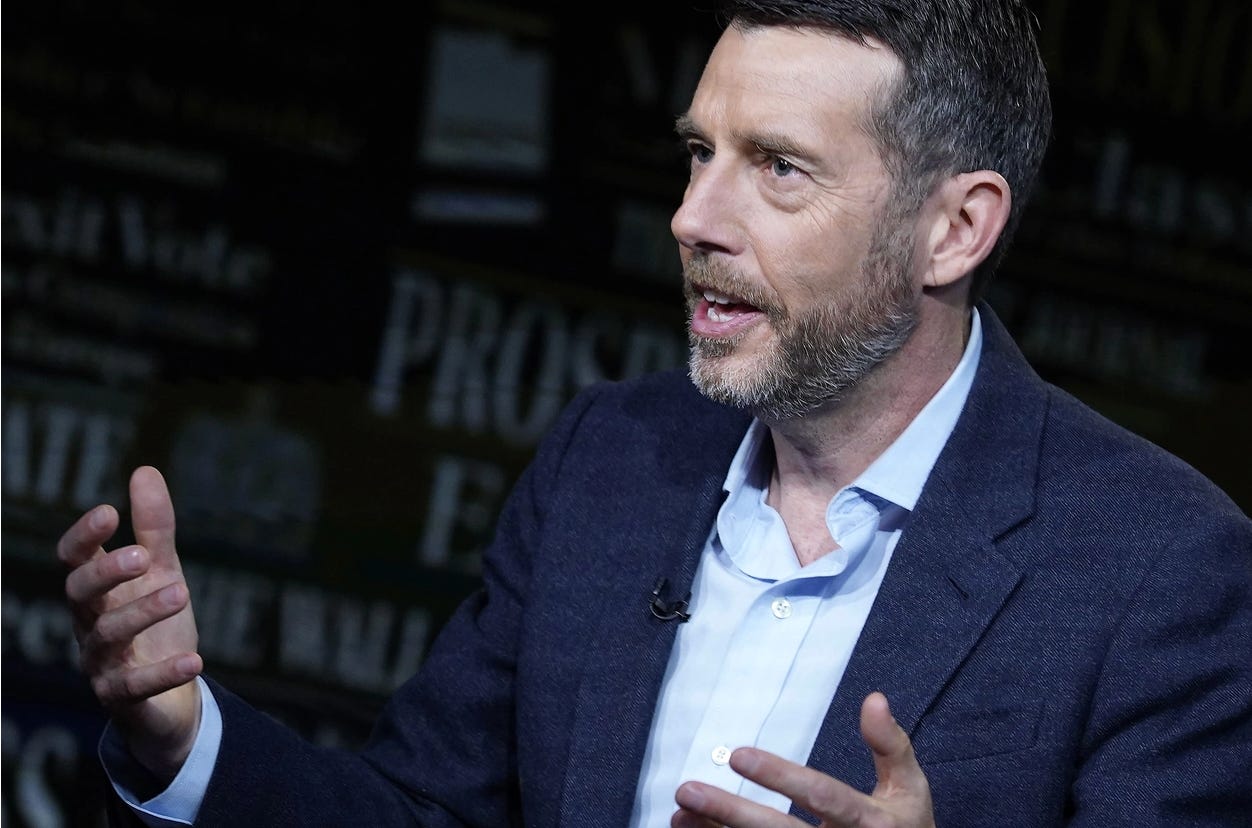
Will they want that delivered, moreover, in less conventional ways than the old techniques of position papers, local media tours and debates? Perhaps a daily “permanent show” distributed on “traditional TV, connected TV, Instagram, Facebook, YouTube, TikTok, Reddit, podcasts, Snapchat, radio, video games, community events, door-to-door canvassing, phone calls and texting,” as former Obama political adviser David Plouffe contends in a New York Times commentary.

And will they respond once again to upbeat messaging or something else?

David Plouffe, source: Politico

Plouffe, backed by some academic research, holds that anger will carry the day once again – this time disgust at Trump’s legacy. “The messaging must focus squarely on making vulnerable G.O.P. candidates, not the president, the face of the things voters are angry about: higher prices, local businesses closing, farm community devastation,” he argues.

At least one presidential hopeful, California Gov. Gavin Newsom, has embraced both some of the technology and some of Trump’s messaging style. He has gotten a lot of ink with constant posts on social media that troll the president. Newsom has used what Politico called “an inescapable, smashmouth, all-caps-laden and meme-filled X account” to counter Trumpism.

“There’s Newsom on Mount Rushmore,” the news outlet reported last year. “There’s Newsom getting prayed over by Tucker Carlson, Kid Rock and an angelic, winged Hulk Hogan. There’s Newsom posting in all caps, saying his mid-cycle redistricting proposal has led ‘MANY’ people to call him ‘GAVIN CHRISTOPHER ‘COLUMBUS’ NEWSOM (BECAUSE OF THE MAPS!). THANK YOU FOR YOUR ATTENTION TO THIS MATTER.’”

But I wonder. Do we really want a Trump-style alternative to the president, especially someone who strikes many as just a bit too slick?

Maybe we’re better off with a cooler head, a less everywhere candidate such as Josh Shapiro, perhaps. “He doesn’t host a podcast or spend much time on cable news,” The Atlantic reported. “Even as he engages in regular skirmishes with the White House over policy matters, the governor goes out of his way to not antagonize the MAGA base. Shapiro, who is expected to run for president in 2028, believes that his party’s prospects of regaining power depend less on combatting Donald Trump than on courting the president’s supporters.”

Pennsylvania Gov. Josh Shapiro

Or would Pete Buttigieg, Rahm Emanuel, J.B. Pritzker, Chris Murphy, Mark Kelly, Andy Beshear or someone else be best? The pundits are split, of course, and both the messenger and the message will be crucial.

Do Trump and MAGA make us more angry or just more exhausted by ugliness, self-dealing and rampant institutional disrespect in the top reaches of government? It seems likely that many of us — perhaps most – are offended by such unhinged and unpresidential messages as “Tuesday will be Power Plant Day, and Bridge Day, all wrapped up in one, in Iran. There will be nothing like it!!! Open the Fuckin’ Strait, you crazy bastards, or you’ll be living in Hell — JUST WATCH! Praise be to Allah.”

In time, polls will help us get a handle on public reaction. But, for now, we have the disparate responses of politicians.

For instance, Marjorie Taylor Greene, a former staunch ally turned Trump critic, said everyone in the Trump administration who claims to be a Christian needed to “beg forgiveness from God” and intervene in the president’s “madness,” as The Guardian reported. In a lengthy post on X, the former Republican congresswoman wrote: “I know all of you and him and he has gone insane, and all of you are complicit. I’m not defending Iran but let’s be honest about all of this.”

Bernie Sanders, an independent senator, said on X: “One month after starting the war in Iran, this is the statement of the President of the United States on Easter Sunday. These are the ravings of a dangerous and mentally unbalanced individual. Congress has got to act NOW. End this war.”

And Democratic Senator Chris Murphy also called it completely unhinged. He wrote on X: “If I were in Trump’s Cabinet, I would spend Easter calling constitutional lawyers about the 25th Amendment. This is completely, utterly unhinged. He’s already killed thousands. He’s going to kill thousands more.”

Even some Republicans have been appalled by Trump’s rhetoric, especially his so-far delayed threat to destroy Iranian civilization. Sen. Lisa Murkowski (R-Alaska) also criticized Trump’s latest threat, arguing on X that “This type of rhetoric is an affront to the ideals our nation has sought to uphold and promote around the world for nearly 250 years.”

Rep. Kevin Kiley (I-Calif.), who recently switched from a Republican to an independent, wrote on X that the U.S. “does not destroy civilizations… Nor do we threaten to do so as some sort of negotiating tactic. We should all desire a future of freedom, security, and prosperity for the people of Iran.”

It’s an open question whether Trumpism will in time burn out, its rage spent. Economic disenfranchisement, especially among the undereducated, seems likely to grow as income inequality widens. And racial strains may be an ever-present reality in our politics (see Kamala Harris’s fall).

But, given the lurches between extremes that now define our system, the time may be ripe in the coming couple years for candidates who embrace and eloquently deliver more positive messages. As Plouffe suggests, they’ll have to tap into all the many channels available now. Forget detailed policy papers and gauzy ads celebrating commitments to family and country. Surely, modern voters will need plenty of sizzle, along with the steak.

Still, decency, morality, a sense of presidential propriety and a promise akin to Reagan’s “shining city upon a hill” or Obama’s “hope and change” — two eminently successful pitches — may offer a much-needed alternative to the anger-driven, self-dealing and self-deluding politics of the moment.

Can “going high” work again?

Gutter level politics has a long history, but we seem to hit new lows daily

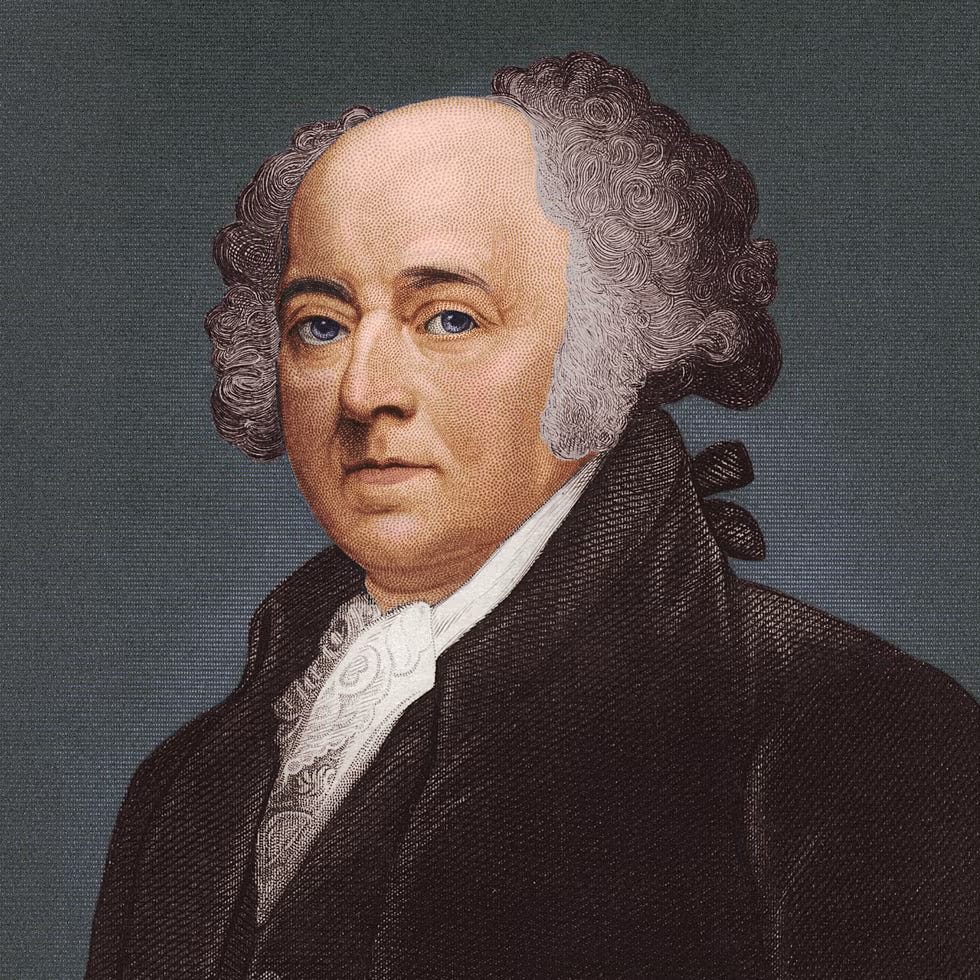
John Adams, source: Biography.com

For much of early American history, politics at the highest levels was a bloodsport.

Just consider how our founding fathers spoke of one another. To John Adams, Alexander Hamilton was “a bastard brat of a Scotch peddler” and Thomas Jefferson had “a mind, soured… and eaten to a honeycomb with ambition, yet weak, confused, uninformed, and ignorant.” For his part, Jefferson saw Adams as a “hideous hermaphroditical character, which has neither the force and firmness of a man, nor the gentleness and sensibility of a woman.” And, as all fans of the musical know, Hamiton died after Aaron Burr shot him in a duel.

So, is it inconsistent for Gavin Newsom to troll Donald J. Trump by mimicking his tweeting style?

“DONALD IS FINISHED — HE IS NO LONGER ‘HOT,’” the California governor’s press office tweeted. “FIRST THE HANDS (SO TINY) AND NOW ME — GAVIN C. NEWSOM — HAVE TAKEN AWAY HIS ‘STEP.’ MANY ARE SAYING HE CAN’T EVEN DO THE ‘BIG STAIRS’ ON AIR FORCE ONE ANYMORE — USES THE LITTLE BABY STAIRS NOW.”

The governor, a likely 2028 presidential contender, is even hawking merchandise à la Trump. His red caps proclaim “NEWSOM WAS RIGHT ABOUT EVERYTHING!” And he mocks Trump’s bombastic self-promotion in an X post that says “MANY PEOPLE ARE SAYING THIS IS THE GREATEST MERCHANDISE EVER MADE.”

And is it in keeping for Maryland Gov. Wes Moore, another possible presidential candidate, to refer on X to Trump as “President Bone Spurs” who “will do anything to get out of walking” and to offer him a golf cart? As The Wall Street Journal reported, Trump had criticized Moore over “out of control, crime ridden, Baltimore” on Truth Social after Moore had invited the president to walk the streets. “I would much prefer that he clean up this Crime disaster before I go there,” Trump said, and floated the idea of sending the National Guard to the streets of Baltimore, as he has in Los Angeles and Washington, D.C.

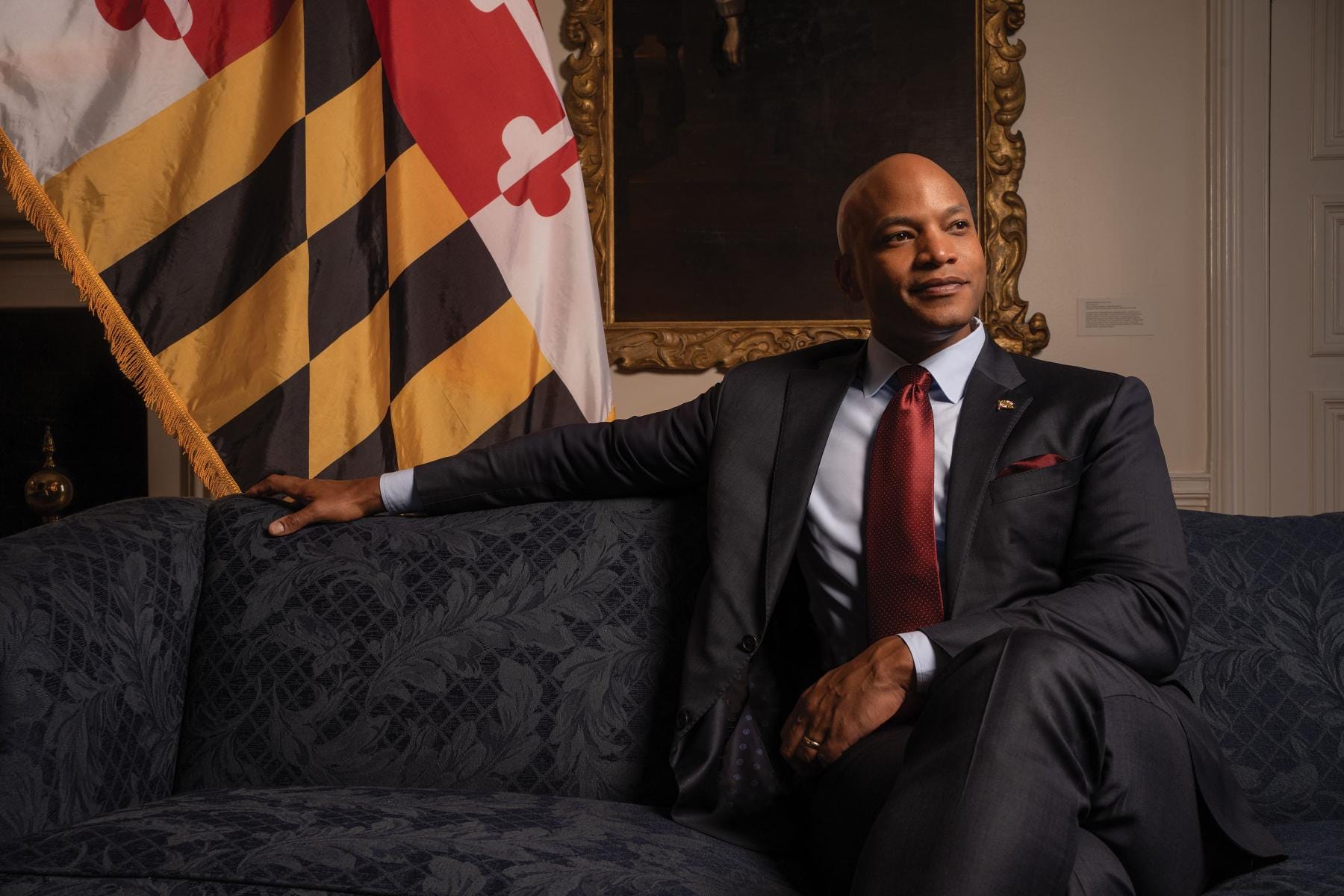
Maryland Gov. Wes Moore, source: Johns Hopkins Magazine

The bone spurs reference, of course, was to Trump dodging the draft during the Vietnam War by getting a doctor’s note about foot problems. For his part, Moore served as a captain in the U.S. Army and was deployed to Afghanistan, belatedly getting a Bronze Star.

And then there’s Illinois Gov. J.B. Pritzker’s jibe at the Democratic National Convention last year.

“Donald Trump thinks we should trust him on the economy because he claims to be very rich,” said Pritzker, an heir to the Hyatt Hotels fortune. “Take it from an actual billionaire, Trump is rich in only one thing: stupidity.” More recently, in response to Trump floating the idea of sending troops to Chicago, the governor said: “Donald Trump is attempting to manufacture a crisis, politicize Americans who serve in uniform, and continue abusing his power to distract from the pain he is causing working families.”

Of course, with his combative and bullying style, Trump years ago triggered the insultathon that American politics has become. Slinging the mud, however inartfully, works for him among his underschooled supporters, who often say he “tells it like it is,” unlike the polished politicians of most of the last decades.

It’s not clear when vulgarity and coarseness became synonymous with seeming truthfulness, but neither truth nor simple good manners are things Trump is well-acquainted with, of course. Some of his more juvenile nicknames for people who offend him include Allison Cooper (Anderson Cooper), Maggot Hagerman (Maggie Haberman), Tampon Tim (Tim Walz), Little Marco (Marco Rubio, his own Secretary of State) and, of course, Governor Newscum.

But does it need to be this way? Aside from winning splashy headlines, does it really help a potential president to imitate Trump’s buffoonery? Or would grace and class sell better to those in the electorate who find the schoolyard taunts and WWE-style crudeness tiresome and unworthy of anyone in – or prospectively in – the White House?

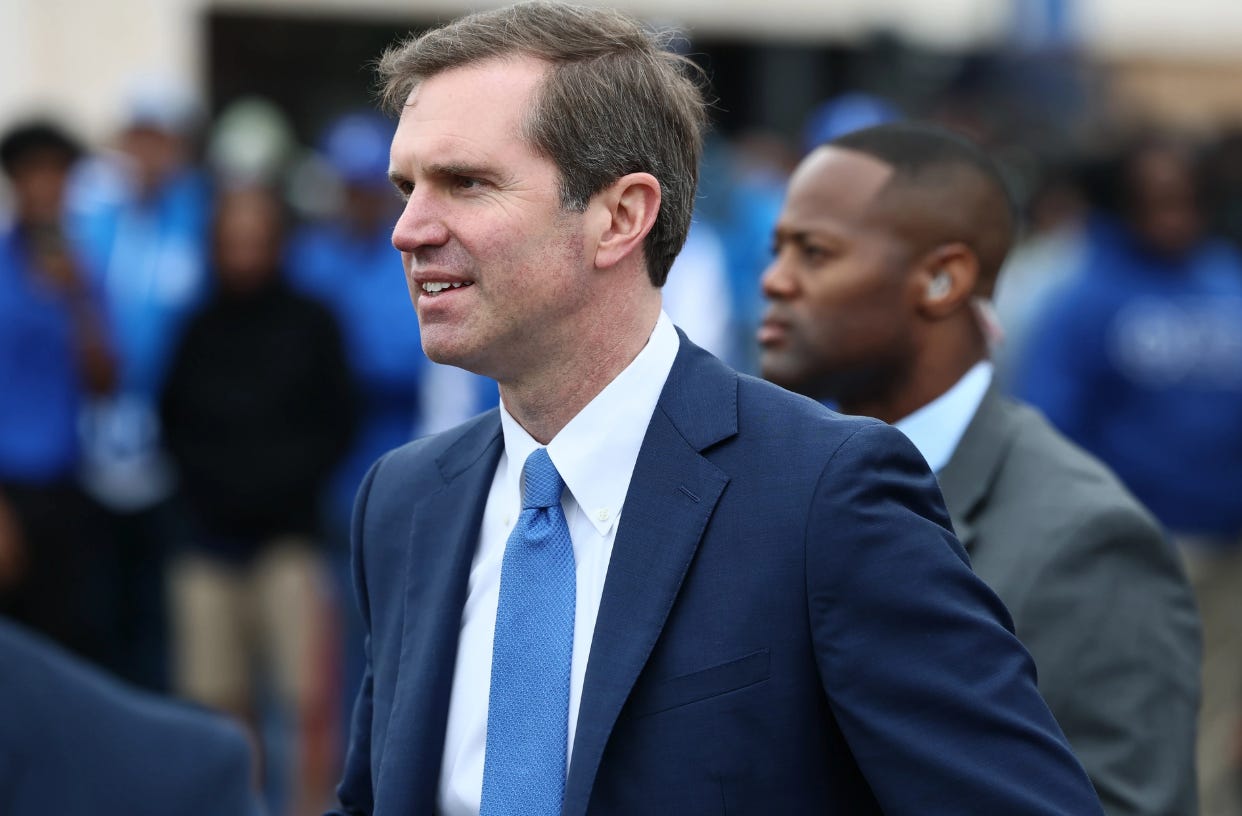
Kentucky Gov. Andy Beshear, source: Politico

Consider Andy Beshear, another potential White House occupant. After spring storms clobbered much of Kentucky, Trump belatedly approved emergency aid for the state. Beshear, the state’s popular Democratic governor, was gracious about the president. When asked about a call he got from Trump, Beshear said he and Trump had “good, positive conversation that was only about emergency assistance,” adding that “he was nothing but polite, and positive, and I was nothing but polite and positive.”

Beshear, the son of a former Kentucky governor, was elected to the state’s highest office in 2019 and reelected in 2023. A former attorney general in the state, he is also a deacon in his Christian church, as is his wife. Beshear claims to strive “each day to live out the values of faith and public service,” though right-wing religious figures have attacked what one called Beshear’s “radically progressive political ideology,” mainly blasting the governor’s defense of LGBTQ rights. Beshear riled them with an executive order banning “conversion therapy” on minors.

Beshear in many respects is reminiscent of Bill Clinton, albeit with far better morals. Clinton governed a red state, Arkansas, espoused moderate positions that many in our center-right country could tolerate. Clinton also for the most part avoided gutter-level insults, preferring a gentle jab to a schoolyard slur. Clinton last year poked fun at Trump’s penchant for talking mostly about himself. “So the next time you hear him, don’t count the lies, count the I’s,” he said.

Compared to the way Trump and some Democratic presidential aspirants are talking, that’s mild stuff, little more than blunt observation of the facts. It’s akin to Pennsylvania Gov. Josh Shapiro, another possible presidential contender, calling Trump a “pathological liar” after a debate with President Biden that was, in fact, marked by falsehoods from Trump. Similarly, it was fair game for Shapiro to say that Trump was “obsessed with continuing to spew hate and division in our politics” after Trump called him “the highly overrated Jewish Governor,” a phrase calculated to whip up Trump’s antisemitic followers.

Of course, Trump’s baiting approach drives responses that, even when they are factually on target, seem like descents to his level.

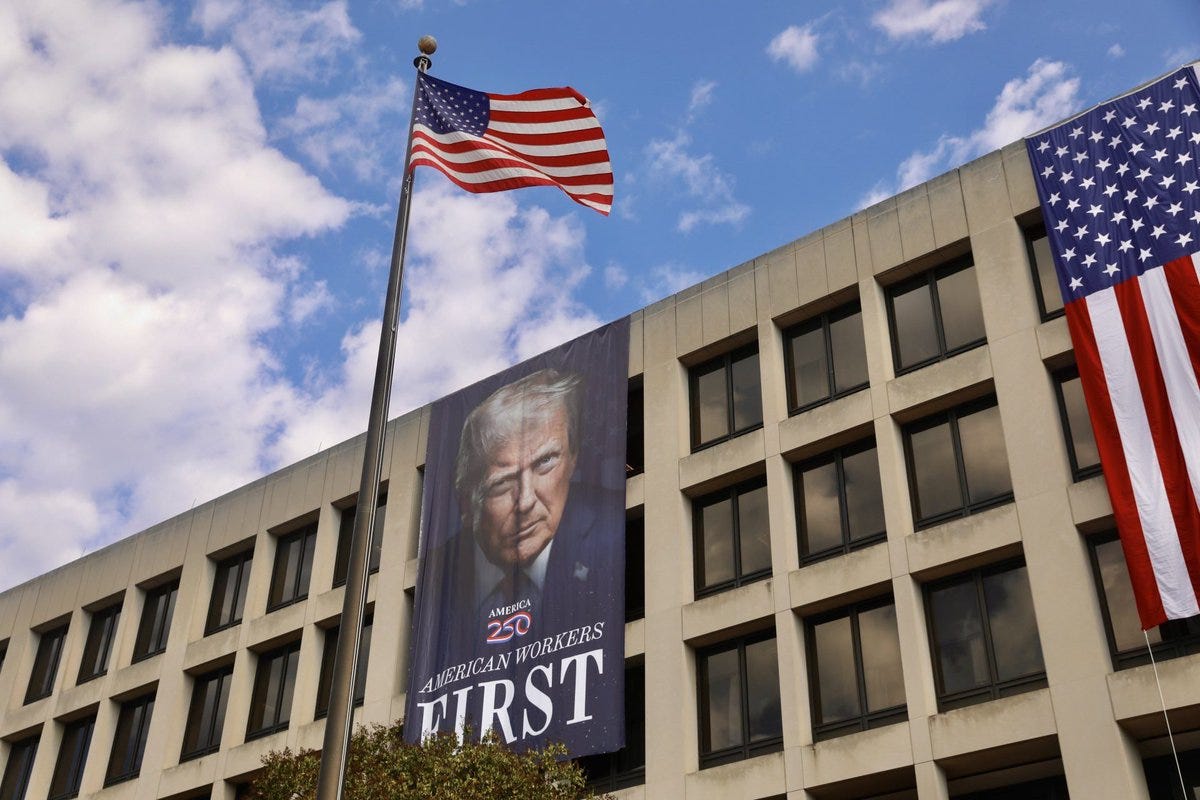
As for Clinton’s stab at Trump’s egocentricity, the president has done little in office but prove how self-aggrandizing he is. A huge image of him now draping the Labor Department not only reflects his megalomania, but evokes the propagandistic self-adulation of the world’s worst despots, men who ruled countries such as North Korean, Romania, Iraq and, of course, Germany.

Self-adulation at the Labor Dept., source: Meidastouch Network

Can someone such as Beshear bring the Democratic Party and the nation back to some sense of civility? Some sense of personal modesty and integrity? Has that boat sailed forever, throwing us back to the days when national leaders vied for who could be more vicious?

“When they go low, we go high,” is how Michelle Obama put it in an address at the 2016 Democratic National Convention. Sadly, she took a sharper tack at last year’s convention, accusing Trump of “going small.” The former first lady said: “Going small is petty, it’s unhealthy, and, quite frankly, it’s unpresidential… It’s his same old con: doubling down on ugly, misogynistic, racist lies as a substitute for real ideas and solutions that will actually make people’s lives better.”

Still, it’s entirely proper to attack misogyny, racism and con artistry, along with the savagery Trump and his minions have brought to bear against immigrants. His conduct and that of his Justice Department and ICE against Kilmar Abrego Garcia, for instance, is despicable. So, too, must we condemn his dictatorial aspirations, as shown by his troop deployments in American cities, along with the sheer vindictiveness of his actions against critics. Consider the FBI raid on the home of John Bolton, a former Trump ally who has his old boss’s number all too well and often lays that out in TV appearances, infuriating the president.

“The real offender here is a President who seems to think he can use the powers of his office to run vendettas,” the often Trump-friendly editorialists at The Wall Street Journal said. “We said this was one of the risks of a second Trump term, and it’s turning out to be worse than we imagined.”

Lambasting loathsome policies in virile and sharp terms is different from calling someone “Crooked Joe” or “Sleepy Joe.” Or, as Trump labeled Bolton, calling someone “a lowlife” and a “sleazebag” — terms he applied to the Yale lawyer who served under Presidents Reagan and George H.W. Bush before becoming a once-trusted adviser in the first Trump White House. We need bold and sharp criticisms of what Trump does, as well as smart insights into his character or lack of it.

But how much longer will all this ugliness last? Will it end in 2029? Or has Trump so polluted the atmosphere that it will take a generation to clear the foul air? Can a Beshear or someone like him win against Trumpist toadies such as JD Vance by going high? In time, we’ll find out.