
We’re getting a master class in would-be autocracy
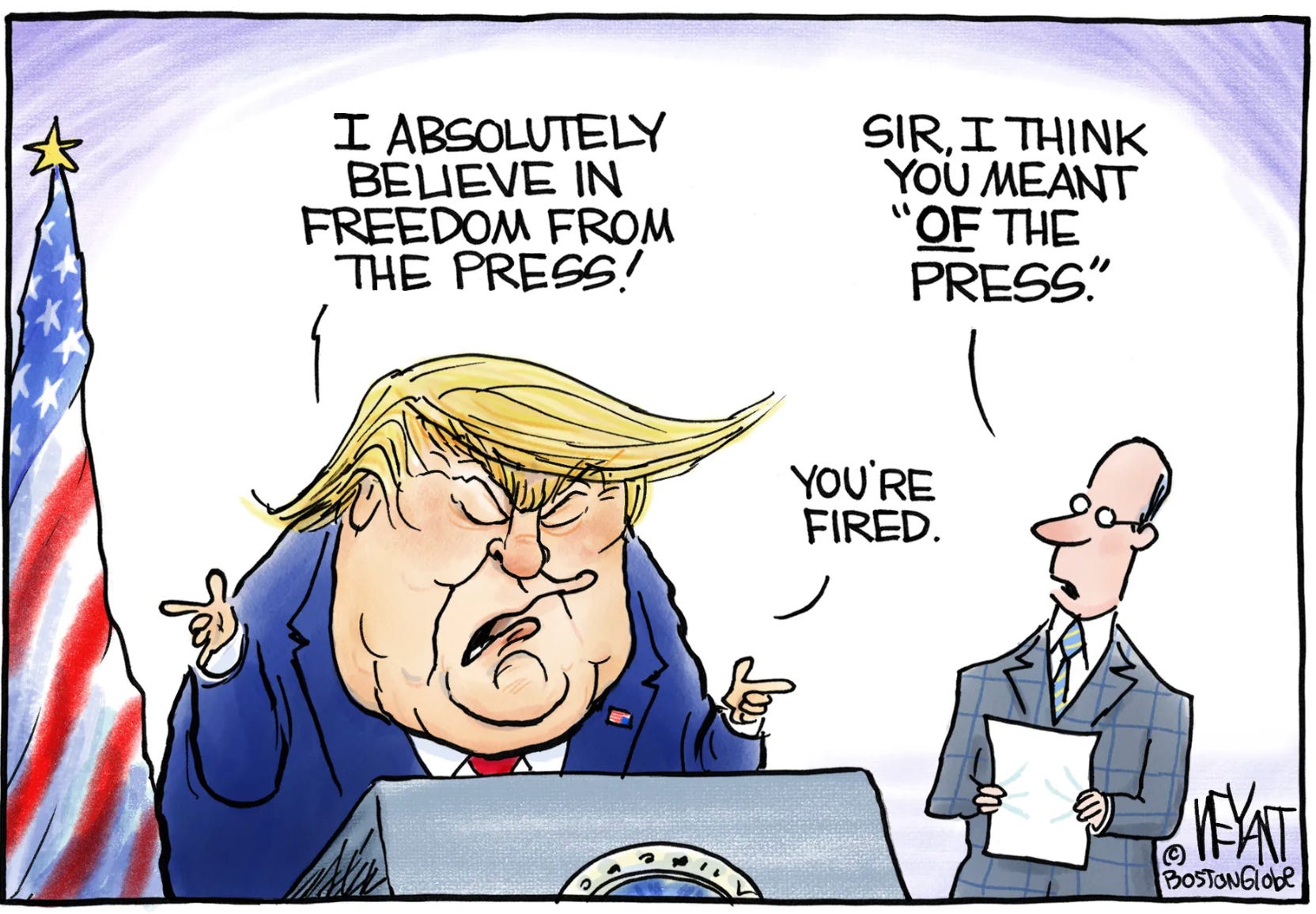
Nearly a decade ago, during his first presidential term, Donald J. Trump infamously tweeted that major media outlets were “the enemy of the American people.” That drew an intriguing response from a fellow Republican, Sen. John McCain.
“I hate the press,” the Arizona war hero sarcastically told NBC News’ Chuck Todd on “Meet the Press.” “I hate you especially. But the fact is we need you. We need a free press. We must have it. It’s vital.”
And McCain – whom Trump had derided as “a loser” — made the risks of losing an unfettered press all too clear.
“If you want to preserve – I’m very serious now – if you want to preserve democracy as we know it, you have to have a free and many times adversarial press,” McCain said. “And without it, I am afraid that we would lose so much of our individual liberties over time. That’s how dictators get started.”
So, now – after he has coopted Congress, the Senate and much of the Judiciary, and weaponized parts of the military against Americans – Trump and his minions are going after the press anew. The administration subpoenaed five New York Times reporters after they reported that the new Air Force One, a Qatari-donated Boeing 747-8, lacked advanced security features, including antimissile capabilities. The journalists cited sources who spoke on the condition of anonymity, a common technique when sensitive matters are involved.
Chillingly, federal agents showed up at the homes of some of the reporters to serve the documents on them. “The appearance of federal law enforcement agents on the doorstep of news reporters should shock the conscience of any American who believes in the Constitution and the press freedom it protects,” David McCraw, a lawyer for the Times, said in a statement.
The administration will likely try to force the reporters to name their sources, who presumably would be prosecuted for divulging information this leak-wary White House seeks to suppress. The DOJ insisted that the reporters are not the targets, but rather those leaking classified information are.
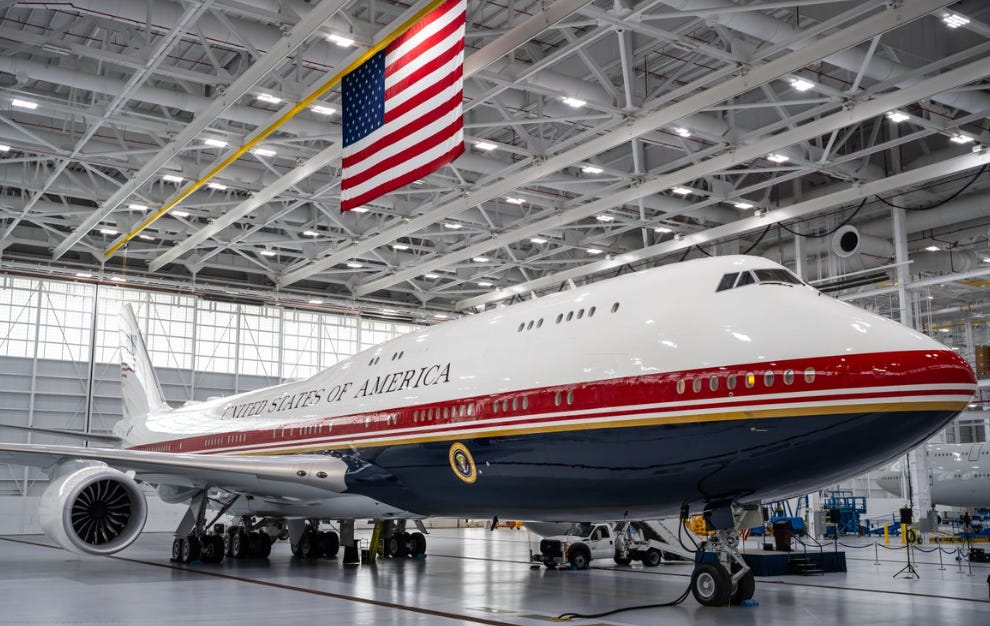
What seems more likely is that l’affaire Air Force One is simply embarrassing to Trump, one of a string of incidents that have been leaving the president red-faced. After all, how could his much-adored “flying palace” be ill-equipped? The reports coincide with his repeated failures to resolve the ill-conceived Iran War, the Reflecting Pool “Algaegate,” and his bizarre misstatements during a NATO meeting (for the record, there’s no “Islamic Republic of Japan.”)
The New York Times is expected in the first instance to fight the subpoenas in court. Taking such a stance paid off earlier this year when the Justice Department sought to compel testimony from journalists at The Wall Street Journal and The Washington Post. The feds withdrew the subpoenas after both news organizations fought back in sealed filings.
As the Times reported, the Justice Department had sought information from three reporters at The Journal about an article detailing how top officials warned Trump of the risks of a military campaign against Iran. It also sought information from a reporter at The Post about reporting related to U.S. military action in Venezuela.
Whether Justice is on firmer legal ground in the Air Force One case could prove to be a crucial matter for journalists. The stakes are every bit as high as McCain suggested they could be so many years ago, as several journalism organizations have contended:
“The National Press Club calls on the Justice Department to immediately withdraw these subpoenas and reaffirm a principle that has long distinguished the United States: a free and independent press serves the people, not the government,” National Press Club President Mark Schoeff Jr. said in a statement.
White House Correspondents’ Association President Weijia Jiang said the organization stands with the Times reporters, saying they were “targeted for doing their jobs to uphold the public’s right to know how its government operates.”
“The WHCA condemns any act of intimidation against journalists, including attempts to pressure them into revealing sources,” Jiang added.

And Stephen J. Adler, chair of the Reporters Committee for Freedom of the Press, said, “When the public’s right to know is crushed, as the Trump Administration is trying to do with its subpoenas against The New York Times, all of us suffer irreparable harm, as does the freedom upon which this nation is built.”
Of course, if the journalists do get hauled up to testify before a grand jury, they likely would refuse to disclose their sources. That could set up a painful and costly time for those reporters, as several cases over the last quarter-century have shown.
In 2001, a Houston-based author writing a book about a local murder spent 168 days in jail because she would not identify sources or give her notes to law enforcement. Four years later, New York Times reporter Judith Miller was sentenced to jail because she refused to reveal who told her that Valerie Plame was an undercover CIA agent and Miller served 85 days, testifying ultimately because her source gave his permission. Then, in 2008, a subpoenaed USA Today reporter in an anthrax-by-mail case was held in contempt of court and ordered to pay $500 per day for the first seven days in which she refused to comply, $1,000 per day for the next seven days, and $5,000 a day for the next seven days after that – all from her own pocket, not her employer’s. That contempt charge was later thrown out.
The orders for the Times journalists to testify could put the DOJ official who issued them into interesting political crosshairs. Jay Clayton, the U.S. attorney in the Southern District of New York who issued the subpoenas, was recently nominated by Trump to serve as director of national intelligence, succeeding Tulsi Gabbard. Clayton, who had chaired the federal Securities & Exchange Commission in Trump’s first term, appears to be one of Trump’s most devoted toadies.
For instance, Clayton did not object when the Trump Administration fired Maurene Comey as a prosecutor in the Southern District office in 2025 in a vindictive political move. Comey’s main problem: she is a daughter of James B. Comey, the former FBI director who is one of Trump’s most prominent adversaries. She also handled cases against Trump’s longtime friend, child molester Jeffrey Epstein.
Clayton is to testify on July 15 before the Senate Intelligence Committee and journalism advocates are calling on committee members to press him on the administration’s latest assault on journalists.
“Donald Trump’s war on the press is looking for another victim, this time the storied federal prosecutors office in Manhattan,” Bruce D. Brown, president of the Reporters Committee for Freedom of the Press, said in a statement. “The subpoenas it issued to journalists at The New York Times break from longstanding Justice Department practice to protect the public interest and press independence by requiring prosecutors to only seek information from reporters as a last resort when all other avenues have been exhausted. When Jay Clayton appears before the Senate Intelligence Committee on Wednesday, members of both parties must not let him escape accountability.”
Thankfully for journalists and the public, Trump and his minions have been set back on some of their anti-press efforts.
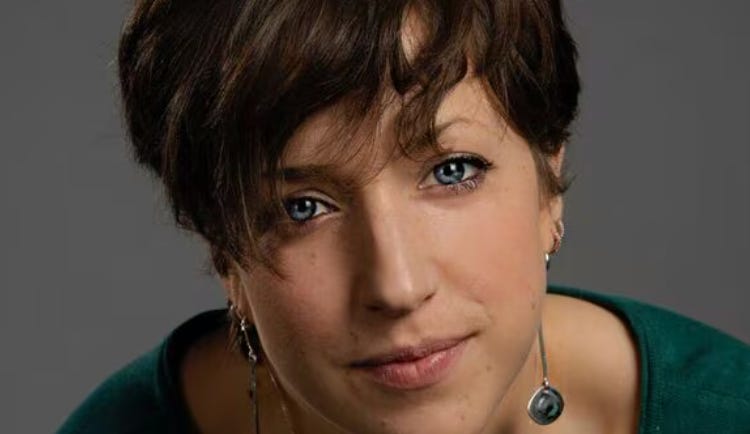
In January, FBI agents descended on the home of a Washington Post reporter, Hannah Natanson, as part of an investigation into a government contractor’s handling of classified material. The agents seized phones, laptops and a smartwatch after executing a search warrant.
But, in the following month, a federal judge ruled that he – not Justice – would review her materials.
“Given the documented reporting on government leak investigations and the government’s well-chronicled efforts to stop them, allowing the government’s filter team to search a reporter’s work product — most of which consists of unrelated information from confidential sources — is the equivalent of leaving the government’s fox in charge of the Washington Post’s henhouse,” Magistrate Judge William B. Porter wrote in his opinion.
Not surprisingly in this appeals-happy administration, the judge’s order is under appeal.
Of course, Trump and his lapdogs have also scored some victories in high-profile assaults on the press. They’ve sued TV networks that have produced critical coverage of Trump’s actions, including ABC, they’ve made them the target of regulatory pressure from the once-independent Federal Communications Commission; and they’ve cut press access or significantly curtailed it at both the White House and Pentagon.
Under CBS News Editor in Chief Bari Weiss, “60 Minutes” bowed to Trumpian pressure in killing a story involving deportation. The network also heavily edited an interview with Trump on the program, including omitting comments about whether the 2020 election was rigged. Weiss was hired by David Ellison and his father, Larry, the Trump-backing billionaires who own CBS parent Paramount. Trump praised her as “a great new leader.”
Trump’s administration has even used labor law to pressure The New York Times via an Equal Employment Opportunity Commission lawsuit that was decried by the newspaper as “politically motivated.”
As Trump continues to try to cow the press, the work of the Times, the Journal, the Post and other outlets has grown more important than ever. And, given the largely supine Congress, courts have emerged as the last bastions in helping them fight on behalf of the public.
Ultimately, however, the largely Trump-friendly Supreme Court will likely have to weigh in on some of the press cases. And, so far, the prospects look poor for the press.
For instance, the Supreme Court recently declined to intervene to halt an $800-a-day fine imposed on former Fox News reporter Catherine Herridge involving her coverage in 2017 of a Chinese American scientist who was investigated by the FBI but never charged. The issue: Herridge has refused to disclose a confidential source.
If Sen. McCain were around today, he would likely be appalled at how the system lately is ill-serving the press and, by extension, the public. Of course, he was onto Trump long before many others. He once excoriated the president for “naivete, egotism, false equivalence, and sympathy for autocrats.”
Lately, the last charge seems the most resonant.