Watch the parkin’ meters

Why do so many politicians disappoint us?
Joseph Weber

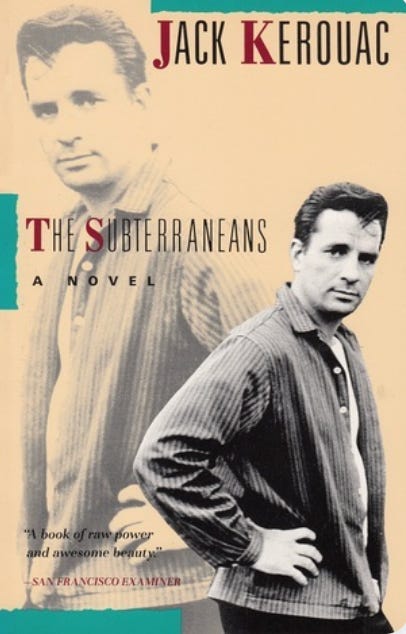
Source: Goodreads

In 1965, Bob Dylan released “Subterranean Homesick Blues,” a nod to the Beats of the 1950s, particularly Jack Kerouac’s novel, The Subterraneans. The stream-of-consciousness autobiographical book explores a deeply flawed writer struggling in an ill-fated romance.

In Dylan’s hallucinatory, fast and wonderful song, many of the lyrics are memorable, but perhaps none more than these:

Look out kid
You’re gonna get hit
But users, cheaters
Six-time losers
Hang around the
theaters
Girl by the
whirlpool
Lookin’ for a new
fool
Don’t follow leaders
Watch the parkin’
meters

Let’s pounce on the “leaders” lines for a moment. When we look at the number of politicians – i.e., leaders – with serious personal flaws, Dylan’s libertarian final lines in that verse seem prescient and, sadly, all too enduring.

From awful presidents, such as Donald J. Trump, to accomplished ones, such as William J. Clinton, to many in lesser offices, we see people who use their power and various professional positions for sexual manipulation and dishonesty of all sorts. In some cases, we see financial misdealings and political malfeasance.

One key question is: why do such deeply flawed people – often individuals with tortured personal psyches — seek public office? What is it that they seek in politics? And, perhaps more important, why do voters elect them (though not always, as we’ll see below)?

Certainly, many of us are not paying mind to Dylan’s caution.

Everyone knows that the dirt in the lives of the people with feet of clay has a way of coming out. Surely, folks in media know that all too well.

Just as Trump and Clinton’s sometimes sordid misadventures with many women were front-page news, so, too, were those of John F. Kennedy (at least, after his presidency and assassination) and Ted Kennedy. Same with former Colorado Sen. Gary Hart, whose presidential hopes were shattered by the “Monkey Business” scandal.

More recently, we had former Rep. George Santos, who was expelled from Congress in 2023 after repeated scandals came to light, including colorfully falsifying his background. A prodigious liar, the Republican congressman made up stories about his college education, his employment, his real estate, his religious background, his athletic achievements, his wealth and even his mother’s death (he claimed it was on 9/11). What nailed his career were convictions on wire fraud and aggravated identity theft.

Santos was sentenced to 87 months for his criminal convictions but served just three months because Trump commuted his sentence. Trump said the fraudster had been “horribly mistreated.” Birds of a feather, perhaps?

Recall that Trump is a felon, convicted on 34 counts of falsifying business records. He was also civilly found to be liable for sexual abuse and defamation of the writer E. Jean Carroll, on whom he has sicced his Justice Department for alleged perjury. Trump is on the hook for more than $80 million in the Carroll affair.

Trump also just pardoned the unfortuitously named Stephen Buyer, a former Republican congressman from Indiana who served nearly two years in prison for making illegal stock trades based on inside information after he left office, as The Guardian reported. Buyer was sentenced in 2023 for trades he made while working as a consultant and lobbyist. He was released in 2025, and the Supreme Court in May rejected Buyer’s appeal without comment or noted dissent.

Even though three of the six conservative justices on the court are Trump appointees, the president in effect overruled them in granting a full, complete and unconditional pardon to this convicted felon.

Again, birds of a feather, it seems.

Graham Platner, source: Maine Public

Of course, plenty of Democrats have much to answer for, too. Now, we have a Senatorial aspirant, Maine’s Graham Platner, a 41-year-old political naif who is expected to win the Democratic primary and to run in the fall against the 73-year-old Republican stalwart Susan Collins.

Platner brings a steamer trunk full of personal baggage. Among his offenses are making demeaning social media posts about women, sporting a since-covered up Nazi tattoo and alleged (but denied) reports of physical intimidation of at least one woman he dated. His wife has said he sexted with several women early in their marriage, as she suggested that “no marriage is perfect.”

For his part, Platner has said that recent reporting about him “struggling, not being a good boyfriend, certainly self-medicating with alcohol,” is something he’s been “very up front since the beginning of this campaign that that was a pretty dark period of my life after I came back from my combat service,” as Forbes noted. He added there are things in media reports that he “absolutely will take responsibility for…But those serious allegations are just not true.”

Nonetheless, his chances of beating Collins have “plummeted,” as the news outlet reported. “Bettors on Kalshi predict the race is now a toss up with the Democratic candidate’s odds falling from 72 percent last month to 54 percent early on Saturday [June 6]. On the crypto betting platform Polymarket, Platner’s odds have a similar drop, falling from 78 percent on May 23 to 60 percent …”

The stakes in the Maine fight are enormous, though. A win by Platner could tilt the balance in the Senate toward Democrats, putting party officials in a precarious position. Do they hold their noses and support a tainted candidate? Or do they shun him, offended by the stench of a senator sitting with them for the next six years (at least) with much to apologize for?
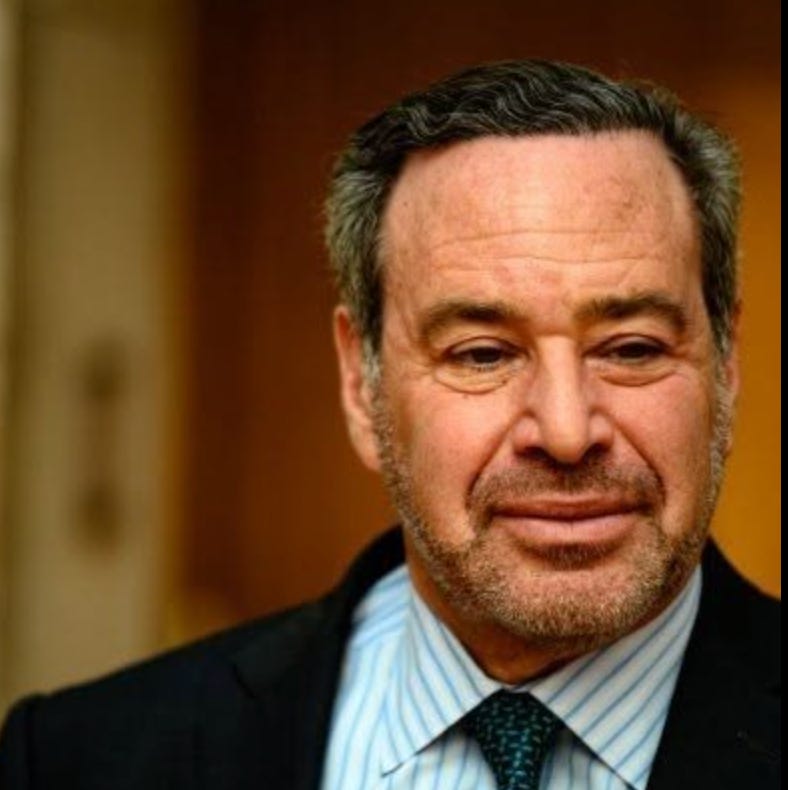
David Frum, source: Facebook

David Frum, writing in The Atlantic, posed the matter as a choice between “character and power.” He compared the Platner quandary to the choice Republicans faced in 2017 with Roy Moore, a Senatorial candidate from Alabama who, as a 32-year-old assistant district attorney had “initiated sexual contact” with a 14-year-old girl, as well as three other women, whom he pursued when they were underage.

GOP leaders including Sen. John McCain and two dozen other Republican senators as well as then-Senate Leader Mitch McConnell urged Moore to quit the race, even though the Republicans had hung onto the Senate by a thread. Moore refused to quit but ultimately lost the race to a Democrat.

“Not as paragons of moral virtue but as pragmatic politicians, the Senate Republicans of 2017 made and executed a calculation: We are better off sacrificing the Alabama Senate seat for three years than enduring Roy Moore as a Senate colleague for who knows how long,” Frum wrote. “To defend Platner, Democrats will have to choose between two strategies: denouncing as liars a possibly growing number of women—or else accepting the stories, but then arguing that twisting a woman’s arm and locking her in a room is not quite the same as beating her.”

Certainly, the l’affaire Platner knocks the Dems on the back foot.

“Do they want to haggle over just how inappropriate these romantic relationships were, even as they argue that wearing an SS tattoo throughout most of one’s adult life does not prove that one is a literal Nazi?,” Frum asked. “These are not conversations that Democrats should wish to prolong in a year that might otherwise deal with Trump’s abuses of power, corruption, and economic mismanagement.”

Whether Platner could serve as a perfectly fine legislator, despite his dubious past, is an open question. Some argue that personal foibles, especially sexual ones, are irrelevant to an elected official’s ability to do a decent job in office. After all, the argument goes, we’re not choosing someone for sainthood, but just to do a decent job for constituents.

But the problem is that character outs, it seems. It seems likely that the citizens of New Jersey would have been better off if Robert Menendez, now a felon residing in a prison in Pennsylvania, had not been elected. He was convicted in 2024 of multiple corruption and bribery charges involved gold bars, cash and luxury cars and is now serving an 11-year sentence.

And, certainly, the nation would have been better served if Vice President Spiro Agnew hadn’t accepted hundreds of thousands of dollars in bribes and kickbacks while serving in various offices before the White House. He resigned in disgrace but avoided jail time even as he paid back hundreds of thousands of dollars.

For Menendez and Agnew, their mendacity didn’t go public before they attained their electoral heights. It took a while for their dirty laundry to get aired. With others, such as Clinton and, certainly, Trump, the flaws were well known and apparently forgiven by the electorate. Now, with Platner, the smudges on his escutcheon are slowly becoming apparent.

But the question remains: why do such flawed people seek the limelight, even when it can sear them? Is there something in their tortured psyches about seeking redemption or justification? Do they turn to public adoration as a way to fill holes in their character and mental makeup?

Perhaps more important, though, why do voters look past their sometimes obvious faults? Have our standards plunged so much that character is irrelevant now?

For Dylan and for plenty of journalists long accustomed to covering political scandal, the lesson is clear. Keep a skeptical eye on all politicians and would-be politicians. Don’t fall in love with them, especially those whose views align with yours. Vote for those who seem to speak for you but recognize that they’ll usually disappoint you in the end.

And, even as you watch their often troubling antics, be sure to watch your parkin’ meters. Perhaps happily, there’s no doubt that the stuff of our ordinary workaday lives deserves more attention than many of the people we choose to represent us.
Juiced in it

Does private schooling help or hurt one’s chances in life?

Joseph Weber

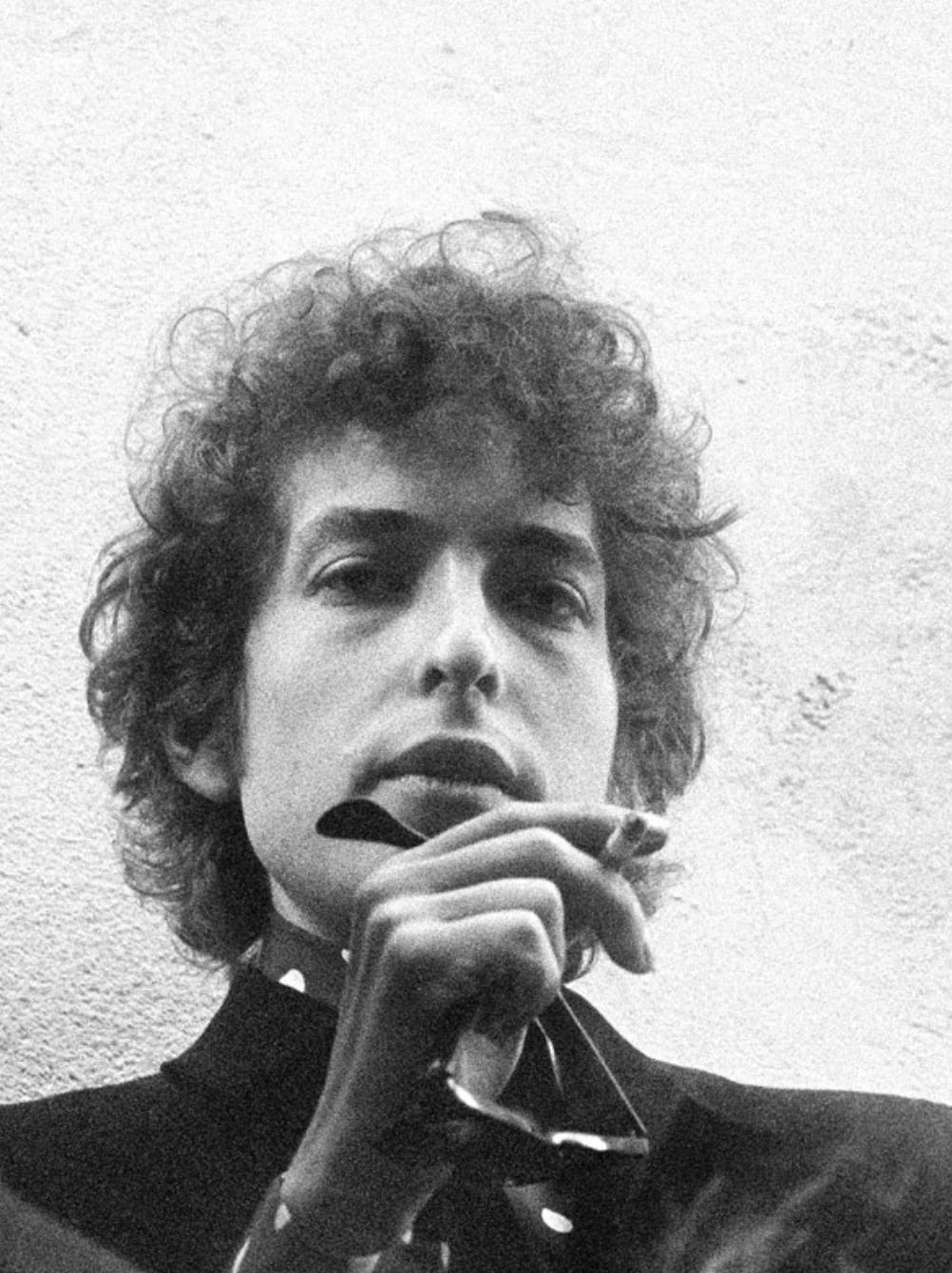
Dylan, source: San Francisco Art Exchange

A bit over a half-century ago, Bob Dylan debuted the extraordinary “Like a Rolling Stone,” a song that helped cement his standing in music and culture. Its scorching lyrics still resound:

Ahh you’ve gone to the finest schools, alright Miss Lonely
But you know you only used to get juiced in it
Nobody’s ever taught you how to live out on the street
And now you’re gonna have to get used to it
You say you never compromise
With the mystery tramp, but now you realize
He’s not selling any alibis
As you stare into the vacuum of his eyes
And say do you want to make a deal?

The song raises the question of whether going to “the finest schools” is really a plus. Do you get the best education – one that lets you deal with all the challenges of life – in elite schools? Or are you better off with a reasonably good public education at, say, Hibbing High School, where Dylan graduated, or the University of Minnesota, where he attended for just a year?

Certainly, Dylan’s modest schooling didn’t hold him back. His work is packed with literary and poetic allusions that seem to have come from either his self-education or dealings with writers such as Allen Ginsberg. It’s also heavily informed by his life as a struggling singer and then as a superstar.

This all occurs to me now as, over several days, my wife and I have dropped grandchildren off at a Department of Defense school on a U.S. military base in Germany. From the outside, the daily routine looks like what critics have dubbed “factory education,” with hundreds of kids filing off some 40 buses on cue to file into their K-12 classrooms.

Those arrivals are reminiscent of workers entering factories in films such as Chaplin’s 1936 classic, Modern Times. or the more troublesome Metropolis, Fritz Lang’s dystopian 1927 view of the future.

To be sure, order is important in such a system and the kids respond. At lunchtime, when a proctor hails them, otherwise lively and loud second-graders go silent, for instance. They raise their hands to count down a few seconds and then remain quiet for a few announcements. And lines are ubiquitous when they enter or leave classrooms.

But, unlike their parents (and differing from some private school systems), the students don’t wear uniforms. And their classrooms are colorful places, alive with lots of the imagery of education, just like most public schools back in the U.S. Yes, there’s regimentation, but there isn’t sterility.

Much as is the case in the U.S., moreover, the schooling the kids get depends a lot on the quality of a particular teacher. A good teacher makes all the difference, my daughter-in-law here – a teacher herself – tells me. Also, because their parents move around every couple years, the military kids often get shifted around among various schools, making continuity a challenge.

Still, as with Dylan, the chances for self-education are extraordinary for these kids. They can visit a bevy of European cities, getting varied cultural experiences their U.S. peers could find only in books. Whether it’s at the Louvre or in the Vatican, they can see first-hand the art that reflects the West. And in hearing the cacophony of languages or tasting so many different foods, they can sample immense variety.

I’m reminded of all this because of a discussion I had with another daughter-in-law in the States. We were debating the merits of private and public schooling.

This daughter-in-law, a neuroscience professor at Princeton, suggested that bright children will succeed whether they are in good public schools or good private ones. The cream rises to the top, she contended. In her view, it’s not necessary – and in some ways may be harmful – for kids to go to often-homogenous private religious day schools or other private academies.

This is a big contrast with the arguments a friend back in the States, a prof at the University of Nebraska-Lincoln, makes for Jewish day school education. Yes, there may be a sameness about the kids, but they also typically are quite bright and their dual-language education gives them a lift, he argues.

This fellow, himself a product of such day schooling, wants his kids to have a richest possible Jewish cultural immersion. He also wants them to get the best secular training available.

Josh Shapiro, Jake Tapper

His kids are getting educations similar to those a couple prominent folks have gotten. Josh Shapiro, the governor of Pennsylvania and a potential presidential candidate, and Jake Tapper, the CNN anchor, both are religious day-school system graduates – including in the high school they both attended.

They both went on to private universities. Shapiro attended the University of Rochester and Georgetown Law. Tapper graduated from Dartmouth.

Is either man poorer or better off for the exclusivity of their schooling, either early or later on? Certainly, the training didn’t hurt their careers. Whether it will help or hurt Shapiro’s chances for the White House is an open question.

Often, such Jewish day-school kids later move onto public high schools. There, my UNL friend argues, they get to experience more diversity among their fellow students than they did in the earlier years. That time, he suggests, makes up for any earlier shortcomings.

By contrast, here in the military system, the racial and cultural diversity among the families plays out in the schools from kindergarten on through. The rainbow of backgrounds gives kids a chance to mingle with others from all across the U.S. and beyond.

My U.S. daughter-in-law’s view in favor of public schools is an intriguing an understandable one. She is a very smart person who excelled in good public schools and later shone at a couple elite private universities, Brown and Harvard. And her view will bear on the education her daughters receive, of course. Her kids will start out at good public schools.

(As a proud grandpa, I must acknowledge that all eight of my second-generation progeny, of course, are brilliant, as well as delightful. They all already excel at everything they do.)

But I wonder about what the best route is for most students.

Throughout their K-12 years, two of our three kids experienced both private and public schooling; one had only public schooling, though very good public schooling. All wound up getting very good private university experiences later on (an interesting challenge for our finances). And all have done well professionally and personally and grew into intellectually and culturally intriguing people.

Was their schooling responsible for that? Were they examples of the cream rising to the top in any system?

Edie Sedgwick, source: Vintage Leisure

Edie Sedgwick, the privileged socialite and Andy Warhol muse who may have inspired “Like a Rolling Stone,” may or may not have been intimately involved with Dylan (he denied reports of an intense relationship). She seems to have been the spark for a couple other Dylan standards, “Just Like a Woman” and “Leopard-Skin Pillbox Hat.”

Sedgwick, who came from a Massachusetts blueblood family, attended exclusive private elementary schools and went on to Radcliffe. Ironically, her acting credits included starring in “Poor Little Rich Girl.” But she had a host of psychological problems and died of a drug overdose at 28.

Certainly, Sedgwick’s exclusive schooling didn’t help her all that much. In the end, perhaps, we’re all responsible for our successes and failures. The training we get may be less important than who we are.

Desertion and betrayal

The costs of art, as “A Complete Unknown” sees them

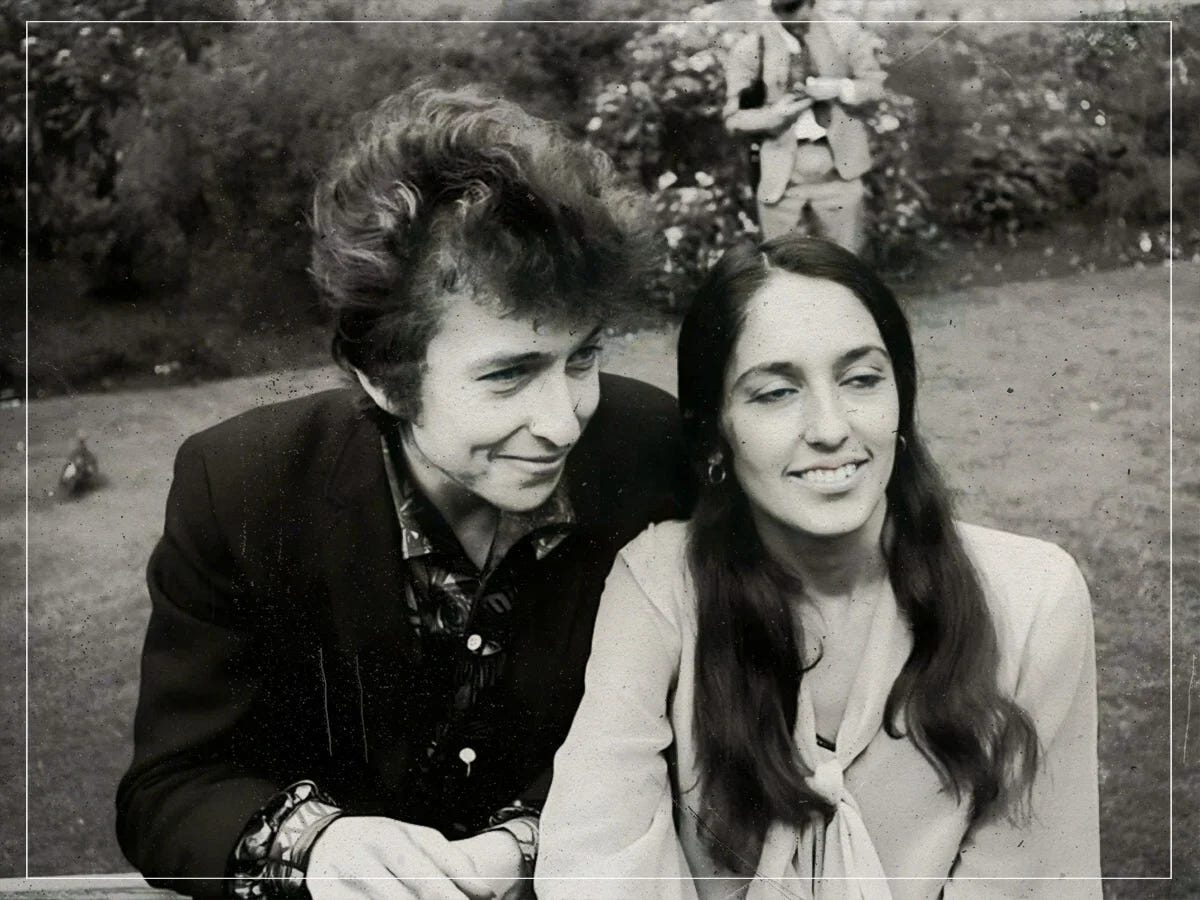
Bob Dylan and Joan Baez in happier times, source: Far Out

In a 2002 play, “Vincent in Brixton,” Vincent Willem van Gogh betrays his early lover, Ursula Loyer. He deserts her, leaving London for Paris. And at one point he announces: “An artist doesn’t care for his wife or children, any more than for the pigeons in the park. He cares for himself and for his work.”

Such words, it seems, could be applied to Bob Dylan, maybe or maybe not in real life, but certainly in the partly fabricated, partly true biopic “A Complete Unknown.” The Dylan in the film comes across as the embodiment of Freud’s theory of selfish infantilism, pure Id that cares only about satisfying himself or herself.

Not a bad person, really, but not a nice one, either. He is honest about life to a fault, despite the mythmaking lies he tells about himself, but is not someone either easy to be around or someone much interested in other people. In short, the film’s Dylan is something of a narcissistic jerk stuck in adolescence.

Of course, he starts out at 19 and moves through his early 20s in the film, so he does a bit of growing up.

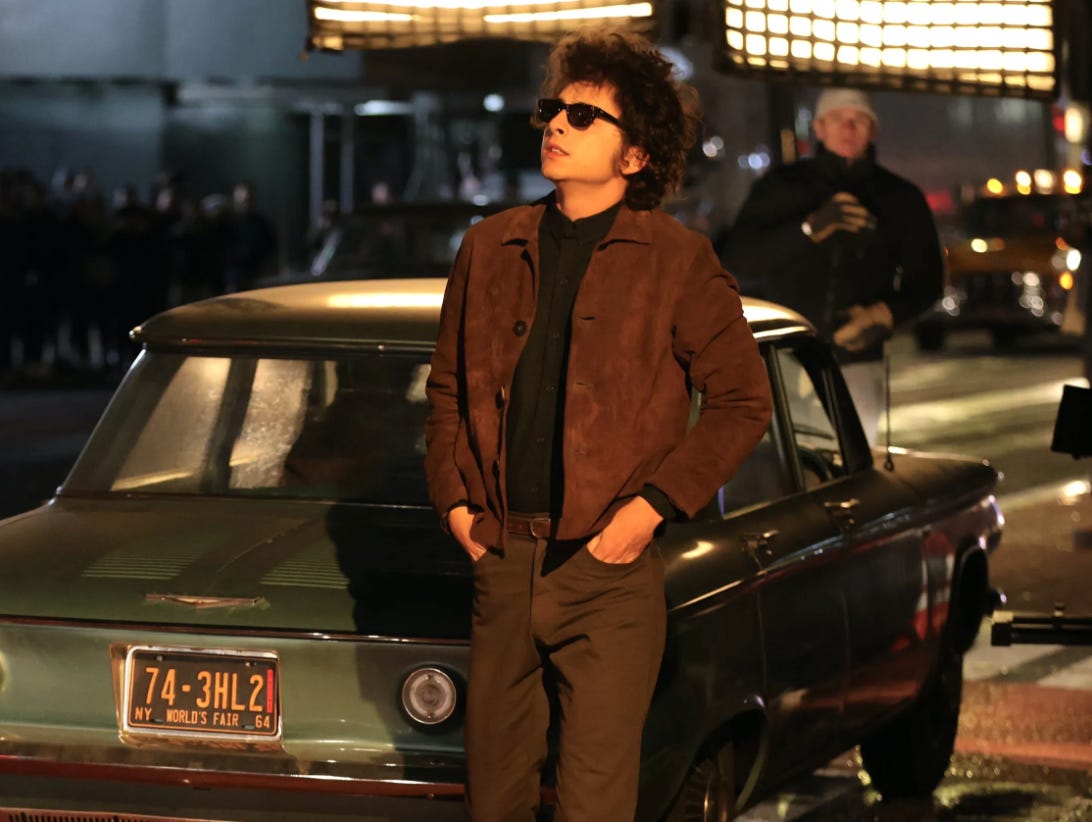
Chalamet as Dylan, source: Vanity Fair

But in that process, the Dylan so remarkably portrayed by Timothée Chalamet betrays or deserts many, if not most, of the people who care about him. He betrays his mentor, Pete Seeger, by going electric at the famous 1965 Newport Folk Festival. He betrays his first real lover, called Sylvie Russo (not Suze Rotolo, as in real life), by taking up with Joan Baez. And then he betrays Baez. Ultimately, he marries someone else.

Beyond the broad strokes, just how much is true and how much is movie mythmaking is hard to tell. Still, many of the film’s literal untruths have been documented.

The New York Times, for instance, unpacks some of the facts from what director James Mangold calls a “fable” about Dylan’s early years. Dylan was not the Newport festival’s closing act, for instance. The fan there shouting “Judas” actually did so a year later at a British concert, then spurring Dylan to tell his band to “play loud,” as he did in the movie.

Time also reports that some of the movie’s convenient narrative about Seeger and Dylan’s idol, Woody Guthrie, is at best dubious. “The movie shows Dylan showing up to Guthrie’s hospital room to play him a song, and then Seeger being so impressed by the young man’s playing that he lets him stay with his family,” the magazine reports, noting that this didn’t really happen. While it’s true that both men did visit Guthrie, who was institutionalized with Huntington’s disease, the details are embellished in the film.

A journalist’s sensibilities may be offended by such filmmaking liberties, of course, but the movie employs them to make larger points that seem to be true about Dylan and, perhaps, great artists in general. Much like van Gogh or others who sublimated nearly everything – and perhaps nearly everyone – in their lives to their art, the film’s Dylan (and perhaps the real one) felt he had to betray many, even his fans, to realize his artistic visions.

Dylan has been notorious throughout his career for his peculiar relationship with fame and his fans. That comes across well in the film, where he sticks it to his folk fans by performing searing electric work and turning his back on the crowds. He flees from fans, mostly young women, in the streets of New York and at a bar where he goes, hoping to remain in the background so he can listen to a performer. He spurns sophisticated devotees at an uptown party.

In the five or six concerts of his that I have been lucky to attend over the decades, Dylan rarely interacted with the crowd. Unlike musicians such as Paul McCartney, James Taylor or Paul Simon, he was not a people-pleaser. In the movie he refuses to play audience favorites, insisting over Baez’s objection that it wasn’t a request performance. It was his venue and he would play what he wanted to play.

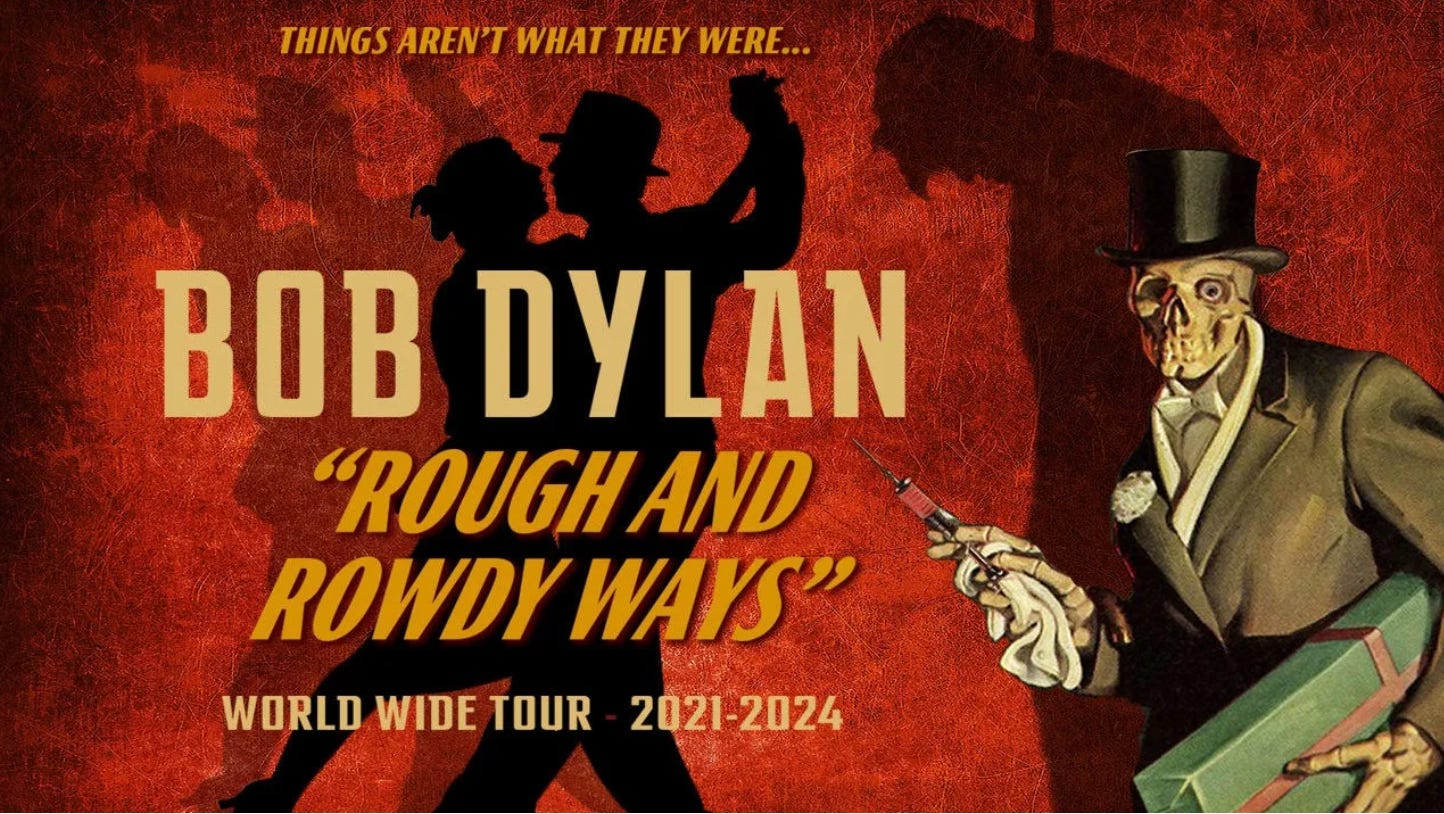
The last time I saw the now 83-year-old Dylan was at a small venue, Colorado’s Dillon Amphitheater, in July 2022. Musically, the show was pretty bad – discordant at times and canned-sounding the rest. Appropriately, “Things Aren’t What They Were …” was the motto on that three-year world tour, “Rough and Rowdy Ways.”

As a letter-writer to the local paper put it: “His set had no life, energy, pop, rhythm or chemistry and left many in the audience wondering and actually pleading out loud for at least one song from his massive catalog of hits. Instead we got a garbled lounge act that left many feeling cheated! He hid behind his piano box, never once acknowledged the crowd with a simple ‘thank you’ or a painfully obvious play on words that we all had fun with leading up to this performance — ‘It’s great to be Bob Dylan playing in Dillon!’”

At that show, he played without a spotlight, retreating into the background, literally in the dark. This was very much unlike the Dylan I had seen years before at Madison Square Garden and Philadelphia’s Spectrum and in a venue in Toronto. Perhaps that’s because at his age, he may feel he is fading to black. Certainly, he will do so, perhaps all too soon. And so, maybe, he was making a statement.

And yet, for all his odd disdain for fame, Dylan seems driven to perform. He seems to need the rush that crowds and stages provide. He needs that perhaps even more than he needs individuals, such as Baez or his first wife Sara Lowndes, with whom he had four children (along with one Lowndes brought into the marriage, whom he adopted). Dylan, who split with Lowndes after 12 years in 1977, had a sixth child with his second wife, Carolyn Dennis, from whom he divorced in 1992.

In his 2004 memoir, “Chronicles: Volume One,” Dylan wrote that family was one of the most important aspects of his life, as People reported. “Having children changed my life and segregated me from just about everybody and everything that was going on,” he wrote. “Outside of my family, nothing held any real interest for me.”

Bob and Jakob Dylan, source: Fatherhood Channel

In 2005, Bob’s youngest son, Jakob, spoke to The New York Times about the role his father played in his youth. “When I was a kid, he was a god to me for all the right reasons,” he recalled. “He never missed a single Little League game I had. He’s collected every home run ball I ever hit. And he’s still affectionate to me.”

Jakob’s older brother, Jesse, echoed this in an interview with U.K.’s The Times in 2021. “My dad’s great, he’s a totally kind, wonderful man,” he said. “He’s been nothing but supportive to me and my brothers and sisters.”

Perhaps these familial praises are true, truer than the self-absorbed betrayer Chalamet and Mangold give us in the film. Certainly, the Dylan in the movie was the young artist and post-adolescent just emerging, just defining himself to himself and the world. And it’s true that romantic betrayals are pretty common among folks at that age, so perhaps the real Dylan can be forgiven for at least those.

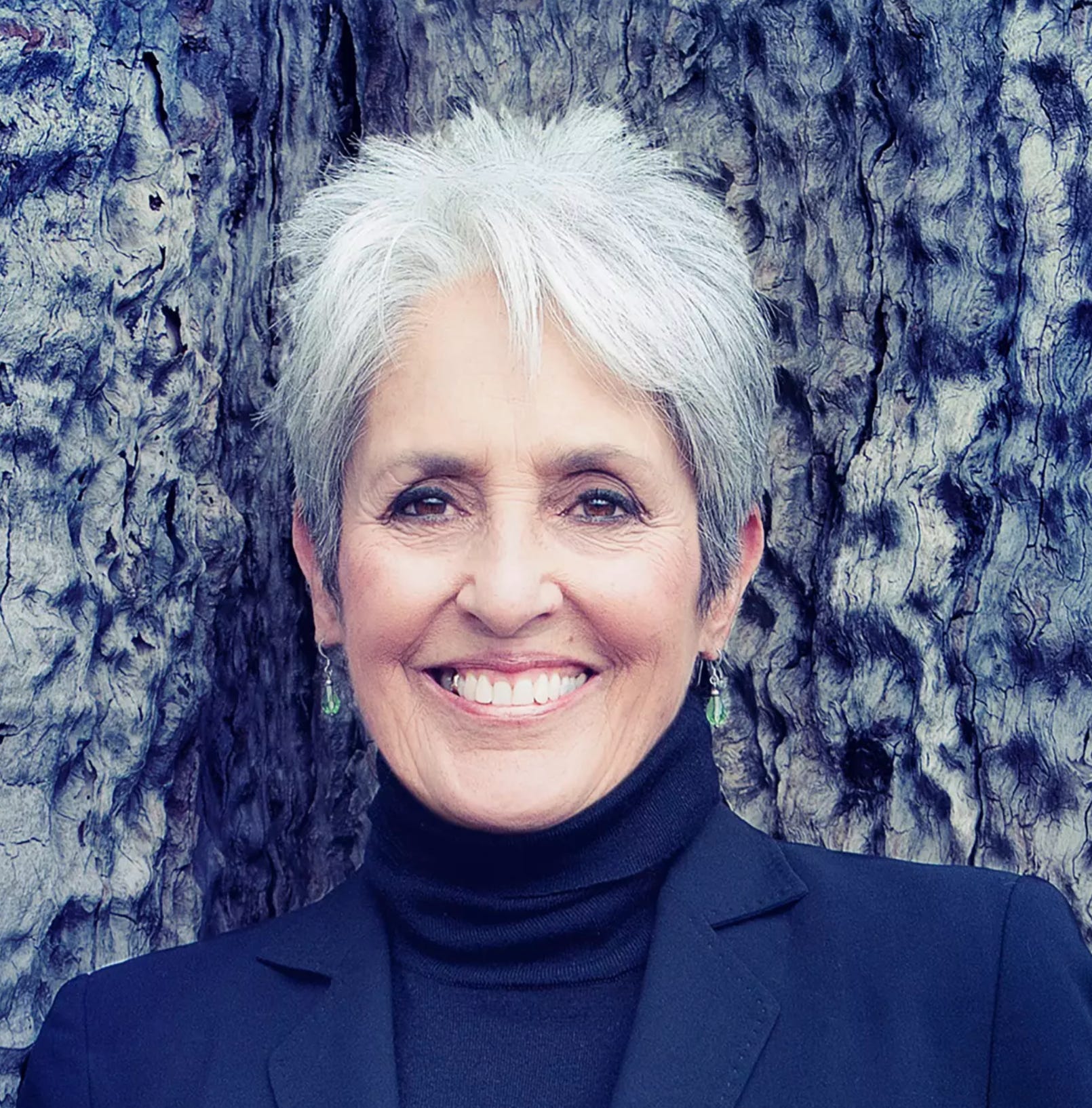
Joan Baez, source: Los Angeles Times

Still, in some ways the movie’s most interesting character is not the Id-consumed Dylan, but rather Baez. At one point, she tells him “you’re full of shit” when he spins nonsense about working in carnivals. She sees through his mythmaking to the real Bobby Zimmerman, the hungry and ambitious guitarist from Hibbing, Minnesota.

Baez, whom I was also privileged to see in the past, these days shuns the stage. Instead, the soon to be 84-year-old recently released a book of poetry, “When You See My Mother, Ask Her to Dance: Poems. After quitting touring several years before, she said in a 2023 New York Times piece, “I have been in a state of manic creativity: portrait painting, drawing, making prayer sticks, making a documentary and last but not least, finishing up a book of poetry …”

Baez, of course, wrote about her time with Dylan in the elegiac “Diamonds and Rust.” Her lyrics are both pained and scorching:

Well, you burst on the scene/Already a legend/The unwashed phenomenon/The original vagabond/You strayed into my arms/And there you stayed/Temporarily lost at sea/The Madonna was yours for free/Yes, the girl on the half-shell/Could keep you unharmed

Now I see you standing/With brown leaves falling all around/And snow in your hair/Now you’re smiling out the window/Of that crummy hotel/Over Washington Square/Our breath comes out white clouds/Mingles and hangs in the air/Speaking strictly for me/We both could have died then and there

Now you’re telling me/You’re not nostalgic/Then give me another word for it/You who are so good with words/And at keeping things vague/’Cause I need some of that vagueness now/It’s all come back too clearly/Yes, I loved you dearly/And if you’re offering me diamonds and rust/I’ve already paid

Many people around Dylan paid in various ways as he shattered musical conventions and challenged America politically and socially. He helped move us from the era of the sugary likes of Patti Page (“That Doggie in the Window”) into a time when popular music could be relevant. He brought us poetic so-called story songs that had messages that previously only fans of the likes of Woody Guthrie of the folk scene heard.

His work also could be searingly personal.

One the best scenes in the movie is when he and Baez team up to angrily sing “It Ain’t Me Babe,” firing one of his trademark songs at each other like prizefighters landing blows. The film suggests the song was about his turn away from Baez, plumbing the depths of their anger toward one another. In fact, the real 1964 performance at which they sang the song together was a playful affair in which they mangled the lyrics.

Source: Amazon

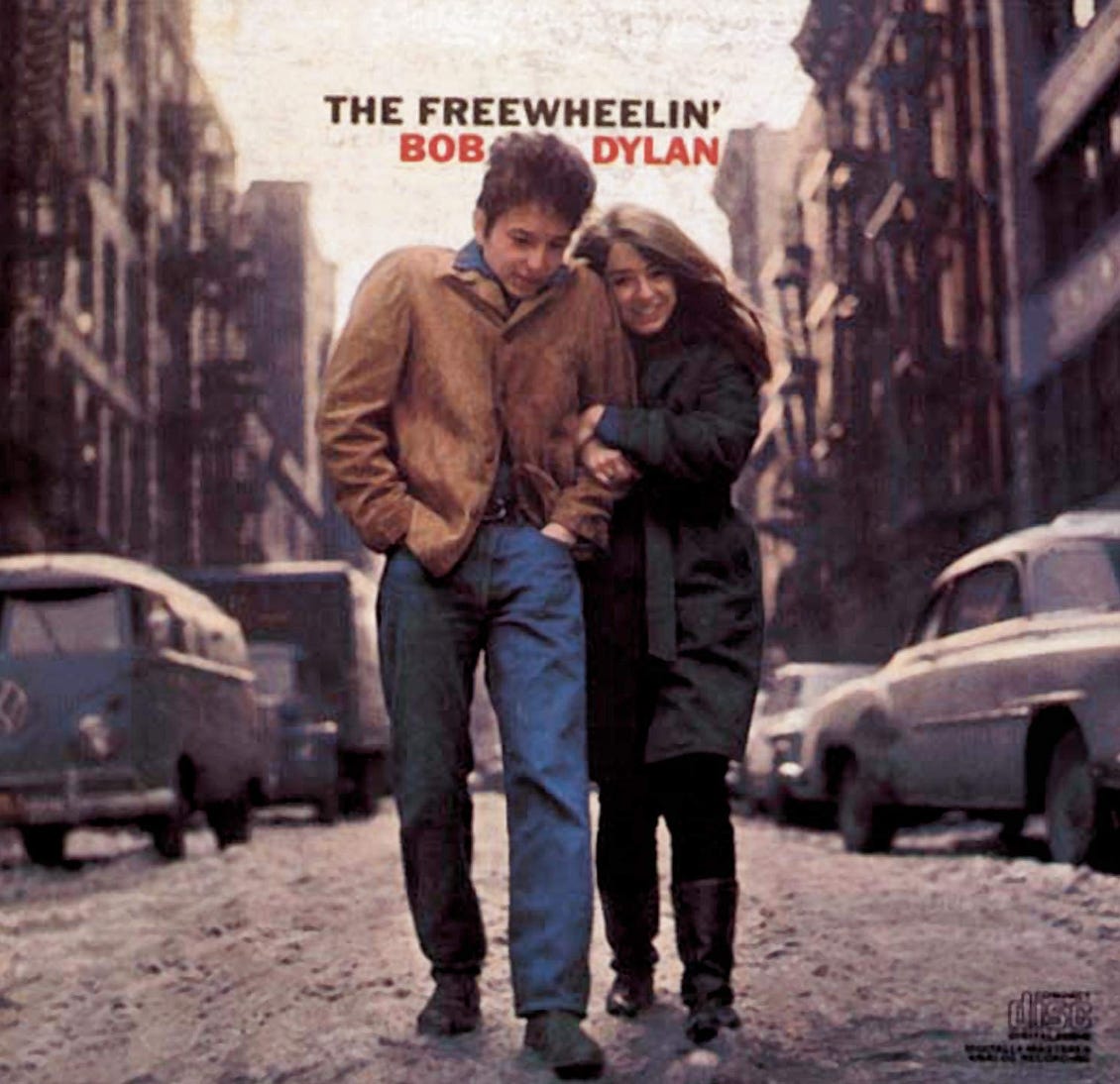
And the song was actually about the loss of his first serious love, Rotolo. While Rotolo and Dylan look to be very much in love in the cover image of his 1963 “The Freewheelin’ Bob Dylan” album, the song tells a rather different story:

I’m not the one you want, babe/I’m not the one you need/You say you’re lookin’ for someone/Who’s never weak but always strong/To protect you and defend you/Whether you are right or wrong/Someone to open each and every door

But it ain’t me, babe/No, no, no, it ain’t me, babe/It ain’t me you’re lookin’ for, babe

Go lightly from the ledge, babe/Go lightly on the ground/I’m not the one you want, babe/I’ll only let you down/You say you’re lookin’ for someone/Who’ll promise never to part/Someone to close his eyes for you/Someone to close his heart/Someone to die for you and more

But it ain’t me, babe/No, no, no, it ain’t me, babe/It ain’t me you’re lookin’ for, babe

You say you’re lookin’ for someone/To pick you up each time you fall/To gather flowers constantly/And to come each time you call/And will love you for your life/And nothin’ more

Lyrics like those are the sort that earned Dylan the 2016 Nobel Prize for Literature. And on that point, the film offers a final bit of distortion. In a screen crawl at the end, it says that Dylan didn’t show up to pick up his prize, implying it was yet another middle-finger he raised to the establishment. In fact, Dylan met with members of the Swedish Academy in a private ceremony the following April, with no media present, at which he received his gold medal and diploma.

And in a Nobel lecture posted on the group’s website, Dylan mentions musical giants who influenced him, such as Buddy Holly and Lead Belly. At length, he discusses three books that made deep marks on him: Herman Melville’s Moby-Dick, Erich Maria Remarque’s All Quiet on the Western Front and Homer’s Odyssey.

“Our songs are alive in the land of the living. But songs are unlike literature. They’re meant to be sung, not read. The words in Shakespeare’s plays were meant to be acted on the stage. Just as lyrics in songs are meant to be sung, not read on a page,” he said. “And I hope some of you get the chance to listen to these lyrics the way they were intended to be heard: in concert or on record or however people are listening to songs these days. I return once again to Homer, who says, ‘Sing in me, oh Muse, and through me tell the story.'”

For all of its inaccuracies and its fictions, though, the movie does capture something about this cultural titan, one who refuses to go quietly into the night, and is well worth seeing. Just hearing those remarkable songs — as performed so ably by Chalamet — is worth the price of admission. We aren’t likely to hear Dylan perform any of them again live, so this reasonable facsimile will have to do. While flawed, the movie is a fascinating take.

Mrs. Thatcher, Simon Warner and me

ThePrimeMinisterThanks to the Prime Minister of England, Simon Warner and I met 33 years ago. Now, because of that PM’s death and the marvels of the Net, we’ve met again – electronically at least. And in that lay an intriguing tale of media, globalization and winding career paths.

Credit Margaret Thatcher first of all. The feisty Conservative lioness, derided or admired as “the Iron Lady,” was running the U.K. when I was lucky enough in 1980 to be chosen for a journalism exchange program created by the English-Speaking Union. Chartered by the Queen, the E-SU promotes friendship among English-speaking peoples and had enough clout to get me into 10 Downing St. to sit with the PM for a while.

Imagine what a thrill this was for a 25-year-old reporter for a little New Jersey paper, The Home News. Mostly, I wrote about small-town mayors and the occasional county official. Now, I would get to interview a sitting PM, one who cut a swath culturally and politically almost as big as that of her buddy, Ronald Reagan. Some loved her, many hated her and I’d get to write about her.

The ways of politicians can be mysterious, of course, so things didn’t turn out quite as I expected.

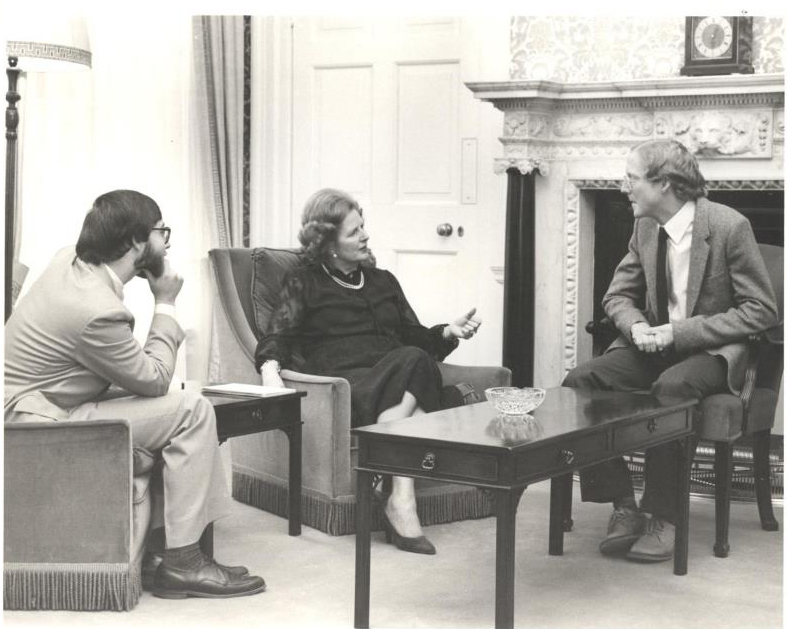
Simon, right in the photo above, was the first surprise. Someone decided a young American reporter should be paired with a young British reporter for a sit-down with Mrs. Thatcher. That was no problem, of course. We met at 10 Downing St. on the big day, July 14, equally excited about our big interview. Back then, exclusivity wouldn’t matter much, since we worked on different continents.

But then, as we waited in an anteroom, the PM’s PR man delivered the bad news. The London media were in high dudgeon about a couple young journos – one an American! – getting access to Thatcher when she had no time for them. Some reporter even wrote a snarky piece about it (long before anyone heard the word snarky). So, the conversation would have to be off the record. No notebooks, no tape recorders, no interview story.

simon_warner09Weeks of boning up went out the window, but, okay, we’d meet anyway. And we did. We had a fine time, talking mostly about innocuous things, such as her son’s adventures around the world. Mostly, Simon and I listened, unable to get a word in edgewise with the imposing Mrs. Thatcher (not that she needed us to, of course). Simon’s editors, with the help of a local Member of Parliament, later negotiated the chance for him to write about the conversation a bit for his paper, The Chester Observer. I got a piece for my paper out of the visit, but just shared my impressions of the PM and spelled out her successes, failures and fights in office. Happily, we could run the photo of the meeting.

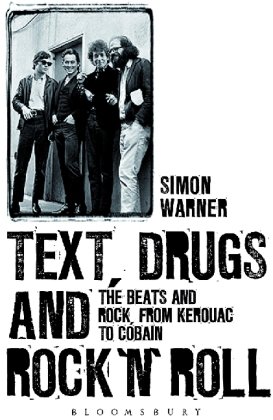
Fast forward to this past week. Touched by Mrs. Thatcher’s death, I tracked down Simon, with just a few clicks on Google (smiling in the head shot to the right here today). He rose through the ranks in journalism, becoming arts editor at a couple regional papers in the 1980s, did media relations in arts and education, and became a live rock reviewer for The Guardian during the 1990s. He earned a master’s in popular music studies, then a Ph.D., and now serves as a Lecturer at Leeds University. He’s a prolific writer, with at least five books about major cultural figures dear to Boomers. These include “Rockspeak: The Language of Rock and Pop,” “Howl for Now: A celebration of Allen Ginsberg’s epic protest poem,” “The Beatles and the Summer of Love,” “New York, New Wave: From Max’s and the Mercer to CBGBs and the Mudd Club,” and his latest, the just-issued “Text and Drugs and Rock ‘n’ Roll: The Beats and Rock Culture.”

text-and-drugs-and-rock-n-rollThe similarities in our career paths intrigue me. We both wound up working for national pubs and both wound up leaving workaday journalism for the academy. Though I spent my career mostly in business news, we also both have written about popular culture and figures important to fellow Boomers (my book about the legacy of Maharishi Mahesh Yogi, the Beatles guru, and his followers’ community in Fairfield, Iowa, is due out early next year). We’re both fans of the Beats (though I mostly left them behind in high school, while Simon has dug deeply into those folks and the long shadow they’ve cast. Gotta love the photo on his latest book cover).

Nowadays, we both also wonder about the future of journalism. Simon emailed me about it: “The media business remains close to my heart but how can print survive? Transatlantically, the great newspaper empires are caught on the horns of a dilemma. Can paywalls work? Can Internet advertising eventually bridge the losses to income that traditional papers, with their shrinking readerships, are suffering? The Guardian, to which I contributed for several years, is attempting to raise its US profile but can that bring dividends? Meanwhile, the middle-market Daily Mail is proving a web hit, of course, overtaking the NYT in terms of visitors!”

Also like me, Simon blogs. He wrote about his media adventures in 2009 in his “Words of Warner.” Interesting read.

So, we’ve enjoyed somewhat parallel lives on different sides of the Atlantic. Their arcs don’t quite reflect that of Lady Thatcher, who lived on a far grander stage, of course. But, at a nice point for all of us, our paths crossed. And now, thanks to the same technology that is upending the media, Simon and I get to say hello again. I plan to buy his latest book, snapping it up as an ebook I can read on my iPad. Small and surprising world, isn’t it?