Iran war coverage raises tough questions
Eons ago, Fred Friendly, who worked as a reporter for an Army newspaper during WWII and later rose to serve as president of CBS News, posed a few interesting questions in a seminar in my journalism graduate program.
Should journalists withhold news during a war? Or, are they obliged to abide by the ethic that a reporter must air even difficult facts — if they are important — as soon as possible, wherever they may lead?
Friendly, who died in 1998, then told of a real-life case where a reporter learned of plans to sneak endangered children out of a European war zone. The journalist held back on reporting on the effort until the mission was complete. Releasing any word beforehand could have cost the children their lives, he reasoned.
Of course, the journalist was right to stay mum.
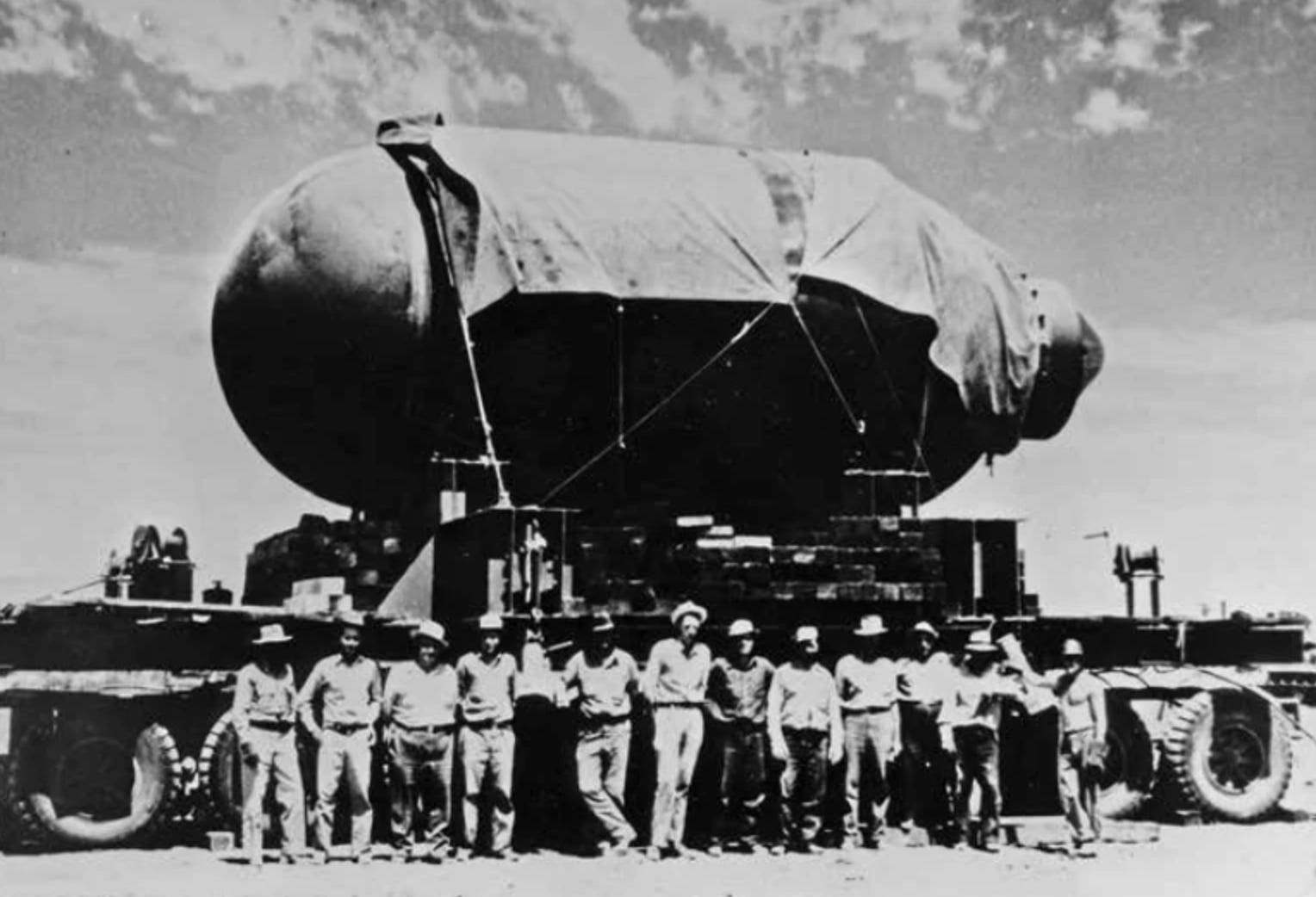
With that example it became apparent to us all that when lives are at stake, a journalist’s first responsibility is not to his or her audience, but rather to preserve life. This idea was demonstrated repeatedly in WWII, when news organizations withheld information they knew about the Manhattan Project, as well as on troop and ship movements, so as not to tip off enemies about sensitive matters.
But does this principle mean, as Donald J. Trump has argued, that reporters broke the law – and their own sense of ethics, though Trump didn’t mention that – when they disclosed that an F-15 fighter had been shot down in Iran? When they learned that one aviator had been rescued while another remained unaccounted for?
As matters of life and death, the questions multiply.
Should the outlets have kept quiet on that, as the government did for more than 24 hours after the shootdown? Should journalists have withheld the news from their audiences until the second airman was rescued? Did they jeopardize his life—and those of his rescuers—by alerting Iranian authorities about the search-and-rescue mission?
And, now, as Trump has threatened, should journalists be interrogated and jailed if they refuse to disclose sources that tipped them to the details?
Trump blamed an unknown “leaker” for sharing the information, vowing to haul in reporters to find the source. “We’re going to go to the media company that released it and we’re going to say, ‘national security, give it up or go to jail,’” Trump said. He added that whoever shared the information is “a sick person.”
But this may not be easy, which may be why Trump refused to point his finger at a single news outlet. Multiple news organizations had reported on the crash, including the Israeli TV outlet N12, Axios, The Washington Post, The New York Times, NBC News and Reuters. Several referred to unnamed “U.S. officials” – plural — as sources.
And just which media outlet broke the news first is not clear, though a few Israeli journalists appear to have gotten the news out before any the others.
Ariel Kahana of Israel Hayom and Haaretz columnist Amir Oren appear to have posted the news on Telegram before their rivals, according to another Israeli journalist who jumped on the story, Amit Segal. Segal and Axios’s Barak Ravid had both posted early on about the shootdown, the New York Post reported.
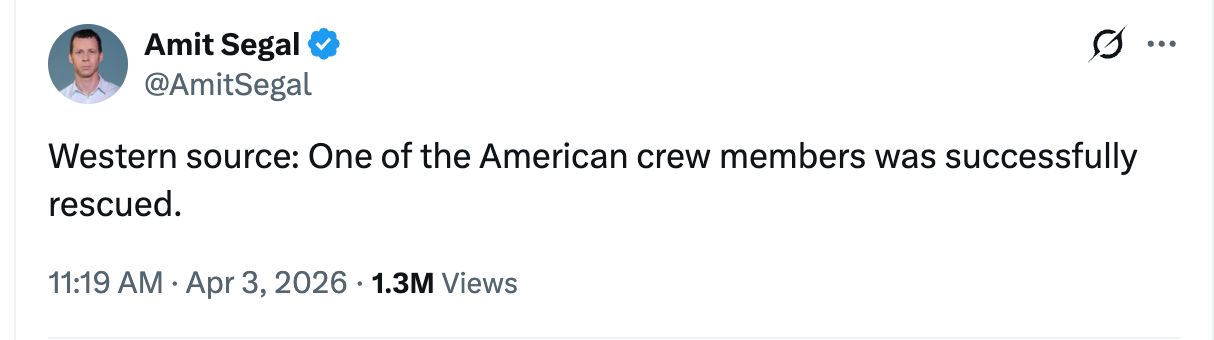
The Military Times credited Israel’s Channel 12 with being the first to report that a second American pilot was missing, according to the New York newspaper. But Segal and Ravid were among the earliest to post the information to Telegram and X, respectively.
“An American fighter jet was shot down by Iranian fire. A search is underway to locate the two crew members, according to a source familiar with the details. Read my article at @axios,” Ravid wrote at 8:54 a.m. on Friday. Similar posts by Kahana and Oren appeared a half-hour earlier, Segal told the Post.
It is also possible, however, that Iranian state media beat them all on the news. Iranian media circulated photographs and video footage on Friday that purportedly depicted debris from the downed aircraft, Israel Hayom reported.
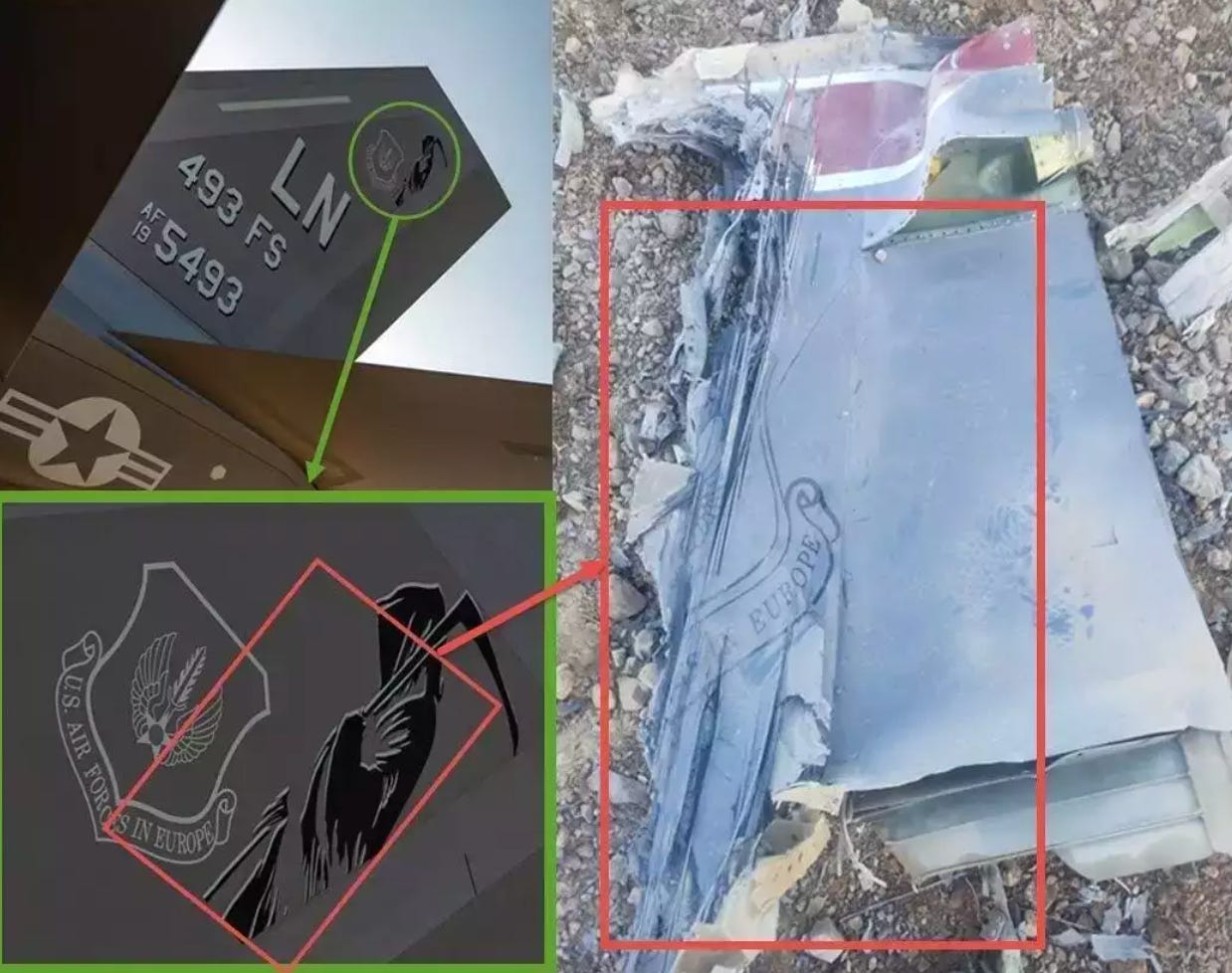
The Tasnim news agency, affiliated with Iran’s Revolutionary Guards, reported that at least one pilot apparently ejected. It incorrectly claimed he was captured by Iranian forces following a failed American rescue attempt. The agency also published an image of an ejection seat.
So, the responsibilities and ethical challenges of the American and Israeli media are not clear here, not to mention their legal risks, despite Trump’s certainty about the irresponsibility of their actions. If it was just a matter of preserving an American’s airman’s safety by keeping quiet, that would have been an easy call: of course, you hold back, just as the reporter in Friendly’s case study did.
But this all was far murkier.
First, did the Israeli reporters, who seem to have gotten the first word out on the F-15 shootdown, get their tipoff just by monitoring Tasnim? Had Tasnim really gotten the information first, even if incorrectly so? And, if so, did the Israelis just get confirmation from the Israeli military with the crucial detail that no one had been captured?
But then, when American media outlets got confirmation of various details, should they have withheld all of that, even though the others had released fragmentary or flawed information on Net? Did the U.S.-based outlets, in fact, do the public – if not the military — a service by providing correct information, even if only from anonymous sources?
Or was that the tipoff that, as Trump claimed, told “the entire country of Iran” that a pilot was “somewhere on their land,” making it “much more difficult for the pilots and the people going into search for him? Did they “put this mission at great risk,” as he insisted?
While lots of questions remain, we do know that the Net, with its power to instantly share information – and misinformation – has changed the calculation for media. They now must add a key element to decisions on publishing sensitive information – what if bad information is out there? Is there not a responsibility to set things right, and quickly?
Government leaders always want war information to serve their interests, not necessarily the larger public interest. Certainly, when journalists reported on the My Lai Massacre in Vietnam in 1968, U.S. authorities were unhappy. But that savagery prompted a rethinking of the war and of the behavior expected of American soldiers, alike.
And now, with Trump threatening to bomb every bridge and power plant across Iran, accurate reporting is essential.
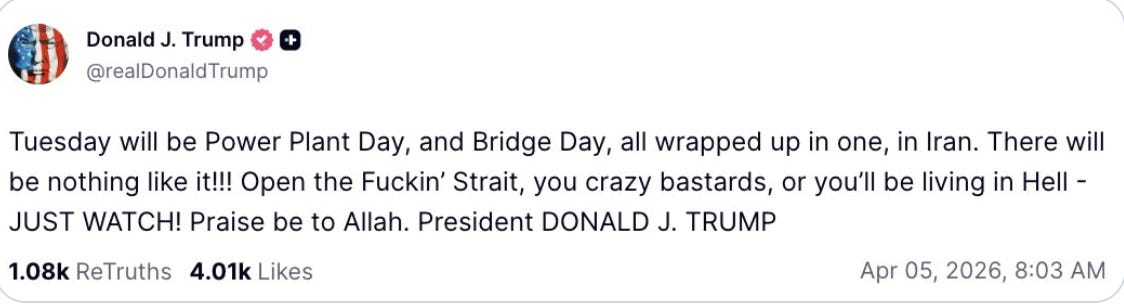
The media need to cover the president’s statements, ranging from the recent Truth Social post saying “A whole civilization will die tonight, never to be brought back again. I don’t want that to happen, but it probably will” to his earlier one: “Tuesday will be Power Plant Day, and Bridge Day, all wrapped up in one, in Iran. There will be nothing like it!!! Open the Fuckin’ Strait, you crazy bastards, or you’ll be living in Hell — JUST WATCH! Praise be to Allah.”
To the extent possible, journalists must report in detail on the destruction in Iran, should that occur. Already, they are covering the moral and legal questions involved in Trump’s threats.
“Such seemingly unrestrained statements have alarmed legal experts and former military officials, who argue that the president’s threat to conduct broad attacks on civilian infrastructure — ‘very little is off-limits,’ he said Monday — could undermine America’s aims in Iran and create legal jeopardy for military leadership,” The Washington Post reported.
As the newspaper reported, Secretary of Defense Pete Hegseth has long supported U.S. military members accused or convicted of war crimes. He has claimed that the U.S. would take its “gloves off” in military conflict and show “no quarter” to its enemies, alarming some legal experts.
For American generals and even lower-level service members, who have the right to refuse to follow illegal orders, the orders that may come from both men are particularly problematic. All that needs to be covered by the press.
Trump, of course, has long been at war with the press, usually for covering him accurately. In his blinkered and hostile world view, the media just complicated a search-and-rescue operation, endangering hundreds of people involved. But for the news outlets interested in reporting thoroughly and correctly, as well as doing things ethically and properly, the issues are anything but simple.