
Ann Patchett’s latest offering is packed with insight
As every journalist knows, facts can both reveal and mask reality. Reporters telling stories of disasters, of human failures and frailty — and even of triumphs — can go only so far in explaining the personal motivations and deep emotions that may afflict or engage us.
Tethered by facts, journalists rarely can delve into human psyches. Even the weightiest quotes or most touching anecdotes can just scratch the surface.
For real depth, however, we can be thankful for fiction. Novelists – including some who launched their careers as reporters (think Hemingway, Didion and Orwell) – have the power to pick up where straightforward reportage leaves off. They can round out a tale, put flesh on the bones of a story, give a character depth beyond the stark outlines of news accounts.
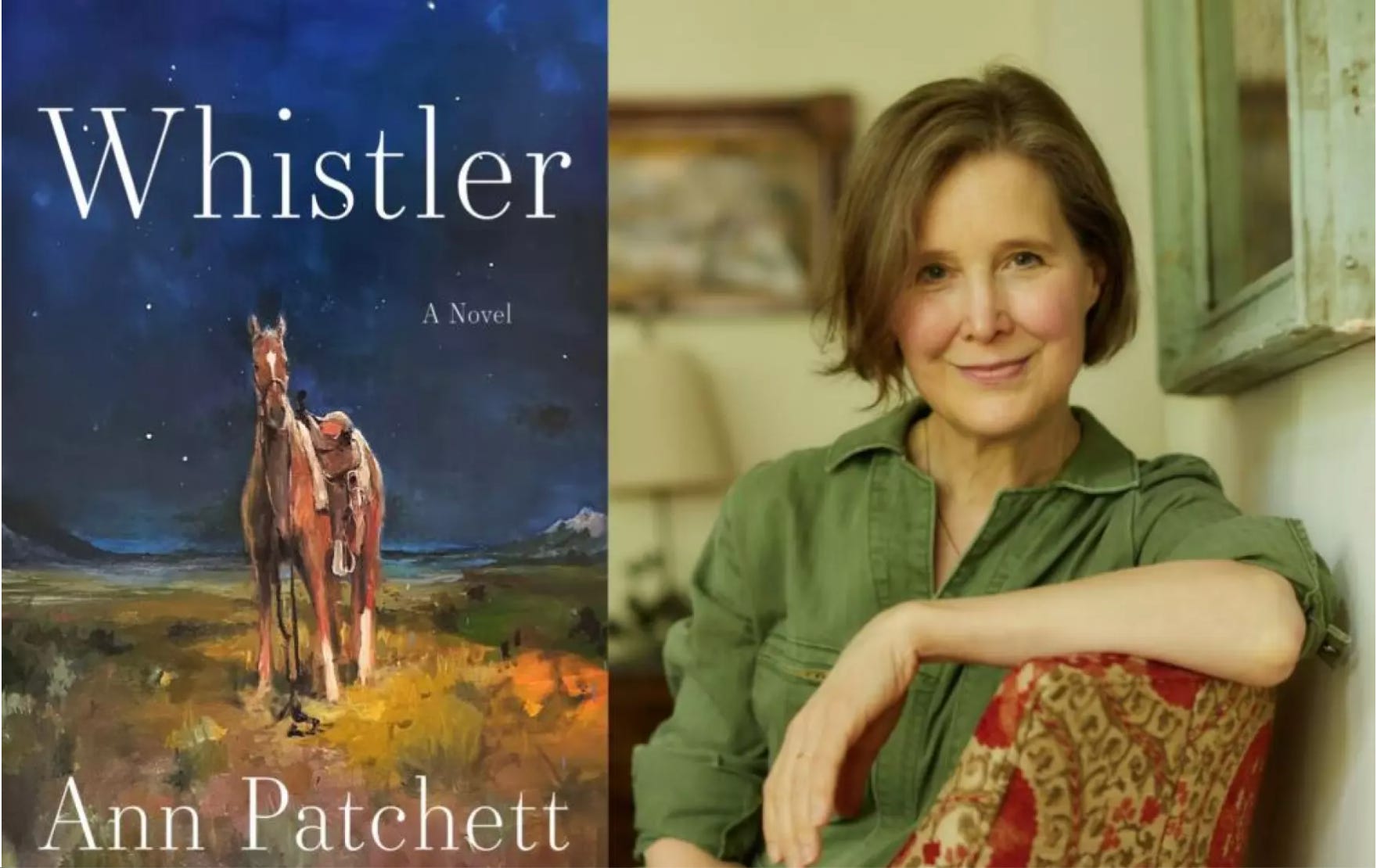
All this springs to mind thanks to some fresh work by a national treasure, Ann Patchett. Her new novel, Whistler, tells the story of a fiftysomething private school English teacher, Daphne Fuller, who by happenstance runs into a stepfather she hasn’t seen in 44 years. We then read of broken marriages, closeted sexuality, affairs, too much drinking and more – essentially a parade of human comedy and tragedy.
Along the way, Patchett shares a wealth of truth. Facts? Well, there are some, it turns out – but she deftly uses them to get to deeper things.
Patchett, in the way of most authors, drew on personal experiences for parts of the book. For instance, Daphne’s stepfather, Eddie Triplett, stoically endures cancer and Daphne ministers lovingly to him. This echoed the sad death of a real-life friend of Patchett’s, Jim Fox, to whom she dedicated the book.
She wrote, journalistically but passionately, about her time with Fox in nonfiction form in The New Yorker just last year.
“In the last week I would ever spend with one of the best friends I’ve ever had, I was given the gift of being supremely useful,” Patchett wrote. “I brought him vanilla ice cream and black coffee. I emptied the urinal, found the remote and the hearing aids, changed the sheets, tended to the sacral ulcer, greeted other helpful visiting friends. When, three days later, Jim was discharged into my care without a single thing relating to his health having been resolved or discovered, I got him dressed and wrapped in a blanket, then pushed him the three blocks home in his wheelchair, because I couldn’t imagine how I would get him into and out of a taxi. We spent our final day together making lists, organizing bottles of pills, and cleaning out the linen closet. I located, purchased, and installed a riser on the toilet seat. I soaked his feet and cut his toenails. He gave me the small china dog that his father had won for him at a fair in Ellwood City, Pennsylvania, when he was a child. ‘I’ve had that dog with me everywhere I’ve lived,’ he said.”

So, it’s no wonder, perhaps, that some of the wisdom in Whistler comes from Eddie Triplett.
Consider this jewel that he utters:
“There is so much randomness to youth. The person assigned to share your room becomes your friend, the girl you pass on your way out the door becomes your wife, and from these random encounters our entire lives are built, four beautiful children came into the world and they, in turn, found the people they were meant to spend their lives with.”
And, as you ruminate on that paragraph, ponder the accidents that may have shaped your life. Of course, we all have such things.
A friend from my childhood, for instance, met his wife of nearly 50 years when she happened to be in a car that picked him up while he was hitch-hiking. For my part, I met my wife thanks to a mutual friend who just happened to take a Henry James class in college with me and thought we’d be a good match.
That proved right and for us that was three children and eight grandchildren ago.
While randomness plays a role in the book, Patchett is hardly just about happy happenstances, though. Daphne and her sister, Leda, a therapist, root around in their psyches and those of others in the book in ways journalists would be hard-pressed to do.
“I knew what Leda would say,” Daphne reflects at one point. “She would say it was because childhood never leaves us. We seal the room up and cover it in sheetrock. We dry and sand and paint, but the pocket of history remains, and sooner or later someone always winds up tapping on the wall, commenting on the way it sounds strangely hollow in there, and then the whole thing comes tumbling down.”
Such wonderful and wise turns of phrase there. Such a great and simple metaphor, gently delivered.
The wounds and scars of childhood are one of Patchett’s major themes in Whistler. At another point, Daphne’s husband, Jonathan, sorts through his deceased mother’s belongings. He is helped by his sister.
“I wonder what Leda would think about that – put two siblings in their childhood home and let them go through every single object in the house, see what comes up,” Jonathan says. “Memory, loss, love, anger, all the usual suspects.”
Indeed, don’t we all know siblings who seem to have lived entirely different childhoods – even under the same roofs? One can only wonder what varying recollections a bit of domestic archeology in the family home would produce for many of us. Certainly, the experience of reliving those years could be a joyous, funny and awful experience, all at once.
And in Whistler some of that experience, of course, inevitably is ugly. In a basically upbeat book, Patchett delicately digs into that, too. She offers a savvy insight into the purpose and style of psychotherapy in the process.
Referring to less pleasant experiences in her young life while talking with Leda, Daphne says: “I packed it away … I put the whole thing in a box and shoved it behind the hot water heater in the basement. Then I forgot about it. Isn’t that what people do? They pack things up and then years later they hire you to unpack it for them.”
And then Patchett also offers some eloquent musing about children and parents, and how they might see one another with blinkers on. “Our parents did not depend on us for their sense of identity. They had their lives and we had ours,” Leda tells Daphne at one point. “Bless them.”
Of course, didn’t we all see our parents through very narrow prisms?
Those folks were our protectors, providers, guides, perhaps. Or maybe they were the banes of our existences. But they were also characters and personalities in their own right, wholly separate of us. If we were lucky, maybe, we’d see a bit of those interesting people when they visited with friends and relatives.
Not surprisingly, Patchett gives Eddie Triplett a bevy of great lines. His important backstory is revealed only slowly, so I will share no spoiler here. But the griefs he suffered through gave him potent insights.
“Your mother and I both have a small shard of glass in our hearts where the other is concerned: her disappointment, my shame, her regret and my regret,” Triplett says. “This helps to pry it loose. All these years later, you can still pry something loose. There’s no sense carrying shame and regret into the next life.”
A similar gem: “… I have found that when you start to wonder about who you’ve hurt in this life, you can easily lose your mind.”
And still another, from a conversation with young Daphne: “Everybody’s got to be vigilant against the bad people. I get that. But there are so many more people who are going to want to help you … it’s mostly good people out there, with a few bad people around the edges.”
Finally, Triplett shares a touch of what may be Buddhism. He says: “… no one wants to change even though change is the never-ending engine of existence. We are attached to our life, so we want to stay alive even though we know we’re going to die …. So by practicing nonattachment and recognizing impermanence, we might have a happier life, and we might have an easier death.”
These selections – little homilies, one might say — pop up unobtrusively along the way as Patchett sketches out a difficult but ultimately redeeming family history. It’s filled with warm and intriguing characters we’d all love to know.
In these cynical and dark times, perhaps we should all be blessed to know such figures.
“Is there a place in serious literature for kind, happy characters and kind, happy stories?” a New York Times reviewer wrote of the book. “This intimate and entertaining novel makes the strong case that there is; as demonstrated across her work, such sturdiness of spirit is part of Patchett’s generous worldview.”
Now, when we need it so badly, let’s be thankful for that worldview. It’s not journalism. Maybe it’s something better.