About Joe Weber

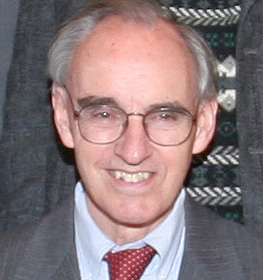
Now the Jerry and Karla Huse Professor Emeritus at the University of Nebraska's College of Journalism and Mass Communications, I worked 35 years in magazines and newspapers. I spent most of that time, 22 years, at BUSINESS WEEK Magazine, leaving in August 2009 as chief of correspondents. So far, I have worked in central New Jersey, New York City, Denver, Dallas, Philadelphia, Toronto, Chicago, Beijing, Shanghai and Lincoln, Nebraska. The adventure continues.

Treason? WikiLeaks and the press

Should some secrets stay secret? And is it treasonous for news operations to report on leaks of war documents when their countries are at war?

These questions arise, of course, because of the release of 92,000 documents about the Afghanistan war by WikiLeaks, in coordination with London’s Guardian, the New York Times and Der Spiegel. The ugly affair raises still further questions about what constitutes patriotism, how the Net makes high-quality journalism tougher to practice, and what governments will now do to try to bury their secrets even deeper.

First off, did the papers act properly? At first blush, it appears that at least two of the organizations — the Times and Der Spiegel — were maneuvered into this joint release. The instigator, it seems, was The Guardian, which had learned that WikiLeaks leader Julian Assange intended to release the papers unfiltered on his Swedish-based Web site. The editors at the Guardian suggested the joint release, apparently persuading Assange that he would make a bigger splash that way. This, at least, is the account given to PBS.

The papers then faced some tough choices: first, do they release the documents, along with their own independent reporting and analysis, and, second, do they share the information with the White House, giving the government a chance to react? On the first count, it seems that the papers really had no choice. After all, the documents would be out on the site no matter what the papers did, and, most likely, they would appear in print (since none of the three competing papers could trust the others to hold back). In short, WikiLeaks held the cards in this high-stakes poker game and it played the papers against one another.

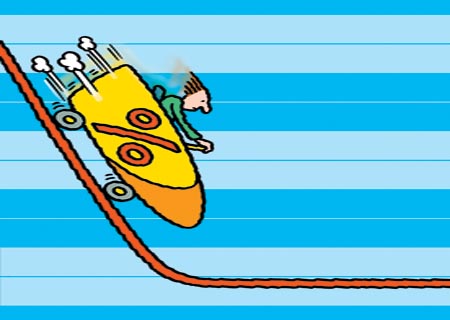
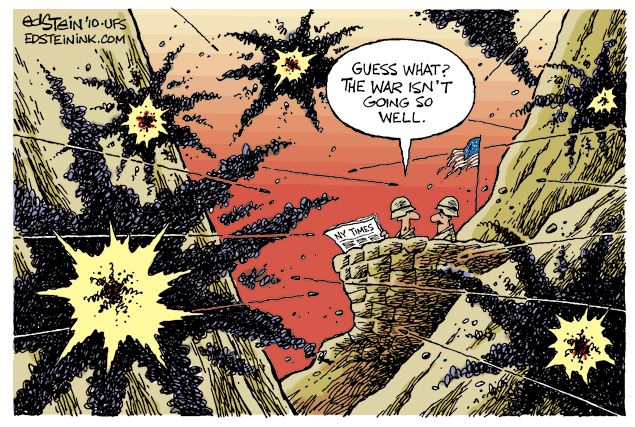
Then the question was, what should the editors do with the information? The New York Times contacted the White House and got its reaction – its take that there was nothing really new in the documents. The White House also did not ask that the Times hold back on publishing the papers (probably realizing the move would be futile). Instead, it got a chance to put its spin on the news, likely hoping to quash the whole matter by offering the “nothing new” take. Certainly, the troops wouldn’t be surprised (see Ed Stein’s cartoon above).

Bill Keller, the executive editor of the Times, laid out the issue nicely in a sidenote to the stories. He noted that the paper had a month to report out the story and that it sought to eliminate any references that could endanger the lives of Allied forces or Afghan supporters. He also suggested that the WikiLeaks folks had the mainstream media over a barrel, arguing “To say that it is an independent organization is a monumental understatement. The decision to post this secret military archive on a Web site accessible to the public was WikiLeaks’, not ours. WikiLeaks was going to post the material even if The Times decided to ignore it.”

Since then, of course, split opinion has emerged on just how problematic the release has been. Former CIA Director Michael Hayden told the folks at Politico that “We’re going to get people killed because of this.” And Rep. Jane Harman, a California Democrat who chairs an intelligence subcommittee, said the documents give the Taliban a hunting list: “There are names of State Department officials, U.S. military officials, Afghans and the cities in which they live in the materials.” By posting them online, she said, “we’ve just served up a target list and an enemies list to the Taliban. … Real people die when sources and methods are revealed.”

For his part, WikiLeaks’ founder Assange said on MSNBC that about 15,000 reports were withheld because they could have revealed the identities of Afghans who have aided U.S. forces and exposed them to “the risk of retributive action” from warlords or the Taliban. For a better sense of who Assange is and what drives him, check out an interview he gave to the folks at TED, the conference organization on the West Coast.

Seems to me there’s no doubt that the leak of the papers in the first place was treasonous. If proved to be the source, Pfc. Bradley Manning will likely spend the rest of his life in jail. The Army intelligence analyst, also suspected of leaking a video a few months ago of a couple Reuters photographers being killed in Baghdad, will be lucky – in other times, he’d be shot. Now, one would guess, the Obama Administration won’t risk making Manning, an impossibly baby-faced twenty-something in his AP photo, into a martyr. Some of Manning’s friends, too, may be implicated, and one wonders whether they had a duty to inform on him before his alleged leaks.

As for WikiLeaks, the legal situation will be tricky but it seems the U.S. can do little against it. Even if Swedish authorities try to muzzle the site, some there, such as Sweden’s Pirate Party, are already offering help. Of course, Assange might never again be able to travel to the U.S. or perhaps to his Australian homeland, since he could be picked up for various violations. Australia is part of the coalition fighting in Afghanistan. Indeed, one has to wonder just where he can go in the West without being pursued.

Some folks are saluting the leaks, praising the media outlets for publicizing the documents, and ignoring or rebutting questions of treason. “I’m more concerned about the troop threat caused by our nation’s involvement in a war that lacks the backing of the Afghan people or fiscal accountability for the $330 billion we have pumped into the longest war in U.S. history,” argues a colleague at Nebraska, Assoc. Prof. Bernard McCoy. “What do we have to show for this? With corrupt Afghan political leaders and insurgents who, according to our own intelligence reports, are as strong as ever, our troops remain at great risk.”
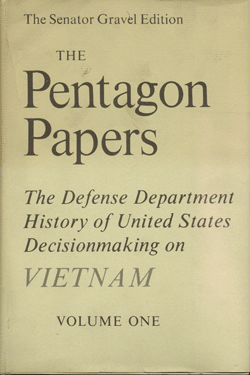
And comparisons to the Pentagon Papers abound. That secret history of the Vietnam war, detailing a wealth of information not revealed to the public and quite embarrassing to the politicians of the day, was published first by the New York Times and then the Washington Post, both in mid-1971. The papers were an official Defense Department study of U.S. activities in Vietnam from 1945-67. A former colleague at BUSINESS WEEK, Mark Ivey, says of the current leak, “Viet Nam, relived.”

But the new documents, including raw intelligence memos, were nowhere as well-researched or vetted as the Pentagon Papers were. The Afghan War documents may be rife with errors and could prove useful in the end only to vengeful Taliban. Joshua Foust, a contributor to Current Intelligence, argues, “If I were a Taliban operative with access to a computer — and lots of them have access to computers — I’d start searching the WikiLeaks data for incident reports near my area of operation to see if I recognized anyone. And then I’d kill whomever I could identify. Those deaths would be directly attributable to WikiLeaks.”

For my part, it seems clear that the leaks could not be stopped once insiders in the military or elsewhere in the intelligence establishment made up their minds to release the papers. If it hadn’t been for WikiLeaks, someone else in the anything-goes Net universe would likely have found a way to help them surface. At that point, the news organizations acted well in doing what savvy reporters do – they put the documents into context and fleshed them out.

Yes, the newspapers were played by Assange. But they gave the public a far richer and more useful account than he would have by releasing the documents alone. In the case of the New York Times at least, the U.S. government also had a chance to frame the discussion and attempt to minimize the damage.

Will anything change now? It seems some Afghans will be in danger. Pakistan’s intelligence service is likely embarrassed and angry. And the U.S. intelligence agencies will now seek stronger means to keep secrets under lock and key. But, unlike the Pentagon Papers, revelations seem few and there’s little in the papers even to strengthen the case of the antiwar folks.

President Obama’s war in Afghanistan has been messy from the start. Too few forces to begin with. A publicly revealed deadline for drawdown. A military leadership that was anything but politic. Unless his plans for military victory start paying off soon – with real gains against the Taliban and Al Qaeda — the WikiLeaks affair will go down as another troubling turn — probably a small one — in a painful, prolonged and maybe doomed battle against Islamist terrorism. This ethical contretemps pales before that ugly reality.


McGraw-Hill: Time for a Deal?

It’s only business. But that was a hard and personal lesson for many staffers at BUSINESS WEEK Magazine. It may yet become a tough lesson for the leaders of McGraw-Hill Cos.

When McGraw-Hill, my employer of 22 years, cut BW loose by selling it to Bloomberg last year, plenty of BW folks felt betrayed. They had committed their careers to the magazine and bought the argument of leaders there that the eighty-year commitment the McGraw family had to the weekly was a forever thing. So long as a McGraw was in charge, McGraw-Hill (MHP) would never sell it, the leaders counseled.

Well, they were wrong, of course. BW, viewed at McGraw-Hill as just another money-losing Internet victim, was quickly snapped up by the business wire. And soon, despite assurances from the Bloomberg camp that the deal was more about buying talent than a big brand name, most of the 200-plus BW vets were let go. It was a harsh dose of the business world’s version of realpolitik, the kind of thing BW folks had reported on but that few of them had experienced. With its formidable global reporting force, Bloomberg just didn’t need all that pricey BW talent.

Now, pundits are vaunting the idea that McGraw-Hill could – or should – be in someone’s sights. Pearson PLC, the $9 billion-a-year British publishing company, is one of the names floated as the perfect acquirer. Textbooks, synergies, global footprint, etc. Such takeover talk, which has long dogged $6 billion-a-year McGraw-Hill, seems as rational and predictable as Bloomberg’s interest in BW. The 101-year-old MHP has been struggling lately with single-digit declines in both net income (down 8.6% last year) and revenue (down 6.3%).

It is perhaps sad, but former BW folks are likely salivating at the prospect of MHP’s demise as an independent company. Turnabout is fair play, as the British say. Even more than that, however, many BW vets have stock options that have been underwater for a few years now [full disclosure: as former chief of correspondents for the magazine, I’m among them. I took a modest number of options with me when I left last year before Bloomberg appeared on the scene]. MHP’s shares traded as high as $72 in mid-2007. They now struggle around $30, after dipping below $24 last fall. In purely stock-market terms, the company seems like a flatliner whose glory days are long behind it.

McGraw-Hill’s challenges loom as high as BW’s once did (and still do). Uncertain prospects cloud the future for MHP’s once high-flying Standard & Poor’s ratings machine, given the vagaries of government regulation, general litigiousness and the tarring the ratings agencies have taken in the recent recession. The recently passed financial reform could cut its margins and expose it to more lawsuits, as S&P president Deven Sharma himself has recently warned (and S&P also warned about rival Moody’s in cutting the rating on the other rating agency giant, a peculiar irony). Prospects are also questionable for MHP’s storied textbook operation, given hard-pressed state education budgets and the march of the Net in the text realm. Flat stock prices? Who should be surprised?

The big question, of course, is whether Pearson or someone else would see as much value in McGraw-Hill as Bloomberg did in BW. The jury is out on whether Bloomberg’s move was a smart one – so far, its main value seem to be putting the Bloomberg name regularly in front of 4.5 million sets of eyeballs at a bargain price. Pearson could likely eliminate a lot of duplication by folding MHP’s textbook operation into its line. As for S&P, that odd beast could be of use to Pearson (which owns the Financial Times along with the world’s biggest textbook publishing operation) or, perhaps, to a Reuters or other financial information service. Certainly, rating agencies are needed and, even without the crazy-days growth of the past and the threat of a litigious future, S&P seems valuable. Slicing and dicing MHP among a few acquirers might make sense.

The atmosphere also seems right. Conditions are much different than 1979, when then-CEO Harold McGraw Jr. repelled a takeover bid by American Express. The popular CEO could rally his family and other loyalists and beat back the challenge. Given the recent anemic stock performance and dubious prospects at the company, current CEO Harold W. (Terry) McGraw III, son of the now-deceased Harold, might find fewer sentimental supporters nowadays. What’s more, the current CEO might do his family and friends a huge favor by putting his company into a global powerhouse that can do something with is still-valuable assets.

Business has precious little room for sentiment, of course. McGraw-Hill taught that lesson to former BW lifers in painful fashion. If a smart acquirer could do more with the bits and pieces of McGraw-Hill, so be it. Certainly, that would be a better fate than watching the company wither into irrelevance. And for stockholders, the premium should at least take the price close to its long-gone high. A deal might be the business world’s version of justice.

Double-dipping?

Gentle reader,

Here is an excerpted take on the question of a double-dip recession, from the people at CalculatedRisk, a blog I dip into now and again. Echoes a post here a couple days ago, but with some more detail. Call us a pair of Pollyannas, but maybe we’re onto something.

Personally, I get nervous when conventional wisdom all moves in one direction — as the sliding markets lately seem to suggest. I’ll stick with the contrarians.

Tuesday, June 29, 2010
2nd Half: Slowdown or Double-Dip?

by CalculatedRisk on 6/29/2010 04:00:00 PM

No one has a crystal ball, but it appears the U.S. economy will slow in the 2nd half of 2010.

For the unemployed and marginally employed, and for many other Americans suffering with too much debt or stagnant real incomes, there is little difference between slower growth and a double-dip recession. What matters to them is jobs and income growth.

In both cases (slowdown or double-dip), the unemployment rate will probably increase and wages will be under pressure. It is just a matter of degrees.

The arguments for a slowdown and double-dip recession are basically the same: less stimulus spending, state and local government cutbacks, more household saving impacting consumption, another downturn in housing, and a slowdown and financial issues in Europe and a slowdown in China. It is only a question of magnitude of the impact.

My general view has been that the recovery would be sluggish and choppy and I think this slowdown is part of the expected “choppiness”. I still think the U.S. will avoid a technical “double-dip” recession.

Usually the deeper the recession, the more robust the recovery. That didn’t happen this time (no “V-shaped” recovery), and it is probably worth reviewing why this period is different than an ordinary recession-recovery cycle.

# First, this recession was preceded by the bursting of the credit bubble (especially housing) leading to a financial crisis. And there is research showing recoveries following financial crisis are typically more sluggish than following other recessions. See Carmen Reinhart and Kenneth Rogoff: “The Aftermath of Financial Crises”

An examination of the aftermath of severe financial crises shows deep and lasting effects on asset prices, output and employment. … Even recessions sparked by financial crises do eventually end, albeit almost invariably accompanied by massive increases in government debt.

# Second, most recessions have followed interest rate increases from the Fed to fight inflation, and after the recession starts, the Fed lowers interest rates. There is research suggesting the Fed would have to push the Fed funds rate negative to achieve the same monetary stimulus as following previous recessions. See San Francisco Fed Letter by Glenn Rudebusch The Fed’s Exit Strategy for Monetary Policy.

The graph from Rudebusch’s shows a modified Taylor rule. According to Rudebusch’s estimate, the Fed Funds rate should be around minus 5% right now if we ignore unconventional policy (obviously there is a lower bound) and probably close to minus 3% if we include unconventional policy. Obviously the Fed can’t lower rates using conventional policy, although it is possible for more unconventional policy.

# Third, usually the engines of recovery are investment in housing (not existing home sales) and consumer spending. Both are still under severe pressure with the large overhang of housing inventory, and the need for households to repair their balance sheet (the saving rate will probably rise – slowing consumption growth).

On this third point, I put together a table of housing supply metrics last weekend to help track the housing market. It is hard to have a robust economic recovery without a recovery in residential investment – and there will be no strong recovery in residential investment until the excess housing supply is reduced substantially.

During previous recoveries, housing played a critical role in job creation and consumer spending. But not this time. Residential investment is mostly moving sideways.

It isn’t the size of the sector (currently only about 2.5% of GDP), but the contribution during the recovery that matters – and housing is usually the largest contributor to economic growth and employment early in a recovery.

Two somewhat positive points: 1) builders will deliver a record low number of housing units in 2010, and that will help reduce the excess supply (see: Housing Stock and Flow), and 2) usually a recession (or double-dip) is preceded by a sharp decline in Residential Investment (housing is the best leading indicator for the business cycle), and it hard for RI to fall much further!

So I’m sticking with a slowdown in growth.

Wall Street’s Jitters — Just a Summer Chill

Wall Street’s jitters about the durability of the economic recovery are beginning to get worrisome – at least to investors. The question is, however, are all those flashing yellow lights really portending another economic plunge, a so-called “double-dip?”

My answer: nope. It seems more likely that the market’s enthusiasm for the recovery just got ahead of itself. Call it another dose of irrational exuberance or, more likely, just excessive exuberance. I suggest that the latest reversals are nothing more than a predictable correction, not an ugly omen. Indeed, I’m reminded of economist’s Paul Samuelson’s hoary trope, hailing from a Newsweek column in 1966, that “Wall Street indexes predicted nine out of the last five recessions.”

Let’s look at the numbers. The S&P 500 index, which closed at 1,095.31 on June 22, has slipped 11.1% from its April 23 peak. On its face, of course, that drop seems big enough to rattle cages from Manhattan to Manchuria. Northern Trust economist Asha Bangalore, who has argued that the S&P 500 index is a “leading indicator par excellence,” pointed to a smaller decline in the index – less than 7% — in early 2008 to suggest that a “rough ride” was in store that year.

Of course, she was right. But, as with any economic question, it would all seem to boil down to timing and perspective. If we pull back the camera to take in a broader picture, the S&P 500 has been on a tear for nearly a year. Between the middle of last August and its late April high, the index climbed 24%. True, the 1,217.28 point peak in April was a long way from the nosebleed pre-recession October 2007 1,565.15 point. Still, that 24% rise over just nine months would seem to make a correction all but inevitable. Indeed, Bangalore herself has noted that the S&P 500 has given off “false signals.”

Pointing to the dazzling climb of recent months, some analysts have marshaled data to show, in fact, that the stock market has been wildly overvalued. The folks at Smithers & Co. contend the overvaluation tops 50%.

Out in the real economy, the rebound from recession certainly has come nowhere near the market’s lofty expectations. After plunging 6.4% in early 2009, the U.S.’s gross domestic product eked out a 0.7% annualized gain last spring, a 2.2% summertime rise and then leapt 5.6% in the winter quarter. Since then, GDP growth has slowed, notching a 3% rise in the first quarter of this year. Does this justify a 24% gain? A cooling, reflected in the market’s latest slide, seemed baked in the cake.

The big question, of course, is whether the cooling is likely to turn frigid this summer. Possible, but it seems unlikely. For one thing, policymakers seem committed to keeping the growth on course, with the folks at the Fed signaling zero interest in raising interest rates. For another, the pressure continues to grow on bankers from President Obama on down to ramp up their still-anemic lending – and the economy managed in the last year to grow even without all the help that looser lending might bring. Sure, Washington’s tap may be dry, but the bankers’ isn’t.

Just as the economy’s slide was anything but orderly, the recovery seems likely to be a stop-and-start sort of thing. One step back for every two forward, as the cliché goes. Lately, we’ve had a step back, for sure. Indeed, the outfit that fixes dates on recession and recovery – the National Bureau of Economic Research – still isn’t confident enough to say that recovery has been under way, despite the year’s worth of positive GDP performances.

But investors who look at the latest gloom on the Street and see darker clouds ahead could be missing the bigger picture. Summertime storms, maybe. And it may yet be a long time before recovery is so strong that it makes a dent in the painfully high unemployment rate. But, if history is any guide at all, the blasts will pass.

(This ran first on the Tabb Forum site).

A mentor’s passing

Chris Welles, a longtime editor at BUSINESS WEEK and former teacher of mine, died the other day. Chris Roush, who edits the blog Talking Biz News, ran the piece below.

I suspect it is one of many tributes to come about Welles, a major figure in business journalism.  I had occasion to write about Welles myself a few weeks ago. He and another former BW editor, Ron Krieger, introduced me to the foreign world of business journalism in 1980 at the Columbia J School. It’s not too great a stretch to say the pair changed my life.

Welles asked tough questions of business people, making for penetrating journalism. He had a hand in much of the best work BW published. Only time will tell, but I believe that BW peaked during Welles’ time there.

Some profound thoughts here by a former editor for us all at BW:

Ex-BusinessWeek editor Shepard fondly remembers Welles  — 2010.06.21

Talking Biz News asked Steve Shepard, the editor of BusinessWeek from 1985 to 2005, for some thoughts about business journalist Chris Welles, who worked at BusinessWeek for 13 years and died this weekend.

Here is what Shepard, now the dean at the CUNY Graduate School of Journalism, had to say:

“Chris Welles was a genuinely good guy with a journalistic soul. He very much believed that it was the job of the press to hold people in power accountable for their actions and to ferret out wrongdoing. He spent his career doing that, first as a writer, then as a senior editor at Business Week. From the late 1960s to the early 1980s, Chris was probably the premier business writer around, the guy who did the tough stories.

“In his early years, Chris was one of the regulator writers for Institutional Investor, an innovative magazine about Wall Street in the 1970s. He specialized in narrative accounts of shennaigans, abuses, and downfalls. He was also a very successful freelancer, contributing to New York magazine, among others. From 1977 to 1985, he headed the Walter Bagehot Fellowship Program in Business and Economics Journalism at Columbia University. I had served as the first director (1975-76) and Soma Golden the second (1976-77). The program ran into financial difficulties during Chris’s tenure, but he fought to continue it and eventually weathered the storm. Now called the Knight-Bagehot Fellowship Program in Business and Economics Journalism, it has just finished its 35th year as a mid-career opportunity for business journalists.

“When I was editor-in-chief of Business Week, I jumped at the chance to hire Chris in the mid 1980s as a senior writer specializing in investigative and narrative pieces. Though he was soft-spoken and always polite, he was a tenacious reporter with a passion to get the bad guys. I eventually promoted him to senior editor in the finance department because I figured his impact would be felt more by having him work with writers every week rather than write a piece himself every couple of months. And I wanted him to teach the next generation of upcoming reporters. Chris took to editing like a fish to water, passing along a lot of knowledge about finance, a lot of wisdom about reporting complex stories. He was respected and liked by his colleagues.

“Like Lou Gehrig in 1939, Chris started losing some of his skills, and nobody knew why. He was eventually diagnosed with early onset Alzheimer’s disease and retired from Business Week. It was a tragedy for him and his wife Nancy, and a terrible loss for all of us. He took business journalism to a new level, setting the bar ever higher for the rest of us. He has left a legacy for all of us to honor.”

Baby Steppes: Memories of Kazakhstan

I’ve not yet seen Paris, but how many seasoned travelers can boast of spending time in cafes in Almaty, Astana and Karaganda? Clearly, I’ve got a leg up on veteran globetrotters.

Our three-week stay in Kazakhstan, for an eight-student photojournalism trip, was nerve-wracking at times. Reservations and credit cards were foreign ideas in some hotels and cold-water walkup flats in crumbling Soviet apartment blocks were the norm. Being unable to read street signs or tell taxi drivers where you want to go (my Kazakh is as good as my Russian) was also unsettling. And long, dusty bus rides and rickety train rides through the barren steppe gave us far too much time for reading.

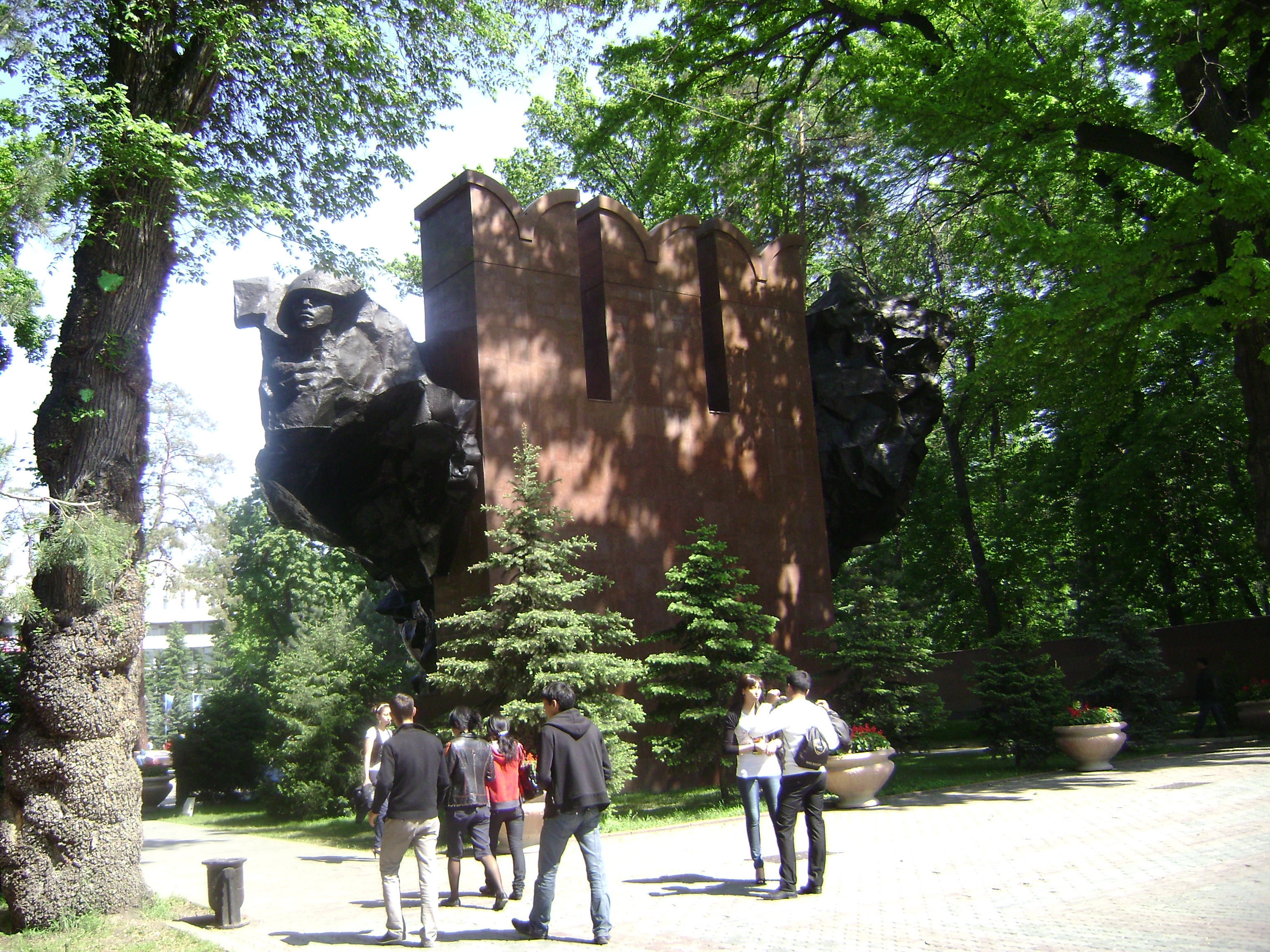
But then there was the magic of the place. There were, for instance, Almaty’s “random taxis,” where you stick out your hand and, voila, some guy happening by in an old Lada or somesuch with an invariably cracked windshield stops to whisk you away (with the help of hand-signals and mumbled Russian). There was the city’s Green Market, an immense bazaar where you can buy just about anything. There was Panfilov Park, a gorgeous island of green that commemorates 28 Almaty soldiers who died fighting Nazis (immense memorials, including an eternal flame that brides and grooms pose near on weekends).

Almaty, the financial center and biggest city in the country, is a pedestrian-friendly place of tony shops, nice parks and rising new apartment towers. A leafy, cool place that stretches downward from the snow-covered Tian Shan mountains, the city was great for a morning run. It’s a busy town. It is home to the Kazakhstan Stock Exchange (KASE), the most visible sign of the nascent capitalism that could – if managed well – turn the country into a substantial regional force.

Almaty’s financiers could help enrich a population that, despite the rise of a middle class, is still relatively poor by western standards. At $1,322 yearly, Kazakhstan’s per capita income ranks it 94th globally, just below Tonga but well ahead of China, according to NationMaster.com. By contrast, each resident of No. 1-ranked Luxembourg boasts an income of $37,500. Some 1.26 million people live in Almaty and, income issues aside, it felt like most of them were shopping in the Green Market when we were.

Astana, for its part, is an enormous World’s Fair. The new capital city, which officially became the seat of Kazakhstan’s federal government in 1998, is much more of a car place (fancy cars predominate, too, for the status-minded Kazakhstanis). Giant buildings with stunning architecture are great to look at, but challenging to get to. It’s pretty, glitzy and new. In an odd way, it has a Washington-like feel, with monumental buildings and a feeling of power, but nowhere near as intimate as Almaty. If Almaty — population over 700,000 — were New York, Astana would be D.C.
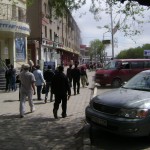
Still, Astana has huge promise. From its spanking-new Eurasian National University, where we met with journalism instructors facing many of the same issues we do at UNL, to the wonderful new U.S. embassy, the place seems fresh and new. That freshness could help sweep away the old Soviet apartment blocks over time. Some of those five-story apartment blocks, with their steel doors, security locks, overgrown common areas and sewer smells, made South Bronx highrises seem palatial. One hopes most such places will disappear in Almaty and Karaganda, as well.

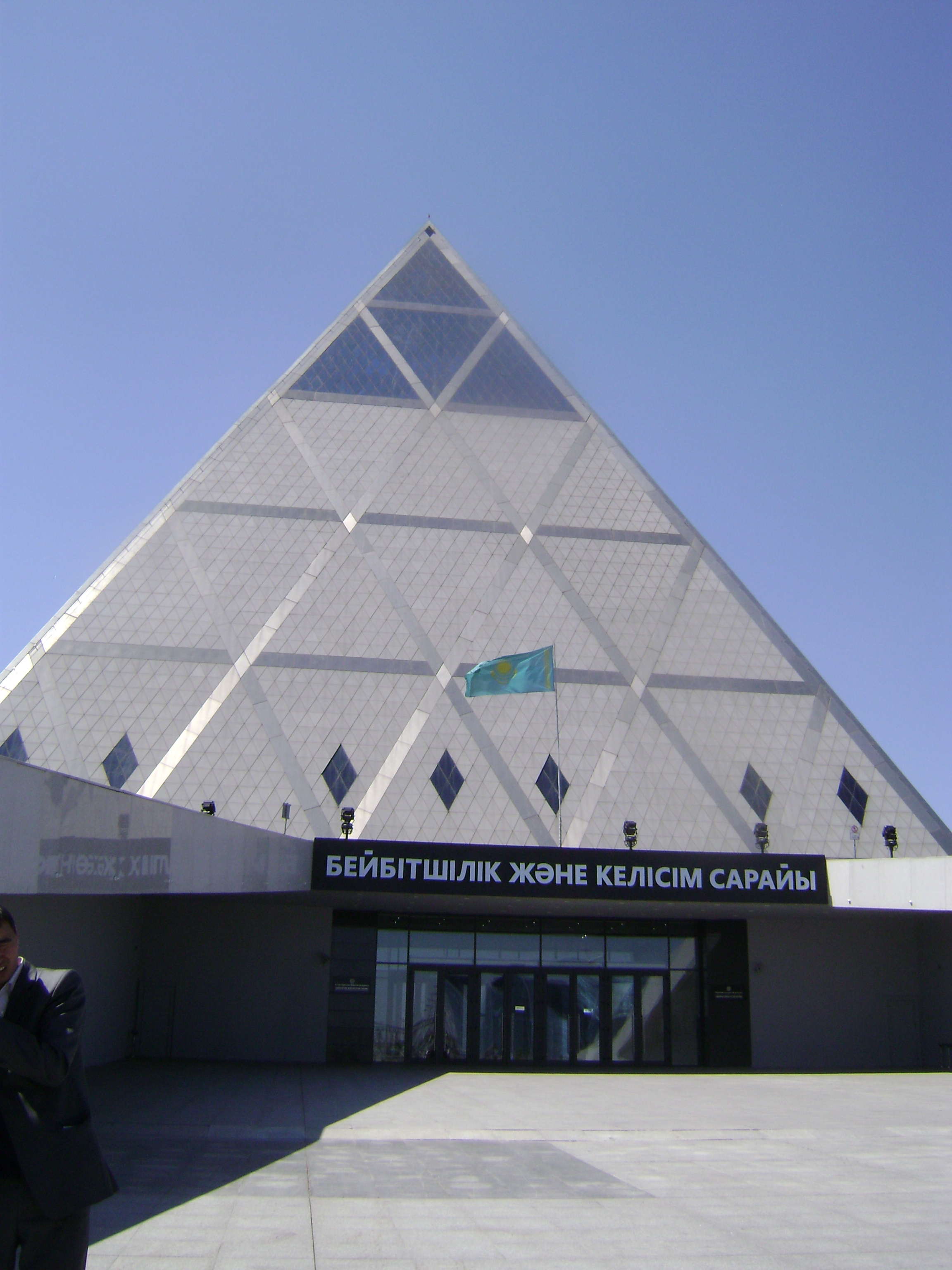
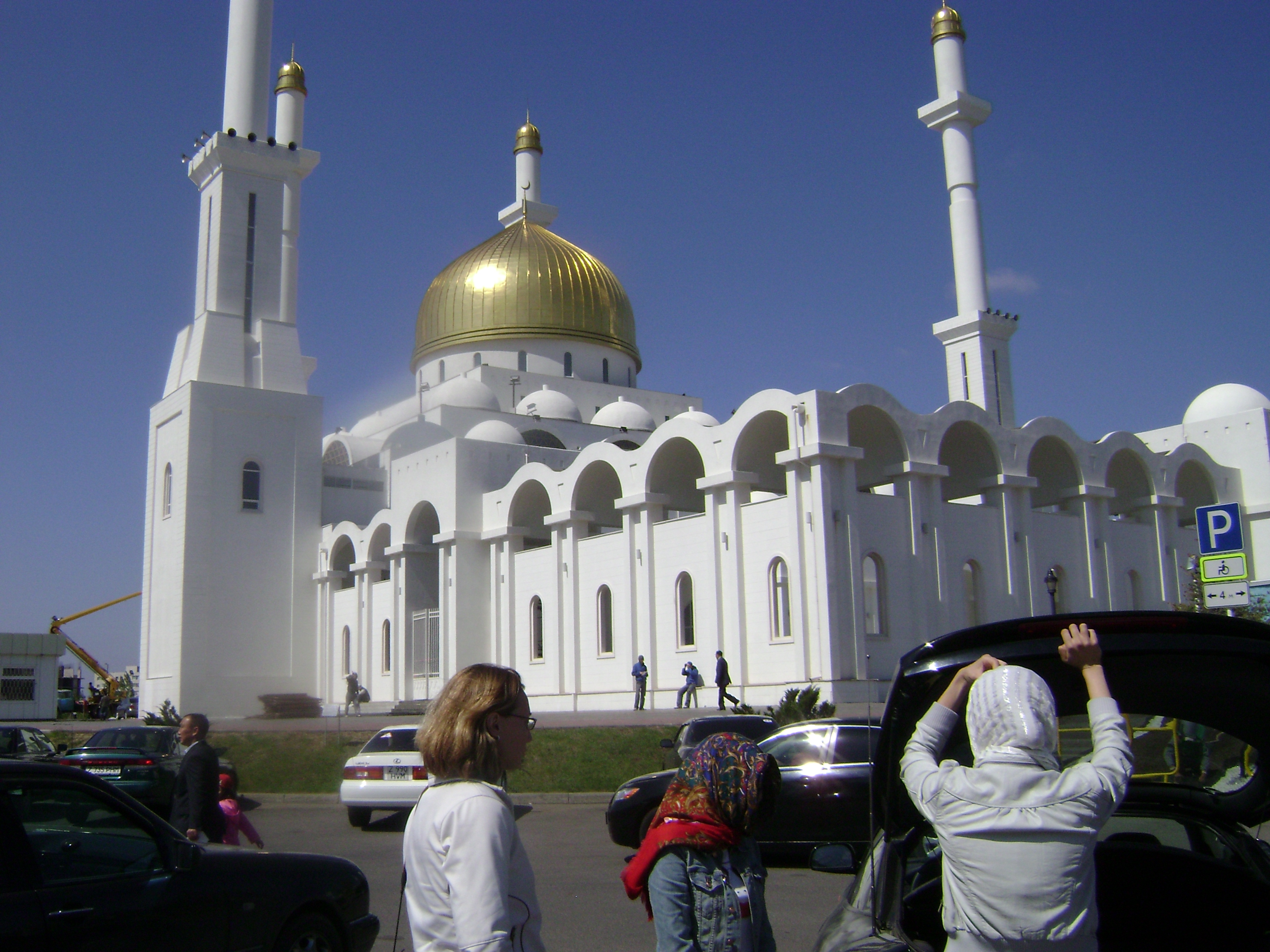
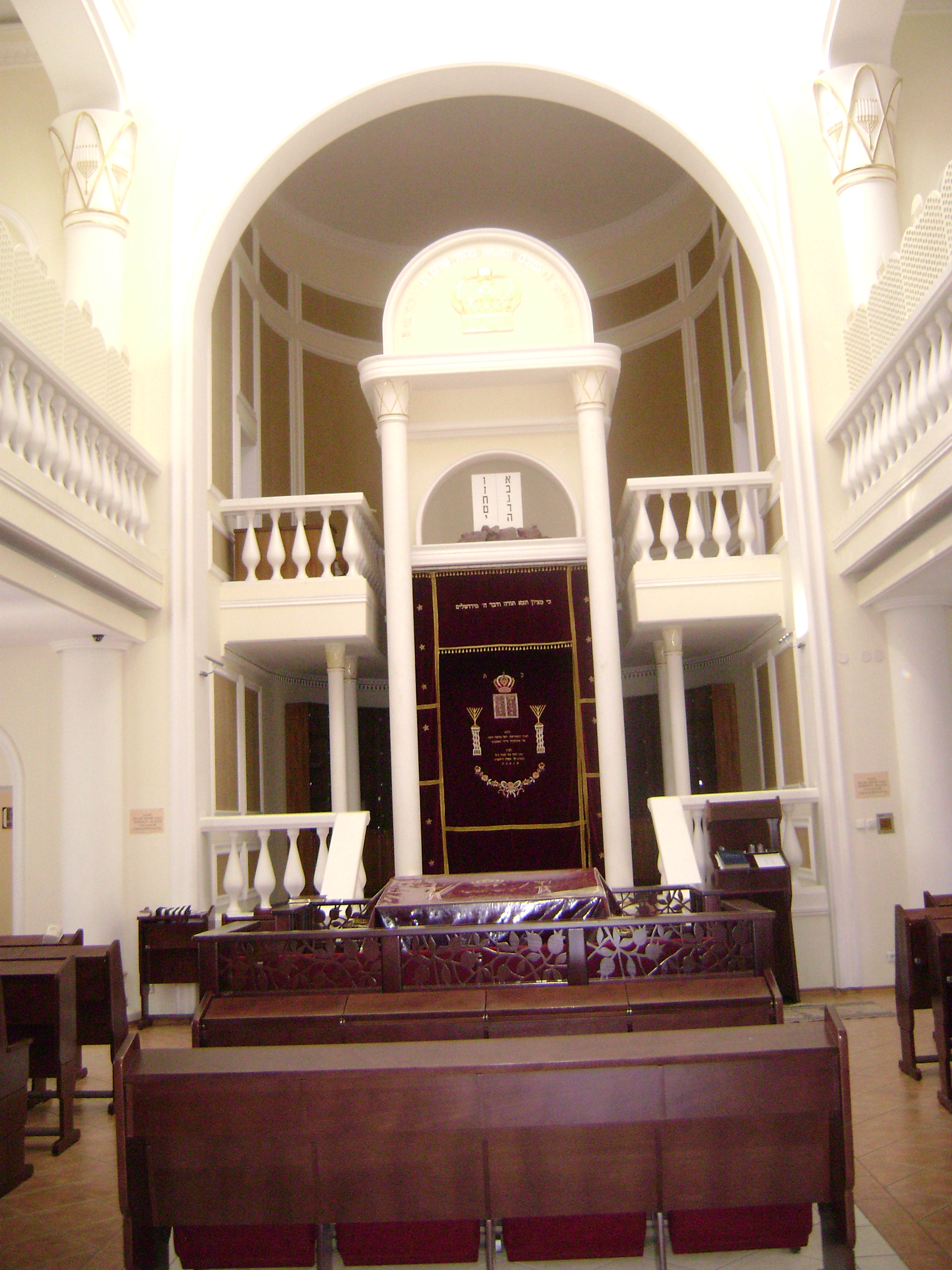
In some ways, Astana is a bold, optimistic statement. Just think about the religious nature of the place. A gleaming mosque, a stunning synagogue, Roman Catholic and Russian churches coexist, with representatives sometimes meeting in a huge glass pyramid built to celebrate the world’s religions. It all reflects the ebullient attitude of the country’s founding president, Nursultan Nazarbayev, who has kept power since Kazakhstan emerged from the Soviet Union in 1991. His long reign has been helped by the nation’s vast oil and mineral riches (despite sometimes questionable elections, he seems popular and the big question mark over Kazakhstan’s future is who will come next once the 70-year-old leader steps aside).

Then there’s Karaganda, the regional center where we spent our final week. There’s something tragic about the place, probably because it was shaped by the KarLag system, part of Russia’s Gulag internal-exile system. Many people in Karaganda, it seemed, had ancestors connected in some way to the KarlLag, as prisoners, exiles or guards. And folks there, even the Russians, still seem suspicious of Russian things – most notably, blaming rockets launched from the Baikonur space base for headaches, high blood pressure, joint pain and weather changes.

Outside of Karaganda, we visited the village of Dolinka, where barracks and other buildings from the KarLag remain. The place seemed desperately poor to Western eyes, but residents don’t seem to feel that way (and there were plenty of satellite dishes on ramshackle houses). Indeed, I’ll never forget the young Russian college student who was appalled at my suggestion that it was a poor town. Her friend lived there, she said, and didn’t think it poor at all. Poverty, it seems, is relative (though running water, heat and the chance to get an education would seem to be handy universal barometers).

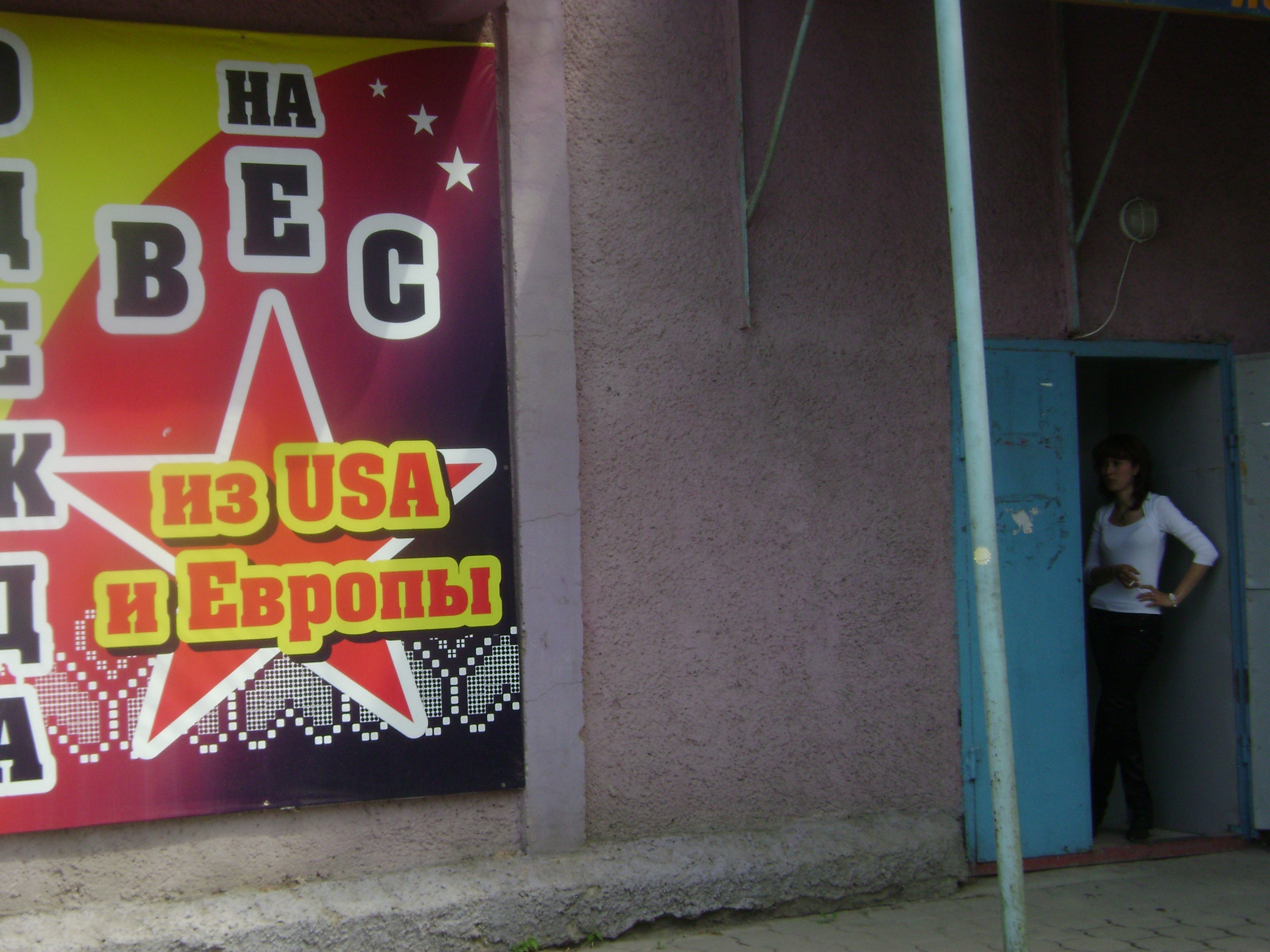
Karaganda is a place where Peace Corps folks and missionaries are reaching out in earnest to the local population. Saving souls or helping people think well of America is certainly not a bad thing. Already, the public seems enamored of things American, as reflected by the constant stream of music videos in cafes and restaurants, as well shop names (U.S. Polo Assn. has an outlet there). College students in an English club, which is helped along by U.S. aid, were fascinated to hear us talk about the U.S. Western cultural elements dominate: I’ll never forget the boy in Dolinka, about 10, who strummed his crude homemade guitar and talked about Pink Floyd.

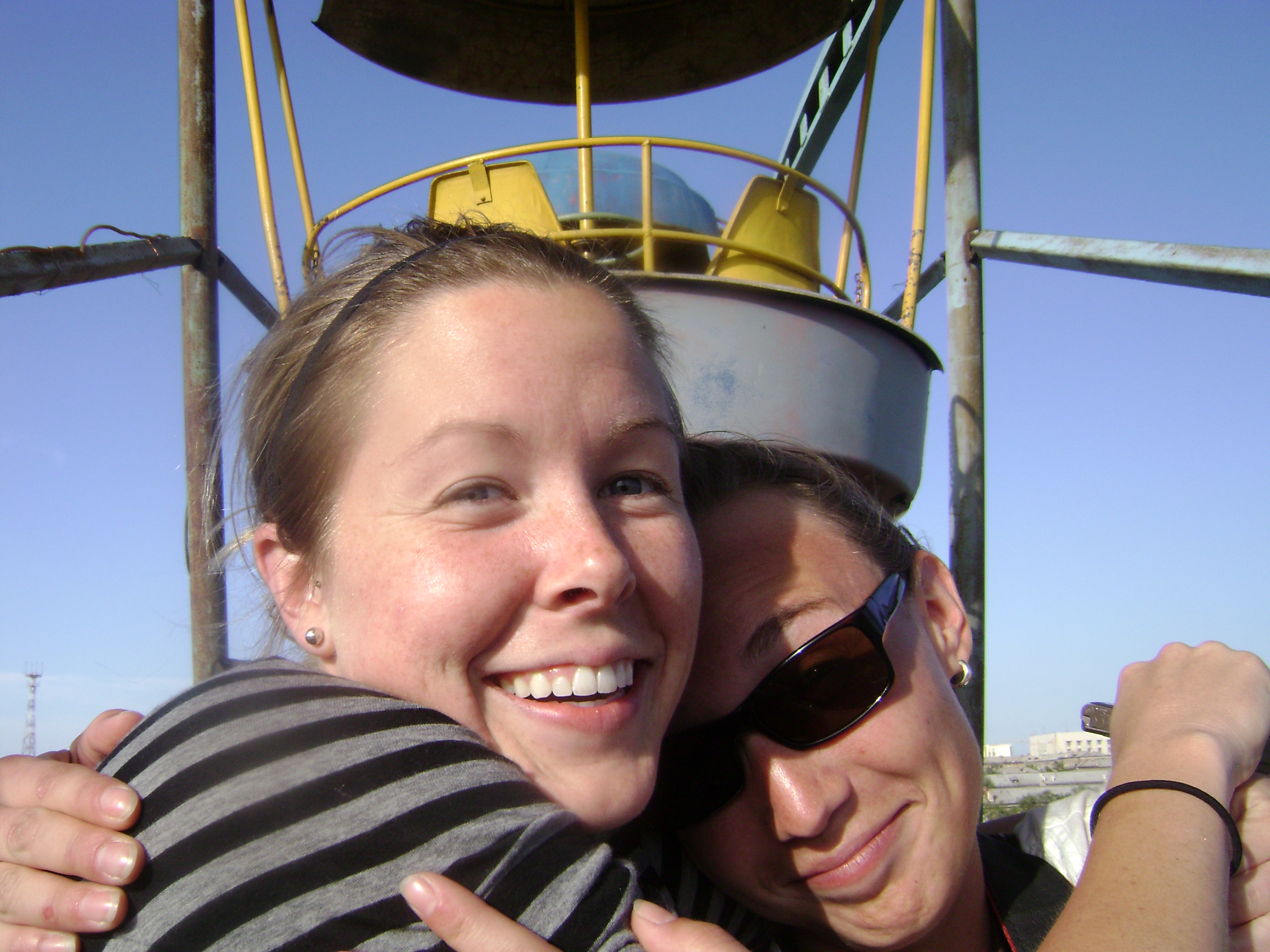
Perhaps my favorite memory of Karaganda will be the city’s sprawling downtown park. There’s a delightful amusement park, where we challenged our nerve on a rickety old Ferris Wheel that looked like it hadn’t been oiled since the fall of the Soviet Union. And one of the students, Megan Plouzek, and I got to run an impromptu marathon around the park (14 circuits approximated 26.2 miles, and I managed five while Megan logged about eight, covering more than 15 miles). The marathon was the brainchild of a local American former college athlete now working for a missionary group, and drew about 15 competitors.

Kazakhstan seems very much a country still emerging. Its economic system, dependent on natural resources, needs to diversify. Its educational system, despite such dubious features as college students occasionally paying teachers for grades, offers a way up for the people. Its government-funded foreign-study programs, which pay full-freight for students who qualify in exchange for five years work back in the country, represent a smart bet on the government’s part.
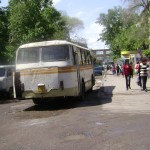
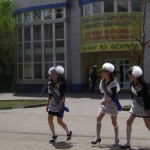
But I believe the country will make a mark globally over time. Already a regional powerhouse in Central Asia, it could ride its oil wealth and strategic location between China and Russia to great things. I suspect Americans will hear much more about the place in coming years, and it makes me feel like we got a ground-floor view. Paris can wait.

Karaganda — A Mixed Soviet Legacy

As we prepare to leave Karaganda, a 75-year-old city whose residents include a large number of survivors of Stalin’s KarLag internal-exile system, a few things stand out. There is a hardiness to the people here, bred perhaps by a history of fighting against everything from the weather to bureaucrats and worse. There is also a tendency to cut corners with few standards, whether in putting up or refurbishing buildings or in buying one’s grades in university. And there is a keen interest in other cultures, particularly the U.S.

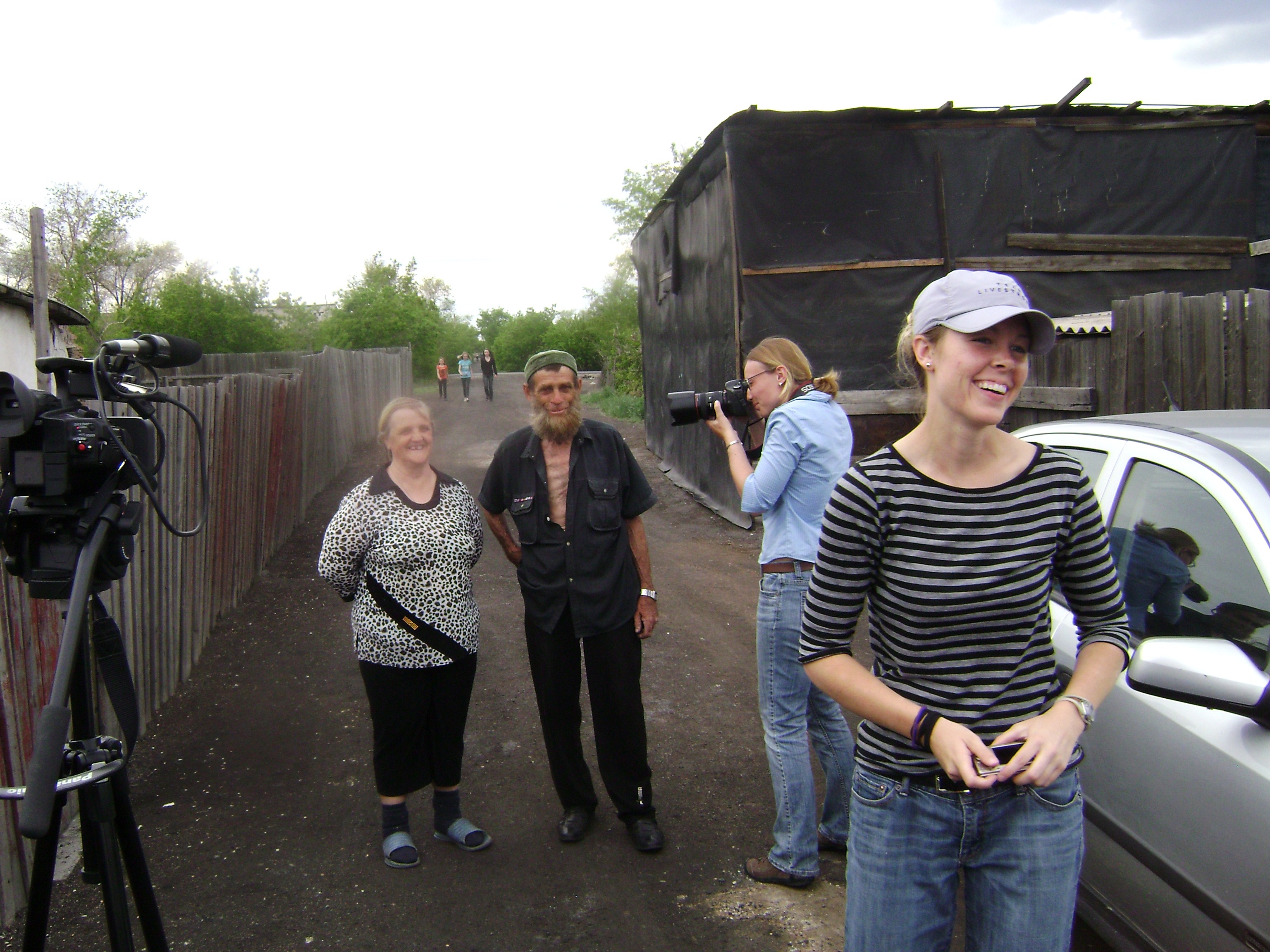
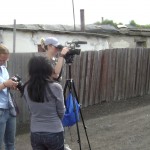
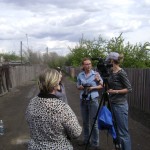
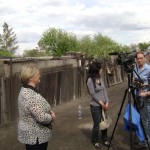
On the survival front, we talked with remarkable people whose histories are both chilling and admirable. We met a woman whose parents survived the most absurd imprisonment in the KarLag here – her father simply because he was a German in the Ukraine during WWII and her mother because, at 18, she told someone that German sewing machines were better than Russian ones. The woman, now in her early 60s, went on to train as an accountant until she retired. Her husband, a Soviet Army veteran, at 67 works his small farm plot to raise the family’s food and boasts muscles far bigger than mine. Chillingly, his wife said her whole village, Dolinka, is a graveyard from indiscriminate killings in the KarLag days, to the point that her husband has turned up human bones as he has tilled his ground. (See Megan Nichols, with camera, and Megan Plouzek, below).

There is some nostalgia for the Soviet days here. College students told us that their parents yearn for the stability of that era. And one of our guides said there was real tumult for a couple years immediately after the collapse of the USSR, with both her parents losing their jobs and much unemployment hereabouts in the gap between the state-run society and the emergence of capitalism. Indeed, even the college students said they believed things were better in schools then, as they point out that salaries for professors are so low now that buying grades is commonplace – we’ve heard that cheating on exams is similarly universal. They believe the Soviets held students to a higher standard.

And yet, there’s also some resentment toward the Soviets. Russia still launches many rockets here from its Baikonur launch area. Intelligent people are convinced that the repeated launches give them headaches, as radioactivity or toxins fall to earth. They believe, too, that the rockets have upset the weather, making for spring days that start out sunny, turn wet quickly and then turn back to good weather. They argue that the Soviets once paid to compensate for health problems from the rockets, but don’t any longer. This distress over seeming Soviet exploitation of the area seems to echo the feelings of people in another part of the country, the Semey area, over nuclear testing that left a legacy of environmental disaster and cruel deformities among residents and their children.

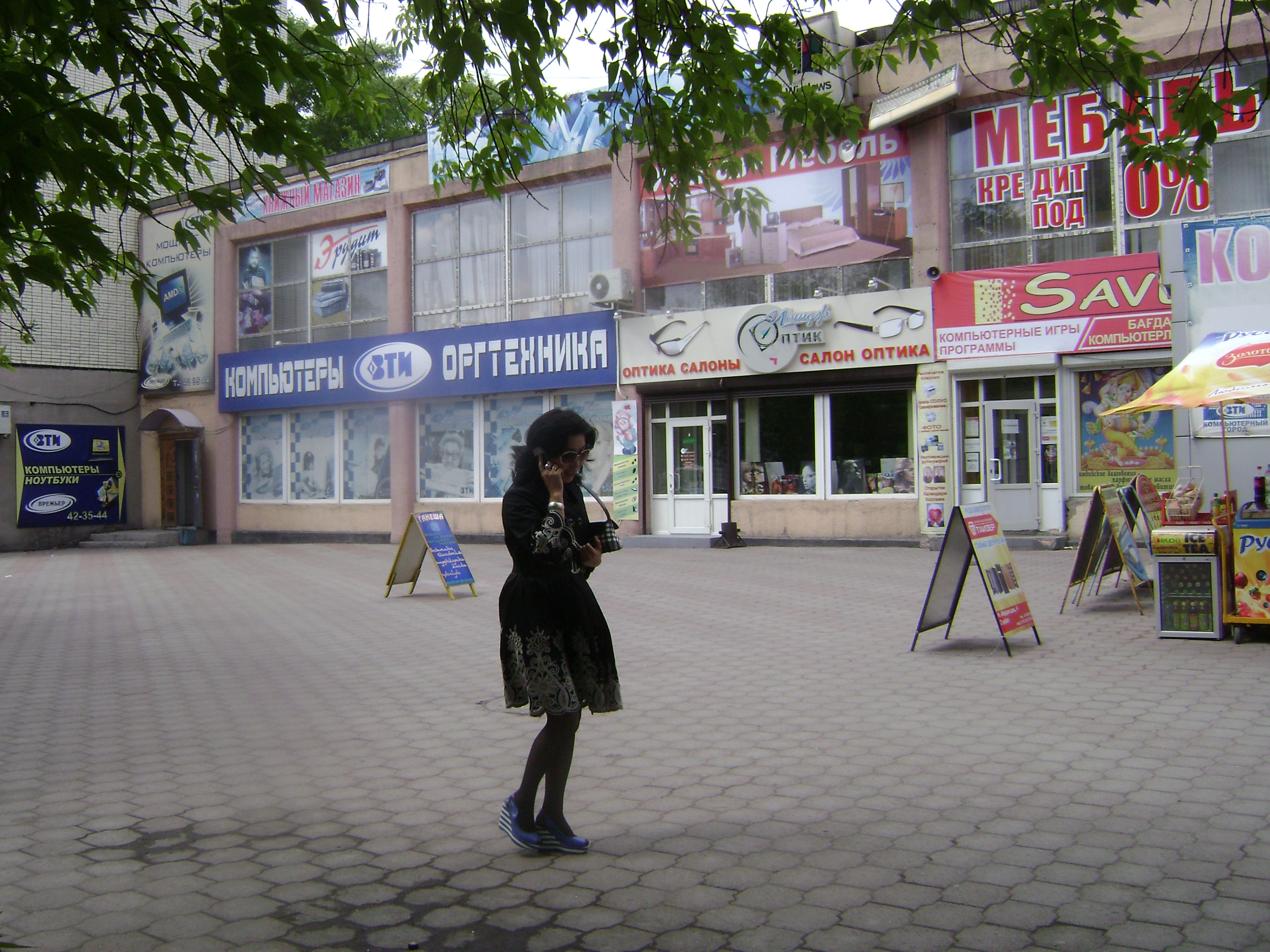
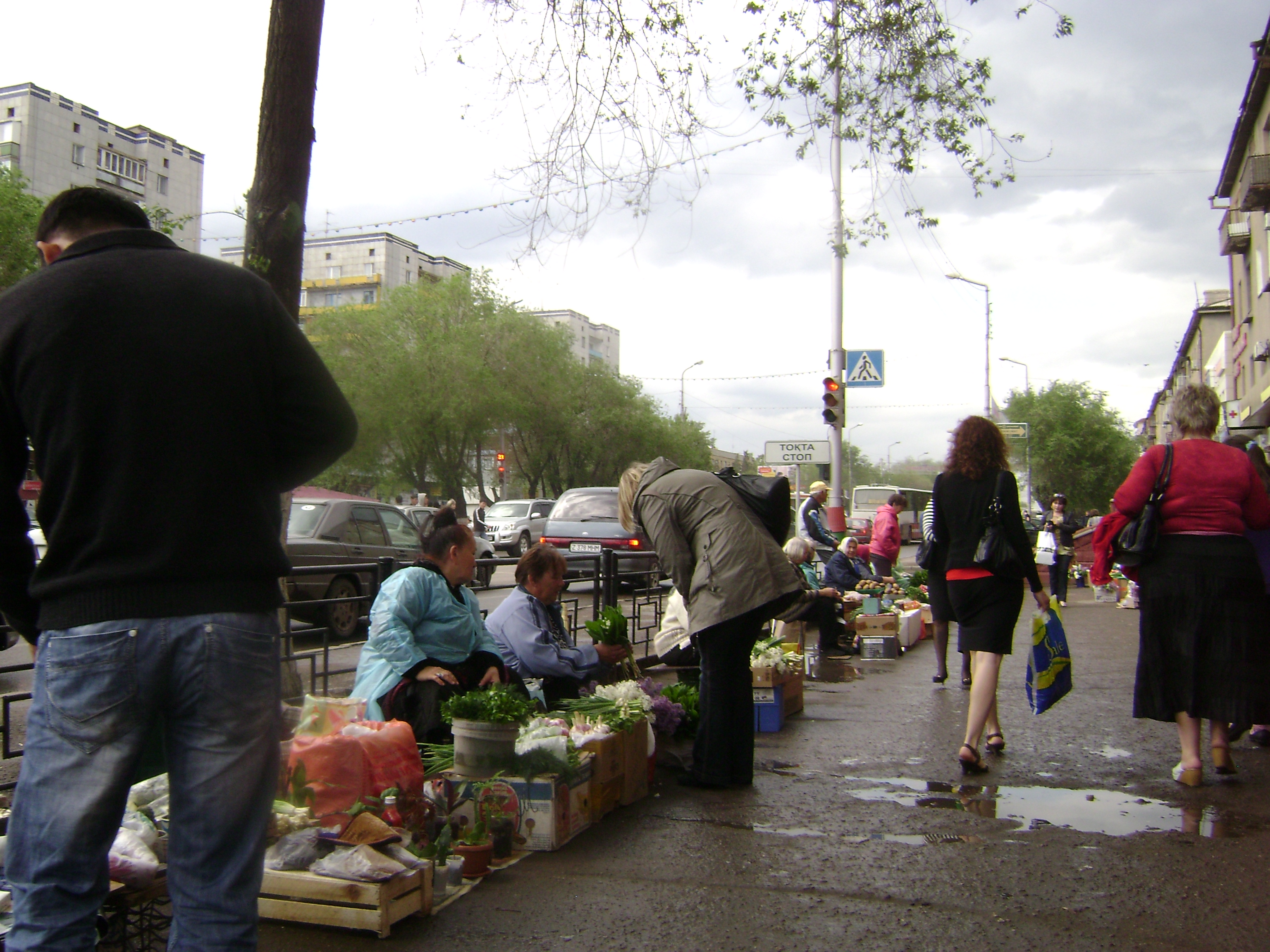
The ability to survive all sorts of abuse marks these people, though. Economically, Karaganda is a dramatic case study in an overwhelmingly small-business oriented culture. Street vendors hawk toys, food and clothing. Underpasses beneath the city’s main roads are packed with little one-person shops, booths and tables. One walks into modern retail complexes that house collections of such one-person shops, often with tiny stores subdivided into sections. We saw, this, too in Astana in convenience stores. Here, one intriguing-looking building housed a bevy of small merchants selling hardware of all sorts. It’s a peddler culture.

We have seen this even in our latest hotel. We’re staying in the Hotel Karaganda, a classic-looking old hotel now undergoing rehab. We checked in and paid at the desk but then were sent upstairs to our room on the third floor where a woman sitting at a table entered us in her book and led us to our room. It appears as if the hotel is subdivided and this woman oversees her collection of rooms as a sub-letter. The second floor is filled with similarly sized rooms, each with a separate merchant. We’ve noted that most of these merchants are women, and our guide said this has been a longstanding way women earn a lot of the income for the family – in addition to doing all the traditional jobs of mothers and wives, such as cooking, cleaning, etc.

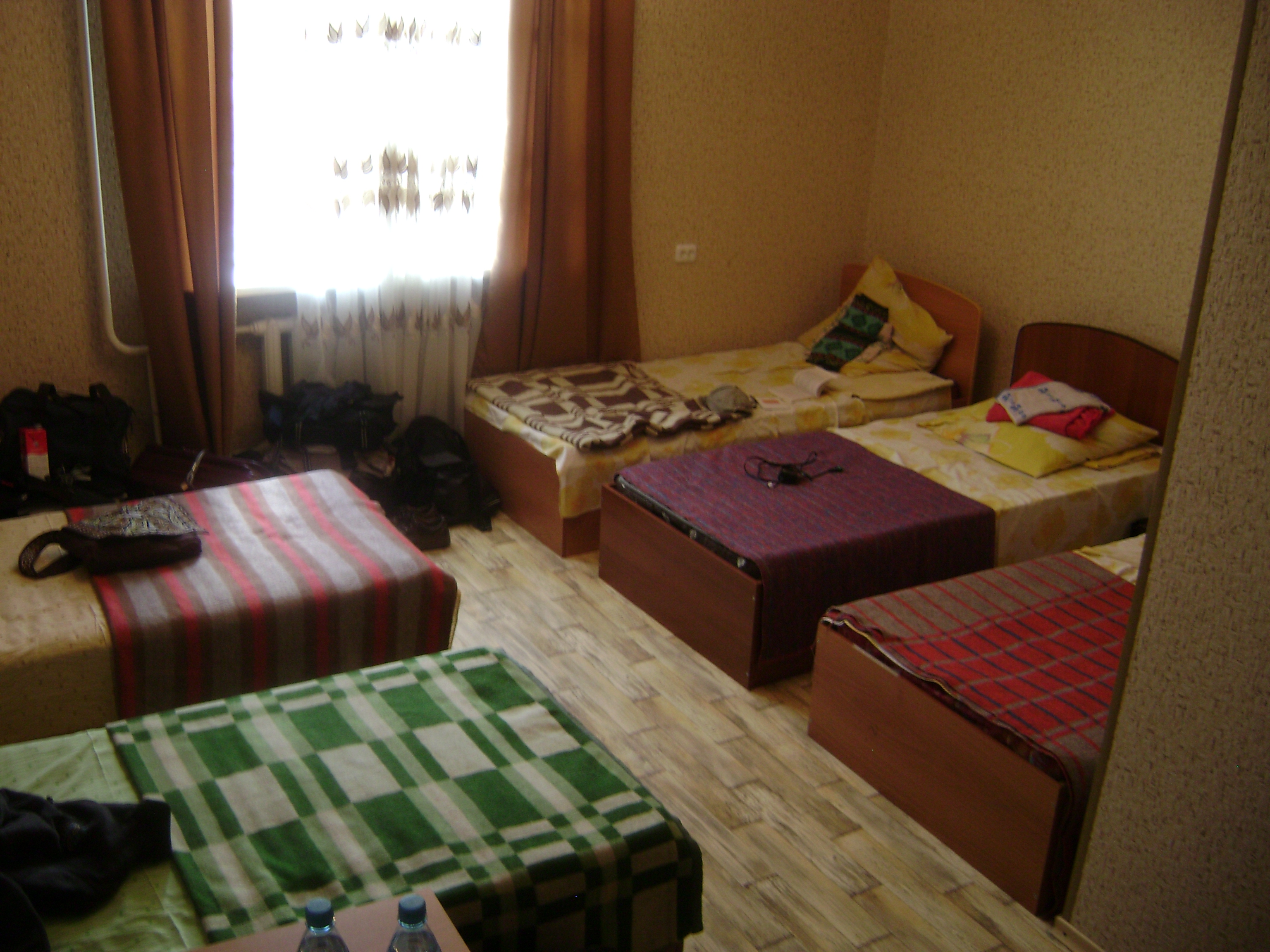
There’s a great need for travelers here to roll with the punches. Reservations can be difficult or even impossible at some hotels, sometimes requiring a payment. And terms can change quickly – we told the folks at the Edem, our first hotel here, that we would definitely stay through last Thursday and probably would stay through Sunday. On Wednesday, I learned they had given away our room and we had to move out on Friday. Then, when we moved to the Hotel Karaganda, our translator had booked two rooms with six beds in all. When we got here, we found just one room with five beds. Fortunately, there are only five of us and the two girls are tolerant of the inconveniences of sharing a small room with three guys – at least for two nights.

If the country is to develop a tourist industry – which it could do – a lot of infrastructure and cultural changes will have to be made. They could start by accepting credit cards and using computer reservations systems in the hotels. Paying in cash for everything – when ATMs limit you to 30,000 tenge (about $200) per day – is a real hassle. Plastic is much more commonly accepted in Astana and Almaty than in outlying regional spots like Karaganda. What’s more, the physical plant can often be challenging – with too few outlets, or outlets hanging out of walls. We’ve been told repeatedly that the construction of even the gleaming new buildings in Astana leaves much to be desired; already, at least one major new building collapsed because it was poorly built, we heard.

Finally, there is a real passion for things from other cultures here. The U.S. particularly is held in high esteem. Rock videos from the U.S., along with knockoffs done by the Russians or Kazakhs, blare from screens in restaurants everywhere. A club named Elvis seems to be a big draw, complete with its pictures of Dylan and the Beatles. Pizza is a big dish here, and we’ve been regulars at the pricey Assorti restaurant in the high-end City Mall and at a smaller cafeteria-type place where we get Margherita pizza. The other day, as we struggled to order, a high-school boy came up to help, using English he had improved by recently spending time in Michigan in an exchange program. People here do seem happy to help us, showing a spontaneous hospitality and graciousness toward strangers that one would be hard-put to find in America or elsewhere — though service in the restaurants can be pathetic, with dishes rarely arriving at the same time for all guests.

The U.S. is boosting its presence here. Peace Corps volunteers busy themselves in English-training classes and HIV-AIDS educational efforts, and the U.S. will be stepping up the number of them in the country substantially. There are now about 150 or so. There are also missionary groups active here, ranging from the Mormons we met in Almaty to a group of evangelicals in Karaganda who operate a feeding program for kids, many of whom are children of alcoholics, as well as an English-training program and a church.  A delightful lady from South Carolina who has taken in five young women who don’t have parents, works with the group. She and a friend helped put together an impromptu marathon this morning that drew about 15 people, including Megan Plouzek and me (I managed just 10 miles or so, while Megan did at least 15).

We ran around a park that demonstrates the curious state of the country. About half of the park is relatively well-maintained, with nice stone and dirt paths and a pleasant amusement park featuring a Ferris Wheel and other rides. People work out at spots around the park, using old playground equipment. Another half of the park, however, is overgrown and includes an abandoned-looking lake as well as rusting picnic spots. It appears that the place may have been well-kept in the old days, but has been largely ignored for at least a couple decades. Like much of the country, it seems to be both promising and in need, a place of great potential that has been both scarred and helped by its history.

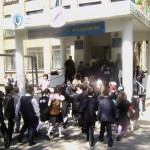
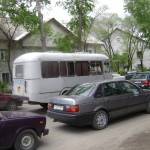
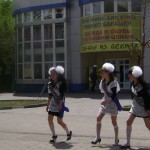
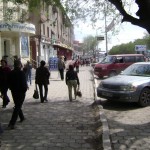
Karaganda & Dolinka street scenes

A half-hour’s drive outside the regional center, a town called Karaganda, sits Dolinka, a hardscrabble village that once was a key part of the KarLag system. The KarLag was the Karaganda portion of the notorious GuLag camp network that once dotted the backwaters of the USSR. At its peak, the KarLag was home to 75,000 exiles, people imprisoned at various times from 1931 to the 1960s. Now, Dolinka exists as a collection of rough shed-type houses and former KarLag barracks and buildings. In it serves as a memorial to that dark era in Kazakhstan’s history.

We met a woman whose parents were sent here — her father because he was a German in the Ukraine and Stalin in WWII saw Germans as a Fifth Column, and her mother because, at 18, she told someone German sewing machines were better than Russian ones. That apparently unpatriotic sentiment earned her five years in prison.

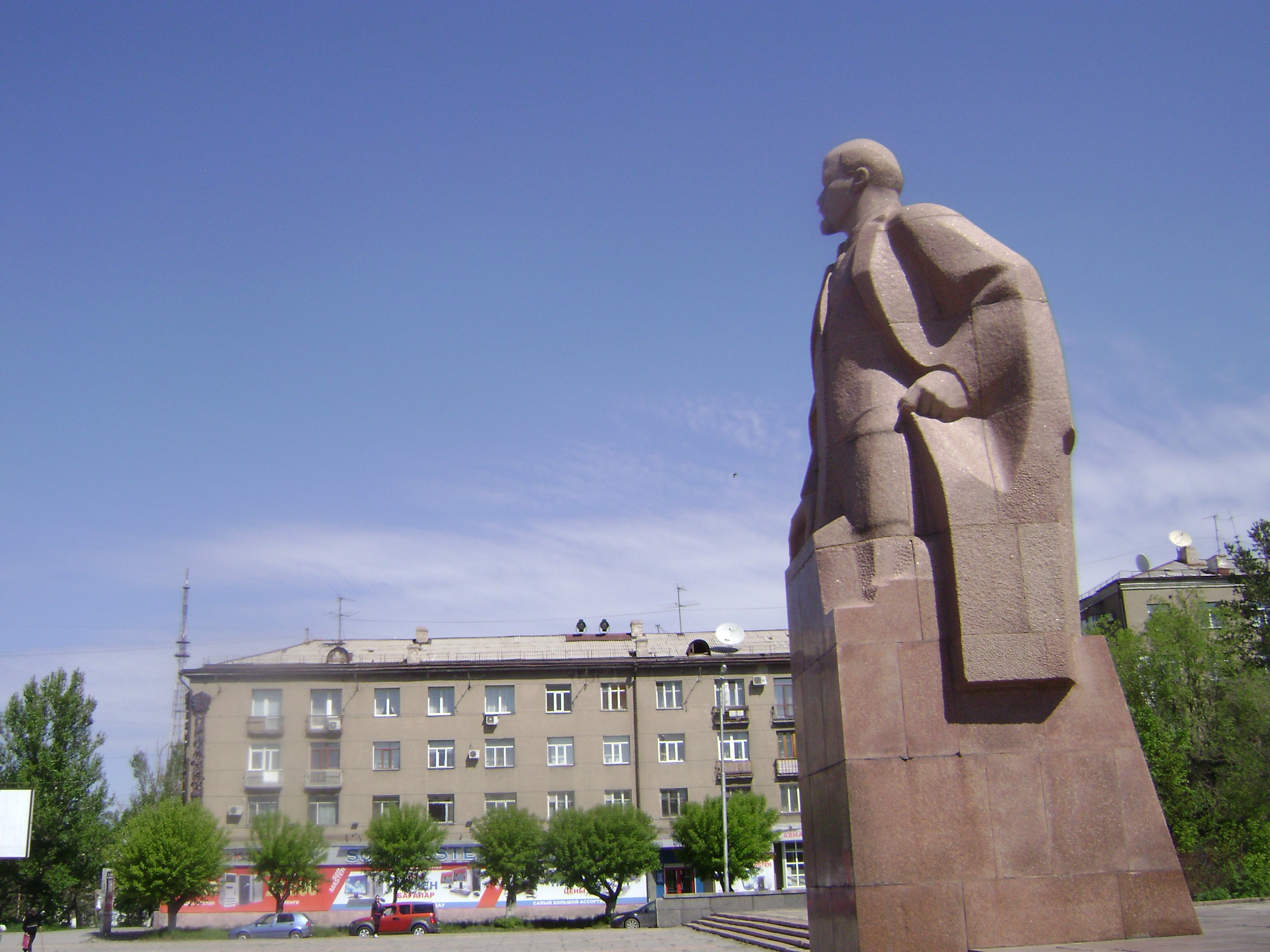
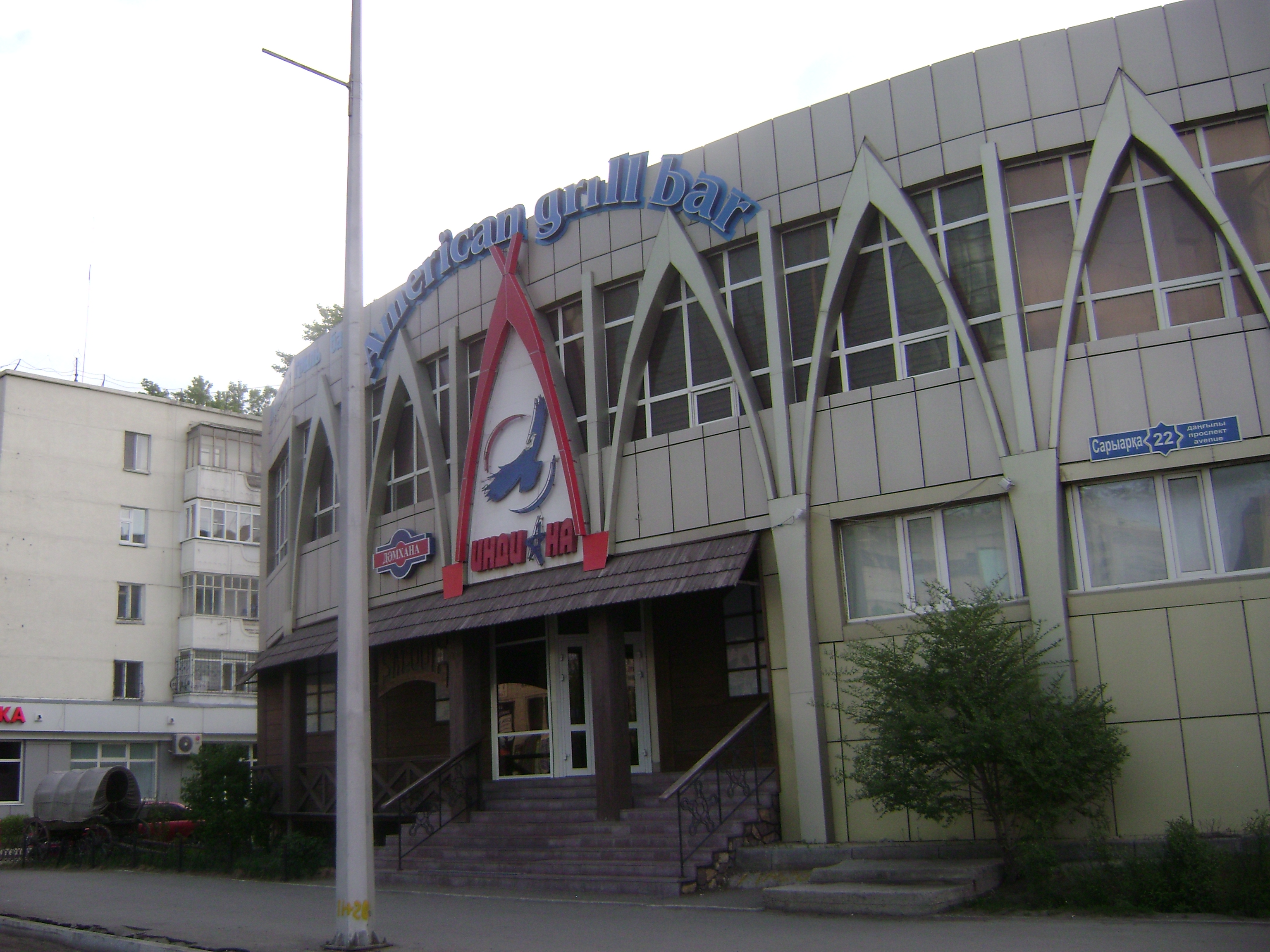
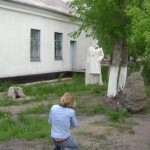
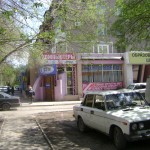
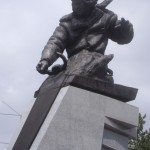
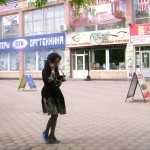
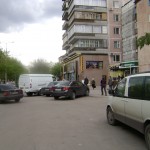
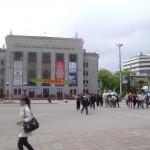
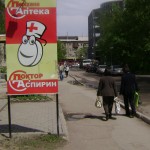
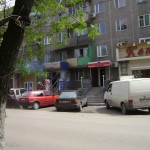
The photos of a developed town below, including the towering Lenin, are from Karaganda. In a sign of how times have changed, a headquarters of Arcelor Mittal, the world’s biggest steelmaker, sits at the top of the street that is home to the Lenin statue and its logo looms high above Lenin. Mittal is very active in Kazakhstan. The photos with a ramshackle look, including shots of videographer Megan Plouzek and photographer Megan Nichols, are from the rural village of Dolinka. Click on each photo to see it in full.

Images of Karaganda

Karaganda is a fascinating place:

Test Case: Capitalism’s Rise in Kazakhstan

Nineteen years after breaking free of the collapsed Soviet Union, Kazakhstan remains one of capitalism’s last frontiers. From its nascent stock exchange in the financial and commercial center of Almaty to the sprawling Abu Dhabi-like construction and institution-building under way in the capital city of Astana, the country continues to seek its footing economically. Its mixture of private enterprise and state direction, together with a benevolent strongman’s rule, would make the place a fascinating laboratory for an economist.

There’s no question that Kazakhstan is the economic powerhouse of Central Asia, the richest of the “stans” and the most politically stable. Its oil wealth in the Caspian Sea has already been staked out by China, Russia and the Western countries, especially the U.S. They covet its huge fields of reserves as strategically vital alternatives to Mideastern suppliers. About as big as Western Europe and far less populated, the country also boasts hefty supplies of uranium and just about every other mineral developed societies need.

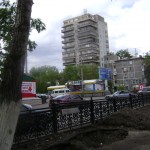
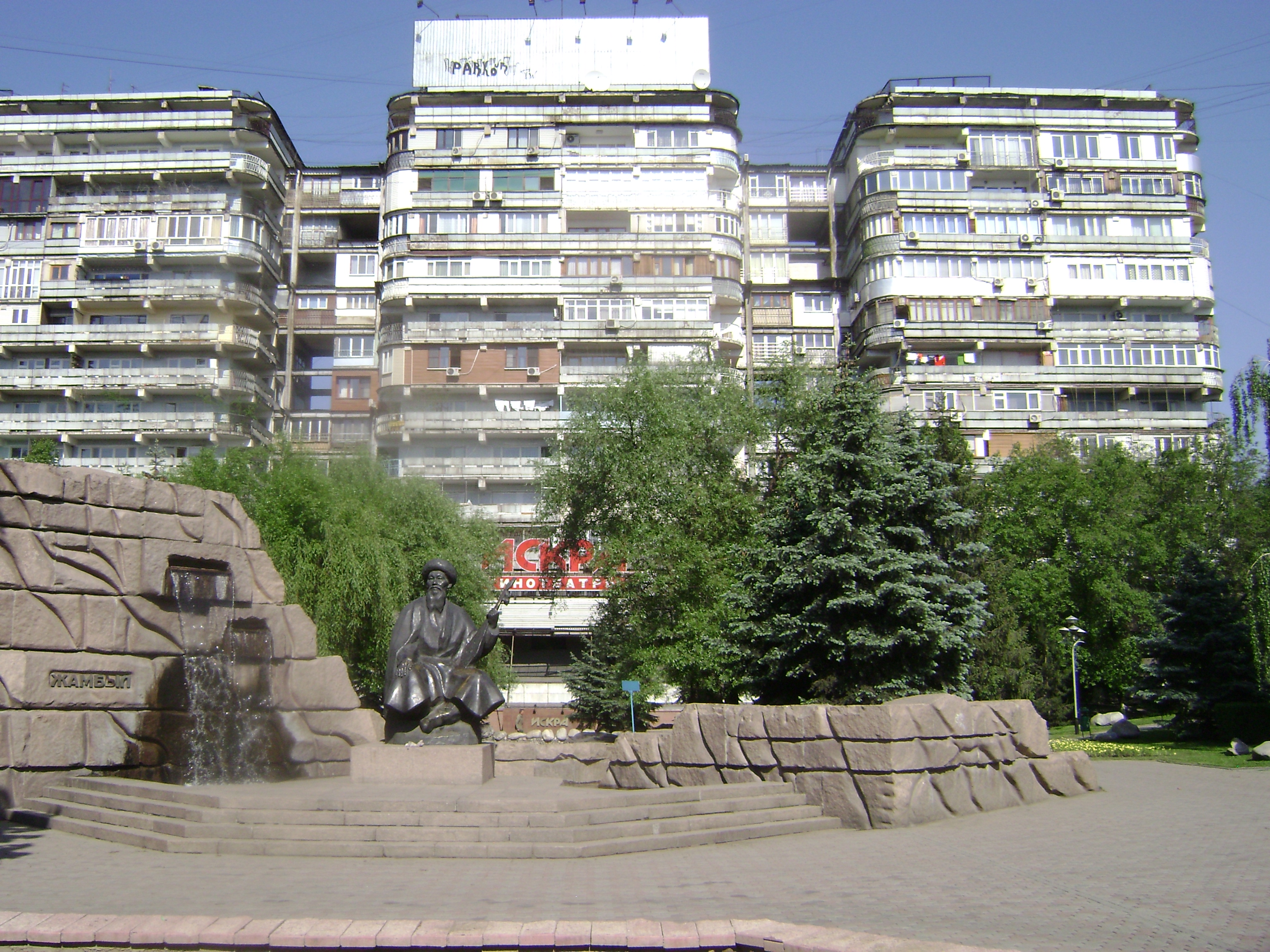
And yet, it has a long way to go to be a fully formed modern capitalist state. For one thing, many residents still  live in crumbling Soviet-era concrete apartment blocks that can stink of sewage, and feature dark cement staircases with missing windows and poorly planned and maintained common areas. Our apartments in gleaming, modern Astana would be low-end by South Bronx standards. Lines of trash bins next to playgrounds invite vermin hard by spots where kids play. The play area, surrounded by our five-story apartment buildings, is a vivid demonstration of the tragedy of the commons – overgrown and decaying with apparently no one to maintain it or at least to maintain it well. Similar buildings linger in Almaty, as in this photo of one sprawling tower block. (Click on it to see detail).

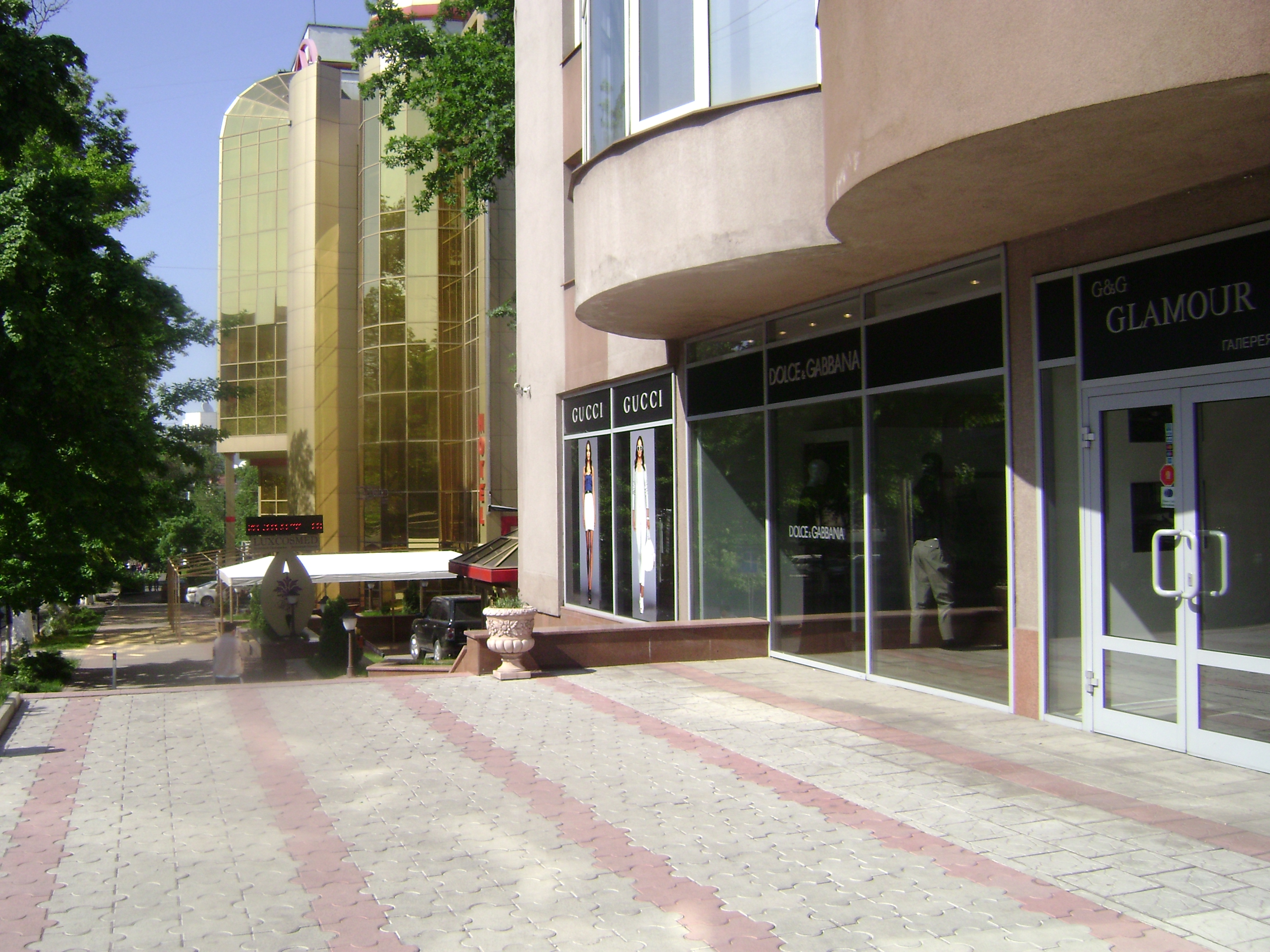
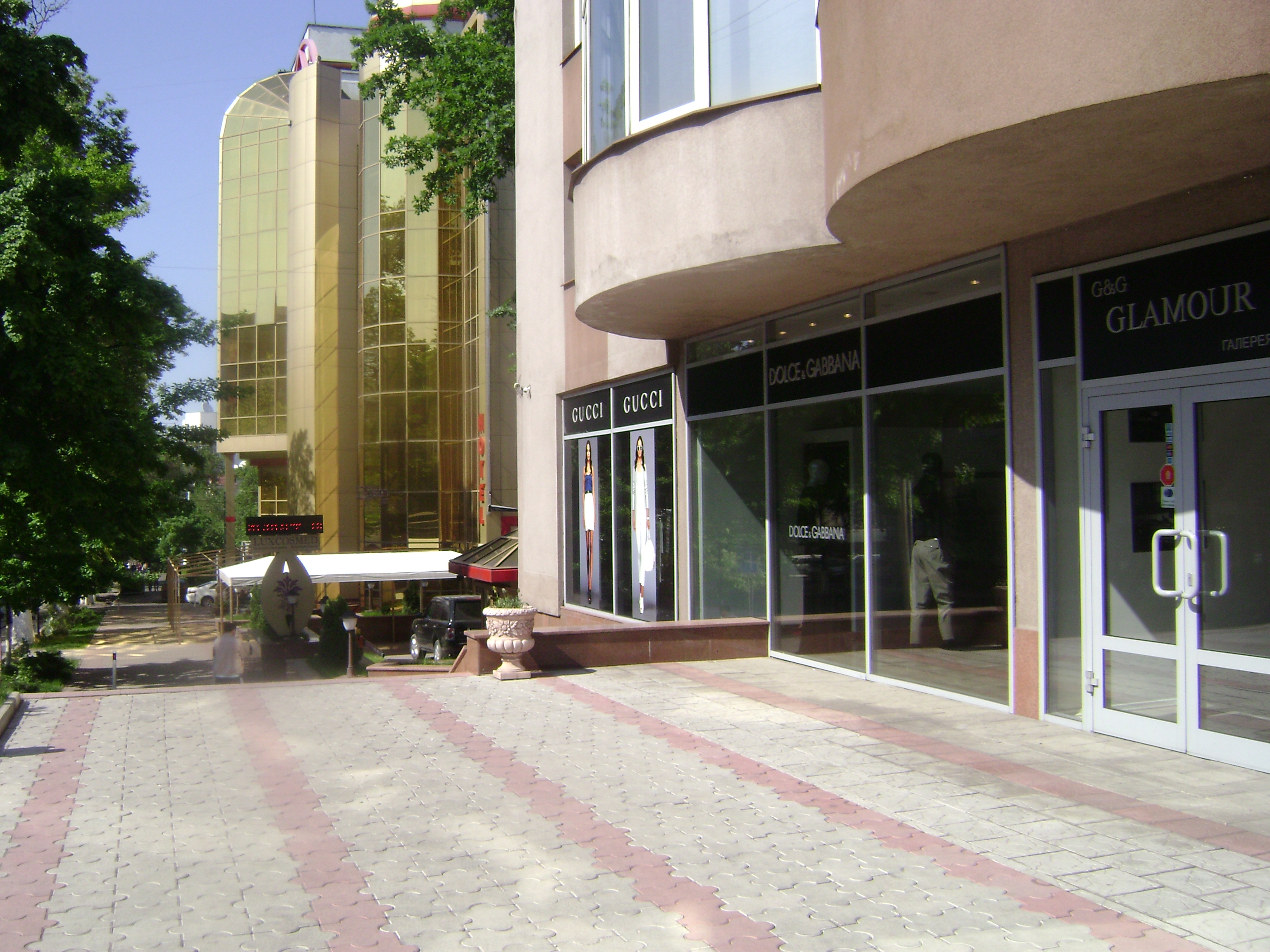
But in Astana people live in Soviet-era blocks, spread across the old area of the city, because the apartments were given to them free in the Soviet days. Even now, many can’t afford the stunning new buildings still under construction in the newer parts of the city. That housing is being privately developed and sold. Instead, people borrow to buy pricey cars – Mercedes-Benzes, Lexuses, Range Rovers and others dominate the jammed roads here. One of our guides says Kazakh people like to “show off” and they often go deeply into debt to drive glitzy cars. They also crave glitzy western brand names, as Gucci stores in Almaty suggest.

Certainly, people will occupy those shiny new buildings over time, though. The country is developing a solid middle class of well-schooled professionals, managers and state bureaucrats who will take to the new residences once their resources allow it. If nothing else, supply and demand will drop the prices of the new condos, one would think. The construction, driven by a real estate bubble that popped a couple years ago, still lumbers along, albeit at a slower rate.

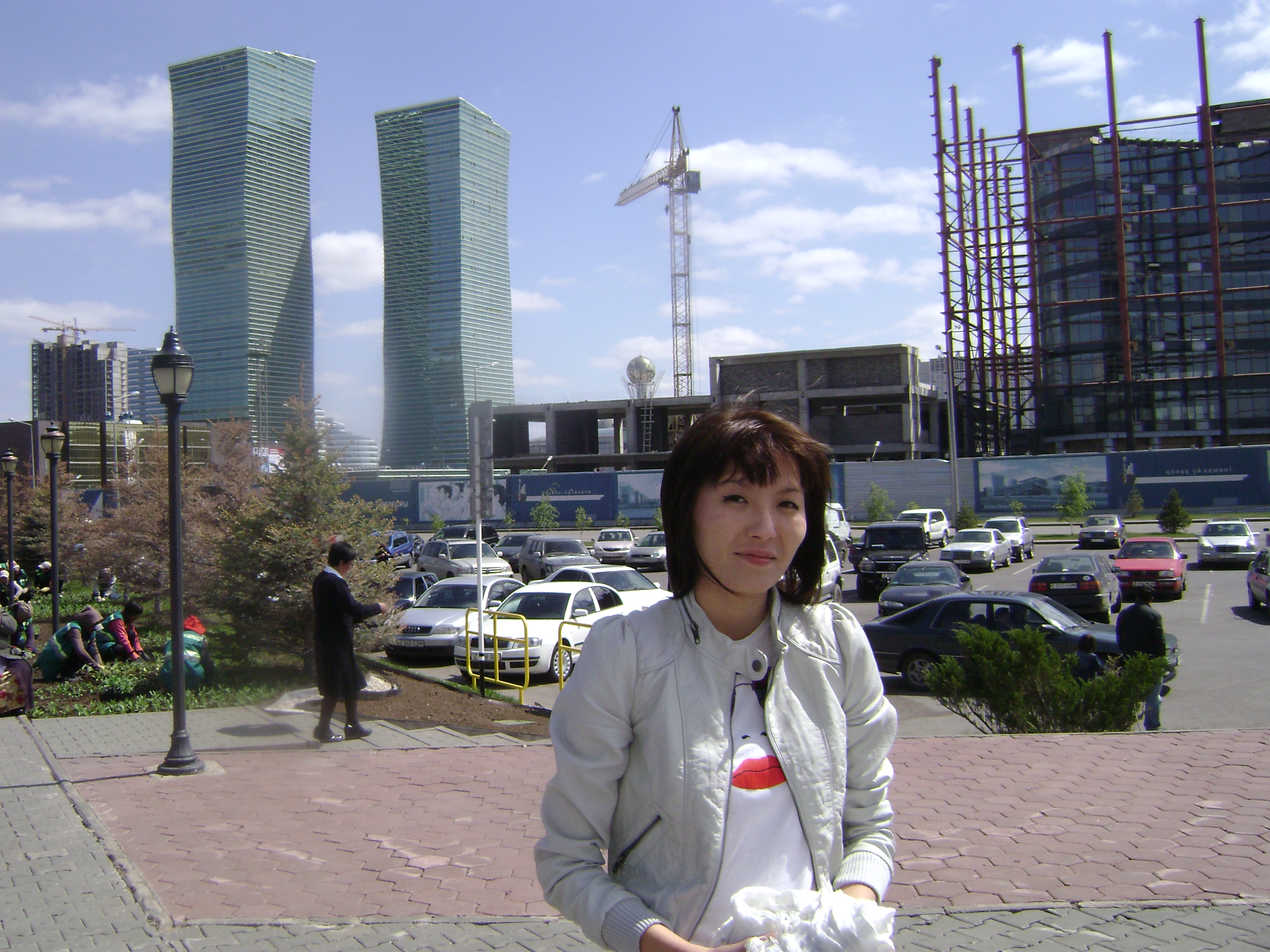
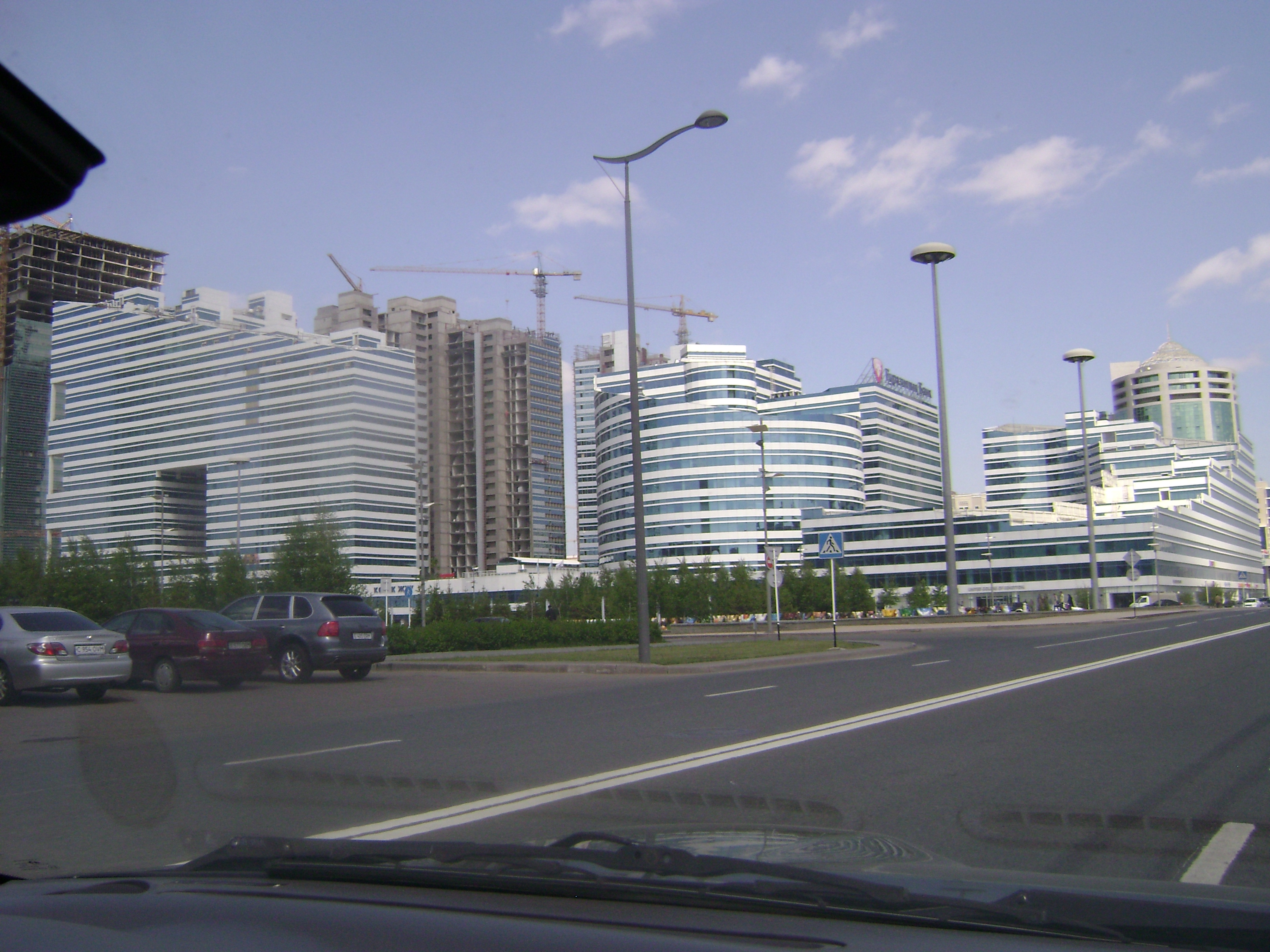
It’s hard to imagine, much less portray, the extent of new development, particularly in Astana. The city was rechristened as the nation’s capital only in 1997 by President Nazarbaev, and it has risen into a Disneyland-like sprawl of some of the most ingenious and playful architecture in the world. In the new city centre, as it is called, a glass and steel pyramid rises near towering office buildings shot through with arches and sporting clever overhangs or minarets. Bright pastels reflect the sun. Even amid the slowdown, building cranes still dominate the skyline behind billboards that hawk the luxury living promised by the novel structures. It’s as if the whole place is a World’s Fair.

We visited the Eurasian National University on Thursday. The gorgeous facilities, housing a museum that showcases ancient artifacts of the region’s earliest days and paintings of warrior heroes of old, are part of a university created by the president to train future leaders, many in the ways of the West. The president also set up a national scholarship program that sends young students to study abroad, so long as they return to help modernize Kazakhstan. Leaders in the journalism school at the university asked us if we could host students at UNL and develop an educational collaboration – something that I am sure our folks would be keen to do.

Our meeting was almost like an affair of state. We all gathered on one side of a table of microphones and the J School faculty gathered on the other. My name was printed on a card, as was that of the J School director opposite me. A small Kazakhstan flag stood before him on the table, and a small American flag stood before me. The session began with rather formal speeches of welcome, all run through a translator from the U.S. Embassy. (The embassy is a stunning new building, corner of America behind some tight security. Very welcoming folks there, too).

Soon enough at the J School, we got down to finding common ground. Since my colleague, Bruce Thorson, and I and the Kazakh faculty were all about the same age, we bemoaned the lack of reading by our Internet-driven students and fretted over the future of print. I got the feeling, however, that preparing students to deliver Net-ready material is not on their agenda here – yet. A meeting with a newspaper editor later confirmed this, as he complained of declining readership but also said he hoped the Net wouldn’t usurp print journalism until he was ready to retire. He, too, is ahem, of a certain age.

Yesterday, some of the students and I went to a stunning mosque with a helpful guide who counted herself as a far-too-unobservant Muslim. Men and women prayed together in the mosque, unlike the more traditional mosque we visited in Almaty. I was able to sit with the group as an imam led prayers. And, to the dismay and disgust of our hostess, some women walked in sporting short skirts. Islam light seems to prevail here.

Afterward, we went to the Lubavitch-run synagogue, Beit Rachel. The shul is in a beautiful building that features a gleaming Star of David on its roof, much like churches showcase crosses – and far more showy than most shuls in America. Nonetheless, it is fenced off, unlike mosques, and has a security guard in a booth at the entrance. Much as religious tolerance is the rule here, Jews have reason to be cautious, it seems. There is also a large Catholic church in town. At Beit Rachel, young Israelis urged me to lay tefillin, which I did. We all had imposed on them a bit, with a local TV crew running all about the building filming us as we did our photojournalism there.

On Saturday, I went to services where, sadly, there were just a yeshiva boker who spoke only Hebrew, a couple other guys who spoke Russian and one delightful fellow from Baku, who spoke English. I’m told more people come when the rabbi is in town, but he’s in Israel at the moment. Still, it was fun talking with the Azeri fellow and it was a delight to eat cholent, the first meat I’ve (knowingly) had in a few weeks. We had a pleasant time all around and got an Amidah or two in.

Further on the religious front, a group of us on Friday also visited a pyramid where all the world’s religions are celebrated. Conferences there periodically draw global religious leaders to talk about their differences and similarities. It’s part of the president’s vision for a harmonious world. I’m told the Pope is among major world religious leaders who have stopped by.

Religiously and financially, there’s a sense of freshness and newness about the country. It’s as if it is still discovering itself and its role in the world, even as it celebrates its ancient history. It also needs to carefully walk lines, balancing Russia, China and the U.S., as well as keep religious and ethnic differences from becoming problems. It is enjoying — but must be cautious about — the billions of dollars, renminbi and rubles that have poured into place in the last 15 years or so. Its institutions are hard-put to keep pace.

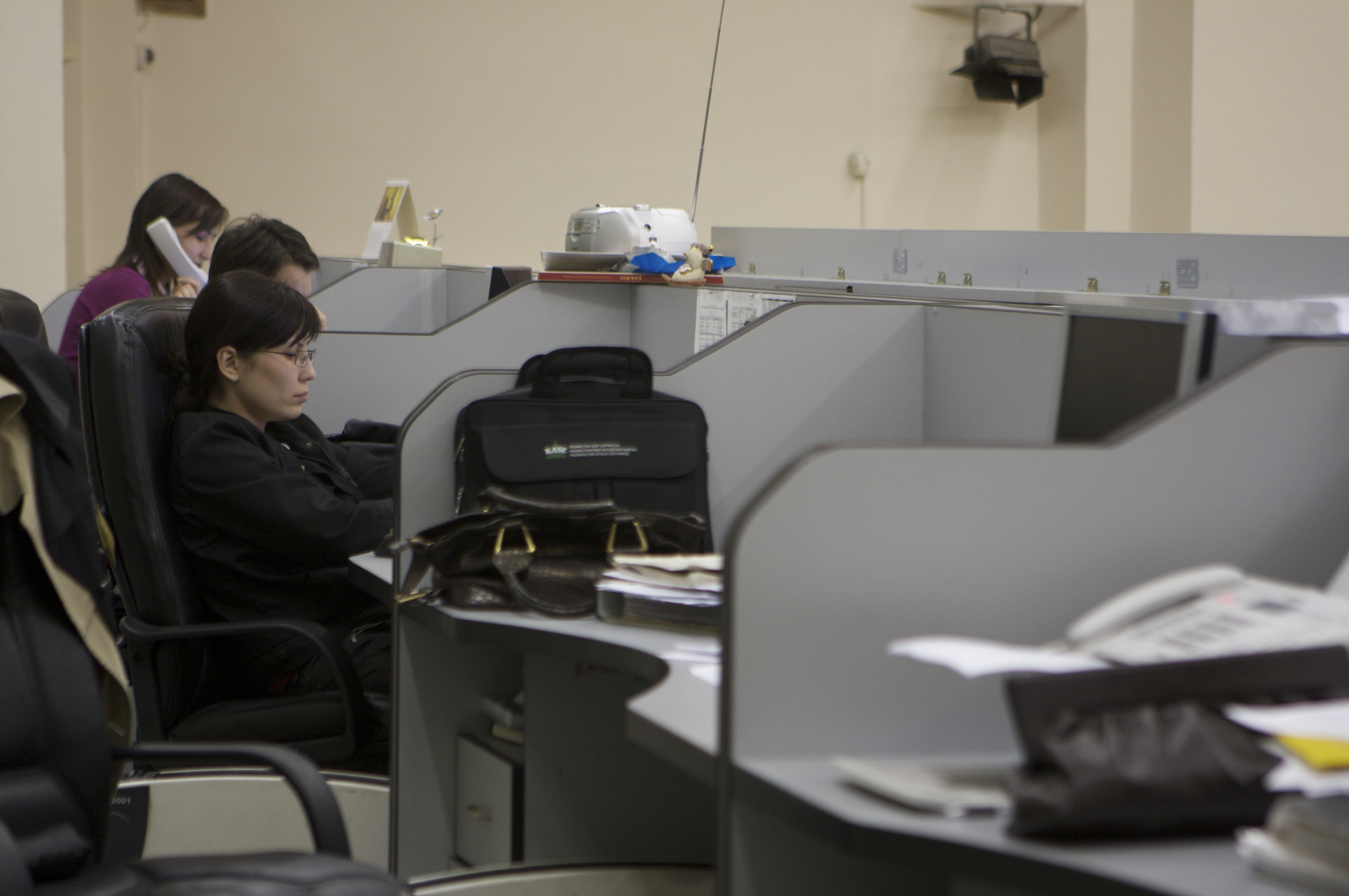
Perhaps the best example is the Kazakhstan Stock Exchange. Set up two days after the country’s currency, the Tenge, was introduced in 1993, KASE is the home bourse for 121 companies. Like markets the world over, these outfits have been roller-coasting in recent years. After soaring past $96 billion in 2008, the market capitalization of the exchange members plunged to about $25 billion last year before recovering to about $64 billion now. The volatility reflects how interlinked Kazakhstan’s economy is with the world’s. The market is still comparatively small and, though heavily electronic, maintains a cubicle-filled trading floor, as the photo here by Sarah Tenorio shows.

As one might expect, oil and mining companies dominate the exchange. But banking and finance is important, too. And all these outfits rise and fall based on global conditions. The finance sector here went into free fall, with lots of bank defaults, because banks here had borrowed heavily from global banks. Real estate, which boomed in U.S. fashion, collapsed amid overextension, leaving Almaty with lots of unfinished buildings. Luxury homes in a neighborhood called Luxor near the KASE offices were going for $4 million in 2008 and they have since fallen by half that.

Still, Kazakhstan’s mineral wealth should sustain the country as long as the world continues to need oil, uranium and other crucial materials. What’s more, the nation’s leaders are keen to diversify the economy to avoid overdependence on such resources. Tourism, for instance, is an area they would much like to expand. If they can improve their hotels and tourist infrastructure, there’s no reason they can’t make a go of it.

Over time, this country’s development will be fascinating to watch.