Whither Print


Source: AP

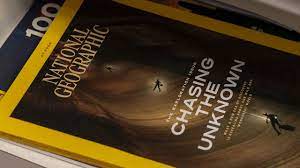
It’s far too easy these days to get depressed about the state of journalism. Legacy outlets – especially those that depend on and once thrived in print – are continuing to shrivel. Just this week, word came that National Geographic lost the last of its staff writers and will end newsstand sales next year. Meanwhile, it was also reported that the circulations of the 25 largest U.S. newspapers slipped 14% to just 2.6 million in the year ending in March, accelerating the decline in print that has afflicted most of the nation’s top papers (as well as killed off many of its smaller ones).

And yet, it’s not as if all the news is dire. For one, digital readership continues to grow among the bigger newspapers. As the PressGazette reported, the New York Times Company announced that its digital-only subscriptions rose to 9 million as of the end of the first quarter of 2023, an increase of 8% from a year earlier, even as circulation of its print product slipped 10% to a bit over 296,000. Meanwhile, The Wall Street Journal recorded 3.3 million digital subscribers in March, up from 2.9 million in the final quarter of last year, even as its print circulation slipped 13% to about 609,650.

More to the point, the growth of alternative all-online media outlets seems to be continuing. To take one example, the nonprofit States Newsroom network has spread to operations in 34 states and it is planning an ambitious agenda of coverage of the presidential race. One of my favorite members of the network is the Nebraska Examiner, an operation staffed by prize-winning refugees of the Omaha World-Herald (which, sadly, has shrunk under the ownership of Lee Enterprises).

The Examiner continues to hold the feet of Nebraska politicians to the fire as it covers state government well, just as other members of the States Newsroom network do. Indeed, the outlets arose because local papers were cutting back on their coverage of state government.

Another example of intriguing online efforts is the Flatwater Free Press, which seeks to cover a broader array of subjects of statewide interest. It’s akin to a for-profit operation, The Colorado Sun, a venture staffed mostly by former Denver Post journalists. These outlets don’t cover local news as closely as dying local papers once did (city councils, zoning boards, school boards, etc.), but they do a sterling job on topics of broader interest. Consider this Flatwater piece about the prospects for restricting gender-affirming care and this interesting piece from the Sun about psychedelic drugs.

Zach Wendling, source: Nebraska Examiner


Will these alternative operations ever match the breadth and depth of coverage that metros and local dailies once offered? That seems hardly possible, as their staffs are a fraction of the size of once-robust legions of journalists at the larger papers. And yet, they are providing opportunities for young people who would find few at shriveled print outfits. One of the more productive folks at the Nebraska Examiner, for instance, is still a student at the University of Nebraska-Lincoln, Zach Wendling, whom I was privileged to have in a class. He’s interning among the handful of seasoned veterans at the outlet. (The place employs four staffers and Zach).

Inexorably, the shift away from print will continue, of course. Young people have little or no interest in news on paper and those of us who still like to hold a print product (in my case, magazines including The Atlantic, Harper’s and The New Yorker) are aging out. And nothing compares to the immediacy of the online realm.

Whether that shift will ultimately do in even the biggest names in print remains a huge question mark. Outlets such as the Times and the WSJ are smartly creating lots of alternative products – newsletters and podcasts and such – to keep their edge. But smaller papers are hard-pressed to keep up, especially those owned by vulture-capital-backed chains more focused on milking the papers on the way down rather than growing them or their online efforts. (See the Chicago Tribune, whose average print circulation in the six months up to March slipped 23% to just over 82,000, according to the PressGazette, putting it at ninth place among the top 25 papers. The Tribune is a property of the notorious Alden Global Capital.)

We have long been in a painful period of transition in news, of course. That’s not new to anyone familiar with the business’s decline over the last decade or longer. It may be that the biggest names will endure and innovate their way through. Prospects for the rest seem bleak, even as the outlook for the little online-only innovators seems fairly bright (so long as the public continues to donate to them).

Jeff Jarvis, source: Twitter


Perhaps a new book by Jeff Jarvis will guide us. As its promotional material tells us, “The Gutenberg Parenthesis” traces print from its beginnings to the digital present. Print, we’re told, “was as disruptive as the digital migration of today.” Now, we are immersed in the changes that may make the print era little more a very long parenthesis between pre-print darkness (though still an era filled with creativity) and what has yet to fully reveal itself. He’s mostly optimistic, it seems, though not about the prospects for conventional media, whose virtues and faults he recounts.

“For half a millennium, the mediators of media-editors, publishers, producers- controlled the public conversation,” Jeff writes. “Now we may break free of their gatekeeping, agendas, and scarcities-while at the same time risking the loss of the value these institutions have brought in recommending quality, certifying fact, and supporting creativity. What must we create to replace these functions? The internet finally allows individuals to speak and communities of their own definitions to assemble and act, killing the mass at last. I celebrate the closing of the Mass Parenthesis. As for Gutenberg’s Parenthesis, I do not cheer its end. Instead, I believe this is the moment to honor its existence and all it has brought us, and to learn from it as we enter a next age.”

Fittingly or not, Jeff’s book is on offer in hardback, though I suspect the slightly less costly ebook sales will trump that format ($27 in hardback on Amazon; $14.34 on Kindle).

Let the Sun Shine In

Source: ASU News

Professors at Arizona State University’s honors college were deeply troubled by plans for right-wingers Dennis Prager and Charlie Kirk to speak at a confab last February exploring “Health, Wealth and Happiness.” But their impassioned reaction raises important issues about just what free discourse on a campus means.

“Thirty-nine of [the college’s] 47 faculty signed a letter to the dean condemning the event on grounds that the speakers are ‘purveyors of hate who have publicly attacked women, people of color, the LGBTQ community, [and] institutions of our democracy,’ event organizer Ann Atkinson writes in The Wall Street Journal. “The signers decried ASU ‘platforming and legitimating’ their views, describing Messrs. Prager and Kirk as ‘white nationalist provocateurs’ whose comments would undermine the value of democratic exchange by marginalizing the school’s most vulnerable students.”

Despite that faculty outcry, the event, sponsored by the college’s T.W. Lewis Center for Personal Development, attracted 1,500 people in person and 24,000 online, according to Atkinson. She described the talks as part of a speaker series connecting students with professionals for career and life advice.

Now, in the wake of the flap, however, the university is shutting down the center, effective June 30. Atkinson, an alum of the college who made her name and fortune in healthcare real estate investing, will lose her job. And, in the WSJ piece, headlined “I paid for free speech at Arizona State,” she slams the university for its “deep hostility toward divergent views.” She concludes that “ASU claims to value freedom of expression. But in the end the faculty mob always wins against institutional protections for free speech.”

Among universities nationwide, ASU is hardly alone in battles over whether some speakers are simply beyond the pale. Debates over visitors of all stripes have roiled campuses from Princeton in the east to Stanford in the west. For a bit of detail, see “What Are the Limits of Free Speech?” While conservative speakers have been at the center of most of the hubbub, the occasional left-winger has slipped in, as happened at the CUNY law school with a pro-Palestinian’s vitriolic talk condemning Israel, capitalism and a host of other bogeymen. See “A Commencement Rant Suggests Poor Schooling.”

The brouhahas raise plenty of questions for anyone interested in open exchange on colleges. They go to the heart of what freedom of speech is and isn’t.

Here are a few such questions: At what point are faculty members being too protective of students in wanting to shut out speakers whose views — no doubt — will offend many? Are students so vulnerable that they should be shielded from obnoxious views? Would they be exposed to noxious notions through the Internet and other venues anyway? And is there anything preventing faculty from criticizing the speakers, essentially turning their appearances into teachable moments, occasions for poking holes in the most outrageous arguments?

Many provocative speakers – on both the left and right – are hardly unique or original in their views. Their opinions percolate about in the zeitgeist, almost always for ill, and are rarely avoided. Indeed, the ideas espoused by some of them have become mainstream in some partisan talking points in the already boiling presidential race.

Is it better to ban such folks or to have faculty members whom students respect intellectually disembowel them? Will reprehensible views go away when a campus here or a campus there simply bars the advocates? And does welcoming such folks reflect badly on a given campus, especially if the purpose of the invitation is for smarter folks to defenestrate their arguments?

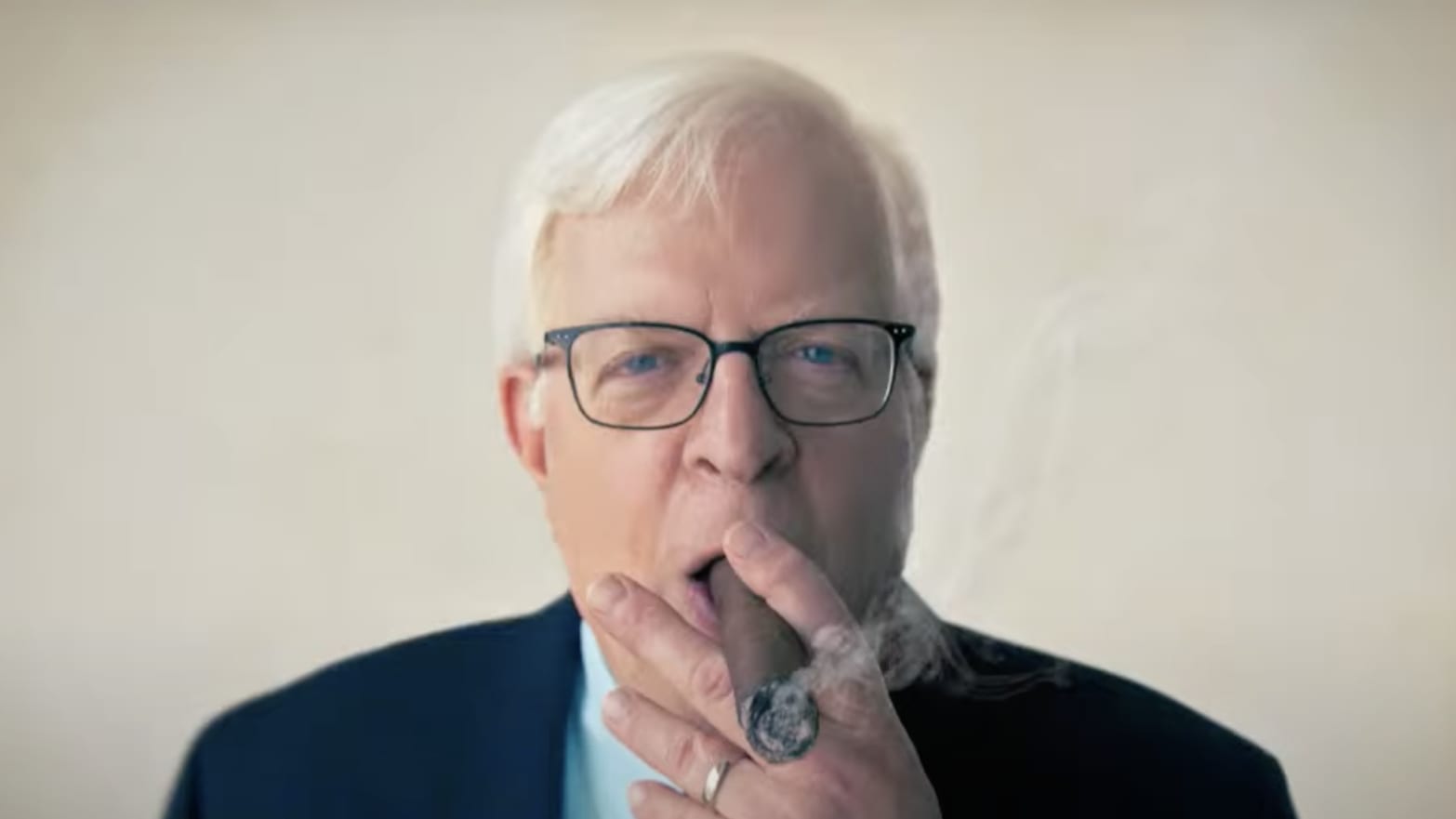
Dennis Prager, source: The Daily Beast

Let’s stipulate that radio host Prager has outraged many folks. He condemned Covid lockdowns, lambasted same-sex marriage, and even criticized a Muslim congressman for using the Quran instead of the Bible in a swearing-in ceremony. Raised in an Orthodox Jewish household, Prager extols Judeo-Christian traditions above all others, a view that resonates with some but would hardly play well in much of the world outside of the West (indeed in most of the world, in sheer population numbers).

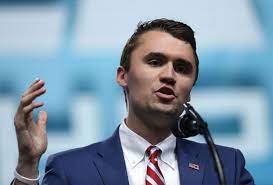
Charlie Kirk, source: The Chronicle of Higher Education

Similarly, let’s acknowledge that Kirk, the founder of Turning Point USA, seems like a throwback to an idealized 1950s. His attacks on feminism and “the transgender agenda” – whatever that is — likely appear wacky to many folks, though not to the future “trad wives” who attended sessions such as the recent Young Women’s Leadership Summit, held fittingly in Texas. Attendees heard about buying tampons and beauty products and other items from companies that market themselves as pro-Christian or anti-woke, as a Washington Post writer noted.

But are campuses, in fact, doing a disservice to their students and larger communities when they prevent them from airing their odd views? There’s no doubt that some views and some speakers are intolerable – one thinks of leaders of the KKK and Nazis on the right and some pro-Palestinian speakers on the left, of course. And attacking folks for their race, religion or sexual orientation in general should keep some speakers off limits.

But even in some of those areas, is it not risky to shut off discussion? For instance, the arguments for and against Critical Race Theory would seem to deserve a full airing. And, when it comes to religion, should there not be room for talking about, say, whether images deemed inappropriate by some Muslims should be shut out of art classes? And would discussions of cults benefit from the airing of such documentaries as Shiny Happy People, a critical exploration of a form of Christianity that some defend but others find odd and dangerous?

As to sexual orientation, many on the right are making hay of attacking homosexuality and transgenderism these days. Some folks, succumbing to the demagoguery of the day, apparently don’t or won’t grasp that respecting gays and transgender folks seems like basic decency. Should there not be room for education about such matters, even if it comes in a debate or counter-programming involving a Kirk or a Prager?

Plenty of odd and disturbing views are coursing through a troubled America nowadays, but it seems that campuses could harm students by not letting them get a full –- and critical — airing. Put them under the microscope, expose them to the hot lights of bright academics. Instead of banning the advocates, would we not be better off pitting them against intelligent opponents in settings where the vacuousness of their ideas could be exposed?

Yes, that is admittedly “platforming” them, as the ASU faculty noted. But have the Internet and social media not already platformed them far more effectively, giving people only one side of the story? Are campuses immune to noxious ideas just because they aren’t delivered in person?

Free speech is often not pretty. But does one defeat ugly ideas by simply shutting off some of the outlets in which exponents could espouse them? Would it not be better to expose racism, hypocrisy, venality, ignorance and such for what they are, holding them up to scrutiny on an enlightened campus?

Letting Kirk and Prager and their ilk speak while showing up the bankruptcy of their ideas would not win over all students. For evidence of their appeal, just look at their popularity in off-campus venues. Still, an intellectual free-for-all would offer a chance to win over the sharper students. There is such a thing as a battle of ideas, and these days the best ideas must be allowed to win.

A Commencement Rant Suggests Poor Schooling

A sweet-smiling, freshly minted CUNY Law School grad triggered an international outcry with an impassioned commencement address that attacked Israel, capitalism, the New York Police Department and a host of other bogeymen. While celebrating the achievements of what a New York Times writer called “a small, modestly ranked law school in Queens,” Fatima Mousa Mohammed, 24, provoked the ire first of the New York Post (which drew global attention to her talk with a cover piece headlined “Stark Raving Grad” two weeks after the May 12 event).

Mohammed’s talk lasted less than 13 minutes and can be seen in its entirety here. As any viewer can see, she liked tossing verbal bombs, even as she condemned real ones – at least those fired by one side.

“Israel continues to indiscriminately rain bullets and bombs on worshippers, murdering the old, the young, attacking even funerals and graveyards, as it encourages lynch mobs to target Palestinian homes and businesses, as it imprisons its children, as it continues its project of settler colonialism, expelling Palestinians from their homes, carrying the ongoing nakba, that our silence is no longer acceptable,” she said in her most fiery phrases.

Riding the storm she generated, the Post has run a long strand of pieces covering reaction to Mohammed’s invective. Politicians ranging from Mayor Eric Adams (also a target of Mohammed’s talk) to Ted Cruz have decried her remarks, as other media outlets piled on (see the Daily MailThe Times of IsraelFox NewsNational ReviewThe Chronicle of Higher Education). For a more sympathetic account, check out Aljazeera.

Some of the critics probed Mohammed’s social history to find such gems as her wishing in May 2021 that “every Zionist burn in the hottest pit of hell.” In her commencement talk, she praised BDS and the support given it at CUNY Law, the sort of hook that almost made her comments relevant to the event (though that was a stretch).

For their part, the chancellor and trustees of CUNY, in a brief statement, slammed Mohammed for “hate speech.” They lambasted her “public expression of hate toward people and communities based on their religion, race or political affiliation.” And they added: “This speech is particularly unacceptable at a ceremony celebrating the achievements of a wide diversity of graduates, and hurtful to the entire CUNY community, which was founded on the principle of equal access and opportunity.”

Calls went out to defund the law school. Indeed, some politicians called for New York’s governor to withhold public funds from any CUNY campus allowing incendiary rhetoric at university events. In turn, this has provoked the ire of free-speech advocates such as the Foundation for Individual Rights and Expression (FIRE).

Was Mohammed’s talk repugnant, inaccurate, unfair, mostly baseless, etc.? No doubt. While she attacked Israelis, could she not spare a phrase condemning Palestinians for killing a British-Israeli mother and daughter in April? That attack prompted Israel to retaliate by killing the assailants. Indeed, any honest account of the Israel-Palestinian conflict would have to address both sides in a very ugly and long conflict.

Mistaken as she was in so many ways, it is nonetheless understandable for someone to want to defend her community. But, as a lawyer supposedly trained to see all sides of an argument, she left glaring gaps in a one-sided tirade that had all the nuance of a freshman diatribe. It fell far short of what one might expect from a law school graduate. If they watched the spectacle dispassionately, CUNY Law faculty members would find little to be proud of in Mohammed or in the training they gave her.

Still, the contretemps offers an important lesson for media and the academy. Free speech is messy and may include ignorance, bias and many other ugly things. But, as FIRE argued in its letter, “At CUNY, if the university punished speech that is anti-Israel, it would open the door to punish speech that is anti-Palestinian, anti-conservative, anti-liberal, and more.”

The extensive coverage, particularly by some of the more level-headed outlets on the right, suggests that the best response to the ignorance Mohammed demonstrated is intelligent speech. With her vile remarks, Mohammed has given her school quite a black eye and shown how poorly CUNY and other schools she attended have served her. It may be that a hard look at CUNY Law is warranted and one would hope the press – on all sides – would provide that. If her talk serves any useful purpose, it would be in triggering such examinations.

All That Is Old Is New Again

Source: The Michigan Daily

Couples who have been married a long time repeat the same arguments again and again. Denied resolution, they bicker over a husband’s habit of putting keys and wallets on shelves meant for artwork. They fight over whether he listens enough to her. They scrap over whether she is too critical. The arguments grow so familiar that they should, perhaps, be numbered so a wife can say “No. 13,” instead of berating the husband over the wallet, or “No. 17” over the listening issue, perhaps “No. 3” over whether she criticizes too much.

Some publications have sought to be helpful in seeking a way out of the never-ending battles. See the Guardian on this.

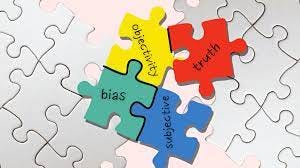
Lately, we’ve seen a similar dynamic at work in the argument over journalistic objectivity. Journalists and some non-journalists have beaten this horse for decades and lately the argument is getting a fresh airing by a generation that, apparently, is discovering the debate anew.

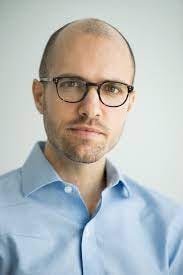
A.G. Sulzberger, source: The New Yorker

The latest missile to fly comes from A.G. Sulzberger, publisher of The New York Times, whose long discussion appears in the Columbia Journalism Review. To boil it down, he argues that objectivity should remain as a journalistic ideal. He argues: “I continue to believe that objectivity—or if the word is simply too much of a distraction, open-minded inquiry—remains a value worth striving for.”

But he avoids the term, mostly characterizing it as a hoary notion espoused by philosopher and journalist Walter Lippmann, who detailed the objectivity idea in the early decades of the last century. Indeed, Sulzberger prefers that media instead regard itself instead as “independent.” Sulzberger’s view: “But independence, the word we use inside the Times, better captures the full breadth of this journalistic approach and its promise to the public at large.”

By independent, he means reporting without fear or favor, as his great-great-grandfather put it, enshrining the ideal so much that it became the motto of The Times.

“It means Independence is the increasingly contested journalistic commitment to following facts wherever they lead. It places the truth—and the search for it with an open yet skeptical mind—above all else,” Sulzberger writes. “Independence asks reporters to adopt a posture of searching, rather than knowing. It demands that we reflect the world as it is, not the world as we may wish it to be. It requires journalists to be willing to exonerate someone deemed a villain or interrogate someone regarded as a hero. It insists on sharing what we learn—fully and fairly—regardless of whom it may upset or what the political consequences might be.”

Martin Baron, source; The Washington Post

This eloquent round of the argument was preceded by similar thoughts from Martin Baron, a former Washington Post executive editor. In late March, he weighed in with a straightforward – if similarly nuanced — defense of objectivity, relying on the rhetorical device of comparing journalists to professional of various sorts. The public demands objectivity in judgments by judges, police officers, government regulators and, perhaps most persuasively, by doctors, he argued.

“We want doctors to be objective in their diagnoses of the medical conditions of their patients,” Baron wrote. “We don’t want them recommending treatments based on hunches or superficial, subjective judgments about their patients. We want doctors to make a fair, honest, honorable, accurate, rigorous, impartial, open-minded evaluation of the clinical evidence.”

Neither Baron nor Sulzberger were naïve in their contentions, though. They acknowledged the arguments that reporters’ backgrounds shaped their viewpoints and their familiarity or unfamiliarity with communities they write about would be important. They recognized the problems posed by bias.

Still, Baron suggested that certain practices, well-honed by earlier generations of journalists, can elevate one above the limits. Also citing Lippman, Baron wrote: “Our job as journalists, as he saw it, was to determine the facts and place them in context. The goal should be to have our work be as scientific as we could make it. Our research would be conscientious and careful. We would be guided by what the evidence showed. That meant we had to be generous listeners and eager learners, especially conscious of our own suppositions, prejudices, preexisting opinions and limited knowledge.”

And Baron defined objectivity in negative terms, arguing: “Objectivity is not neutrality. It is not on-the-one-hand, on-the-other-hand journalism. It is not false balance or both-sidesism. It is not giving equal weight to opposing arguments when the evidence points overwhelmingly in one direction. It does not suggest that we as journalists should engage in meticulous, thorough research only to surrender to cowardice by failing to report the facts we’ve worked so hard to discover.”

“The goal is not to avoid criticism, pander to partisans or appease the public. The aim is not to win affection from readers and viewers. It does not require us to fall back on euphemisms when we should be speaking plainly. It does not mean we as a profession labor without moral conviction about right and wrong.”

Putting the ideas positively, Baron echoed what journalism teachers have taught for years. “The idea is to be open-minded when we begin our research and to do that work as conscientiously as possible,” he held. “It demands a willingness to listen, an eagerness to learn — and an awareness that there is much for us to know. We don’t start with the answers. We go seeking them, first with the already formidable challenge of asking the right questions and finally with the arduous task of verification.”

Leonard Downie Jr., source: Twitter

These spirited and much-detailed arguments were all kickstarted anew in January by Leonard Downie Jr. His view, distilled, goes like this: we all are prisoners of our racial, gender, socio-economic and political backgrounds and thus cannot hope to report objectively on anything, so why bother trying? Instead, just own up to the biases and, indeed, own them.

Downie, another former executive editor at The Washington Post who now is a professor at Arizona State University, argued in a Washington Post piece that objectivity is obsolete. He and a colleague quizzed newspeople and concluded: “What we found has convinced us that truth-seeking news media must move beyond whatever ‘objectivity’ once meant to produce more trustworthy news. We interviewed more than 75 news leaders, journalists and other experts in mainstream print, broadcast and digital news media, many of whom also advocate such a change. This appears to be the beginning of another generational shift in American journalism.”

He suggested that one’s biases can’t be readily shelved and that identity is central.

“But increasingly, reporters, editors and media critics argue that the concept of journalistic objectivity is a distortion of reality,” Downie wrote. “They point out that the standard was dictated over decades by male editors in predominantly White newsrooms and reinforced their own view of the world. They believe that pursuing objectivity can lead to false balance or misleading ‘bothsidesism’ in covering stories about race, the treatment of women, LGBTQ+ rights, income inequality, climate change and many other subjects. And, in today’s diversifying newsrooms, they feel it negates many of their own identities, life experiences and cultural contexts, keeping them from pursuing truth in their work.”

Indeed, newsrooms need to “move beyond” objectivity, he argued, though just how that would look seemed a bit gauzy.

“We urge news organizations to, first, strive not just for accuracy based on verifiable facts but also for truth — what Carl Bernstein and Bob Woodward have called ‘the best obtainable version of the truth.’ This means original journalism that includes investigating and reporting on all aspects of American life.”

These debates, including the question of whether to deep-six the term “objectivity,” remind me of the contention of my former editor at BusinessWeek, Stephen Shepard. Because BW was a magazine – a venue in which readers expected a point of view in coverage – Shepard maintained that fairness was really the attainable goal. Our reporters were not akin to cameras, unblinkingly recording reality, but rather we were making judgments constantly. But our judgments and arguments had to be fact-based and fair to all views involved.

Demonstrating a few years earlier just how old this argument is, I wrote about this all in an academic piece published in 2015 in Journalism and Mass Communication Educator. The piece detailed the development of the objectivity ideal –- which is really only about a century old — and the arguments that have raged about it. The debate, as I say, is hardly new.

The bottom line, I believe, is that objectivity is a myth and an ideal. It is as unattainable as the beauty of a Greek god or goddess — but that doesn’t mean we can’t keep trying, striving to reach the grandeur of a David or the loveliness of an Athena.

We owe it to readers to report the facts thoroughly and fairly, acknowledging differing views. We need to pursue the truth as best we can determine it, quoting responsible voices on all sides of the issues we write about. That doesn’t mean showcasing “alternative facts,” or failing to call out misstatements or untruths (indeed, Trump coverage is a sorry example of the need to make such callouts). And it does mean reporting on things that might go against one’s own views and doing so well and with appropriate distance.

But we also can’t forget that it is often outrage at or discomfort with things we cover that drive us. We get angry at injustice. We are stirred to write about wrongdoing. Why? Because we judge that it’s wrong. And it may be that who we are informs our passion or judgment about what is right and wrong. That is hardly objective, but it can make for great journalism.

There is much wisdom in the pieces by Sulzberger and Baron and, it must be admitted, in the Downie piece — even if one disagrees with his conclusions. Reflecting the journalistic traditions these three were reared in, the arguments they make are balanced, thorough and smart. They are worth pondering.

Are Book Publishers Censors?

Source: Goodreads

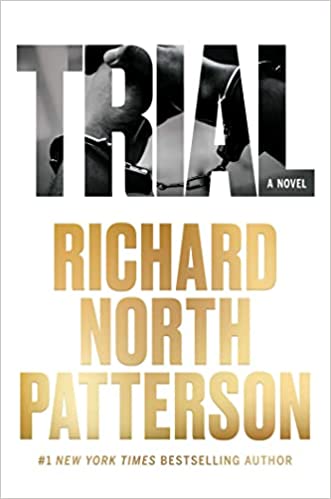
Much-published novelist Richard North Patterson’s disturbing piece in The Wall Street Journal, “Why My New Novel About Racial Conflict Ran Into Trouble,” recounts his problems as a white author getting a publisher for his new novel, “Trial.” The book, which he says focuses on “America’s accelerating racial discord,” was rejected by about 20 imprints of major New York publishing houses, even though some editors in them said it was this New York Times best-selling author’s best work.

Why the turndowns? His ethnicity had much to do with it, Patterson writes. “One publisher responded that I would be ‘rightly criticized’ for writing the book; another that she only cared to hear on such subjects from ‘marginalized voices’; another, more colorfully, that I was ‘too liberal for white people and too white for Black people.’”

“Not once did anyone suggest that any aspect of the manuscript was racially insensitive or obtuse,” writes Patterson, a lawyer and journalist who interviewed many people of all backgrounds to write the book. “Rather, the seemingly dominant sentiment was that only those personally subject to discrimination could be safely allowed to depict it through fictional characters.”

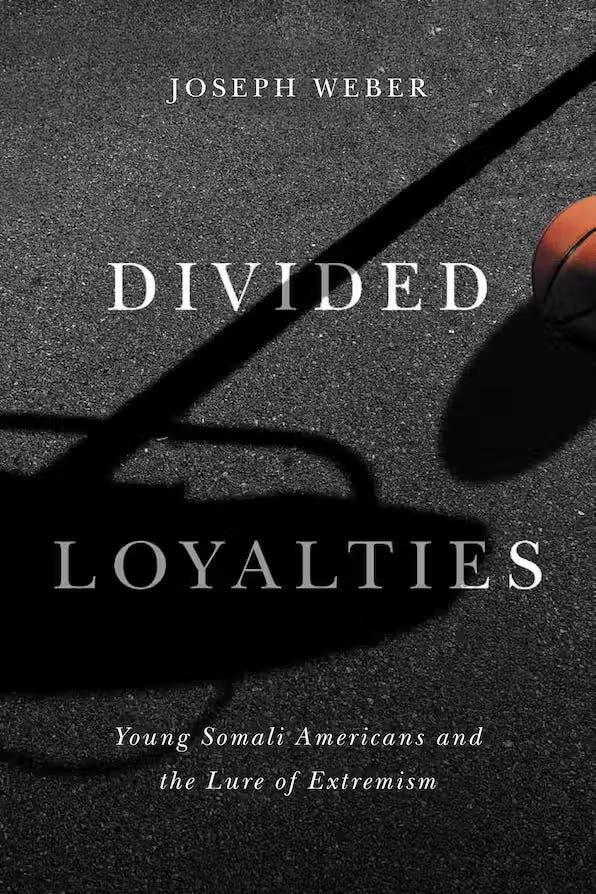
Perhaps he was lucky that he was not pitching university presses. Patterson’s woes reminded me of my troubles in getting my second book, “Divided Loyalties: Young Somali Americans and the Lure of Extremism,” published. While my race and gender did not seem to be at issue – so far as I know – the topic certainly was. The book, a journalistic work of nonfiction, focuses on a group of young Black Muslim men in Minnesota who conspired to make their way to Syria to join ISIS between 2013 and 2015 (some got there and were killed, while others were tried and sentenced to prison for terms of up to 35 years).

Because the book is both journalistic and academic, I pitched it to several academic presses. It passed muster with an editor and the staff at the distinguished Columbia University Press, but was tripped up in the final step, consideration by the press’s publication committee. Such committees, staffed by faculty, ultimately make the call on whether to issue a book contract or not at university presses.

Why the problem? As the editor wrote me: “Our internal staff is very much in favor of your book, but the publications committee had some reservations. In particular, we have one board member who is generally very skeptical of our terrorism studies list and books that align with it. This member felt strongly that your book needs to be vetted by a scholar with a background in the study of the Muslim-American experience before it could be approved, and the rest of the board agreed.”

In other words, a faculty member didn’t care to have Columbia publish books about terrorism and found my book unpalatable, even though it was written from the viewpoint of a young Somali Muslim man (a would-be terrorist who became an FBI informant). Two out of three independent reviewers had recommended publication. But, as requested by the committee, the editor found a fourth reviewer, who sided with the objecting faculty member. Indeed, this fourth reviewer took umbrage at the idea that I relied in part on law enforcement sources, as well as on the would-be ISIS members (evidently, an unacceptable breadth and fairness in sourcing).

Defeated by her faculty committee, the kindly editor suggested I seek another publisher. So, in 2020, Michigan State University Press published the book. Indeed, the MSU press relied on the four reviews Columbia had obtained to make the decision to publish (the Columbia editor was kind enough to share those reviews with her MSU colleague). And, in fairness to the academic review process, the helpful suggestions in those critiques, as well as advice by both editors, did improve the book.

Irrespective of the merits or shortcomings in “Divided Loyalties,” the decision by the Columbia publication committee was troubling on several counts. First, why would it be unacceptable for a non-Somali journalist to write (sympathetically) about Somali American culture by relying on members of that community, including academics, for their insights about it? Second, why should one faculty member’s skepticism about an important area of publication – Columbia’s distinguished list of books about terrorism – carry such sway?

Indeed, given that Columbia is a mere 10 miles from the worst terrorist incident of the modern era, the 9/11 attack, wouldn’t it be natural for the university’s press to publish works about terrorism? Thankfully, the press has continued to publish on the topic (though I don’t know whether the faculty member remains on the committee).

Source: Amazon

As with Patterson’s novel, which will be released in June by an independent publisher, readers are free to find flaws in “Divided Loyalties.” But that’s only because officials at one university press took a viewpoint differing from that of another. In my Columbia press experience, it seems that biases based on cultural, religious and political factors play an insidious role, a role perhaps as troubling as the idea that a person from one ethnic group cannot write well about members of another such group.

I look forward to reading Patterson’s book.

What Are the Limits of Free Speech?

“If liberty means anything at all, it means the right to tell people what they do not want to hear,” George Orwell famously said.

That, of course, is just one of innumerable quotes about free speech. Another handy one, attributed to George Washington, warns: “If freedom of speech is taken away, then dumb and silent we may be led, like sheep to the slaughter.”

My favorite, however, comes from Oscar Wilde. His riff on a noted comment from S.G. Tallentyre was: “I may not agree with you, but I will defend to the death your right to make an ass of yourself.”

Lately, lots of speakers — and many who would prefer not to hear them — have either been making asses of themselves or – depending on one’s viewpoint – prompting profound questions. Consider the infamous March 9 flap at Stanford Law School, where hecklers shouted down a conservative judge, who then was criticized by the school’s associate dean for diversity, equity and inclusion.

First, let’s grant that this was not so much about speech – really – but about a person the students deemed beyond the pale.

The noisy students weren’t furious about the subject of Appeals Court Judge Kyle Duncan’s comments – which dealt with guns, Covid and Twitter. Instead, they were offended by his record, which included defending Hobby Lobby against requirements that it provide contraceptive healthcare benefits to employees; his criticism of Obergefell v. Hodges, the U.S. Supreme Court decision that recognized a constitutional right to same-sex marriage, as an “abject failure” that “imperils civic peace,” as well as his defense of Louisiana’s gay-marriage ban before the Supreme Court and his defense of a North Carolina law keeping transgender people out of their preferred bathrooms.

They were troubled that Duncan, a Trump appointee, had denied a transgender woman’s request to be called “she” or “her.”

But all of it – both Duncan’s appearance and the student outrage – smacked of being a setup, an orchestrated affair more reminiscent of a WWE bout than an academic gathering. His visit, at the invitation of the university chapter of The Federalist Society, was tailor-made for controversy — and it began early.

Beforehand, students posted flyers warning that Duncan advocated for laws that “would harm women, LGBTQ+ people and immigrants,” as The Stanford Daily reported. Students in the organizations OutLaw and Identity and Rights Affirmers for Trans Equality (IRATE) asked the society to cancel his event or move it to Zoom. Their email said: “While acknowledging your right to freely associate with speakers and gain mentorship from those you choose, we are writing to express specific concerns about the effect of bringing this person into our campus community…”

After the society refused the request, Duncan’s visit did not disappoint those who expected a brawl. As the school paper reported, Duncan’s critics outnumbered Federalist Society members. The paper reported that his opponents “brought posters condemning him; some also had trans flags painted on some of their cheeks. Short speeches about how Duncan’s actions are harmful to many communities were made by protest leaders and the protesters shouted call and response chants, including, ‘When our trans neighbors are under attack, what do we do? Stand up, fight back!’”

For his part, Duncan seemed to relish the attention, even as the specific attacks infuriated him. A lawyer who posted his views of the event on Substack noted that Duncan “walked into the law school filming protesters on his phone.” When asked if he tried to record, Duncan responded with, “Damn right I did. I wanted to make a record.” And, in his opening remarks, the judge said: “I’m not blind — I can see this outpouring of contempt.”

Hecklers made it difficult for Duncan to speak, so much so that DEI Associate Dean Tierien Steinbach stepped in. As reported by Bloomberg Law, she told Duncan: “Your advocacy, your opinions from the bench, land as absolute disenfranchisement of their rights,” referring to the students. But Steinbach also defended free speech, even as she questioned whether his provocations were worthwhile. She said she “wholeheartedly” welcomed Duncan to campus, but told him, “For many people here, your work has caused harm.” Twice Steinbach asked, “Is the juice worth the squeeze?” seeming to question if he believed his speech was worth the reaction.

Despite her attempt at even-handedness, right-wing outlets demanded Steinbach’s firing. While they appear not to have gotten that, Steinbach has gone on leave (voluntarily or otherwise). The conservatives also won an apology, with criticism of Steinbach, from Law School Dean Jenny S. Martinez and university president Marc Tessier-Lavigne. Indeed, the dean mandated a half day of special free speech training for law students.

Now, as The New York Times reported, Martinez released a lawyerly 10-page memo that rebuked the activists. “Some students might feel that some points should not be up for argument and therefore that they should not bear the responsibility of arguing them,” she wrote. But, she continued, that “is incompatible with the training that must be delivered in a law school.” She added, “I believe that the commitment to diversity, equity and inclusion actually means that we must protect free expression of all views.”

But does she really mean “all views?” Would one of the many neo-Nazis riling America be welcomed to speak at Stanford? Would a KKK leader be cordially invited? How about a zealous homophobe?

The debate over free speech roiling so many campuses now seems to come down to what speech goes beyond the pale, or more properly, which speakers do. Duncan has standing, of course, because of his role as a judge. But should his positions on such matters as whether to call a transgender woman “she” put him over the line of acceptability?

Mores are moving fast these days, perhaps too fast for some conservatives. But remember that there was a time when eugenicists were acceptable on campuses. Indeed, some venues encouraged flagrantly racist and anti-Semitic academics to publish, speak and teach their views. Has the line simply moved too far for some?

As they exercised what critics called “the heckler’s veto,” there’s no question that the students behaved badly. The fact that they were law students who will need to trade and tolerate views with civility in the most potentially heated courtroom situations makes it worse.

But did Duncan serve the cause of civil discourse well by calling one critic “an appalling idiot” as he left the classroom and later calling his hecklers “bullies” and “hypocrites?” Later, in a Wall Street Journal op-ed, he doubled down, writing “They are, and I won’t apologize for saying so. Sometimes anger is the proper response to vicious behavior.”

 Indeed, one wonders how much Duncan is basking in the attention his appearance provoked. As a opinion-writer at The San Francisco Chronicle wrote: “No matter who you think behaved worse here, the answer doesn’t matter for Duncan, because he got what he wanted: fame.” Referring to a Slate writer’s comments, he added, “it’s hard not to view Duncan’s performance as a not-so-subtle audition for the next Supreme Court vacancy that arises under a Republican president.”

Like it or not, free speech has limits and, if nothing else, simple decorum demands restraint even when it’s most difficult. The problem today is we don’t know what the limits are yet. Almost certainly, l’affaire Duncan will not be the last test of them.

Outsiders Shine a Light on America

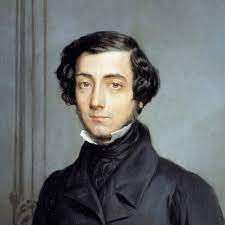
As far back as the 1830s, it was clear that an outsider could look at America in a fresh, independent and novel way. Back then, the keen observer of American culture was Alexis de Tocqueville, a French political scientist, historian and politician whose four-volume “Democracy in America” praised much about the burgeoning country, but also noted its flaws.

Alexis de Tocqueville

Tocqueville pointed to equality as the great idea of his era, and he thought that the United States offered the most advanced example of equality in action, as the History website summarized his work. “He admired American individualism but warned that a society of individuals can easily become atomized and paradoxically uniform when ‘every citizen, being assimilated to all the rest, is lost in the crowd.’” Trenchantly, Tocqueville also took note of the irony of the freedom-loving nation’s mistreatment of Native Americans and its embrace of slavery.

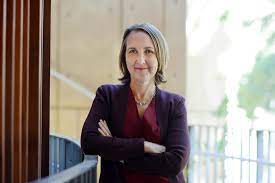
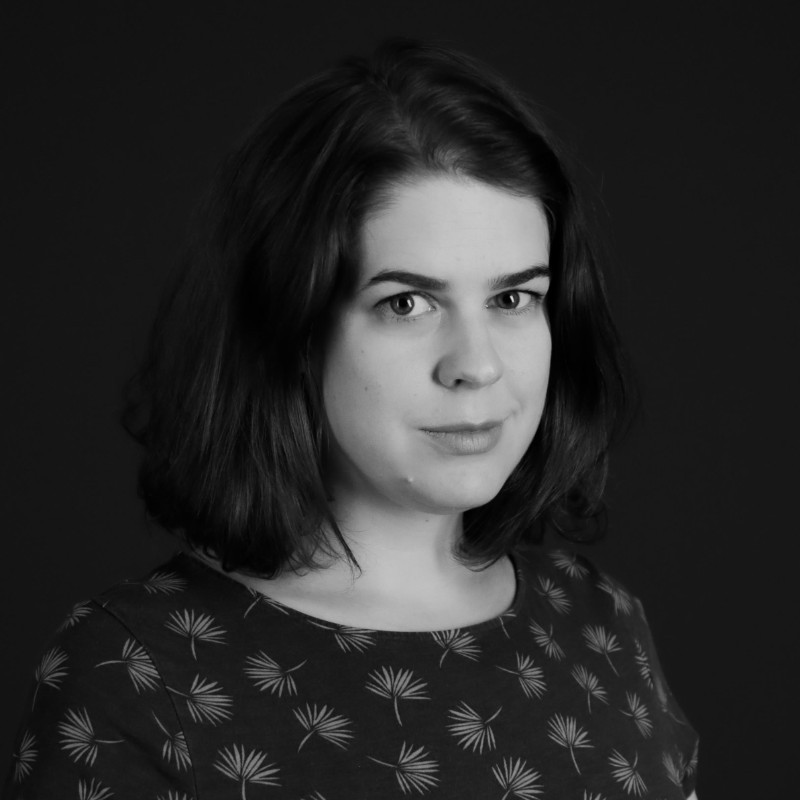
Now comes Helen Lewis, a British staff writer for The Atlantic and former deputy editor of England’s New Statesman magazine. She reports on the abundant irony, as well, in just one state, Florida. While exploring various aspects of the state’s odd culture, she casts that irony in timely political terms in a piece headlined “How did America’s Weirdest, Most Freedom-Obsessed State Fall for an Authoritarian Governor?: A journey through Ron DeSantis’s magic kingdom.”

To Lewis, Florida is “America’s pulsing id, a vision of life without the necessary restriction of shame. Chroniclers talk about its seasonless strangeness; the public meltdowns of its oddest residents; how retired CIA operatives, Mafia informants, and Jair Bolsonaro can be reborn there.” To her, the state is “the Australia of America: The wildlife is trying to kill you, the weather is trying to kill you, and the people retain a pioneer spirit, even when their roughest expedition is to the 18th hole.”

And she notes that it’s no surprise that the two top contenders for the GOP presidential nomination, Gov. DeSantis and former President Trump, both call the state home. They fit in smoothly in a place that she says “has come to embody an emotional new strain of conservatism.” She quotes Miami-based author Michael Grunwald saying: “The general Republican mindset now is about grievances against condescending elites, and it fits with the sense that ‘we’re Florida Man; everyone makes fun of us.’ ” Lewis adds that criticism doesn’t faze Florida men, but just emboldens them.

Helen Lewis

Lewis’s observations struck me as spot on because I’ve recently spent time in two corners of the place, Sarasota and Orlando. In the former, I visited relatives of my wife who live in a gated community that is a haven for retirees – one of many such guarded places in the state. It boasts palm trees, lovely ponds sometimes frequented by alligators, a couple pools and lots of paddle ball-playing oldsters who like the mix of independence and security, as well as the chances to hang out with mostly white middle class folks that such a homogenous place can offer. As for Orlando, I spent several days with grandkids at the Walt Disney World Resort, a place Lewis says “flatters its customers the way Florida flatters the rich, by hiding the machinery needed to support decadence. You absolutely never see Cinderella smoking a joint behind her castle, or Mickey Mouse losing it with a group of irritating 9-year-olds.”

Disney World, Lewis writes, “only underlines how the state is one giant theme park. She quotes Grunwald saying: “This is not a place that makes anything, and it’s not really a place that does anything, other than bring in more people.” She adds, “Having brought in those people, what Florida never tells them is no, nor does the state ask them to play nicely with the other children.” She quotes Grunwald again: “We’re not going to make you wear a mask or take a vaccine or pay your taxes or care about the schools.” (Indeed, I came down with COVID-19 in Florida and had a devil of a time persuading a doctor to give me the new drug Paxlovid. Masks were rare.)

Lewis points out various contradictions about Floridians, noting how they value freedom but call for government help when reality intrudes. “In Florida, no one wants to hear about the costs or the consequences,” she writes. “Why else would people keep rebuilding fragile beachfront homes in a hurricane zone—and expect the government to offer them insurance?” 

The central irony in Lewis’s work is that this state so eagerly embraces two GOP politicians who would do more to take power and rights away from individuals – or businesses — than any Democrat would dare to. Both Trump and DeSantis would much like to restrict voting and would curb abortion rights, for instance. Both slam “woke” culture, attacking diversity efforts in academia and business. Indeed, DeSantis recently one-upped Trump by stripping away the independence of state-funded New College of Florida, in Sarasota, as he installed cronies and right wingers such as Christopher Rufo (an out-of-stater famous for attacking critical race theory) on its board.

More than anything, though, DeSantis’s headline grabbing action at Disney World has defined him for a national audience. The governor drove legislation that ended the autonomy that Disney has long exercised over its 39-square mile tract of land near Orlando. He took control of the Reedy Creek Improvement District, which governs the theme parks, hotels and other amenities in the area, appointing a board to oversee municipal services. He did this to punish the Disney Co. CEO at the time for criticizing the “Don’t Say Gay” law of March 2022 that limited what public school teachers could teach.

As the Orlando Sentinel recently editorialized: “…the governor’s ego had been bruised, by tepid criticism from Disney’s then-CEO Bob Chapek, aimed at DeSantis’ hateful attacks on LGBTQ+ people. And though DeSantis loves to chant ‘freedom,’ he’s clearly established that freedom only covers himself and those who follow the same track. For everyone else, retribution is as swift as a whip crack.”

And, as Atlantic writer Lewis put it: “DeSantis is a politician who preaches freedom while suspending elected officials who offend him, banning classroom discussions he doesn’t like, carrying out hostile takeovers of state universities, and obstructing the release of public records whenever he can.”

As I wandered about the Disney resort parks along with thousands of others in this spring-break month, I was struck by how un-Republican DeSantis is. Disney brings in millions of visitors, employs 77,000 “cast members” in its parks, and is responsible for countless other jobs in and around Orlando. It is an economic machine without parallel. So why would any politician, much less a Republican, want to tamper with that?

Beating up on gay and transgender people and on the “woke” culture that encourages toleration seems to be a common trope for right wing politicians these days, though. DeSantis seems to be calculating that railing against Disney and other “woke” companies, as well as political stunts such as busing migrants to more liberal states will garner attention for him in the culture wars. Economics and old-fashioned GOP ideology be damned; it’s all about winning the votes of conservative straight white people who feel threatened by folks of different sexual orientations (and by diversity in all senses).

Firing back at DeSantis, Disney announced that in September it will host a conference promoting lesbian, gay, bisexual and transgender rights in the workplace. Run by the Out & Equal organization, the event is expected to draw some 5,000 people, according to the Miami Herald. The paper reported that the meeting will include dozens of corporate sponsors such as Apple, McDonald’s, Uber, Walmart, Hilton, Amazon, Boeing, Cracker Barrel and John Deere, and several government agencies, including the State Department and the CIA, which will have booths at the conference.

Disney World has committed to host a second annual meeting of the group in 2024, possibly just as DeSantis makes his bid for the White House. Slamming Disney yet again at that point could play well for him with the culturally conservative folks he needs to steal away from Trump. And, certainly, his attacks would grab more headlines. But will that tune play well for most American voters, the ones who have accepted gay marriage? The ones who voted for Obama and, more recently, for Biden? The ones who still flock to Disney World? The contest will be fascinating.  

For Chinese students, history is personal

“I have a sister who is eleven years older than I. Actually, I heard from my mother that I should have another sister who is just one year old than I. I asked my parents and grandparents a lot times about where did she go or did she die. From my mother’s mood, I guess she didn’t die but she was abandoned by my parents. Why? Because at that time, my family was so poor to afford three children, and boys mean more than girls to a family which I completely disagree with. Thus, I have never seen her in my life. I wish she would live better than I and we could meet each other again. I am looking for her, I hope I can find her.”

Their stories, like China’s history for the last three generations (and longer), are remarkable. Some are heartbreaking. Others are heartwarming. Still others, like those of many of my students in Nebraska, are surprisingly upbeat. The variety in their life stories – again, as is also true of my students in Nebraska – is stunning.

My students in a summer course at the Shanghai University of Finance and Economics shared their brief autobiographies as an initial assignment. I assign the task to get a sense of their writing skills and to get to know them a bit. I ask where they hope their studies will take them and what they want to get out of the course. As in Nebraska, I find a blend of young-adult idealism, hopefulness and candor in their work.

Some of their stories are extraordinary, though, and they open a window onto China’s recent history:

“All of the members in my entire family are born in Shanghai, and my grand grandparents and grandparents, they came through the Cultural Revolution, which is also mentioned in the yesterday’s Ted video. During that ten years, it seems like nobody need to work, according to what my grandfather have told me, and the national economy backed off. National income lost about 500 billion yuan, according to the online statistics, and people’s living standards and personal education has been destroyed. While my grandparents suffered a lot because of the chaos in the upper politics, my parents and I have already got the great benefit from the reform and opening policy. All of us are well-educated and have more working opportunities than ever no matter how fierce the competition is in today’s job market. Those who are about the similar ages as me, which are also called millennials professionally, actually enjoy the fruits that the great development in China has brought us.”

Their tales also shed light on China’s present and future:

“I was born in a little village in Zhejiang province. My mother and my father are all local residents in this village, but they came to Shanghai to set up their own business when I was about two … My mother and my father are retailers selling glasses in Shanghai. Their business is successful now. They have expanded their business to eight chain stores now which was unimaginable at the beginning of the business, because my grandfather and grandmother are all farmers with little income and they had little money for the business when they first came to Shanghai, a city full of opportunities and attractiveness to them at that time.

‘My parents lived a tough life at the beginning of their business. My father was once time cheated by his fellow-villager when his business just started to improve, who suddenly disappeared with all my father’s savings… I really admire them for setting up their own business so successfully…. But things aren’t going well these years. The industry has been going downhill since the rise of E-business in Chinese. One of the chain stores has been shut down because it wasn’t able to earn profit. I was asked to help at the day the store was shut down .The store was decorated beautifully and it cost a lot, but at that day they had to be moved out of that store … My parents told me that it was harder and harder to run a business nowadays…. They plan to shrink their business and end it when they retire. This arises my interest in business and economics, and that is why I chose to enter Shanghai University of Finance and Economics.”

Some come from very modest backgrounds, as the children of farmers:

“I know how many people in China are still in poor today, cause I know how many people are still struggling for a better life. Chinese people, especially the farmers, are trying their best to fight against corruption of the government, discrimination of the citizen, destruction of the bad weather, low price of agricultural products, low pay in the factories, the inequality of education.

“There are too many things we need to do, and I want to contribute to the positive changes of my family, my homeland, and my country. I got much help from the society, and I want to do something helpful to society, that’s where my worth lies… I want to get a wider vision. I want to know more about the world I used to hate business as I think that it is just a chase for money, but now I think that only through business can our people get wealthy, so I want to know more about the business world, what’s it like, how does it work, how can we work in the process and make people get wealth through the process.”

Others, hailing from comfortable backgrounds, expect to do even better than their parents in life:

“I come from a well-off family. My father is a salesperson who lacks high-level education but is pretty experienced in marketing in the environmental protection industry. I am very proud of him and he is my hero who built up from nothing and made every effort to offer the best to my family. My mother is the woman who stands at the back of him. She works more than a housewife would do and takes good care of both my father and me. Since I was little, I have travelled a lot with my parents around the country partly thanks to the requirement of my father’s job. In the rest of my life, I would love to walk farther, enjoy more beautiful sceneries and accompany my parents to travel all over the world with the gratitude they brought to me in my childhood. To be a better one, man needs to experience more.”

Their powerful stories make me want to serve them better as a teacher, even of a short-term course. If I can provide some insights into economics and business, I may give them something that helps them long after their school days end. Such is my hope and ambition anyway.


Africa, more than just a bend in the river

DanShotAfrica1After visiting Uganda and Kenya for a bit more than a week, I am sure of one thing: what I don’t know could fill an encyclopedia. It would be presumptuous of me to claim anything but the most superficial knowledge of Africa. This is true, even after I was fortunate to spend most of the time learning from true world-class experts in the Horn of Africa, courtesy of the fine lecture series put on by the Reef Valley Institute.

But I feel compelled to share a few thoughts. Gary Kebbel, a colleague at school who has spent more time on the continent than I, told me before I went that Africa can change you for life. Similarly, my daughter, Abigail, who spent a semester in west Africa, found that the place changes one’s views of many things, from ghastly poverty to the often-trivial things we in the First World regard as problems.

It will take time before I can tell whether my short stay in Africa – in mostly privileged conditions – will change me. My semester teaching in China in 2011 certainly did that, though four months is a lot longer than 10 days. But I must admit that I have a slightly broader outlook on things from just this short stint – a wider outlook on the U.S., as well as on the rest of the world.

So, here are a few impressions from someone who parachuted in:

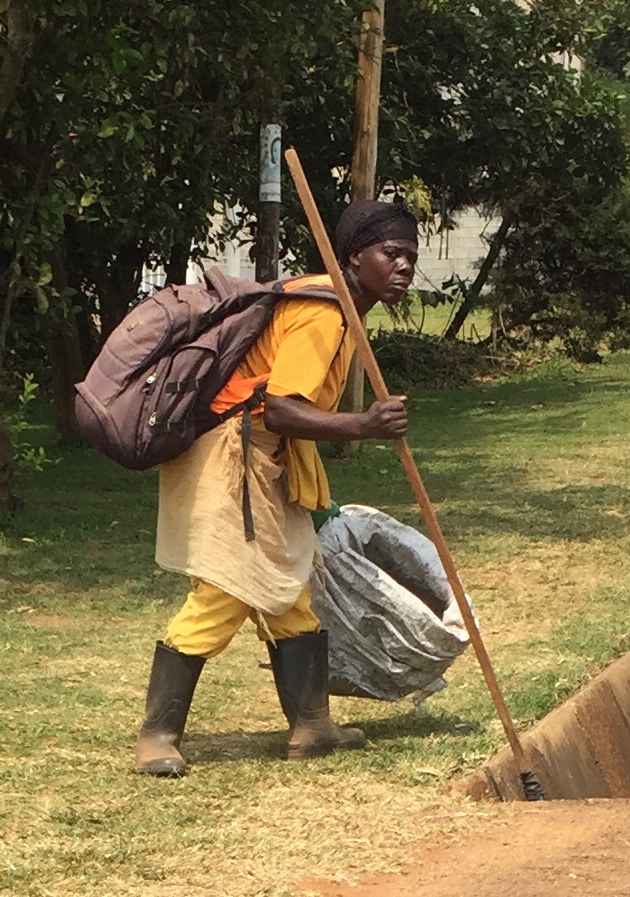
First, life in Africa can be brutal and is, at best, a daily struggle for millions of people. Folks in the Horn area and elsewhere are subject to famines, terrorism, war and disease. The poverty in Nairobi and even in smaller places such as Entebbe takes one’s breath away. People scavenge waste heaps for recyclable material and then someone sets fire periodically to the dumps to pare back the volume, tossing off smog-boosting smoke. Many in Nairobi live in dire slums, in huts topped by corrugated steel, because it’s far too costly to snare an apartment. The photos here, shot by my son, Daniel, offer a glimpse of those in Uganda who are relatively better off.

The dilemma of such poverty in Africa is a riddle. When one looks at how China has lifted millions out of destitution and built a solid middle class over the last 30 years – after Chinese leaders opened their economic system to capitalism – one can only wonder why the same phenomenon hasn’t occurred in so many parts of Africa. Why have manufacturers such as Foxconn not flocked to the Horn to take advantage of cheap labor, building iPhones for world markets and providing jobs? Why have local entrepreneurs not done the same?DanShot2Africa

It may be that the stability insured by the Chinese political system allowed for growth and that leaders in the often volatile African countries cannot deliver that same security. Will entrepreneurs invest millions in plants when one can’t be sure of who will be in charge and whether revolution might unsettle everything? The last 50 years in many of the Horn countries have been marked by repeated changes in governance, with upheaval, cronyism and self-dealing by leaders, compared to which China’s Communist Party has been an oasis of stability and continuity. Where would you invest if you ran a multinational or even were a homegrown entrepreneur?

On this front, there are grounds for hope, though. The Chinese, as it happens, are expanding their military presence in Djibouti with plans for up to 10,000 soldiers to be based there. Can the capitalists of China not be far behind? Would Foxconn, for one, see this a great spot to escape the comparatively high wages and labor shortages on its home turf? I’m persuaded that nothing can lift the living standards in places such as Ethiopia, Somaliland, Uganda and Kenya more than factories that can provide jobs and income for thousands. It will take stability to bring in such factories, to draw investors.

How ironic would it be, though, if the Chinese, aided by their military, ride to the rescue and bring heightened living standards to Africa when longtime capitalists from the West have failed to do so? Indeed, the northeastern corner of Africa is awash in nongovernmental organizations staffed by well-meaning Westerners who offer helping hands and hearts in the region – and who do vital work, especially in health. But they can’t hold a candle to the roaring dynamo that capitalism has been for China, a place unhelped by NGOs for most of the last few decades. Still more irony there.

Second, I was struck by what life in a police state is like. Nairobi, in particular, is a place where both the wealthy and the just-above-poverty level folks live behind cinderblock walls and concertina wire, usually guarded by security service people in military-style uniforms who pack submachine guns. Heavily armed men are everywhere. They make for a dystopic panorama straight out of end-of-the-world sci-fi movies. One can have a wonderful life, I imagine, behind such walls. But who really wants that? Who wants to emerge to see squalor not far from the tall gates?

In the U.S., many people have electronic security systems in their homes and some wealthy people live in gated compounds or on estates surrounded by fences. But most of us live in open neighborhoods where one skips a few steps across a lawn to front doors and windows that would take nothing but a small hammer to defeat. That, to me, is a far better way to live than to exist in a perpetual state of insecurity and fear, unable to stroll around a neighborhood on cool evening or feel comfortable taking a quick run.

Yes, crime is a problem in the U.S. and, yes, the proliferation of guns is a true tragedy. But in Uganda and Kenya, guarding against theft or home invasion is a daily challenge that changes the look and feel of cities. Everywhere I went in Nairobi, I walked through metal detectors and had guards run mirrors beneath the cars I was in, and I grew inured to the sight of young people in fatigues carrying weapons that could take out a pack of attackers. In Nairobi, one goes nowhere without a driver and no one goes out at night.

Who could possibly want that sort of life? It’s no wonder that so many Africans look to the U.S. or Europe for far better opportunities and for simple safety. And, if one wants to see an argument against income inequality and in favor of the development of strong middle classes, just check out Africa. The gap between the haves and have-nots is a Grand Canyon and that, and the desperate levels of poverty, make for awful insecurity and crime.

DanShotAfrica3Third, the people I came in contact with were uniformly delightful. A friend who has spent years in the region said that while the U.S. and the West in general provide a “transaction-based society,” where people buy and sell services and vanish from one another’s lives, the African societies in the Horn especially are “relationship-based.” People want to get to know one another, not merely do business. Take the time to ask how people are doing, this friend said, and you will get by far better, even in the most mundane things. Security guards in Nairobi would see books I was carrying and start conversations about them, and not short ones. A driver and I had long chats about the importance of education, along with local and international politics.

It was extraordinary to see how friendly and engaging — and often well informed — the people I came across were, especially about the U.S. Indeed, it surprised me to have people fretting over strained race relations and the turn in politics in the U.S., probably a product of watching CNN.

Finally, it’s hard to be optimistic about the future of the Horn of Africa. Will the walls ever come down around the compounds? Certainly, in places such as Nairobi there is development, the construction of grand complexes of housing, offices and shopping in areas such as the Westlands, not far from the foreign embassies. But will there be enough, and will it provide well-paying jobs for enough people? And, in Somalia, we are seeing steps toward governance, perhaps toward reestablishing a central state, even as Al-Shabaab controls so much territory. Will the clans who run the place find a way to share power in the interest of all, not just some?

The daily struggles of so many people in the region, the persistent income inequality, and the troublesome politics make it tough to see anything but a slow course upward. This part of the world certainly is unlike most of what we see in the U.S., even in areas hard-pressed by globalism’s downsides. And it’s far different from China or other parts of Asia. One can only wish the Horn’s leaders the kind of wisdom and opportunity it will take to find the economic engines the place so desperately needs.

Tenure is more than a job for life

TenureMountainThe letter was short, barely filling a page. But the message, for me, was a big deal. The vice chancellor for academic affairs at the University of Nebraska-Lincoln let me know this week that I had successfully run a 5 ½-year long gauntlet and qualified for tenure.

I choked up. I felt like a 17-year-old getting accepted into the college of his dreams. The news about what technically is called “continuous appointment” meant more to me than I had expected. It meant more than just job security; it meant I had been accepted by my peers, my dean and the people who fill the upper reaches of my Big Ten university as someone they’d like to work with for as long as I could command a podium in a classroom.

That acceptance, that ratification of my role as a mentor to young people, that endorsement of my teaching and research skills – it was like getting my first car or going on a first date. It summoned up sepia-colored images of my father – someone who had not even graduated from high school – calling me and an academically inclined sister his little professors. We were the ones who pulled As, the ones he could see in classrooms, occupying places he respected.

I was surprised at my own reaction, though, partly because I’ve been conflicted about tenure. After all, I managed to stay 22 years at my last job, at BusinessWeek, without it, and had worked at three other news organizations before without it. At each place, I was only as good – and secure – as my next story. My job security depended on shifting arrays of bosses and the economic health of my employer. And that seemed fine to me – even just, if one believes healthy capitalism requires dynamic labor markets where jobs must come and go, where there is no room for sinecures.

For years I’ve been sympathetic to a view that a former colleague at BusinessWeek put into writing recently. Sarah Bartlett, marking her first anniversary as dean of the Graduate School of Journalism at the City University of New York, complained that the “tenure system can create a permanent class of teachers who may not feel much pressure to constantly refresh their skills or renew their curricula.” Tenure, she suggested, would atrophy programs rather than create the “vibrant academic cultures” that journalism schools, in particular, need at a time of great industry ferment.

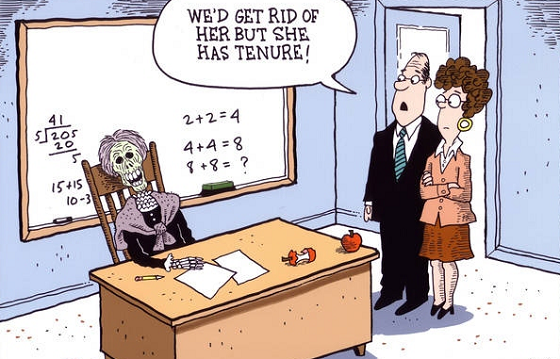
SkeletonBut does tenure serve mainly to shield those who would resist change? Does it do little more than protect aging old bulls and cows who should long ago have been turned out to pasture? Does it guarantee that hoary old fossils will dominate classrooms, spouting outdated and irrelevant approaches? Does the pursuit of tenure, moreover, drive aspiring faculty members to do pointless impractical research that doesn’t help the journalism world or the J schools themselves, as Sarah also implied?

Well, I look around at my tenured colleagues at UNL and see the opposite. As one pursued tenure, she wrote a textbook for training copy editors. Sue Burzynski Bullard’s text – “Everybody’s An Editor: Navigating journalism’s changing landscape” – should be standard fare in any forward-looking J school. Because it is an interactive ebook, the now-tenured Bullard is able to – and does – refresh the book regularly. Another colleague, John R. Bender, regularly updates “Reporting for the Media,” an impressive text that he and three colleagues wrote. It’s now in its 11th edition. A third colleague, Joe Starita, produced “I Am A Man: Chief Standing Bear’s Journey for Justice,” setting a high bar for storytelling and research that contributes to an emphasis at our school in journalism about Native Americans. This was Starita’s third book and he’s toiling on a fourth, even as he inspires students in feature-writing and reporting classes.

And that productivity by tenured faculty isn’t limited to written work. Starita teamed up with multimedia-savvy journalism sequence head Jerry Renaud to shepherd the impressive Native Daughters project about American Indian women. Bernard R. McCoy, a colleague who teaches mainly (but not exclusively) in the broadcasting sequence, has produced documentaries including “Exploring the Wild Kingdom,” a public-TV effort about the most popular wildlife program in television history. Another of his works, “They Could Really Play the Game: Reloaded,” tells the story of an extraordinary 1950s college basketball team. And he’s now working on a production about WWI Gen. John J. Pershing.

Tenure doesn’t mean that creative work ends or innovations in the classroom cease. Each of my colleagues has had to adapt to the digital world. Some still prefer to teach in older ways – one quaintly requires students to hand in written papers that he grades by hand, for instance. But even he teams up with visually oriented colleagues to guide students to produce work as today’s media organizations demand it. Charlyne Berens, a colleague, and I teamed up with the Omaha World-Herald just last spring to guide students to produce a 16-part series that boasts print, online and multimedia elements, The Engineered Foods Debate. Charlyne, who recently retired as our associate dean, wrote several works, including “One House,” about the peculiar unicameral Nebraska legislature, and another about the former Secretary of Defense, “Chuck Hagel: Moving Forward.”

tenuretelescopeAs for me, the pursuit of tenure gave me the impetus to write my first book, “Transcendental Meditation in America: How a New Age Movement Remade a Small Town in Iowa.” I’m now working on a second book, exploring the reasons that drive people to join cults. I’m also developing curricula for business and economic journalism instruction that I hope will serve business school and J school students, including those interested in investor relations. The pursuit of tenure also drove me to develop research for academic journals, encouraging me to look into areas as far-flung as journalism training in China, as well as such practical work as the teaching of business journalism, the challenges of teaching fair-minded approaches to aspiring journalists, and the pros and cons of ranking journalism schools – all topics for forthcoming journal publication.

Forgive me for beating my own chest. I don’t mean to. I am humbled by the work that my colleagues at the J school and across the university do. It is an enormous honor for them to consider me a peer and, assuming that the university’s regents in September agree with our vice chancellor, I expect that I will spend the next decade or so trying to live up to that.