
About Joe Weber

Now the Jerry and Karla Huse Professor Emeritus at the University of Nebraska's College of Journalism and Mass Communications, I worked 35 years in magazines and newspapers. I spent most of that time, 22 years, at BUSINESS WEEK Magazine, leaving in August 2009 as chief of correspondents. So far, I have worked in central New Jersey, New York City, Denver, Dallas, Philadelphia, Toronto, Chicago, Beijing, Shanghai and Lincoln, Nebraska. The adventure continues.

My kind of town, Chicago is …

ChiBluesNearly 13 years ago, my editor at BusinessWeek warned me to put on my combat helmet when a cover story by a group of us in the Chicago bureau hit the streets. The piece, “Chicago Blues,” reported that the city was slipping as a business capital. We discussed how its financial markets were shrinking, it was losing corporate headquarters, high-tech entrepreneurs were making tracks for the Coast and the toddlin’ town wasn’t even really The Second City anymore — LA stole that ranking as it became a magnet for Midwesterners and others looking to live in a place on the rise.

All of it was true. And reading about all of it, editor Steve Shepard knew, would really tick off people in Chicago.

Now, it’s Rachel Shteir and the editors at the New York Times Book Review who have found — probably to their dismay — that it’s their turn to get out the flak jackets. Shteir, a New Jersey-born professor at Chicago’s DePaul University, lit into the Windy City in a front-page essay for a long list of all-too-unsettling truths. Fifteen-year-olds shot near President Obama’s home, racial segregation, financial strain, corrupt politicians — all of it masked by a boastful swagger about how NYC and other spots can’t hold a candle to the city by the lake.

As we did in 2000, Shteir is finding that Chicagoans don’t take kindly to national publications — especially New York-based ones — saying nasty things about their city. The outpouring of venom directed at her is stunning — “clueless,” “a vampire,” “elitist,” “mean-spirited,” “a poor, sad woman,” “maladapted,” “a disingenous shithead” and worse. And these were among the more civil comments posted in response to a Chicagomag.com piece, “Rachel Shteir Defends Her Anti-Chicago Essay in a Rare Q&A” by Carol Felsenthal.

The vileness of the responses is far worse than what we encountered, probably because people now feel untethered by any sense of civility when they’re sounding off on the Net. Coarseness and abuse are the order of the day, it seems. But the passion, defensiveness and unwillingness to brook any criticism is all too familiar. It’s a replay of what we ran into — honest, open and full discussion? Fuggedaboutit! Critical self-examination? Don’t bug me, a—-le!

ShteirIn fairness, we had some good thrust-and-parry discussions involving smart people. WTTW invited a colleague and coauthor of the piece, Roger Crockett, and me, onto “Chicago Tonight” to face off against Paul O’Connor of World Business Chicago and the Chicagoland Chamber of Commerce’s Jerry Roeper. Sure, we argued, but we all behaved like gentlemen, mostly. Indeed, Shteir appeared on the station with Phil Ponce to explain her criticisms, proving that the folks at WTTW have a lot of class. At a couple commercial stations, I’ve read, the hosts vented their outrage, but didn’t share the stage with Shteir (I don’t know if they invited her on or not).

But back in the BW storm, we also got blindsided. Some economic heavyweights staged a panel discussion at the Chicago Fed, as I recall, to explore Chicago’s economic health. But it was anything but a full and balanced discussion. It was more a highbrow ambush with nary a negative word to be heard. One would have thought Chicago was Edenic. The folks there didn’t bother asking me or anyone from BW to join them on the dais to make our case, but rather were happy to hold forth as if our arguments weren’t worth the trouble. Instead, they just ignored the data we had mustered and focused on things such as how bad traffic was, a sure sign of health, as I recall economist Diane Swonk arguing. Swonk in fact had a point about traffic, but what did that have to do with the losses of corporate headquarters, the inability of Sears to innovate and the fiery arguments at the Chicago futures exchanges about whether to modernize to try to catch up to European rivals?

As Shteir is finding, boosters will just change the grounds of the argument when uncomfortable truths don’t suit them. Can’t win the fight on your opponent’s terms? Just change the terms. Sadly, the ugly truths don’t go away. And the social problems Shteir is talking about — the crime, corruption and growing number of murders — seem to be moving even into better neighborhoods now. Check out the problems in Old Town with gangs on DNAinfo.comChicago, if you doubt that.

Screen shot 2013-04-25 at 10.06.04 PMShteir got under the skin of Mayor Rahm Emanuel with her polemic. His response: “Meet the people. Meet our neighborhoods. We have a lot to offer, which is why we’re a world-class city,” according to Felsenthal. That kind of shallow boosterism echoed what we heard from Mayor Daley. Not satisfied with a Q&A with him that we ran with the BW piece, Daley responded with a long letter that ended with “Life is good in Chicago, and it’s only going to get better.” Tragically, the gang violence and the continuing tragedy that is the Chicago school system both suggest otherwise.

Felsenthal goes over much of this ground in a couple posts in her blog in Chicagomag.com. Both the posts and the comments are worth a glance.

For my money, Shteir’s broadside doesn’t say enough about the many wondrous things about Chicago. The lakefront is unmatched. Michigan Avenue is a treasure. Neighborhoods, especially on the north side, are charming and liveable. New York, by contrast, is too crowded and just too much. The Cubs are great fun, though it would be nice if they won more often. The city has great art, great music, great culture, delightful restaurants. And, despite the invective hurled at Shteir, it has some great people.

But all that is at risk if Chicago can’t solve its corrosive problems, and the first step is facing up to them, not facing down the messenger. We wrote a lot in the BW piece about the shortcomings of the futures exchanges but, since then, those folks got their act together (we cannot take credit for that. I’m sure it was more a matter of dollars and common sense). They merged the Board of Trade and the Merc to form a global titan, CME Group. Bravo! Sadly, the city’s banking community is now mostly a ward of distant banking giants. Outfits that were once the pride of Chicago, such as Sears, are now pathetic shells. I wonder what we would find if we looked anew at the city’s business health (Note to the Bloomberg Businessweek bureau: take a look).

Chicago, to be sure, is not soon to become another Detroit, as Shteir suggests. It doesn’t depend on a sole industry that can suffer a near-death experience and take a city down with it. But will it look more like Detroit in, say, 25 years than it does today? That turns in part on whether the city can solve the problems people like Shteir have the guts to bring up, no matter what abuse they suffer for doing that.
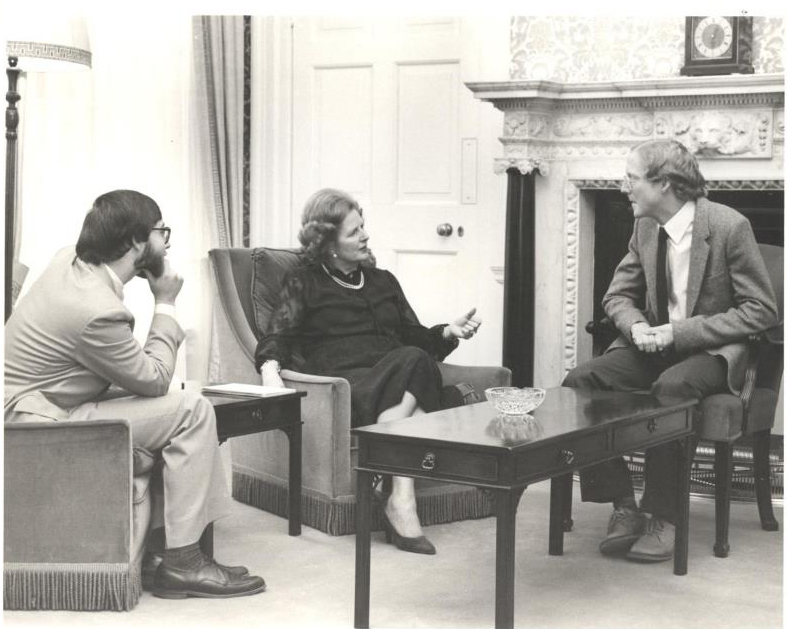

Mrs. Thatcher, Simon Warner and me

ThePrimeMinisterThanks to the Prime Minister of England, Simon Warner and I met 33 years ago. Now, because of that PM’s death and the marvels of the Net, we’ve met again – electronically at least. And in that lay an intriguing tale of media, globalization and winding career paths.

Credit Margaret Thatcher first of all. The feisty Conservative lioness, derided or admired as “the Iron Lady,” was running the U.K. when I was lucky enough in 1980 to be chosen for a journalism exchange program created by the English-Speaking Union. Chartered by the Queen, the E-SU promotes friendship among English-speaking peoples and had enough clout to get me into 10 Downing St. to sit with the PM for a while.

Imagine what a thrill this was for a 25-year-old reporter for a little New Jersey paper, The Home News. Mostly, I wrote about small-town mayors and the occasional county official. Now, I would get to interview a sitting PM, one who cut a swath culturally and politically almost as big as that of her buddy, Ronald Reagan. Some loved her, many hated her and I’d get to write about her.

The ways of politicians can be mysterious, of course, so things didn’t turn out quite as I expected.

Simon, right in the photo above, was the first surprise. Someone decided a young American reporter should be paired with a young British reporter for a sit-down with Mrs. Thatcher. That was no problem, of course. We met at 10 Downing St. on the big day, July 14, equally excited about our big interview. Back then, exclusivity wouldn’t matter much, since we worked on different continents.

But then, as we waited in an anteroom, the PM’s PR man delivered the bad news. The London media were in high dudgeon about a couple young journos – one an American! – getting access to Thatcher when she had no time for them. Some reporter even wrote a snarky piece about it (long before anyone heard the word snarky). So, the conversation would have to be off the record. No notebooks, no tape recorders, no interview story.

simon_warner09Weeks of boning up went out the window, but, okay, we’d meet anyway. And we did. We had a fine time, talking mostly about innocuous things, such as her son’s adventures around the world. Mostly, Simon and I listened, unable to get a word in edgewise with the imposing Mrs. Thatcher (not that she needed us to, of course). Simon’s editors, with the help of a local Member of Parliament, later negotiated the chance for him to write about the conversation a bit for his paper, The Chester Observer. I got a piece for my paper out of the visit, but just shared my impressions of the PM and spelled out her successes, failures and fights in office. Happily, we could run the photo of the meeting.

Fast forward to this past week. Touched by Mrs. Thatcher’s death, I tracked down Simon, with just a few clicks on Google (smiling in the head shot to the right here today). He rose through the ranks in journalism, becoming arts editor at a couple regional papers in the 1980s, did media relations in arts and education, and became a live rock reviewer for The Guardian during the 1990s. He earned a master’s in popular music studies, then a Ph.D., and now serves as a Lecturer at Leeds University. He’s a prolific writer, with at least five books about major cultural figures dear to Boomers. These include “Rockspeak: The Language of Rock and Pop,” “Howl for Now: A celebration of Allen Ginsberg’s epic protest poem,” “The Beatles and the Summer of Love,” “New York, New Wave: From Max’s and the Mercer to CBGBs and the Mudd Club,” and his latest, the just-issued “Text and Drugs and Rock ‘n’ Roll: The Beats and Rock Culture.”

text-and-drugs-and-rock-n-rollThe similarities in our career paths intrigue me. We both wound up working for national pubs and both wound up leaving workaday journalism for the academy. Though I spent my career mostly in business news, we also both have written about popular culture and figures important to fellow Boomers (my book about the legacy of Maharishi Mahesh Yogi, the Beatles guru, and his followers’ community in Fairfield, Iowa, is due out early next year). We’re both fans of the Beats (though I mostly left them behind in high school, while Simon has dug deeply into those folks and the long shadow they’ve cast. Gotta love the photo on his latest book cover).

Nowadays, we both also wonder about the future of journalism. Simon emailed me about it: “The media business remains close to my heart but how can print survive? Transatlantically, the great newspaper empires are caught on the horns of a dilemma. Can paywalls work? Can Internet advertising eventually bridge the losses to income that traditional papers, with their shrinking readerships, are suffering? The Guardian, to which I contributed for several years, is attempting to raise its US profile but can that bring dividends? Meanwhile, the middle-market Daily Mail is proving a web hit, of course, overtaking the NYT in terms of visitors!”

Also like me, Simon blogs. He wrote about his media adventures in 2009 in his “Words of Warner.” Interesting read.

So, we’ve enjoyed somewhat parallel lives on different sides of the Atlantic. Their arcs don’t quite reflect that of Lady Thatcher, who lived on a far grander stage, of course. But, at a nice point for all of us, our paths crossed. And now, thanks to the same technology that is upending the media, Simon and I get to say hello again. I plan to buy his latest book, snapping it up as an ebook I can read on my iPad. Small and surprising world, isn’t it?

Raise a Glass for the Class of ’72

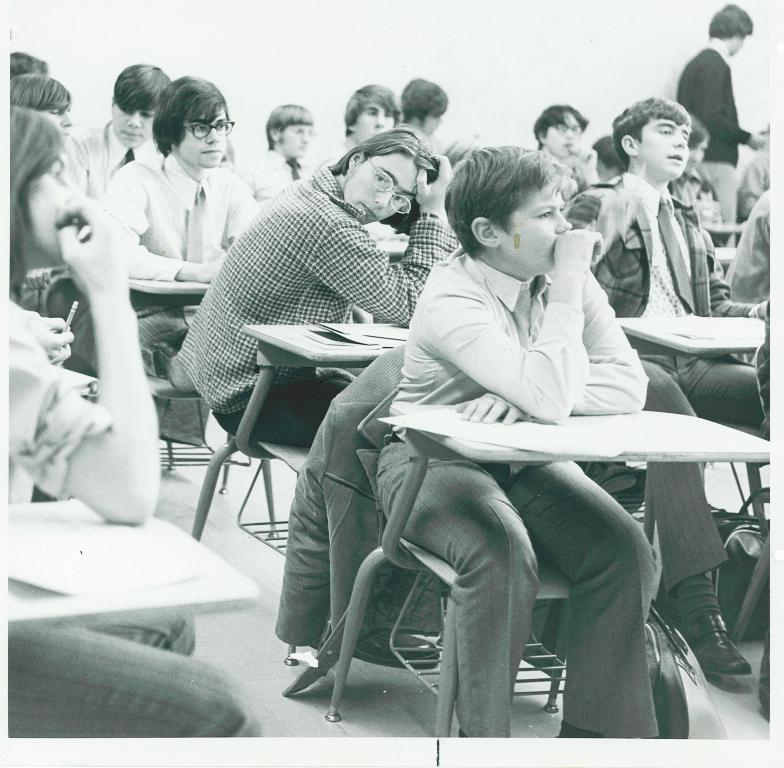
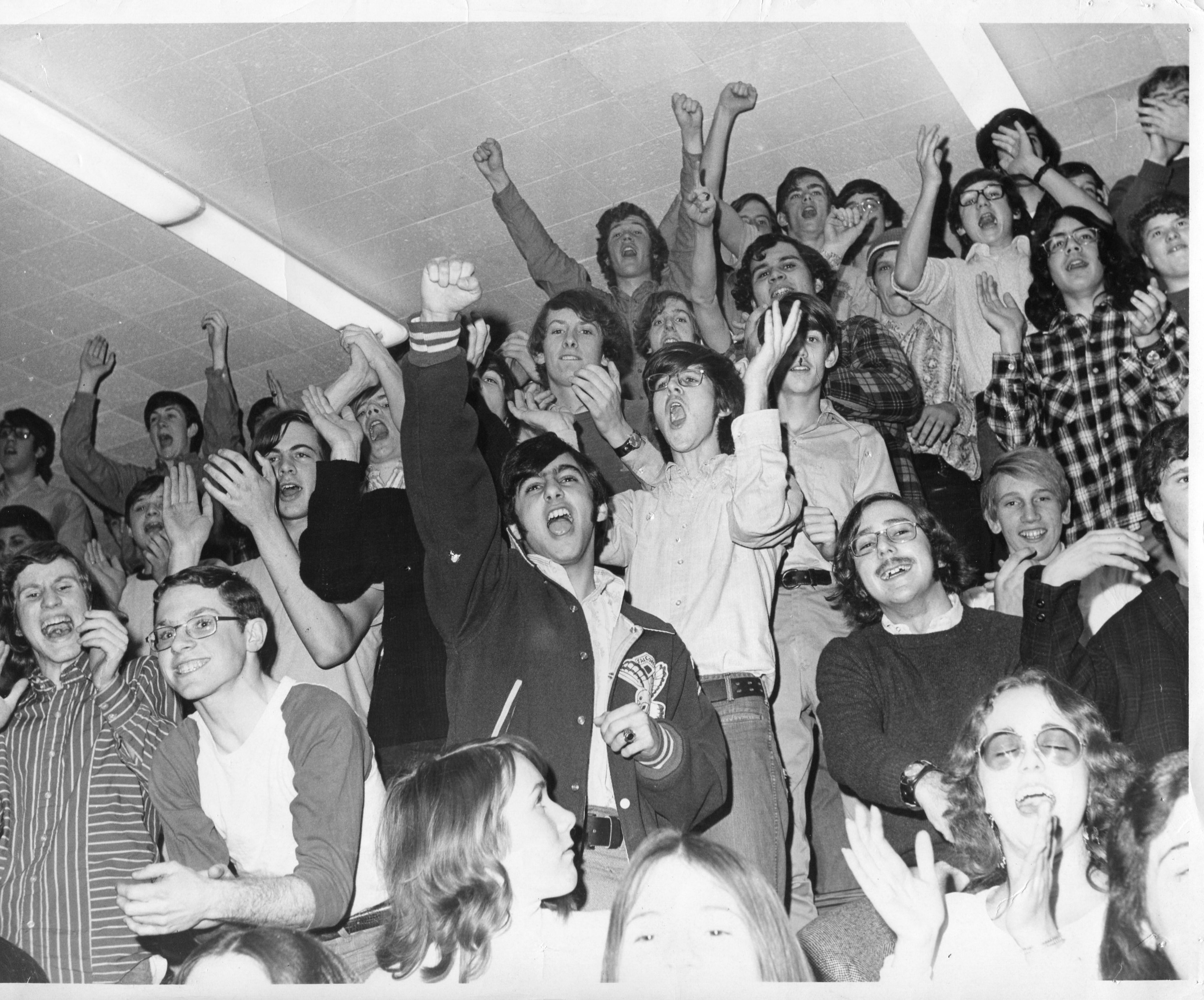
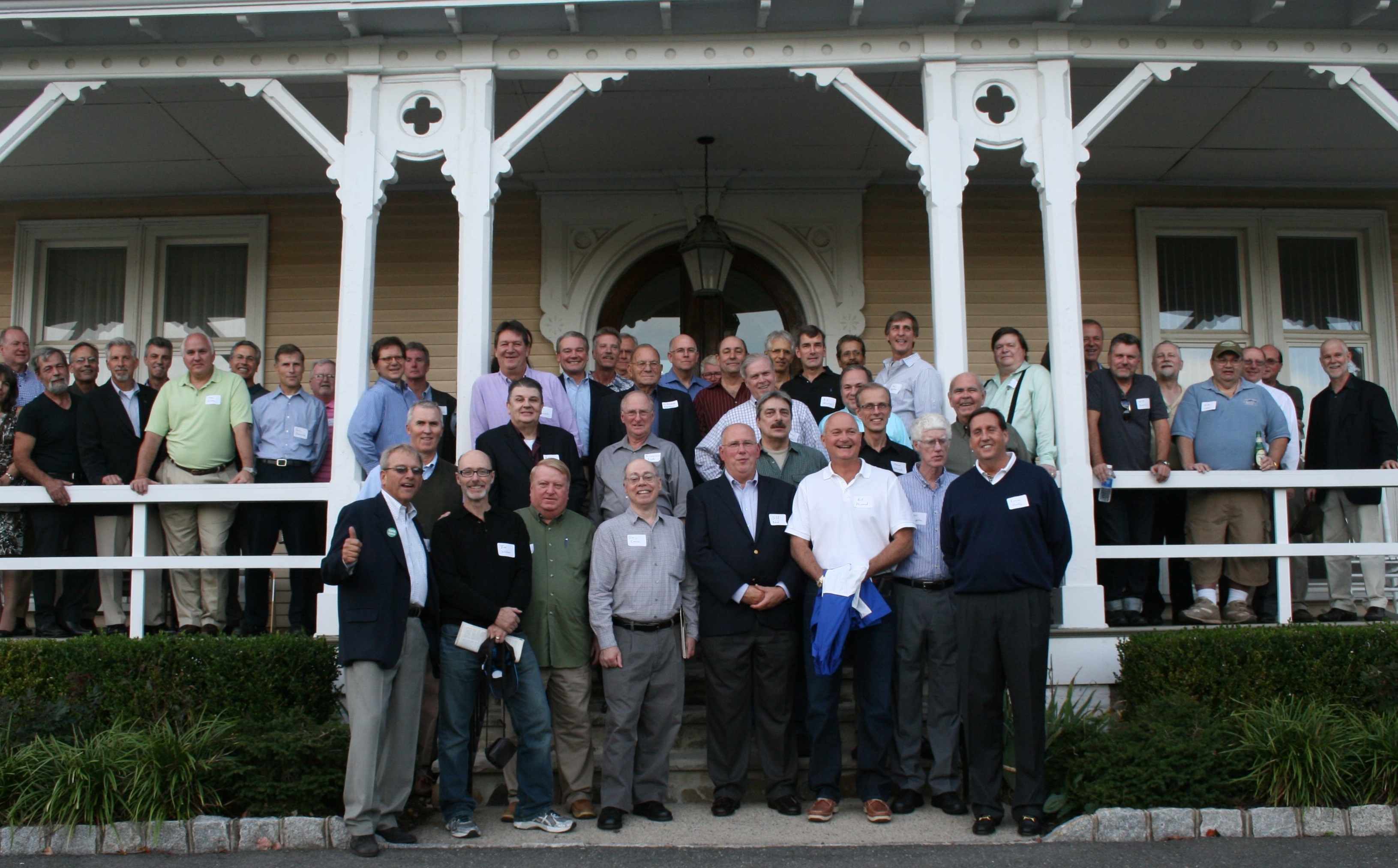
Astonishing as it is, my old friends and I just gathered at our 40th high school reunion. How can this be, when in so many ways we’re still 17? Wasn’t it just yesterday that we knocked around in tattered VW bugs and sung our heads off at rock concerts by the likes of Springsteen (who played a mixer at our school before he drew slightly bigger crowds)? Are we no longer the sharp-tongued guys who tweaked the Establishment at every turn? What happened to the shaggy studs who charmed girls and worried parents all across New Jersey?

Ah, blame the clock and calendar. As the reunion drove home – and my students in Nebraska these days demonstrate as they morph from high schoolers into college grads – we all change over time. Many of my old friends (though, infuriatingly, not all) have, ahem, somewhat higher foreheads now. Our scraggly beards and mustaches have silvered over. The last superstar I saw live was Dylan and he’s far grayer and now sings in an aging rasp. For most of us, Establishment-tweaking ended long ago, as we became the Man. And, as for charming the girls, well, they now are our wives and daughters and, for some of us, granddaughters.

Funny how that all happened. My father, of blessed memory, said just a few years ago that he looked up one day and, with the snap of his fingers, suddenly saw how the decades had rushed by. Lately, I feel much the same. I’ve now got three kids in their twenties (two of them already in the northern half of that stretch). They’ve got jobs and lives of their own, far from the home my wife and I have made in Nebraska. These days, it’s tough getting us all even on the same continent at the same time, an issue as the years fly by ever more quickly. So much has changed in such a dazzlingly short time.

Of course, the changes have been good – mostly. Education freed us of the illusions of youth. Hard experience stripped away the follies we cherished as kids. The loves we had as teens, fueled by hormones and naivete, gave way to the deeper passions of adulthood. We grew up, just as people always have. I’m reminded of Mark Twain’s line about how dense his father was when he (Twain) was 14 but how much the man had learned by the time Twain turned 21.

And yet, it was remarkable to see how these changes played out in friends at the reunion. Many, like me, now honor ideals we once scoffed at. Where some of us marched against the Vietnam War and wanted no part of the military, we now honor the service of young men like my son, now serving in harm’s way as an Air Force officer. While some of us once thought capitalism was the seat of evil, we now see it as a world-changing force for good. Some of us who once spurned the laws that limited our fun – hey, it was all about sex, drugs and rock n’ roll, after all — now hold to those laws as lawyers, judges and police officers.

Not all of us were quite so rebellious, of course. Our class valedictorian went to West Point and later became an Army Ranger. He was a great guy, a truly nice guy, in high school, even though we sat – literally – on opposite sides in an English class divided between Romantics and Classicists, anti-Establishment types and those solidly on the side of The System. He remains a great guy now. Another classmate worked his tail off, went on to Princeton and now shapes young minds at Notre Dame. Still another, a good soul with a warm heart, went on to serve his community as a police officer, someone who saves lives.

We were a mixed lot, the class of 1972. We entered high school as clean-cut young men wearing jackets and ties (ours was an all-boys school). We left it far scruffier and more skeptical, maybe even cynical. The world around us turned upside down in those years and we were forced to take sides, as one of my sharpest classmates put it. We sometimes couldn’t see one another for the warm-hearted kids, the decent people, we were. Now, I think, we can.

Sadly, for many of us, experience has been a brutal tutor. We stood in silence for a time at my reunion for the dozen of us now gone. Some fell to dread diseases of the era, including AIDS. One, a Port Authority policeman, died in the 9/11 attack on the World Trade Center; he had rushed there to help rescue people and was caught inside when the buildings fell. He left behind dear friends who will never forget him. He was, indeed, a hero, as dear friends described him. How can so many of us be gone already? How many more will be by the time the 50th reunion rolls around?

High school reunions are times to think fondly of those we’ve lost and think kindly toward those we’ve grown distant from. They give us the chance to tell friends we haven’t seen in a while just how important they were during those crazy teen years. Careers and families took many of us far from our roots in central New Jersey. We don’t see one another as we lead our lives in Massachusetts, Pennsylvania, Nebraska and other far-flung places. That’s a pity.

It was good to catch up with folks once so important to me. I’d like to stay in touch. And I look forward to our next big reunion. For all of us, I’m sure, it will come round far sooner than we expect.

Free and foul speech: the Islamic uproar

As Muslims across the world protest the American-made movie trailer that ridicules Islam, the collision of values between the West and the Islamic world seems never to have been so stark. Free speech versus respect. Tolerance as opposed to ideological despotism. Openness to criticism and debate instead of muzzling.

What stance must we in journalism take on this fight? Anyone who espouses freedom of thought and expression, it would seem, cannot side with those who would suppress it. No matter how noxious or vulgar that expression is, the right of all to say what we think is fundamental for journalists. More than that, free expression is central to a democracy, a core value. The open exchange of ideas, we believe in the West, leads to progress as the best ideas win out and the weakest wither.

If Islam and the teachings of its prophet do offer the best ideas, are they not strong enough to withstand the amateurish rant of a fraudster and a few friends in California? Surely they are. Is Islam so fragile that its followers must murder Americans to defend it? Absolutely not. Are its ideas so weak that a 14-minute movie trailer can undermine it? No. And is the feeble little film really so powerful that the faithful cannot simply shrug it off?

But far more than a battle of ideas is involved here. Fouad Ajami, the Stanford academic and a Muslim himself, traces the fervor in the eruptions in the Muslim world to “a deep and enduring sense of humiliation.” In his insightful column in The Washington Post, “Why is the Arab world so easily offended?,” he traces the rise and fall of Islam as a cultural and economic force among the nations. Where adherents once dominated much of the civilized world, thriving and making huge contributions to art and science, millions now struggle in poverty, envying the West and blaming it for their sorry state. Many now crave nothing more than to move to Europe or the U.S., even as others set fire to the American flag or trample Western embassy signs.

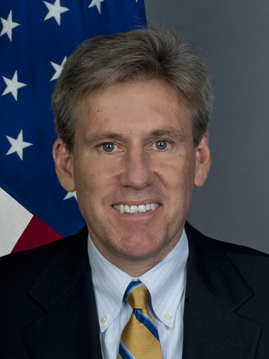
Further, fundamentalist opportunists in places such as Egypt and Libya pounce on any opportunity to capitalize on these feelings of inadequacy and fragility. Nakoula Basseley Nakoula and his friends gave them the perfect excuse to target even an American as friendly to the Muslim world as J. Christopher Stevens, the late ambassador to Libya who aided in the work of rebels there seeking to oust a despot. “Innocence of Muslims” was a gift to Al Qaeda, the Taliban and their ilk as they seek to turn back the clock instead of embracing the possibilities for improvement of their societies in the 21st Century.

The ideas in the trailer – such as they are – certainly are obnoxious and offensive. Knowledgeable critics say they are flat wrong. But since that is so, would the piece not simply die of its own trivial weight? Is not the best response for the Islamic world simply to ignore the film, to brush it off as a piece of lint that floats momentarily onto the rich tapestry of Islamic history and belief? The Catholic Church, after all, survived intemperate artistic criticisms, such as “Piss Christ,” the 1987 photo by an American artist depicting a crucifix in urine. Judaism has survived such bogus attacks as “The Protocols of the Elders of Zion” or vile marches by would-be Nazis in Skokie, Illinois.

There is nothing wrong with civil protest, even outside embassies – far removed as they may be from Hollywood. Indeed, advocates of free speech should welcome that. Bigotry needs to be countered whenever it arises and the bigotry of this film must be condemned. So, too, must the foulness of anti-Semites be opposed. And anti-American sentiments must be countered wherever they arise. But there’s no excuse, of course, for killing. And the answer to free speech should just be more free and better speech, eloquence instead of ignorance. Certainly, it should not be violence.

Still, the danger of the Muslim world erupting in such passion against the trailer is that it gives the filmmaker a far bigger stage than he deserves. The fervid reaction launches a film few would have heard of into superstardom. The same was true of the anti-Islamic Florida pastor, Terry Jones, who advocated burning copies of the Quran. Such men and their “work” don’t deserve the fame the protesters confer upon them. The best response, perhaps, is no response. Instead of burning flags and scaling embassy walls, why not educate the West on how the anti-Islamic ideas are baseless?

Ideas matter, of course. Plenty of wrongheaded ones have led societies astray – just look at the legacy of Osama bin Laden, Adolf Hitler and their like. But it’s only by letting ideas compete freely, by letting people shop in the intellectual marketplace, that the best ideas come to the fore and the weakest die.

This is, of course, a recent notion. Not so long ago, people in the West could lose their lives for blasphemy. Our current view of the value of free expression hasn’t taken root in the Islamic world yet – and it may never do so. But, as Ajami sagely writes, “Modernity requires the willingness to be offended.” Much to the regret of the West and to the disservice of the Arab world, he says the heartland of Islam lacks that willingness.

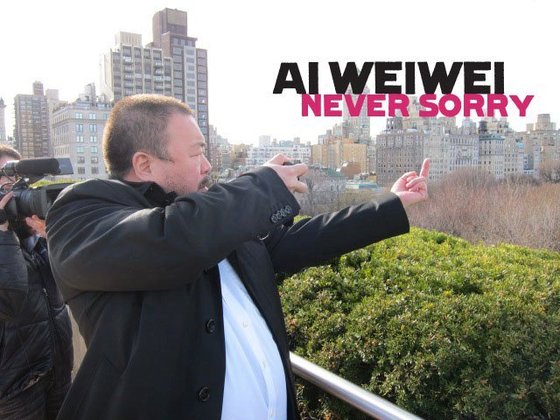
Last night, my wife and I saw “Ai Wewei: Never Sorry,” the astute documentary by Alison Klayman about a courageous artist’s struggle for freedom of expression in China. Ai does things the authorities cannot abide, such as producing a video in which a string of people, including himself, say “Fuck you, Motherland.” He embarrasses police who assault him by filming them. He is subjected to constant surveillance and winds up arrested and detained for 81 days. His art studio in Shanghai, which officials once encouraged, is destroyed. He’s a thumb in the eye to those who would suppress free expression.

Freedom of expression must be cherished and protected. Ai’s criticisms are powerful and important. The California fraudster’s are not. In each case, however, totalitarians cannot be allowed to throttle their voices. Let them speak. Counter them, if necessary, or heed them. Ignore them if that’s appropriate. In the end, a critic’s barbs will stick only if they deserve to.

Kids Say the Darndest Things — Part 2

Art Linkletter would be impressed. My new students in a pair of Reporting I classes this term are lively and inquisitive. Words such as “entertaining” and “surprising” come to mind, too.

A note from one:

“…in the assignments you have a folder called reading assignments, and it says for ‘Aug 30 Bender, Chaps. 3, 4; Math Tools, Foreword, Chaps. 1,2’ so by next class we need to do the [autobiographies] about us, read all of that plus the D&SH and the new york times and the journal start everyday?”

Yup. Welcome to the NFL. (where, I hope, you will also learn to capitalize when appropriate.)

From another:

“… Though my name appears as …. and my sex as female in your records, I go by … and use masculine pronouns (he/him/his). If you have any TAs, could you please alert them of this so that my homework, quizzes, and tests are graded correctly?”

That’s my ‘welcome to the NFL’ for 2012.

And from a third:

“I was wondering if I took some notes over the two chapters if I would be able to use those during the quiz? Just a thought.”

Why, then, dear, would there be a quiz?

Ah, college life. As I enter my fourth year in the classroom, it’s still intriguing and challenging, at times even exhilarating. The students are a blend of enthusiasm and rough edges. Their candor is refreshing; their openness, invigorating. Their naivete, in some cases, is touching.

Most don’t know their places in the world yet. So my job, in part, is to help them find their footing, at least in journalism. Some will make their way in that arena, while others will take our classes as preparation for law, social work, education or whatever floats their boats.

With a Herculean effort of memory, I can understand where most of them are. I was a college sophomore myself once and didn’t know quite where I would fit. The path before me was hazy and intimidating, even if exciting. Life was a roller-coaster of emotions and choices. Schoolwork, sometimes, seemed overwhelming.

I expect to challenge these kids, just as they will test me. Yes, dear, you do need to do all that reading, and lots more. No, I don’t have a problem calling you whatever you’d like me to call you. And, no, you can’t treat every quiz as an open-book affair. Even in the Google era, students must commit some things to memory, must absorb facts and insights from texts.

If I do my job this year, I may help some of these bright-eyed kids clear away the haze that hangs before them. In the end, that’s really what education is about, isn’t it? It’s what makes grading, dealing with bureaucracy and working through the weekends worthwhile.

Should be a good year.

One artist reflects on another: Klayman and Ai Weiwei

Sometimes, the world seems astonishingly smaller and filled with more wonder than one can imagine. Take the case of filmmaker Alison Klayman, whose documentary about a famous dissident Chinese artist, “Ai Weiwei: Never Sorry,” debuts July 27 in New York, Los Angeles, San Francisco and Washington, D.C

Alison’s film has garnered a ton of praise. It won a special jury prize at the Sundance Film Festival, was an official selection of the Berlin International Film Festival and was an opening night film at the Hotdocs Film Festival and the Human Rights Watch Film Festival. “The Chinese art-star emerges as a stirring symbol of antiauthoritarianism – and also as the kind of magnetic, irreverent prankster you’d want to dine with, not to mention follow on Twitter,” the Village Voice said. “Ai Weiwei is captivating on camera, and the film makes the case that there is really no separation between the artist and his work,” crowed Toronto’s Globe and Mail. “Chinese activist Ai Weiwei combines the chutzpah of Michael Moore, the antic iconoclasm of Duchamp, and the humility of Gandhi,” observed the Boston Phoenix. “Let’s hope Klayman gets to make a sequel,” added The Guardian of London, giving Alison’s work four stars.

There are many more paeans to her work. Details and a trailer are available here. There’s also a Facebook page for the film here.

Much to the consternation of Chinese authorities, Ai Weiwei continues to generate attention. The Wall Street Journal just this morning ran a piece about his battle with authorities over a $2.4 million tax bill. Once celebrated for his work on the Bird’s Nest for the Beijing Olympics of 2008, Ai has riled Chinese officials with persistent criticisms. He was detained without charges for nearly three months in 2011, and state media reported he confessed to tax-evasion, though he has challenged the tax case at every turn. He set up a website, fakecase.com, to chronicle his battle.

So what does Ai Weiwei have to do with the world getting smaller and more wonderful? Well, this is personal. Last fall, a short time after I arrived in Beijing to teach journalism for the semester, I chanced upon a group that held weekly services, Kehillat Beijing (cleverly named website: sinogogue.org). On my second Friday night service, who should walk in but Alison Klayman, who I hadn’t seen for an absurdly long time. Alison, dear reader, has been a good friend of my eldest daughter, Becky, for about 16 years, since both girls were 12 years old and we lived in the Philly area.

In a coincidence no fiction editor would let an author get away with, Alison had rushed to services from the airport, bags in tow. She had long before become a fan of the delightful Jewish group — a havurah for expats and visitors — while living and working in Beijing. She happened to be back in the city for some final work on the Ai Weiwei movie. Needless to say, we had a fine time catching up over a rather nice, western-style dinner that followed services.

So, count me among those eager to see the film. I can’t make the NYC premiere, but will catch it here in Lincoln, Nebraska, where it will be shown at the Ross from Sept. 7-13. It will be a highlight of the fall.

Ying Chan discusses budding Chinese journalists

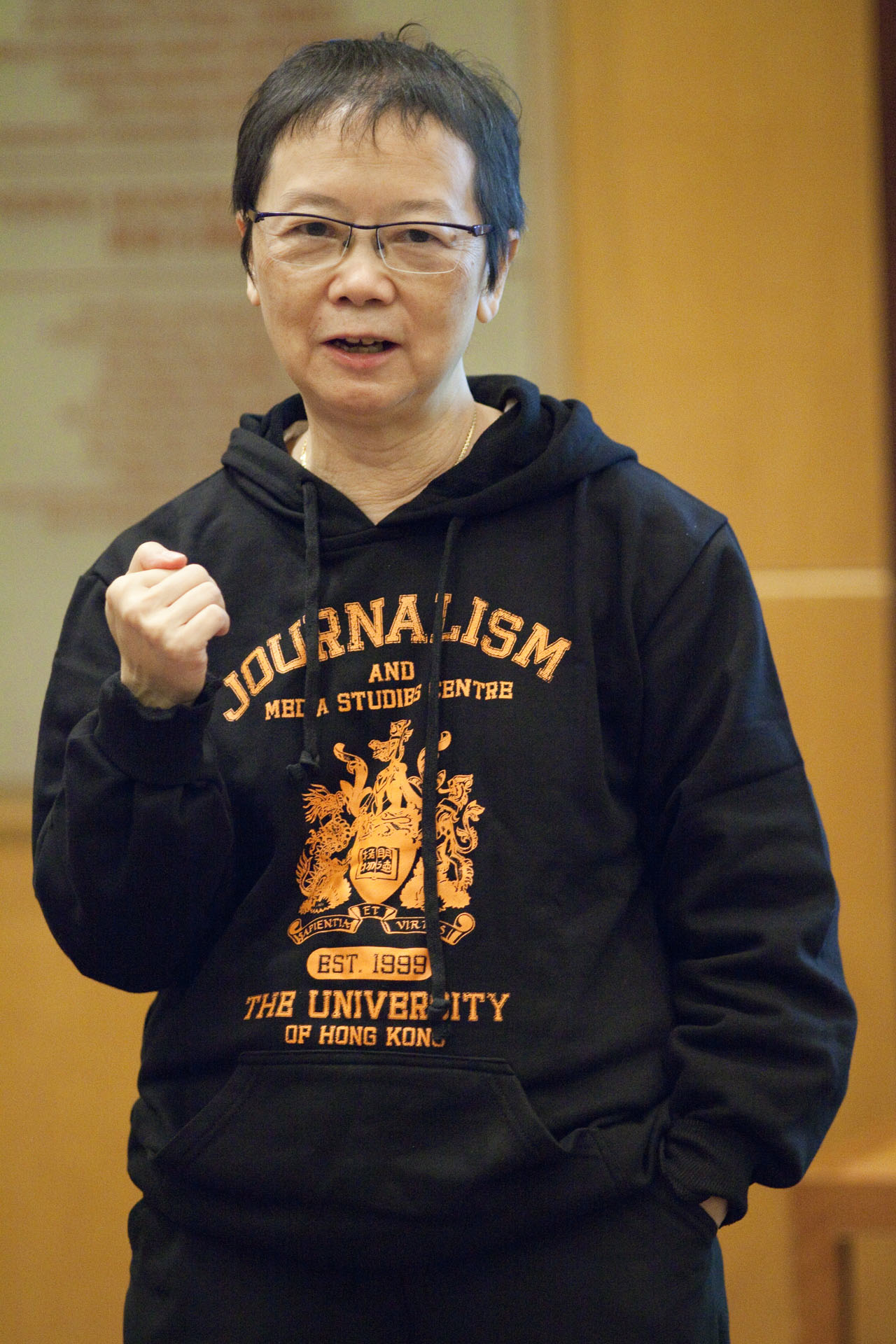
The Columbia Journalism Review online ran a Q&A I did with Yuen Ying Chan, one of the foremost journalism educators in China. By turns steely and gentle, smart and tough, she was a delight to talk with. It was a privilege meeting her.

After 23 years working in New York City journalism, including a seven-year stint at the New York Daily News that netted her a Polk Award, Yuen Ying Chan returned to her native Hong Kong. There, in 1999, she founded the Journalism and Media Studies Centre, and as its director began turning undergrads and grad students into working journalists through Asia. Soon after that, she turned to mainland China, where she set up the Cheung Kong School of Journalism and Communication at Shantou University, which now serves some 640 undergrads. Chan spoke about journalism and journalism education in Hong Kong and China with Joseph Weber, an associate professor at the University of Nebraska-Lincoln who recently taught in the Global Business Journalism program at Tsinghua University, under the auspices of the International Center for Journalists.

One impression I have about China is that students don’t ask, ‘Why?’

It’s rote learning. It’s endemic. They don’t challenge authority. They are taught to listen, to follow. So that’s part of the culture, the system. It’s the worst of Confucianism, plus Communism—the authoritarian respect for authority and not challenging authority. Students in mainland China schools cram in too many courses. They have had top-down teaching—the antithesis of critical thinking—for 12 to 14 years before we get them.

Are schools of journalism on the mainland changing that, by inculcating critical thinking?

In Shantou we do. Students are very outspoken. We were able to host a lesbian activist, Helen Zia, for a week. She’s a civil-rights activist and a former executive editor of Ms. Magazine. We had an open debate on lesbianism, where Zia showed a film about relationships and talked about her own marriage. The room was packed. Shantou is different. We try to teach journalism the way it should be taught.

Which is how?

Which is critical thinking, seeking truth from facts, challenging authority, discipline, good reporting and writing. We do it. It’s not easy.

Do you get official pressure?

It’s not so much official pressure, but more the Chinese bureaucracy. In Shantou we can get away with more. It’s a public university but it’s funded two-thirds by Li Ka-shing [a wealthy Hong Kong businessman]. It’s almost like a privately funded public university.

What about the rest of journalism education on the mainland, in terms of promoting critical inquiry?

It’s very uneven. At Shantou, we have students doing investigative reporting.

What are the limits in investigative reporting?

You can’t talk about Tibet; there’s no exposing the Politburo or their sons’ and daughters’ business interests; no discussion of June 4 [1989, the Tiananmen Square massacre]; no Taiwan; no Xinjiang protests [a 2009 uprising in a region in western China]—those are drop deads. And then you have room to navigate. The space is opened and closed. There are no set rules, but there is a system of censorship in place, and also self-censorship. For instance, the rebellion in the village of Wukan [an anti-corruption protest that began last year] is all over the news in Hong Kong. It’s censored on the mainland but Wukan was all over the weibo, China’s miniblogs. That was despite government efforts to censor. Reporting the Bo scandal has been banned in Chinese papers. But students can climb the so called Great China Firewall to access international websites. I can read students cynical comments in their own weibo. This is a generation of digital natives who are savvy with using information to get the information they want.

I’ve been surprised at how much the China Daily discusses pollution, which is a great embarrassment.

They have to compete for the market. There’s a tension between the market forces and the forces of authoritarianism. But it’s not just China Daily. Environmental stories, such as pollution, are on the official agenda.

What are the differences in your approach in Shantou in mainland China and here in Hong Kong on the issue of censorship?

Most of the students [in Shantou] will work in the [mainland China media] system. If they work in the system, they will have to know the rules and the boundaries. We teach them that they need to equip themselves as much as possible to push the limits. You need to be good. The better you are, the better you can deal with the limits. We try to let them know where there are limits. It’s very challenging. China is in transition. It’s full of good stories and for them to report and write about that, that’s their job. The challenge is to deal with reality, not to succumb to it, and the keep the North Star, the values of journalism. We try to do that.

There seems to be more life left in print here than in the US.

We are facing the same digital transformation. Students have to understand digital. But in a country of 1.3 billion with a long newspaper-reading tradition, even a tiny percentage of newspaper readers can sustain print longer than it can in smaller countries.

What are the prospects for your students?

It’s an exciting time to be in journalism in Asia now. Our students go into internships all over the world. They go into international and local media, Chinese- and English-language. They also get internships in media companies across Asia and around the world. Many internships grow into jobs.

What kind of work do your students do?

They do grassroots reporting on community issues. You know the scandal about overcrowded school buses? They went to do a story on school buses in Shantou. They found a 19-seat bus that was packed with 46 students. It’s on the website. Isn’t that a good story? They did another story on a flood in the city. It speaks a lot about municipal management. They do profiles. They do multimedia. That’s why they are getting jobs.

As for investigative work, when I taught a course on “enterprise reporting” at Shantou, students investigated the e-waste dump nearby that was killing the river in the area. Students worked in teams and do a lot of shoe-leather reporting up and down the polluted water. Their article was published in a leading daily in Beijing. This year, students reported on stories such as the plight of the children of migrant farmers or overloaded schools buses in the area.

Chinese students go into journalism with a lot of idealism ad a strong sense of mission. They want to speak up for people and to fix the problems in society.

Foul mouths and young minds

How offensive is too offensive?

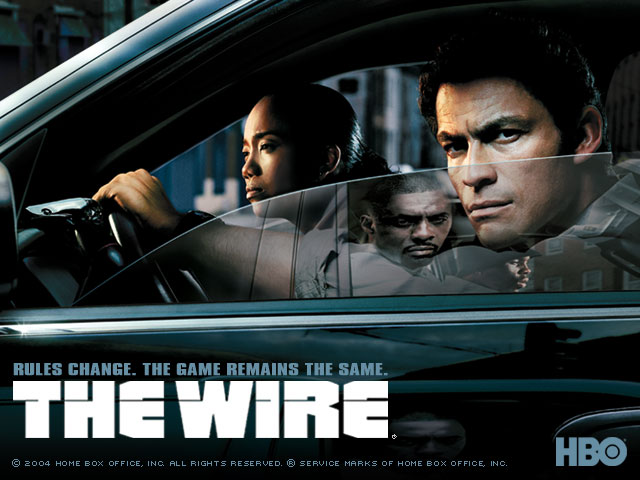
Today, while giving presentations about authors, a student screened a trailer for “The Wire” for all the Reporting I class to see. And hear. And hear, they did. The F word, the N word, even the C word.

The student blanched, as did I. I did my best to tell these 19- and 20-year-olds beforehand, as the video started, that this was likely to be strong, and I remarked afterwards that it certainly was. But, frankly, I was stunned at how vile it was. I hadn’t seen the trailer, though I had seen – and loved – the series on HBO.

Fortunately, the visuals were tame, unlike those in the show. But the effect of the words, repeated frequently, was nearly as potent. Ugly racist terms, ugly sexual terms, ugly sentiments in general. I faced a group of bug-eyed students who didn’t know quite how to react.

David Simon, the former Baltimore Sun journalist who created the show, was trying to reflect real life on the rough streets. How else do cops, drug dealers, politicians and union bosses talk, after all? The language shouldn’t be cleaned up if it’s to be authentic – or at least seem authentic. Can’t fault him for that. And in watching the show, all five seasons, I constantly was struck by how true-to-life he made all those flawed people seem.

But, while I give Simon kudos for “The Wire” and my student praised his real-life book about murder in the city, “Homicide,” that doesn’t mean the language needs to be showcased in a sophomore-level journalism class in Nebraska. There are ways to talk about the talk without listening to the talk.

Am I a prude? Am I naïve about what my young charges hear on a daily basis? Am I too PC?

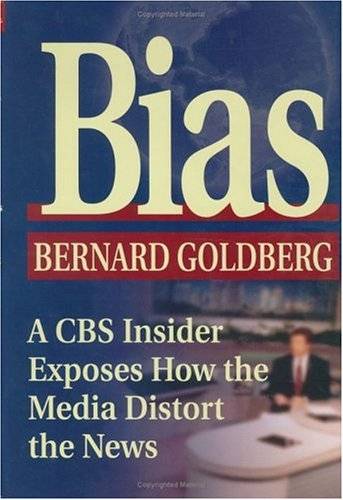
Coincidentally, in the same class we talked about Bernie Goldberg’s book about political bias in network TV. In one section, Goldberg dismissed a colleague’s preference of the term “Indian” over “Native American” while faulting another for labeling the flat tax idea “wacky” – both items evidence, in Goldberg’s mind at least, of bias and excess political correctness in mainstream media. That led to a good debate in class about whether journalists worry too much about PC language and whether we need to bother with it.

Well, yes, we do need to bother with it, I argued. If African-Americans prefer to be called such, the media need to do so. If Native Americans don’t like a term that Columbus or someone else erroneously bestowed on them, we have to respect that. And there really is no place in a classroom for the N word or really any of the other offensive terms that Simon’s show shouted.

So, I’m donning the hairshirt on this one. I popped an email of apology to my students, even though I had been almost as surprised by the video as they were. It may have been the student’s presentation, but it was my classroom, after all. I’m not going to fault the student, who was just trying to enliven her time in the front of the class. But I sure wouldn’t encourage that sort of video again.

Yes, they’ve all heard worse. Yes, as journalists they will have to develop thick skin on their ears as well as everywhere else. And, yes, I’m from New Jersey, where people can shame Marines even when talking about the weather. But my Nebraska kids don’t have to traffic in the classroom in what my elders used to call foul-mouth talk.

Once, when I was young, I had my mouth cleaned out with soap. At times I can almost still taste it. Now is one of those times.

Mud all around in DePauw journalism case

A friend, Mark Tatge, is in hot water because he showed students how to use the tools of investigative reporting on one of their own, a 19-year-old sophomore busted for drinking. The unsettling case raises questions about the duties journalists have to the truth, journalism teachers have to students and administrators have to teachers.

And like lots of unsettling cases, it’s messy.

Tatge, a former Midwest bureau chief for Forbes and textbook author with a distinguished record in the business, teaches investigative reporting as a visiting professor at DePauw University. To show students how to use public records, he handed out a public records packet about the arrest of a student athlete in January for public intoxication, resisting law enforcement, illegal consumption of alcohol and criminal mischief. According to journalism blogger Jim Romenesko, the 17-page packet included Facebook and Twitter profiles, along with court documents.

Devised as a classroom exercise, the case study has gone far beyond the blackboard. The DePauw student newspaper told the campus about it and blogger Romenesko delivered the news to his national journalism audience. The blog, Inside Higher Ed, has written about it. Needless to say, the student is embarrassed. And her mother lashed out at Tatge in a letter to The DePauw, accusing him of bullying, “wanting to create news,” and not caring whether a student or the school was damaged.

For his part, Tatge is troubled that the university has shown no support for him in this maelstrom. Academic freedom and the principles of journalism are at stake, he and his supporters have suggested.

Plenty of journalists and academics have offered backing in comments on Romenesko, though opinion is hardly unanimous. One critic said it was “totally inappropriate within the context of a student-faculty relationship. How about a little judgment?” A critic faulted Romenesko for printing the details, including running the student’s photo. Inside Higher Ed held off on identifying the student.

I’m reminded of what officials at Tsinghua University in Beijing warned me about the classroom last semester. The classroom, they say, is a public sphere in which anything you say can echo far beyond school, especially in the days of the Net. Therefore, be cautious of what you say there. Avoid sensitive topics, they counseled.

Tatge, I imagine, had no notion that this investigative exercise would have gone any further than the door of his classroom. For his students, it would be a powerful example of using public records in a way that hit close to home, as The DePauw suggested in its coverage. It would have more impact than doing, say, a patent search, he suggested.

Indeed, Tatge may have figured there would be no embarrassment to the young woman, who turned 20 a month after her arrest. She would not have even known about it if some friends in the class hadn’t told her of the discussion. Certainly, Tatge, would not have deliberately sought to put her in the stocks nationwide, to expose her shame far and wide. He just wanted to make a lesson in public documents real and meaningful for the students in his class.

But the questions this case raises are troubling. Should teachers worry, in the age of the Net, that everything we do in a classroom can be showcased to the world? Does that lead to self-censorship, a la China’s? Do we really want to stifle ourselves in the way teachers – and journalists — there must to save their jobs? At home, will administrators back up such faculty when the heat rises? Or will they cave under pressure?

On the other hand, shouldn’t faculty members feel obliged to shield 19-year-olds who do stupid things? Isn’t it the nature of kids to make dumb mistakes that in an earlier, less public, time would have been punished quietly? No teacher would deliberately hold a student up to nationwide scorn. All of us – Tatge included, I’m sure – feel our first duty is to educate students, not humiliate them.

It’s less a legal matter than a moral one. Legally, the student lost her right to anonymity when she was arrested. But does that mean she’s fair game in any classroom on campus? Does a teacher have a moral duty to protect students, even if the law permits exposure? Do teachers need to act more discreetly about their young charges?

At the end of the day, we can only hope everyone involved remembers a few key things. First, the student has to live with the consequences of her alleged mistake. It was she, not Tatge, who brought this grief down on herself. She, her mother and the school administration should keep that in mind. In an earlier generation, mom might have taken the daughter to the woodshed, not turned her wrath on a teacher and the campus newspaper. Indeed, it’s surprising that lawyers haven’t shown up yet.

Second, it was the police, not Tatge, who made the charges public in the first place. Once such charges are lodged, they are out there for all to see. They eventually will be adjudicated, raising still more opportunity for exposure.

Punishing the messenger here will not make the student’s problems any easier. Administrators need to back up teachers when the fault lay elsewhere to begin with.

Still, faculty members are not just journalists, not just messengers. The muddy part here is that teachers have other responsibilities to students – both those in their classrooms and others on campus. That’s a tough line to walk at times. Sadly for all involved, there’s mud all around on this one.

Is the Internet making college kids dumber?

Kids say the darndest things, don’t they? Certainly, college kids do on weekly current events and readings quizzes.

You may think, for instance, that the CPI is the Consumer Price Index. And you would be sure of that if you just read it in a text assigned for the day’s class.

But to one of my 28 students in Reporting I, it is the Corporal Payment Index. To another, it’s the Compared Probability Index. To a third, it’s the Current Percentage Index.

One of my favorites, though, is the College Placement Index. Problem is, I’m not sure where the author of that one would place. Still, we must give her and the others points for inventiveness, no?

Indeed, it may be that these kids, mostly freshmen and sophomores, have been getting points for inventiveness for years. They had to make decent grades to get through high school and into a Big Ten university after all. It just appears that their high school teachers didn’t make them work too hard for those grades. Certainly, the kids didn’t learn how to give the text, say, a quick scan before a quiz.

Do I sound exasperated? Well, these kids plan to go into journalism and you wouldn’t know that from the acquaintance some have with current affairs. It’s not just that one of the most common measures of the economy eludes them. It’s that they don’t appear to read the news much, even when they know they will be asked about it each week.

It wasn’t Egypt that defied the U.S., for instance, by saying it would put 19 Americans on trial in an investigation on nonprofits. No. According to one of my students, it was Canada. Canada! For another, it was – stunningly – “Newt.” To a third it was “Obama.” Did they even read the question?

Who is the Palestinian president? Okay, so maybe an answer like “Muhamed” or “Hussein” is conceivable. But “Gadafi?” “Addis Abba?” “Aasad?” “Hafnet?” And, my favorite, “Netanyahu” (courtesy of two students).

Yes, kids in or barely out of their teens may be forgiven for not knowing the names of leaders of places they have no connection to. But not when those names are on the front page of the New York Times a day or two before a quiz drawn from that page. The paper is free on campus, including just two floors down in the J School, not to mention available online. They know where the answers are before walking in every week. They don’t have to look much beyond the headlines.

I should be able to shrug this all off. Chalk it up to high school teachers who themselves may not even read newspapers anymore – it’s a generational thing, isn’t it? These kids have Facebook, YouTube, ESPN and Entertainment Tonight instead of newspapers. And nitty-gritty stuff like the names of national leaders just washes over them.

But because they do have such a wealth of information, they should be the most well-informed generation ever. They have a zillion free news sources on their computers. They have Jon Stewart. They have TV and radio everywhere, including on their computers.

And yet some say Israel blamed “Palestine” or Iraq or Syria (two students) for bombing Israeli personnel in the capitals of India and Georgia. We may be at war with Iran before the year ends and these kids won’t have clue about what led up to it.

It’s as if the information glut has made them dumber. All those warring countries just blend together in some kind of mashup. The kids don’t need to separate it out or know anything because they can Google it. Their heads can remain blissfully empty, undisturbed by the information overload.

Chinese vice president Xi Jinping in Iowa

But what about common sense? Is it sensible to say the vice president and likely future leader of “The Senate” arrived in the U.S. on Tuesday, Feb. 14? How about “Congress?” Or, “Syria?” And could Johnson and Johnson be selling “shoe” implants abroad even after the FDA rejected sales in the U.S.?

With answers like that, can they wind up among the leaders of journalism tomorrow? Sadly, unemployment may be their more likely fate. But they won’t be counted among the ranks of “discouraged” workers. At least four say it is “lazy” workers the government doesn’t count as jobless because they’ve stopped searching.

Yes, I try to put myself back into the head of a 19- or 20-year-old as I work with these kids. All these annoying little things on quizzes, I know, may take a backseat to getting through Spanish or getting into the right sorority or, as is true for many kids, working too many hours a week to study. Maybe fights with girlfriends or boyfriends keep them from focusing on school. Or maybe there are real problems at home that plague them.

But, really now, can the CPI be the Calculated Projected Index, the Central Population Index or the Chief Production Index? No points for inventiveness, I’m sorry to say. Instead, they need to read the papers and crack those books to get through my class. They have their work cut out for them, and so do I.