About Joe Weber

Now the Jerry and Karla Huse Professor Emeritus at the University of Nebraska's College of Journalism and Mass Communications, I worked 35 years in magazines and newspapers. I spent most of that time, 22 years, at BUSINESS WEEK Magazine, leaving in August 2009 as chief of correspondents. So far, I have worked in central New Jersey, New York City, Denver, Dallas, Philadelphia, Toronto, Chicago, Beijing, Shanghai and Lincoln, Nebraska. The adventure continues.

Time for the kids to shine

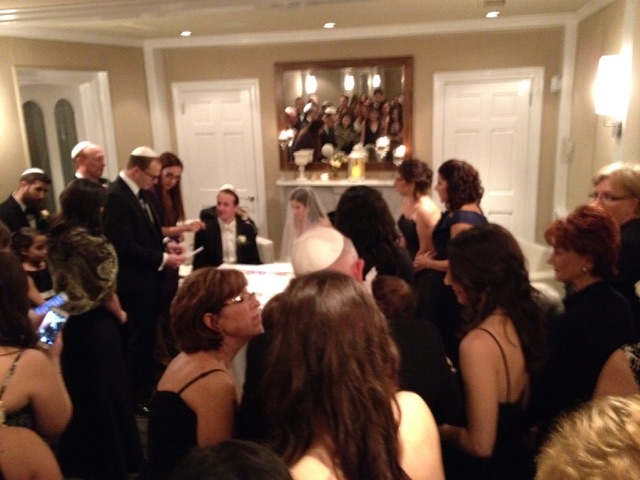
Ketubah The matron of honor and the best man at last night’s Miller-Segal wedding gave the best toasts to their marrying siblings I have ever heard. Witty, touching, endearing.

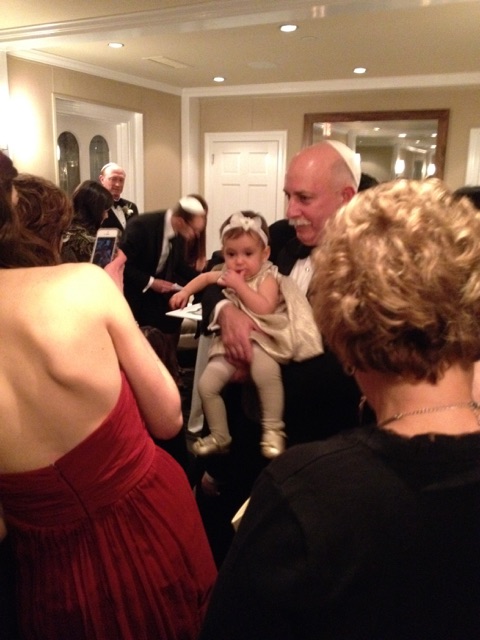
The matron of honor, the bride’s sister, capped her talk by saying her little daughter loves her aunt and will love her new uncle, but would love nothing more than a cousin. The crowd roared, the bride and groom beamed, and it was as if one could hear a baby’s giggle in the not-too-distant future.

It was delightful. And, like the other three weddings my wife and I were privileged to attend since Labor Day this year, the event marked the rise of a new generation among our friends.

It is challenging for us, Baby Boomers now pushing 60 (or a tad past that milestone), to watch these kids taking the stage. The matron of honor, in her early 30s, was poised and polished and knew exactly what to say and how to say it. The best man, likewise, took control of the crowd as well as any Hollywood performer.

The nerve of them to grow up!

They all could roar out the tunes with the band but the lyrics, to me, were new. These whippersnappers took over the space just in front of the bandstand and, in the group dancing they prefer, they owned the place.

Where were my songs, I wondered? Why do they all know the words, but I don’t? And why were my graying friends and I now off to the side, as these kids filled the floor? Why were we the outsiders when, just yesterday, it was all our party?

Dance1 Plenty about it was entertaining, of course. The twentysomething and thirtysomething guys and girls strutted their stuff, peacocking for one another just as we all once did. Hair perfect, dresses and tuxes looking just right, dancing with just the right flair to catch one another’s eye.

Some of the sparks they threw off might just catch fire. Maybe a few other weddings will come out of last night’s partying.

Yes, these weddings were not about us oldsters, it was clear. We may pay the bills and we still get to give a few speeches (the dads’ talks were similarly delightful). At my nephew’s nuptials just a few weeks ago, I even got to officiate. Now that was great fun.

But these events really were about our kids – though we can hardly call them that anymore. And, as the matron of honor made clear, they are about the babies they will bring into the world.

Babypix That is as it should be. Weddings, I’ve realized this fall, are not really for or about us, the parents. They are about the next generation, the group that is now beginning to shove us — ever so respectfully – off to the side. It’s their time to shine, they are saying.

It’s taken four weddings for me to feel that’s okay. In fact, that is as it should be. We Boomers need to get out of the way. We’re not off the stage yet, but we’re no longer at the center. The show belongs to a new generation.

Of course, after all those galas, I am beginning to learn the lyrics. I am learning to sing along. And the tunes, I’m finding, are not half-bad. I can even still bust a move pretty well.

Bring on the next one.

Will the Net Save Books?

BookshelfArtSo, the Net is supposed to be fatal for books, right? Why plow through a couple hundred dead-tree remnants when you can just watch a 1:15 video? And, if you want to wade through a lot of prose, can’t you do that online through Nook, Kindle, etc., even if such outfits kill profit margins for publishers and savage bookstores?

Well, such questions seem reasonable nowadays. But, as a first-time author I’m discovering how the Net also opens the world – literally, the world – to writers and publishers to develop audiences for their work. No longer is book marketing a matter of running around the country and lecturing or just reaching out to reviewers. It’s a far, far better thing than that.

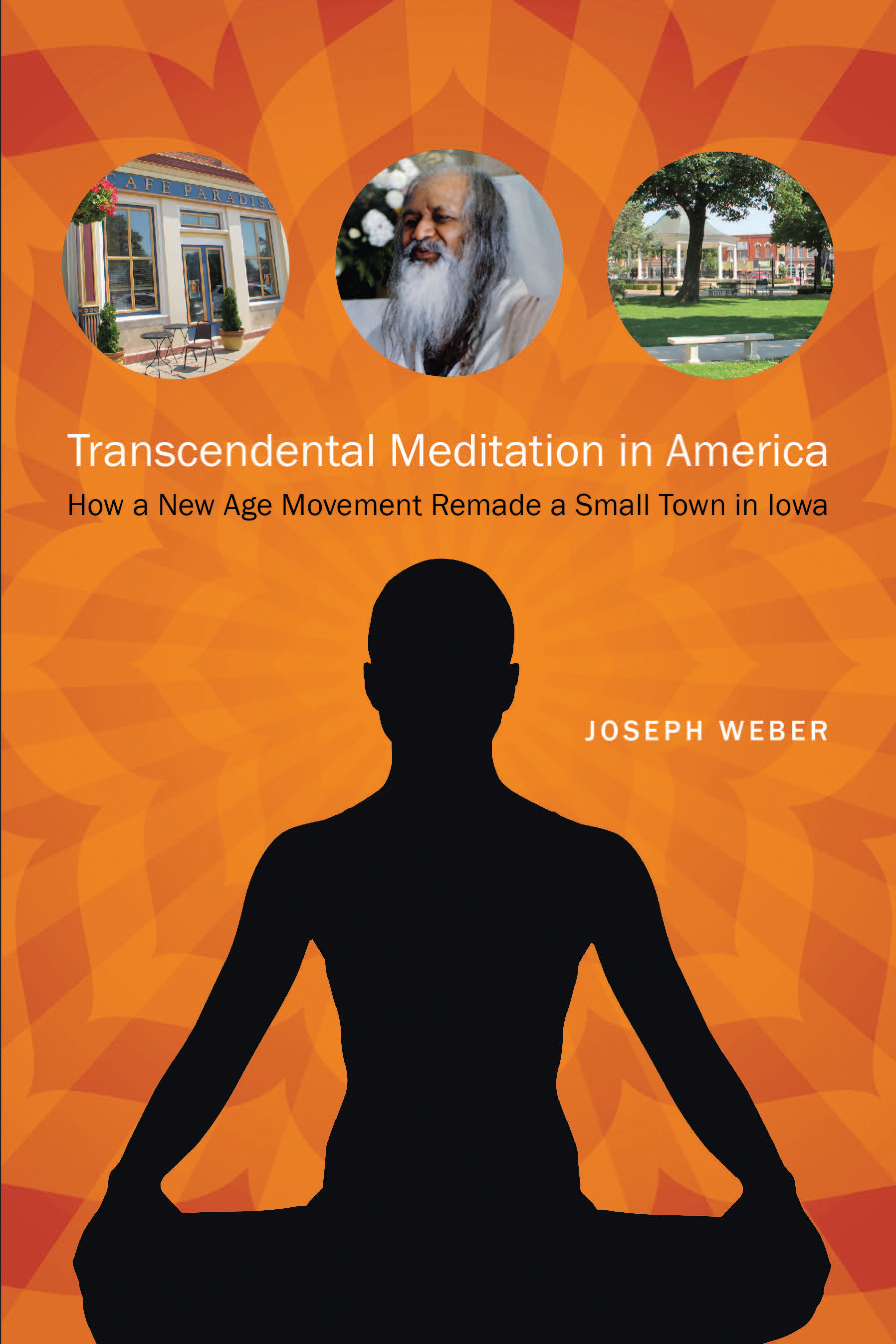
UnknownOccasionally, I Google my book title – “Transcendental Meditation in America: How a New Age Movement Remade a Small Town in Iowa.” It’s amazing what comes up. The book doesn’t come out until May, but already Amazon and online retailers all over the globe list it.

Folks in New Zealand, for instance, can pre-order on fishpond. And fans of Albany Books Ltd., “your neighbourhood bookstore” in Delta, British Columbia, Canada, can find a listing on the outlet’s site. So, too, can Canadians in London, Ontario, by checking out the Creation Bookstore site. Amazon sites in the U.S., U.K. and India are carrying it, as well.

Others round the globe are on the bandwagon. Angus & Robertson, a “Proudly Australian” site, intrigues me, as do Landmark Ltd. an Indian site, and Loot Online in Tokai, South Africa. Then there’s Waterstones in the U.K.

And some sites are segmented by market, with intriguingly different prices. eCampus will let folks buy or rent the book ($15.30 to buy, $14.40 to rent, so you make the call on the difference). Another college-oriented site, knetbooks, rents it for $14.26 if you return it by June 20 (slightly higher if you keep it til the end of July). FreshmanExperience retails it for $15.30. Amazon carries it for $13.71, marked down from the $18 jacket price. (One suspects all these prices will bounce around over time.)

AnaLouise Keating

AnaLouise Keating

But it’s not just retailers who have discovered the book. AnaLouise Keating, a professor at Texas Woman’s University in Denton, Texas, tweeted about it in early March, linking to a review she posted on goodreads, where she gave it five of five stars. Her review: “”Iowa” and “New Age”…the terms can seem like quite a juxtaposition, and Weber provides an interesting, useful discussion. Definitely worth reading.” (Thank you, Dr. Keating!)

Back in January, the book made a splash at Before It’s News, a blog by “a community of individuals who report on what’s going on around them, from all around the world.” The folks there listed it as one of 35 noteworthy new books. Hey, I’m not complaining.

UIPAnd bloggers with special interests in the area are plugging it. Evolutionary_Mystic Post runs a long description of the book and (now I’m blushing) of me. Looks like the material came from the University of Iowa folks, to whom I am much indebted, as well as from my bio material on our university site.

The folks in Iowa, no doubt, get the credit for loosing this stuff on the world. I must especially thank editors Catherine Cocks and William Friedricks, Managing Editor Charlotte Wright and Marketing Manager Allison Means. But I’ve been doing my part, too, as they counseled. I’ve developed my own website for the book, at transcendentalmeditationinamerica.com, as well as a Facebook site. The FB site is a handy spot to post newsy things that pop up around the topic, such as a recent riot among Indian meditators whom the TM Movement brings to Iowa to meditate for world peace. (Interesting irony there).

So, there will be lectures and book-signings and the traditional stuff. But, thanks to the Net, there’s so much more. Will the Net kill books? Not on this evidence.

So what is your doctorate in?

hey-honeyNot long ago, newspaper editors thought the idea of a reporter getting a college education was about sensible as horns on a horse. Applying a slightly different comparison, New York Tribune founding editor Horace Greeley displayed a notice in his paper’s office saying: “No college graduates or other horned cattle need apply.”

Nowadays, of course, college degrees are basic requirements for journalists. Indeed, a former city editor of mine who had left our little New Jersey daily was denied advancement at Newsday a decade or two ago because he lacked such a degree, never mind his ample skills as an editor. The thinking, one presumes, is that only someone who has been broadly schooled in the textbook-learning on offer at university can bring to bear the intellectual breadth needed in a modern news operation.

Fair enough (except, of course, to my frustrated former editor). But what are the limits to creeping credentialism? Should a master’s degree now be the threshold requirement for a journalist? Beyond that, what should the credentials of a teacher of journalism at a university be? How about a dean? Is a Ph.D. a minimal requirement for a professor or a J school administrator?

DeanImageThis all comes to mind as we at the University of Nebraska-Lincoln ponder five candidates for the deanship at the College of Journalism and Mass Communications. Three boast doctorates, while one stopped at his master’s degree and another topped out academically with a bachelor’s. While the first three earned advanced degrees, the latter got their educations on the job, leading impressive advertising and news operations, respectively. (Indeed, all are impressive for differing reasons.)

So which one is best equipped to run a J school? Naturally, one cannot judge them on paper alone. To their credit, the members of our school’s selection committee did not toss the resumes lighter on academic credentials. Instead, they invited the contenders to pitch us on their ideas for how to run a school that aims to supply talented, well-rounded journalists and advertising and PR people to industry – a particular challenge as the industry changes fast around us and the demands for technical skills grow.

The open-mindedness of the committee members may reflect the makeup of our college faculty, a wondrous blend of sheepskin and shoe-leather. All of us have master’s degrees, but relatively few have doctorates. Those without the high-level academic pedigrees honed their craft in years of experience in such places as the New York Times, Newsday, The Miami Herald, The Detroit News, The Denver Post, The St. Petersburg Times (and Politifact), BusinessWeek, The Wall Street Journal and TV stations in markets such as Detroit and Omaha, as well as ABC News. Nebraska is a place where students learn from people who’ve gotten their schooling in the trenches as well as the classroom.

big10-11-nav-logoThe decision, of course, on who will take our mantle won’t really be made by that faculty. We get to weigh in. But, ultimately, the choice will be made by top officials at UNL, most of whom have earned Ph.D.s (though our chancellor’s degree is a juris doctor). Will they demand the Ph.D. union card, consciously or otherwise? Should they, in fact, given that research is a growing requirement for J schools to shine? And, does Nebraska’s entry into the Big Ten demand the credential, not only of our dean but of more faculty members over time, as well? Will the college be taken seriously alongside the likes of Northwestern if we don’t go toe-to-toe on the credentials front? What does it take to run with the big dogs these days?

For wisdom, readers might turn to a report issued last October by the Columbia Journalism School. It traces the growth of professionalism in the field and details longstanding tensions between industry and academia, along with the strains between journalism programs and the higher reaches of universities. “Very few schools are dominated by faculty members who have either journalism degrees or PhDs in communication. And many dean searches turn into contests between a journalist and an academic,” says the report, “Educating Journalists: A New Plea for the University Tradition.”

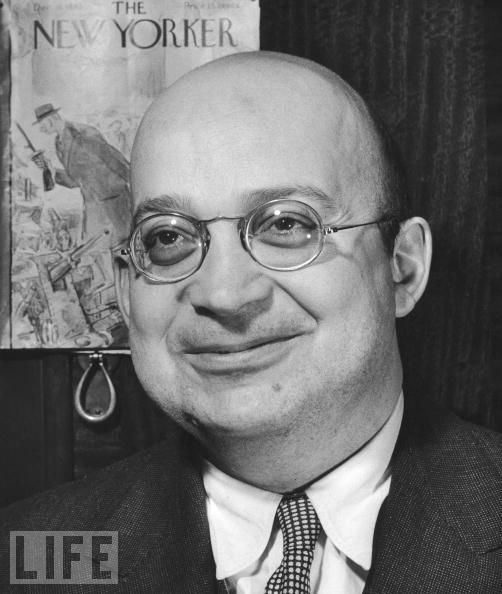
A.J. Liebling

A.J. Liebling

The authors argue for boosting the quality and quantity of graduate professional education in journalism. They say they hope this would lead to a master’s degree in journalism or a doctorate in communication becoming a standard credential for a journalism faculty member. Taking care to argue for top-quality instruction, they remind readers of Greeley’s thoughts and those of another journalistic icon, A.J. Liebling. The latter blasted his J school training (at Columbia) as boasting “all the intellectual status of a training school for future employees of the A&P.”

On requirements for deans, however, the authors punt. That may be fitting since one of the three authors, Nicholas Lemann, led Columbia for a decade even though his formal education didn’t go past a bachelor’s degree (he was busy cutting a deep swath at the Washington Monthly, Texas Monthly, Washington Post, Atlantic Monthly and The New Yorker). Indeed, Lemann’s successor at Columbia, Steve Coll, likewise didn’t spend more time in a classroom than needed for a BA, but instead put in his time writing seven books while laboring at The Washington Post and The New Yorker. Coll took the helm at Columbia just this year.

So what qualities will prevail at CoJMC? Will the Ph.D. be the price of entry to the deanship here and, increasingly, at J schools across the country (except at that titan in Morningside Heights, which improved a lot since Liebling’s day)? In time, will a doctorate be mandatory for tenure-track positions at all such schools, as it is already at many that are not as enlightened as CoJMC?

Stay tuned.

Hello sweetheart, get me rewrite

3-aa349c4b3bNorman Mailer once said, “writing books is the closest men ever come to childbearing.” Well, at long last my baby is nearing delivery.

The University of Iowa Press, midwife in this blessed event, just released its Spring 2014 catalog. It’s hard to describe how fulfilling it is for my book, “Transcendental Meditation in America: How a New Age Movement Remade a Small Town in Iowa,” to be the lead title out of the 23 the press is bringing out.

It’s been a long and exciting time coming. To get this book started, I started visiting the good folks of Fairfield, Iowa, in 2010. I had grown intrigued about them a few years earlier, when I first heard of the migration a couple thousand of them had made there some 35 years or so before. To borrow a useful lyric, they were Baby Boomers chasing a dream of peace, love and understanding as they followed their guru, the Maharishi Mahesh Yogi.

Some had left Ivy League colleges where they seemed headed for conventional careers. Others didn’t know what their prospects were. All, however, had found a spiritual home in the TM Movement and they were out to change the world. By simply meditating in groups, many believed, they could lower the temperature on an overheated, tortured world. How much could they change things if their numbers grew?

UIP small banner_yellowThey bought a bankrupt Presbyterian college in Fairfield and set up their own school, now called Maharishi University of Management. They founded a school for their children, making it possible for someone to study the guru’s teachings from pre-K to Ph.D., all in the same little farm town whose culture they transformed.

Interesting place, it seemed to me. It would be even more intriguing to look into how that dream was playing out in the wake of the guru’s death, in 2008. Would this movement go on and thrive under other leaders, much as other Utopian efforts such as Mormonism have? Or would it wither and fade, as the Oneida Community and Brook Farm did? Would it be riven by in-fighting and misdirection? Or would it get its act together? The story of that place and those people, it seemed, would be a rich and surprisingly American tale.

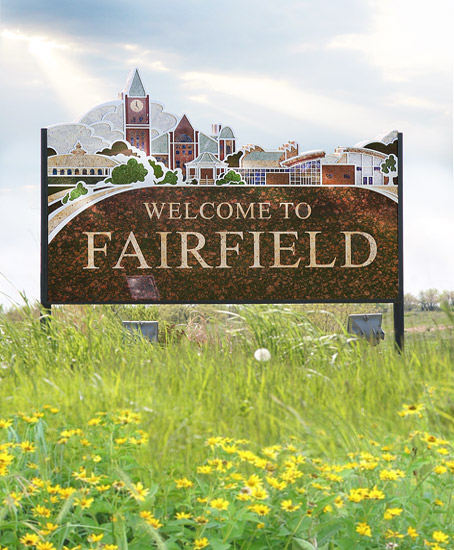
fairfield-open-signSo, this is what the book is about. The folks in Fairfield, while focused on the stars, have often been brought back to earth with a shock. A murder on campus, suicides in the community, infidelity, scamsters, some tensions with neighbors – all that has been a part of their community life. But they’ve also rebuilt a sleepy little town into a lively place with vegetarian restaurants, a smorgasbord of religious practices, thriving businesses and, with the help of nonmeditating locals, a vibrant arts scene. They’ve even developed their own style of architecture, dotting the town and campus with striking buildings and homes.

Along the way, they’ve attracted the famous and celebrated. Among them are such rock luminaries as Paul McCartney, Ringo Starr and a few of the Beach Boys, radio shock-jock Howard Stern, comedian Jerry Seinfeld, newspeople George Stephanopoulos, Candy Crowley and Soledad O’Brien and talk-show diva Oprah. Plenty of A-listers have practiced TM over the years and some have popped into Fairfield at times.

The story of TM, seen through its potent and mixed effect on this little town, is a winding and intriguing one. Certainly, my patient and astute editors, Catherine Cocks and William Friedricks, and I found it be so. (I’m much indebted to them for their advocacy and guidance.) I hope readers find this account as interesting as we did. Look for the book in May.

The college hunt gets personal — open letter to a niece

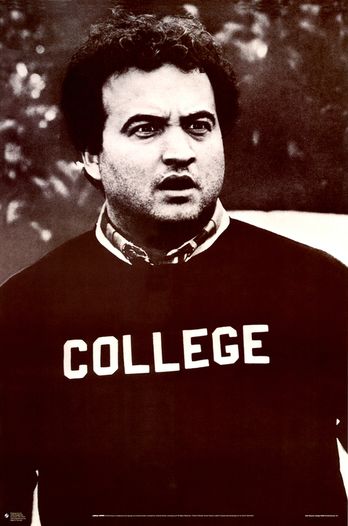
BelushiDear Sam,

So, senior year is hard upon you. That means prom, a top spot in the cheering squad, maybe a full-court press in calc to buff up that transcript. And, of course, it’s time for you and colleges to get serious about one another.

You’ve checked out a few places already. A couple big state universities, a few state colleges – most of the places touchingly within 50 miles or so of home. You’ve probably pored over their websites, talked to folks there and maybe chatted with a teacher, coach or guidance counselor about your options. You and your parents may have checked out finances to figure out what you can afford, perhaps gotten some info about aid and scholarships.

It’s a good start, Sam, but – with any luck – not the end of the game. Let me lob a few thoughts your way. Take these from a grizzled uncle who has been around the academic block a bit, between attending a few schools, teaching at three universities and, most important, seeing three of your cousins go through the same sleuthing sessions you now are involved in.

 First, talk to more people. Start with your extended family. At least nine of your cousins have been through the mill already, in undergrad and grad schools. Some went to big, private, urban or suburban schools (Boston University, Columbia, Stanford). Some opted for smaller private schools (Bucknell, Stevens, Pomona). And some chose big public schools (West Virginia, Rutgers, Michigan State, University of Oklahoma). Some went to community colleges for a while. Find out what they liked, what they hated. They’ll tell you, in spades.

 Think about your aunts and uncles. Shockingly, they can be helpful and they’d probably talk with you. Their alma maters include Rutgers, Columbia, Colorado State and the University of Toronto, among other places. One is now pursuing a Ph.D. Even if they natter on about goldfish-swallowing, panty raids and ukulele-playing, they might have a few useful pointers to share.

College101 Visit more places. You must pick up the vibe on a campus to figure out whether you’d like to spend four years and lots of Mom and Dad’s money there. One cousin visited Georgetown and was turned off. Why? The girls dressed like they were at a fashion show or were stalking husbands, not like they were there to learn. Blue jeans, please, and forget the makeup. For her, Harvard’s holier-than-thou attitude was fatal for it. Another thought Berkeley’s refusal to let her stow her luggage in the visitor center for the tour was a killer sign that it wasn’t all that user-friendly. A much smaller, more indulgent school outside LA couldn’t have been more obliging, by contrast.

 Think broadly. Why limit yourself to a tiny corner of the country you’ve known all your life? The U.S. is a big place and on- and off-campus life, socially and intellectually, in the South, West and East differ. Want to climb mountains and ski on your weekends? Think about Denver or Fort Collins. Want to learn really good manners? Think about Atlanta. Want to hear people talk funny? Think Boston. Why just New Jersey, Delaware or even Pennsylvania? Sidenote to Mom and Dad: It took us a while to accept the idea of our youngest in far-off California, until we realized it was just a plane ride away, just as Massachusetts and New York were for the other two.

 Look at the US News and World Report rankings, but look deeper. Some schools rank high overall but may not be so strong in the discipline that interests you. If you really want to dig into schools, check out the websites for particular departments. Are the faculty distinguished? Indeed, will you ever see the senior faculty or, as often happens, will you be taught by grad students?

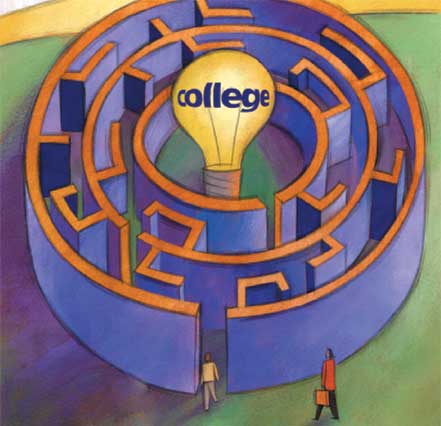
Collegemaze Figure out what you want. Visits are crucial. Big urban schools are great for some folks (one cousin went to a small high school, so wanted thousands of classmates.) Smaller, more intimate colleges are better for others (after a big public high school, another cousin craved a small liberal-arts spot). Want Division One athletics? Could be exciting, but how much time do you really want to spend on the field? Unless you are quarterbacking the football team, it won’t be all there is to life in school (one cousin quit the D1 track team she’d pined for when she learned it meant no other after-school activities and not all that much time for schoolwork). Small fish in big pond or vice-versa – what works for you?

 Think about life after class. If you pick a big school, a sorority can make a cold and daunting place more intimate. It can also give you lifelong friends, the chance to learn leadership and offer great academic and social support, not to mention a nice place to live. At a smaller school, the dorms may be just fine.

 If you like the idea of a big place, find one that offers “learning communities.” These groups, which bring together like-minded students to study and sometimes live together, make a sprawling campus smaller. You might find lifelong friends there, too.

Sam, there’s a lot more to picking a place where you’ll spend some important years than just popping in on a few nearby campuses. Would you buy the first blouse you see on a rack? Would you limit yourself to just a few stores in the mall? How about the first CD in the bin? (Oh, I forgot. Nobody does that anymore).

Times do change, of course, Sam. But find out what wrong turns (and right ones) others who’ve been down the road have taken. And, whatever you do, shop around. One last thing — don’t sell yourself short. Pick a range of schools, but make sure to aim high. To mix metaphors (something a good English teacher will mark your down for), cast your net wide. Once you’ve applied to a lot of places, you can still go to the school down the block. It won’t move, but in coming months your hopes may.

Love,
Your uncle.

Time to be smart, not a smartass

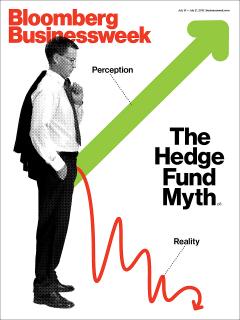
HedgeFundFlouting convention has its uses. An outrageous image can provoke debate, prompt action or, at a minimum, win attention. And all those things are vital to any media organization in our infoglutted age. When so many magazines vie for notice, after all, it takes a lot to grab a reader’s eye on a crowded newsstand, stand out in a towering mail pile or merit a crucial split-second’s notice on a computer screen.

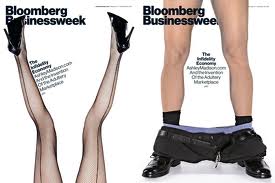
But does that mean sacrificing taste? Sure, Penthouse gets a second glance every time. But will that translate into lasting buzz or just a dismissive, “ah, there they go again?” Does a magazine want to be known as smart and sassy or as juvenile and sassy? What happens to the “smart” when a puerile cover image sullies the book’s impact?

So this brings us to Bloomberg Businessweek. There’s no question the magazine has done impressive work since 2009, when McGraw-Hill sold BusinessWeek after thinning its journalism ranks over several financially troubled years. One would expect no less than excellence from Bloomberg, the preeminent business-news operation of the day. A friend who toils abroad for the news service points out that BB won the 2012 National Magazine Award for General Excellence – the magazine world’s equivalent of the Pulitzer Prize — something the magazine hadn’t done since 1996, an earlier time of superb journalism at BW.

InfidelityBut one must wonder whether BB has won despite some of its new approaches, rather than because of them. Much of the reporting and writing remains superb – its economic coverage, for instance, has won awards from the Society of American Business Editors and Writers, and I know from serving as a judge that the work was best in class. Some of BB’s contrarian ideas, fleshed out well in text that intelligently challenges conventional wisdom, are compelling. At its best, its work is as good as the best material BW was known for over decades, work that won 10 National Magazine Awards in various categories from 1973-2008, all before the latest general excellence prize. BW and its staffers won a slew of other prizes for foreign and domestic work over those years, too.

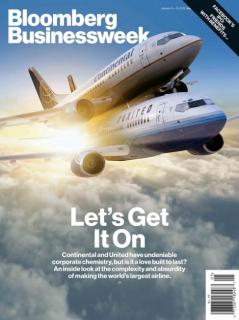
MatingJetsThe risk for BB is that its drive to be edgy, particularly in its cover imagery, could easily thrust it over a cliff’s edge. It could all too easily slip from provocative to prurient, as it has at times already. Disturbingly, the distance from smart to smartass is not all that great.

Already, the editors have had to apologize for the art in a cover piece. They ran a smart housing story, only to have its impact undercut by racial insensitivity in the cover art. At best, the drawing seemed goofy anyway.Housing

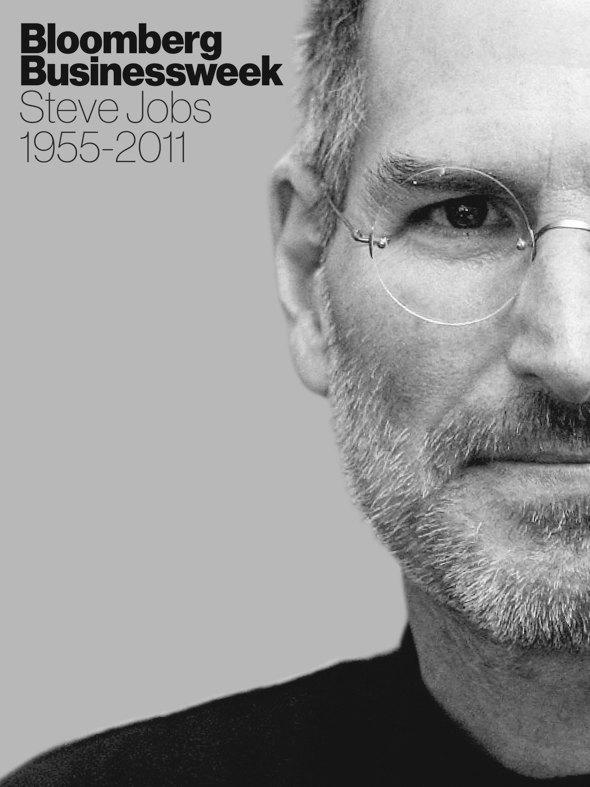
BB today, like BW before it, does have to distinguish itself both in its journalism and in the artwork it uses to make its points. And, as my friend from Bloomberg points out, the magazine has been recognized for its design successes by such outfits as Britain’s Design and Art Direction. Apparently, though, what caught the eye of folks at D&AD was one of the more elegant covers, which used a stark and simple photo of Steve Jobs. This seems a case of BB earning recognition for being classy rather than déclassé. That’s something any editor should feel proud of.

JobsBB has had some impressive successes. It has held onto 4.7 million readers worldwide when so many others have lost the readership battle. It can draw on the work of 2,300 journalists in 72 countries, a couple thousand more journalists and support staffers than BW ever had. If it is to keep up its record of success in readership and influence, the book should work to be known for top-flight economic and business coverage and high-quality artwork that makes the coverage come alive. This is its inheritance, its bloodline. The editors shouldn’t be weighed down by the magazine’s stellar list of alumni and their work as they sort out what to put in the book each week, what imagery to adorn its cover with. But, if they do pause for a second to consider the book’s distinguished history, they might feel a useful nudge in the right direction.

What do the editors, staffers and art folks want the book to be known for anyway? What do they want their legacy to be? Flout convention, sure. Be provocative. Kick up dust. But do it with style and intelligence. A little grace can carry you a lot farther than an adolescent smirk or an unwelcome dollop of snark.

How much are your ethics worth?

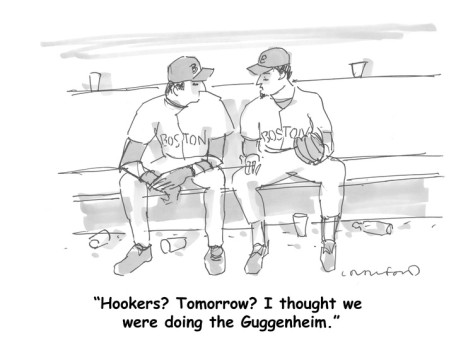
Hookerscartoon“Would you sleep with me for $25?,” the man asked the woman he had just met. “No!,” she said indignantly. “Well, how about $500?,” he responded. “Mmm,” she said. “Well, let me think about that.” Then he said, “how about $250?” Her furious answer: “What do you think I am?”

“My dear, we know what you are at this point,” he countered. “Now, we’re just negotiating price.”

This old story came to mind as I thought about the $38 undercharging episode I went through last night. My daughter, son-in-law and I bought several items at Target and the clerk told us the sum, which seemed low. My daughter questioned the figure, but he insisted all was right. So we went on our way.

Later, we looked at the receipt and, sure enough, he undercharged us by $38, apparently failing to scan a board game we bought.

So, what do we do? Return to the store and, possibly, get the clerk in trouble? Rationalize our windfall by grousing about how much Target has made on us over the last few months (the equivalent of a small country’s GDP)? Do we say to ourselves, “well, the game was absurdly overpriced anyway?”

Or, do we just take malicious joy, savoring the illicit thrill of getting away with something?

theftI was reminded of a couple incidents that, for decades, have stuck with me. First, when I was a kid, my aunt and I passed the candy bin in a grocery store and she filched a few chocolate malt balls or some such treat. When I asked whether that was stealing, she came up with some cockamamie rationalization for why it was okay. It didn’t seem right to me then and doesn’t now.

I shared this story with my daughter and son-in-law. I also thought, “what kind of example do I want to set for them? How do I want them to see me?” Since they are both lawyers whose job requires a high-minded sense of ethics – a sense they have anyway — the questions were especially sharp for me.

On the flip side, I once went into a shop with a friend and, when I told the counterman he had undercharged me, my friend asked me: “So, are you new to this country?” Only someone hopelessly naïve would not try, at every turn, to get away with whatever he could. Property is theft, right? And isn’t that the American way?

After we got home and played our board game last night, it was past closing time and too late to return to the clerk. But, as I awoke this morning, the undercharge was eating at me. It just wasn’t right. Those malted milk balls weren’t free. And I didn’t want my kids to look on me in an ugly light, whether the sum was for $38 or $3,800. I didn’t like feeling guilty. Right direction

So, this morning, I popped in on the Target. The clerk, a different fellow than our cashier of last night, said most people wouldn’t bring up such an undercharge. Sadly, that may be right. Indeed, I did have to suppress a twinge of feeling foolish, a sense that I was the altar boy who never grew up, the Boy Scout whom others scoff at for being oh so righteous. I even thought, “well, I’m just a middle-class guy who, thankfully, can afford to do the right thing. How different things would be if I were just scraping by, like so many others do.”

Still, I know who I am. My kids do, too. That’s well worth $38, wouldn’t you say? It would be worth $3,800 or $38,000.

Prosecute Snowden, not the press

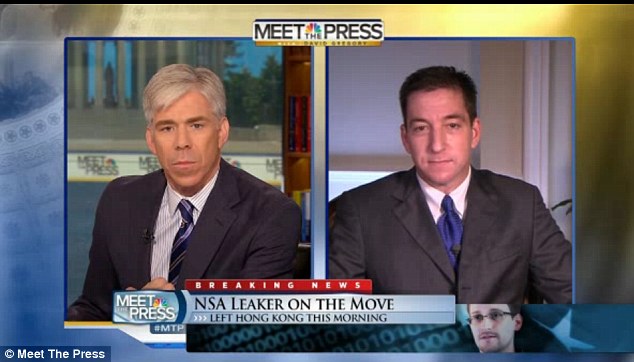
article-0-1A78A5A4000005DC-767_634x362As Edward Snowden wings his way toward whoever he thinks will shield him from American prosecutors, his bizarre story keeps metastasizing. This noxious growth is now tainting the press. The latest turn: the suggestion that not only should the former NSA contractor be prosecuted but so should a recipient of his leaks, Guardian columnist Glenn Greenwald.

NBC “Meet the Press” host David Gregory today asked Greenwald: “To the extent that you have aided and abetted Snowden, even in his current movements, why shouldn’t you, Mr. Greenwald, be charged with a crime?” So, was Gregory siding with some politicians who have called for a journalist to be prosecuted for doing his job? Certainly seemed so, though the TV host did later say he was merely asking a question, however pointedly.

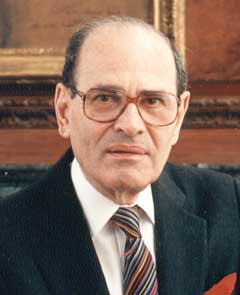
Have we come to that in journalism? Are we now dining on our own? Would Gregory have raised the same question to the late Arthur Ochs Sulzberger, publisher of the New York Times, and his editors when in mid-1971 they decided to publish the Pentagon Papers? Then, as now, national security concerns were at issue in the publication of explosive secret material — in that case classified material dealing with the ongoing Vietnam War.

Sulzberger

Sulzberger

The Snowden case is a knotty one. There’s no question for me that the former trusted intelligence analyst should be prosecuted for his crime. He betrayed his employers and violated his oaths. His acts could be considered treasonous in a time of war, albeit an undeclared war with terrorists. He should be brought to account for them.

But it’s also clear that he brought to light a practice that deserves national scrutiny. Indeed, the shame of it is that the debate hasn’t happened until now. Do we want the government reading our email or, however much buried in massive data-collection practices, scanning our phone calls? Certainly, we want it rooting out terrorist plots, using wiretapping or whatever technology works. But should it cast its net so wide that it ropes in everyone? These are important questions and, sadly, it took Snowden’s actions to bring them forward.

Snowden, however, didn’t have to blow his whistle quite the way he did. He had alternatives for bringing his case forward. He could have found a friendly congressman or senator, perhaps a libertarian who might have found the NSA practices just as dubious as he did. Questions then could have been asked and debated, perhaps behind closed doors in deference to national security. Policy could have been changed quietly. Is it naïve to think so? Perhaps. But Snowden didn’t even try this route.

Would he have broken laws in talking with an elected government official about a government program? That’s one for the lawyers to decide. Certainly, he would have spared the government the international black eye it has suffered from his leaks. To much of the world now, the U.S. respects its citizens’ rights to privacy no more than China does. But, if Snowden found a courageous legislator to work with, he might have forced changes to happen without making the U.S. look like a global snoop, hardly a beacon of freedom.

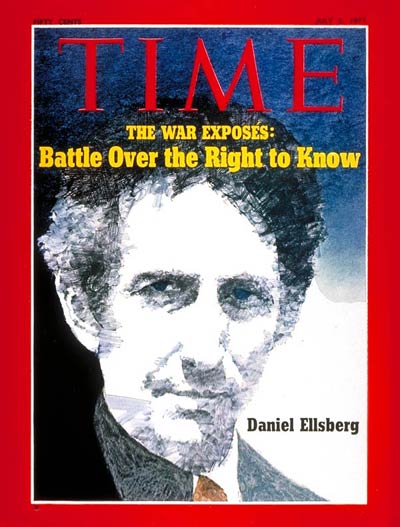
TimeIf Snowden got nowhere with the legislators, he could then have turned to the press, it seems. That was the route former military analyst and ex-Pentagon staffer Daniel Ellsberg took. He shared copies of the Pentagon Papers first with legislators and moved beyond them only when none would make them public in the halls of the Capitol. He felt they had to be exposed. Ultimately – two weeks after the Times began printing the Papers and was enjoined temporarily from doing so – a senator, Mike Gravel, did publish the documents in the official record of the Senate.

But Snowden chose otherwise, rushing outside government to make his case. He broke the laws and violated the trust of his colleagues. Whether he is prosecuted or not, history will judge whether his acts were heroic or merely treasonous. Ellsberg has largely been judged a hero. But Ellsberg had the guts to face the consequences of his actions. Unlike Snowden, he stayed in the U.S. and was tried for espionage in court. The charges were dismissed, as it turned out, because of governmental misconduct that, ironically, included illegal wiretaps on the former analyst. But the risk for Ellsberg’s act of conscience was very real.

Now Snowden will live as a fugitive, likely to spend the rest of his life looking over his shoulder. Is that heroic? Ellsberg also tried at first to stay out of the limelight, leaking his documents anonymously until he was outed. By contrast, Snowden seems to crave the attention, lionizing himself for his actions. Again, heroic? The more apt word might be narcissistic.

As for the press, the Times was right to print the Pentagon Papers. They proved invaluable to understanding how dishonest the politicians were in pursuing a war that was foul and doomed from the start. Similarly, the Guardian and the Washington Post were right in publishing Snowden’s leaked documents, even though the war we are currently fighting – the battle against terrorists – is just, is impossible to avoid and is one we must win.

The argument this time is over whether the government’s intrusions are massive overkill. Are the security services deploying a nuclear bomb when well-aimed rifles might work better? Certainly, we all want them stopping terrorist plots. But can they not just ID the bad guys and go and get ‘em without ensnaring all Americans and plenty of foreigners in their net? Do the terrorists win when we give up something as precious as privacy, the cherished right of all Americans to be left alone?

Snowden went about this all wrong. But the debate he triggered is necessary and vital and so, too, are the journalists who have brought his story to light. Gregory’s pointed question to Greenwald deserves a loud answer: no, the journalist should not be prosecuted for doing his job. Instead, the policymakers need to be held to account for falling down on theirs.

Academic journals: not The New York Times, but sometimes better

UtS_covSI.inddFor journalism profs who hail from the mainstream media – or the public prints, as they were once known – academic journals seem foreign, a bit intimidating and, maybe, a touch esoteric. If one has written for, say, The New York Times, Wall Street Journal or Time magazine, small, densely written and heavily footnoted quarterly, biannual or annual pubs with modest audiences seem a world apart.

But I am learning that such journals, like good poetry magazines, can be more fascinating and engaging than pubs that cater to the mass market. Rather like Indie music compared with the mainstream stuff, the world of the academic specialist can be a rich and intriguing place. It’s a welcome alternative to the fluff, panic and tawdry gabble that dominates Big Media.

Consider Utopian Studies, a biannual edited by Nicole Pohl of Oxford Brookes University and produced by folks at the Penn State University Press. Its latest issue includes a piece by Alireza Omid Bakhsh, an assistant professor at the University of Tehran, called “The Virtuous City: The Iranian and Islamic Heritage of Utopianism.” Bakhsh discusses the Shiite Utopian vision of Abu Nasr, who lived approximately from 870-950 and wrote about cosmology, man’s physical and spiritual nature and the structure of society. Who knew? And, if not for Utopian Studies, who outside of Iran would?

But the journal is also modern. Another piece, “The Business of Utopia: Estidama and the Road to the Sustainable City,” by London-based King’s College geography researcher Federico Cugurullo, argues that eco-cities can be bad socially and ecologically. Cugurullo probes current development strategies in Abu Dhabi to make his case.

Still another contribution looks to the past to shed light on the present. “’New Year’s Dream’: A Chinese Anarcho-cosmopolitan Utopia” examines a 1904 story by intellectual Cai Yuanpei that designs a better world. The piece, by UCLA Ph.D. candidate Guangyi Li, analyzes the theme of national and world revolution in the tale to broaden our understanding of utopianism and anarchism. Hear echoes of Mao and the less starry-eyed visions of modern Chinese leaders?

hjmr20.v012.i01.coverUniversity presses and houses such as Routledge produce a bevy of such journals. Academic groups such as the Association for Education in Journalism and Mass Communication produce still others, ranging in their focus from advertising education and electronic news to international communication and magazines and new media research. Such journals can look at their topics with a wide lens or a narrow one, and both can be intriguing.

Consider the Journal of Media and Religion, co-edited by Daniel A. Stout of the University of Nevada, Las Vegas, and published four times a year by Routledge. A piece in its latest issue is titled “Mapping the Landscape of Digital Petitionary Prayer as Spiritual/Social Support in Mobile, Facebook, and E-mail.” Authors E. James Baesler and Yi-Fan Chen, both of Old Dominion University, examine how people pray, surprisingly, in the three media. Another piece, “Seeing the Light: Mormon Conversion and Deconversion Narratives in Off- and Online Worlds,” probes the online discussions of “questioning and former Mormons,” comparing them with testimonies of the faithful. Author Rosemary Avance is a doctoral candidate at the Annenberg School for Communication at the University of Pennsylvania who also hangs her hat at the University of Utah as a Mormon studies fellow.

Fascinating stuff.

specializationUnless one is focused on certain specializations, of course, one is unlikely to ever hear of such journals. I learned of the two I’ve mentioned, along with many others, from Signe Boudreau, a delightful reference librarian and associate professor at the University of Nebraska. Signe is helping me plumb the journal world to see where my academic interests might find outlets.

Thanks to Signe, I now have pieces under consideration in both these journals. They spring from my research on a Utopian community of meditators in Fairfield, Iowa. My book on the group, titled “Transcendental Meditation in America: How a New Age Movement Remade a Small Town in Iowa,” is slated for publication next year by the University of Iowa Press.

The work published in such journals sometimes goes mainstream, of course. Making economics journal articles accessible to a mass audience, in fact, was a favorite assignment for me in grad school, thanks to my journalist-turned-economist professor, Ron Krieger. That exercise helped me in writing both at newspapers and magazines. More typically, of course, journal authors wind up quoted as experts on some topic timely enough to make headlines. Savvy journalists, it’s clear, do well to pay attention to this corner of publishing – and they are likely to find it pretty darn intriguing.

Free speech in China — an impossible dream?

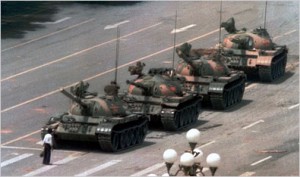
tienanmentank-395No one really knows how many people died, were permanently hurt or lost their livelihoods 24 years ago today in Tiananmen Square. The government may have records on the casualties, believed to total more than 155 killed and 65 wounded, but it hasn’t made them public. Indeed, Chinese history books barely acknowledge the event, known in China simply as June Fourth. Sadly, few Chinese have seen the iconic AP photo of the lone man standing up to tanks in Beijing.

This extraordinary moment in recent Chinese history, though, echoes among those aware of the events at the time, both in the West and in China. Rising expectations for democracy and such freedoms as the right to free expression thrust hundreds of students into the streets on June 3 and 4. The country had thrown off the stultifying yoke of Maoism, had embraced the liberating force of capitalism and seemed to be on a road toward wider choice in everything from consumer goods to politics.

And then, of course, the road came to a dead end with tanks, bullets and tears in Tiananmen Square in Beijing. The sprawling area of monuments, museums and government offices, which today draws thousands of Chinese and Western tourists, became synonymous with oppression.

It’s hard for us in the West to grasp how disillusioning this massacre must have been for the Chinese. First, many of the pro-democracy demonstrators killed were students at the nation’s top universities; these were the best and brightest in a Confucian system that ranks intellectuals high in the pecking order. I’m sure they were students much like the bright and eager young people I taught at Tsinghua University in the fall of 2011, innocent idealists who love their country and want only to make it better. Thus, their interest in journalism.

More important, the June Fourth protesters couldn’t have been more precious to their families. Because of China’s one-child policy, these students – some still in their teens – each carried the weighty hopes and aspirations of parents and grandparents on their shoulders. Little could be more alienating or tragic for those families, who today still bear the burden of grief and fury.
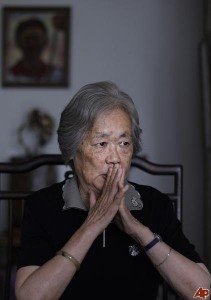
Ding Zilin, 2010

Ding Zilin, 2010

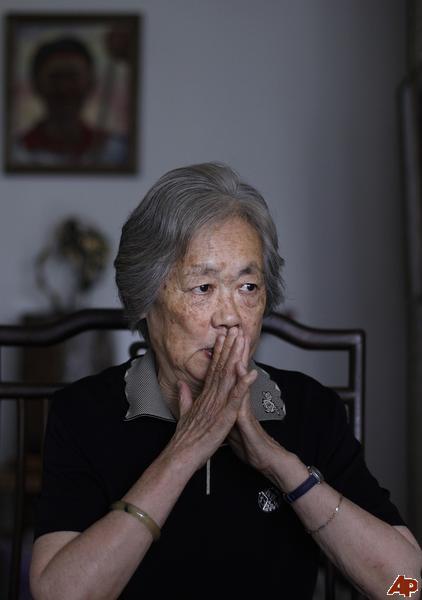
”Since my son died in 1989, there’s nothing more that can scare me,” Ding Zilin, a retired professor whose 17-year-old, Jiang Jielian, was killed on the night of June 3, told the New York Times in 1999. ”I do what I choose to do according to my own conscience.”

Ding, a retired professor of philosophy at People’s University who had once been a loyal Communist Party member, led a drive then to open a criminal investigation into the events of June Fourth. It went nowhere. Ding, who had attempted suicide repeatedly after the death of her son, wound up leading bereaved parents who have continued to demand the right to mourn their children in public and to end persecution of June Fourth victims. In response, she and her husband, former People’s University Aesthetics Institute head Jiang Peikun, have been constantly harassed. Ding’s nomination for the Nobel Prize in 2003 must have been a major embarrassment for Party leaders.

Since the massacre, some at the demonstrations or — like Ding — related to demonstrators have endured house arrests, loss of work and ongoing medical problems. Qi Zhiyong, a construction worker who went to the demonstrations out of curiosity, not activism, lost a leg, his occupation and any good feelings he had toward the Party, as the Washington Post reported. The paper reported that Zhang Lin, who organized protests in 1989 in Anhui Province, has spent much of the last 20 years under house arrest or in jail, as an advocate for labor rights and democracy. Some protesters who went on to have good careers now stay quiet about their youthful activism, fearing retribution.

Chinese leaders crushed the Tiananmen demonstrations nearly a quarter-century ago out of fear that they could trigger nationwide uprisings. Since then, however, riots, protests and mass incidents have only grown, with some 180,000 in 2010 alone, as reported by the Wall Street Journal. Instability, driven by economic grievances or dissatisfaction with corruption, has worsened and is a major source of worry for the government. Chinese leaders today are desperate to manage societal transformation – which includes everything from urbanization to economic growth — while keeping a lid on the discontent and maintaining Party control.

Xi Jinping and other new leaders of China are walking a narrow and treacherous path. As economic expansion slows, disparities in wealth grow and upheaval from the migrations of millions to crowded cities worsens, they will surely find it increasingly difficult to keep order. That challenge to preserve order may underlay recent directives barring discussion of such topics as freedom of the press in universities and concerns in some Party quarters about too much Westernization.
Peter Herford
Peter Herford

Peter Arnett

Peter Arnett


The Party’s worries have hit home for some distinguished Western journalists recently. Peter Herford and Peter Arnett, longtime Asia hands who have taught for years at Shantou University’s journalism school, were just pink-slipped. Ostensibly, this is because they passed a mandatory retirement age of 70 for foreigners teaching in China. Herford, however, finds this puzzling because each of them passed that milestone about eight years ago.

Far less momentously, the government’s worries also hit home for me. In the last few weeks, I wanted to survey Chinese journalism students about freedom of expression and censorship, as well as the biases they see in both Western and Chinese media. I scuttled the project, however, after colleagues in China warned that the students’ answers, even in an anonymous Web-based study, might be tracked by state monitors. The survey wasn’t worth putting the students at risk.

tiananmen_square_original_t_shirts-ra2e852c4ad79491598dbbf9530e70006_va6lr_512Chinese leaders seem to have learned the wrong lessons from June Fourth. Suppressing speech is like clamping a lid on a pot of boiling water. As the heat grows, the chances of an explosion just grow with it. No doubt, the leaders worry that the more apt comparison is to the Arab Spring, and they are determined to avoid similar tumult. Not heeding – or even hearing — the demands and discontents of the people, however, seems like a losing strategy for a government. Certainly, plenty of Chinese dynastic leaders up to Empress Dowager Longyu, ousted in 1912, learned that the hard way.

Suppressing the history of June Fourth, barring free speech and banning even discussion of a free press, won’t keep Chinese people from learning about these things. Even keeping June Fourth off the Internet in China won’t do the trick. Do leaders really not think the 190,000 Chinese now studying in the U.S. won’t hear about it? What of those studying elsewhere, including in Hong Kong or other parts of Asia? Next year will mark the 25th anniversary of the tragic event. An even brighter spotlight will be shone on the massacre then. Facing up to that dark history in the coming year might be a far better approach than tightening the lid on that bubbling pot even more.