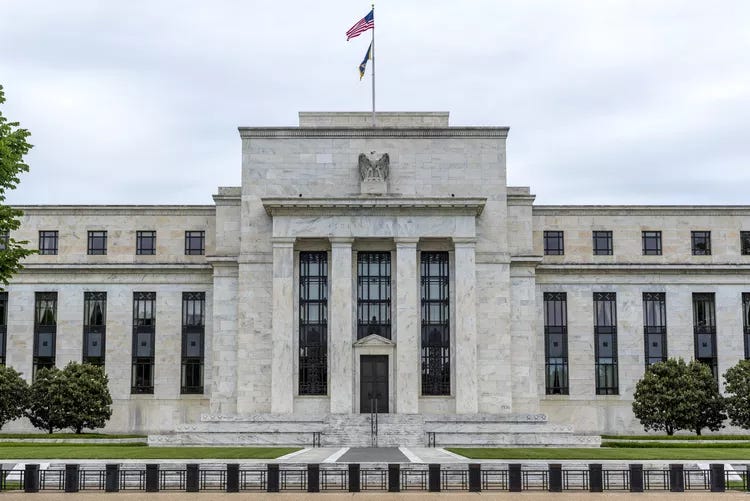
Trumpy matters

A bit more about a sib’s concerns about Harris versus her guy

Source: Tribune Content Agency

For various reasons, a sibling of mine has long been committed to Donald J. Trump. She points to several areas where she believes the Biden-Harris team has problems, some of which were discussed in a prior edition of The Big Picture. Take a look there, if you like, for a bit of context.

Today, though, let’s take up a few other problem spots my sister has mentioned: electric vehicles, tent cities and riots. All are well worth exploring.

Source: MarketWatch

ELECTRIC VEHICLES

Eager to reduce our dependence on climate change-inducing fossil fuels, the Biden Administration has argued that America should cruise into the future on EVs. It has provided an array of incentives, many of which come on top of similar efforts in some states, to make such vehicles affordable for more of us. A federal tax credit of $7,500 is available, based on the make of the vehicle and the income of the buyer. And states such as Colorado match that, so qualified buyers can drive off with quite a bargain.

Helped by such carrots, EV sales have soared since Biden took office. From 0.3 million in 2020, they jumped to 1.6 million last year. The growth continued in the first half of this year, first with a modest 2.6% rise in the first quarter, year over year, then with an 11.3% rise in the second quarter.

It’s rare nowadays to go for a drive and not see an EV. Tesla now has to compete with such new offerings as the BMW i5, Cadillac Lyriq, Honda Prologue, and Kia EV9 SUV, Cox Automotive reports. And the outlet says higher volumes of the Ford Mustang Mach-E and F-150 Lightning are helping Ford hold onto its No. 2 position, behind Tesla, in the EV market.

Publicly available chargers are also multiplying, aided by Biden funds. As of April, the U.S. had more than 168,300 such charging stations across the country, most notably in California with nearly 44,600 public and private outlets. The U.S. has a long road to travel to equal China’s charger network, which in 2022 was estimated to have at least 1.76 million stations. But the Biden Administration is moving on the issue and this year made more than $623 million in grants available for chargers under a $2.5 billion program in the Bipartisan Infrastructure Law.

In recent years, U.S. carmakers rushed to meet heightened EV demand, though some are now taking a breather, scaling back, delaying or tweaking plans. Ford is stepping up its hybrid production, for instance, to attract drivers not fully committed to electric, CNBC reported. GM is continuing to produce hybrids and gas-powered cars after it initially went all in on electrified vehicles.

The carmakers don’t expect demand for EVs to stop growing, only to grow more slowly. U.S. EV sales last year equaled about 7.6% of the overall national market, Cox Automotive estimated, according to CNBC. Analysts still expect that to rise to between 30% and 39% by the end of the decade.

Source: Evocharge

The burning question my sib raised was whether the U.S. energy grid could handle the heightened demand. In this, she is echoing former Fox News fabulist Tucker Carlson, who in 2022 bemoaned “California’s already collapsing energy grid” in the wake of heat wave-induced blackouts that year. As Scientific American reported, however, utilities have been moving to strengthen the grid as a warming climate steps up demand for power for lots of reasons and they are planning for EVs.

In California—the national leader in EVs with more than 1 million plug-in vehicles—EV charging currently accounts for less than 1% of the grid’s total load during peak hours, the newsmagazine reported. In 2030, when the number of EVs in California is expected to surpass 5 million, charging should account for less than 5% of that load, a spokesperson for the California Energy Commission said.

The pull on the grid is expected to rise more from the nation’s move away from climate-damaging fossil fuels in coming decades. So, utilities are aiming to boost their capacity by adding clean energy sources, expanding battery storage and building transmission lines, the magazine reported.

“We’re talking about a pretty gradual transition over the course of the next few decades,” Scientific American quoted Ryan Gallentine, transportation policy director at Advanced Energy Economy, as saying. “It’s well within the utilities’ ability to add that kind of capacity.”

Harris has been a booster of the administration’s EV policy and that’s likely to continue.

For his part, Trump has long ridiculed EVs and promised to end federal supports for them. More recently, as he has gotten closer to Tesla founder Elon Musk, Trump has softened his tone – or just started talking out of both sides of his mouth. It’s an open question whether he’s just pandering to car-industry workers fearful of the change and to Musk at the same time.

 “I’m constantly talking about electric vehicles, but I don’t mean I’m against them. I’m totally for them,” he told a crowd in Michigan, as The New York Times reported. Moments later he said, “I’ve driven them, and they are incredible, but they’re not for everybody.”

Source: U.S. Department of Housing and Urban Development

TENT CITIES

Homelessness is a national scourge, to be sure. Tent cities have spread across the country, as the numbers of people without homes have climbed in recent years. The total figures – including people who use shelters and those who don’t — were sliding gradually from 2007 until 2016, moving from about 647,000 to about 550,000. Then, after Trump was elected, the count rose anew to about 580,500 in 2020, and it has climbed since to about 653,100.

“The most significant causes are the shortage of affordable homes and the high cost of housing that have left many Americans living paycheck to paycheck and one crisis away from homelessness,” Jeff Olivet, head of the U.S. Interagency Council on Homelessness, told The Hill late last year.

Housing prices have soared across the country. In early 2017, at the beginning of the Trump Administration, the median price of a home in the U.S. topped $313,000 for the first time, rising to $338,600 by the end of his term in the final quarter of 2020, according to the St. Louis Fed. Since then, the median figure has climbed to a high of $442,600 in the last quarter of 2022 and, under pressure from high interest rates, it has since dipped slightly to $412,300.

Of course, prices are higher generally in urban areas. Making matters worse, rents have climbed, making that alternative too costly for a record half of those who rent, according to a new Harvard study. Since 2001, inflation-adjusted rents have gone up 10 times faster than renters’s incomes.

Source: Investopedia

 “Housing experts say the underlying problem for both buyers and renters is a massive housing shortage that has built up over decades and will take years to remedy,” NPR reported. “Single-family construction has been picking up, and some developers are building slightly smaller, lower-cost homes … But the Harvard report’s authors say this reprieve isn’t likely to last.”

“For one thing, high interest rates and other rising costs — land, labor, insurance — have again slowed down apartment construction,” NPR reported. “And because all those things are so expensive, most of what’s being built is at the higher end of the market. Over the past decade, the U.S. has lost more than 6 million units with rents under $1,000. For extremely low-income renters, the National Low Income Housing Coalition calculates that for every 100 households, there are only 34 places they can afford.”

Harris seems quite mindful of the issue. She is offering plans to incentivize builders to build starter homes. And, to help buyers she is floating the idea of providing $25,000 down payments for qualified buyers. The details are yet to come, but readers can some discussion of the ideas in a prior Big Picture installment.

Minneapolis riot damage, June 2020; source: Star Tribune photo

RIOTS

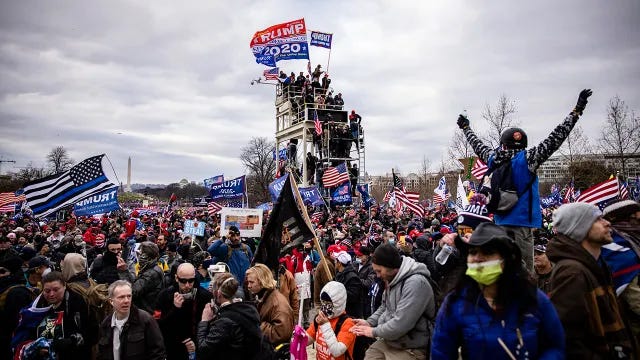
This concern is, well, ironic. On Jan. 6, 2021, rioters took over the U.S. Capitol after Trump whipped them up, threatened to hang Trump’s sitting vice president, Mike Pence, and assaulted nearly 150 police officers, sending some to the hospital with severe injuries. Four people died. Nearly $3 million in damages were reported.

Trump today calls the rioters patriots and has promised to pardon those convicted of various crimes in connection with the Capitol insurrection.

But my sib isn’t referring to that riot, of course. Rather, she seems to be troubled about the street rage that reigned in 2020 — while Trump was still in office — in places such as Minneapolis. That was the scene of the brutal murder of a Black man, George Floyd, in May 2020. Four policemen were involved in Floyd’s killing.

“Some demonstrators vandalized police vehicles with graffiti and targeted the precinct house where the four officers had been assigned,” The New York Times reported. “Protests also occurred in the city in the subsequent days. Officers used tear gas and fired rubber bullets into crowds. Some businesses, including restaurants and an auto-parts store, were set on fire.”

Floyd’s murder and other incidents of police violence against Black people around the same time in places such as Louisville, Kentucky, and Brunswick, Georgia, spawned still more demonstrations. In all, protests erupted in at least 140 cities across the United States, and the National Guard was activated in at least 21 states in the period.

Three days after Floyd’s murder, then Minnesota Gov. Tim Walz – now the Democratic vice presidential nominee — activated the National Guard. The city sought his help after vandalism and fires broke out during demonstrations.

“Let’s be very clear,” Walz said. “The situation in Minneapolis, is no longer, in any way, about the murder of George Floyd. It is about attacking civil society, instilling fear and disrupting our great cities.”

Nonetheless, Walz was criticized by Republicans for waiting too long to act. As noted by FactCheck.org, there was some ambiguity in what city officials wanted at the time, so it’s not clear that Walz was at fault. Walz did apologize to a Hispanic CNN reporter who was arrested while covering the disturbances, saying he took responsibility for the arrest.

Now that Walz is a political opponent, however, Trump recently revived the criticism. This is a reversal from his stance in the spring of 2020, when he praised Walz for calling in the Guard. An audio recording obtained by ABC News documents Trump telling Walz in a June 1, 2020, call with governors that he was “very happy” with how Walz responded in the days after protests turned violent.

“You called up big numbers and the big numbers knocked them out so fast it was like bowling pins,” Trump said on the call, according to ABC News.

The big question now, of course, is: what would Harris do if confronted with national disorder because of police violence against Blacks? Well, she made her career in law enforcement, prosecuting criminals in San Francisco as district attorney and then statewide as California’s Attorney General. Liberals lambasted her as too tough on crime and as a supporter of policies that fostered mass incarceration.

To serve their ends, Trump and his allies are painting Harris as “dangerously liberal” and soft on crime. “She has plenty of evidence to point to that shows she was, at times, a tough-on-crime prosecutor,” Vox noted. “She also has plenty of evidence that shows she was, at other times, a reformer.”

In politics, as in war, truth can be one of the first casualties. As the Trump folks seek to define Harris and Walz to suit their cartoonish images, they don’t seem to have much regard for the facts.

Who is to blame?

A Trumper in the family points the finger at Biden and Harris

Political leaders campaign in poetry, govern in prose, the late New York Gov. Mario Cuomo famously said. After Kamala Harris’s uplifting and extraordinary speech, perhaps a close, hard look at a few things is in order.

A sister of mine who supports Donald J. Trump argued that the Biden-Harris administration is responsible for major problems in recent years. So, she asked that I share information with her on a few biggies.

Since this space, I hope, is one for some clarity, sharing the word more broadly might be useful. For now, let’s look at just three of her issues: border security, taxes and inflation.

Source: Flickr via YES!

1) Biden is to blame, she says, for OPEN BORDERS

Let’s start with an emergency proclamation of last June, when Biden blocked many crossings on the southern border. Homeland Security officials reported that over the following six weeks, the number of border patrol encounters with migrants had plunged by more than 50% thanks to the measure, cutting the seven-day average to below 1,900 a day. DHS also removed and returned more than 50,000 individuals to more than 100 countries.

“Crossings dropped sharply this spring and summer after the Biden administration tightened border controls and closed off migrants’ access to the asylum system,” The Washington Post reported. “Still, apprehensions exceeded 1.3 million during the first nine months of the 2024 fiscal year.”

Biden issued that proclamation because a few months earlier, in February, Republicans in Washington killed a border security bill that would have gone far toward solving the problems. The bill, backed by Biden, was crafted over many months by one of the most conservative GOP officials in Washington, Sen. James Lankford of Oklahoma, by Democratic Sen. Chris Murphy of Connecticut and by independent Sen. Kyrsten Sinema of Arizona, a place very much affected by crossings.

 As Lankford described it, the bill would have provided funds to build a wall, increase technology at the border, and add more detention beds, more agents, and more deportation flights. It would have ended what Lankford called the abuse of a system that waived in over a million people. And he said it would have dramatically changed ambiguous asylum laws by conducting fast screenings at a higher standard of evidence, limited appeals, and fast deportation.

For its part, the American Immigration Council called the measure “the most sweeping immigration bill of the twenty-first century.” It would have overhauled the asylum-seeking process—and imposed an ‘emergency authority’ that would leave asylum fully out of reach for those crossing between ports of entry for much of the next three years, according to the group. It would have attempted to address issues like work permits and years-long waits for asylum-seekers, and also raised the initial standard a person must pass to access our asylum system.

So, in other words, it would have done most of what GOP leaders wanted done. “I honestly believe that exact bill would have passed in December, but by the time it got into February, it became immediately the major focus in the election, because, as you recall, the Republican primary suddenly got resolved,” Lankford said. “It looked very obvious that President Trump was going to be there, and everything collapsed at that point. If that bill would have gone in December, I think it would have passed.”

What happened? Trump weighed in and told his allies in the Senate and the House to kill the bill. Why? He felt more chaos at the border would help him win reelection.

“I think the border is a very important issue for Donald Trump. And the fact that he would communicate to Republican senators and congresspeople that he doesn’t want us to solve the border problem because he wants to blame Biden for it is … really appalling,” said GOP Sen. Mitt Romney of Utah. “But the reality is that, that we have a crisis at the border, the American people are suffering as a result of what’s happening at the border. And someone running for president not to try and get the problem solved. as opposed to saying, ‘hey, save that problem. Don’t solve it. Let me take credit for solving it later.’”

Trump’s backers in Washington, fearing his wrath and punishment by his followers, did his bidding. They gave him an issue on which he has pounded the Biden-Harris administration ever since, one that could have been largely resolved without his interference.

Source: The Washington Post

Now, with the help of a BBC summary and other sources, let’s look back a bit to see how the illegal crossings rose to top 2 million in 2022, more than double that of some prior years. Did Biden, in fact, do nothing while the chaos reigned?

First, from Biden’s first days in office in January 2021 until May 2023, the administration expelled more than two million migrants under a public health measure, Title 42. Trump had first used the law beginning in March 2020 to expel nearly 400,000 in this Covid-inspired action.

Immigration detainees, source; NPR, 2018

Earlier, Trump had also imposed a “zero-tolerance” policy of separating children from their parents and deporting the adults. Between 3,900 and more than 5,000 children were separated from their parents between 2017 and 2021, an effort that perhaps only the most callous Trump supporter could accept. Recall the cages?

When Biden came in, he sought to fix that inhumane policy. However, undoing the cruel damage has proved problematic because of sloppy record-keeping by the Trump administration. Some children have remained stranded. As of the latest accounting, in April 2024, nearly 1,400 children were still waiting.

So there’s no question that border crossings climbed during Biden’s time in office. Still, while he tried to work with GOP officials, he was stymied. For his part, did Trump eliminate crossings, even as he caged children to accomplish that? Nope.

But did Biden and allies in the Congress make efforts to curtail the crossings? Yup. But the biggest of those moves was shot down by Trump in an extraordinarily self-serving election-manipulating way.

Now, might we expect Harris to make efforts similar to Biden’s on the border? As she said in her acceptance speech, Harris promises to bring the Lankford-Murphy-Sinema bill back. Certainly, if Trump loses and his hold on the GOP slips, such a bill could be a slam-dunk.

Source: Reuters

2) Our current president RAISES TAXES, my sib says, suggesting Harris would, too

As he sought to boost some spending for needed measures like the $108 billion bipartisan infrastructure bill, Biden has needed revenue. But he pledged to avoid hiking taxes on any families making less than $400,000 a year. Harris is sticking with that approach, even as she — like Biden — tries to implement some changes. She wants to significantly raise taxes on the wealthiest Americans and large corporations, as The New York Times reported.

The most recent White House budget, a Biden plan that Harris supported, includes proposals to raise taxes on large corporations. Chief among them is raising the corporate tax rate to 28% from 21%.

For wealthy individuals, Harris would set the top marginal income rate at 39.6%, up from 37%. On top of that, she would also increase the rate on two parallel Medicare surtaxes to 5% from 3.8% for Americans making more than $400,000 and expand the income subject to one of them. Together, the Medicare and income proposals would create a top marginal rate as high as 44.6%

Moreover, the wealthy would see changes in how gains on investments in stocks, bonds, real estate and other assets are taxed, the Times reported. For Americans making more than $1 million a year, investment earnings would be taxed at the same rate as regular income, instead of at the lower rates for capital gains.

On the benefit side, Harris is also suggesting giving tax incentives to builders to make starter homes that would be sold to first-time buyers. As Times economics writer Peter Coy describes them, these would boost the supply of housing. So, too, would her proposed $40 billion innovation fund to “empower local governments to fund local solutions to build housing.”

More homes are badly needed after years of insufficient construction, Coy writes. He quotes Orphe Divounguy, a senior economist at Zillow, who stated in June: “The simple fact is there are not enough homes in this country, and that’s pushing homeownership out of reach for too many families,”

Coy is less keen on Harris’s plan to help first-time buyers to become homeowners by giving them up to $25,000 each toward a down payment. “Sellers surely would take advantage of the increased demand by raising their prices,” the writer suggests. “So a big portion of the taxpayer money that was intended for home buyers would wind up in the pockets of sellers.”

For my part, I’m reminded of the G.I. Bill, the postwar measure that veterans used to buy houses. Between 1944 and 1955, veterans used the bill to take out 4.3 million federally guaranteed low-interest home loans with a total face value of $33 billion. They were responsible for 20% of all new homes built in that period, including massive developments such as the Levittowns. Perhaps that would be a more sensible approach.

Still, Coy is even less enthused about Trump’s plans. “The Harris-Walz agenda for the economy is much better than Donald Trump’s,” he writes. “Trump wants to extend all of the tax cuts in the 2017 Tax Cuts and Jobs Act, including those benefiting the wealthiest Americans. For years he called for repealing the Affordable Care Act, although lately he has said he’ll keep it unless he can come up with something better and less expensive. His plan for across-the-board tariffs would raise prices for all kinds of imported goods.”

Source: Getty Images North America via NPR

3) Biden caused INFLATION, she suggests

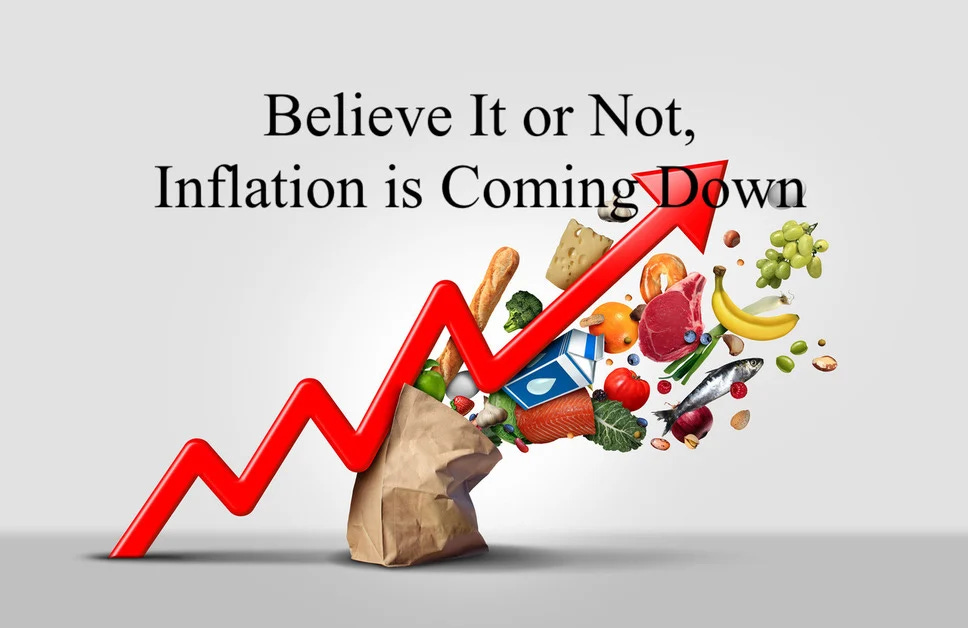
My sib blames Biden for the inflation that has wracked our economy, echoing a common refrain from Trump. There’s no doubt that there has been a lot of it, even though the rate of price hikes has been coming down. The 7% annual rate in 2021 slipped to 6.5% in 2022, to 3.4% in 2023 and to an annualized 2.9% so far in 2024. And that compares to rates of between 1.4% and 2.3% during the Trump years.

Source: U.S. Inflation Calculator

But is Biden to blame? Does Trump share culpability?

First, the surge in prices began in the wake of the Covid epidemic, when economies shook off their recessions. Higher demand for all sorts of goods drove up prices — a far more potent effect than any presidential effort could have.

Earlier, Trump in 2020 engineered the Cares Act and Biden in the following year pushed the American Rescue Plan – both of which were designed to keep recession at bay and to keep Americans working and spending. The measures, together with others, pumped some $5 trillion into the economy. The influx was, at worst, a contributing part.

“These programs contributed to strong consumer and business demand, which tightened labor markets (between mid-2021 and early 2022 the ratio of job vacancies to unemployed workers doubled), putting upward pressure on wages and prices,” economists at the National Bureau of Economic Research reported.

Yes, together with the post-Covid global economic resurgence, such actions abetted inflation. But they also kept a recession, which lasted from February until April 2020, from becoming a depression. And they also helped lower unemployment from its Trump-term high of 14.8% in April 2020 to the current 4.3% (after it dipped to a record 3.4% in January and April 2023.

Source: Bureau of Labor Statistics

So, could Biden have done more to combat inflation? Probably not.

In fact, presidents don’t control inflation. That job falls to the independent Federal Reserve, which controls interest rates and thus tries to cap inflation. The Fed tries to balance employment and other markers of economic health with the price increases that normally come from a hot economy – if we have too much employment, for instance, we get more inflation; if we have too little employment, we have recession.

As experts have long observed, presidents get way too much credit for good economies and too much blame for bad ones. But they can do a lot of harm. Trump’s plan to impose tariffs on foreign goods, for instance, is sure to stoke inflation, as would his suggested efforts at pressuring the Fed to reduce interest rates.

I hope my sister finds some of the information here helpful. Other issues that she raised — some spoken to by Harris — will be worth a look in the future, too. So, stay tuned.

A leap of faith

What does religion have to do with a presidential election? A lot, for some.

Trump in 2020: source: The Washington Post

Religion and politics make for a combustible mix. Just as the Bible can be invoked to support almost any side of an argument, so can partisans – especially Christian evangelicals – use religion as they see fit to make their political cases.

Just ask journalist McKay Coppins of The Atlantic. He attended scores of rallies for Donald J. Trump and analyzed the prayers people offered at them. His conclusion: many evangelicals see America as a chosen land that has fallen into sin and they see Trump as the country’s divinely anointed redeemer.

“Trump’s supporters attribute America’s fall from grace to a variety of national sins old and new—prayer bans in public schools, illegal immigration, pro-transgender policies, the purported rigging of a certain recent election,” Coppins writes. “Whatever the specifics, the picture of America they paint is almost universally—biblically—bleak.”

Opening a Trump gathering last winter in Durham, New Hampshire, for instance, one minister invoked both the former president and the Divine: “We know what he did for us and how he strove to lead us in honorable ways during his term as our president—in ways that brought your blessings to us, rather than your reproach and judgment …. We know the hour is late. We know that time grows shorter for us to be saved and revived.”

At another rally, a woman offered the following prayer shortly before New Hampshire’s Republican primary: “Lord, you have a servant in Donald J. Trump, who can lead our nation … Help us to overcome any obstacles tomorrow so that we may deliver victory to your warrior.”

And in Iowa, at yet another gathering of the faithful, a minister waxed passionate. “Be afraid,” he told the crowd. “For rulers do not bear the sword for no reason. They are God’s servants of wrath to bring punishment on the wrongdoer. And when Donald Trump becomes the 47th president of the United States, there will be retribution against all those who have promoted evil in this country.”

Trump in 2015, source: Getty Images via NPR

To such folks, American voters will not just hire an executive to oversee affairs of state for the next four years. No, Europeans and other foreigners may do that prosaic sort of thing. But Americans, instead, will choose a sword wielder in a pitched battle of good versus evil, a person who can carry forward the divinely appointed role the U.S. occupies in the world.

The notion that the U.S. has a blessed mission may seem bizarre to many – certainly to those living in other perfectly fine and, in some ways, more civilized countries. But the idea of a supernatural connection is baked into our national consciousness.

Think about how we begin many sporting and other public events by singing “God Bless America,” that patriotic plea Irving Berlin wrote in wartime 1918 and revised in prewar 1938. Consider how the motto “Annuit Coeptis” (‘He favors our undertakings’) is carved into the wall above a doorway in the U.S. Senate chamber and how “In God We Trust” appears above the Speaker’s rostrum in the U.S. Capitol’s House chamber, as well as on U.S. currency. Mull over the 1954 addition to the Pledge of Allegiance of the phrase “under God.”

That idea of a divine connection even puts a halo of sorts around the nation’s founding. “Faith in America,” a 2022 survey by the Deseret News and the Marist Poll, reported that 55% of Americans believe the U.S. Constitution was inspired by G-d. The figure rises to 65% among Christians and to 70% among those who practice some religion. But even 45% of those who do not practice a religion believe the Constitution was divinely inspired.

And, as perhaps has been reflected by the embattled Louisiana law mandating displays of The Ten Commandments in publicly funded K-12 and university classrooms, nearly half of Americans (49%) say the Christian Bible should have “a great deal” of or “some” influence on U.S. laws. That’s according to a 2024 Pew Research Center survey. This is so, even though 49% of U.S. adults say that religion is losing influence and that this is a bad thing, Pew reported.

Harris, source: AP via WFTV9

While the fervor Trump generates among Christian evangelicals gets a lot of attention – and while some of his religious backers see Kamala Harris and the Democrats as nothing short of demonic – Harris hasn’t been deserted by people of faith. Emerging groups such as “Evangelicals for Harris” urge Christians to back Harris, extolling her religious commitment.

“Her faith journey started when she was a little girl, singing in the children’s choir at the 23rd Avenue Church of God in Oakland, California, where she was born and raised,” the pro-Harris group says in describing “Kamala’s Faith Story.” “This was where she learned to have a living faith, one that expresses itself through one’s life, especially through service to others, particularly the vulnerable and powerless.”

In a nod to the varied religious influences on her, the site’s writers add: “While a deeply committed and faithful Christian, Vice President Harris has great respect for other faith traditions. Her mother Shyamala Gopalan and relatives in India took her to Hindu temples. She joins her husband, Doug Emhoff, in Jewish traditions and celebrations.”

Source: John Pavlovitz

And some religious figures are waxing passionate in condemning Trump. North Carolina minister John Pavlovitz, for instance, offers his critiques on sites such as The Good Men Project. “Donald Trump is not Christian and never has been,” the minister writes. “He is cruel, immoral, vile, racist, misogynistic, narcissistic, vulgar, criminal, hateful.”            

Making it clear what audience he is addressing on that site, Pavlovitz headlines his note: “White Christian, It’s Time to Embrace Jesus’ Love and Reject Donald Trump’s Hatred Once and for All.” And he opens it with “Dear White Christian.”

Of course, Black religious leaders have also rallied around Harris. By the thousands, they have joined in Zoom calls and otherwise gathered to organize their support for her. Black women, in particular, have rushed to back her.

And some leaders have joined hands behind Harris. Pavlovitz has allied with Black singer and activist Malynda Hale to raise money for Harris. Together, they operate a site, “Christians for Kamala: Love, for the Win,” that so far has raised more than $155,000.

“We proudly support Vice President Kamala Harris as she champions true Christian values embodied in the teachings of Jesus,” the site’s authors say. “Now more than ever, we need to bring our personal spiritual convictions to bear and to speak with our voices, our time, our resources, and our votes.”

The Harris backers, however, may have a tall Calvary-like hill to climb in some quarters of America’s religious community. As NPR reported, about 8 in 10 white evangelical Christians supported Trump in the past two presidential elections. And longtime conservative activist Ralph Reed of the Faith and Freedom Coalition says many remain grateful to Trump for efforts such as overturning Roe v. Wade. Democrats, he says, lag far behind Republicans reaching out to faith-based voters.

Certainly, the partisan divide is as wide as the separation between Heaven and Earth. According to the Deseret News/Marist polling, 81% of Republicans believe the U.S. Constitution was inspired by G-d, while only 36% of Democrats agree (though 55% of independents do). As Pew reported, though, most Americans want a president who lives a moral and ethical life:

And, in terms of Trump, Pew found that most Republicans and people in religious groups that tend to favor the GOP think he stands up at least to some extent for people with their religious beliefs. Two-thirds of Republicans and independents who lean toward the GOP (67%) say Trump stands up for people with their religious beliefs “a great deal,” “quite a bit” or “some.” About the same share of white evangelical Protestants (69%) say this about Trump.

Interestingly, though, many Americans in both parties are skeptical of Trump’s attempts to portray himself as a religious person. Some 6% of Republicans and GOP leaners say Trump is very religious, while 44% say he is “somewhat” religious, according to Pew. Nearly half (48%) say he is “not too” or “not at all” religious. Overall, just 4% say Trump is very religious.

Some may see it as pandering on Trump’s part when, after the July 13 assassination attempt on him, he wrote on social media: “It was God alone who prevented the unthinkable from happening. We will fear not, but instead remain resilient in our faith and defiant in the face of wickedness.”

But, as reported by NPR, Republican politician and businessman Vivek Ramaswamy said of the shooting, which killed one person and wounded two others: “I personally believe that God intervened today, not just on behalf of President Trump but on behalf of our country.” And Texas Governor Greg Abbott, also a Republican, said: “Trump is truly blessed by the hand of God — being able to evade being assassinated.”

Whether Trump has truly had a “come to Jesus” moment as a result of his lucky turn of the head then is impossible to know. Will we continue to hear phrases such as that he used about President Joe Biden last September, when he said “let’s indict the motherf_____”? Such language would not serve him well among religious folks, of course.

Just what his religious backers believe is difficult to pin down. Journalist Coppins points to a confounding change in tone that has happened over the last few years among evangelicals backing Trump. Where in 2016 many of them saw Trump as an “unlikely vessel” — a nonreligious person who could be a “blunt, utilitarian tool in God’s hand” – more recently, they have recast him as a “person of faith.” Some 64% of Republicans now see him that way, according to a recent Deseret News poll by HarrisX.

To be sure, seeing a thrice-married philandering felon with a history as a sexual abuser and dishonesty in business as a religious person might take a big jump. Perhaps a great leap of faith. Apparently, that’s a hurdle at least some Americans — maybe an aging and shrinking minority — are willing to make.

Watch your parkin’ meters

“Followership” is a dangerous thing. See JD Vance

Source: The New York Times

As the Vietnam War ramped up and Lyndon Johnson struggled to carry JFK’s mantle in the White House in early 1965, Bob Dylan released “Subterranean Homesick Blues.” Among the song’s memorable lines: “Don’t follow leaders, watch the parkin’ meters.”

For anyone who has been disappointed by politicians, teachers, clergy or others in authority, the line resonates. It suggests that, ultimately, we all must think for ourselves in both the big and little things. That’s so because the most inspiring leaders can take us astray and, perhaps, because the most charismatic can be the most dangerous.

Such folks can have an extraordinary ability to convert even the seemingly brightest people into followers.

Consider JD Vance. The Ohio senator and running mate for Donald J. Trump underwent an extraordinary conversion under the former president’s influence.

Recall that Vance in 2016 called Donald J. Trump an “idiot,” said he was “reprehensible,” and labeled him “cultural heroin.” He shared his feelings about the then-candidate to a Facebook friend: “I go back and forth between thinking Trump is a cynical asshole like Nixon who wouldn’t be that bad (and might even prove useful) or that he’s America’s Hitler.” And in an October 2016 interview Vance said he was a “never-Trump guy.” The following year, he said the president-elect was a “moral disaster.”

Now, of course, all that has changed. Vance has metamorphosed into a true believer. He has become Trump’s angry warrior, his “attack dog,” as Politico and Axios, among others, have called him. Nowadays, he barnstorms the country, lambasting Vice President Kamala Harris and her running mate, Minnesota Gov. Tim Walz. Never mind that his broadsides, especially on Walz, don’t hold up; like his master, he disregards the facts to serve his own ends.

How could that be? How could Vance, a clearly intelligent Yale Law School graduate and U.S. Senator, have done such a flip-flop?

Joseph E. Lowndes

Perhaps the most insightful comment on the point comes from a University of Oregon political scientist, Joseph E. Lowndes. “Vance has been a chameleon his whole life – that’s how he described himself in his autobiography,” Lowndes is quoted in The Guardian as saying. “He has no core, and seems to have been influenced by a series of strong personalities, from Amy Chua, to Peter Thiel, to Trump.”

Chua, author of Battle Hymn of the Tiger Mother, was a Yale Law School professor of Vance’s who persuaded him to write The Hillbilly Elegy about his troubled upbringing. Thiel is an idiosyncratic Silicon Valley billionaire who has long backed Vance in business and politics.

If Lowndes is right, Vance is an example of the ultimate follower, a shape-shifting devotee who assembled his identity under the influence of others. Certainly, there’s reason to think Vance at best had a fragmented sense of self before being molded by powerful people.

“Vance was born James Donald Bowman, after his biological father, Donald Bowman, who separated from Vance’s mother Beverly when he was young,” Vanity Fair reported. “When Beverly later remarried, Vance was adopted by his stepfather and became James David Hamel; this is the name he kept through his early adulthood. He went by J.D., before and after the name change, but when he enlisted in the Marines, he was known officially as Corporal James D. Hamel. Then in 2013, around the time he was admitted to the bar, he opted to change his surname to Vance. In Hillbilly Elegy, he notes that he chose the name in honor of Bonnie Blanton Vance, the grandmother who helped raise him. (In his recent campaign speeches, Vance has spoken fondly of his ‘Mamaw and her extensive arsenal.)”

The many changes Vance, now 40, has undergone have drawn notice even among psychologists.

Prof. Emeritus John A. Johnson, source: Pennsylvania State University

“Then there is Vance’s religious odyssey,” Psychology Today blogger John A. Johnson writes. “Understandably, when he was a child being raised by his grandmother, he initially adopted her belief in Jesus and loathing of organized religion, especially televangelists, whom she called ‘crooks and perverts.’ As he got older, the pain he experienced from living in a dysfunctional family led to constant arguments with his grandmother about whether God really loved them. As a teenager, he reconciled with his father and attended his father’s Pentecostal Church. But after a stint in Iraq with the Marines, he became skeptical about many things he had believed, and, by the time he attended college, he read Christopher Hitchens and Sam Harris and began calling himself an atheist. However, he found secular worldviews insufficient for providing meaning in life and eventually converted to Catholicism.”

Trish Zornio, source: Colorado Springs Gazette

Biomedical scientist Trish Zornio, admittedly partisan as an unsuccessful 2020 Democratic hopeful for the U.S. Senate from Colorado, weighs in on the point in The Colorado Sun. “The man is a walking set of contradictions, and he might as well have ‘Will sell soul for power’ tattooed across his forehead,” she writes.

Certainly, his embrace of Trump (and Trump’s choice of him) reeks of opportunism. But Vance’s yearslong pursuit of father figures suggests more is involved than simple political gain. Strong people seem to have meant far more to him over the years.

To be sure, many of us can credit mentors with helping shape our views, especially when we were young and malleable. That’s a vital function, one might argue, of educators. And perhaps some have influenced our personalities.

But sometimes those influences can be too powerful, indeed can become coercive. I saw this in writing two books that explored what might be called “followership.” One, Transcendental Meditation in America, examined the influence the guru Maharishi Mahesh Yogi exerted on his devotees, even among many who were well educated. The other, Divided Loyalties, probed the power that Islamists had on naive young men recruited to join ISIS.

People unmoored in their own ill-formed identities sometimes surrender themselves to persuasive leaders to help fill in the holes they feel in their lives and personalities. If Lowndes is correct, that’s a sad statement about Vance that could have dire consequences for the country, should the increasingly addled-seeming Trump, now 78, be reelected in November.

Mike Pence; Source: AFP/Getty Images, via The Guardian

Recall that Trump’s vice president, Mike Pence, had the strength of character to resist Trump’s demands that he improperly decertify the 2020 election results. Pence, it’s clear, had a well-developed sense of who he was and he did the legally and morally correct thing, even if it cost him his political career.

Vance, by contrast, would have done his master’s bidding.

“If I had been vice president, I would have told the states, like Pennsylvania, Georgia and so many others, that we needed to have multiple slates of electors and I think the U.S. Congress should have fought over it from there,” Vance told ABC News. “That is the legitimate way to deal with an election that a lot of folks, including me, think had a lot of problems in 2020. I think that’s what we should have done.”

It’s no wonder that Trump warmed to Vance. Trump, of course, has long needed to be surrounded by yes-men and adoring followers. In Vance, he seems to have found just what he needs and we all may yet be poorer for that.

Getting the sharp end

Cartoonists make their points about Trump et al.

For many of us, words are everything. We delight in them, we excoriate with them, we lavish praise with them. We struggle to find just the right ones.

But for cartoonists, the challenge is tougher. In a small space their images can — and must — speak volumes. Even as they may hit a few targets at a time, they must make a single, sharp point. They carry an extraordinary burden.

Consider Donald J. Trump’s propensity for lying. By the count of The Washington Post, during his tenure as president, he logged 30,573 false or misleading claims. Each requires many words to debunk, an exhausting task that, too often, is ignored by Trump’s followers.

At his Thursday press conference in Florida, for instance, Trump told some whoppers.

“As is typical for the former president, his remarks were littered with falsehoods,” wrote The New York Times. “He falsely accused Democrats of violating the constitution by replacing Mr. Biden on the ticket. He said nobody was killed on the Jan. 6 siege on the Capitol, when in fact several people died, including one Trump supporter, who was shot dead by the Capitol Police.”

As reported by The Associated Press, Trump insisted there had been a “peaceful transfer of power” in 2021. He argued, too, that the results of the 2022 ruling that overturned the 1973 Roe v. Wade decision pleased Democrats, Republicans and “everybody.” To quote the news service, “He also falsely claimed he drew more people to his speech at a ‘Stop the Steal’ speech before the riot than the famous March on Washington in 1963, the iconic event at which Dr. Martin Luther King Jr. gave his ‘I Have a Dream’ speech.”

Note that journalists routinely include the word “falsely” in their reports. Sad.

Explaining his falsehoods, though, can take a lot. Indeed, a long page on Wikipedia is devoted to his lies. Scholars have written papers and journalists have opined at length about them. “Jeremy Adam Smith wrote that ‘lying is a feature, not a bug, of Trump’s campaign and presidency’. Thomas B. Edsall wrote ‘Donald Trump can lay claim to the title of most prodigious liar in the history of the presidency.” George C. Edwards III wrote: “Donald Trump tells more untruths than any previous president. There is no one that is a close second.”

So many words. But Dan Piraro’s cartoon above gets to the point far more simply. Plato thought there were universal truths. For Trump, by contrast, the truth seems to be whatever notion he can conjure up that serves him at the moment. Even for folks who know little of Plato (perhaps like Trump), the cartoon works.

A cartoon, ideally, can endure even as it nails feelings of the moment. Piraro’s work above is eight years old, yet it still is fresh. So, too, is a memorable bit of Mike Lukovich’s work from 2016, an Olympic year like 2024. This image is circulating with new life on the Net:

Trump, of course, earlier this spring suggested he may not accept this fall’s election results, as he repeated his claim that the 2020 election was stolen from him. “If everything’s honest, I’ll gladly accept the results. I don’t change on that,” he said. “If it’s not, you have to fight for the right of the country.”

The Olympics have offered fertile ground for other cartoonists, too. New York Daily News artist Bill Bramhall saw the July 28 election in Venezuela as a chance to pillory Trump. Venezuelan dictator Nicolás Maduro lied about his hefty defeat at the polls and, so far, has clung to power. In an image drawn from a great collection of cartoons by U.S. News and World Report, Bramhall also invoked the infamous shirtless images of Russia’s Vladimir Putin to cast Trump as a third-rate would-be dictator:

Bramhall also is very much in the moment with an image that reflects the recent stock market turmoil and the trouble that Trump got into with his infamous suggestion that Vice President Kamala Harris only recently decided she was Black.

Trump’s incendiary commentary about Harris also inspired Chris Britt, a longtime editorial cartoonist for several newspapers who also works as an author and illustrator:

Lukovich, too, generates powerful cartoons that speak to the moment. As vice presidential hopeful Tim Walz has made “weird” the operative word for Trump and his peculiar running mate, JD Vance, the Atlanta Journal-Constitution cartoonist leapt into the fray. He used Trump’s frequent references to a 1988 movie cannibal, Hannibal Lecter, and Vance’s memorable cat ladies line to underscore the pair’s oddness:

A few cartoonists have plumbed The Heritage Foundation’s blueprint for a conservative administration to great effect. Despite a wealth of evidence to the contrary, Trump has maintained he knows nothing of Project 2025 and has sought to distance himself from it. So Chris Britt saw the topic this way:

Pulitzer Prize winner Walt Handelsman of The Advocate, and formerly of the Times-Picayune, took on the topic, too:

The boldest cartoonists are willing to push their themes to the edge of acceptability and sometimes beyond. Lukovich was irked by Trump’s use of the term “Black job.” Trump’s usage has been widely ridiculed, of course, including recently by Olympic gold medalist Simone Biles, who said she loved her Black job. Here was Lukovich’s take, which managed to both salute Harris and criticize Trump:

Race and gender were useful themes for Dave Whamond when Harris jumped into the race:

And gender, in particular, touched a nerve with Ed Wexler:

When Harris tapped Walz, she inspired several folks. Consider the riff The Plain Dealer’s Jeff Darcy took on JD Vance’s “Hillbilly Elegy,” tapping into Walz’s Nebraska origins:

Handelsman also had an interesting take on Walz joining the ticket:

So, too, did Clay Jones:

For better or worse, this election will surely provide lots more fodder for these talented artists. As they poke, needle and ridicule, they may especially get under the humorless Trump’s thin skin.

The limits of labels

Trump has struggled to pigeonhole Harris and Walz

Tim Walz, source: CBS News

“Thrice-wed philandering felon, fraud and sexual abuser” has a certain ring to it and offers a helpful summary value. The phrase is useful shorthand for social media.

But such a label has limits.

While that description of Donald J. Trump is accurate, for instance, it falls short. It omits qualities of his such as racism, sexism, demagoguery and ignorance. Such a tag, label or meme may have a bumper-sticker utility, but can go only so far and can often mislead or be misused.

On that point, Trump and his aides have scrambled to come up with pithy terms to attack Vice President Kamala Harris and her new running mate, Minnesota Gov. Tim Walz. Trump has tried out “the most Radical Left duo in American history.” And one of his campaign videos says Walz “will be a rubber stamp for Kamala’s dangerously liberal agenda.” Parroting that, House GOP Conference Chair Elise Stefanik lambasted “the most radical Far Left-wing ticket in history.” And, of course, there’s the “DEI hire” label.

Will such terms stick?

Under Trump’s guidance, Republicans have sought to reduce people to such abusive monikers and juvenile nicknames, such as Trump’s “Crazy Kamala” or the bizarre “Kamabla.” Presumably, they believe such caricatures will cement identities in voters’s minds. As a clever marketer, Trump knows that this gimmick, born of consumer advertising, locks in simple associations (think “soft” for Downy or “electric” for Tesla).

But, really, will anyone who looks even slightly beyond them buy those reductions? Will most Americans, particularly all-important independent voters, warm to Trump’s approach? Writing for the conservative news site, The Free Press, columnist Joe Nocera sketched out the flaws in Trump’s tack for Walz under the headline “Tim Walz is no radical.”

“He signed a bill that provides free breakfast and lunches for Minnesota public schoolchildren. An advocate for fighting climate change, he took a page from the Republican playbook and championed legislation to reduce government red tape for renewable energy projects,” Nocera writes. “On his watch, abortion rights, a critical issue for Democrats, were enshrined in state law. An NRA darling in Congress (he’s a lifelong hunter), Walz as governor supported expanded background checks and red flag laws. They are also now the law in Minnesota. Plus paid parental and medical leave. Plus a ban on non-compete agreements (giving workers the ability to easily switch jobs). Plus bills to strengthen worker safety.”

Joe Nocera, source: Sarasota Herald-Tribune

Are those measures the sort that most Americans will scream “radical” about? Certainly, a Trump Administration would revile such moves, but do they make one swallow Trump’s belittling sobriquets? As Nocera put it, “Call me crazy, but I think a lot of voters will find this ‘progressive,’ ‘extremist,’ ‘socialist’ agenda attractive.”

As Walz said of this caricature of him in an interview on CNN, “What a monster! Kids are eating and having full bellies so they can go learn, and women are making their own healthcare decisions, and we’re a top-five business state and we also rank in the top three of happiness … Look, they’re going to label whatever they’re going to label.”

To be fair, Walz came up with a very sticky label for Trump and his running mate, JD Vance. He memorably called them “weird,” a word that emphasizes the essential oddness of both men. It also reflects the sort of Midwestern folksy jargon and commonsense judgment that Walz is known for. Indeed, some observers credit his use of the word for getting him the VP choice or, at least, moving him up the ladder.

“Weird,” moreover, is apt and avoids the incendiary tones of more provocative labels for Trump and Vance. It makes them look ludicrous, just the type of characterization that the thin-skinned and humorless Trump can’t abide.

Still, such a term, like other labels thrown about by both camps, can do only so much. More sophisticated critiques are necessary, and we will surely see them.

Some on the right have already attacked Walz, for instance, for being slow to deploy the National Guard to contain the riots that followed George Floyd’s murder in Minneapolis in 2020 – a slipup Walz fessed up to. “Walz and his team have said they dealt with the issues as best they could,” Reuters reported. “The two-term governor acknowledged his decision to delay deploying the National Guard and called the city’s response an ‘abject failure,’ during a press conference a few days after protests gripped the Twin Cities and the greater Minneapolis area, causing extensive damage to buildings, businesses, and a police precinct that was overrun by rioters and set ablaze.”

To many, a single misjudgment in a long career hardly seems like a fatal flaw. Of course, we will never see an acknowledgement of a mistake by Trump, who lacks the capacity for self-criticism. But we will see Walz’s hesitancy highlighted on Fox and other venues.

Source: Variety

Voters will have to evaluate the successes and failures of both Harris and Walz, since both folks have histories to assess. Similarly, they will need to evaluate their characters and resumes.

What sort of judgment will people apply? For Walz, they can assess his background as a teacher, long-term congressman, governor and champion of legislation that seems to have helped people’s lives. For Harris, they can evaluate her role as being in the room for three and half years when Presidential decisions were made and for traveling the world to shore up relationships that Trump damaged, as well as her record in law enforcement.
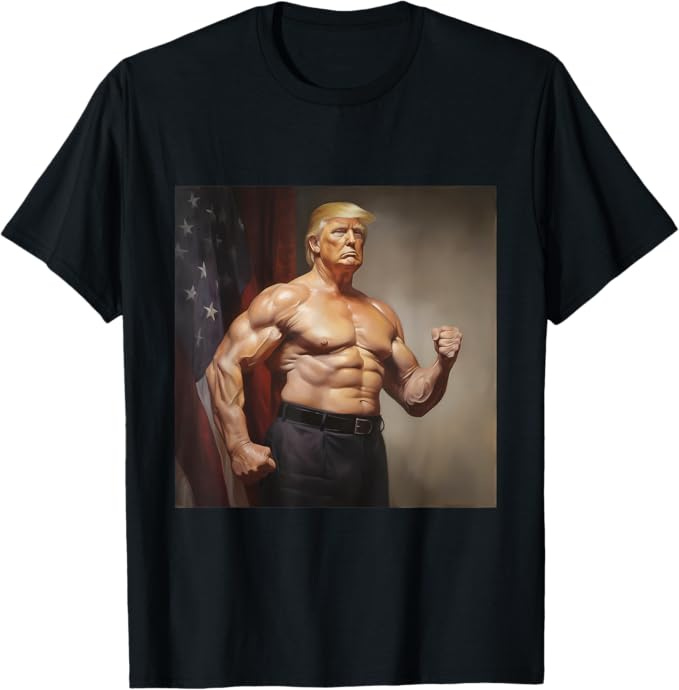
Do these things paint a bold, bright contrast with a chaos-inducing criminal who killed a bipartisan effort to reform border regulations just to advance his candidacy? Do they differ from Vance’s comparison of Trump to Hitler, as well as his labeling the man an “idiot” and “reprehensible” before Trump elevated the young opportunist to his ticket?

If we get the chance to see debates between Trump and Harris, as well as between Vance and Walz, we may better be able to evaluate these folks. Certainly, they would in those settings toss labels and memorable lines at one another, some of which could easily stick.
Recall the folksy “there you go again” phrase Ronald Reagan used in his 1980 debate with Jimmy Carter and Reagan’s 1984 quip against Walter Mondale: “I will not make age an issue of this campaign. I am not going to exploit for political purposes my opponent’s youth and inexperience.” Then there was Lloyd Bentsen’s jab against Dan Quayle in 1988: “I served with Jack Kennedy. I knew Jack Kennedy. Jack Kennedy was a friend of mine. Senator, you’re no Jack Kennedy.” And Barack Obama’s memorable phrase in a faceoff with Hillary Clinton in 2008: “You’re likable enough, Hillary.”

It’s hard to imagine Trump or his staffers having the wit for such lines. And, indeed, since Trump has sought to rig a debate by changing rules he earlier agreed to for a faceoff with President Biden, one may not happen between the top candidates. As for Walz and Vance, both men seem to be spoiling for a fight.

Mary L. Trump, source: ABC News

When Harris jumped in after Biden stepped out, she seemed to set Trump back on his heels. He and his team can’t seem to quite pigeonhole her as they would like to and he has gone off-script at times (“she happened to turn Black”). Now, Walz’s arrival has “terrified” Trump, says the former president’s niece, Mary Trump.

“You can see why Donald is terrified,” the clinical psychologist said, according to  Newsweek. “Because his criteria for a running mate included somebody who would lick his boots, subjugate himself, and exhibit the kind of cruel weirdness that Donald, and the base of the Republican Party, revel in. Vice President Kamala Harris picked someone who has executive [experience] and actually wants to work to make the lives of Americans better.”

Is Mary Trump, whose book about Trump labels him “the World’s Most Dangerous Man,” onto something? Voters will have to decide.

Is life in 2024 a cabaret?

A look at what a 58-year-old musical says about today’s politics

Cabaret’s 2024 Broadway production; source: NY Public Library for the Performing Arts

As the counterculture movement was heating up in the 1960s, the musical Cabaret debuted on Broadway. An ironic and challenging study of the blend of decadence and poverty of 1929-30 Berlin, the award-winning show carried a heavy warning, as it depicted the way the Nazis insidiously tapped into anti-LGBTQ sentiments, nationalism, economic strain and antisemitism to drive their rise to power.

Last night, we saw a production in Breckenridge, Colorado. This was our local version of a far more elaborate revival of the show now running in New York City and the one that is a hot ticket in London; it opened in the U.K. in late 2021 and is slated to run there at least until early 2025. The musical – an odd mix of sly entertainment and depressing political cautions — left me with many questions.

For one, why is a 58-year-old show being revived now? What resonance could it have in our day, compared with the 1960s?

For another, would audiences and critics warm to it again, as they did in its first run (1,166 performances in New York and eight Tony Awards)? And why did the 1972 movie, featuring Liza Minelli and Joel Grey, win a slew of “best” awards, including best picture and best director prizes? How impressive was it that, in 1995, the film was selected by the Library of Congress for preservation in the United States National Film Registry as being deemed “culturally, historically, or aesthetically significant”?

The answers it seems, are complicated. First, the new production of Cabaret, in London and New York, is not the first major revival, as the theatre collection curator of the New York Public Library for the Performing Arts recounts. New York productions were staged in 1966, 1987, 1998 and 2014, and others were mounted in London. So, the core message of the piece has long been with us, requiring a reminder every decade or so.

The original director, Hal Prince, “wanted the audience to understand that the musical was not only about the hedonism and antisemitism of Berlin in the interwar period, but also about the United States in the mid-1960s,” library curator Douglas Reside writes. “Both cultures indulged in a drug-fueled sexual revolution at a time in which basic civil rights were denied to minority groups.”

How contemporary was the show then – and now? “Prince often recounted his memory of bringing an image of shirtless young men snarling at the camera to rehearsal,” Reside adds. “He noted that his cast suggested the image came from Nazi Germany, when in fact it was a photo from a recent Life magazine issue—white supremacists protesting the integration of a public school.”

Source: Library of Congress

So, the theme of being drawn in by seductive and entertaining escapism at a time when repression is just around the corner, sadly, has long had an appeal. Perhaps that’s because the forces of such repression – the Nazis in the 1930s, the white supremacists of the 1960s and, perhaps, the would-be oppressors of today’s GOP (supported by modern Nazis and supremacists) – have long been with us. Until they can dominate, they prowl about on the fringes of society and culture.

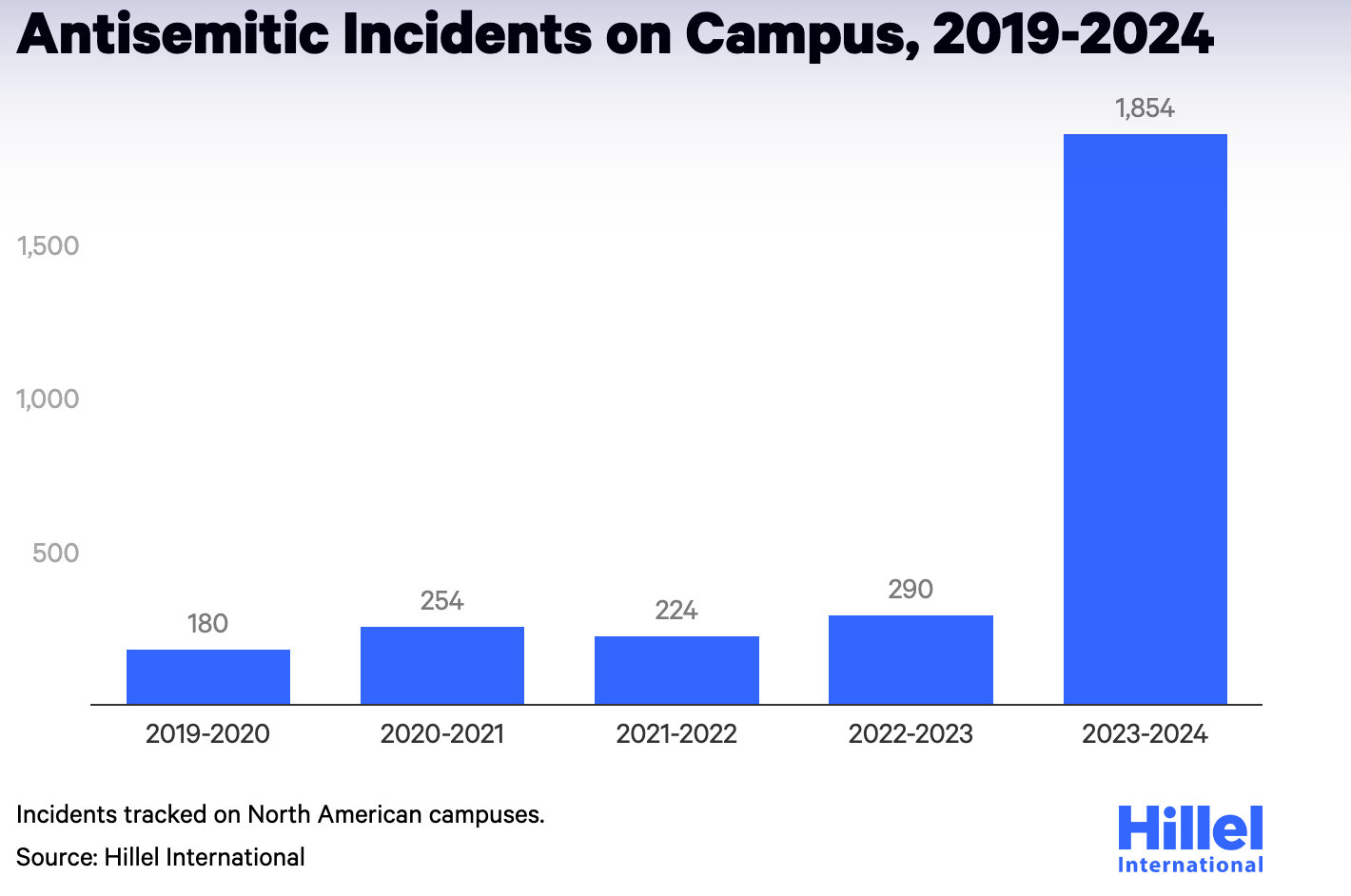
Think about the forms today’s reactionaries take. On the social front, we have book-banning (not all that dissimilar to burning), antisemitism (moving in from the fringes to show up on college campuses), anti-LGBTQ sentiments (often driven by right-wing religious ideas), rekindled racism against Blacks and other minorities, including immigrants, and antiabortion efforts (also religiously motivated).

And on the political front we have a party that uses such themes to gain a following. The Trumpist Republican party is keen to centralize federal power in the presidency (dictator for a day, as the former president put it, as well as his Supreme Court’s effort to grant exceptional immunity to the chief executive). We also have promises to remake the federal workforce into one answerable to political masters. And we have open admiration of autocrats around the world and disdain for democracy among the politicians and their supporters.

Source: Bloomberg, via Ad Age

Consider the comments of Peter Thiel, a Silicon Valley billionaire who long supported now-vice presidential nominee JD Vance and the GOP.  He gave $1 million to Trump in 2016 and spoke at the GOP convention back then, pulled back on his political donations for a time afterward, and now seems to be moving back toward supporting the Republican nominee.  While he hasn’t endorsed Trump again, before President Biden’s withdrawal Thiel said he would vote for Trump over the president.

“I don’t think we’re ever in a cyclical world but there are certainly certain parallels in the U.S. in the 2020s to Germany in the 1920s,” the German-born Thiel said in a podcast in February. “Liberalism is exhausted, one suspects that democracy, whatever that means, is exhausted, and that we have to ask some questions very far outside the Overton window.”

As Newsweek reported, the Overton window means the range of views or opinions considered politically acceptable at a given time.

Cabaret, of course, reflects some of those parallels, but in much the opposite way to the manner in which the Stanford-educated Thiel sees them. The show at once celebrates the sexual freedoms of pre-war Berlin even as it suggests that the self-indulgences and, in some cases, the depravity of the era were a narcotic blinding people to the rise of the Nazis.

Those sexual freedoms would be condemned, of course, by many in Trump’s legions, even as they overlook their candidate’s long-known hedonism. It’s perhaps ironic that Thiel is married to a man, since the show aims in part to condemn the victimization of gays by the Nazis. But Thiel seems willing to overlook the anti-gay sentiment that drives so many in the Trump coalition in favor of broader political aims.

As The New York Times wrote, Thiel’s politics have mutated over time, though he has long had a libertarian bent. In 2009, Thiel wrote that he had come to “no longer believe that freedom and democracy are compatible.” He argued that American politics would always be hostile to free-market ideals, and that politics was about interfering with other people’s lives without their consent. Since then, the Times noted, he has hosted and attended events with white nationalists and alt-right figures.

Source: LN

Scary stuff, frankly. The main Nazi character in Cabaret, smuggler Ernst Ludwig, comes across for most of the piece as a decent fellow. Ultimately, of course, he turns on the American writer protagonist, Clifford Bradshaw, and on a Jewish-Christian couple. Ludwig is reminiscent of the true believers one now sees all around Trump, people whose peculiar world views drive them into illegality, into believing that democracy is a failed system better scrapped.

One thinks of a recent commentary by Boston College historian Heather Cox Richardson. “It is up to us to decide whether we want a country based on fear or on facts, on reaction or on reality, on hatred or on hope,” she writes. “It is up to us whether it will be fascism or democracy that, in the end, moves swiftly, and up to us whether we will choose to follow in the footsteps of those Americans who came before us in our noblest moments, and launch a brand new era in American history.”

Like our politics, Cabaret is filled with contradictions (or, perhaps, ironies). How can a musical both celebrate sexual freedom and blame its excesses for political myopia or willing blindness? By the same token, how can a candidate who has been as licentious as they come be a hero to the religious right? How can otherwise bright people — many in Trump’s camp boast Harvard educations — be drawn to a man who boasts of loving the underschooled? How can anyone be drawn to a convicted felon, one found to be a sexual abuser, whose dishonesty is legendary?

Liza Minelli, singer of “Life is a Cabaret”

In the show, the most memorable song, the one featuring the line, “Life is a cabaret, old chum,” sounds at first like a joyous celebration of life, of course. But we see how it becomes all about fear and sorrow. Its downbeat lines have been trimmed from some popular recorded versions, but they linger in the stage production, an ode to a friend who was an alcoholic prostitute who died early.

Based on a 1951 play that was rooted in Christopher Isherwood’s 1939 novel, “Goodbye to Berlin,” Cabaret makes one think hard about the effects of politics that one can’t ignore. It has done so for decades so far, as it has spoken to a few generations. Let’s hope that the show remains cautionary and thought-provoking. The great fear is that it could prove prescient.

Has grace forever departed the GOP?

Trump continues to show a lack of style, basic manners and common decency

Trump in 2016, source: NBC News

In the heated 2008 presidential election, a supporter of the Republican candidate, Sen. John McCain, told him that she couldn’t trust Barack Obama. The woman called Obama “an Arab” at the height of a conspiracy movement that claimed the Democrat was not a natural-born American citizen and therefore ineligible for the presidency.

“No ma’am, he’s a decent family man, citizen, that I just happen to have disagreements with on fundamental issues, and that’s what this campaign is all about,” McCain said to applause.

That’s called grace. It’s something many Republicans once had.

Before McCain, there was President George H.W. Bush. In 1993, he left a handwritten note in the Resolute Desk in the White House for his successor, Bill Clinton.

“When I walked into this office just now I felt the same sense of wonder and respect that I felt four years ago,” Bush’s note said. “I know you will feel that, too.”

“I’m not a very good one to give advice,” the note continued, capturing Bush’s genuine strain of humility. “Don’t let the critics discourage you or push you off course,” he wrote, and ended by saying, “Your success now is our country’s success. I am rooting hard for you.”

Source: Wikimedia Commons

Contrast such basic good manners and decency with Donald J. Trump’s reaction to the release of Evan Gershkovich, Paul Whelan and others unjustly imprisoned by Vladimir Putin.

“Are we also paying them cash? Are they giving us cash (Please withdraw that question, because I’m sure the answer is NO)?” he said. “Just curious because we never make good deals, at anything, but especially hostage swaps. Our ‘negotiators’ are always an embarrassment to us!” he added in his social media post.

No congratulations. No best wishes.

Graceless? Trump is the embodiment of gracelessness.

Of course, his absurd attack on Kamala Harris about whether she was Black or Indian was another recent example. His racist boorishness, apparently aimed at eroding her support in Black communities while stoking white resentments at the gains minorities have made, may have played well with a few supporters.

But for many folks, it confirmed the same sort of oafishness he demonstrated with his birtherism claims about Obama.

NY Times reporter Serge Kovaleski, Trump’s mockery; source: CNN

Need other examples of his callous buffoonery? Recall his mockery of a disabled journalist, New York Times reporter Serge Kovaleski, in late 2015. Of course, there was his incessant nicknaming of opponents, which continues today.

His incitement of a mob to attack the Capitol on Jan. 6, 2021, was perhaps the most dangerous – and deadly – case of his asinine behavior. Recall that the mob called for the assassination by hanging of Trump’s vice president, Mike Pence, whom he had pressured to invalidate the election results.    

Biden’s inauguration, Source: USA Today

Then, consider Trump’s absence at the January 2021 inauguration of President Joe Biden. The move broke with over 150 years of tradition, showed scant respect for the office and made a mockery of the peaceful transition of power.

And give some thought to the opposite, the reactions of Biden and Harris to the attempted assassination of Trump. Harris labeled it “heinous, horrible and cowardly.”

For his part, Biden called Trump personally after the shooting. “I told him how concerned I was and wanted to make sure I knew how he was actually doing,” Biden told NBC’s Lester Holt. “He sounded good. He said he was fine, and he thanked me for calling…. I told him he was literally in the prayers of Jill and me, and his whole family was weathering this.”

Would Trump have done the same were the situation reversed? Hard to imagine that from a man who doesn’t appear to know the meaning of even basic manners, much less the graciousness that once was a hallmark of many of his party’s leaders in years past.

Kamala Harris; source: The White House

Will we again get back to such common decency? It seems likely that the only way that will happen is if Trump and his party are soundly trounced in the upcoming election, the numerous prosecutions of him move forward and the toxin that is Trumpism is purged from the GOP.

All that, of course, is a tall order. But, for anyone with a sense of basic manners, it would seem to be within reach.

Will free(r) trade survive?

This presidential election is putting globalization into the crosshairs again.

Thomas Sowell, source: National Review

Stanford University economist Thomas Sowell offered a profound thought: “The first lesson of economics is scarcity: There is never enough of anything to satisfy all those who want it. The first lesson of politics is to disregard the first lesson of economics.”

As we ponder the appeal of Donald J. Trump, this insight is worth considering. While he stitches together various discontented groups in his bid to retake the White House, the former president seeks to turn the clock back even further on globalization, among other things. By imposing stiff new tariffs on imports, he maintains that this would restore jobs in hard-pressed Middle American communities.

But would it? Would restricting imports boost the numbers of factory jobs, especially in the states Trump hopes to win? And have similar efforts by President Biden – no friend of globalization himself — paid off for most Americans?

The Tax Foundation, a business-friendly but nonpartisan group in Washington, contends that such tariffs under both Trump and Biden have had a contrary effect – at least for Americans overall. Indeed, it’s not clear that they even helped voters in hollowed out manufacturing communities.

The foundation estimates that if imposed, Trump’s proposed tariff increases would hike taxes by $524 billion annually and shrink GDP by at least 0.8 percent. The group finds that the levies would slash employment by 684,000 full-time equivalent jobs. And that’s all before counting the effects of retaliation in this potential escalation of an ongoing trade war.

As president, Trump imposed nearly $80 billion worth of new taxes on Americans by levying tariffs on thousands of products valued at approximately $380 billion in 2018 and 2019, the group calculated. This amounted to one of the largest tax increases in decades.

And things actually worsened under Biden. That’s because the Biden administration kept most of the Trump administration tariffs in place, and in May 2024, announced tariff hikes on an additional $18 billion of Chinese goods. The cost amounted to an additional tax increase of $3.6 billion.

“We estimate the Trump-Biden tariffs will reduce long-run GDP by 0.2 percent, the capital stock by 0.1 percent, and employment by 142,000 full-time equivalent jobs,” the foundation says.

But have the levies benefitted folks in protected industries? Have they kept open factories in the industrial Midwest that otherwise would shut down? Is the tradeoff worthwhile?

Warner Wolf, source: Newsday

As WABC-TV broadcaster Warner Wolf used to say, let’s go to the videotape, (well to the stats, anyway):

The number of manufacturing jobs climbed during Trump’s tenure, rising from 12.383 million in January 2016 to a high of 12.828 million in January 2019, before slipping a bit (perhaps seasonally). This suggests that his policies (perhaps) helped add a relatively small 445,000 such jobs. Thanks largely to Covid, the tally dropped to 12.188 million by January 2021, the beginning of Biden’s term, but then climbed to a high of 12.966 million by this past January before slipping back to a preliminary estimate of 12.950 million by June.

The figures suggest that Biden’s policies (perhaps) helped restore more manufacturing jobs – as few as 122,000, if one counts from the Trump-term height, or as many as 760,000, if one counts from the Covid-dampened figure in 2021.

But do tariffs deserve the credit for gains in either administration? Not according to economists at the National Bureau of Economic Research. As The New York Times reported, a  nonpartisan working paper by four such researchers examined monthly data on U.S. employment by industry. Their finding: tariffs that Trump placed on foreign metalswashing machines and an array of goods from China starting in 2018 neither raised nor lowered the overall number of jobs in the affected industries.

Source: Investopedia

Worse, those additional costs did hit many Americans, who paid higher prices for such goods, fueling inflation. Moreover, they incited other countries to impose their own retaliatory tariffs on American products, making them more expensive to sell overseas, and the levies had a negative effect on American jobs, the paper finds. As the Times reported, that was particularly true in agriculture: Farmers who exported soybeans, cotton and sorghum to China were hit by Beijing’s decision to raise tariffs on those products to as much as 25 percent.

Trade wars of the sort that Trump launched, that Biden exacerbated, and that Trump promises to accelerate don’t appear to help even the people they are designed to help. And, overall, consumers and workers pay the freight for this, bearing the burden of higher prices for both imports and domestically produced competing products, the academic work suggests.

Historical evidence and recent studies show that tariffs are taxes that raise prices and reduce available quantities of goods and services for U.S. businesses and consumers, which results in lower income, reduced employment, and lower economic output. For example, the effects of higher steel prices, largely a result of the 2002 Bush steel tariffs, led to a loss of nearly 200,000 jobs in the steel-consuming sector, a loss larger than the total employment in the steel-producing sector at the time,” the Tax Foundation contends.

So, what accounts for the recent rise in jobs in manufacturing? Well, part of that may be normal economic growth. The number of manufacturing jobs had been rising since at least 2014, predating both Trump and Biden. And, under Biden, assorted industrial policies may have helped boost the tallies, irrespective of tariffs.

Researchers at the Center for American Progress point to investment programs that Biden championed. Singling out three, the group, which styles itself as “progressive” but independent, lists the Infrastructure Investment and Jobs Act (IIJA), CHIPS and Science Act, and Inflation Reduction Act (IRA). The measures were aimed at undoing decades of disinvestment in American communities, the group says.

The efforts were designed to rebuild the nation’s physical, digital, and utility infrastructure; retake the global lead in advanced semiconductor manufacturing; speed the nation’s transition to electric vehicles (EVs) and green energy; and create high-quality jobs, the center notes. These three policies combined direct public spending with grants, loans, tax incentives, and other financial assistance for private companies to promote key sectors, especially manufacturing, using public investment as a way to “crowd in” private investment.

Source: English Plus

To be sure, there can be little doubt that globalization in recent decades cost some people dearly, even as it benefitted most Americans. While low-cost imported goods helped most consumers, and access to the U.S. market lifted the economies of many other countries, this didn’t help some people – particularly those in industrial states that turned to Trump for relief.

Listen to the liberal Economic Policy Institute: “Globalization of our economy, driven by unfair trade, failed trade and investment deals, and, most importantly, currency manipulation and systematic overvaluation of the U.S. dollar over the past two decades has resulted in growing trade deficits—the U.S. importing more than we export—that have eliminated more than five million U.S. manufacturing jobs and nearly 70,000 factories.”

And consider the disproportionate effect this has had on working-class white voters in the most hard-pressed states – the sort of voters one sees packing into Trump rallies. As The New York Times reported, economic mobility for many of them declined in recent years, even as it improved for many Black Americans.

“Over the past few decades, globalization and changes in technology have caused many jobs to go from the United States to China, India and elsewhere,” the newspaper reported, drawing on a new Harvard study.  “These shifts appear to have pushed white people out of the work force, while Black people found other jobs.”

The Times suggests several explanations for the racial disparity.

“White workers might have had more wealth or savings to weather unemployment than their Black counterparts did, but at a cost to their upward mobility,” the newspaper suggests. “They might also have been less willing to find another job. A steel mill that shut down could have employed not just one worker but his father and grandfather, making it a family occupation. People in that situation might feel that they lost something more than a job — and might not settle for any other work.”

Source: MarketWatch

Moreover, the Harvard study found that the places where Black workers live were generally less affected by job flight than the places where white workers live. And it noted that, compared with earlier generations, Black workers today are less likely to face racial prejudice in the labor force, making it easier for them to find work. Certainly, this could only fuel the racist demagoguery so rampant nowadays.

As for globalization, even as it has brought big advantages to most Americans — and to many folks overseas — more open trade has been under assault worldwide for years. It was a tough slog for free-trade warrior Clayton Yeutter and President Ronald Reagan to open the way to freer trade back in the 1980s, and many have sought to retrench since. Indeed, the Republican party under the economic nationalist Trump has rejected the concept almost altogether, while Democrats have been only slightly less disapproving.

It’s not clear what a President Kamala Harris would do in this regard. The Tax Foundation, of course, has an idea for what she should do: “In the context of the ongoing trade war, the rise of digital services taxes, and the global minimum tax, U.S. policymakers should seek to build consensus through multilateral negotiations and the rules-based trade system rather than pursue harmful, tit-for-tat retaliation that threatens to compound the harms to U.S. businesses and consumers.”

For his part, Trump has been clear on his route, and it’s not what the foundation would prefer: As the foundation notes, he has proposed a new 10 percent universal tariff on all imports and a 60 percent tariff on all imports from China, as well as potentially higher tariffs on EVs from China or across the board.

As they battle for votes, particularly in key industrial states, Harris and Trump could easily race to the bottom in attacking world trade. The vote in states that they both need — Pennsylvania, Ohio and Michigan, for instance — may turn on the issue. Unlike Trump, however, Harris has some training in economics — it was one of her majors at Howard University as an undergraduate — and her father is an emeritus professor of economics at Stanford University. She should know better.

Will either candidate “disregard the first lesson of economics” and indulge in pandering on the point? Will Harris’s greater degree of economic sophistication keep that impulse in check? Their stances will bear watching.

The gloves are off

If Trump’s edge has been plain speaking, he’s about to meet his match

Source: AP, via VOA News

Some of my relatives in New Jersey have liked one thing above all about Donald J. Trump. As one put it, “he talks like us.” The meaning: unlike politicians whose insults are measured and almost diplomatic, whose criticisms on sensitive topics are muted, the blunt New Yorker “tells it like it is.”

Unburdened even by basic manners, the former president is given to fixing labels on opponents such as “lightweight,” “dumb” or “dummy,” “a dope” or “dopey,” “weak,” “a loser,” “boring” and so on. Like a grade school bully, he bandies about terms such as “Crooked Hillary,” “Crooked Joe,” “Pencil Neck,” “Birdbrain” and “Little Marco.”

Well, Trump may meet his match in Kamala Harris. Addressing her campaign staff, the vice president said that, as a longtime prosecutor, she dealt with perpetrators of all sorts: “Predators who abused women, fraudsters who ripped off consumers, cheaters who broke the rules for their own gain,” she said. “So, hear me when I say, I know Donald Trump’s type.”

Diplomatic? Hardly. Blunt to a fault or coarse? Well, no. Harris is too smart and too — well, adult — for that. On point, though? Unquestionably.

To be sure, Harris’s prosecutor-versus-predator theme isn’t exactly new. She indirectly called Trump a “predator” in the 2020 campaign in her comments in the virtual Democratic National Convention. But, with his 34 felony convictions since then, along with a fraud judgment of $454 million against him and the $88.3 million in a pair of judgments against him for his sexual assault of E. Jean Carroll, her barbs underscoring Trump’s venality hit home much harder now.

Harris won’t have to sink to Trump’s schoolyard level. Don’t look for her to call him “Dumb as a Rock,” as he, flailing for a label, said of her. Of course, she could do so, with ample evidence: a former prof of Trump’s at Wharton reportedly said of him: “Donald Trump was the dumbest goddamn student I ever had!” and his former White House colleagues have called him an “idiot,” “dope” and “moron.”

Andy Beshear, JD Vance; source: CNN

But she won’t hold back, either. It’s clear that the gloves are off in this race and Harris and her compadres won’t be anywhere near as politic as former President Biden has been in dealing with Trump and his vice presidential hopeful, JD Vance. Already, potential Democratic vice presidential nominee Kentucky Gov. Andy Beshear has called Vance “a phony.”

And just how this all plays out will be fascinating to watch. Despite the relative genteelness of most recent presidential races, strong language has a long history in American political campaigns. A promoter of Thomas Jefferson, for instance, in 1800 referred to the nation’s second president, John Adams, as a “hideous hermaphroditical character, which has neither the force and firmness of a man, nor the gentleness and sensibility of a woman.” And in 1828, supporters of Andrew Jackson called John Quincy Adams, the sixth president, “a pimp,” accusing him of providing women to the Russian czar while serving as the U.S. minister to Russia. For their part, Adams’s supporters caricatured Jackson’s mother as a prostitute.

Nikki Haley, source; Getty Images via CNN

In today’s take-no-prisoners contest, the more Harris and her colleagues provoke Trump, the more he may be tempted to respond like the thin-skinned brute he is. As The New York Times has suggested, the attacks could provoke him to drop even lower, particularly because women, Blacks and other minorities seem to especially infuriate him. Recall that “Birdbrain” was his term for Nikki Haley, “Pocahontas” was his moniker for Elizabeth Warren, and “Crazy Nancy” was Nancy Pelosi. Trump used the less elegant “that bitch” for former German Chancellor Angela Merkel.

Certainly, obvious racism and sexism — if Trump and his backers descend into them — will play well with some of the former president’s supporters, perhaps even with many. Indeed, we already are hearing strains of both in comments such as that of Tennessee Republican Rep. Tim Burchett, who called Harris a “DEI vice president” and “a DEI hire,” invoking the common right-wing attack on diversity, equity and inclusion programs at universities. Another Republican, Rep. Glenn Grothman of Wisconsin, said the Democratic Party backed Harris only “because of her ethnic background,” while one right-wing commentator claimed she is not a natural-born citizen because her parents were immigrants (she was born in Oakland, Calif.).

The theme of such critics will be that Harris got where she is as a kind of affirmative action baby. Never mind that Harris is the gifted daughter of an economics professor and a cancer researcher, and that she earned a law degree from the University of California, Berkeley. They will ignore the fact that she served as a deputy district attorney in the Alameda County District Attorney’s Office from 1990 to 1998, that she was elected in 2004 as district attorney of San Francisco, that in 2010 she was elected as California’s attorney general and then, in 2016, was elected as a U.S. Senator from California. They will play down her work on the Senate’s judiciary and intelligence committees, on which she sat until Biden tapped her to join him in the 2020 race.

Even as he seems increasingly addled by age, Trump may be too clever – or too well-advised – to be flagrantly racist and sexist in his dealings with Harris. While others may be more cloddish, Trump knows just how to stop short of being fully outrageous, how to avoid being too explicit.

Charlottesville, 2017; source: AP, via NPR

Recall that Trump saw “some very fine people on both sides,” among the white nationalists who marched in Charlottesville in 2017. Remember that in 2020 he told a far-right extremist group to “stand back and stand by.” Recall that he urged on insurrectionists on Jan. 6, 2021, telling them to “show strength” in the march on the Capitol, after telling them to “be there, will be wild!” And remember that Trump pressed Georgia’s Republican Secretary of State to “find 11,780 votes” to try to overturn his loss in the state in 2020.

But, if Harris gets under his skin, Trump could well go too far. How will mainstream voters – particularly women – respond then? How will they react to dog whistles about race and gender? How will they react to more explicit assaults on those grounds by Trump devotees?

Harris is brilliantly positioned to take advantage of such attacks. And she is well-seated to launch far more precise – and well-founded – volleys at Trump. His flaws are legion and we can expect that she will expose, dissect and pound away at all of them.

Indeed, as my relatives may find, Harris will “talk like us” as she shines a bright, bold light on Trump’s foulness. But she may do so far more sharply — and effectively — than Trump ever could.