Shrinking its way to greatness?

The Washington Post will surely not find success that way
Joseph Weber

Illustration source: The Wrap

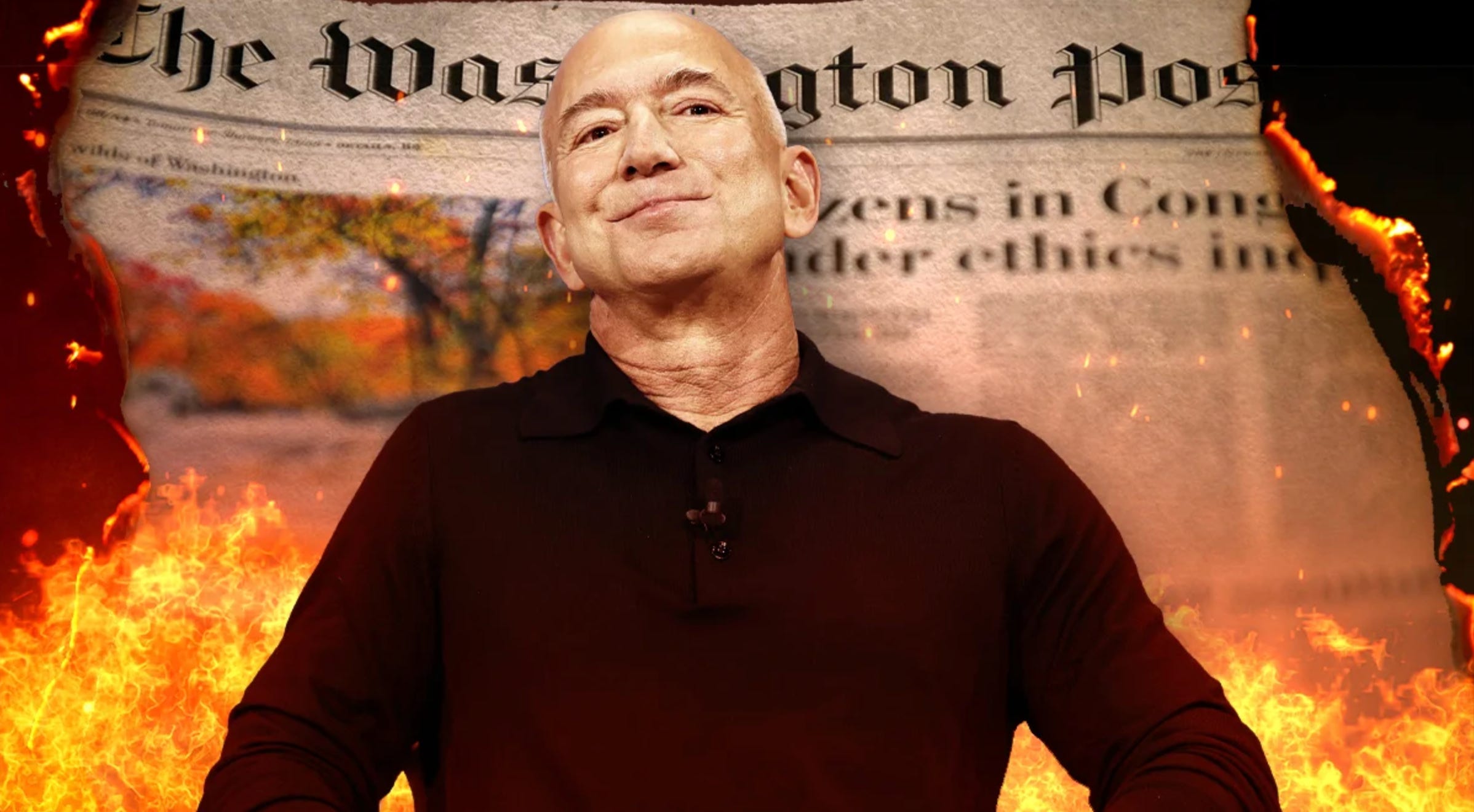
Someday, a smart academic will cooly analyze the rival game plans that enabled The New York Times to thrive while, just down the road, The Washington Post slipped into what has been looking like a slow-motion death spiral.

But it’s likely that two things on that list will include an owner committed to great journalism and a passion for innovation, even at great cost.

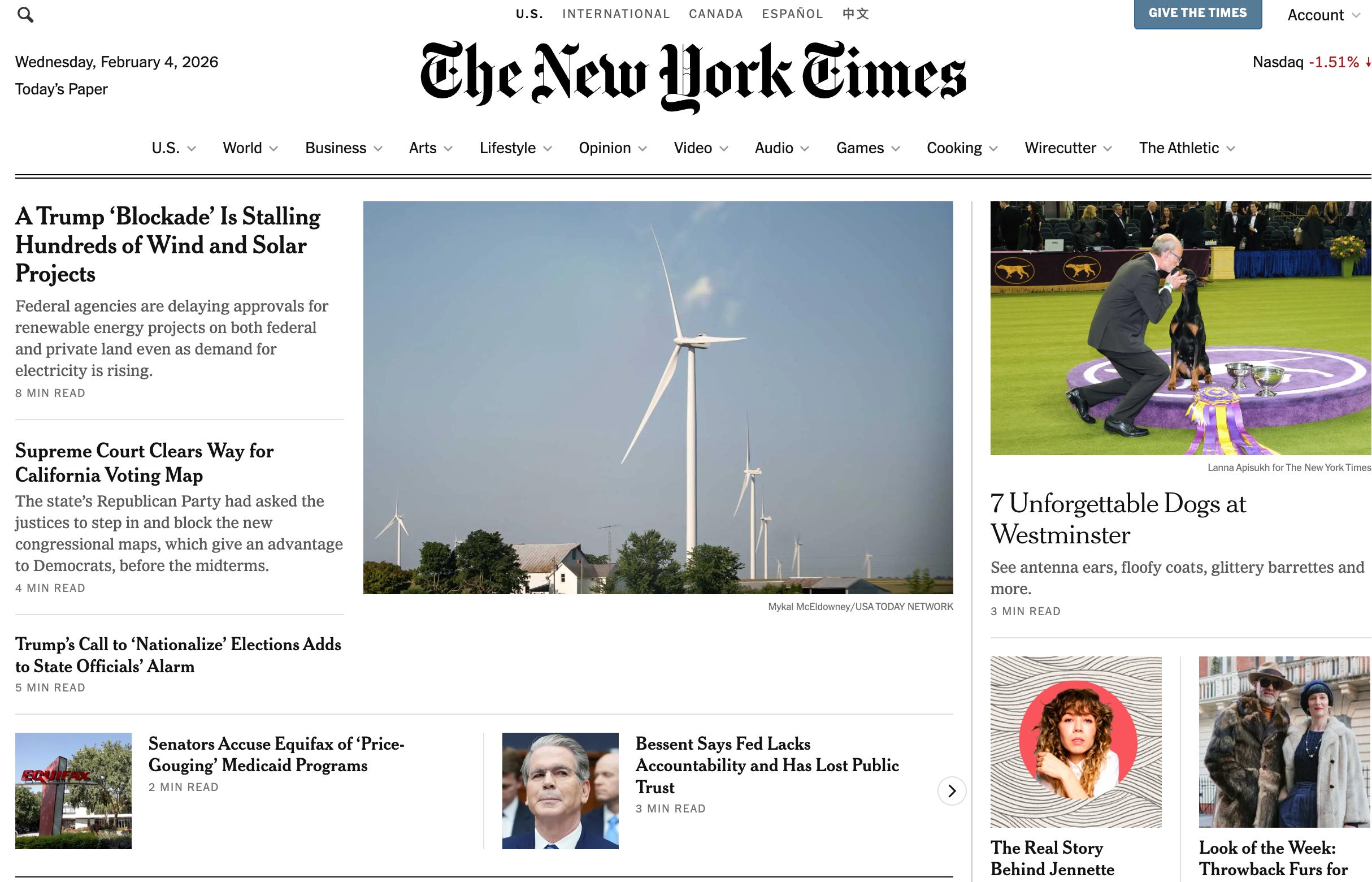
Consider first the nonstop innovation that has kept the Times vibrant. The New York paper’s website is a cornucopia of offerings from the news of the day and in-depth magazine offerings to games, consumer advice in Wirecutter, exceptional sports coverage in The Athletic, audio offerings that range from The Daily to Opinions, along with entertainment, cooking and health news.

The soup-to-nuts menu of the paper could keep a reader, listener or video-watcher engaged for hours. Just picking out the best things to tap into takes a while each day.

By contrast, the best that can be said of the Post is that it tries.

In unoriginal ways, the Post mimics some of the same offerings, but with far less content. While on a given day the Times might have whole subsections devoted to the Trump Administration, the Epstein files, the Russia-Ukraine war, the Super Bowl and more, along with the top stories of the day in its many categories, the Post offers short lists of pieces that take no time to scan through.

It could hardly be otherwise given the yawning gap in staff at the papers. While the Times employs more than 2,800 people in its journalism operations, the Post shrank its newsroom in multiple downsizings in recent years to 800 and now is losing more than 300 of them, along with more on the business side.
With its extraordinary breadth, the Times has been on a roll in adding digital subscribers and is now up to 12.78 million total subscribers as it aims for 15 million by the end of next year. By contrast, the Post is believed to be down to about 2 million subscribers.

Sadly, the soup is thin in the D.C. paper and the latest trimming could hardly bulk it up. As the Times reported about its competitor, the Post’s sports and books sections will close, its metro section and international staff will shrink. In a sharp contrast with the growing Daily podcast at the Times – which just added a Sunday version – the daily “Post Reports” podcast will disappear.

Just how will all that make for a better, more relevant and profitable product? The Post, as of Feb. 4, hadn’t even reported on its layoffs. Instead, it posted an Associated Press story that quoted editor Matt Murray saying in a note to the staff: “We can’t be everything to everyone.”

Just what the Post will be to anyone, going forward, is tough to see. Ashley Parker, a Post veteran now at The Atlantic, offered hints, though, and they are hardly optimistic.

“Today’s layoffs provide a whiff of the latest alleged strategy: an almost-exclusive focus on politics and national-security coverage, though even that explanation defies credulity, as the growing list of those laid off includes some of the nation’s finest political and international reporters and editors,” she wrote. “To the extent that a plan exists, it seems to be to transform the Post into a facsimile of Politico.”

Parker noted that Politico was born out of the Post nearly 20 years ago. Two Post reporters launched it as a “fast-paced, scoop-driven, win-the-morning publication,” she wrote.

Parker also quoted a longtime Post reporter bemoaning the new cuts. “We’re changing and trimming and cutting our way toward a much more mundane product, and one that doesn’t seem to attract more readers,” the journalist told her.

And what’s especially disheartening is that Post owner Jeff Bezos could easily underwrite the sorts of innovation that the Sulzberger family has done at the Times. Indeed, after he bought the paper in 2013, he backed ambitious efforts and the paper was gaining in leaps and bounds.

Ralph E. Hanson, a professor at the University of Nebraska Kearney, described some of the surge. Instead of focusing narrowly on D.C., he noted, Bezos and his editors pushed the paper into becoming a national or even international paper, much as the Times is.

By 2016, under Bezos’ ownership, Hanson wrote, the paper had a growing audience, increasingly ambitious reporting, and was gaining recognition as a national read. Politico’s Ken Doctor said that the Post was joining the ranks of The New York Times, The Wall Street Journal, and USA Today as having nationwide appeal.

While other papers were laying journalists off, in fact, the Post was hiring, Hanson noted. He cited Politico’s estimates that the Post’s newsroom grew by more than 60 positions, or 8 percent. This gave the Post a news staff in excess of 750, compared with 1,307 at the NY Times, 450 at USA Today, and the Wall Street Journal with about 1,500.

And 2016 delivered a 75 percent increase in new subscribers over the year and doubled digital subscription numbers. Under the guidance of Marty Baron, who joined in January 2013, that growth was driven by exceptional journalism, the sort that won 11 Pulitzer Prizes before he retired in 2021.

Of course, the paper was punching above its weight in terms of staffing. It had always done so, compared with the Times. “Not being The New York Times, being forced to do more with less, was freeing,” contended Post veteran Parker. “It created—required—a culture of collegiality and collaboration, a willingness to experiment and take risks, a certain puckishness.”

A former colleague, now at The Athletic, told Parker: “There’s sort of an Avis mentality at the Post: ‘We try harder.’” The quip recalled the Hertz-Avis ad campaign of decades past.

But lately, Bezos has apparently not seen much reason to try hard at all. “Over recent years, they’ve repeatedly cut the newsroom—killing its Sunday magazine, reducing the staff by several hundred, nearly halving the Metro desk—without acknowledging the poor business decisions that led to this moment or providing a clear vision for the future,” Parker wrote.

Marty Baron, source: The Harvard Gazette

Baron, in a post on Facebook, acknowledged “acute business problems that had to be addressed.” As anyone in the industry knows, and Baron noted, we are in “a period of head-spinning change in media consumption.” It is one that requires “radical innovation,” which, of course, demands money.

More than that, it requires courage and values – of the sort that the Sulzbergers have long had. In recent years, Donald J. Trump has filed at least three major lawsuits against the Times, including a pending $15 billion defamation suit filed last September. Two were dismissed.

Bezos, instead, has sought to cozy up to Trump, perhaps mindful of the power Washington has over his financially far more important Amazon business and other interests.

“The Post’s challenges, however, were made infinitely worse by ill-conceived decisions that came from the very top —from a gutless order to kill a presidential endorsement 11 days before the 2024 election to a remake of the editorial page that now stands out only for its moral infirmity,” Baron wrote. “Loyal readers, livid as they saw owner Jeff Bezos betraying the values he was supposed to uphold, fled The Post. In truth, they were driven away, by the hundreds of thousands.”

As readers lost faith in the paper, journalists were losing trust in Bezos, as well. “Similarly, many leading journalists at The Post lost confidence in Bezos, and jumped to other news organizations,” Baron wrote. “They also, in effect, were driven away.”

The former editor, known for his grace, said he remained grateful for Bezos’s support during his tenure.

“During that time, he came under brutal pressure from Trump,” Baron wrote. “And yet he spoke forcefully and eloquently of a free press and The Post’s mission, demonstrating his commitment in concrete terms. He often declared that The Post’s success would be among the proudest achievements of his life. I wish I detected the same spirit today. There is no sign of it.”

There also seems no sign of an editorial vision at the diminishing newspaper. Perhaps one will emerge, but it’s likely impossible for the Post to shrink its way to prosperity.

“This ranks among the darkest days in the history of one of the world’s greatest news organizations,” Baron wrote. “The Washington Post’s ambitions will be sharply diminished, its talented and brave staff will be further depleted, and the public will be denied the ground-level, fact-based reporting in our communities and around the world that is needed more than ever.”

The odds are that the academic who someday analyzes the Post’s rise and fall will, in effect, be conducting an autopsy. And that is sad for us all.
We just have to survive

Trump’s victory makes a troublesome statement about America

Source: Newsweek

As of this writing, some 71.9 million Americans proved something quite disturbing as of the close of Election Day yesterday. They revealed themselves as ignorant of economics, heartless toward the desperate, tolerant of racism (if not racist), and disrespectful of basic morality and law.

Their vote for Donald J. Trump is enough to make one ashamed of being an American.

There are hard lessons in the election of a dictatorial demagogue whose personal immorality is well-established, whose venal self-interest has been all too obvious and whose ignorance and scorn of history, political norms and institutions such as the military is astonishing. Among other things, the vote reflects failures on the part of our educational, religious and civic institutions.

It suggests an America suffering from a deep rot that could be tough to root out. It suggests an America that is in dire need of a hard look at itself.

“We just elected a convicted felon who has normalized bullying, spread hate like an industrial sprinkler and shown us over and over and over again he sees laws as irrelevant and self-enrichment as sacrosanct. Faced with a billowing ocean of red flags – from indictments for trying to overturn the 2020 election to the coddling of dictators who rule enemy nations – a majority of Americans cast their vote for the man who is a totem of the worst in all of us,” USA Today columnist Rex Huppke writes. “So spare me the wails of ‘This isn’t who we are!’ I’ve got bad news for the sane and decent among us: This is exactly who we are.”

Check out the insight of Lisa Lerer of The New York Times:

“Donald Trump told Americans exactly what he planned to do.

“He would use military force against his political opponents. He would fire thousands of career public servants. He would deport millions of immigrants in military-style roundups. He would crush the independence of the Department of Justice, use government to push public health conspiracies and abandon America’s allies abroad. He would turn the government into a tool of his own grievances, a way to punish his critics and richly reward his supporters. He would be a ‘dictator’ — if only on Day 1.

“And, when asked to give him the power to do all of that, the voters said yes.

“This was a conquering of the nation not by force but with a permission slip. Now, America stands on the precipice of an authoritarian style of governance never before seen in its 248-year history.”

Source: Agence France-Presse, via The New York Times

And consider what David A. Graham of The Atlantic had to say:

“Trump may be the most negative mainstream candidate in American history. Observers including my colleague Peter Wehner have noted the contrast between Trump’s disposition and Ronald Reagan’s sunny optimism. But in a strange way, Trump does offer a kind of hope. It is not a hope for women with complicated pregnancies or LGBTQ people or immigrants, even legal ones. But for those who fit under Stephen Miller’s rubric that ‘America is for Americans and Americans only,’ Trump promised a way out.”

Indeed, Trump’s election represents a victory for the nativists in the long-established cyclical pattern of the U.S. to repel, welcome and then again repel outsiders. Though we are a nation of immigrants, we repeatedly have shut our doors to those who would join us. As far back as the Alien & Sedition Acts of 1798, we’ve shown our suspicion of newcomers. In the 1800s, native Americans detested and demeaned IrishItalian and Jewish immigrants. Then, the Immigration Act of 1924 set a quota on European immigrants and shut out Asians. And in World War II, as the Holocaust raged, thousands of Jews were barred from the U.S.

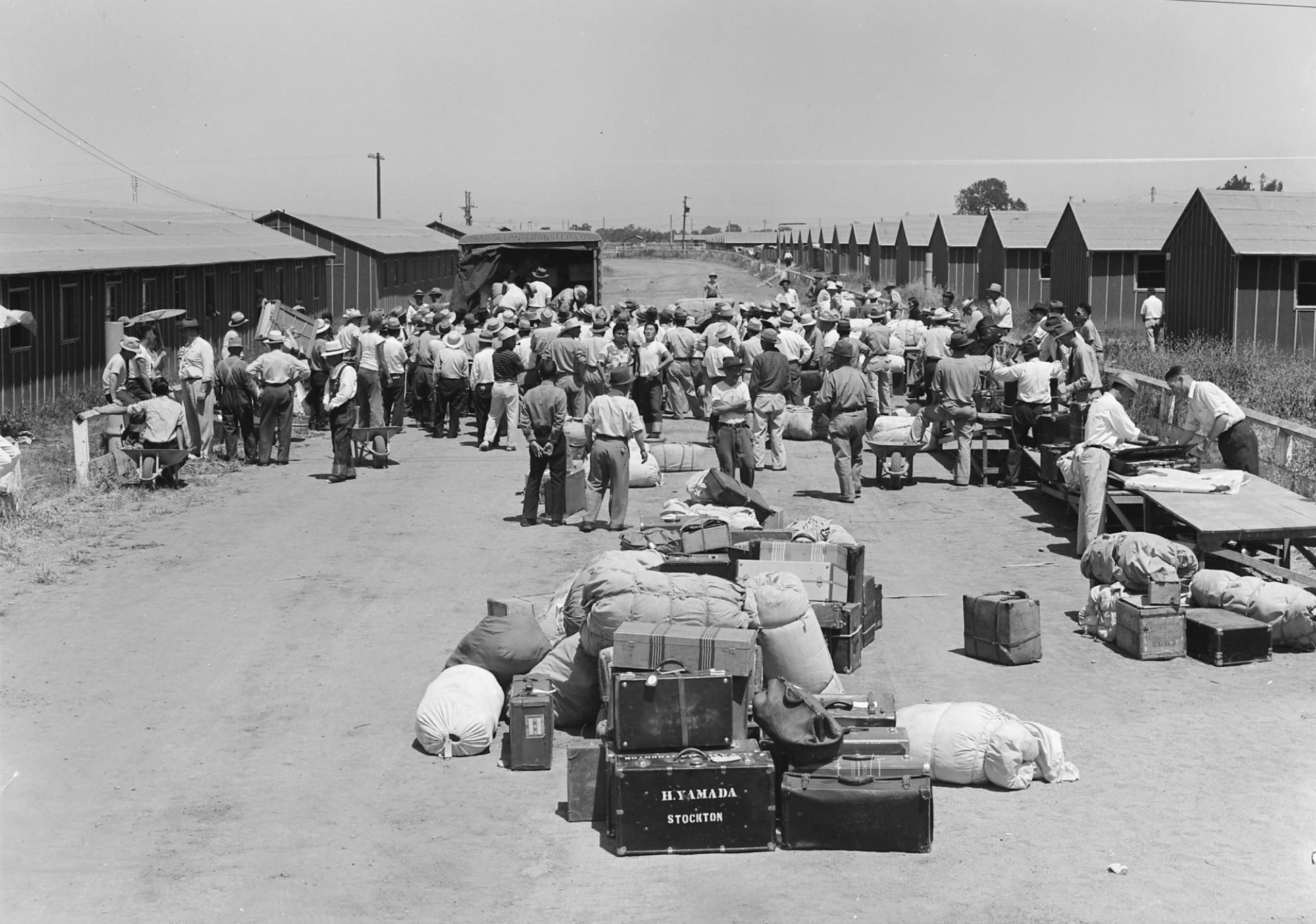
Oh, and we “interned” thousands of Japanese-Americans during that war for no other reason than the color of their skin.

Japanese-American “interns,” source: The National WWII Museum

Trump’s plans to deport millions of migrants to the U.S. are well in line with this entrenched American anti-immigrant and racist tradition. Even though his own grandfather Friedrich came to the U.S. from Germany and his wife, Melania (originally Melanija Knavs) hails from Slovenia, Trump has a deep-set revulsion to immigrants — at least non-white ones. Perhaps betraying his Germanic sympathies for eugenics, Trump in a radio interview linked immigration, violent crime, and genetics, saying, “we got a lot of bad genes in our country right now.” 

Soon, we are likely to see American law enforcers rounding up migrants, putting them into internment camps and tossing them out of the U.S. Families will likely be uprooted and broken up, all because of a failure to establish a path to citizenship for them. The effect on our economy could be devastating, as people who do our roofing and carpentry, pick our vegetables and staff our grocery stores and restaurants are driven out.

Indeed, the economic effects in general of the Trump presidency could prove devastating. They could make the inflation of the Biden years pale. The economically ignorant may have voted for Trump in large part because of that inflation – unaware that the price spiral sprang mostly from post-Covid shortages and a robust employment picture – but they soon are likely to experience steep price hikes when Trump’s tariffs kick in and drive up the costs of American-made goods and imports alike.

The global trade war that his levies are likely to spawn will also hurt America’s standing in the world and substantially increase tensions with China and other countries. Of course, his likely abandonment of Ukraine, his coziness with Vladimir Putin and his distaste for NATO will have severe implications, as well.

At this political nadir, it’s difficult to find reasons for hope. Editorialists at The Wall Street Journal have argued that checks and balances in the U.S. system will contain some of Trump’s worst impulses, scaling down any aspirations toward dictatorship he may have. But will there be many such checks, given the toadies in what will be a Republican-dominated Senate (and perhaps House, though we don’t know yet)?

In fact, is it more likely that a second-term Trump will be far less bound than even the first-term Trump was?

“Those expecting his instincts to be tempered by advisers, as sometimes happened during his first term, will be disappointed,” The New York Times editorialized. “His inner circle has been purged of people who say no. In a second Trump term, the secretary of state would not come from Exxon, and the secretary of the Treasury would not come from Goldman Sachs. The smart — and courageous — people have left the room. What remains are loyalists and ideologues and a decision-making process that begins and ends with the question of what is most expedient for Mr. Trump.”

While it’s hard to strike an optimistic note, it is, nonetheless, heartening that some 66.9 million of our countrymen saw Trump for the loathsome and dangerous figure he is. Overall, the man won with a bare majority of 51 percent to Vice President Kamala Harris’s 47.5 percent, according to current tallies by the Associated Press.

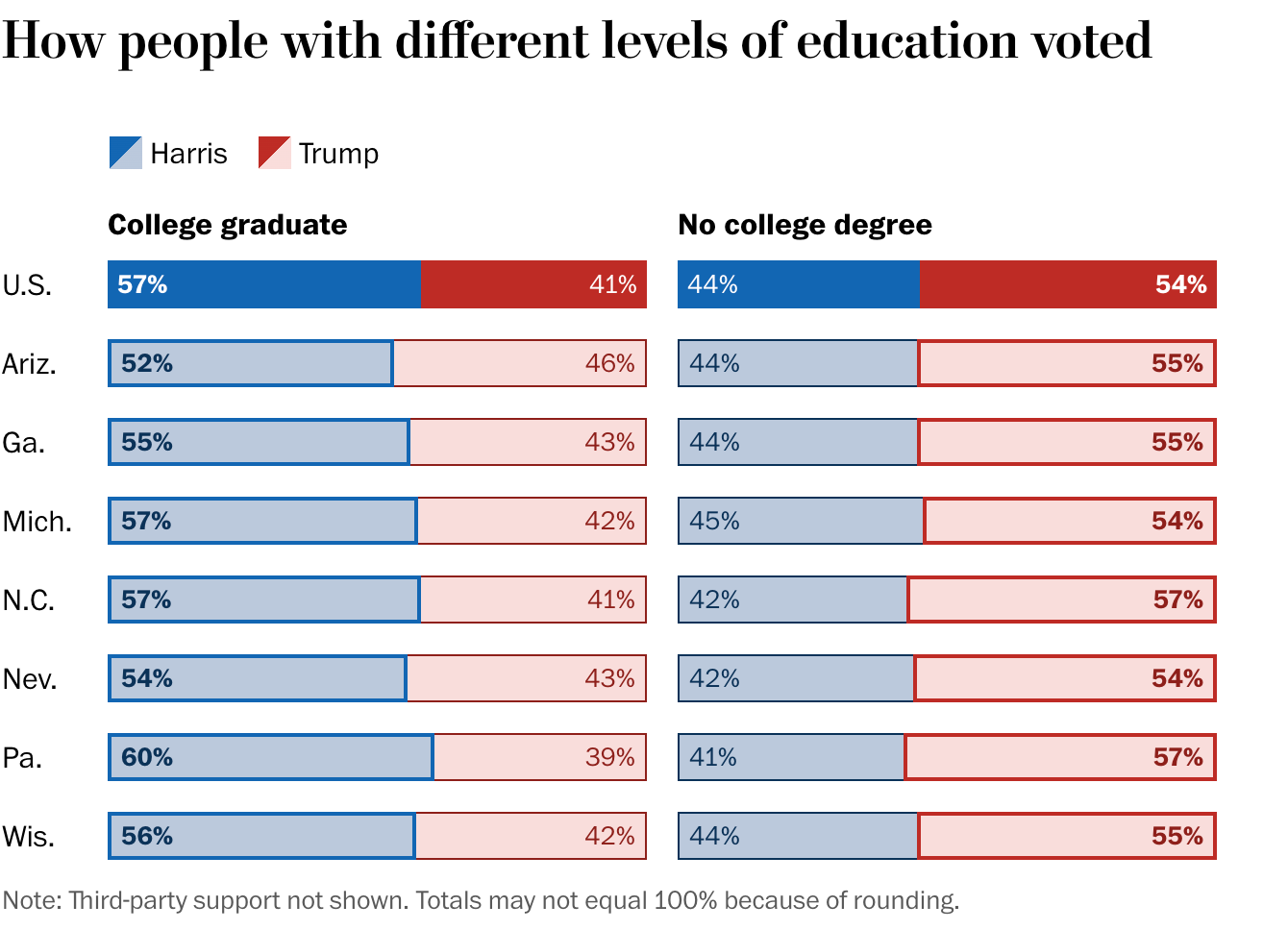
Source: The Washington Post

Those Harris supporters apparently went to good schools or, at least, paid attention when they were there. This, in fact, is no small concern. According to early exit polls, some 54 percent of Trump voters nationwide lacked college degrees, perhaps explaining the ignorance that drives many of his backers. And that number could rise as more thorough surveys come in over time.

Pew in 2020 reported that voters who identify with the Democratic Party or lean toward it were much more likely than their Republican counterparts to have a college degree (41% vs. 30%). In 1996, the reverse was true: 27% of GOP voters had a college degree, compared with 22% of Democratic voters. But the problem is that, as of that year, about two-thirds of registered voters in the U.S. (65%) lacked a college degree.

The 2024 election, by and large, was a working-class election. That is the group that gave Trump the votes in the so-called Blue Wall, handing him Pennsylvania, Michigan and Wisconsin. If Harris had carried those elector-rich states, she would occupy the White House for another four years. In other words, Trump’s success was a triumph for the undereducated who bought the promises of a demagogue who tailored his grievances to theirs.

Give Trump credit. He may be a business failure (see his bankruptcies), but he is a brilliant huckster.

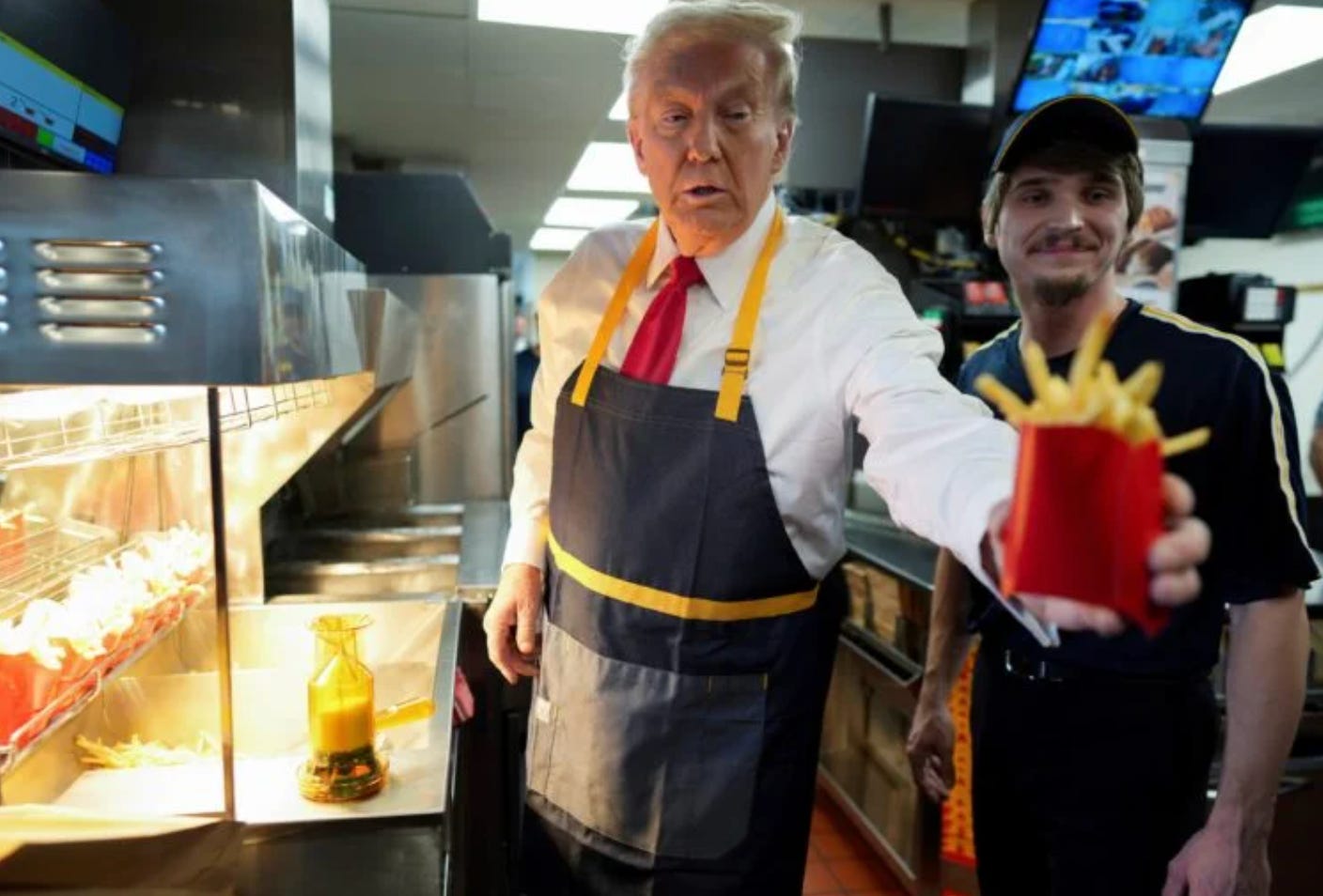
Source: pool photo from The New York Times

Those to whom he pandered were gulled in 2016 and again in 2024, it seems. The lapse seems to prove an adage often attributed (perhaps incorrectly) to Mark Twain that “It’s easier to fool people than to convince them they have been fooled.”

Indeed, the number of people who paint a rosy picture on the first Trump term, at least economically, is extraordinary and flies in the face of objective evidence to the contrary (inflation notwithstanding). Consider our historically low jobless rates and the performance of the stock market in recent years, for instance.

No one knows for sure what the future holds for the economy. But Trump’s plans bode ill, whether regarding tariffs or the decimation of the federal budget because of his top-down tax cuts. It’s entirely possible that the people fooled by Trump again this time will rue the day they made their choice.

And, on the upside (the side occupied by those 66.9 million Harris voters), Trump will face an uphill fight for some of his other moves. Perhaps we can take heart from the encouragement of such resistance by Robert Reich, former Secretary of Labor and a distinguished academic.

“We will do that by resisting Trump’s attempts to suppress women’s freedoms. We will fight for the rights of women and girls to determine when and whether they have children. No one will force a woman to give birth,” Reich writes.

“We will block Trump’s cruel efforts at mass deportation. We will fight to give sanctuary to productive, law-abiding members of our communities, including young people who arrived here as babies or children.

“We will not allow mass arrests and mass detention of anyone in America. We will not permit families to be separated. We will not allow the military to be used to intimidate and subjugate anyone in this country.

“We will protect trans people and everyone else who is scapegoated because of how they look or what they believe. No one should have to be ashamed of who they are.

“We will stop Trump’s efforts to retaliate against his perceived enemies. A free nation protects political dissent. A democracy needs people willing to stand up to tyranny.”

Is Reich whistling in the wind? Well, it depends on who will do the resisting. Most women voters (54 percent) voted for Harris, as did most people 18-29 (55 percent), most Blacks (86 percent) and Latinos (53 percent). Will such people, along with white men who likely will find themselves disenchanted anew after a couple years, wield enough power in the midterms to neutralize Trump?

American history and politics, like much else, tend to move in cycles. If Hegel was right and if Trump’s mistakes loom large enough, things will come around again. Embarrassing, disturbing and troublesome as this election has been, coming ones could give sensible folks hope. We just have to survive the coming storms.

Prosecute Snowden, not the press

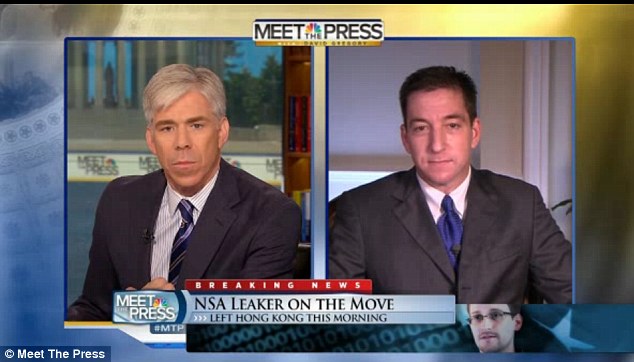
article-0-1A78A5A4000005DC-767_634x362As Edward Snowden wings his way toward whoever he thinks will shield him from American prosecutors, his bizarre story keeps metastasizing. This noxious growth is now tainting the press. The latest turn: the suggestion that not only should the former NSA contractor be prosecuted but so should a recipient of his leaks, Guardian columnist Glenn Greenwald.

NBC “Meet the Press” host David Gregory today asked Greenwald: “To the extent that you have aided and abetted Snowden, even in his current movements, why shouldn’t you, Mr. Greenwald, be charged with a crime?” So, was Gregory siding with some politicians who have called for a journalist to be prosecuted for doing his job? Certainly seemed so, though the TV host did later say he was merely asking a question, however pointedly.

Have we come to that in journalism? Are we now dining on our own? Would Gregory have raised the same question to the late Arthur Ochs Sulzberger, publisher of the New York Times, and his editors when in mid-1971 they decided to publish the Pentagon Papers? Then, as now, national security concerns were at issue in the publication of explosive secret material — in that case classified material dealing with the ongoing Vietnam War.

Sulzberger

Sulzberger

The Snowden case is a knotty one. There’s no question for me that the former trusted intelligence analyst should be prosecuted for his crime. He betrayed his employers and violated his oaths. His acts could be considered treasonous in a time of war, albeit an undeclared war with terrorists. He should be brought to account for them.

But it’s also clear that he brought to light a practice that deserves national scrutiny. Indeed, the shame of it is that the debate hasn’t happened until now. Do we want the government reading our email or, however much buried in massive data-collection practices, scanning our phone calls? Certainly, we want it rooting out terrorist plots, using wiretapping or whatever technology works. But should it cast its net so wide that it ropes in everyone? These are important questions and, sadly, it took Snowden’s actions to bring them forward.

Snowden, however, didn’t have to blow his whistle quite the way he did. He had alternatives for bringing his case forward. He could have found a friendly congressman or senator, perhaps a libertarian who might have found the NSA practices just as dubious as he did. Questions then could have been asked and debated, perhaps behind closed doors in deference to national security. Policy could have been changed quietly. Is it naïve to think so? Perhaps. But Snowden didn’t even try this route.

Would he have broken laws in talking with an elected government official about a government program? That’s one for the lawyers to decide. Certainly, he would have spared the government the international black eye it has suffered from his leaks. To much of the world now, the U.S. respects its citizens’ rights to privacy no more than China does. But, if Snowden found a courageous legislator to work with, he might have forced changes to happen without making the U.S. look like a global snoop, hardly a beacon of freedom.

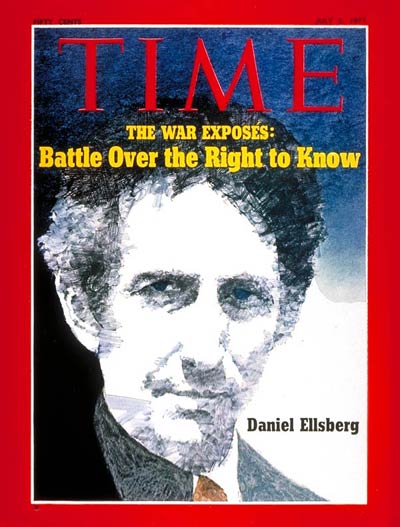
TimeIf Snowden got nowhere with the legislators, he could then have turned to the press, it seems. That was the route former military analyst and ex-Pentagon staffer Daniel Ellsberg took. He shared copies of the Pentagon Papers first with legislators and moved beyond them only when none would make them public in the halls of the Capitol. He felt they had to be exposed. Ultimately – two weeks after the Times began printing the Papers and was enjoined temporarily from doing so – a senator, Mike Gravel, did publish the documents in the official record of the Senate.

But Snowden chose otherwise, rushing outside government to make his case. He broke the laws and violated the trust of his colleagues. Whether he is prosecuted or not, history will judge whether his acts were heroic or merely treasonous. Ellsberg has largely been judged a hero. But Ellsberg had the guts to face the consequences of his actions. Unlike Snowden, he stayed in the U.S. and was tried for espionage in court. The charges were dismissed, as it turned out, because of governmental misconduct that, ironically, included illegal wiretaps on the former analyst. But the risk for Ellsberg’s act of conscience was very real.

Now Snowden will live as a fugitive, likely to spend the rest of his life looking over his shoulder. Is that heroic? Ellsberg also tried at first to stay out of the limelight, leaking his documents anonymously until he was outed. By contrast, Snowden seems to crave the attention, lionizing himself for his actions. Again, heroic? The more apt word might be narcissistic.

As for the press, the Times was right to print the Pentagon Papers. They proved invaluable to understanding how dishonest the politicians were in pursuing a war that was foul and doomed from the start. Similarly, the Guardian and the Washington Post were right in publishing Snowden’s leaked documents, even though the war we are currently fighting – the battle against terrorists – is just, is impossible to avoid and is one we must win.

The argument this time is over whether the government’s intrusions are massive overkill. Are the security services deploying a nuclear bomb when well-aimed rifles might work better? Certainly, we all want them stopping terrorist plots. But can they not just ID the bad guys and go and get ‘em without ensnaring all Americans and plenty of foreigners in their net? Do the terrorists win when we give up something as precious as privacy, the cherished right of all Americans to be left alone?

Snowden went about this all wrong. But the debate he triggered is necessary and vital and so, too, are the journalists who have brought his story to light. Gregory’s pointed question to Greenwald deserves a loud answer: no, the journalist should not be prosecuted for doing his job. Instead, the policymakers need to be held to account for falling down on theirs.