“Let’s talk of graces, of worms, and epitaphs”

Are we seeing Shakespearean drama in action?

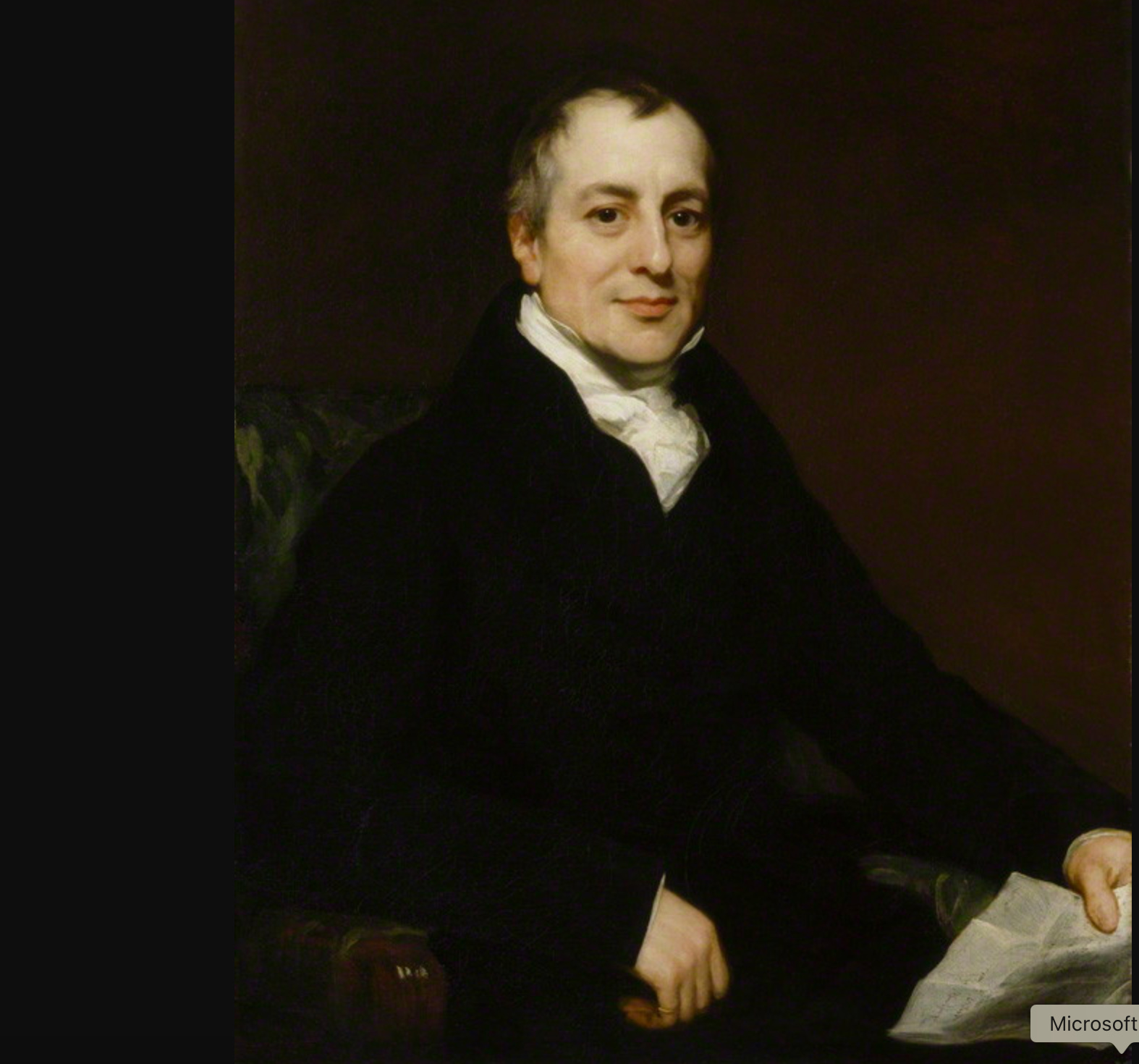
Source: Shakespeare Birthplace Trust

In Richard IIShakespeare’s famous play, the king is loathed for his self-serving and self-deceptive rule. He wastes money, steals land and kills political rivals.

Just after Trump’s first inauguration in 2017, Cornell history professor Rachel Weil drew parallels to the then newly anointed president.

“But Trump seems to be falling into the same traps as Richard II,” she wrote. “He takes the idea that he represents the people literally. Witness his unsubstantiated claims about having really won the popular vote, or the odd assertion in his inaugural speech that ‘for the first time in history we are transferring power from Washington, DC, and giving it back to you, the People.’’’

Of course, Trump did win the popular vote this time around, garnering 77.3 million votes to Kamala Harris’s 75 million, according to the latest Cook Political Report tally. But was that, as he has claimed, a “massive” mandate and “an unprecedented and powerful mandate?”

Rachel J. Weil, source: Cornell

Or has he swallowed the fiction of what Weil called a king’s “miraculous” qualities in the play, the “superhuman” nature he deludes himself about? Has Trump accepted nonsense about himself and his role and powers much as Shakespeare’s Richard II did? Trump’s self-image now seems to include even a divine mandate.

“Many people have told me that God spared my life for a reason and that reason was to save our country and to restore America to greatness,” he told his supporters after winning the election.

Messianic self-delusion at work?

Perhaps we should look a bit more closely at his “mandate.” Let’s start with two important numbers: 41 percent and 49.8 percent.

The first figure is Trump’s current approval rating, which is 10 percentage points lower than it was in December 2016, just before he took office the first time. That suggests that nearly six in 10 Americans are onto him (indeed, his rating in the Reuters/Ipsos poll has long hovered at around 40 percent, seemingly his base).

And then there’s the second number, 49.8 percent. That’s the share of the popular vote he got, according to the latest Cook report tally. By contrast, Harris took 48.3 percent, suggesting she was clearly not as well-received, but not with much of a shortfall statistically.

Indeed, it’s clear that fewer than half the voters endorsed Trump. Most preferred Harris or someone else. In what world does that amount to a popular mandate, much less a divinely ordained one?

Still, it must be admitted that Trump’s party won domination of all three branches of government and that he controls the GOP. The party of George Bush the elder and Ronald Reagan is now his. Such eloquent and reasonable statesmen are now history, as is their approach to building national unity.

And much of the nation – including most top elected officials – now are under the thumb of a man claiming heavenly anointment. Richard II redux?

Well, perhaps we should refer both to him and to the courtiers who are catering to his every whim. Some, in fact, may be guiding the often-irrational 78-year-old, Rasputin-like.

Even though we are weeks away from his investiture, the new would-be monarch and his influential acolytes are flexing their muscles. Trump and Elon Musk – which some have called a “shadow president” – this week have used the possibility of a government shutdown to begin a process of gutting the government.

They felt no qualms about embarrassing Speaker Mike Johnson, who had negotiated a bipartisan spending deal. They torpedoed it.

Surely, Trump won’t want a shutdown marring his inauguration. So, we likely will see some sort of deal before then, perhaps imminently.

But does the threat of such a closure reflect what most Americans want? Do the spending cuts threatened in the coming four years reflect popular will? Do most of us want at least $2 trillion in spending cut from a government that spent $6.75 trillion in the latest fiscal year, as Musk has suggested? His Department of Government Efficiency, as the odd entity he co-leads is called, is already foreshadowing its efforts with the destruction of the budget deal.

Source: Wall Street Journal

And where will Trump and Musk find the programs to cut? So-called discretionary spending – the stuff that Congress votes on annually — amounts to about $1.8 trillion, as The Wall Street Journal reported. This includes defense spending, such as buying everything from aircraft carriers to mess-hall meals, as the paper reported, to nondefense programs such as NASA, farm and housing programs, and such.

Will they go after Social Security, Medicare and Medicaid – even though Trump promised to not touch them? “The government’s big-ticket items provide healthcare for Americans and money for retirees,” the Journal reported. “Social Security benefits cost the government $1.45 trillion in the most recent fiscal year, according to CBO estimates published this month. Medicare and Medicaid were a combined $1.49 trillion.”

Already, some Republicans are renewing attacks on such programs. Utah Sen. Mike Lee, for instance, recently called Social Security a “Ponzi scheme that’s running out of new investors” and “government dependency at its worst.” Musk called Lee’s comments, in an X thread that Musk reposted, “interesting.”

For some billionaires, of course, programs that help folks of far smaller means are abstractions. If they ever knew hunger or want, they’ve apparently long forgotten that. And they are continuing a longstanding GOP resistance to such government efforts, an ideological battle that dates back to the New Deal.

In a sense, Trumpism isn’t all that new in this respect. It’s just another battle in the historic war between wealthy small-government ideologues and most Americans. With at least 13 billionaires in his proposed Cabinet and top offices, that battle clearly is tilted away from most Americans.

Heather Cox Richardson, source: Maine Public Radio

As Boston College historian Heather Cox Richardson wrote of laws passed in the New Deal that created Social Security and guaranteed various workers’ rights: “A majority of Americans of both parties liked the new system, but the reworking of the government shocked those who had previously dominated the country. As soon as the Social Security Act passed, opponents set out to destroy it along with the rest of the new system.”

The fight joined back then has long endured and it has involved many of the same demagogic tools. Just look at Trump’s campaign dog-whistles about race, religion and women’s rights. They, along with nativism, seem to be reliable standbys for a would-be right-wing president.

“A coalition of Republican businessmen who hated both business regulation and the taxes that paid for social programs, racists who opposed the idea of equal rights for racial and ethnic minorities, and religious traditionalists—especially Southern Baptists—who opposed the recognition of women’s equal rights, joined together to fight against the New Deal,” Richardson recounted.

So, Trump has vowed to deliver on the promises he made in his campaign. His tariff vows may rekindle inflation. His opposition to diversity and LGBTQ programs may inhibit rights minorities have fought for. His efforts to destroy the Department of Education may scramble our system of federal grants and advance such goals as destroying academic freedom and pursuits such as critical race theory. And, of course, we may see attacks on longstanding health mandates such as vaccination for childhood diseases.

Will taking such unpopular approaches ultimately do in a Trump Administration and guarantee a return of the Senate and House to Democrats in two years and of the White House in four? Of course, none of us can know that. We can’t know whether the extraordinarily dishonest and often incoherent Trump will deliver on his promises.

But, if he does, his fate could be a less violent replay of Richard II’s. In the play, the king is ousted and his main opponent seizes the crown. In the end, Richard is killed.

Our system, thankfully, provides for elections instead of such ugliness. But in the coming years, we may see either the permanent installation of a GOP minority or a renewed cyclical withering. Much will turn on what the once and future monarch decides.

Grace in victory, ya’ kiddin’ me?

For Donald J. Trump, there is no high road

Source: ebay

Nearly five years ago, web publisher Elizabeth Spiers wrote an opinion piece for The Washington Post headlined “Trump is the ultimate sore winner. Now he’ll seek revenge.” This was after then-President Donald J. Trump was acquitted by the GOP-dominated Senate in his first impeachment.

Might he have been gracious in victory? Might he have extended an olive branch to critics? Might he have even shown a touch of shame, contrition and regret?

Fuggadabout it.

Within 48 hours, Trump fired two witnesses who testified in the case, ordering hotel-chain founder Gordon D. Sondland recalled from his post as the ambassador to the European Union and having Lt. Col. Alexander S. Vindman, a decorated Iraq war veteran on the National Security Council staff, marched out of the White House by security guards. He also ousted Vindman’s brother, Lt. Col. Yevgeny Vindman, from the NSC staff.

Trump’s press secretary declared that those who hurt the president “should pay for” it.

So, is it any surprise that president-elect Trump hasn’t even waited until he assumes office to rain hell on his real and perceived critics? Is it any wonder that he has sued Gannett, The Des Moines Register and a pollster over simply reporting a pre-election Iowa poll that showed him as slightly behind Kamala Harris in the state?

In his mind, the pollster was guilty of “brazen election interference,” according to the suit. Reporting the news, to Trump, is interfering with an election, it seems.

This followed an October suit against CBS News in federal court in Texas, in which Trump alleged that “60 Minutes” engaged in deceptive trade practices — an odd charge — when it aired an interview with Kamala Harris. He objected to editing that he claimed made Harris look better.

“It’s clear that Trump is waging war on the press,” Samantha Barbas, a professor at the University of Iowa College of Law told The New York Times. “Trump and his lawyers are going to use any legal claim that they think has a chance of sticking. They’ll cast a wide net to carry out this vendetta.”

So don’t expect graciousness in victory from the once and future president. Vindictiveness and intimidation are his longstanding tropes.

“If somebody attacks him, he attacks them back, he says, ten times as hard,” New York Times reporter Peter Baker said. “He’s not about diplomacy. He’s not about negotiation. He is all about the fight.”

Machiavelli, source: Medium

Whether slights are big or small, imagined or real, Trump uses whatever levers of power he has to slash anyone who crosses him or might do so. He appears to take to heart a couple of Niccolò Machiavelli’s pieces of advice: “It is better to be feared than loved, if you cannot be both” and “If an injury has to be done to a man it should be so severe that his vengeance need not be feared.”

How petty can the once and future president be?

He once built a hill in front of a cottage in Scotland whose owner had opposed a Trump golf course and hotel development — so the cottage’s yard flooded whenever it rained.

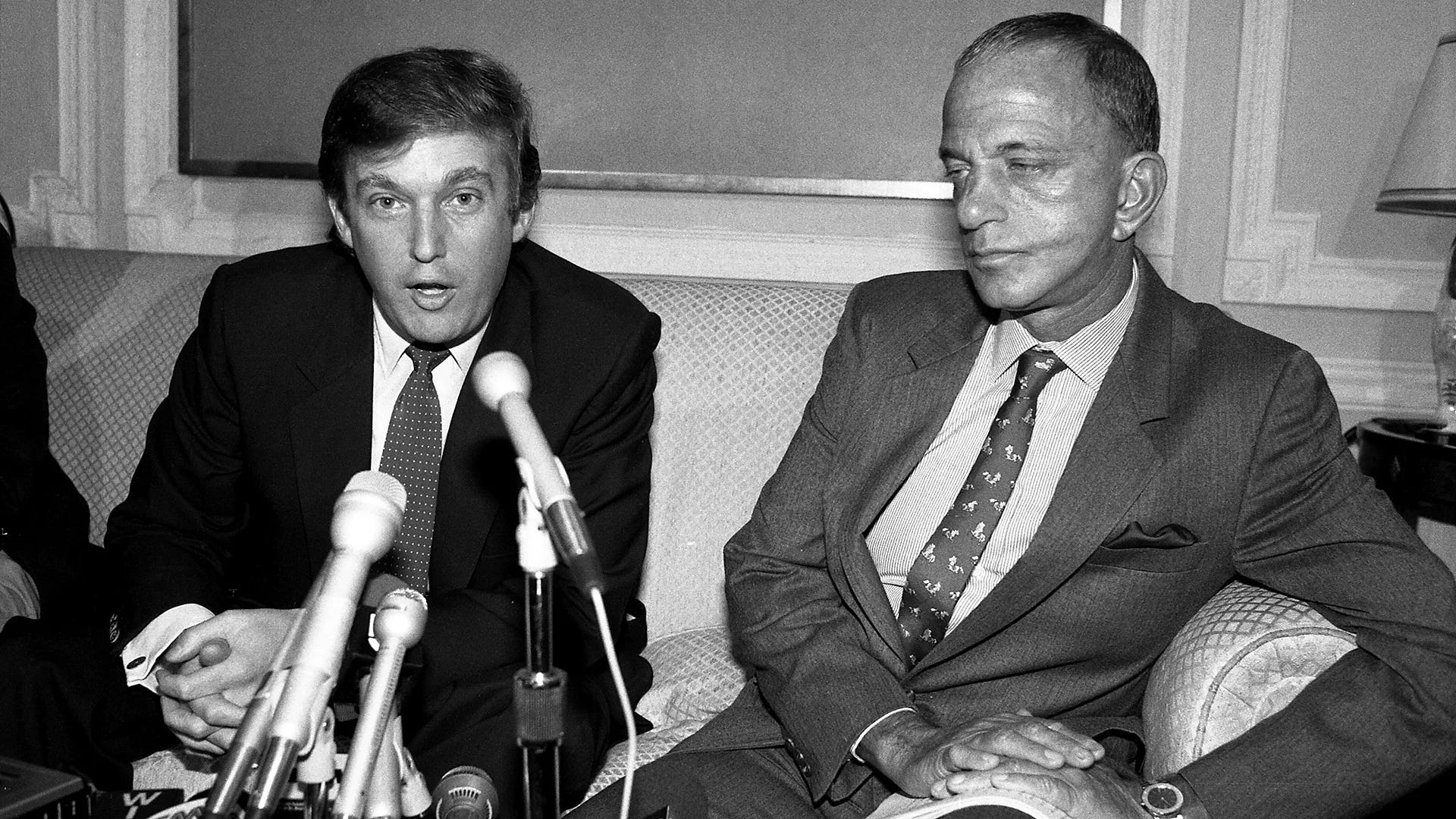
Beyond just owning a thin skin, Trump has a method to his viciousness. Hitting back hard is pure Trump; it’s something he learned from one of his first lawyers, the late disbarred Joe McCarthy errand boy Roy Cohn. As a cousin of the notorious lawyer said, “Roy Cohn showed him that you can turn around a situation just by ignoring the facts and going after your attacker.”

Trump does that either with legal action or verbal savagery, a powerful weapon when wielded by someone in the White House.

Rex Tillerson, his former secretary of state, was “dumb as a rock and I couldn’t get rid of him fast enough. He was lazy as hell.” Adviser Steve Bannon “cried when he got fired and begged for his job.” Former White House Communications Director Anthony Scaramucci was a “highly unstable ‘nut job.’ ” Former assistant Omarosa Manigault was “wacky” and “deranged,” “a lowlife.” Former national security adviser John Bolton was “very publicly terminated.”

Making people pay has long been a key to Trump’s approach. Spiers noted that as a casino operator, he invented fake ethical scandals about people who could have exposed him as a terrible businessman. Recall that he drove his casinos into bankruptcy six times (really, what amount of stupidity or, more likely, greed does it take to bankrupt a gaming house?)

He’s especially nasty toward the media, apparently hoping he can cow critical journalists.

The $16 million settlement he won from ABC parent Disney seems to have invigorated him. In his recent press conference, he referred to ongoing lawsuits he has brought against publisher Simon & Schuster over the rights to recorded interviews he gave to journalist Bob Woodward, and the Pulitzer Prize board for reaffirming awards it gave to The New York Times and Washington Post for their reporting on ties between his 2016 campaign and Russia.

“It costs a lot of money to do it, but we have to straighten out the press,” Trump said. “Our press is very corrupt. Almost as corrupt as our elections.”

While Disney’s surrender has riled many in the media, what’s more troubling is that it may have been a product of fears that a Trumpian judiciary in Florida and beyond, as well as a Trump-friendly jury in the red state, would have backed the former president up.

A federal judge in the state in July denied Disney’s motion to dismiss Trump’s suit. As The New York Times reported: “A reasonable jury could interpret Stephanopoulos’s statements as defamatory,” Judge Cecilia M. Altonaga, a George W. Bush appointee, wrote, and then added an emphasis in italics. “Stephanopoulos stated ten times that a jury — or juries — had found plaintiff liable for rape.”

Beyond Trump’s concerns, his war on the media could have far-reaching effects for others who share his feelings of victimization. Lee Levine, a retired media lawyer, told The Wall Street Journal that the Disney settlement will embolden some media critics. That could potentially chill news outlets’ handling of sensitive stories, the paper reported. It “will definitely have an impact on news coverage going forward,” Levine said.

“You need a fair press,” Trump also said, striking an heroic pose. “I’m doing this not because I want to. I’m doing this because I feel I have an obligation to.”

Gimme a break. Trump’s litigiousness should be a lesson to anyone in media who believes that capitulating to him will spare them his ire (take note, owners of The Washington Post and the Los Angeles Times).

Kash Patel, source: Wall Street Journal

He will use whatever powers are available to him to muzzle or punish critics in journalism and elsewhere. His choice to head the FBI, Kash Patel, said months before the election that he would use his post “to come after the people in the media who lied about American citizens, who helped Joe Biden rig presidential elections.”

And Trump has made it clear he will use his Justice Department to exact vengeance on political opponents, such as former Rep. Liz Cheney, whom House Republicans want investigated criminally for her role in leading the panel that probed the Jan. 6, 2021, insurrection at the Capitol. A House subcommittee, echoing Trump’s attacks, recommended the investigation in a recently issued report that suggested she tampered with a witness.

“Liz Cheney could be in a lot of trouble based on the evidence obtained by the subcommittee, which states that ‘numerous federal laws were likely broken by Liz Cheney, and these violations should be investigated by the FBI,’” Trump wrote in a post on his Truth Social network.

Trump’s enemies list is a long one. That’s why some, such as Sen. Bernie Sanders, have urged President Biden to issue preemptive pardons to, among others, the entire Jan. 6 House investigative panel.

“You know, when Trump talks about sending to jail people who were on that Jan. 6 committee, that sounds like being a tin-pot dictator,” Sanders said on NBC’s “Meet the Press.” “This is what authoritarianism is all about. It’s what dictatorship is all about…. You do not arrest elected officials who disagree with you.”

Would-be appointee Patel seems to think arrests and worse are appropriate and not only for elected officials, but just rank and file government staffers. In a 2023 book, Patel listed 60 people whom he classified as “members of the executive branch deep state” — a “cabal of unelected tyrants” who posed “the most dangerous threat to our democracy.”

And he has since said that the Trump administration must deal with this “deep state,” be it “criminally or civilly.”

Sarah Isgur, source: NBC News

At least one potential target on Patel’s list, former Justice Department public affairs office director Sarah Isgur, argues she would prefer a prosecution to a pardon that would be seen as an affirmation of guilt.

“If we broke the law, we should be charged and convicted,” Isgur wrote in a New York Times opinion piece headlined “I Don’t Want a Pardon from Biden. None of Us Should.” “If we didn’t break the law, we should be willing to show that we trust the fairness of the justice system that so many of us have defended. And we shouldn’t give permission to future presidents to pardon political allies who may commit real crimes on their behalf.”

Certainly, Isgur is taking a high-minded approach. She notes, however, that such prosecutions would likely be unpopular with many Americans, including those who voted for Trump.

“If he wants to prosecute everyone on his list, it’s going to require a lot of law enforcement resources,” she writes. “At a time when much of the American public wants the president to focus on inflation, crime and immigration, voters may not be pleased if drug cartels are a lower priority than prosecuting Liz Cheney for treason.”

Of course, for Trump and his toadies, using taxpayer money and resources to browbeat enemies would likely be cost-free. He wouldn’t be paying the bill — we all would — and he would force his targets – whether well-heeled or not – to spend a lot in their defenses.

As The New York Times reported, Trump famously lost a libel case that he brought against the writer Timothy O’Brien for allegedly understating Trump’s net worth. During the 2016 election, Trump told The Washington Post that it was worth it, even with the loss.

“I spent a couple of bucks on legal fees, and they spent a whole lot more,” he said of O’Brien and his book publisher. “I did it to make his life miserable, which I’m happy about.”

If that’s the sort of thing that makes Trump happy, buckle up. If you’ve watched him over time — or, heck, just visited one of his gaudy hotels — you know that grace is not part of his repertoire.

Kowtowing to a new reality

Why ABC’s settlement is a problem for the press and us all

Source: The Guardian

Over the years, when major TV networks have displeased Donald J. Trump, he has been quick to respond.

After moderators on ABC fact-checked his false statements during a presidential candidate debate in September, he called the network “dishonest” and railed against it on Fox. “To be honest they are a news organization, they have to be licensed. They ought to take away their license for the way they did that,” he said on Fox & Friends.

Thanks for reading The Big Picture! Subscribe for free to receive new posts and encourage my work.

Then, he took umbrage at CBS for an editing decision in an interview with Kamala Harris, saying it should lose its broadcast license. And, a few weeks before the general election, he went on his Truth Social to expand his targets to include not only CBS, but also “all other Broadcast Licenses.”

The TV-sensitive Trump’s attacks followed those from as far back as 2017, when he tweeted: “With all of the Fake News coming out of NBC and the Networks, at what point is it appropriate to challenge their License? Bad for Country!,” followed by “Network news has become so partisan, distorted and fake that licenses must be challenged and, if appropriate, revoked. Not far to public!”

So, now that the once and future president will again wield influence over the ostensibly independent Federal Communications Commission, is it any wonder that ABC has kowtowed to him in agreeing to pay $16 million to settle a defamation suit he brought? Indeed, Trump just named a new chair for the commission, Brendan Carr, a Project 2025 contributor who has said networks should be punished for political bias.

Just how much power Trump, Carr and the FCC will have over the networks is in dispute. The networks don’t need licenses to operate, even though local affiliate stations do.

And, while the White House doesn’t control FCC decisions, it does appoint the five commission members. Surely, the other four will be parrots for Carr, who is already firing shots across the bow. The Republican operative and Trump toady just wrote on X that “broadcast media have had the privilege of using a scarce and valuable public resource — our airwaves. In turn, they are required by law to operate in the public interest.” As chairman, he added, “the FCC will enforce this public interest obligation.”

Brendan Carr, source: Getty Images via Variety

Moreover, Trump’s Department of Justice will have power over corporate media deals. Recall that in his first term Trump tried to block AT&T’s acquisition of CNN’s owner, Time Warner (though Justice’s antitrust division failed in that effort in court). That potent lever could bode ill for ABC and the other networks.

Even while presidents are somewhat hemmed in by longstanding free speech protections, there’s no doubt that Trump, as president again, can make life very tough for broadcast media. Tom Wheeler, FCC chairman from 2013 to 2017, told The New York Times that Trump’s threats could create a “chilling effect” on how news organizations make editorial calls.

“It is hard to yank a license; it is particularly hard to yank a license on the instruction of the president of the United States,” Wheeler said. “But it is not hard to have an impact on decision making.”

So, ABC’s decision, while alarming to believers in a free press, is not surprising. The case at issue turns on politics, lust and semantics.

Source: The Guardian

Anchor George Stephanopoulos last spring repeatedly referred to Trump as being “liable for rape” after a jury found him liable for “sexual abuse” in a mid-1990s assault on writer E. Jean Carroll. Without her consent, Trump had penetrated Carroll with his finger in an assault in a New York department store dressing room. While Trump objected to the term “rape,” the judge in the case acknowledged that the terms were interchangeable in real-world use, even though they were legally distinct.

“The finding that Ms. Carroll failed to prove that she was ‘raped’ within the meaning of the New York Penal Law does not mean that she failed to prove that Mr. Trump ‘raped’ her as many people commonly understand the word ‘rape,’” Judge Lewis A. Kaplan wrote. “Indeed, as the evidence at trial recounted below makes clear, the jury found that Mr. Trump in fact did exactly that.” Kaplan said New York’s legal definition of “rape” is “far narrower” than the word is understood in “common modern parlance.”

Trump still owes Carroll nearly $90 million, plus interest, in the matter. He was found liable for that because he defamed her, according to two juries. Of course, the litigious mogul is appealing and may be hoping a friendly judiciary — one larded with his appointees — will vindicate him.

The facts, and Kaplan’s comments in a binding ruling, suggest that ABC likely would have had a good case, had it stood its ground and fought. Indeed, had Trump lost the election, it’s hard to see how the network would have bent the knee as it has. But, as president, Trump will just have too much power over it, network executives seem to think.

From a purely financial standpoint, moreover, the $16 million is peanuts compared with what litigating the case would cost. And it’s notable that $15 million will not go directly to Trump, but rather to his future presidential foundation and museum ($1 million goes to legal fees). Notably, neither Stephanopoulos nor the network apologized for the comments, saying only that they “regret” them.

It is a far cry from the $787 million that Fox agreed to pay Dominion Voting Systems for defaming the company in its dishonest and incorrect reporting. “The truth matters. Lies have consequences,” the company’s lawyer said in discussing the settlement.

It’s a bit surprising, in fact, that Trump didn’t press for more money or to have it go directly into his pockets. But it seems likely that he valued the PR effect and his ability to crow about the deal to his followers even more. He also may not have relished the idea of prolonged litigation that drew still more attention to his longstanding sexual depravity.

Is this all appalling, nonetheless? Unquestionably.

Much as the decisions by the owners of The Washington Post and the Los Angeles Times to kill editorial page endorsements of Kamala Harris, ABC’s action seems like another case of what Yale historian Timothy Snyder calls “anticipatory obedience.” This is where organizations or individuals facing a tyrannical leader rush to yield in hopes he will not crush them.

“Most of the power of authoritarianism is freely given,” Snyder writes in his book On Tyranny. “In times like these, individuals think ahead about what a more repressive government will want, and then offer themselves without being asked. A citizen who adapts in this way is teaching power what it can do.”

For those counting on the press to act as a guardrail against Trump’s excesses, the ABC decision seems craven, at best. It’s of a piece with the steady stream of major execs rushing to kiss Trump’s, ahem, ring by jetting off to Mar-a-Lago to dine with him and donate to his inaugural fund. Perhaps the most shameful is the $1 million donation by Washington Post owner Jeff Bezos.

Jeff Bezos, Trump; source: Fox Business

What’s more, it’s not at all clear that ABC’s choice will make any difference over the coming four years. The notoriously thin-skinned Trump may yet threaten its ability to broadcast the truth when something else offends him.

Sadly, we can be sure that the journalists there will second-guess everything they do now to try to avoid irking the king. That’s the way tyrants work. Self-censorship, authoritarians across the world have found, is the best kind.

With a Trumpist Senate, House and judiciary, the incoming president will have extraordinary power to shape the laws and practices we follow. With decisions such as ABC’s, he may also in effect hold sway over the reporting and discussion of any of his efforts, perverting reports to suit his often distorted view of reality.

Will the media be able any longer to shine a light on the truth? Will more print media fall in line behind the Times, Post and ABC? And just how much of a difference will that make, in any case?

As shown by an election in which a bit over 49 percent of voters ignored or dismissed a ceaseless cascade of troublesome headlines and broadcast stories, the media is far less of a counterweight than it once was or should be. In their thrall to a strongman, far too much of the public — though not quite a majority — simply doesn’t seem to care about facts.

It’s hard to find reason for optimism, for hope that things could change for the better with Trump holding the whip hand at the moment. Still, in our electoral system, little is forever. Enough voters may care about reality that things could change with the midterm elections in a couple years. Certainly, that happened in Trump’s first term and in 2020.

In the end, Trump may have just a couple years to cow networks and intimidate journalists. But, as the ABC decision suggests, a tyrant to whom all kneel can do a lot of damage. Will his loathsome handiwork prove to be lasting? We’ll all have to stay tuned for that.

An argument for fairness

The problems with the fracas at the Los Angeles TimeS

Harry Litman, source: his Substack

When longtime Los Angeles Times legal columnist Harry Litman quit the paper, furious at its owner for “cozying up” to Donald J. Trump by cancelling an endorsement of Kamala Harris, he raised one of the most troubling questions in political journalism today. Should news outlets scrap the idea of “balance” in their coverage?

“First, the idea of balance is fundamentally misplaced when on one side of the balance is a sociopathic liar like Donald Trump,” Litman wrote in a Substack. The paper’s owner, Dr. Patrick Soon-Shiong, “apparently would have the Times deliver an on-the-one-hand, on-the-other-hand presentation to readers. But there is no ‘other hand.’ Trump is an inveterate liar, and journalists have a defining responsibility to call that out.”

Thanks for reading The Big Picture! Subscribe for free to receive new posts.

Subscribed

Litman further attacked the longstanding journalistic credo of neutrality, something long called “objectivity.” Instead, he suggested that news outlets need to clearly take a side, seemingly both on their editorial and news pages. He was particularly irked about the shelving of a multi-part series, “The Case Against Trump,” that was slated to run (presumably on the news pages) as a companion to the spiked pro-Harris editorial.

“These are not normal times. Look around. We are in the political, cultural, and legal fight of our lifetimes. Trump’s conduct since winning the election only reinforces his determination to replace constitutional rule with some form of authoritarian rule,” Litman wrote. “So the neutral posture that Soon-Shiong uses to justify his violence to the paper is exactly, fundamentally wrong. This is no time for neutrality and disinterest. It’s rather a time for choosing. And a choice for true facts and American values is necessarily a vigorous choice against Donald Trump.”

Source: Lifewire

Litman’s impassioned argument is understandable, based in cold, hard facts and on claims by Trump himself about his intentions and his targets. The writer is also unquestionably correct about the incoming president’s long litany of lies, both in his first term and in the recent election. And Litman rightly observes that “people who voted for Trump were fed a relentless false account of issue after issue, including Trump’s signature distortions about immigrants (eating pets, committing a disproportionate number of violent crimes), which Fox News and right-wing social media parroted relentlessly.”

But his suggestions and solution, in the end, are wrong-headed and self-defeating. They not only call for violating longstanding journalistic ethics about fairness, but they would have exactly the opposite effect he seeks on the electorate – especially the 49.9 percent of American voters who backed Trump (by the latest Associated Press count, though the Atlas of U.S. Elections pegs Trump’s tally at 49.72 percent). They likely would drive such folks even further away from responsible media than they are now.

Litman is in effect arguing that the press must become full-throated participants in The Resistance, as the effort was called during Trump’s first term. But is that tack going to persuade anyone in the 49 percent? Or, rather, are they simply going to do more of what such folks have done for decades, which is to turn away from the press as hopelessly biased? Recall that just 11% of Republicans and only 58% of Democrats have a high degree of trust in the media, as reported in 2023.

Source: The New York Times

Followed to its logical conclusion, Litman’s argument would have the press shouting into a void, preaching only to the choir. Sure, unceasing hostile coverage would please anti-Trump readers, reassuring them about their legitimate fury at the man and the dangers he poses. But would it make any difference in the end with many alienated folks? Would it win over hearts and minds that need to be gained?

Ever since Trump appeared on the electoral scene, we have seen polarization widen in the media. On the one side, news and opinion coverage in responsible outfits such as The New York Times, The Washington Post, the Los Angeles Times, The Atlantic and The New Yorker, as well as CNN and MSNBC, has been relentlessly negative. On the other, fawning operations such as Fox News and Newsmax have trumpeted rightist misstatements and exaggerations, pandering flagrantly to Trump and his partisans (and gaining ground in the process).

And the election results, tragically, suggest that the anti-Trump reports in the media made no significant dent. No matter how many ugly, if accurate, headlines the critics produced about Trump’s lies and dangerous plans, his backers remained unmoved. Many likely never saw them.

At best, the outlets proved impotent beyond their loyal readerships. At worst – and this is the more dangerous thing for our democracy and for an informed public – they alienated potential readers and viewers with the ceaseless critiques, no matter how legitimate they were.

In short, The Resistance failed. And now, Litman’s call for an end to balance and neutrality would drive it further into the wilderness. Abandoning such principles would cost the media still more readers and viewers.

What’s more, his problematic solution – as shown by his action – is to quit. Three other editorial page members did so at the LA Times and some 2,000 readers did so, in effect, by cancelling their subscriptions. Rather than join the fray and battle it out with pro-Trump commentators (such as CNN right-winger Scott Jennings whom Soon-Shiong is hiring as he develops what he called “diverse perspectives”) Litman took his marbles and went home.

Just who does that help? Certainly, it may be satisfying to Litman. And, yes, he still can air his views in his Substack and even might find other outlets. But will remaining LA Times readers be served by his trenchant views not appearing any longer in the paper?

Source: Financial Times

In the end, the press needs to call out Trump’s lies. It needs to report fully and fairly on whatever dictatorial overreaches he attempts. It must report on the incompetents and ideologues he plans to lard his Cabinet with. It has to raise questions about the dubious judges he is likely to stock the courts with, right up to the highest court in the land.

Moreover, it will be obliged to report on the pernicious economic effects likely to arise from Trump’s tariffs. It will need to detail the human tragedies that his deportation plans will spawn. It must spell out whatever disasters arise from foreign policies, perhaps including the abandonment of Ukraine. Certainly, it has to cover the disregard for the law shown by his plans to pardon Jan. 6 insurgents.

All that demands coverage. But, at least in the news pages, that coverage should be free of the writers’s opinions. Sure, they should quote the many smart Trump critics, but they also must give voice to his credible defenders (hard as they may be to find). Put the authorial condemnations on the editorial pages, along with defenses. But leave the news pages to tell things straight.

My suggestion, for instance, for the LA Times series, “The Case Against Trump,” would have been a sister series, “The Case For Trump.” Admittedly, the latter would be harder to flesh out than the former, but some in a near majority of the electorate may have warmed to it (and perhaps would then have read the critical package, too).

Importantly, fairness differs from “bothsidesism.” It’s not a matter of he said/she said coverage that insists on equal numbers of inches for various sides. The first mission of the press is to seek out the truth, as best it can, and that doesn’t mean parroting “alternative facts.” When the president speaks falsely, as he surely will, that must be called out, for instance.

But, in the case of Trump, it means letting people in positions of trust for him air their views, even if others undercut them. It means trying to understand the fears and hopes of his supporters and reflecting them in the coverage, as well as pointing out likely shortcomings in solutions by Trump (will he really bring down the prices of groceries, for instance?)

In the end, I disagree with Litman’s approach, but I second his fact-based criticisms of Trump, a man all too easy to loathe and fear. But I also am mindful of the need for fairness in journalism.

Source: William McKeen

That fairness ideal is fragile, relatively new and almost uniquely American.

As I wrote in an academic paper some years ago, it wasn’t until after World War I that a devotion to what was then called objectivity took hold in the U.S. In 1923, the American Society of Newspaper Editors adopted the Canons of Journalism, mandating that “news reports should be free from opinion or bias of any kind.” The American Newspaper Guild, the journalists’ union, in 1934 adopted a code of ethics that called for accurate and unbiased reporting, guided “only by fact and fairness.” And by the end of World War II, objectivity was “universally acknowledged to be the spine of the journalist’s moral code,” according to academics Michael S. Schudson and Susan E. Tifft.

Yes, “objectivity” has long since been discredited, since no one is truly objective. The very questions journalists raise and their choices of what constitutes news are subjective matters. Their approaches arise from their backgrounds, their educations and their biases.

But fairness as an ideal endures. It’s a value that my former editor at BusinessWeek, Steve Shepard, insisted on, even as we undertook viewpoint-oriented magazine journalism. It’s possible both to have little use for Soon-Shiong’s financially self-interested actions at the LA Times and to uphold the ideal of fairness and balance in coverage.

Indeed, if journalists don’t do that, the levels of trust in media will surely plunge still further.

As our major political institutions seem compromised by Trumpism, and at a time when the risks that Trump’s presidency poses for our democracy are all too real, the press is a guardrail we can’t afford to lose. And that’s why the press can’t afford to keep losing its audience.

Litman calls balance a “bromide.” Isn’t it, instead, a pillar that should not be undercut, whether by Trump or those opposed to him? Should we, in effect, help a potential tyrant by abandoning cherished journalistic ideals?

Echoes of the past

Visits to Portugal and Spain suggest a rough road for the U.S.

Sagrada Familia, Barcelona; source: author

“History does not repeat itself, but it rhymes,” an old maxim goes. Are we about to see some such sad, even tragic, poetry again?

I’m reminded of the question after spending a few weeks in Portugal, Spain and Germany, visits that gave me some perspective on the president we will inaugurate next month. Recall that this is the same man who vowed to be a dictator for at least a day.

Germany’s ugly history with a tyrant at the helm need not be repeated here. But, for some readers, the experiences in Portugal and Spain may be unfamiliar. They also may be more instructive.

Consider Portugal, where the “Ponte 25 de Abril” rises high above the Tagus River between Lisbon and Almada. When the bridge was built in 1966, dictator António de Oliveira Salazar named it for himself. After his regime fell in the Carnation Revolution in 1974 and his successor, Marcello José das Neves Alves Caetano, was driven out of the country, Portugal’s new leaders renamed the span for the date of the upheaval.

Ponte 25 de Abril, Almada to Lisbon; source: Wikipedia

Lasting 41 years, the Portuguese dictatorship was the longest-lived one in Europe. It beat the rule of Francisco Franco Bahamonde in neighboring Spain, whose regime lasted 36 years. Spain’s tyranny ended with Franco’s death in 1975.

Their tenures had extraordinarily personal effects on the people of the countries.

Portugal’s Women’s Liberation Movement, 1970s; source: Jacobin

Salazar’s control was pervasive. As reported by Daniel Melo of the University of Lisbon, censors battered the press and propaganda abounded. Women were subjugated, largely confined to their homes, except for attending to education and caring functions, as well as providing for Christian sacraments.

The Roman Catholic Church became a tool for the regime’s cultural vision. “First and foremost of these was the retrieval or (re)invention of so-called popular traditions in keeping with the fundamentalist Catholic mother church,” Melo writes. He points to “the ultranationalist cult and the rationale of mass mobilization in conformist cultural activities, appealing to ruralist and traditionalist nostalgia and/or those already enshrined in mass culture, from the emergence of cultural and entertainment industries.”

Christ-King monument, Almada, Portugal, built 1949-59; source: author

Are there echoes there in the irreligious Donald J. Trump’s cynical and opportunistic use of religion? Does suppression of women’s rights to control their own bodies have a precursor in the approach by Salazar, whose links to women have been much disputed? Does the assault on the media by a thrice-married philandering felon and sexual abuser mirror that of the Portuguese dictator?

As for Franco, his authoritarian rule included similar traditional religious tyranny, as well as the establishment of concentration camps and the execution of political and ideological enemies.

Do such prison camps bring to mind Trump’s plans for deportation camps? Certainly, he wouldn’t get away with executing political opponents, but his intention to persecute them is so serious that the Biden Administration is considering pre-emptive pardons. The current president may have to do so for himself, as well as Vice President Kamala Harris, former Vice President Mike Pence and Sens. Mitch McConnell and Chuck Schumer and former Rep. Liz Cheney, all of whom Trump has singled out for criticism.

To be sure, there are differences between our system and the unbridled power that the Iberian dictators had. For one, there is still an oversight function exercised at times by the Senate and Congress. And even if both are Trumpist, pressure brought to bear by good journalism can have an effect.

So far, such pressure has driven out one of the proposed nominees for the clown car Cabinet, potential Attorney General candidate Matt Gaetz. This came about even as the Trumpists blocked publication of a report that would have detailed his depravity. By contrast, it’s possible that Defense Department head nominee Pete Hegseth will yet survive similar pressure, though the headwinds against him are strong.

Lisbon Christmas Market, source: author

But the clown-in-chief’s selection of such bozos suggests just how erratic and problematic governance will be in the coming four years. No doubt, he’ll find others – perhaps more dangerously capable ones, such as Gaetz replacement Pam Bondi and possible Hegseth successor Ron DeSantis – to do his destructive bidding. Their efforts may amount to a reversal of the role of government, as eloquently described by historian Heather Cox Richardson, who points to Trump’s promises “to reject Biden’s economic vision and resurrect the system of the years before 2021 in which a few individuals could amass as much wealth as possible.”

“The change in ideology is clear from Trump’s cabinet picks,” Richardson writes. “While the total net worth of the officials in Biden’s Cabinet was about $118 million, Laura Mannweiler of U.S. News and World Report noted, a week ago she estimated the worth of Trump’s roster of appointees to be at least $344.4 billion, more than the gross domestic product of 169 countries.”

Are such folks going to make life better for ordinary Americans? Do they have even the remotest connection to the working-class folks who elected their leader?

As Wall Street Journal columnist Peggy Noonan noted, “the exotic cabinet picks that veer from ‘that’s a stretch’ to ‘that’s insane.’ The more exotic nominees—Robert F. Kennedy Jr. at Health and Human Services, Pete Hegseth at Defense, Kash Patel at the Federal Bureau of Investigation, Mehmet Oz at Medicare and Medicaid Services—don’t have backgrounds that fit the jobs. Taken together they look like people who want to blow things up.”

Just give some thought to what The New Yorker had to say about Kennedy, a man who is raving proof of the theory of thinning bloodlines. “Kennedy has indicated that he intends to reëxamine safety data for approved vaccines, advise municipalities not to add fluoride to their water supply, halt infectious-disease research at the N.I.H. and fire six hundred of its employees, and reverse the F.D.A.’s ‘aggressive suppression’ of, among other things, discredited COVID remedies such as ivermectin and hydroxychloroquine,” the magazine reported.

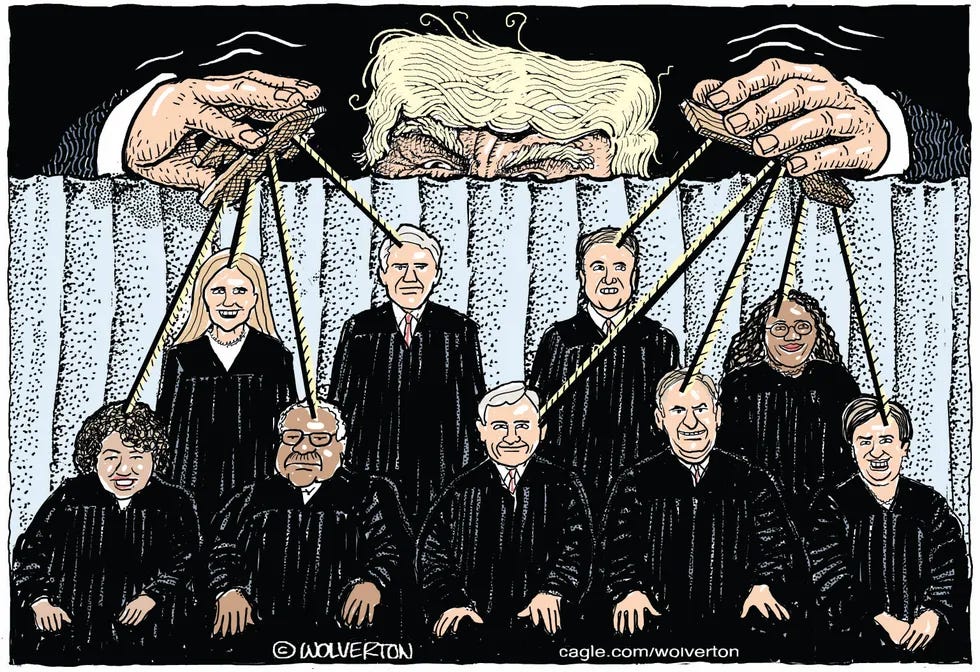
Source: Monte Wolverton & Columbus Dispatch

“Earlier this year, Kennedy said that he would seek to prosecute medical journals if they didn’t ‘start publishing real science.’ (The Lancet, one of the alleged offenders, recently published a study showing that vaccines have saved more than a hundred and fifty million lives in the past half century, or about six lives a minute.),” The New Yorker continued. “Amid the rising threat of bird flu—this month, a teen-ager in Canada was infected and hospitalized in critical condition—Kennedy has suggested that we should relax restrictions on the sale of raw milk, which, because it is unpasteurized, can potentially spread the virus.

“The pro-Trump editorial board of the New York Post, which met with Kennedy last year, wrote that his views amounted to a ‘head-scratching spaghetti of . . . warped conspiracy theories,’ and concluded that ‘he’s nuts on a lot of fronts.’ Kennedy has insinuated that H.I.V. isn’t the cause of aids, that Wi-Fi induces ‘leaky brain,’ that chemicals in the water are responsible for ‘sexual dysphoria,’ and that Anthony Fauci and Bill Gates led a cartel to prolong the covid pandemic and ‘amplify its mortal effects in order to promote their mischievous inoculations.’”

Even lesser Cabinet picks, such as likely Commerce Secretary Howard Lutnick of the Cantor Fitzgerald firm must give one pause. He made his rep and his billions pitching shell companies – akin to those valueless penny stock investments that ripped off people decades ago in Colorado. As The Wall Street Journal noted, such “deals made money for Cantor, but many worked out badly for ordinary investors.”

Of course, for the felon-in-chief, someone such as Lutnick is a bird of a feather. Recall that Trump paid a $2 million fine for misusing charitable funds. And remember how his six business bankruptcies screwed over many ordinary folks. Trump is still on the hook for $88.3 million, plus interest, for his assault of E. Jean Carroll.

Sagrada Familia, source: author

Portugal, Spain and, of course, Germany survived their tyrannical leaders, though it took a world war and revolutions to do so. The work of brilliant artists, such as architect Antoni Gaudí i Cornet, endured during their terms, even though the Sagrada Familia was damaged during the Spanish Civil War. Such countries emerged as stronger democracies.

But it took decades for them to recover from the dictators who ran them. As we hear so many rhymes of the past today, what will be the fate of the U.S.? Trump will disappear in time, but how much damage can he and his minions do?

A little escape

Off to the Continent

Source: Lisbon Travel Guide

Friends,

The D and I are off to Portugal, Spain and Germany for a couple weeks. I’ll share some pix and thoughts when we return.

Source: Travel & Leisure

Happy Thanksgiving (we’ll let you know how good the turkey is at Flaherty’s Irish Pub in Barcelona). Stay well, everyone.

JW

It would be funny …

… if it weren’t so damn serious

Source: Mr. Money Mustache

Legend has it that in the 1950s the Cole Bros. Circus blazed a new trail in entertainment by giving us the clown car. The idea was to stuff as many comic fools as possible into a car from which the door panels, engine and seats had been removed.

We’re now seeing a recreation of that in Washington.

The buffoon-in-chief is fashioning a Cabinet packed with as many unqualified and inexperienced bootlickers as he can find. While it helps to hail from Fox News, the dominant characteristics required by Donald J. Trump seem to be ineptitude and sycophancy (and then there’s immorality, too).

No more will we have potential challengers to Trump’s whims. As The New York Times pointed out in a pre-election editorial, the top dolt’s inner circle “has been purged of people who say no.”

There’s no secretary of state from Exxon or secretary of the Treasury from Goldman Sachs. “The smart — and courageous — people have left the room,” the paper noted. “What remains are loyalists and ideologues and a decision-making process that begins and ends with the question of what is most expedient for Mr. Trump.”

Instead, we have folks that Trump-backing evangelicals would likely not want around their daughters.

Gaetz, source: The Week

Consider Matt Gaetz, the Floridian who Trump wants to put atop the Justice Department. His resume seems to include experiences that even the party-animal-in-chief would envy. Sex with a 17-year-old, paying women to have sex with him on trips to Fox News appearances, drug fueled parties in New York and in the Bahamas – all allegedly have been part of his repertoire.

Hegseth, source; New York Times

Then there’s Pete Hegseth, a former Fox News breakfast program host up for the top job at Defense. Like Trump, he’s been married three times and, like Trump, has been quite the philanderer beyond that. Hegseth, who is also a member of a Christian nationalist church, fathered a daughter by a Fox News producer while married to his second wife. He also may have raped a woman at a, surprise, Republican Party event in 2017 and then paid her to remain silent about it.

Elon Musk, source: The Week

Let’s not forget Elon Musk, who won’t officially be in the Cabinet but will co-lead a “department,” as Trump calls it, charged with rooting out inefficiencies in government. In addition to pursuing “several” female employees at at least one of his companies, Musk has been a fan of illegal drugs, including LSD, cocaine, ecstasy, mushrooms and ketamine, using them with some Tesla board members, all documented by The Wall Street Journal. Thrice-married (though only to two women), Musk has fathered 12 children with an array of partners.

Then there are Trump candidates who seem to lack the sexual prowess that Trump seems to like, but offer other qualities.

Source: LA Times

Robert F. Kennedy Jr., Trump’s choice to head the Department of Health and Human Services, for instance, provides some compelling policy nuance. As Time has reported, RFK Jr. has falsely claimed that vaccines cause autism and argued that adding fluoride to the water supply causes IQ loss, bone cancer and more. He also accused the FDA of “aggressive suppression” of raw milk for cautioning that that it can contain dangerous bacteria, including E. coli and listeria. Oh, a worm ate part of his brain and he once dumped a bear cub carcass in New York’s Central Park.

And Lee Zeldin, Trump’s candidate to head the Environmental Protection Agency, seems likely make the EPA echo George Orwell’s ministries of Truth, Peace, Plenty and Love. As a congressman in 2019, Zeldin opposed extending a moratorium on drilling off Florida’s coast and voted against a bill that would have protected the Arctic National Wildlife Refuge. A big fan of fossil fuels, he earned a score of 14 percent from the League of Conservation Voters for favoring fossil fuel expansion, slashing environmental funding, rescinding U.S. participation in international climate change politics, according to The Nation. He also voted against disaster aid to Puerto Rico after Hurricane Maria. Perhaps most of all, Zeldin is a fawning defender of Trump, going so far as to oppose creation of a commission to investigate the Jan. 6, 2021, Capitol insurrection.

Just to balance the scales, a few leading ladies will share the limelight in the Trump circus, too.

Source: The Week

South Dakota Gov. Kristi Noem is up for Secretary of Homeland Security. Her bid to serve as Trump’s VP crumbled amid a public backlash after Noem acknowledged in a memoir that she shot and killed her dog Cricket for being “untrainable,” as USA Today reported. Noem also claimed to have met North Korean dictator Kim Jong Un while she served as as congresswoman, but that was all made up.

And Tulsi Gabbard, Trump’s tap for director of national intelligence, is a favorite of Russian officials for her pro-Russian views. “The C.I.A. and the F.B.I. are trembling,” Komsomolskaya Pravda, a Russian newspaper, wrote in a glowing profile of the former Hawaii congresswoman, as reported by The New York Times. The Russian paper noted that Ukrainians consider her “an agent of the Russian state.” And Rossiya-1, a state television channel, called her a Russian “comrade.”

These are just a few of the intellectual and political giants, the organizational geniuses and paragons of decency, who will help manage our country in the next four years. Unlike others close enough to Trump in his first term to see how vile and stupid the man is, these folks will surely kiss his, ahem, ring on a regular basis.

Of course, it remains to be seen whether any of the folks in the Senate charged with confirming most of these bozos will grow spines. Perhaps some of these luminaries will not find themselves in the White House. But, for now, the 53-GOP Senate member majority appears firmly ensconced under Trump’s big tent, cheering at every circuit that the clown car makes.

A sense of humor will be indispensable over the coming four years. But G-d help us.

Soldier on, we must

The press, against all odds, must continue reporting fairly and thoroughlY

Source: The New Yorker

For the last year or so, the responsible media have reported doggedly on Donald J. Trump, spelling out his status as a felon, fraud and sexual abuser. More recently, journalists have dutifully recounted the, ahem, shortcomings of many in the Cabinet the incoming president is assembling.

For the Americans who elected Trump, however, all that seems to make no difference. Perhaps for some of them, in fact, these flaws may even be qualifying characteristics – badges of honor that bespeak an enviable outlaw and macho status. Such qualities may be part of giving the finger to the Washington establishment and overeducated coastal elites.

So, the question is: if critical reporting on Trump et al. is irrelevant or worse to most Americans, do the media really have a useful role? If such information is important only to the minority that read newspapers, smart magazines and such, does it matter? Some have suggested that The Fourth Estate is one of the main guardrails of democracy, but is it really now just a spent and impotent force in American life?

And, if so, how should reporters operate, going forward?

As a commentator for the Columbia Journalism Review recently noted, former Washington Post editor Martin Baron in 2017 famously said, “We’re not at war; we’re at work.” The CJR commentator’s gloss for 2024: “This time, we must be at work, but also preparing, if an errant leader chooses so, to be at war.”

Indeed, there’s little doubt that Trump 2.0 will be even more vicious toward the press than the first version. Consider what Reporters Without Borders, the Paris-based global journalism advocacy group, says:

“Trump has repeatedly issued specific threats to weaponize the U.S. government against the media …. He has made at least 15 calls for television stations to have their broadcast licenses revoked–a power the president does not possess. Following Democratic nominee Kamala Harris’s interview with the CBS program ‘60 Minutes,’ Trump accused the show of manipulating Harris’s responses to appear more flattering and posted on his social media site Truth Social that ‘CBS should lose its license.’ He later doubled down against CBS in an interview with Fox News, saying, ‘we’re going to subpoena their records.’ 

“Trump called for ABC News to be punished after the network aired his singular debate with Harris. The former president has also said that Comcast – the parent company of NBC News and MSNBC – will be investigated for ‘treason’ if he is elected. After a draft Supreme Court decision on Roe v. Wade was released in May 2022, Trump said the journalists who broke the story should be jailed until they give up their sources.”

Richard J. Tofel, source: Substack

So, how should the media respond, how should they do their work? Here’s the view of the aforementioned CJR commentator, Richard J. Tofel, former president of ProPublica:

“First, [the press] must continue to do its workaday job of reporting the news, of holding power to account, of describing the changes that are being made and proposed. Most of all it must do this work with restraint and proportion, not saying the sky is falling when the winner of an election fairly won is making choices he is entitled to make.

“But at the same time, it must prepare to defend the Constitution …. if such a threat eventuates, through extralegal means or a perversion of the law itself, it must step up. I fear that may occur in the next two years (before the voters can weigh in again). If it does, the press must fight, if necessary to the point of being silenced, with a courage, even a physical courage, that it has rarely had to muster in this heretofore blessed country.”

None of that means the press — the straight news or non-editorial, non-opinionated part of it, at least — should plan to become part of the Resistance. No, the media — especially still-surviving local press — must report for and about their audiences. This will mean reflecting the legitimate concerns, fears and hopes of Trump supporters, reporting faithfully on how or how not they will be addressed.

But this doesn’t mean sharing and endorsing the racism, sexism, fondness for despotism and other ugly characteristics that mark some such supporters. It also doesn’t mean indulging in false equivalences in the name of objectivity.

As Monika Bauerlein, CEO of Mother Jones, put it in 2019, many fault lines run through our country and our politics now. One of the most important, she wrote, “is the one between those who stand for democracy, with a small d, and those who abet authoritarianism and minority rule. In that battle, journalists can’t just dispassionately chronicle two equally valid ‘sides.’ A free press needs (and is needed by) lowercase-d democracy. We can’t exist without it.”

The press, she adds in referring specifically to The New York Times, “can’t be part of the Resistance but it better damn well be part of the lowercase-r resistance against authoritarianism and illiberalism.”

Still, the question remains about whether any of it will make any difference.

Matt Gaetz, source: Financial Times

Will it make any difference when the press reports on Justice Department head nominee Matt Gaetz’s suspected pedophilia and drug use? When even The Wall Street Journal’s fire-breathing rightist columnist Kimberley A. Strassel calls the former Florida Republican congressman “a self-promoting featherweight disliked by 98% of his colleagues and towing a steamer trunk of skeletons,” adding that he’s “the kind of choice that makes even true supporters wonder how easily Mr. Trump is gulled by Twitter flash”?

Strassel’s colleague at the WSJ, Peggy Noonan, has little use for Gaetz, either. She calls him “disruptive, divisive, aggressive, lacking in groundedness and wisdom, and dogged by ethics allegations.”

But will that matter? Will anyone be swayed if the media — even the responsible conservative media — report on the peculiar history and beliefs of Robert F. Kennedy Jr. as he undergoes scrutiny to head the Department of Health and Human Services? Will the public care about the extramarital proclivities or coercive messianic religious convictions of Pete Hegseth, Trump’s choice to oversee Defense?

As the Jewish Telegraphic Agency reports, Hegseth is associated with Reformed Reconstructionism, a fringe Christian group that believes in applying biblical Christian law to society and in exclusively male leadership. It is actively preparing the world for the prophesied return of Jesus.

“The denomination has an affinity for the Crusades, the military campaign waged during the Middle Ages by European Christians to rid Muslims from the Holy Land, as described in the Old and New Testaments,” the JTA reports. “One of Hegseth’s most prominent tattoos is a large Jerusalem cross on his chest, a symbol featuring a large cross potent with smaller Greek crosses in each of its four quadrants. The symbol was used in the Crusades and represented the Kingdom of Jerusalem that the Crusaders established.”

Trump’s anointed Defense Department candidate, the WSJ’s Noonan writes, “has no serious governmental or managerial experience, no history of international accomplishment. …  In the past 10 years Mr. Hegseth has made his living as a breakfast TV host and culture warrior. This isn’t the right fit. At this point in his life Mr. Hegseth, 44, lacks the stature and depth required of the role.”          

Nonetheless, incoming Senator Majority Leader John Thune has suggested that recess appointments – a tool for getting around Senate confirmation hearings – could be among “all the options on the table.” Legislators, he argues, should work to “see that [Trump] gets his team installed as quickly as possible so he can implement his agenda.”

In other words, with its 53-senator majority, the GOP may well just give Trump whatever incompetent crackpots, morally loathsome or religiously extreme figures he wants. No vetting required, it seems. No legislative oversight needed. House Speaker Mike Johnson has already genuflected to his master in saying that a report on Gaetz’s activities should be withheld from the Senate and the public.

As it should, the press has dutifully reported on all this. It has detailed, as best it can, the moral and intellectual flaws in Trump’s team. And its efforts may be helped by critics in Washington who believe the truth about such nominees, no matter how unsavory, needs to come out. If further proof of their unsuitability exists, no doubt the press will air it.

However, as the ample reporting on Trump throughout the past campaign demonstrates, such facts may not matter. The incoming president may get all he wants, bringing to heel anyone in Washington who objects.

Steve Tesich, source: The Nation

Tragically, perhaps, this phenomenon and the reaction of voters to the wealth of negative Trump reporting — over many years — seems to confirm a view first argued in the early 1990s that America has become a “post-truth” society. A now-deceased Serbian American playwright, Steve Tesich, argued back then in The Nation that Americans had just grown weary of unpleasant news. To update his thought a bit, they simply turned away from media that reported discomfiting news, preferring the “alternative facts” that Trumpist Kellyanne Conway so memorably described.

Pessimistically, Tesich provided a grim warning, one that journalists must keep in mind:

“We are rapidly becoming prototypes of a people that totalitarian monsters could only drool about in their dreams,” Tesich wrote. “All the dictators up to now have had to work hard at suppressing the truth. We, by our actions, are saying that this is no longer necessary, that we have acquired a spiritual mechanism that can denude truth of any significance. In a very fundamental way we, as a free people, have freely decided that we want to live in some post-truth world.”

Still, in the face of whatever weapons Trump and his minions will wield, and in the face of widespread public indifference to immorality, venality and flagrant self-interest, journalists must soldier on with what truly is a sacred mission. They must report the truth as best they can, ferreting it out and recounting it fully and fairly.

Yes, many in the public will turn a blind eye or a deaf ear.

But many will take note. By the latest tally, some 76.4 million Americans voted for Trump, giving him a slim majority of just 0.1 percent. Some 73.7 million voted for Harris, suggesting that many of our countrymen do pay attention. Many do remain believers in decency and democracy.

Over time – perhaps by the two-year midterm elections or four years on – persistent, thorough and fair truth-telling by the press could make all the difference. Much will turn on just how problematic the coming presidency proves to be, of course. In that, a responsible press will likely have no shortage of things to report.

When will reality bite?

For investors, the Trump bump can’t last, but it’s tough to know when the Trump dump will begin

Source: LA Times, 1929

My profs in grad school used the phrase “dumb money” to describe surges that sometimes drove stock markets up before a big fall. Investors who took part were either unsophisticated folks who chased market enthusiasm upward or smarties who speculated and hoped to get out before the game ended.

Are we seeing dumb money again?

During Election Week, the S&P 500 gained 4.66 percent, the Nasdaq rose 5.74 percent, and the Dow climbed 4.61 percent, as Reuters reported. The S&P 500 and the Dow registered their best weekly percentage jumps since early November 2023, with the Dow topping 44,000 for the first time. The rally continued on Veterans Day, with the Dow closing 0.7 percent higher, and the S&P 500 and Nasdaq Composite each rising 0.1 percent.

Most analysts credited Donald J. Trump’s election for the gains. They suggested that investors expect lower corporate taxes and deregulation and pointed to rises in consumer sentiment and the Fed’s rate cut.

“The recent stock market rally suggests that investors are either celebrating the outcome of the election, the reduced uncertainty that follows when elections end, or perhaps both,” Alex Michalka, vice president of investment research at Wealthfront, said, according to USA Today. “Regardless, we’re encouraged to see millennials continuing to make smart financial decisions by putting their money to work in the stock market.”

So, with the fever burning, is it time for smart money to get out?

Well, one smart guy, Warren Buffett, appears to be letting much of this rally pass him by. He is keeping an astonishing $325 billion — yes, that’s billion — out of the market, in cash and equivalents, as The Wall Street Journal reported.

Source: Picture Perfect Portfolios

Part of the reason may be that the much watched “Buffett Indicator” — a ratio of listed stocks to the size of the U.S. economy – suggests that valuations are ridiculously high. “Taking the Wilshire 5000 Index as a proxy, it is now around 200%, which would leave it more stretched than at the peak of the tech bubble,” the paper reported.

What’s more, the ratio of share prices to earnings in the Dow, at about 31, is some 47 percent higher than the historical average, according to full:ratio. By that measure, investors would seem to be way out over their skis.

So, let’s stipulate that the current euphoria is well over the top. Perhaps before Inauguration Day, we’ll see the markets slip a bit.

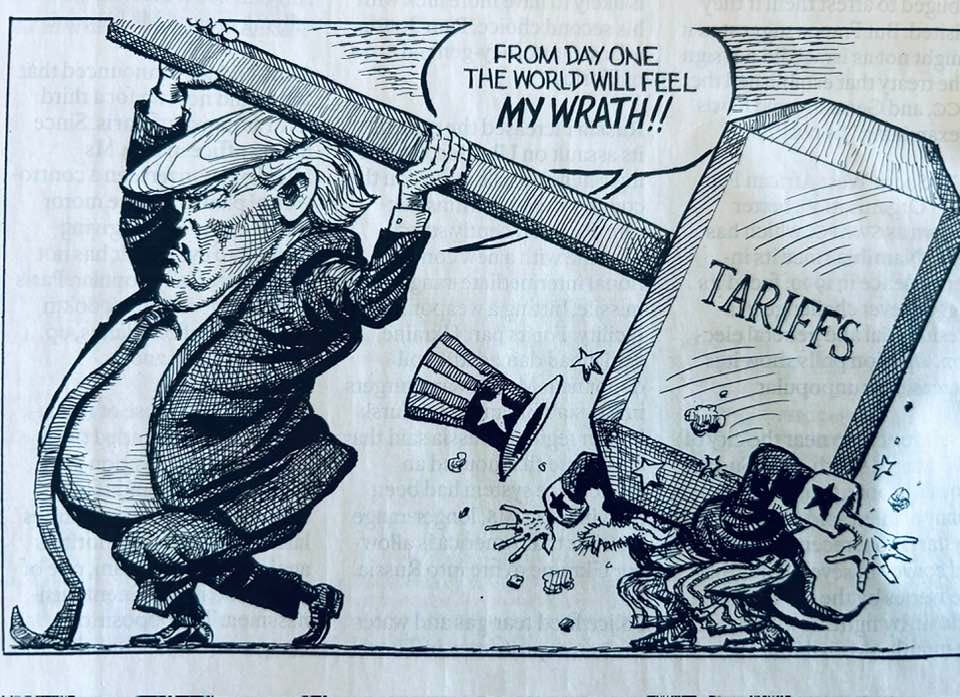
But what’s more concerning is the long-term outlook. If Trump imposes tariffs of 60 percent on Chinese products and up to 20 percent on everything else from abroad, what will happen with Corporate America? American producers who depend on imported components will surely feel a pinch, driving up their product prices, retriggering inflation and perhaps reducing GDP growth in the U.S.

Source: Financial Times

The Peterson Institute for International Economics found that Trump’s proposals – assuming that targeted countries retaliated — would slash more than a percentage point off the U.S. economy by 2026 and make inflation 2 percentage points higher next year than it otherwise would have been, as PBS reported. That could shift the Fed’s interest-rate cuts into reverse and put the White House and the central bank at each other’s throats.

Maurice Obstfeld, a former chief economist of the International Monetary Fund and senior fellow at the institute, warned that the tariffs “would undoubtedly trigger foreign retaliation and fuel a destructive trade war. This factor added to the damage from Trump’s last go at tariffs. As harmful as the Smoot-Hawley tariff of 1930 was to the US, the international trade war it ignited was much worse. If the experience is repeated in today’s far more interconnected world, the costs will be higher still, and US workers and businesses alike surely will lose.”

Yes, Obstfeld did raise the specter of 1930. One can only hope that this is either hyperbole or that wiser heads will be able to forestall what could arise.

But Europeans already are girding for deep problems. Analysts for the giant Dutch bank, ING said of Trump’s election: “Europe’s worst economic nightmare comes true.”

“A looming new trade war could push the eurozone economy from sluggish growth into a full-blown recession,” the ING analysts wrote. “The already struggling German economy, which heavily relies on trade with the US, would be particularly hard hit by tariffs on European automotives. Additionally, uncertainty about Trump’s stance on Ukraine and NATO could undermine the recently stabilised economic confidence indicators across the eurozone. Even though tariffs might not impact Europe until late 2025, the renewed uncertainty and trade war fears could drive the eurozone economy into recession at the turn of the year.”

Source: NPR

And it’s not just tariffs that could hurt the U.S. economy. Trump’s deportation efforts will certainly be inhumane and likely will spawn unrest across the country, but economically they could lead to labor shortages that could amp up inflation and drive down gross domestic product.

“Due to the loss of workers across U.S. industries, we found that mass deportation would reduce the U.S. gross domestic product (GDP) by 4.2 to 6.8 percent,” warns the American Immigration Council. “It would also result in significant reduction in tax revenues for the U.S. government. In 2022 alone, undocumented immigrant households paid $46.8 billion in federal taxes and $29.3 billion in state and local taxes. Undocumented immigrants also contributed $22.6 billion to Social Security and $5.7 billion to Medicare.”

Folks who console themselves by believing in Trump’s business savvy and sensitivity to markets might want to look a bit harder. Recall that he bankrupted casinos — something that’s pretty hard to do — six times. And take note that shares in his social media company, Trump Media & Technology Group, are worth less than half of what they were last March, down from above $66 to below $31.

His management skills in government, moreover, are, well, questionable. At least a couple dozen colleagues and aides turned on their former boss after his first term. Both Treasury Secretary Steven Mnuchin and former chief of staff Reince Priebus called Trump an “idiot,” according to author Michael Wolff, as reported by Politico. Former economic adviser Gary Cohn said Trump was “dumb as shit,” and former national security adviser H.R. McMaster labeled him a “dope.”

Of course, Trump is now 78 and one must wonder whether anything has improved for him intellectually or mentally, especially in light of the rambling “weave” he often delivered during the campaign.

For investors, the tricky thing — as always — is timing. The economy has tended to be resilient, but Trump’s moves — if he delivers on his promises as threatened — seem certain to hit it hard. For now, the bulls are running, eagerly chasing Trump euphoria. Eventually, reality will bite.

Antisemitism poses a challenge for Trump

How will the administration deal witH IT?

Source: IAC

When Arab-Israeli journalist Yoseph Haddad spoke at a downtown Chicago synagogue a day after the presidential election, dozens of pro-Hamas demonstrators showed up. Masked or wearing kaffiyehs, most screamed outside the Loop shul, but a couple got inside under false names, disrupting the event and vandalizing property. Shouted down by the audience, they were hauled out by police.

This followed an attack by a pair of masked men earlier that day on two Jewish students at DePaul University, about five miles away. And it came after an attempted murder of a Jewish man, shot on Oct. 26 on his way to synagogue West Rogers Park, about 11 miles away.

Meanwhile, on Election Day, a neo-Nazi endorsed Donald J. Trump for president. As Rolling Stone reported, Chris Hood, the founder of the neo-Nazi group NSC-131 called on fellow fascists in the swing states to vote for Trump.

So, might we expect to see stepped up antisemitic incidents over the coming four years? Recall that Trump flirted with white extremism two years ago by dining with the rapper Ye and prominent white supremacist and Holocaust denier Nick Fuentes at his Florida club, Mar-a-Lago, as Vox noted.

Source: NBC News

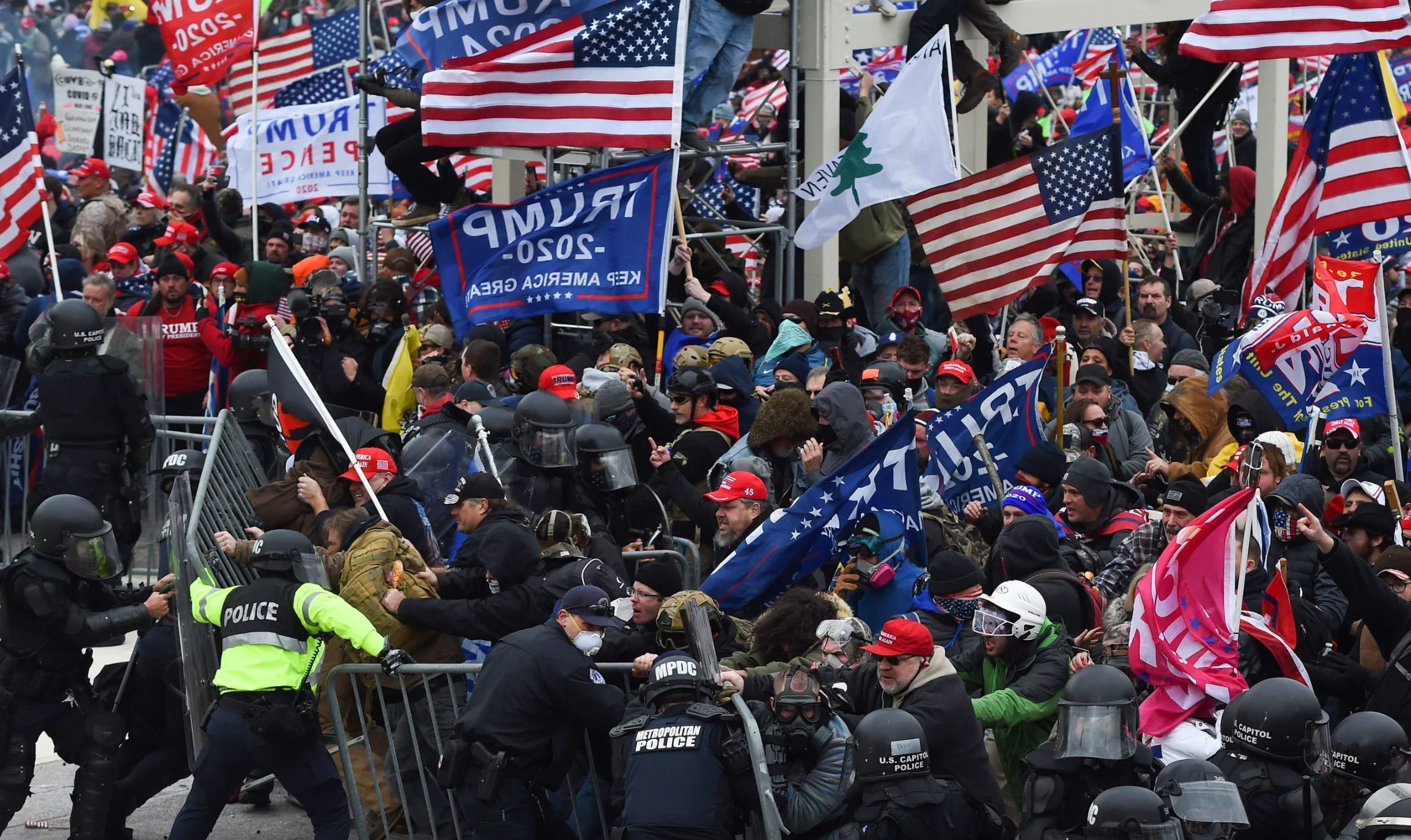
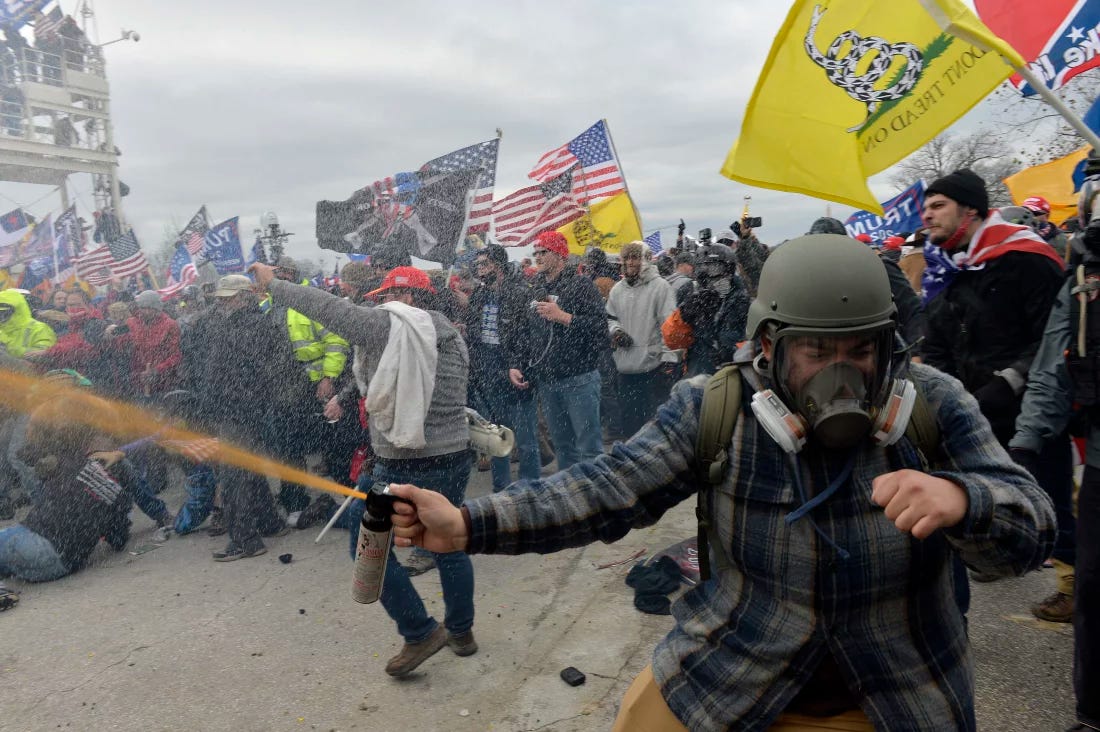
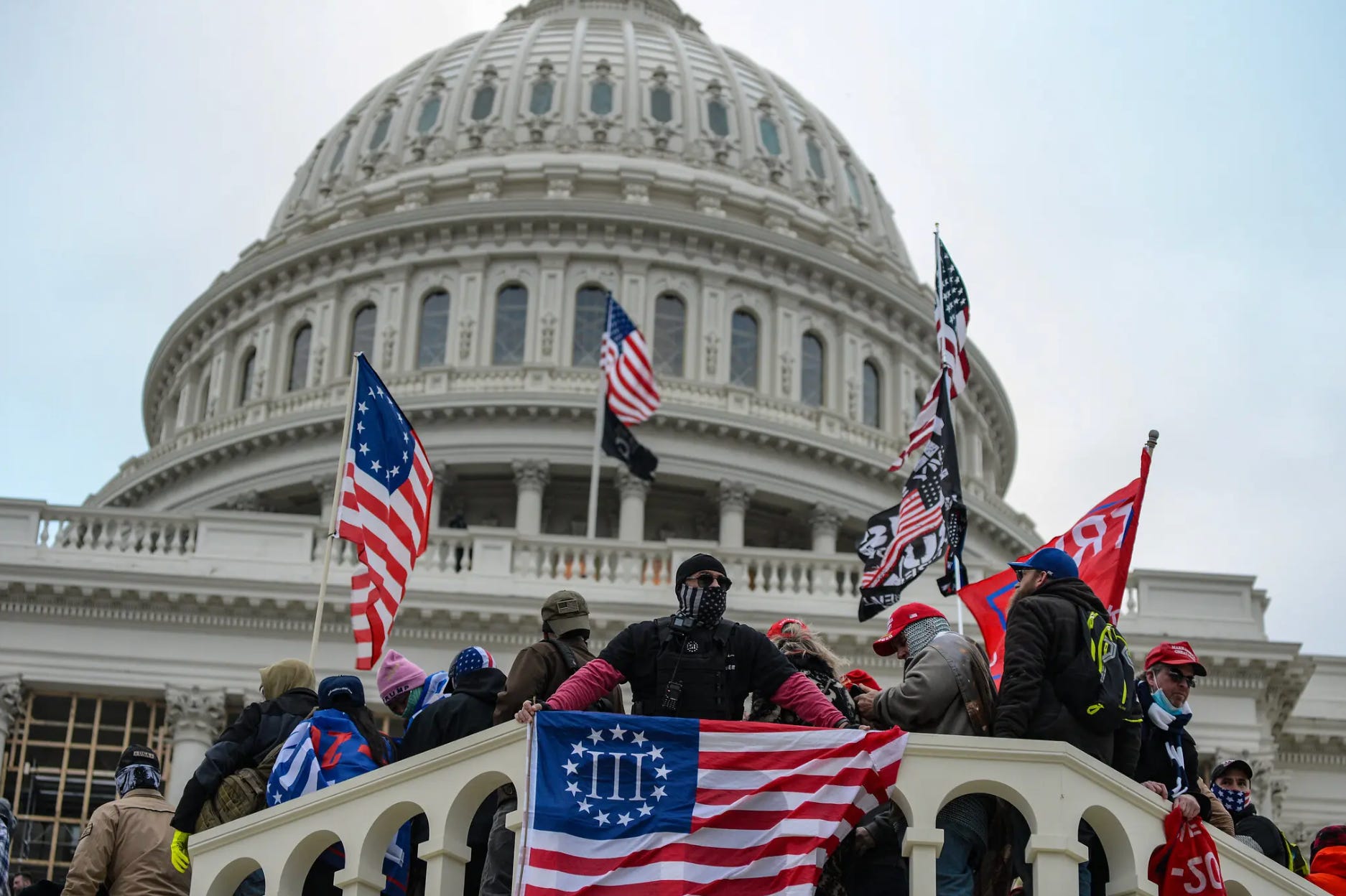
And remember that during the Jan. 6, 2021 insurrection, protesters carried a Confederate flag into the US Capitol, erected a gallows and noose on the lawn, and that at least one rioter sported a “Camp Auschwitz” hoodieProud Boys brandished “6 Million Wasn’t Enough” T-shirts and an Israeli reporter was singled out and harassed by protestors, according to AP News. White nationalists recorded a live stream and offered a “Shoutout to Germany” for their 10,000 viewers. 

Of course, Trump has long done a weird dance with such supremacists. He repeatedly denounced antisemitism and he has a Jewish daughter and grandchildren. But he also has praised Hitler and criticized American Jews for not showing enough gratitude for his support of Israel. 

It’s likely that Trump’s stances on immigrants and others hated by supremacists emboldened them. Antisemitic incidents and hate crimes rose 12% from 1,879 in 2018 to 2,107 in 2019, where the highest previous number was in 1994, according to Reuters. These included fatal shootings at a California Synagogue and a New Jersey kosher grocery store, as well as the stabbing of a rabbi in his New York home.

To be sure, antisemitism exploded during the Joe Biden term, mainly as a reaction to the aftermath of the Oct. 7, 2023, Hamas attack and Israel. Hillel recorded 1,834 antisemitic incidents on campuses in the 2023-24 school year, up from 180 in 2019-20 and 254 the following year. A study by Brandeis academics found that antisemitism was “far more prevalent” on campuses last year than in 2016, when they first examined the phenomenon. “The ongoing Israel-Hamas war is clearly a major driver of the sharp increase in antisemitic hostility on campus,” they reported.

And the Anti-Defamation League counted 8,873 incidents nationwide last year. This was sharply up from the roughly 2,000 recorded each year during Trump’s first term. Such incidents have continued.

Tarek Bazzi, source: ADL

As the ADL reported, on Oct. 13, a speaker named Tarek Bazzi at an anti-Israel rally in Dearborn, Michigan, said: “We’re not here to condemn the killing of innocent civilians on both sides. We’re not here to chant empty slogans, because when we say ‘Free Palestine,’ and when we say ‘From the river to the sea,’ we understand what that means….The only hope that Palestine has is its armed resistance…If you’re pro-Palestine, then you’re pro-armed resistance.”

Four days before, at a rally in New York City, the crowd cheered after a speaker mentioned that 5,000 rockets had been fired at Israel. An attendee displayed his phone to onlookers with an image of a swastika on it, and another held a sign celebrating the attack as a “Zionist nightmare.”

But can we expect things to get worse in coming years? As long as the Gaza War continues, this may be the case. But much will turn on how the White House and campus administrators respond.

“Trump and extremists’ unabated use of xenophobic antisemitic tropes without an immediate and unequivocal condemnation from a bipartisan group of leaders across the U.S. will likely lead to more violence and hatred toward the American Jewish community,” former ambassador Norman Eisen and former USAID administrator Jonathan Katz warned in a September piece in Newsweek in which they said Trump was fueling antisemitism in his campaign. “A 2024 American Jewish Committee survey found that 93 percent of Jews think that antisemitism is a problem, with 56 percent calling it a ‘serious’ problem.”

They pointed to efforts in Washington to combat the problem. They praised the Biden-Harris National Strategy to Counter Antisemitism, and pressed for the bipartisan Countering Antisemitism Act. But they said such national efforts must be coupled with state and local action, including by governors and mayors, across the U.S., who should adopt policies in line with the White House led strategy to counter antisemitism.

While collegiate bans on encampments protesting the Gaza War have limited the more vocal antisemitic events on campuses, incidents have continued, as recorded by the AMCHA Initiative:

Source: Harvard Crimson

At Harvard the Palestine Solidarity Committee and Harvard Out of Occupied Palestine held a silent protest inside a library in October, during which students sat with signs that demonized Israel with such phrases as, “No normalcy during genocide,” “Harvard divest from death,” and “Israel bombed a hospital, again.” Meanwhile, the university restored the PSC as an official student group after a five-month suspension.

At Drexel in Philadelphia, a helicopter dropped leaflets that demonized Israel, stating, “This is how Israel gives evacuation orders. Imagine this paper telling you to pack up your family and leave your life behind. This is what terrorist Israel does when you stay at the hospital where you are being treated.” At Columbia, a faculty and staff group called for a boycott of local businesses with ties to Israel on Instagram, including a map of businesses to boycott indicated with red inverted triangles, a symbol of Hamas’s targets. 

For Halloween, a student at Binghamton University dressed up as Yahya Sinwar, the dead leader of Hamas. The student and posted a picture on Instagram alongside the caption, “this was my costume last night.”

Some academics have stood out for their viciousness against Israel. At an Oct. 15 rally in New York, CUNY professor Danny Shaw shouted, “Zionism is a trap. Go back to your true history. Go back to Yiddish land …. This is not Israel versus Hamas. This is a Zionist extermination campaign that began in 1948.” 

Republicans in recent months criticized campuses that they said didn’t act against antisemitism, often angering free-speech advocates. Whether legislative efforts will continue or grow remains to be seen.

If incidents multiply, it’s likely that the Trump Administration will face demands to act anew against antisemitism. Given Trump’s dalliances with supremacists, can or will it do so?