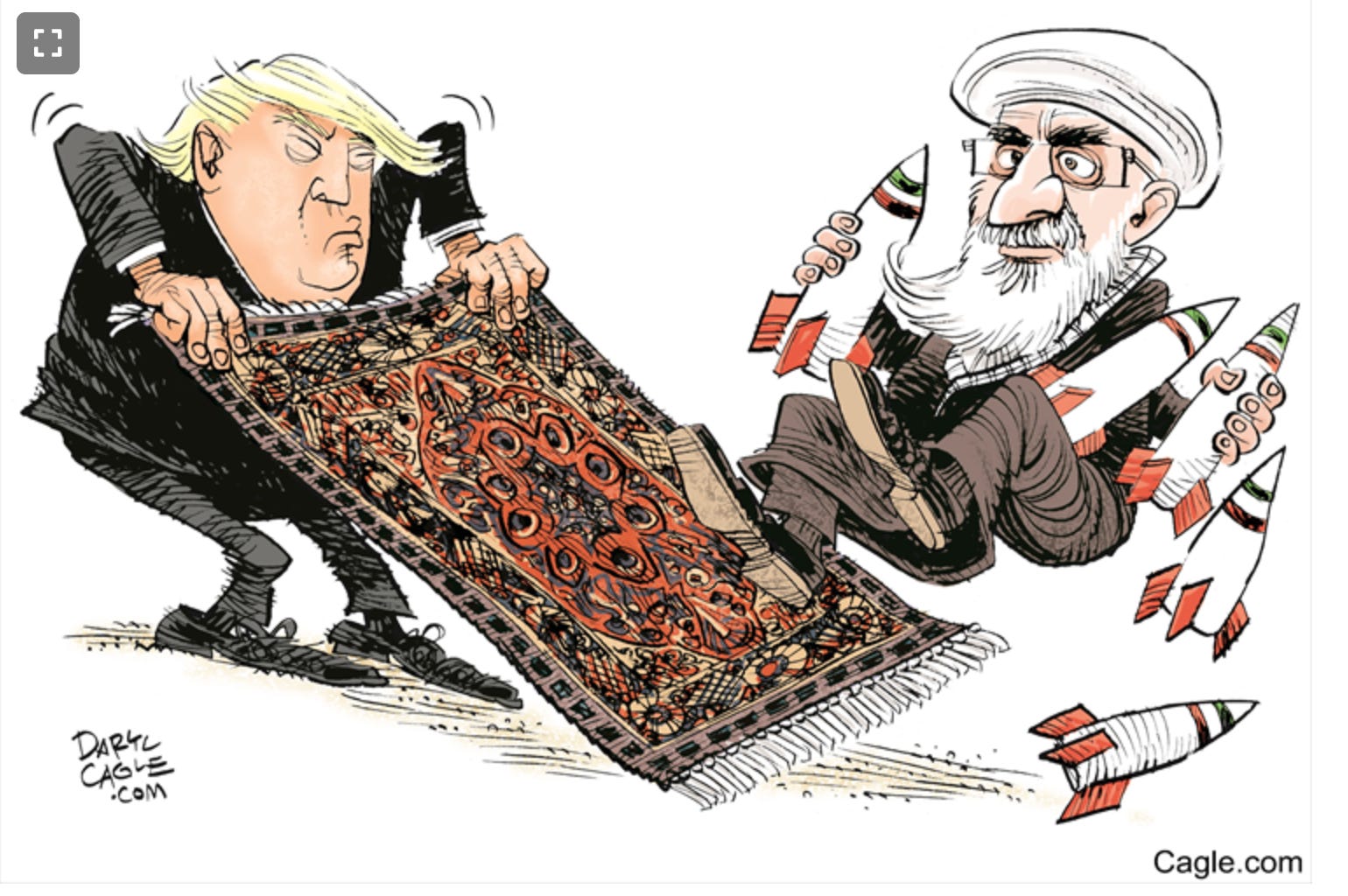
Preferring yesterday

To some, progress is so threatening that even bicycles are targets

Joseph Weber

Source: National Review

Seventy-one years ago, Yale-educated William F. Buckley, Jr. launched what has been called “the intellectual beacon of the conservative movement,” the magazine National Review. In his publisher’s statement, he wrote of the new weekly: “It stands athwart history, yelling Stop, at a time when no one is inclined to do so, or to have much patience with those who so urge it.”

The comment is revealing about the nature of conservatism. Many in the movement, it seems, put stumbling blocks in the way of progress, holding that the good old ways are inevitably best.

But what if the old ways really aren’t so good? What if they pollute our waterways and endanger our health? Even conservative darling Richard M. Nixon recognized such problems when he created the Environmental Protection Agency in 1970.

So why is it that the same EPA is now moving to roll back a three-year-old rule that requires coal-fired power plants to prevent the release of toxic heavy metals into streams and rivers through polluted groundwater? Do conservatives really want our waterways tainted with poisonous heavy metals?

“The AI and data center revolution is creating an electricity and baseload power demand that cannot be met under the overly restrictive policies of past administrations,” EPA Administrator Lee Zeldin said in a statement quoted by the Associated Press. “The Trump EPA will continue doing its part to address these burdensome regulations on the coal-fired power plant sector that hold American communities back from the new opportunities presented by this new 21st century energy reality.”

As AP reported, this plan is the latest step that Donald J. Trump’s administration has taken to pull back regulations on coal mining and coal-fired power and to empower fossil fuels as a primary energy source to feed the rapid growth of artificial intelligence data centers. But one wonders: why do the Trumpies so love fossil fuels, despite the planet-wide threat they pose?

Their efforts go well beyond yelling “Stop.” They are assailing environmental progress, turning back the clock.

Whether this involves contempt for electric vehicles, shutting down offshore wind farms or dismantling federal efforts in climate science with such moves as shutting down the National Center for Atmospheric Research in Boulder, Colorado, Trump and his minions are seeking to peel back any gains society has made in going green.

At times, their efforts plunge into the absurd. The Trumpists, for instance, don’t seem to like bikes.

Source: Bloomberg News’ “Governing”

Last year the Trump Administration canceled grants for street safety measures, pedestrian trails and bike lanes in communities around the country. As Bloomberg News reported, the problem for the Trumpies was that the projects weren’t designed for cars.

A San Diego County road project that included bike lanes “appears to reduce lane capacity and a road diet that is hostile to motor vehicles,” a U.S Department of Transportation official wrote, rescinding a $1.2 million grant it awarded nearly a year before, according to the news outlet. In Fairfield, Ala., converting street lanes to trail space on one road was also deemed “hostile” to cars, and “counter to DOT’s priority of preserving or increasing roadway capacity for motor vehicles.”

And in Boston, the administration pulled back a grant to improve walking, biking and transit in the Mattapan Square neighborhood in a way that would change the “current auto-centric configuration.”

With such bureaucratese, one wonders whether the officials also have trouble with basic English.

Sometimes, conservatives justify their moves by arguing the costs of protections are too high or thwart development. But sometimes, they just seem afflicted by a weird nostalgia, such as for gas-powered cars, or animus toward blue states. Such sentiments seem to underlay the recently filed Trump administration lawsuit against California over limits on tailpipe emissions.

“Gavin Newsom is determined to continue pushing Democrats’ radical E.V. fantasy — even if doing so is illegal,” Transportation Secretary Sean Duffy said in a statement quoted by The New York Times. He referred, of course, to Gov. Gavin Newsom of California, a Democrat likely to run for president and a frequent critic of Trump.

As the newspaper reported, the Trump administration has moved to slash federal support for electric vehicles, which do not emit planet-warming pollution. The Environmental Protection Agency has erased limits on greenhouse gases from vehicle tailpipes, and Trump signed a law last year eliminating a tax credit of up to $7,500 that had been available to people who bought a new electric car.

As has long been true, rightists often point to economics justify their defenses of the status quo. The current crew pair that with a loathing for the Biden Administration.

“Oppressive, expensive electric vehicle mandates drive up costs for American consumers and violate federal law,” former Attorney General Pam Bondi said at the time the suit against California was filed. “California is using unlawful policies from the last administration to create exorbitant costs for their citizens.”

But their efforts often fly in the face of common sense and science. For instance, the Omaha Public Power District has long planned to retire three of five power plants in north Omaha and switch the other two from coal-fired to natural gas. Nebraska’s rightwing Attorney General filed suit last fall to block the moves, though.

As reported by the Nebraska Examiner, AG Mike Hilgers said, “we should not be taking one electron off the grid.”

Hilgers’ 46-page lawsuit seeks to stop the changes, as well as prevent OPPD from pursuing any policy that prioritizes considerations other than price or reliability, including “environmental justice.” Residents of predominantly Black north Omaha have long complained of health risks from the plants, including asthma and respiratory issues.

The OPPD is a publicly owned utility that serves more than 900,000 people across 13 counties in eastern Nebraska, a region that includes Omaha.

As the Examiner reported, in 2014 and 2016, OPPD directors agreed to a plan that, by 2023, OPPD would retire the three North Omaha units in operation since the 1950s and switch the other two in operation since the 1960s from coal to natural gas. The oldest three units switched to natural gas in 2016. The plan was delayed in 2022 and then made contingent upon the construction of two new power-producing stations.

Why this conservative attachment to coal? Why this penchant for sticking with the status quo when harms have long been known?

Encouragingly, the power district in overwhelmingly red Nebraska could be in for changes in leadership that could make for progress. Three renewable energy advocates are advancing toward a fall general election and if they win, they and two other like-minded incumbents, would dominate the district board.

Sara Kohen, source: The Downballot

As The Downballot reported, the trio includes former state Sen. Carol Blood, the Democrats’ unsuccessful nominee for governor in 2022 who also lost a run for Congress in the conservative 1st District last cycle. The other is education professor Mark Gudgel, who failed in running for Omaha mayor in 2021. The third is attorney and school administrator Sara Kohen, who narrowly lost a bid for the Omaha City Council in 2021.

When they are defeated in high-profile runs, going for lower-profile utility regulatory posts might give such progressives toeholds for bigger offices later on. But, more important in the short run, they also could help restore environmental gains.

Environmentalists cheered in another red state, Arizona, when renewable energy supporters won an election to take charge of a Phoenix electrical utility company. In Georgia, a couple Democrats scored landslide victories last year in special elections for their state’s Public Service Commission, and Democrats now have the opportunity to flip the third seat they need to win control of the body this fall, The Downballot reported.

It will take a couple major elections to unseat those on the federal level who out of sentiment, nostalgia or just ignorance irrationally cling to the often-flawed past. But as the Nebraska, Arizona and Georgia elections demonstrate, grassroots victories in sometimes little-noted posts can help.

Sometimes, people who stand athwart history get steamrolled. Perhaps the time for that is long overdue.

The Revolution is feasting on its own

Trump’s penchant for firing his loyalists defines his movement

Joseph Weber

Goya’s “Saturn Devouring His Son”

Royalist and anti-revolutionary journalist Jacques Mallet du Pan, writing in 1793 about the French Revolution, coined a phrase that resounds today: “A l’exemple de Saturne, la révolution dévore ses enfants,” which translates to “Like Saturn, the revolution devours its children.”

We see this in Washington, where Donald J. Trump has been ruthless in metaphorically beheading acolytes.

So far, he has bounced three Cabinet members: Attorney General Pam Bondi, Labor Secretary Lori Chavez-DeRemer and Homeland Security Secretary Kristi Noem. Lower-level career fatalities include Border Patrol “commander at large” Gregory Bovino; Corey Lewandowski, an unpaid special staffer at the Department of Homeland Security, and Navy Secretary John Phelan.

More recently, Dr. Marty Makary quit as head of the Food and Drug Administration amid rumors that Trump was planning to can him. Health Secretary Robert F. Kennedy Jr. urged him to jump beforehand, it appears.

And Trump has pulled out all the stops — including a Justice Department probe — in trying to oust Federal Reserve Chairman Jerome Powell from the Fed board. Powell, whom Trump had appointed during his first term, will be succeeded by Kevin Warsh at the Fed’s helm, but he intends to stay on the Fed board for a couple years yet.

In his first term, Trump loved to wield his guillotine. Casualties included FBI Director James Comey, Secretary of State Rex Tillerson, Attorney General Jeff Sessions, National Security Adviser John Bolton and White House Communications Director Anthony Scaramucci – all of whom went on to disparage Trump (and some still do so).

Of course, such highly visible executions are nothing compared to over 200,000 firings of federal employees thanks to sometimes-Trump ally Elon Musk’s Department of Government Efficiency. Makary’s FDA was gutted by the voluntary departures of some 4,000 staffers, apparently out of distaste with the agency’s tumult and redirection under Kennedy and Makary.

In a sorry twist, at least some federal employees who got the ax were very surprised Trumpists.

An attorney advisor for the U.S. Department of Agriculture, for example, said he was “devastated” after voting for Trump and being assured that his job was safe. As CNN reported, he had moved to Little Rock, Arkansas, with his pregnant wife and toddler for the position. He said, “I was expecting to spend the rest of my life doing it.”

Some felt blindsided.

“I was thinking that there would be changes,” a two-time Trump voter and Department of Agriculture researcher told The Los Angeles Times. “But instead of being focused, this is just going completely off the rails, chopping and slicing up parts of the government that are protecting Americans.”

So much for loyalty. Trump, of course, is notorious for expecting it but rarely returning it.

Robert Evnen, source: NBC News

Even more intriguing, though, is when voters are involved and believe that Trump backers aren’t Trumpy enough. That was the case in the May 12 primary defeat of two-term Nebraska Secretary of State Robert Evnen.

Evnen lost to Omaha businessman Scott Petersen, who challenged the integrity of Nebraska’s electoral system on the Lincoln resident’s watch. The incumbent tried to tie himself to Trump’s national election overhaul efforts, but wound up defending the state’s voting systems – something that apparently doesn’t suit the Trump narrative that many in the state’s GOP seem to buy.

“People don’t trust election systems … and whether right or wrong, it’s a problem,” Petersen told the Nebraska Examiner. “It needs to be addressed.”

Petersen targeted Evnen’s handling of vote counting, the news outlet reported. He questioned whether the ballot-counting machines can access the internet and be hacked, argued that voting by mail should be restricted to only special circumstances and promised to conduct full hand counts of races.

Like other secretaries of state, Evnen regularly audited election results, the news outlet reported. But, by raising the specter of taints — in Trump-like fashion —Petersen undermined the incumbent.

That was so even as Evnen in the past year has tried to tie himself even more tightly to Trump. He handed over data the Trump administration requested to the U.S. Department of Justice that his Republican predecessor didn’t, including parts that critics say are potentially sensitive, according to the Examiner. He also started echoing some of Trump’s concerns over elections.

Evnen had supported a state constitutional amendment in 2022 requiring voter ID, and said he’d like such systems rolled out nationally. He pressed for more efforts to ensure noncitizens aren’t voting – a Trump hobbyhorse, but a nonproblem, according to outfits such as the Brennan Center at NYU. In desperate-seeming emails in recent weeks, Evnen pleaded for votes by arguing that he and Trump were “completely in-sync” on mail-in voting, something Trump has labeled “mail-in cheating.”

But Petersen apparently put Evnen on his back foot with suggestions of flaws in the system, despite providing no evidence. As the Examiner reported, Evnen was cast onto the defensive, describing Nebraska’s elections system as the “gold standard.” And he conducted a “transparency tour” across several counties describing the accuracy testing of Nebraska’s ballot-counting machines.

With a GOP rank and file that has been convinced by Trump and his backers that voting systems nationwide are rigged, such rational approaches are nonstarters, it seems. With people conditioned to be suspicious, those dogs just don’t hunt.

Rep. Don Bacon, source: NBC News

Never mind that Petersen’s approach earned him the title of “President of the TinFoil Hat Club” from outgoing U.S. Rep. Don Bacon, one of many GOP establishment figures to back Evnen. The Lincoln resident had a laundry list of endorsements from Republican elected officials, including Gov. Jim Pillen, Sens. Deb Fischer and Pete Ricketts, and all three of the state’s House lawmakers.

Evnen had long paid his dues to the state GOP by serving such figures in one way or another. But Petersen prevailed by out-Trumping him.

In the end, the revolution that Evnen backed devoured him, much as it has gobbled up so many in Washington. And, with 2 ½ years remaining for Trump’s tenure in Washington, still more are likely to fall prey to it.

While some of Trump’s followers paint in him in messianic imagery, perhaps it is Saturn he resembles more.

“Am Yisrael Chai”

But, as for the current Israeli government approach, some disagree

Joseph Weber

A Polish newspaper in 1791 published a phrase since handed down to us in a lot of forms: “Gdzie dwóch Polaków, tam trzy zdania” means “where there are two Poles, there are three opinions.” A more modern version, perhaps from the Borscht Belt or the long history of Judaism in Poland, tells us “two Jews, three opinions.”

I was reminded of this by a rabbi of my acquaintance who recently discussed a decision by her synagogue to change a pro-Israel banner that has graced the building since shortly after Hamas massacred Jews on Oct. 7, 2023. Some congregants objected to the “We Stand with Israel” message, either out of fear because synagogues nowadays are being attacked or out of distress at Israel’s military actions. Others took pride in the message, since lately Israel needs friends when it has become the target of much heat.

Some members, the rabbi wrote, felt all three things at once. This version of “two Jews, three opinions” has a counterpart in longstanding rabbinic tradition, “davar acher” – Hebrew for “a different thing,” she suggested. The phrase separates often differing, sometimes contradictory, commentaries on various matters and suggests that both views could be correct. The text allows for diverse opinions.

There’s little doubt that Jews are split on crucial matters involving Israel now. The killings of more than 70,000 people in Gaza, still others in Lebanon and still others at the hands of Israeli settlers or soldiers in the West Bank have many asking a version of “Israel: What Went Wrong?,” the title of a new book by an Israeli-born scholar teaching at Brown University, Omer Bartov.

Many American Jews disapprove of Israel’s conduct of the war in Gaza, with 61 percent saying Israel has committed war crimes, and about 4 in 10 saying the country is guilty of genocide against the Palestinians, according to a Washington Post poll from last fall. While more Israelis backed the Gaza actions, less than a third believe Israel won, and even fewer believe Hamas will lay down its arms, according to an Israeli poll published in January.

Among Jews in the U.S., opinions about Israel are particularly split by age. While 93 percent of those surveyed by Pew in the spring of 2024 condemned the Hamas attack that started the war, Jewish adults under 35 were divided over Israel’s military response: 52 percent said the way Israel carried out the war was acceptable, while 42 percent called it unacceptable, and 6 percent were unsure. Jews ages 50 and older were more likely to say Israel’s conduct of the war acceptable (68 percent).

So, lots of views. Can all be right? As it makes war so aggressively on its neighbors – albeit in response to real threats – can Israel’s actions be just and appropriate? Or has it lost the moral compass that once defined the nation along with its historically justified claims to the land, which underpinned Zionism?

Perhaps the most unsettling arguments come in Bartov’s new book. The work is especially troubling to defenders of Israeli because Bartov has a lot of street cred. A professor of Holocaust and genocide studies at Brown, he grew up in a Zionist home and served as an officer in the Israel Defense Forces during the Yom Kippur War in 1973. He argues that Zionism has morphed into an ideology of extremism that led in Gaza to genocide, a term he doesn’t use lightly.

Indeed, in the wake of the Oct. 7th savagery, Bartov published an opinion essay in The New York Times about Israel’s military response. “I believe that there is no proof that genocide is currently taking place in Gaza,” he wrote a month after the massacre, “although it is very likely that war crimes, and even crimes against humanity, are happening.”

But he has since then changed his view. Relying on a UN definition that says genocide involves acts carried out with the intent of destroying a particular group – whether national, ethnic, racial, or religious – he argues that Israel’s destruction in Gaza meets that tragic test.

Source: Amazon

As he told New Yorker editor David Remnick, Bartov notes that the population of Gaza lives in less than half of the territory now, with entire cities – such as Rafah – leveled. Unhoused, living in tents and with no infrastructure, the Gazans are “living there like dogs, and nobody is doing anything about it. The plan, the future of the genocide in Gaza seems to be to create a resort town for the rich and to have the Palestinians be the water carriers for that.”

But, long before the Gaza War, Bartov had doubts about how Zionism was evolving. “I served on the West Bank,” he said of his time in the IDF. “The sense, this question that you suddenly ask yourself, ‘What am I doing here? Why am I here? This is not my home.’ It would come up. I can’t say that it was a fully developed political understanding. It was a feeling that something was not right.”

Then, in the late 1980s with the outbreak of the first intifada when he was an officer in reserve, he was outraged by calls from the then-Minister of Defense, Yitzhak Rabin, to “go and break their bones.” He wrote Rabin a note comparing the IDF to the WWII Wehrmacht, referring to the process of brutalizing an army.

As many Israelis endorsed the idea of a two-state solution — or at least as Rabin saw it, a self-governing entity for Palestinians that was short of a full state – Bartov was more hopeful. That time, he recalled, was “the last moment of realism as opposed to messianism, which is what has taken over Israel now.”

But that ended with the assassination of Rabin in November 1995. “I remember it well because I was sitting there and holding my six-month-old daughter and crying, and I didn’t even like Rabin,” Bartov said. “He was the last hope, and he could have accomplished something because of his own record, because of his standing in Israeli society. I thought this is over for a generation. I was wrong because it’s more than a generation now, and things are only going the wrong way.”

Any chance of a course correction?

Bartov is pessimistic about change coming from within. As a New York Times reviewer noted, “he says that the leadership, whether Jewish or Palestinian, just isn’t there. Any initiative will have to come from the outside, and he credits President Trump for pressuring Prime Minister Benjamin Netanyahu to accept a 20-point plan last fall that at least gestures ‘toward a new political horizon.’” Even Germany, seeking its “greatest atonement” could play a role, he suggests.

As might be expected, ideas such as Bartov’s have their critics.

The American Jewish Committee, for instance, contends genocide – a term first used by a Polish Jewish lawyer to refer to the Nazis’ effort to destroy world Jewry – is a misnomer for the Gaza campaign. “Israel is not seeking to destroy the Palestinian people or the Palestinian population of Gaza, which is what would need to happen in order to correctly apply the term ‘genocide,’” the AJC maintains. “Israel’s leaders have repeatedly asserted that their campaign in Gaza is solely against the terrorist organization Hamas.”

Well, not all Israeli leaders say as much. If they don’t want to kill Palestinians, they at least want to drive them out.

“We must promote a solution to encourage the emigration of the residents of Gaza,” far-right National Security Minister Itamar Ben-Gvir said in 2024. And far-right Finance Minister Bezalel Smotrich, who also holds a position in the Defense Ministry, says that Israel “will rule there. And in order to rule there securely for a long time, we must have a civilian presence.” In other words, settlements much like those unsettling the West Bank.

And, as Bartov has noted, the big problem for Gazans is they have nowhere to go.

“The big difference between the Nakba of 1948 and what happened in ‘23, ‘24, ‘25 in Gaza is that at the time the borders were open, in ‘48, they could flee. They did flee, to Lebanon, to Jordan, to Syria,” the Holocaust and genocide scholar said. “In 2023, 2024, Israel, of course, did not open its borders. Egypt did not open its borders, and they had no place to flee. Ethnic cleansing, which was what the Israeli government wanted to carry out, became genocide.”

Source: Amazon

It’s all reminiscent of “Neighborhood Bully,” 1983 song about Israel by Bob Dylan (nee Zimmerman):

Well, he knocked out a lynch mob, he was criticized

Old women condemned him, said he should apologize

Then he destroyed a bomb factory, nobody was glad

The bombs were meant for him. He was supposed to feel bad

He’s the neighborhood bully.

Well, the chances are against it, and the odds are slim

That he’ll live by the rules that the world makes for him

‘Cause there’s a noose at his neck and a gun at his back

And a license to kill him is given out to every maniac

He’s the neighborhood bully.

Of course, Israel is surrounded by bullies who want nothing more than its destruction. Genocide for Israelis would be fine with them.

The synagogue that plans to remove its “We Stand with Israel” message will replace it with rotating banners. Some messages will be seasonal – “Shanah tovah!” around the holidays, for example. Others will be general, such as “BZBI: Where You Belong.” At times, it will display an “Am Yisrael Chai” banner, using a phrase that means “The People of Israel Live.”

Banners planned for Temple BZBI

“We look forward to having this new communication tool,” the rabbi wrote. “Rather than live under one banner, we will return again and again to davar acher, a new idea, a new approach.” That may accommodate several opinions.

Of course, it’s not clear what opinions will guide Israel’s future over time.

“Zionism is not reformable. The state of Israel is,” Bartov argues. “The state of Israel has to be reinvented, and it cannot be reinvented according to this ethnonationalist principle that has taken hold of it.… Israel, as a society, there has to be a society of all its citizens. As it was said at the time, in the 1990s, in the early 1990s, Eretz Kol Ezracheha, a country of all its citizens.”

About that pot and kettle

“Projection” abounds in the Trump era

Joseph Weber

Anna and Sigmund Freud, source: Deutschlandfunk

In the mid-1890s, Sigmund Freud pioneered the psychological insight of “projection.” His daughter, Anna, refined the concept in the 1930s. But, with what seems to be the third attempt on Donald J. Trump’s life, their understanding couldn’t be more relevant than ever today.

The Freuds’s notion was that people sometimes defend their own egos by projecting their unacceptable views or urges onto others. For instance, a married man attracted to a female coworker might accuse her of flirting with him. Or a woman wrestling with the urge to steal convinces herself that others are trying to break into her home.

In the Trump era, projection abounds, it seems. It’s not self-dealing by the Trump family that is corrupt, but rather the Joseph Biden “crime family.” The GOP efforts to restrict voting don’t threaten democracy, but rather “mail-in cheating” and other alleged election flaws are at fault.

Nowadays, such projection in Trump’s Washington is so common as to rarely draw comment. But it is disappointing when the phenomenon appears in reputable publications, especially those that often otherwise provide substantial critical reporting about the White House.

Consider, sadly, The Wall Street Journal. Amid the instant analyses of the shootings at the White House Correspondents’ Association dinner, a few comments on the paper’s editorial page stand out. Violent actions and extreme rhetoric by Trump are not at fault in the fever swamp that is the mind of the self-styled “friendly federal assassin,” the paper suggests. Rather, it’s the fault of unnamed politicians and journalists.

Referring to “the poison that too often passes for American political discourse these days,” the Journal takes to task the “life or death terms” in which it suggests politics are miscast now. In such a heated environment, the editorialists hold, “the mentally unstable convince themselves of their own righteous cause.”

And the solution? “We need our political and media classes to stop talking and writing in apocalyptic terms and restore reason to political debates,” the WSJ contends. “We need to revive the traditional moral line that violence is unacceptable.”

No one would argue with the latter sentiment, of course. The attempts on Trump’s life — and this one appears to be the third, even as this shooter’s targets remain murky — are just as reprehensible as earlier assaults on Ronald Reagan and Gerald Ford. They are just as loathsome as the tragically successful assassination of John F. Kennedy and several occupants of the White House long before him — assaults that occurred in eras far less polarized than today.

But is the problem really media overstatement? This at a time when American forces are being deployed abroad ostensibly to forestall nuclear war? When they grab up foreign leaders and kill alleged but unproven drug dealers? When domestic forces murder American protesters while rounding up and warehousing tens of thousands of immigrants?

And who, after all, is responsible for talking in apocalyptic and violent terms? Who, more than anyone, has corrupted our political discourse for the last decade? Who has debased the language of Washington more than any president in recent history?

Just consider a few of Trump’s comments:

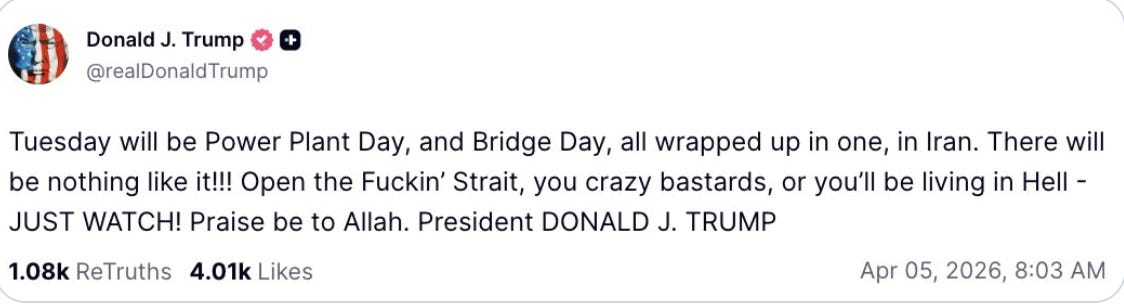
“Tuesday will be Power Plant Day, and Bridge Day, all wrapped up in one, in Iran. There will be nothing like it!!!” Trump posted on Truth Social on April 5. “Open the Fuckin’ Strait, you crazy bastards, or you’ll be living in Hell – JUST WATCH! Praise be to Allah.”

Liz Cheney, source: People

At an October 2024 campaign event, Trump said of former U.S. Representative Liz Cheney, “She’s a radical war hawk. Let’s put her with a rifle standing there with nine barrels shooting at her, okay? Let’s see how she feels about it … when the guns are trained on her face.”

A short time before, at a September rally, he proposed a crackdown by police to deal with crime. “If you had one really violent day … one rough hour—and I mean real rough—the word will get out, and it will end immediately,” he argued.

A bit more than a year earlier, at a March 2023 gathering of the Conservative Political Action Committee, he said: “I am your warrior. I am your justice. And for those who have been wronged and betrayed, I am your retribution.”

In June 2020, with protesters outside the White House, he said: “Can’t you just shoot them? Just shoot them in the legs or something?” This appears in a memoir by former Defense Secretary Mark Esper.

And all those are consistent with other comments by Trump. “I would bring back waterboarding,” he said in a 2016 Republican primary debate. And I’d bring back a hell of a lot worse than waterboarding.” And, when a protester disrupted a Las Vegas rally of his that year, Trump said: “I’d like to punch him in the face.”

As The Atlantic noted in a long 2024 compendium of Trump’s most inflammatory comments, Trump accused his opponents of inspiring the attacks against him with their rhetoric. “The reality, however, is that Trump himself has a long record—singular among American presidents of the modern era—of inciting and threatening violence against his fellow citizens, journalists, and anyone he deems his opposition,” the outlet remarked.

Classic projection, it seems. And, of course, his incendiary comments have had results. Just look at the January 6, 2021, insurrection at the Capitol, something his administration is busily trying to rewrite.

In a 2020 edition of Perspectives on Terrorism, a respected peer-reviewed academic journal, three scholars dissected Trump’s language during his first term. Political discourse in the period “became more hateful and divisive,” they noted.

And they laid the fault at the feet of the president, saying his enemies were those most often victimized.

“Threats and actual violence against groups and individuals singled out and demonized by Trump increased,” the scholars wrote. “The targets of his verbal attacks were most of all racial, ethnic, and religious minorities, the news media collectively and individual journalists, and well-known politicians, mostly Democrats…. We found that contrary to an old children’s rhyme (‘Sticks and stones may break my bones but words will never hurt me’) Trump’s aggressive, divisive, and dehumanizing language was seconded by his followers and inflicted directly or indirectly psychological and physical harm to Trump’s declared enemies.”

Of course, this has continued during Trump II and has moved far beyond language.

Robert Reich, David Rothkopf

“There is a close relationship between Trump and violence — not just the attempts on his life but also the violence he’s unleashed on the world, the violence his ICE and Border Patrol agents have caused inside America, the violence he has incited among his followers,” Robert Reich, a former official in the administrations of Bill Clinton, Jimmy Carter and Gerald Ford, noted in a Substack. “Trump’s violence has resulted in thousands of deaths and injuries. That is no justification for last night’s attack, of course, but it is part of what he has wrought in America. He has changed the script in Washington.”

Another former government official, David Rothkopf, did not hold back in delivering his own heated language about Trump in his Substack. Like Reich, Rothkopf has bipartisan cred. He served in the Clinton Administration and also worked as a managing director of Kissinger Associates.

Dissecting the president’s press performance after the aborted dinner, Rothkopf argued that “the con man, serial sex abuser, war criminal, racist, misogynist, immoral, most corrupt president in U.S. history became Saint Donald, the MAGA martyr.”

Arguing that no president in modern history has done more the promote division or violence in the U.S. than Trump, he laid the blame for today’s corrosive atmosphere at the president’s feet. “If America has a culture of violence, he is this country’s principle [sic] Apostle of Violence—a promoter of gun culture, hate and lawlessness,” he wrote. “What is more, we all know it. We know it. We can see it. It is woven into the fabric of our daily lives.”

There’s no doubt that the political atmosphere has coarsened and grown superheated ever since Trump descended his escalator in 2015 and defamed immigrants as drug dealers, criminals and rapists. And there’s no question that under Trump’s provocations, critics respond with strident language – one might even say “apocalyptic terms,” per the WSJ.

But put the blame where it belongs. It’s not the media, which serves as Trump’s messenger, albeit however critically. It’s the message.

Moreover, a deranged man who seems to have grown unhinged by Trump’s policies and sexual history is at fault here. Was he motivated by our vile political atmosphere? In time, we may learn more about what drove him and whether the Net-driven nastiness in the zeitgeist contributed.

If we want to change that atmosphere, though, the best place to start may be in the November midterm elections. Following up with a more civil alternative to Trump in the presidential vote two years later could also help.

Certainly, it is long beyond time for the projection practiced by Trump and his minions — and bought by too many in the press and outside — to end.

Alex P. Keaton was delightful …

… but Nebraska’s version isn’t quite so endearing

Joseph Weber

Michael J. Fox as Alex P. Keaton, source: Instagram

In the 1980s, Michael J. Fox earned his acting spurs in “Family Ties,” a sitcom in which he played Alex P. Keaton, the right-wing young son of a pair of ex-hippies. Throughout the show’s seven-season run, the buttoned-down tie-wearing character clung to Reagan-style conservatism.

But Fox in 2020 said Keaton would have shunned Donald J. Trump. George W. Bush or Mitt Romney might have flown, perhaps, but not Trump.

I’m reminded of this because Robert B. “Bob” Evnen, a fellow we knew in Lincoln, Nebraska, was something of a Keaton-like figure to his family. While Bob’s family consisted mostly of liberal Jews, he took a different path. An attorney schooled at the liberal-leaning Gould School of Law at USC, he became a fire-breathing MAGA-backing rightist who got quite active in Nebraska Republican politics.

One longtime friend of his family once bemoaned Bob’s turn from his family’s values. How could this black sheep have gone so far astray, she wondered?

Bob Evnen, source: his campaign

But Bob’s shift certainly paid off for him professionally. He won election as Nebraska’s Secretary of State first in 2018 and again in 2022. He’s now seeking a third term, with three candidates – one Republican and two Democrats – vying to take his job in a May 12 primary. He recently emailed me, seeking my vote, even though, as a resident of Colorado now, I no longer vote in Nebraska.

Not that he’d get my vote anyway.

Bob is a fascinating study in how enablers of Donald J. Trump – often otherwise bright people – contort themselves so they can ride on the coattails of the president and other highly placed Trump toadies. They do so despite facts and logic, sometimes despite their own experiences.

They do so, perhaps, because opportunism pays off.

For instance, Bob won the state post in 2018 championing requirements that voters in Nebraska show identification in order to vote. Never mind that the numbers on voter fraud in the state – and nationally for that matter – were and continue to be minuscule.

One group that tracks such voter fraud cases listed just two Nebraska men who voted twice in 2016, each once by mail and once in person. No cases were listed for any other year except 2020, when three members of one family voted in one county while living in another.

In that 2020 Nebraska case, prosecutors said the family patriarch had become angry with the village board in a nearby community where he owned several properties but didn’t live. The board had passed an ordinance pertaining to junk on lots and nuisance properties. The man, who presumably voted against the board candidates, was fined $10,000 while his son and daughter-in-law got probation.

Voter ID, which Nebraskans endorsed by ballot question in 2022 and which was enacted into law in mid-2023, may have prevented the man from voting. Indeed, on its face, voter ID seems as reasonable as requiring a driver’s license or some other photo identification to buy booze or fly.

Bob claims he wrote the state’s voter ID law, by the way, though it appears that a few more folks were involved. His staff and a legislative committee, for instance, had their hands in.

Of course, facts are slippery things with MAGA folks. More important, as the League of Women Voters noted, the issue is that time and time again, voter photo ID laws have proven ineffective in fighting voter fraud — in the rare instances it does take place.

“While voter photo ID laws aim to prevent in-person voter impersonation, an almost non-existent form of voter fraud, other types of voter impersonation are similarly rare and not cause for significant concern,” the league reported. “According to the Brennan Center, the rate of in-person voter impersonation is extremely low: only 0.00004% of all ballots cast. It’s worth noting that this rate is even significantly lower than other rare forms of voter fraud, such as absentee ballot fraud, which voter photo ID laws do not address.”

Indeed, the league traced the history of such efforts as voter ID laws back to the Jim Crow era in the South. That was “when many states employed various tactics — including literacy tests, poll taxes, and extralegal measures such as violence and intimidation — to prevent Black Americans from voting. Following the enactment of the Voting Rights Act (VRA) in 1965, many of these tactics were outlawed, but efforts to restrict voting access persisted, including implementing voter ID laws.”

Voter ID measures also restrict voting by Native American communities, low-income, elderly, and rural voters, according to the league. “This is partially because photo IDs aren’t as common as many people assume: 18 percent of all citizens over the age of 65, 16 percent of Latino voters, 25 percent of Black voters, and 15 percent of low-income Americans lack acceptable photo ID.”

But, on the right, fraudulent voting remains a hot-button issue. That’s chiefly because Trump – egomaniac that he is – could not believe that he lost the 2020 election to Joe Biden. Even today, he espouses the lie that really he won.

In a laughable case of “how far right can I be?,” Bob Evnen faced a couple Republican opponents in the 2022 primary who attacked the integrity of the vote in Nebraska in 2020. His state post then included ensuring an honest election.

Both of Bob’s opponents had based their campaigns on claims that the state’s vote-counting machines had been compromised, the Nebraska Examiner reported. They argued that fraudulent voting had occurred on Bob’s watch. Both questioned whether Biden had truly won an electoral vote in Nebraska’s 2nd Congressional District, where he outpolled Trump by more than 22,000 votes.

But Bob, a former general counsel for the Nebraska Republican Party, maintained that he had fully investigated all the claims by the two and by a group called the Nebraska Voter Accuracy Project and found no validity to any of them, the news outlet reported.

Had Bob faced just one of the other GOP primary contenders, it’s an open question whether he would have won. Together, the two garnered just over 56 percent of the party vote, though they split the voting with smaller shares each, of course, leaving Bob to prevail with just under 44 percent of his party’s support.

Ah, the delicious irony. What goes around comes around, eh Bob? Of course, he coasted to success in the fall 2022 general election in heavily red Nebraska with no opposition from Democrats or others.

But this is a drum that even today Bob keeps beating, usually as he marches in lockstep with Trump. For instance, he praised a presidential executive order titled “Preserving and Protecting the Integrity of American Elections” as opening “a new and hopeful chapter.”

Trump signed the executive order in late March of last year, aligning it with a House Republican priority to pass the Safeguard American Voter Eligibility Act. The SAVE Act would require proof of citizenship in federal elections. While the House passed that act, it is expected to die in the Senate.

Election watchdogs have said that some MAGA Republicans base their contentions about fraud at the ballot box on the “myth” of widespread voting by non-citizens. That’s so even though the Heritage Foundation, a conservative think tank, analyzed election conduct from 2000 to 2025 and found just 99 instances nationally of noncitizens voting out of hundreds of millions of votes cast.

Still, this bogeyman remains one Bob is happy to raise, even as he lets in just a smidge of daylight between himself and Trump. “It’s very important that we assure ourselves that non-citizens are not voting,” Bob recently said. “But we don’t need to nationalize elections to do it.”

Source: Bob Evnen email

Apparently concerned about that sliver of daylight seeming too bright, in his email he assured me – and others he sent the note to – that “The President and I are Completely In-Sync on Mail-In Voting,” another of Trump’s hobbyhorses. Trump rode that pony with a second executive order, titled “Ensuring Citizenship Verification and Integrity in Federal Elections.”

Bob likes this one a lot. He said it would “require each state to send the Postal Service a list of those who have requested early ballots. As soon as the Postal Service is ready to put this into effect, we will immediately provide the list of Nebraska early voters, which already is publicly available under Nebraska state law. The Postal Service will then be responsible for making sure that it returns early ballots only for those voters on that list.”

Imagine how efficiently that all would work.

But you don’t have to imagine that, since the Brennan Center at NYU’s School of Law did so already: “If implemented, the executive order would inject chaos into our elections, block eligible American citizens from voting, undermine voter privacy, and expose election officials and others to criminal prosecution simply for doing their jobs,” the center reported.

Oh, and recall that Trump has himself voted by mail, including just recently. Still, he calls it “mail-in cheating.”

But such measures all fall under what a former journalist and longtime observer of Nebraska politics, Steve Smith, calls “the Integrity Narrative.” Smith, who directs communications for The Good Life Institute, writes that this narrative “opens with a claim that the system needs protection. It then builds a tool to measure risk. Finally, it closes with a report that appears to confirm the original concern. Each step feels reasonable; all told, they shape how voters are treated in real time.”

Of course, the ultimate game is to drive down voter participation in a bid to help Republicans.

“It helps to ask a simple question,” Smith adds. “What problem is this system solving? Claims about widespread illegal voting always end up being debunked, overblown, or downright fictional.”

Still, such issues offer opportunists their chances to shine and to cozy up to people in power. A decade ago, Bob distinguished himself in Nebraska politics — and won over the heart of then-Gov. and now Sen. Pete Ricketts — by co-founding and leading a 2016 drive that successfully reinstated the death penalty in the state. The state legislature had abolished it.

“Capital punishment is the only penalty that is repeated in all five of the Books of Moses,” Bob told a group of Omaha Republicans. “The Old Testament is composed of three parts. The five Books of Moses, the Prophets and the Writings. The Five Books of Moses, in each of those five books you’ll find capital punishment is prescribed for certain crimes. And so we begin with capital punishment is morally required.”

“Required?” Never mind that a famous passage in the Mishnah, an early collection of traditional writings, cites a religious court’s view that one execution in 70 years was considered destructive. Or that the rabbis in the Talmud fashioned legal hurdles that made the death penalty exceedingly rare — something Bob as a knowledgeable Jewish person should have known.

Sounds a bit like JD Vance, the Catholic convert, telling the pope to “be careful when he talks about matters of theology.” Ah, the hubris of MAGA, from the top on down.

Since Bob’s death-penalty effort paid off, Nebraska has executed one man, Carey Dean Moore. Moore killed two Omaha cab drivers in 1979, when he was 21. He was sentenced to die, but the decree was twice reversed and then stayed in 2007, when Nebraska’s Supreme Court had reservations about electrocution, and again in 2011, that time over concerns about lethal injections. After 38 years on death row, Moore was killed by injection in 2018.

Moore’s death drew the ire of death-penalty opponents.

They included Sister Helen Prejean, a Roman Catholic nun whose novel about a Louisiana execution was made into the movie “Dead Man Walking.” Prejean pilloried Ricketts over his championing of the death penalty. “‘An important tool,’ Gov. Ricketts calls it,” Prejean said. “A tool for what? To show that we’re capable as a state of imitating the worst possible violence under the worst possible conditions, the most pre-meditated death of a human being you can imagine?”

“What’s going to happen after the execution … is anybody really safer? Has it really helped the state? All these things come to mind when I think of this and what’s about to happen in Nebraska,” she said. “Nothing will be accomplished by it, and that’s hardly what you call pro-life.”

By the way, Bob proudly claims to be pro-life, too. Never mind the moral and intellectual inconsistency – as one might politely call it – of advocating state-sponsored killing while calling oneself pro-life.

Inconsistency – perhaps we might call it hypocrisy — isn’t a problem for many MAGA Republicans, though. They claim they are furthering democracy with their efforts to restrict voting. They argue that gerrymandering is fine in Texas, but not in blue states. And they back a philandering felon’s invocations of law and order when his minions murder protesters in Minnesota.

So, Bob, Alex P. Keaton was entertaining and appealing in the 1980s. But your version of him just isn’t all that charming. I won’t be voting for you, volunteering or donating to your reelection bid. As your president might say, thank you for your attention to this matter.

Divinely ordained?

In a flap between Trump and the pope, guess who takes the high road
Joseph Weber

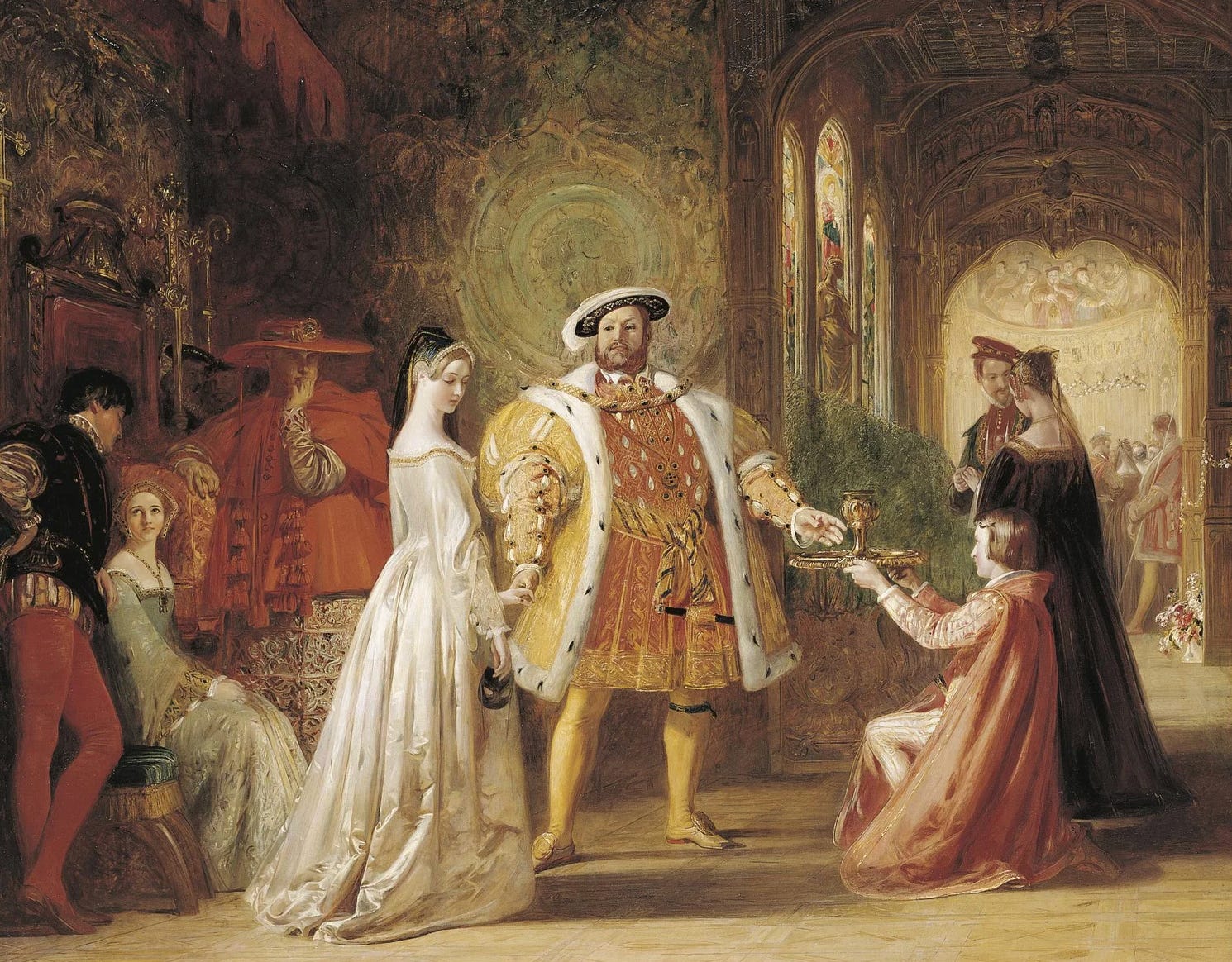
Henry VIII meets Anne Boleyn, source: World History Encyclopedia

Popes and kings have often rubbed one another the wrong way.

Consider Henry VIII. When Catherine of Aragon couldn’t produce a male heir for the obese British king, he grew infatuated with one of her ladies-in-waiting, Anne Boleyn. Pope Clement VII stalled for years on granting a divorce. So, the monarch broke with the Roman church, appointed a Protestant clergyman as the Archbishop of Canterbury, got his divorce from him and married the heavily pregnant Anne.

Then, in 1534, Parliament passed a law making Henry the Supreme Head of the Church of England. The randy ruler also soon had Boleyn beheaded and married four more times. The fates of the six were not happy: “divorced, beheaded, died, divorced, beheaded, survived.” For his sins, Clement’s successor excommunicated Henry in 1538 and the king died nine years later.

Three centuries earlier, Holy Roman Emperor Frederick II went to war twice against papal armies, battling them in 1229 and 1230 and again in the 1240s. Pope Gregory IX had excommunicated Frederick a couple times and taken his lands in Italy while the king was off on crusades. His successor, Pope Innocent IV, later again excommunicated the emperor. In their war of words, the popes called Frederick “the antichrist,” and he, in turn, labeled Innocent the same, adding that the pope’s name was “the mark of the beast,” arguing that his initials equaled the Roman letters for the Satanic 666.
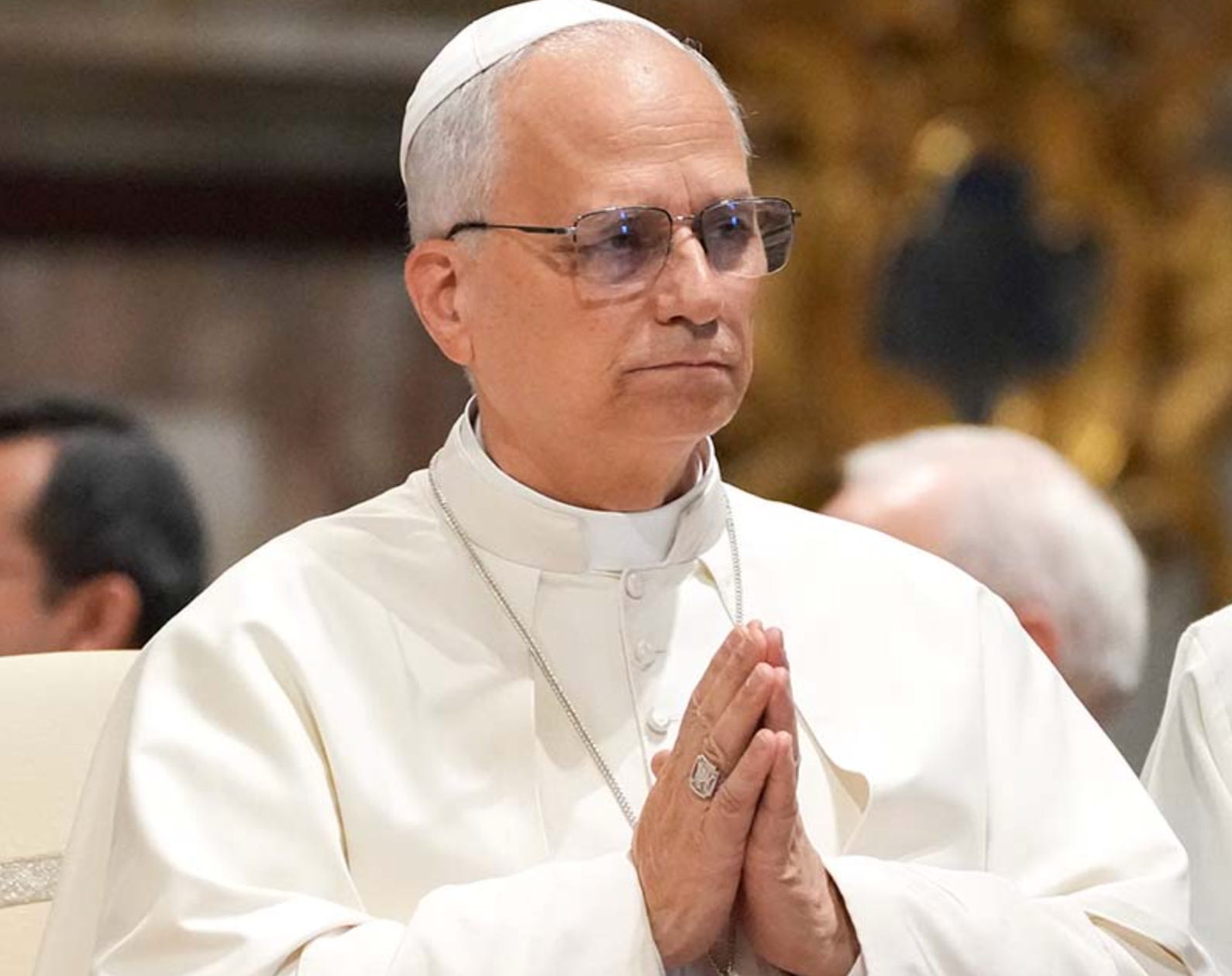
Pope Leo, sourceL OSV News

So, in comparison, the contretemps between the obese would-be monarch, Donald J. Trump, and Pope Leo XIV seems like small beer. Certainly, it’s as paltry and petty as Trump himself, who demonstrated his anger, irrationality and knack for non-sequiturs as he took on the leader of 1.4 billion Catholics in a Truth Social post.

While Trump hurled personal insults, calling Leo “WEAK on crime and terrible for Foreign Policy,” and accusing him of “catering to the Radical Left,” the pope preferred to take a higher road. Speaking to reporters at the beginning of a 10-day tour to four African nations, Leo said: “I have no fear, neither of the Trump administration, nor of speaking out loudly about the message of the Gospel. And that’s what I believe I am called here to do.”

Leo said he had “no intention to debate” Trump. “I am not a politician,” he told reporters, as he defended his earlier remarks asking the world to end “the madness of war.” He added: “The message is the same: to promote peace.”

The pope did offer a slight jab, however. When he was asked specifically about Trump’s comments on Truth Social, Leo said: “It’s ironic — the name of the site itself. Say no more.”

For all the small-mindedness in Trump’s blast, though, what is astonishing – if consistent – is his egocentrism. It’s all – and always – about him, of course.

Leo, the first American-born pope, was chosen by the global College of Cardinals last May not because he headed the worldwide Augustinian order of priests or because he is an expert on canon law who taught as a seminary professor while ministering in Peru for a decade. No, according to Trump, the now-70-year-old was “a shocking surprise” who owes his appointment to Trump.

“He wasn’t on any list to be Pope, and was only put there by the Church because he was an American, and they thought that would be the best way to deal with President Donald J. Trump,” the president posted. “If I wasn’t in the White House, Leo wouldn’t be in the Vatican.”

The pope, Trump added, should be “thankful” to him – though this randy and often-philandering royal wannabe made it clear he doesn’t “want” the Chicago-born pontiff leading the Church (as if he has the say-so).

“And I don’t want a Pope who criticizes the President of the United States because I’m doing exactly what I was elected, IN A LANDSLIDE, to do, setting Record Low Numbers in Crime, and creating the Greatest Stock Market in History.”

Never mind that Trump was elected his second time with less than half the popular vote, 49.8 percent to 48.3 percent for Kamala Harris, a margin of less than 2.3 million votes. And just what crime and stock markets have to do with the pope is a mystery, one perhaps clear only in Trump’s unsettled mind.

Leo, for his part, has avoided direct criticism of Trump in most of his admonitions about the president’s military adventurism.

In his opening months as pontiff, he quietly dodged an early invitation from Trump to visit Washington. But in January, Leo delivered a speech voicing concern about the Trump administration’s capture of President Nicolás Maduro of Venezuela.

As The New York Times reported, his admonishments on the war in Iran have grown more pointed as the conflict has continued, and as Trump administration officials began invoking theology to justify the war that Trump ordered up.

Pete Hegseth, source: The Guardian

First, he appeared sour on efforts by Pete Hegseth, the defense secretary, to portray the U.S.-Israeli campaign against Iran as a Christian mission. Hegseth, a supporter of a peculiar Christian sect, asked the American people to pray “every day, on bended knee” for a military victory in the Middle East “in the name of Jesus Christ.”

The pope saw things differently. In a homily during a Mass on the Thursday morning before Easter, the pope said that the Christian mission had often been “distorted by a desire for domination, entirely foreign to the way of Jesus Christ.”

Then, on Easter Sunday, he renewed his call for peace. “On this day of celebration, let us abandon every desire for conflict, domination and power, and implore the Lord to grant his peace to a world ravaged by wars,” Leo told tens of thousands of faithful gathered in St. Peter’s Square.

“We tend to consider ourselves powerful when we dominate, victorious when we destroy our equals, great when we are feared,” the pope said at the Basilica of St. John Lateran, the cathedral of the bishop of Rome. “God has given us an example — not of how to dominate, but of how to liberate; not of how to destroy life, but of how to give it.”

In late March the pope warned against invoking the name of Jesus for battle, saying in a Sunday homily that Jesus “does not listen to the prayers of those who wage war, but rejects them.”

After Trump threatened to wipe out “a whole civilization” in Iran, the pope said that “this threat against the whole population of Iran” was “really not acceptable.” He urged citizens to contact their political leaders to ask them to “to work for peace and to reject war always.”

As the Times noted, Trump’s angry reaction to the soft-spoken Leo, who was born Robert Francis Prevost in Chicago, showed “how differently two of the world’s most powerful Americans handle conflict.” The paper noted: “One pleads for resolution, while the other reflexively increases the temperature.”

While the pope mostly kept his comments focused on issues, Trump has preferred to make them personal.

“I like his brother Louis much better than I like him, because Louis is all MAGA,” the president posted. “He gets it, and Leo doesn’t!”

Lou Prevost, the eldest brother of the pope, has repeatedly praised Trump in online posts, applauding his attacks on the trans community and the Democratic Party, and once even shared a video that referred to former House Speaker Nancy Pelosi as a “c–t.”

“These f—ing liberals crying about tariffs is just unreal,” read the caption under the video, posted by someone else and reported on by the Daily Beast. “Do they not know that there is a thing called video? Just listen to what this drunk c— has to say in the mid-90’s long before her husband had grindr dates.”

Prevost’s efforts, first noted by the Daily Beast last May 2025, quickly earned him an invitation to the White House, and to a Mar-a-Lago bash hosted by the president in December.
Source: Truth Social

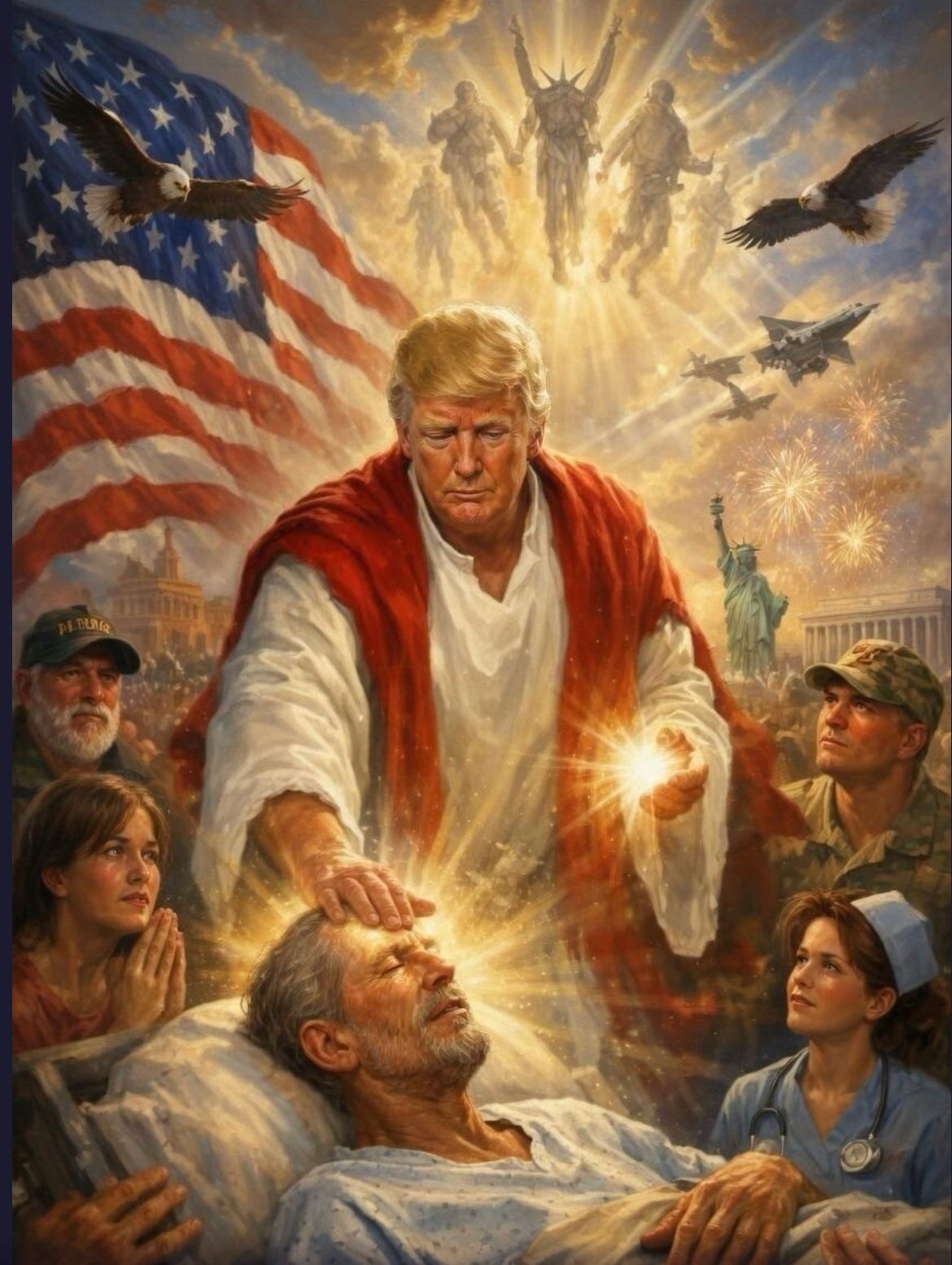
But today some of Trump’s latest postings are not sitting well with others in the MAGA base, as The Washington Post reported. Several were offended by Trump’s post of an image depicting him in Christ-like robes, holding a glowing orb and blessing an ailing man.

“I don’t know if the President thought he was being funny or if he is under the influence of some substance or what possible explanation he could have for this OUTRAGEOUS blasphemy,” wrote Megan Basham, a prominent conservative Protestant Christian writer and commentator. “But he needs to take this down immediately and ask for forgiveness from the American people and then from God.”

The president has since had the image removed.

Isabel Brown, a Catholic podcaster with the Daily Wire outlet and a conservative influencer allied with the Trump White House, also spoke out against it. “This post is, frankly, disgusting and unacceptable, but also a profound misreading of the American people experiencing a true and beautiful revival of faith in Christ in the midst of our broken culture,” Brown wrote.

David Brody, an evangelical journalist with the Christian Broadcasting Network, blasted the image, as the Times reported. “This goes too far. It crosses the line,” Brody wrote on social media. “A supporter can back the mission AND reject this simultaneously.”

The newspaper also noted that Representative Debbie Dingell of Michigan, a Catholic Democrat from the Detroit suburbs, called the image “deeply offensive and disrespectful.” She added: “This is not a matter of politics or humor — it touches the core of our faith. Our Lord represents humility, sacrifice, compassion, empathy and truth. Everything he is not.”

After Pope Francis died last spring, Trump kicked up similar dust when he posted an image of himself as pontiff. He had a ready answer when reporters asked who he would like to take the job in Rome, according to the Times. “I’d like to be pope,” he joked to reporters at the White House. “That would be my number one choice.”
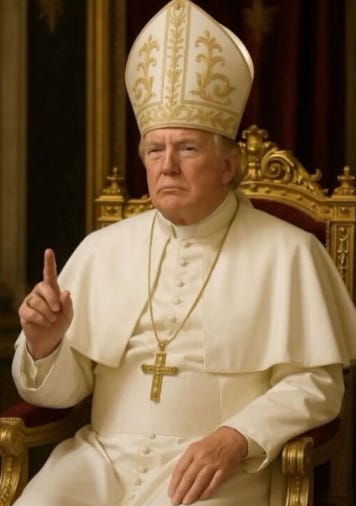
Source: Truth Social, via The New York Times

For the notoriously humorless Trump – now clearly stung by Pope Leo — the joke was likely more than half-serious.
Do we need hope and change again?

With Trump’s rage going too far, Americans could be ready for something better

Joseph Weber

Source: WBUR

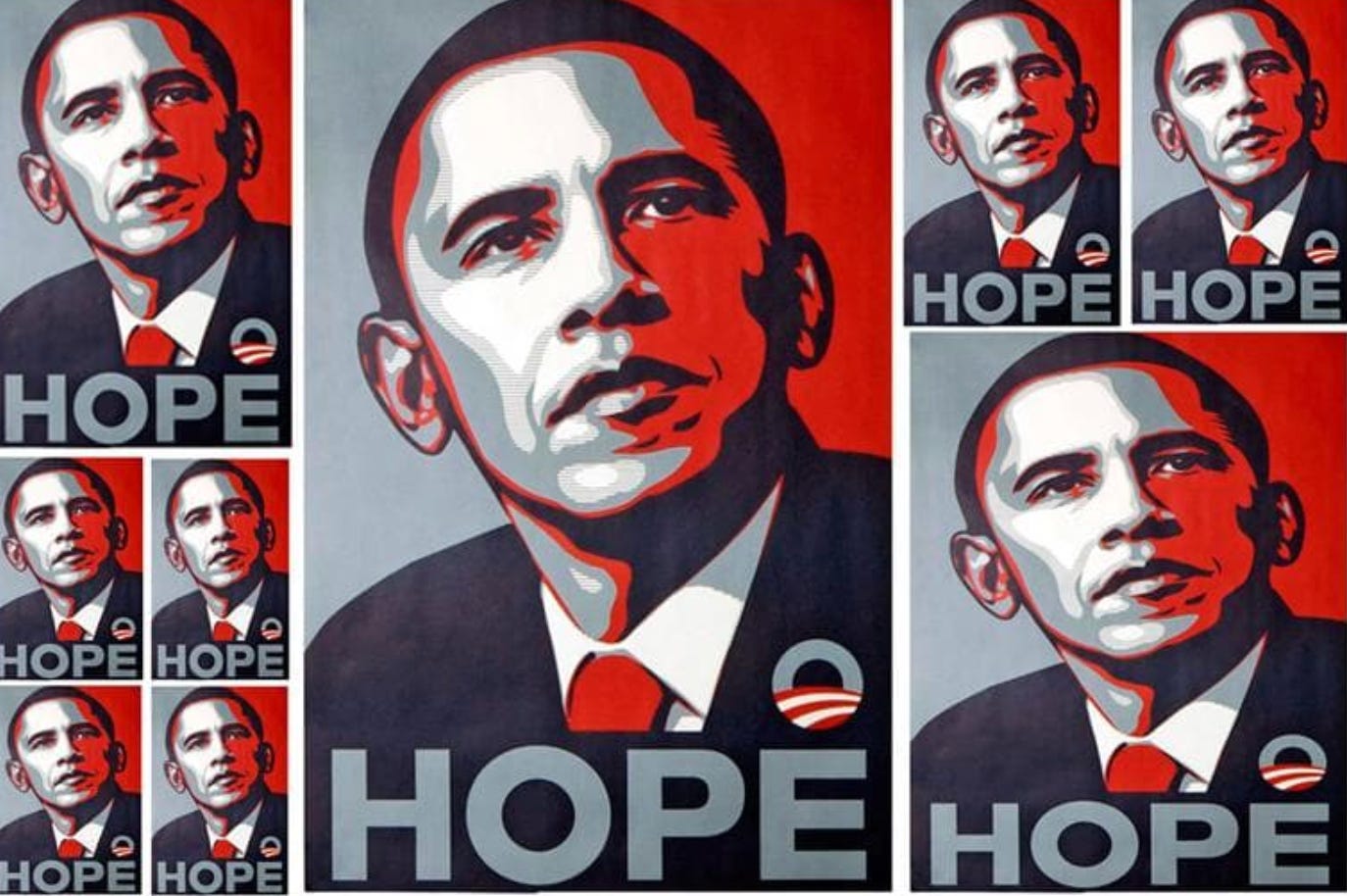
When Barack Obama won the presidency in 2008, he was a fresh face offering “hope and change,” his signature campaign message. He vowed to help the middle class, then struggling in one of the nation’s worst modern recessions, promised an end to the Iraq War, and pledged to install ethical government.

Obama pioneered the use of social media, data-driven voter targeting, and grassroots, small-dollar fundraising. Using platforms such as MyBarackObama.com, his team mobilized 2.2 million volunteers for ground-level organizing and personal outreach. The “campaign team used social media and technology as an integral part of their campaign strategy, not only to raise money, but also more importantly, to develop a groundswell of empowered volunteers who felt that they could make a difference,” academics at Stanford reported.

The technology allowed the junior Illinois senator to deliver an upbeat message, one surprisingly like Ronald Reagan’s “shining upon city on a hill,” his 1980 campaign theme.

“Yes, we can” – a phrase Obama borrowed from the Spanish version used by Cesar Chavez and Dolores Huerta of the United Farm Workers – became his rallying cry. It worked at a time when Americans craved hope and optimism, successful enough to give Obama two terms.

But when Donald J. Trump came to power – in his two successful presidential campaigns – much of the electorate wanted something far different. They were angry and feeling unheard. White voters, in particular, seemed to feel like they were losing their grip on the country, a message Trump delivered with no embarrassment. The undereducated, especially, felt sidelined economically.

Trump reflected, channeled and ultimately rode to power on their rage at a system that seemed to leave many of them out.

But now that we’re seeing the effects of rage as a governing principle, are many Americans feeling differently? With murderous attacks on alleged drug dealers, followed by military raids on foreign countries and war in the Middle East, as well as masked and armed federal agents rounding up tens of thousands within our borders (and killing some), are growing numbers of Americans appalled by their choice?

And, starting with the midterms and then in the presidential contest of 2028, will they seek a different message?

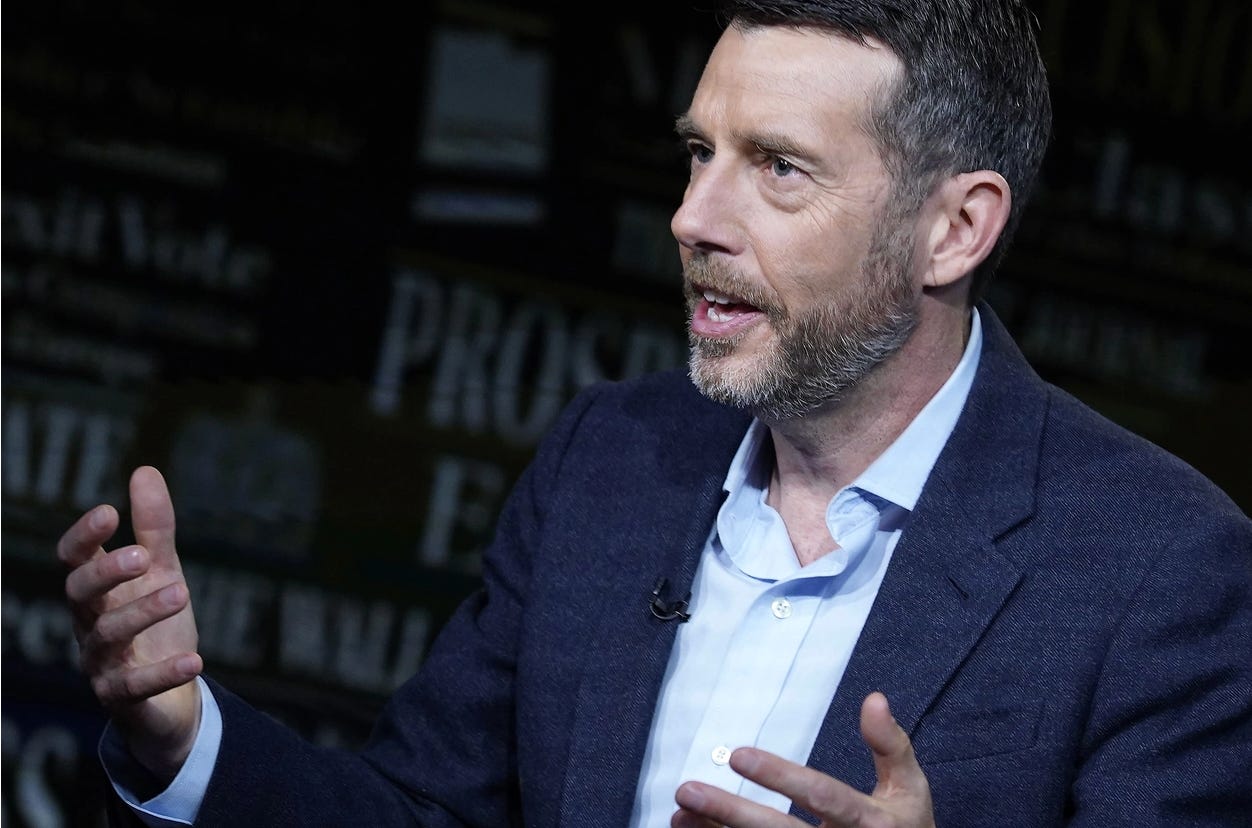
Will they want that delivered, moreover, in less conventional ways than the old techniques of position papers, local media tours and debates? Perhaps a daily “permanent show” distributed on “traditional TV, connected TV, Instagram, Facebook, YouTube, TikTok, Reddit, podcasts, Snapchat, radio, video games, community events, door-to-door canvassing, phone calls and texting,” as former Obama political adviser David Plouffe contends in a New York Times commentary.

And will they respond once again to upbeat messaging or something else?

David Plouffe, source: Politico

Plouffe, backed by some academic research, holds that anger will carry the day once again – this time disgust at Trump’s legacy. “The messaging must focus squarely on making vulnerable G.O.P. candidates, not the president, the face of the things voters are angry about: higher prices, local businesses closing, farm community devastation,” he argues.

At least one presidential hopeful, California Gov. Gavin Newsom, has embraced both some of the technology and some of Trump’s messaging style. He has gotten a lot of ink with constant posts on social media that troll the president. Newsom has used what Politico called “an inescapable, smashmouth, all-caps-laden and meme-filled X account” to counter Trumpism.

“There’s Newsom on Mount Rushmore,” the news outlet reported last year. “There’s Newsom getting prayed over by Tucker Carlson, Kid Rock and an angelic, winged Hulk Hogan. There’s Newsom posting in all caps, saying his mid-cycle redistricting proposal has led ‘MANY’ people to call him ‘GAVIN CHRISTOPHER ‘COLUMBUS’ NEWSOM (BECAUSE OF THE MAPS!). THANK YOU FOR YOUR ATTENTION TO THIS MATTER.’”

But I wonder. Do we really want a Trump-style alternative to the president, especially someone who strikes many as just a bit too slick?

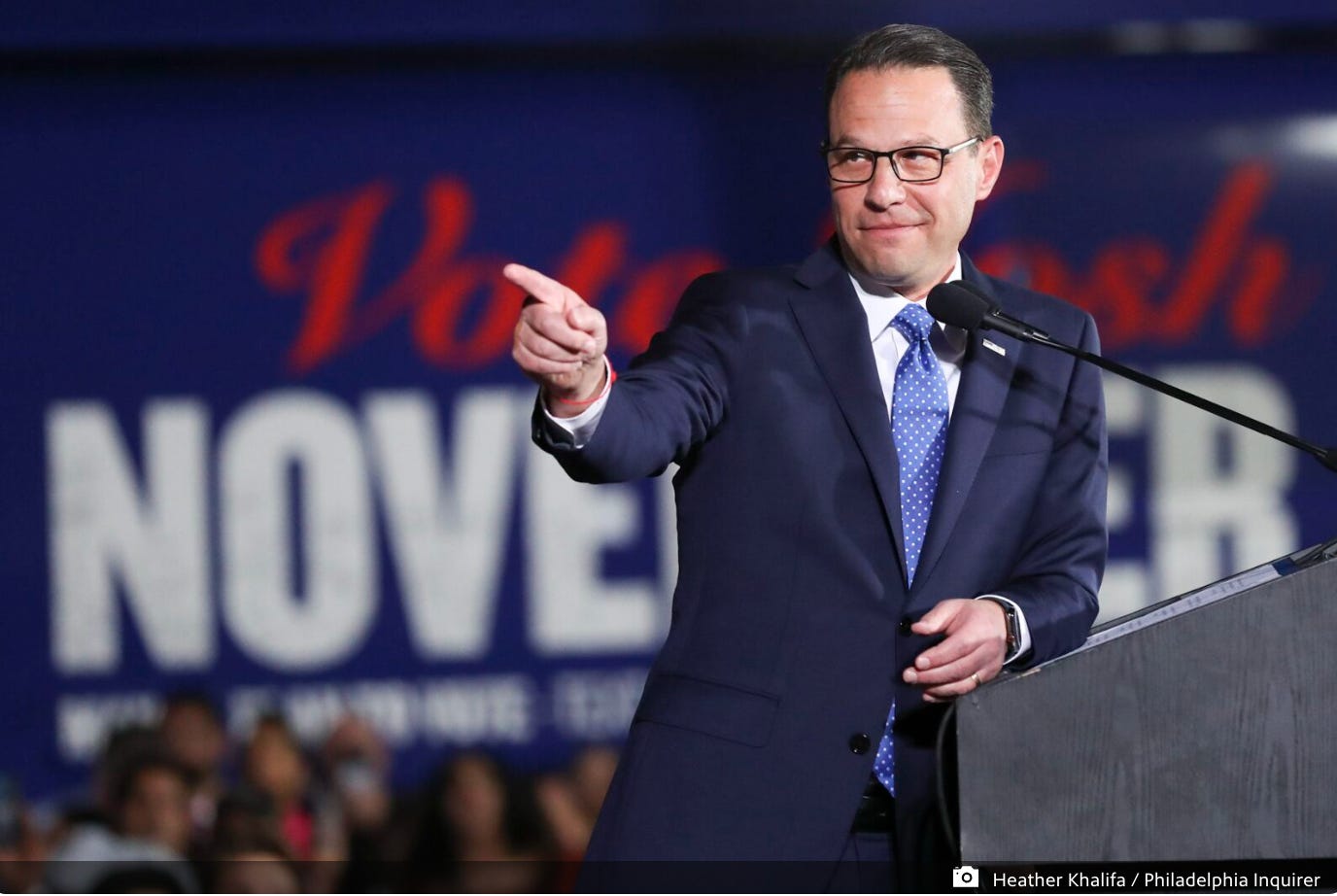
Maybe we’re better off with a cooler head, a less everywhere candidate such as Josh Shapiro, perhaps. “He doesn’t host a podcast or spend much time on cable news,” The Atlantic reported. “Even as he engages in regular skirmishes with the White House over policy matters, the governor goes out of his way to not antagonize the MAGA base. Shapiro, who is expected to run for president in 2028, believes that his party’s prospects of regaining power depend less on combatting Donald Trump than on courting the president’s supporters.”

Pennsylvania Gov. Josh Shapiro

Or would Pete Buttigieg, Rahm Emanuel, J.B. Pritzker, Chris Murphy, Mark Kelly, Andy Beshear or someone else be best? The pundits are split, of course, and both the messenger and the message will be crucial.

Do Trump and MAGA make us more angry or just more exhausted by ugliness, self-dealing and rampant institutional disrespect in the top reaches of government? It seems likely that many of us — perhaps most – are offended by such unhinged and unpresidential messages as “Tuesday will be Power Plant Day, and Bridge Day, all wrapped up in one, in Iran. There will be nothing like it!!! Open the Fuckin’ Strait, you crazy bastards, or you’ll be living in Hell — JUST WATCH! Praise be to Allah.”

In time, polls will help us get a handle on public reaction. But, for now, we have the disparate responses of politicians.

For instance, Marjorie Taylor Greene, a former staunch ally turned Trump critic, said everyone in the Trump administration who claims to be a Christian needed to “beg forgiveness from God” and intervene in the president’s “madness,” as The Guardian reported. In a lengthy post on X, the former Republican congresswoman wrote: “I know all of you and him and he has gone insane, and all of you are complicit. I’m not defending Iran but let’s be honest about all of this.”

Bernie Sanders, an independent senator, said on X: “One month after starting the war in Iran, this is the statement of the President of the United States on Easter Sunday. These are the ravings of a dangerous and mentally unbalanced individual. Congress has got to act NOW. End this war.”

And Democratic Senator Chris Murphy also called it completely unhinged. He wrote on X: “If I were in Trump’s Cabinet, I would spend Easter calling constitutional lawyers about the 25th Amendment. This is completely, utterly unhinged. He’s already killed thousands. He’s going to kill thousands more.”

Even some Republicans have been appalled by Trump’s rhetoric, especially his so-far delayed threat to destroy Iranian civilization. Sen. Lisa Murkowski (R-Alaska) also criticized Trump’s latest threat, arguing on X that “This type of rhetoric is an affront to the ideals our nation has sought to uphold and promote around the world for nearly 250 years.”

Rep. Kevin Kiley (I-Calif.), who recently switched from a Republican to an independent, wrote on X that the U.S. “does not destroy civilizations… Nor do we threaten to do so as some sort of negotiating tactic. We should all desire a future of freedom, security, and prosperity for the people of Iran.”

It’s an open question whether Trumpism will in time burn out, its rage spent. Economic disenfranchisement, especially among the undereducated, seems likely to grow as income inequality widens. And racial strains may be an ever-present reality in our politics (see Kamala Harris’s fall).

But, given the lurches between extremes that now define our system, the time may be ripe in the coming couple years for candidates who embrace and eloquently deliver more positive messages. As Plouffe suggests, they’ll have to tap into all the many channels available now. Forget detailed policy papers and gauzy ads celebrating commitments to family and country. Surely, modern voters will need plenty of sizzle, along with the steak.

Still, decency, morality, a sense of presidential propriety and a promise akin to Reagan’s “shining city upon a hill” or Obama’s “hope and change” — two eminently successful pitches — may offer a much-needed alternative to the anger-driven, self-dealing and self-deluding politics of the moment.

When do editors say “wait a minute?”

Iran war coverage raises tough questions

Joseph Weber

Source: Ethical Journalism Network

Eons ago, Fred Friendly, who worked as a reporter for an Army newspaper during WWII and later rose to serve as president of CBS News, posed a few interesting questions in a seminar in my journalism graduate program.

Should journalists withhold news during a war? Or, are they obliged to abide by the ethic that a reporter must air even difficult facts — if they are important — as soon as possible, wherever they may lead?

Friendly, who died in 1998, then told of a real-life case where a reporter learned of plans to sneak endangered children out of a European war zone. The journalist held back on reporting on the effort until the mission was complete. Releasing any word beforehand could have cost the children their lives, he reasoned.

Of course, the journalist was right to stay mum.

With that example it became apparent to us all that when lives are at stake, a journalist’s first responsibility is not to his or her audience, but rather to preserve life. This idea was demonstrated repeatedly in WWII, when news organizations withheld information they knew about the Manhattan Project, as well as on troop and ship movements, so as not to tip off enemies about sensitive matters.

The Manhattan Project, source: Arcadia Publishing

But does this principle mean, as Donald J. Trump has argued, that reporters broke the law – and their own sense of ethics, though Trump didn’t mention that – when they disclosed that an F-15 fighter had been shot down in Iran? When they learned that one aviator had been rescued while another remained unaccounted for?

As matters of life and death, the questions multiply.

Should the outlets have kept quiet on that, as the government did for more than 24 hours after the shootdown? Should journalists have withheld the news from their audiences until the second airman was rescued? Did they jeopardize his life—and those of his rescuers—by alerting Iranian authorities about the search-and-rescue mission?

And, now, as Trump has threatened, should journalists be interrogated and jailed if they refuse to disclose sources that tipped them to the details?

Trump blamed an unknown “leaker” for sharing the information, vowing to haul in reporters to find the source. “We’re going to go to the media company that released it and we’re going to say, ‘national security, give it up or go to jail,’” Trump said. He added that whoever shared the information is “a sick person.”

But this may not be easy, which may be why Trump refused to point his finger at a single news outlet. Multiple news organizations had reported on the crash, including the Israeli TV outlet N12AxiosThe Washington PostThe New York TimesNBC News and Reuters. Several referred to unnamed “U.S. officials” – plural — as sources.

And just which media outlet broke the news first is not clear, though a few Israeli journalists appear to have gotten the news out before any the others.

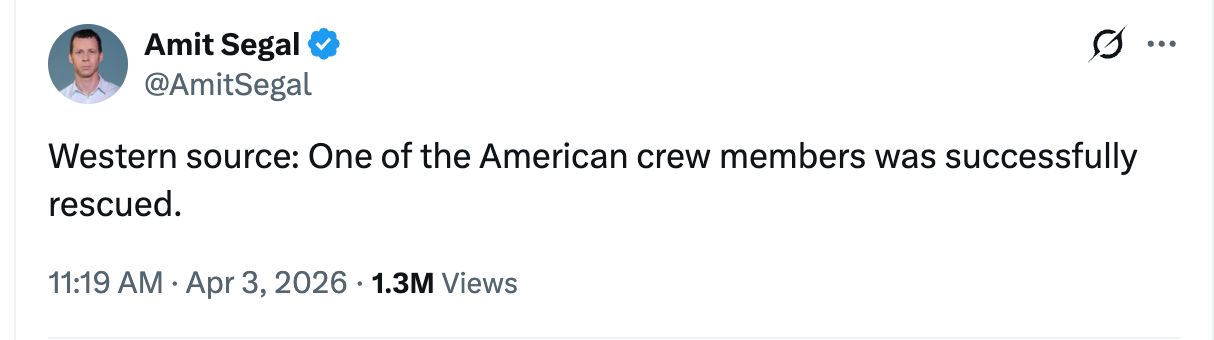
Ariel Kahana of Israel Hayom and Haaretz columnist Amir Oren appear to have posted the news on Telegram before their rivals, according to another Israeli journalist who jumped on the story, Amit Segal. Segal and Axios’s Barak Ravid had both posted early on about the shootdown, the New York Post reported.

The Military Times credited Israel’s Channel 12 with being the first to report that a second American pilot was missing, according to the New York newspaper. But Segal and Ravid were among the earliest to post the information to Telegram and X, respectively.

“An American fighter jet was shot down by Iranian fire. A search is underway to locate the two crew members, according to a source familiar with the details. Read my article at @axios,” Ravid wrote at 8:54 a.m. on Friday. Similar posts by Kahana and Oren appeared a half-hour earlier, Segal told the Post.

It is also possible, however, that Iranian state media beat them all on the news. Iranian media circulated photographs and video footage on Friday that purportedly depicted debris from the downed aircraft, Israel Hayom reported.

Images of debris from Tasnim, source: Israel Hayom

The Tasnim news agency, affiliated with Iran’s Revolutionary Guards, reported that at least one pilot apparently ejected. It incorrectly claimed he was captured by Iranian forces following a failed American rescue attempt. The agency also published an image of an ejection seat.

So, the responsibilities and ethical challenges of the American and Israeli media are not clear here, not to mention their legal risks, despite Trump’s certainty about the irresponsibility of their actions. If it was just a matter of preserving an American’s airman’s safety by keeping quiet, that would have been an easy call: of course, you hold back, just as the reporter in Friendly’s case study did.

But this all was far murkier.

First, did the Israeli reporters, who seem to have gotten the first word out on the F-15 shootdown, get their tipoff just by monitoring Tasnim? Had Tasnim really gotten the information first, even if incorrectly so? And, if so, did the Israelis just get confirmation from the Israeli military with the crucial detail that no one had been captured?

But then, when American media outlets got confirmation of various details, should they have withheld all of that, even though the others had released fragmentary or flawed information on Net? Did the U.S.-based outlets, in fact, do the public – if not the military — a service by providing correct information, even if only from anonymous sources?

Or was that the tipoff that, as Trump claimed, told “the entire country of Iran” that a pilot was “somewhere on their land,” making it “much more difficult for the pilots and the people going into search for him? Did they “put this mission at great risk,” as he insisted?

While lots of questions remain, we do know that the Net, with its power to instantly share information – and misinformation – has changed the calculation for media. They now must add a key element to decisions on publishing sensitive information – what if bad information is out there? Is there not a responsibility to set things right, and quickly?

Government leaders always want war information to serve their interests, not necessarily the larger public interest. Certainly, when journalists reported on the My Lai Massacre in Vietnam in 1968, U.S. authorities were unhappy. But that savagery prompted a rethinking of the war and of the behavior expected of American soldiers, alike.

And now, with Trump threatening to bomb every bridge and power plant across Iran, accurate reporting is essential.

The media need to cover the president’s statements, ranging from the recent Truth Social post saying “A whole civilization will die tonight, never to be brought back again. I don’t want that to happen, but it probably will” to his earlier one: “Tuesday will be Power Plant Day, and Bridge Day, all wrapped up in one, in Iran. There will be nothing like it!!! Open the Fuckin’ Strait, you crazy bastards, or you’ll be living in Hell — JUST WATCH! Praise be to Allah.”

To the extent possible, journalists must report in detail on the destruction in Iran, should that occur. Already, they are covering the moral and legal questions involved in Trump’s threats.

“Such seemingly unrestrained statements have alarmed legal experts and former military officials, who argue that the president’s threat to conduct broad attacks on civilian infrastructure — ‘very little is off-limits,’ he said Monday — could undermine America’s aims in Iran and create legal jeopardy for military leadership,” The Washington Post reported.

As the newspaper reported, Secretary of Defense Pete Hegseth has long supported U.S. military members accused or convicted of war crimes. He has claimed that the U.S. would take its “gloves off” in military conflict and show “no quarter” to its enemies, alarming some legal experts.

For American generals and even lower-level service members, who have the right to refuse to follow illegal orders, the orders that may come from both men are particularly problematic. All that needs to be covered by the press.

Trump, of course, has long been at war with the press, usually for covering him accurately. In his blinkered and hostile world view, the media just complicated a search-and-rescue operation, endangering hundreds of people involved. But for the news outlets interested in reporting thoroughly and correctly, as well as doing things ethically and properly, the issues are anything but simple.

April is what we make of it

Though this one seems more Eliot than Chaucer

Joseph Weber

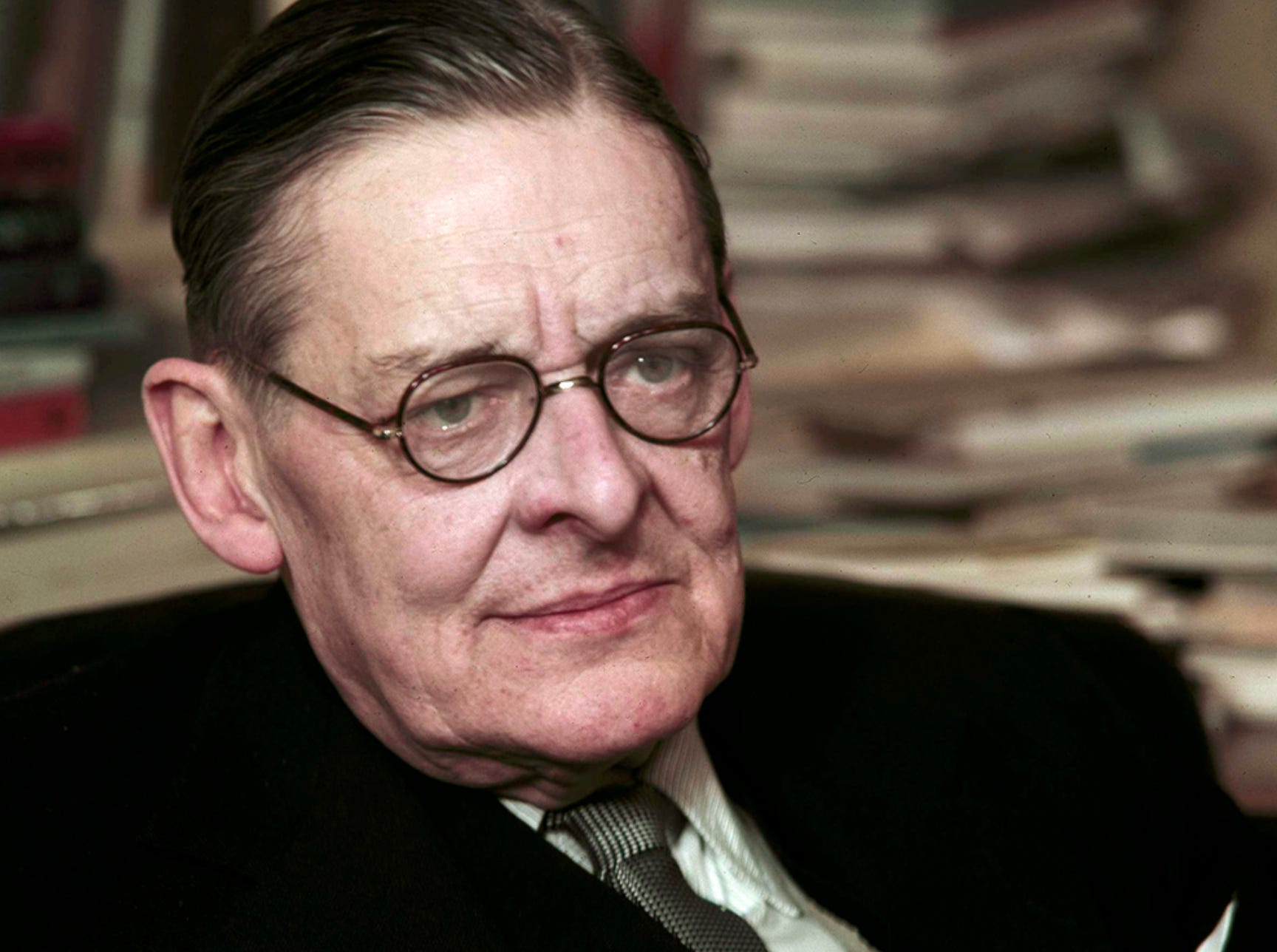
T.S. Eliot in 1956, source: National Catholic Reporter

April is the cruellest month, breeding/Lilacs out of the dead land, mixing/Memory and desire, stirring/Dull roots with spring rain./Winter kept us warm, covering/Earth in forgetful snow, feeding/A little life with dried tubers.

So begins The Waste Land, where T.S. Eliot wrestled with his personal demons in shellshocked post-WWI Europe. Unhappily married, toiling away in a bank despite his studies at Harvard, the Sorbonne and Oxford, and perhaps feeling at 33 that he was midway through an unfulfilled life, the poet suffered a breakdown and was recovering in a Swiss sanatorium when he wrote the work.

Rife with classical references, The Waste Land’s opening inverts the meaning Geoffrey Chaucer infused into springtime in his General Prologue to The Canterbury TalesAs Tyler Malone notes in a guide to Eliot’s poem, Chaucer paints April as a month of restorative power, when spring rain brings nature back to life:

Whan that Aprille with his shoures soote/The droghte of March hath perced to the roote,/
And bathed every veyne in swich licóur/Of which vertú engendred is the flour 
… In modern English, that’s: “When April with its sweet showers has pierced the drought of March to the root, and bathed every vein (of the plants) in such liquid by which power the flower is engendered/created.

By contrast, of course, Eliot gives us an April (in 1921) whose promise is little but hollow and mean-spirited deceit in a world rendered barren by war, a civilization ruined by cultural and physical desolation. His depressing spring reflected both widespread sentiment about a Western world gone awry and his personal mental crisis.

I’m reminded of all this because on the eve of Easter and midway through the Jewish celebration of Passover – both of which are all about hope and rebirth – we also seem immersed in a modern Waste Land.

Guided by an inept president who underestimated the enemy and a self-styled Secretary of War who is busily firing experienced military leaders, we are in a war whose course seems impossible to predict. An unsettling New York Times piece suggests that Iran could well become yet another of our country’s unresolved battlegrounds.

Writer Charles Homans notes that “never-ending wars” have become “the dominant condition of American foreign policy throughout the 21st century.” He holds that this is “a once-dystopian-seeming possibility that, somewhere in the long shadow of Sept. 11, became a quietly accepted reality.” Homans adds that the United States has been actively involved in military conflicts at home or abroad for most years of the 19th and 20th centuries and in the quarter-century since the Sept. 11, 2001, attacks.

Pete Hegseth, source: Feminist Giant

And with the Christian nationalist Secretary of Defense, Pete Hegseth, at the helm, the current battle has taken on perverse messianic overtones. Of course, the former Army National Guard Major and ex-TV host not only knows better than his generals, but he’s happy to take on the foremost global leader of Christianity. Hegseth, a supporter of a peculiar Christian cult, has asked the American people to pray “every day, on bended knee” for a military victory in the Middle East “in the name of Jesus Christ.”

Pope Leo XIV, the first American-born pope, has been having none of that. In a homily during a Mass on the Thursday morning before Easter, the pontiff said that the Christian mission had often been “distorted by a desire for domination, entirely foreign to the way of Jesus Christ.” Earlier, in late March, the pope warned against invoking the name of Jesus for battle, saying in a Sunday homily that Jesus “does not listen to the prayers of those who wage war, but rejects them.”

Meanwhile, there are plenty of other troubles to fret about both globally and in the U.S. The post-WWII order, particularly regarding NATO, is at risk. Democracy at home is in danger and our economy hangs in the balance, with 72 percent of Americans rating economic conditions as fair or poor and only 31 percent expecting better conditions in a year.

Oh, and masked and armed federal agents continue to round up immigrants across the U.S., shipping them off to detention camps by the tens of thousands (over 68,000 so far, many with no criminal backgrounds). So far, in such custody, at least 46 people have died. Two others, of course, were murdered by such agents in Minneapolis.

It is, indeed, difficult to see this as a hopeful spring.

Heather Cox Richardson, source: The Guardian

Somewhere, no doubt, a modern Eliot is writing verse that captures this gloomy time (or perhaps he or she is doing a podcast about it all). Of course, we do have Substacker Heather Cox Richardson, the Boston College academic who regularly puts all this in historical context and calls out lies from Donald J. Trump. As she discussed it, his recent TV address about Iran marked a new low.

“Sounding tired and speaking in a monotone, Trump reiterated his claim that the U.S. doesn’t need the oil that travels through the Strait of Hormuz and demanded that other nations who need the oil more force Iran to reopen it,” Richardson wrote. “In reality, the U.S. is tied into international oil markets, and prices not only of oil, but also of products that use oil to get to market, are already rising.”

She also noted Trump’s skewed priorities of late, referring to his comments about his new budget at an Easter lunch reception. “I said to [Office of Management and Budget director] Russell [Vought], ‘Don’t send any money for daycare because the United States can’t take care of daycare,’” Trump said. “That has to be up to a state. We can’t take care of daycare. We’re a big country. We have fifty states, we have all these other people. We’re fighting wars. We can’t take care of daycare.”

As Richardson suggested, kids are low on his list. Like Trump’s budget requests for 2026, his new budget calls for an enormous boost to the nation’s military spending, $1.5 trillion, to be paid for with cuts to domestic programs, the academic noted.

Of course, we’re very much in the early days of this Trumpian catastrophe. It’s as if we’re not even through the early German advances in the four-year-long world war that thrust Eliot and many of his generation into their funks. Things may yet turn upward for the U.S., perhaps with November elections that will repudiate the bleak national course Trump has set.

As for Eliot, his understandable pessimism about humanity never disappeared, though his personal life and attitudes did undergo big changes. Some years after writing The Waste Land, he dismissed the poem as “the relief of a personal and wholly insignificant grouse against life…just a piece of rhythmical grumbling.”

By then, his first wife had died and he was happily married to a second woman. He also had given up the Unitarianism of his American youth and converted to Anglo Catholic Christianity, while also becoming a British subject. His writing at that point focused on religious themes, notably The Four Quartets, regarded by some as the major Christian poem of the last century.

Redemption, in whatever form it will take, seems a long way off for us now. Still, Chaucer’s April is a far more welcome one than Eliot’s.

Can the courts save us?

So far, many have shot down Trump’s foulest efforts

Joseph Weber

Just over a half-century ago, a federal judge appointed by an honest Republican president stood up to a corrupt Republican president and made history.

John J. Sirica, a son of Italian immigrants who put himself through law school by boxing, demanded in 1973 that Richard Nixon cough up secret Oval Office recordings. On one, Nixon plotted with aides to quash the infamous Watergate burglary investigation. The late judge’s subpoena – and later release of the tapes, as well as the trials of the Watergate burglars over which Sirica presided – led to Nixon’s humiliating resignation.

Ah, if only humiliation worked on this shameless White House.

But, today, we again see other courageous judges taking on a far more corrupt president and setting him back on his would-be regal heels. Donald J. Trump and his minions have been scorched by one court decision after another in their long parade of efforts to twist, stretch and violate the law.

Trump has lost decisions ranging from one damning a company’s blacklisting from defense contracts to proof-of-citizenship requirements for voting. He’s been slapped down in areas as diverse as tariffs and deportations, as well on his efforts to dismantle the U.S. Agency for Global Media. The administration lost a big vaccines case, was forced by a court to pull back on National Guard deployments in cities and suffered setbacks on revenge cases he brought at critics.

The list of judicial defeats goes on and on. The president and his colleagues have lost cases dealing with congestion pricing in city streets, withholding federal funds from schools in diversity, equity and inclusion cases, and on cuts in funding to sanctuary jurisdictions.

And the judges involved have been withering in their rulings against the administration.

Judge Coughenour, source: Seattle Times

Senior U.S. District Judge John Coughenour in Seattle, a Ronald Reagan appointee, called Trump’s executive order ending birthright citizenship “blatantly unconstitutional,” for instance. Another Reagan appointee, Appeals Court Judge J. Harvie Wilkinson III, said of the illegal deportation of Kilmar Armando Abrego Garcia: “There is no question that the government screwed up here.” The judge, sitting in Virginia, added: “This should be shocking not only to judges, but to the intuitive sense of liberty that Americans far removed from courthouses still hold dear.”

Even deep in Trumpland, judges have been blistering.

Judge Fred Biery, source: TexasMonthly

District Judge Fred Biery, serving in Texas and ordering the release of a 5-year-old illegally detained by immigration authorities, didn’t hold back, for example. “Observing human behavior confirms that for some among us, the perfidious lust for unbridled power and the imposition of cruelty in its quest know no bounds and are bereft of human decency,” Biery, a 78-year-old Clinton appointee and grandfather, wrote in a three-page ruling. “And the rule of law be damned.”

Still other judges have taken aim directly at Trump.

U.S. District Judge William Young railed against the administration in a free-speech case involving pro-Palestinian protesters such as the Columbia student Mahmoud Khalil and Tufts student Rümeysa Öztürk. In his 161-page opinion, the Reagan appointee accused the president of violating “his sacred oath” to faithfully execute the Office of President of the United States, and . . . to the best of [his] Ability, preserve, protect and defend the Constitution of the United States … by ignoring the Constitution’s command that the president take care that the laws be faithfully executed.”

Judge Young, source: Massachusetts Lawyers Weekly

Indeed, Young wrote that Trump favored muzzling free speech. “After all, the facts prove that the President himself approves truly scandalous and unconstitutional suppression of free speech on the part of two of his senior cabinet secretaries,” the judge thundered.

Young, who sits in Massachusetts, also took aim at Trump’s Immigration and Customs Enforcement agency, particularly its love of masks.

After hearing from a top ICE official, Young wrote that the court “rejects this testimony as disingenuous, squalid and dishonorable.”

“ICE goes masked for a single reason — to terrorize Americans into quiescence,” he contended. “Small wonder ICE often seems to need our respected military to guard them as they go about implementing our immigration laws. It should be noted that our troops do not ordinarily wear masks. Can you imagine a masked marine? It is a matter of honor — and honor still matters. To us, masks are associated with cowardly desperados and the despised Ku Klux Klan. In all our history we have never tolerated an armed masked secret police.”

Ouch.

Of course, to Trump the law is just an annoyance, a small obstacle to be overcome. And judges, to him, are lackeys in a system that just gets in his way. Beating the system and the judges is a kind of game that, if stretched out long enough, he is sure he can win or sidestep.

“The time has also come for Republicans to pass a tough new crime bill that imposes harsh penalties for dangerous repeat offenders, cracks down on rogue judges. We got rogue judges that are criminals. They are criminals, what they do to our country. The decisions that they hand down and hurt our country,” Trump said at a March 25 National Republican Congressional Committee event in Washington.

He previously called Supreme Court Justices who had ruled against him in a tariffs case “fools and lap dogs” for political opponents. “They’re very unpatriotic and disloyal to our Constitution. It’s my opinion that the court has been swayed by foreign interests and a political movement that is far smaller than people would ever think.”

He recently ratcheted up his language, saying that Justices Neil Gorsuch and Amy Coney Barrett “sicken me.” He had appointed both of them, but they joined four other Justices in ruling against him in the tariffs case. The majority held that Trump had illegally sought to authorize some levies under an emergency law that was not suited to the charges.

Justices Barrett and Gorsuch, source: National Law Journal

Such tariffs are a mainstay of Trump’s 18th century view of economics. After he lost that Supreme Court case, Trump just found other rules to rationalize the charges, albeit temporarily.

So much for respect for judges and the laws they are upholding.

The “lap dog” judges that “sicken” him on April 1 will be among the nine who will hear oral arguments on one of the hobbyhorses Trump rides to limit the rights of immigrants, birthright citizenship. Recall that the 14th Amendment to the Constitution, ratified in 1868, grants citizenship to everyone born in the U.S. (with a few exceptions, such as for children of diplomats).

Ever since then, it has been understood that the language of that amendment is clear and inarguable. Nonetheless, Trump on his first day back in office in January 2025 issued an executive order aimed at overturning that, holding that a child born to parents in the U.S. unlawfully is not entitled to citizenship.

Several judges have shot down Trump’s so-called EO.

“The plain language of the Citizenship Clause—as interpreted by the Supreme Court more than a century ago and routinely applied by all branches of government since then— compels a finding that the plaintiffs’ challenges to the EO are nearly certain to prevail,” one such judge, Leo Sorokin, wrote in enjoining enforcement of the order. “The Citizenship Clause speaks in plain and simple terms.”

As quoted by the judge, the amendment says: “All persons born or naturalized in the United States, and subject to the jurisdiction thereof, are citizens of the United States and of the State wherein they reside.” And the judge then wrote: “The words chosen by the drafters and ratified by the states, understood ‘in their normal and ordinary’ way, United States v. Sprague, 282 U.S. 716, 731 (1931), bestow birthright citizenship broadly to persons born in the United States.”

Now, it will be up the Supreme Court to rule on whether Trump has the power to, in effect, rewrite the amendment.

Praising Sorokin’s ruling last July, former New Jersey Attorney General Matthew Platkin said he was “thrilled the district court again barred President Trump’s flagrantly unconstitutional birthright citizenship order from taking effect anywhere.” Platkin, who helped lead the suit the judge considered, added: “American-born babies are American, just as they have been at every other time in our Nation’s history … The President cannot change that legal rule with the stroke of a pen.”

Decades ago, an appeals court considering one of Judge Sirica’s orders about the Watergate tapes rejected efforts by Nixon’s lawyers to “refashion the Constitution” to suit him.

“Though the President is elected by nationwide ballot and is often said to represent all the people, he does not embody the nation’s sovereignty,” the court wrote. “He is not above the law’s commands. Sovereignty remains at all times with the people, and they do not forfeit through elections the right to have the law construed against and applied to every citizen.”

A No Kings Day protest, source: The New York Times

These days – and today happens to be the nation’s third “No Kings Day “– we are seeing once again whether a president is “above the law’s commands.” Sirica, one imagines, would be appalled by this president but likely would take heart from the many judges standing in the way of Trump’s monarchical impulses.