When is it time to quit?

Athletes, academics and politicians have trouble letting go

Joseph Weber

Lindsey Vonn, source: CNN

After Lindsey Vonn wiped out in the downhill competition in the Olympics, suffering barely endurable pain from a complex tibia fracture in her left leg, her father made clear his preferences for her athletic future.

“She’s 41 years old and this is the end of her career,” former ski racer Alan Kildow told The Associated Press. “There will be no more ski races for Lindsey Vonn, as long as I have anything to say about it.”

From his lips to G-d’s ear, we might say. Far too often, athletes, academics and, particularly, politicians, just stick around too long. They can’t let go, it seems, even when their bodies – and perhaps, their minds – should compel them to do otherwise.

Consider Tom Brady, who played professional football for 23 seasons. Unable to say sayonara, at age 45 the longtime New England Patriots star jumped to the Tampa Bay Buccaneers in 2022. That led to his first losing season, with an 8-9 record and a playoffs washout.

writer at SBNATION was unflinching about the faded star. “Tom Brady’s final season was a huge waste of time for everyone involved: It was a horrible, terrible, no good, very bad year” was the headline.

Years earlier, there was Muhammad Ali, who quit boxing at 39 in 1981. After two decades in the ring, Parkinson’s Disease ultimately delivered a knockout to “The Greatest.” Ali’s pace and speech began to slow down in the late 1970s, but he wasn’t formally diagnosed with Parkinson’s until 1984, three years after he had left professional boxing, as TheSportster recorded

In academia, many professors linger well past 65. Some may be fine well into their 80s, but it’s all too likely that they grow out of touch with progress in their fields, as well as the cultural and social world their students inhabit. They also clog up the talent pipeline, keeping younger – and more diverse – potential faculty out.

“Nationally, aging faculty remain overwhelmingly white, and the diversity, equity, and inclusion initiatives that swept through elite universities in the 2010s largely failed to dislodge them,” an opinion writer observed in The Harvard Crimson. “As the writer Jacob Savage demonstrated in a viral essay in December, efforts to remedy elite institutions’ lack of racial diversity fell not upon older white men, but upon incoming hires.”

Of course, politicians are among the worst for being unable to hang it up. The infirmities of age that afflicted Joseph R. Biden, in office until age 82, and Donald J. Trump, soon to turn 80, are well-known. Indeed, had Biden quit the game earlier, we all might have been spared the many griefs inflicted on us by the increasingly doddering and rambling Trump.

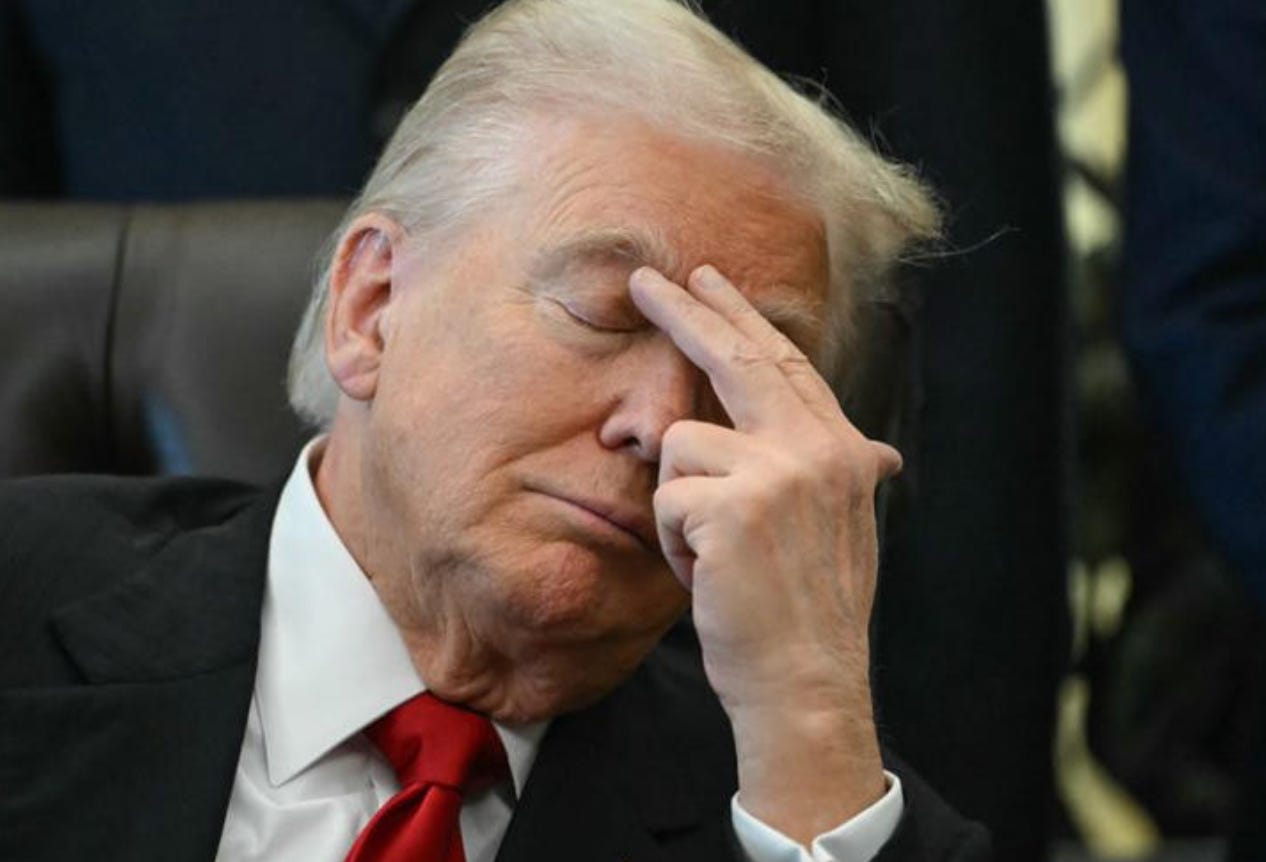
Trump nodding off, source: MSN

Trump is showing signs of aging in public and private, The Wall Street Journal has reported. He has struggled to keep his eyes open during several televised events, and some people close to him have said he at times strains to hear. (Trump denied having a hearing problem and said he closes his eyes for relaxation.) Biden’s age-related collapse in 2024 damaged the Democratic Party in ways it is still working to repair.

As the newspaper also reported, Rahm Emanuel, a 66-year-old Democrat and Washington veteran, recently called for a mandatory retirement age of 75 for presidents, cabinet officials, members of Congress and federal judges. The former congressman, White House chief of staff, Chicago mayor and potential White House contender said that should also apply to him, should he ever return to a major Washington job.

According to The Harvard Crimson opinion writer, Alex Bronzini-Vender, in 2025, roughly 37 percent of congressional Democrats are 65 or older, along with 29 percent of congressional Republicans. In 2024, nearly 18 percent of Fortune 500 CEOs were aged 65 or older. And in 2020, about 14 percent of American lawyers and 24 percent of state judges “had crossed the same threshold.”

Twenty-four members of Congress are 80 or older, according to NBC News. In total, this Congress is the third-oldest in U.S. history, with an average age of 58.9 years at the start of this session one year ago. The median age in the U.S. is 39.1.

Of course, the threshold for packing it in can vary by field. Skiing for fun is something folks in their 80s do, but perhaps not rushing down mountains at speeds topping 70 miles an hour.

The longtime champion Vonn was famous, of course for retiring in 2019 after a slew of injuries. She underwent three surgeries between the 2017-18 and 2018-19 seasons after tearing her LCL with three tibial plateau fractures in her left leg. She also missed the 2014 Sochi Winter Olympics due to injury, after winning gold at the 2010 Vancouver Winter Olympics despite fighting through an “excruciating” bone bruise in her leg.

After she underwent surgery for a partial knee replacement in 2024, she felt healthy, prompting her to leave retirement. Even after she tore her left ACL in training a week before her disastrous run on Feb. 8, she insisted on competing.

“But being here today, being around all of this Olympic spirit has me so excited about the potential and how I could hopefully close my career in a way that is really based on what I want to do,” she said before the race. “I retired in 2019 because my body said no more, not because I didn’t want to continue racing. I feel like this could be an incredible moment to end the chapter, this chapter of my life, and move forward in a really exciting and peaceful way.”

Skiing, of course, had been Vonn’s life. Her father and grandfather taught her starting at age 3 in Minnesota. She competed in her first races at 7 and took part in international competitions at 9, took part in her first Olympic Games at 17 and kept competing – and usually winning — for decades.

And the problem with that sort of commitment – not uncommon in sports or in some other fields with nearly lifelong obligations – is that one has to either discover or reinvent oneself when the playing field is no longer available. The question arises: “Who am I, if not a top-level skier or quarterback or professor or journalist or politician?”

George Koonce, source: Watch the Yard

Consider George Koonce, a former NFL player who attempted suicide after his playing days with the Green Bay Packers and Seattle Seahawks ended. Speaking on the point in a 2012 ESPN piece: “Football becomes your identity. Your family buys into it, your friends buy into it, the alums from your college buy into it. And then it is gone. You are gone.”

But Koonce decided not to be “gone.” He earned degrees in sports management and administration (the latter a doctorate), and filled important positions at Marquette University, the University of Wisconsin-Milwaukee and Marian University. He coauthored the book “Is There Life After Football?:Surviving the NFL.”

Even as athletics, academics and politics may well shape a person’s life and career, there comes a time when they need to look to other things – perhaps in related areas, perhaps not.. In hindsight, it seems that time should have come far sooner for Vonn. One wonders whether her father and others in her life might have delivered that message earlier, sparing her the globally broadcast anguish she suffered.

Extraordinary

Bad Bunny’s halftime show echoed peace and unity messages of old

Joseph Weber

Source: Instagram

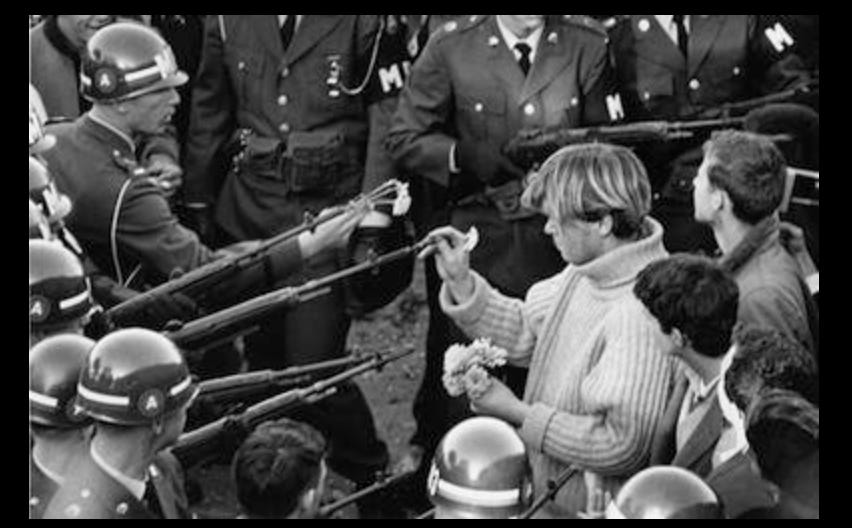
As the Vietnam War raged in October 1967, one of more than 70,000 protesters at the March on the Pentagon was photographed sticking flowers into the barrels of rifles held by MPs.

Whether the “flower power” movement of the day had much to do with the end of U.S. involvement in the war five and a half years later is a matter of debate. But it was one of countless many peaceful – and sometimes not so peaceful – efforts that surely helped to turn the tide against the gruesome and ultimately failed U.S. disaster in that country.

It was a bold and gentle effort – reminiscent of the pacifism of Mahatma Gandhi, the Rev. Martin Luther King and others – aimed at the conscience of a nation, if not at the hardened hearts of its leaders.

Source: Wikipedia

Bad Bunny’s remarkable performance at the Super Bowl was in line with that sensibility. His performance, a joyful celebration of the richness and liveliness of Latin culture, was a flower stuck in the eye of Donald J. Trump and other racists who denigrate, torment and deport Black and Brown Americans and immigrants with an anger and viciousness rarely seen in recent history.

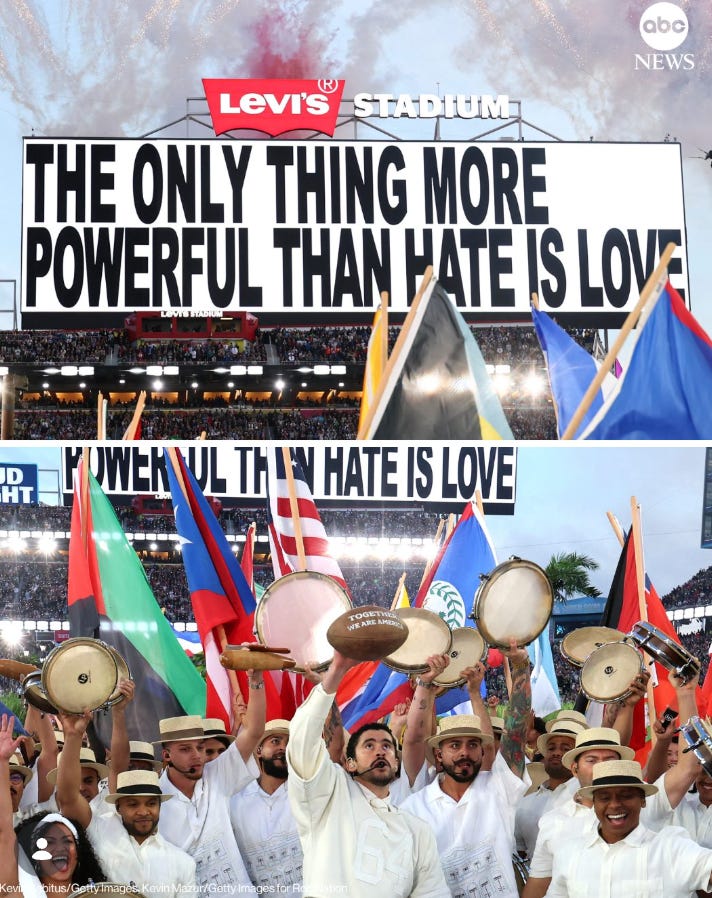
Matching the gesture of that Pentagon protester, the Puerto Rican rapper properly known as Benito Antonio Martínez Ocasio showcased his message on the billboard above Levi’s Stadium, “The Only Thing More Powerful Than Hate is Love.” The sentiment echoed King’s comments: “Darkness cannot drive out darkness: only light can do that. Hate cannot drive out hate: only love can do that” and “I have decided to stick with love … hate is too great a burden to bear” and Gandhi’s “Hatred can be overcome only by love.”

Suited to the event, Bad Bunny led a group of performers carrying the flags from countries across the Americas and the Caribbean. He shouted out “God Bless America, and recited a long list of the nations, at least 23 of them that make up the Americas and the wider region. As a writer for CNN noted, “Bad Bunny declared himself an American patriot in the broadest sense of the term.”

It was an ecstatic performance that even drew praise from Tom Brady, the former New England Patriots quarterback and Trump supporter. Brady exclaimed on social media: “Amazing!!!!!!!!!.”

What a far cry from Trump’s reaction.

The president, who had groused about Bad Bunny before the show, declared on his Truth Social site afterwards that “It makes no sense, is an affront to the Greatness of America, and doesn’t represent our standards of Success, Creativity, or Excellence,” Ranting, he complained that “Nobody understands a word this guy is saying,” and called the halftime show “a slap in the face to our country.” Trump said there was “nothing inspirational” about the show, and that it would still get rave reviews from “the Fake News Media, because they haven’t got a clue of what is going on in the REAL WORLD.”

As an Esquire writer noted: “Much like most of the President’s rambling screeds on social media, it’s a saddening—yet unsurprising—take to stomach. The guy can’t even appreciate a wedding on live TV just because Bad Bunny criticized ICE at the Grammys. And if you speak another language in this country, then that apparently makes you un-American now, too. Forget the fact that the “REAL WORLD,” according to the United States Census Bureau’s 2019 report, states that more than half (55 percent) of the Spanish speakers in this country (over 40 million people, by the way) were U.S.-born Americans citizens.”

Bad Bunny drove home his core message at the end, as a writer for The Atlantic noted. “Pushing toward the camera with throngs of drummers, he closed by holding up a football with a message on it: Together, We Are America. It was a pointed message but also a conciliatory one, a unity slogan.”

Make no mistake, though. Bad Bunny’s performance was a political statement aimed at Trump and other nativist philistines who would turn back the clock on the appeal of the United States to other Americans – broadly defined. That he sang in Spanish at the nation’s preeminent sporting event made it clear that the country is richer and more diverse than the whites-only population that Trump would prefer. “We’re still here,” the rapper sang.

And Trumpists felt stung. “Bad Bunny is absolutely vile. I can’t understand a word of it but I just know it’s foul, vulgar, and demonic. Cover your kids’ ears. The NFL owes millions of Americans an apology,” one wrote on X. Another chimed in: “If we can learn anything from Bad Bunny’s Super Bowl performance, it’s that we should be deporting even more people.”

Of course, they watched, though.

Source: The White House

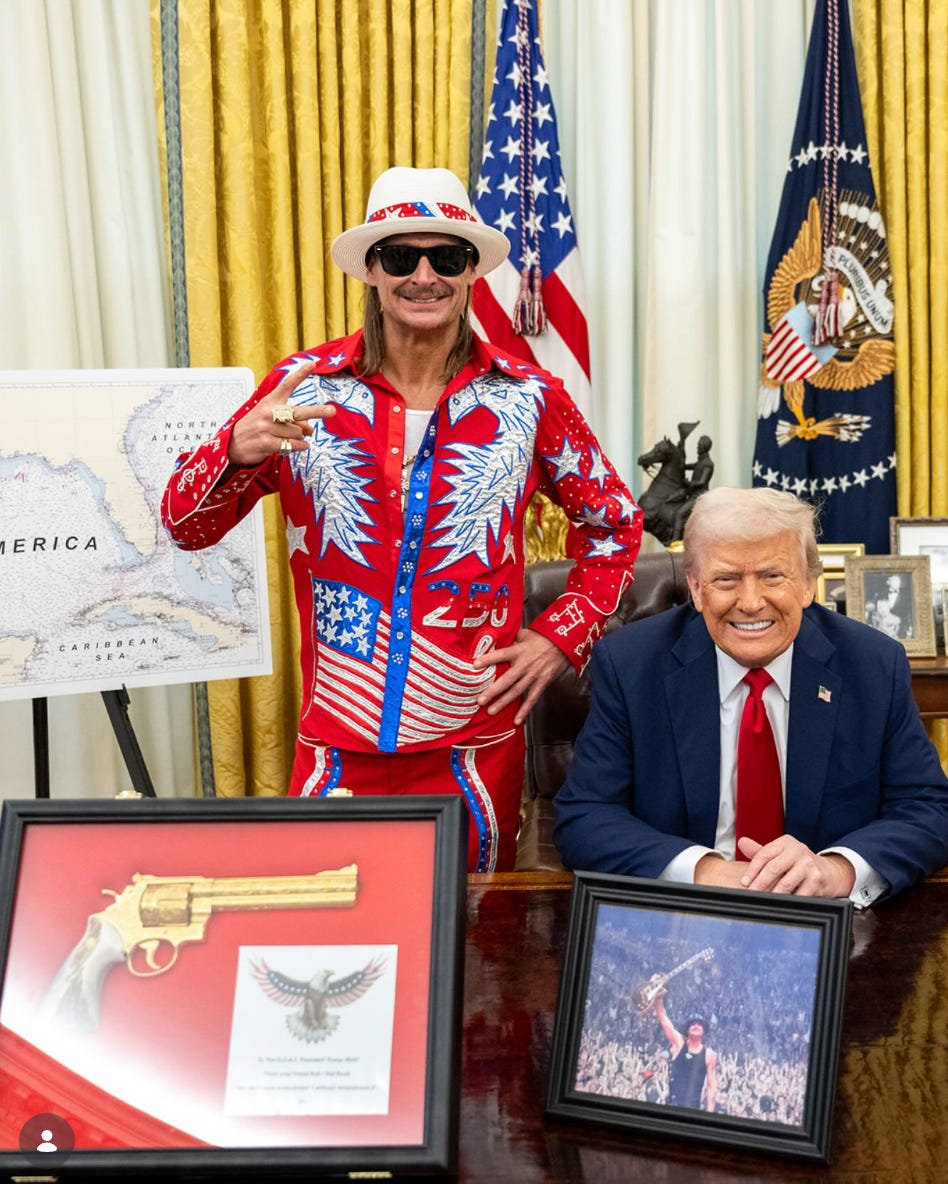
They seem not to have been among Trumpists who jumped to Kid Rock’s streamed alternative halftime show. Recall that the classic Kid Rock tune “Cool, Daddy Cool,” includes the Epstein-esque lyrics: “Young ladies, young ladies, I like ‘em underage/See some say that’s statutory …” The clownish Rock’s show drew about 6 million viewers, a minuscule fraction of the more than 130 million thought to have been drawn to Bad Bunny.

Will Bad Bunny’s positive Gandhi-esque message resound as immigration and Border Patrol agents prowl the nation, rounding up countless innocents who look a lot like the people in the halftime show? Certainly, attempts to prick the conscience of the heartless and soulless likely will fail. Trump is evidence of that.

But, for the rest of America, the chance to heed the singer’s message looms near. Elections in November will give us the first signs of whether this updated version of “flower power” can have an effect, assuming that the Trumpists don’t corrupt the voting. And then there will be November 2028, far off as that seems.

In time, Americans with hearts, brains and consciences will get the chance to respond both to Trump and Bad Bunny.

Shrinking its way to greatness?

The Washington Post will surely not find success that way

Joseph Weber

Illustration source: The Wrap

Someday, a smart academic will cooly analyze the rival game plans that enabled The New York Times to thrive while, just down the road, The Washington Post slipped into what has been looking like a slow-motion death spiral.

But it’s likely that two things on that list will include an owner committed to great journalism and a passion for innovation, even at great cost.

Consider first the nonstop innovation that has kept the Times vibrant. The New York paper’s website is a cornucopia of offerings from the news of the day and in-depth magazine offerings to games, consumer advice in Wirecutter, exceptional sports coverage in The Athletic, audio offerings that range from The Daily to Opinions, along with entertainment, cooking and health news.

The soup-to-nuts menu of the paper could keep a reader, listener or video-watcher engaged for hours. Just picking out the best things to tap into takes a while each day.

By contrast, the best that can be said of the Post is that it tries.

In unoriginal ways, the Post mimics some of the same offerings, but with far less content. While on a given day the Times might have whole subsections devoted to the Trump Administration, the Epstein files, the Russia-Ukraine war, the Super Bowl and more, along with the top stories of the day in its many categories, the Post offers short lists of pieces that take no time to scan through.

It could hardly be otherwise given the yawning gap in staff at the papers. While the Times employs more than 2,800 people in its journalism operations, the Post shrank its newsroom in multiple downsizings in recent years to 800 and now is losing more than 300 of them, along with more on the business side.

With its extraordinary breadth, the Times has been on a roll in adding digital subscribers and is now up to 12.78 million total subscribers as it aims for 15 million by the end of next year. By contrast, the Post is believed to be down to about 2 million subscribers.

Sadly, the soup is thin in the D.C. paper and the latest trimming could hardly bulk it up. As the Times reported about its competitor, the Post’s sports and books sections will close, its metro section and international staff will shrink. In a sharp contrast with the growing Daily podcast at the Times – which just added a Sunday version – the daily “Post Reports” podcast will disappear.

Just how will all that make for a better, more relevant and profitable product? The Post, as of Feb. 4, hadn’t even reported on its layoffs. Instead, it posted an Associated Press story that quoted editor Matt Murray saying in a note to the staff: “We can’t be everything to everyone.”

Just what the Post will be to anyone, going forward, is tough to see. Ashley Parker, a Post veteran now at The Atlantic, offered hints, though, and they are hardly optimistic.

“Today’s layoffs provide a whiff of the latest alleged strategy: an almost-exclusive focus on politics and national-security coverage, though even that explanation defies credulity, as the growing list of those laid off includes some of the nation’s finest political and international reporters and editors,” she wrote. “To the extent that a plan exists, it seems to be to transform the Post into a facsimile of Politico.”

Parker noted that Politico was born out of the Post nearly 20 years ago. Two Post reporters launched it as a “fast-paced, scoop-driven, win-the-morning publication,” she wrote.

Parker also quoted a longtime Post reporter bemoaning the new cuts. “We’re changing and trimming and cutting our way toward a much more mundane product, and one that doesn’t seem to attract more readers,” the journalist told her.

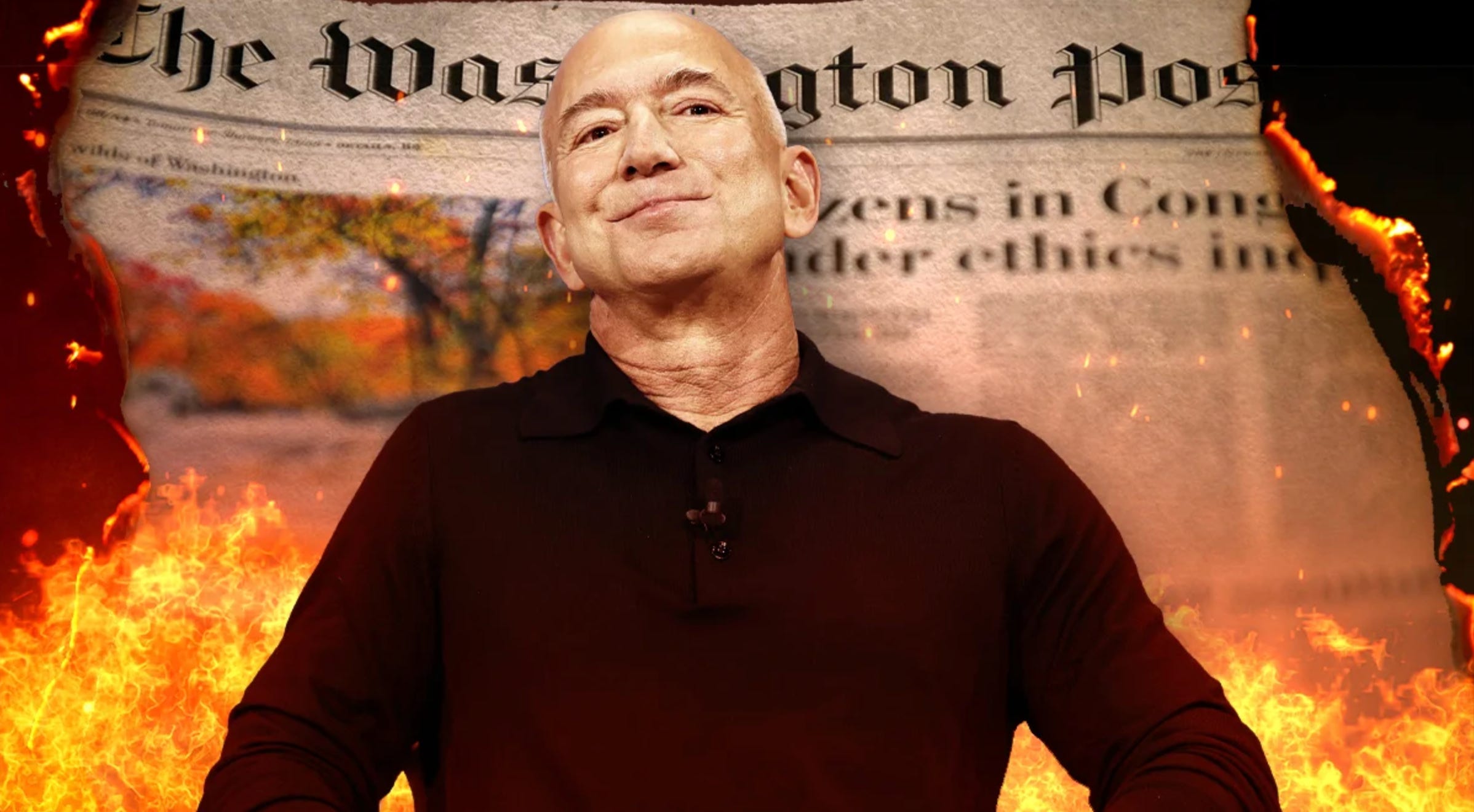
And what’s especially disheartening is that Post owner Jeff Bezos could easily underwrite the sorts of innovation that the Sulzberger family has done at the Times. Indeed, after he bought the paper in 2013, he backed ambitious efforts and the paper was gaining in leaps and bounds.

Ralph E. Hanson, a professor at the University of Nebraska Kearney, described some of the surge. Instead of focusing narrowly on D.C., he noted, Bezos and his editors pushed the paper into becoming a national or even international paper, much as the Times is.

By 2016, under Bezos’ ownership, Hanson wrote, the paper had a growing audience, increasingly ambitious reporting, and was gaining recognition as a national read. Politico’s Ken Doctor said that the Post was joining the ranks of The New York Times, The Wall Street Journal, and USA Today as having nationwide appeal.

While other papers were laying journalists off, in fact, the Post was hiring, Hanson noted. He cited Politico’s estimates that the Post’s newsroom grew by more than 60 positions, or 8 percent. This gave the Post a news staff in excess of 750, compared with 1,307 at the NY Times, 450 at USA Today, and the Wall Street Journal with about 1,500.

And 2016 delivered a 75 percent increase in new subscribers over the year and doubled digital subscription numbers. Under the guidance of Marty Baron, who joined in January 2013, that growth was driven by exceptional journalism, the sort that won 11 Pulitzer Prizes before he retired in 2021.

Of course, the paper was punching above its weight in terms of staffing. It had always done so, compared with the Times. “Not being The New York Times, being forced to do more with less, was freeing,” contended Post veteran Parker. “It created—required—a culture of collegiality and collaboration, a willingness to experiment and take risks, a certain puckishness.”

A former colleague, now at The Athletic, told Parker: “There’s sort of an Avis mentality at the Post: ‘We try harder.’” The quip recalled the Hertz-Avis ad campaign of decades past.

But lately, Bezos has apparently not seen much reason to try hard at all. “Over recent years, they’ve repeatedly cut the newsroom—killing its Sunday magazine, reducing the staff by several hundred, nearly halving the Metro desk—without acknowledging the poor business decisions that led to this moment or providing a clear vision for the future,” Parker wrote.

Marty Baron, source: The Harvard Gazette

Baron, in a post on Facebook, acknowledged “acute business problems that had to be addressed.” As anyone in the industry knows, and Baron noted, we are in “a period of head-spinning change in media consumption.” It is one that requires “radical innovation,” which, of course, demands money.

More than that, it requires courage and values – of the sort that the Sulzbergers have long had. In recent years, Donald J. Trump has filed at least three major lawsuits against the Times, including a pending $15 billion defamation suit filed last September. Two were dismissed.

Bezos, instead, has sought to cozy up to Trump, perhaps mindful of the power Washington has over his financially far more important Amazon business and other interests.

“The Post’s challenges, however, were made infinitely worse by ill-conceived decisions that came from the very top —from a gutless order to kill a presidential endorsement 11 days before the 2024 election to a remake of the editorial page that now stands out only for its moral infirmity,” Baron wrote. “Loyal readers, livid as they saw owner Jeff Bezos betraying the values he was supposed to uphold, fled The Post. In truth, they were driven away, by the hundreds of thousands.”

As readers lost faith in the paper, journalists were losing trust in Bezos, as well. “Similarly, many leading journalists at The Post lost confidence in Bezos, and jumped to other news organizations,” Baron wrote. “They also, in effect, were driven away.”

The former editor, known for his grace, said he remained grateful for Bezos’s support during his tenure.

“During that time, he came under brutal pressure from Trump,” Baron wrote. “And yet he spoke forcefully and eloquently of a free press and The Post’s mission, demonstrating his commitment in concrete terms. He often declared that The Post’s success would be among the proudest achievements of his life. I wish I detected the same spirit today. There is no sign of it.”

There also seems no sign of an editorial vision at the diminishing newspaper. Perhaps one will emerge, but it’s likely impossible for the Post to shrink its way to prosperity.

“This ranks among the darkest days in the history of one of the world’s greatest news organizations,” Baron wrote. “The Washington Post’s ambitions will be sharply diminished, its talented and brave staff will be further depleted, and the public will be denied the ground-level, fact-based reporting in our communities and around the world that is needed more than ever.”

The odds are that the academic who someday analyzes the Post’s rise and fall will, in effect, be conducting an autopsy. And that is sad for us all.

What drives ICE and Border Patrol?

Agents regularly arrest their “own kind,” unbothered by that, it seems

Joseph Weber

Alex Pretti under assault by federal agents; source: Texas Public Radio

Pecola Breedlove, an 11-year-old Black girl in Lorain, Ohio, in 1940-41 is routinely mocked by other children for her dark skin, curly hair and brown eyes in Toni Morrison’s 1970 novel, “The Bluest Eye.” Yearning for acceptance, Pecola prays daily for her eyes to change color.

The girl is not alone in her hunger to fit into white middle America, in her desire to deny who she is so she can slip into the dominant culture. Other Black characters in the novel mock one another over their skin color, with one of the light-skinned girls saying “I am cute! And you ugly! Black and ugly.”

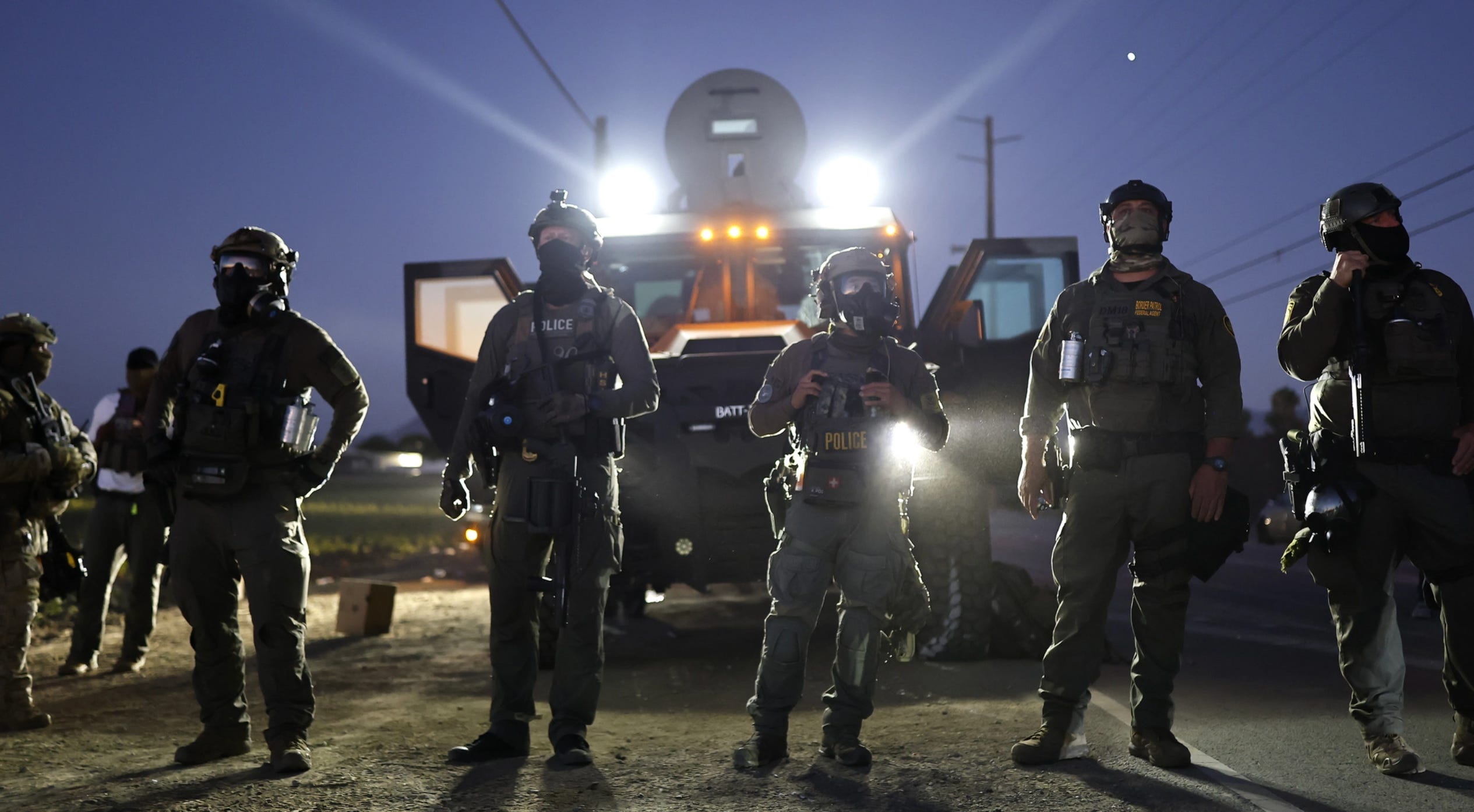
Might a similar dynamic be taking place for the two Latino agents who fired on – and killed – the Minneapolis protester Alex Pretti? Indeed, might that same sort of process animate the large number of Latino Border Patrol and Customs and Border Protection agents who regularly round up other Latinos for deportation?

ProPublica named Pretti’s shooters as Border Patrol agent Jesus Ochoa and Customs and Border Protection officer Raymundo Gutierrez. Both are veteran agents from south Texas. Ochoa, 43, joined the patrol in 2018, while Gutierrez, 35, signed on four years earlier.

Gutierrez works for CBP’s Office of Field Operations. He is assigned to a special response team, which conducts high-risk operations like those of police SWAT units.

Ochoa, who prefers the Anglo name “Jesse,” graduated from the University of Texas-Pan American with a degree in criminal justice, according to his ex-wife, Angelica Ochoa. A longtime resident of the Rio Grande Valley, Ochoa had for years dreamed of working for the Border Patrol and finally landed a job there, she said.

As ProPublica noted, Ochoa has a thing for weapons. By the time the couple split in 2021, he had become a gun enthusiast with about 25 rifles, pistols and shotguns, Angelica told the news outlet.

Ethnically, both men fit in well with perhaps half the officers in the Border Patrol who are Latino and nearly 30 percent of ICE agents who are.

Of course, we don’t know what drives Gutierrez and Ochoa. But we do know that their jobs pay well; such agents can earn between $64,200 and more than $137,000 a year, not counting recruitment and retention bonuses.

As experienced officers, they may also be eligible for generous retention incentives. Such incentives can now total up to $60,000 for supervisors and officers eligible to retire in certain locations. Similarly, new agents are eligible for up to $60,000 in incentives, including $10,000 after completing the training academy and an additional $10,000 if assigned to a remote location.

David Cortez, source: Notre Dame

So, really, it’s all about the money. Such pay is crucial for Customs and Border Patrol agents, according to David Cortez, an assistant professor in political science at Notre Dame who has researched the motivations of Border Patrol and ICE agents.

“But for many of them, this job is not necessarily about stopping immigration,” Cortez told NPR in 2019. “This isn’t about their dedication to immigration law or their dedication to keeping migrants from crossing the border illicitly or anything like that. This is about economic self-interest. This is about survival.”

Many, Cortez said, come from poor border towns and work for the immigration enforcement agencies – often in teams with fellow Latinos – as a matter of economic opportunity they might not otherwise have. He pointed to one ICE agent who before joining up was barely surviving on rice and beans

Claudio “CJ” Juarez, 48 when Cortez met him, appears to have signed up for the money. Juarez said: “I wish I could say that it was idealistic or more sexy, but it really was as simple as they [ICE] were the first ones that called me, and I jumped on the first opportunity.”

Still, Cortez found that such Latino officers do feel a connection with the people they arrest — one they either set aside or use to their advantage.

The kinship such agents feel “raises this interesting kind of dilemma,” he said. “[T]hey find themselves coming face to face with men, women and children who, you know, might remind them of their own children, who look and talk, sound like they do or whose stories kind of mirror those of their own families.”

But the agencies find that the ethnic backgrounds of such officers are invaluable in carrying out ICE surveillance and raids. “It literally is a key to get through doors,” the professor said. “For example, if you are Latinx and a person with a brown face is at your door, you’re more likely to open it.”

Seemingly, many agents don’t feel any difficulties in using that edge or, apparently, in making life very uncomfortable for others who look like them. CNN in a December report on Border Patrol recruits raised that issue.

Juan Peralta, a 20-year-old trainee featured in the CNN piece, admitted that friends asked him, “How do you feel about arresting your own kind?” His answer: “They didn’t come in the right way, so they aren’t my kind.” Peralta was the son of an immigrant raised in a border town.

And another agent, Claudio Herrera, offered a more expansive answer.

“I’ve been asked, ‘aren’t you ashamed of apprehending your own?,’ he said. His answer: “I say, ‘of course not, because I’m protecting my community. I’m protecting both sides of the border.’” It took Herrera 11 years to become a citizen, and he joined the Border Patrol six years ago. He urges those coming from Mexico to do so legally.

Crossing legally scarcely seems like an option now, of course. More people have been leaving the U.S. than coming in, according to Brookings, which pegs the net loss in migration at between 10,000 and 295,000 last year. Numbers are hard to come by; thus the yawning range.

Since February 2025, the first full month of Donald J. Trump’s current term, the Border Patrol has recorded fewer than 10,000 encounters with undocumented migrants each month at the southwestern border, according to Pew. Those are the lowest totals in more than 25 years.

Recent totals have been even lower than the 16,182 encounters in April 2020, when international migration plummeted in the early months of the coronavirus pandemic.

Still, people have tried. The Border Patrol reported 237,538 encounters with migrants at the U.S.-Mexico border in the 2025 fiscal year, which began in October 2024 and ended last September. That was down from more than 1.5 million encounters in fiscal 2024, more than 2 million in fiscal 2023 and a record of more than 2.2 million in fiscal 2022. The 2025 total was the lowest in any fiscal year since 1970, according to historical data from the Border Patrol.

“Encounters” here refers primarily to apprehensions of migrants crossing into the U.S. between official points of entry. The term refers to events, not people. So, Border Patrol agents may encounter some migrants more than once – for example, if a migrant is apprehended and deported but tries to enter the U.S. again.

As for Ochoa and Gutierrez, perhaps in time — and if there’s a trial — we’ll find out whether Alex Pretti’s killers feel any remorse about shooting him as he lay defenseless on the ground, pinned down by a group of immigration agents. Aside from being a fellow American, Pretti was not one of their “own kind,” not Latino.

Still, maybe then, too, we’ll get a better sense of their sentiments about dealing with fellow Latinos. Are their identities things that, like Pecola Breedlove, they’d rather deny? Or are their backgrounds assets that they — like so many other agents — can use, even if that makes life miserable for others who look and speak just like them?

Not just footballs will be in the air

ICE will also share the limelight at the 60th annual Super Bowl

Joseph Weber

Bad Bunny, source: Wikipedia

When the Seahawks and Patriots meet in the Super Bowl on Sunday, politics will be in the air every bit as much as the passes tossed by rival quarterbacks Sam Darnold and Drake Maye. With musicians who have been sharply critical of Donald J. Trump slated to appear, it couldn’t be otherwise.

Indeed, the performances by Green Day and Bad Bunny seem likely to further showcase Trump’s slide in pop culture as other events — particularly involving the hard-pressed Kennedy Center — underscore the president’s deterioration in more highbrow realms. Altogether, they focus a spotlight on just how out of touch this geriatric president is, culturally as well as in simple humanitarian terms.

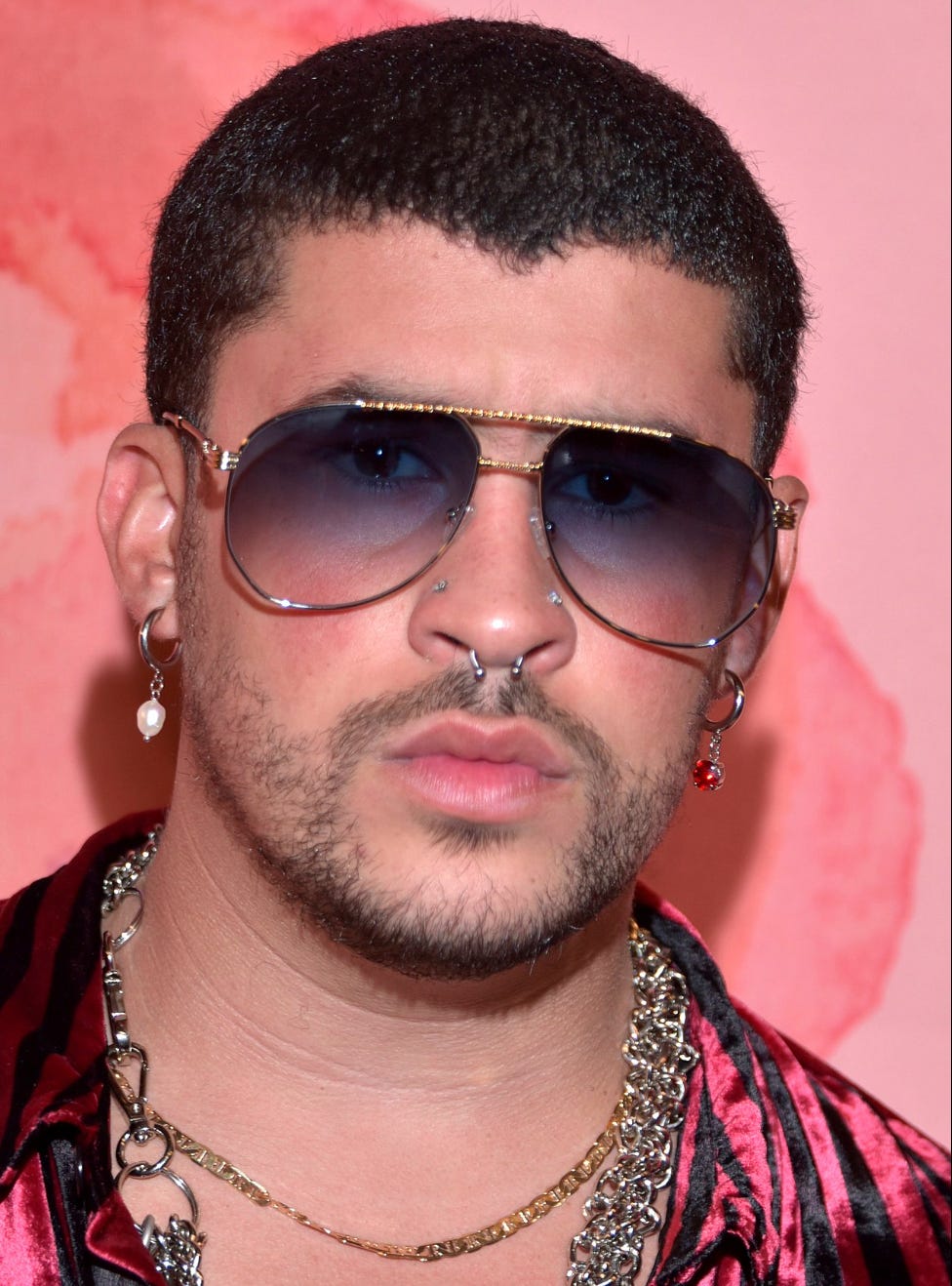
At halftime, Bad Bunny, the Puerto Rican rapper properly known as Benito Antonio Martínez Ocasio, is expected to perform before an audience of about 130 million people worldwide. And whether the global superstar is explicit in his hostility to U.S. immigration policy and Trump or not, his message – even if only implied – will resound.

Bad Bunny has already set the tone. As he won three Grammy awards including Album of the Year on Feb. 1, he took the stage to say: “Before I say thanks to God, I’m gonna say: ICE out. We’re not savages, we’re not animals, we are humans and we are Americans … the only thing that is more powerful than hate is love.”

As yahoo!news reported, the right is seething.

Conservative commentator Eric Daugherty called Bad Bunny “trash,” while Fox News personality Tomi Lahren dismissed the protesting stars at the show (many of whom sported ICE OUT pins). “Overpaid musicians and celebrities at the Grammys say ‘F**k ICE,’ Lahren said on X. “Meanwhile, the hardworking men and women of ICE and border patrol (majority Hispanic) are out on the streets removing public safety threats and protecting communities. The audacity is astounding.”

Bad Bunny’s presence in Levi’s Stadium in Santa Clara alone will be a political statement. Last fall, Trump showed how removed he is from popular culture with his reaction to the rapper’s selection for the Super Bowl. “I’ve never heard of him. I don’t know who he is,” Trump said in October. “I think it’s absolutely ridiculous.”

Then, after the NFL announced that the band Green Day will perform at the game’s opening ceremony, Trump dug in deeper, slighting both acts. “I’m anti-them. I think it’s a terrible choice. All it does is sow hatred. Terrible,” he told The New York Post.

Billie Joe Armstrong, source: Billboard

Billie Joe Armstrong of Green Day has long criticized Trump, decrying Trump’s “fascist overtones if not straight up fascism” and slamming his racism. And Green Day has been turning up the heat. At a recent Los Angeles show, the band updated the lyrics to “Holiday,” one of its classic early 2000s songs, to take a knock at Trump aide Stephen Miller by name.

As HuffPost reported, the song’s original lyrics include the line, “The representative from California has the floor.” Armstrong instead said, “Ladies and gentlemen, Stephen Miller now has the floor,” before launching into the bridge of “Holiday,” which includes the lyric, “Sieg Heil to the President Gasman.”

Armstrong explained: “This song is anti-fascism. This song is anti-war. We stand up for our brothers and sisters in Minnesota.”

“Hey everybody, please look out for your neighbors,” Armstrong added. “Make sure you take care of each other. Make sure you love one another. Protect each other. “Chinga la migra!” (which loosely translates to, “f**k the immigration cops.”)

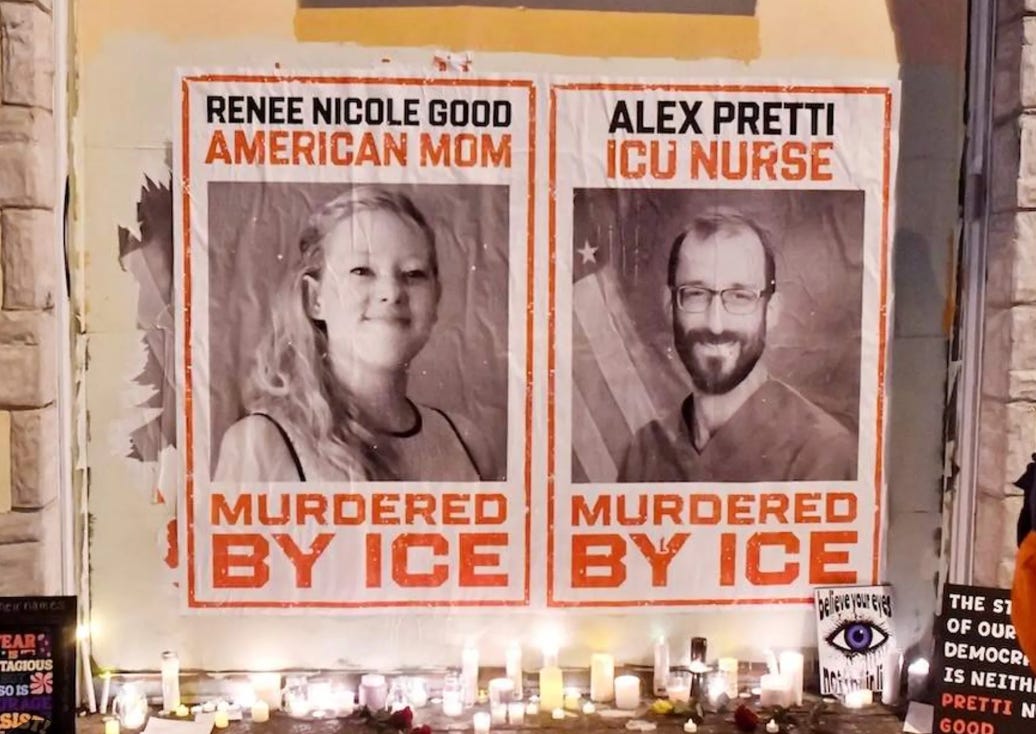
Of course, in the pop world, Bruce Springsteen recently grabbed the global spotlight with “Streets of Minneapolis,” his angry and sad ode to the city. The Boss bemoaned the murders of Alex Pretti and Renee Good and called out Trump and his servile aides by name.

Asked about the song, White House spokeswoman derided what she called “random songs with irrelevant opinions and inaccurate information.” She did not say what was inaccurate in the tune, however. And, as for relevance, the popularity of the song seems to undercut her claim about “irrelevant opinions.”

Within days of its release, the Springsteen song hit No. 1 on the iTunes charts in 19 countries. The anti-ICE track immediately trended on YouTube with millions of views and became Springsteen’s first No. 1 on the Billboard Digital Song Sales chart.

Just how explicit Bad Bunny gets — if at all — in any political message could be problematic for many viewers in another respect. He performs entirely in Spanish, which itself may infuriate conservatives. Distressed by Hispanic immigration, Trump in March issued an executive order designating English as the nation’s official language, something about 30 states have done, most since the 1980s.

About 45 million Americans, or roughly 14 percent, are believed to speak Spanish at home. This is more than double the number from 1990 and makes the U.S. the second-largest Spanish-speaking country in the world, after Mexico. As Trump and conservatives resist such growth, they seem much like King Canute ordering back the tide.

Many of those Spanish speakers are Roman Catholics, another group with which Trump is lately losing ground. Cardinal Joseph Tobin of Newark, New Jersey, (my hometown, as it happens) recently urged the faithful to press legislators to deny funding to ICE, which he called a “lawless” organization. He encouraged participants in an online interfaith service on Jan. 26 to say “no” to ICE violence.

“One way that we say ‘no’ is that we mourn, we do not celebrate death, and, what is probably worse, we do not pretend it doesn’t happen. We say names. We pray for the dead,” Tobin said, according to the National Catholic Reporter. “We mourn for a world, a country, that allows 5-year-olds to be legally kidnapped and protesters to be slaughtered.”

Cardinal Joseph Tobin of Newark, N.J., arrives in St. Peter’s Basilica for the Mass “Pro Eligendo Romano Pontifice” (“for the election of the Roman pontiff”) at the Vatican May 7, 2025. (CNS/Lola Gomez)
Cardinal Tobin, source; NCR

Coincidentally, in a blistering opinion ordering the release of 5-year-old Liam Conejo Ramos and his father, Judge Fred Biery of the Federal District Court for the Western District of Texas on Jan. 30 condemned “the perfidious lust for unbridled power” and “the imposition of cruelty” the seizure of the boy and his father represented. As The New York Times reported, the judge chastised the government’s “ignorance of an American historical document called the Declaration of Independence” and called for “a more orderly and humane policy than currently in place.”

Cardinal Tobin was one of three U.S. cardinals who signed a statement condemning President Donald Trump’s foreign policy aims and calling for the White House to focus on peace. In his recent remarks, Tobin noted that he was speaking within a few miles from two ICE detention centers.

“Everyday people from many faith communities go to Delaney Street here in Newark, and to the Elizabeth Detention Center, and they say ‘no’ by standing at the gates, by talking with the ICE personnel, by insisting on the rights of the detainees within,” he said. “They bring them human comfort, they console the families of those who aren’t always admitted to see their loved ones. How will you say ‘no?’ How?”

But Trump’s cultural and religious shortcomings go beyond splits with anguished clergymen and hostile Spanish-speaking musicians. Consider his disastrous mismanagement of the Kennedy Center for the Performing Arts, the Washington venue that caters to a broad range of arts interests.

After a flood of cancellations and dwindling attendance, the president said the Kennedy Center would close for two years, beginning July 4, for renovations.

Since Trump’s name was added to the complex’s facade, CNN reported, award-winning composer Philip Glass withdrew the June world premiere of his symphony based on Abraham Lincoln. And the Washington National Opera cut ties with the center.

Even before Trump loyalists at the center moved to rebrand it with Trump’s name along with Kennedy’s, Trump’s efforts drove out a string of performers. After the president’s hand-picked board elected him chair last February, artists including Issa Rae, Renée Fleming, Shonda Rhimes and Ben Folds resigned from their leadership roles or canceled events at the space. And Jeffrey Seller, producer of the hit musical “Hamilton,” canceled the show’s planned run.

The Kennedy Center, source: Visit Fairfax

Even as the center’s façade has worn Trump’s name since December, many news organizations continue to call it the Kennedy Center for the Performing Arts. Congress named the center as a living memorial to Kennedy in 1964, the year after the president was assassinated, the Associated Press reported. “The law explicitly prohibits the board of trustees from making the center into a memorial to anyone else, and from putting another person’s name on the building’s exterior.”

Kerry Kennedy, a niece of John F. Kennedy, said in a social post on X that she will remove Trump’s name herself when his term ends.

“Three years and one month from today, I’m going to grab a pickax and pull those letters off that building, but I’m going to need help holding the ladder. Are you in?” she wrote on a photo of the center’s new name. “Applying for my carpenter’s card today, so it’ll be a union job!!!”

As for the NFL showcasing Bad Bunny and Green Day at its premiere event, the choices may reflect an organization more in touch culturally than Trump is, but they are loaded with irony. Nearly 95 percent of some $132 million in federal election contributions by North American sports team owners, including many in the NFL, have gone to Republicans since 2020, according to The Guardian.

The owners of both the Seahawks and Patriots have been among GOP supporters, even as Seahawks principal owner Jody Allen has lately stayed on the sidelines. She gave nothing to either party in the 2021-24 period, though Allen and her late brother, Microsoft cofounder Paul Allen, donated to both major parties in prior years.

They gave $166,100 to Democrats between 2016 and 2020 and $248,700 to Republicans in the same period. Paul notably gave $100,000 in 2018 to a group dedicated to preserving GOP control of the House.

On the Patriots side, Robert Kraft gave $1 million to Trump’s inauguration party in 2017 but he kept his distance from his former longtime friend after the Jan. 6, 2021, insurrection at the U.S. Capitol. Kraft said he was “upset” about the events. The two appear to have mended fences, however, with Kraft joining Trump in his box at the Kennedy Center at the recent premiere showing of the documentary “Melania.” Kraft has also given modestly to both Democratic and Republican candidates and interests since 2021.

“Melania,” as it happens, seems like yet another bit of cultural deafness by the Trumps, opening to scorching reviews. Consider The Independent’s: “It will exist as a striking artifact — like The Birth of a Nation or Triumph of the Will — of a time when Americans willingly subordinated themselves to a political and economic oligopoly.”

Perhaps because of the musicians slated for the big game — or maybe because he fears a raft of boos — Trump is staying away from Sunday’s big game. When he attended the 2025 Super Bowl, he was met with a mixture of cheers and jeers. Whether Bad Bunny and Green Day get a similar mix or one tilted toward cheers will make for interesting TV.