The New York Times stands accused of calling a “five-alarm fire” a matter of a few sparks
In a text journalism students have used for years, University of Nebraska Professor Emeritus John Bender and his colleagues warn against using loaded words. In order to preserve a sense of neutrality, they counsel against terms such as “extremist,” “radical,” “fanatic” and “zealot,” suggesting they convey value judgments by the writers. Use language that helps keep a reporter’s opinion out of the pieces, they advise.
In an era when overstatements or falsehoods by politicians and their critics alike abound on cable news and elsewhere, however, the advice in the text, Writing and
Reporting for the Media, seems almost quaint. Stridency and alarm about the state of the Republic seems the order of the day and journalists, some critics say, should reflect that, not mute it with euphemism and weak language.
The New York Times, “The Old Gray Lady,” has waded into the understatement fray in a new weekly newsletter, The Backstory. Patrick Healy, an assistant managing editor for Standards and Trust (an intriguing title given the widespread lack of trust in media nowadays), answers reader queries in the publication about the paper’s coverage of any number of issues.
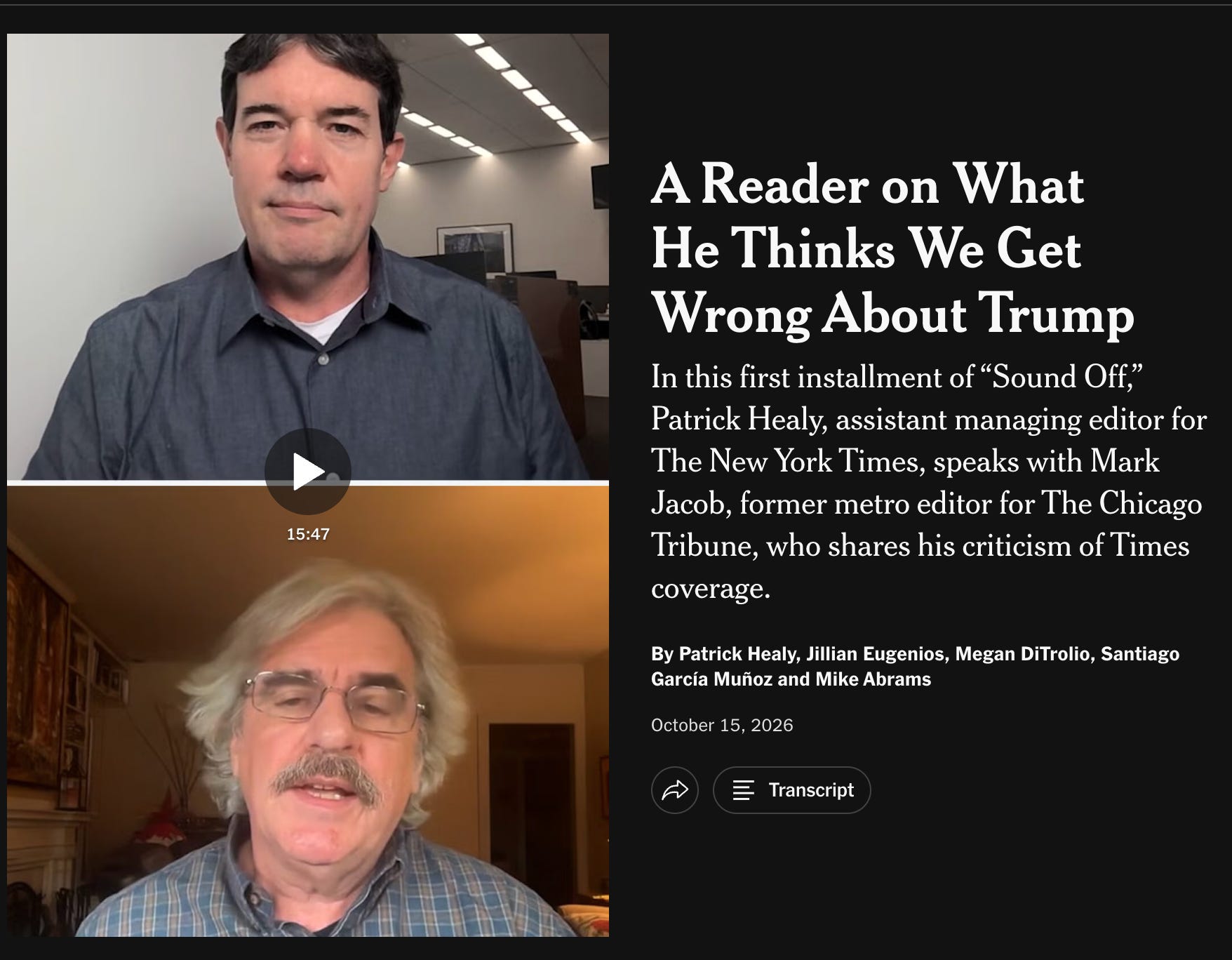
The newsletter is home to “Sound Off,” where Healy parries, thrusts and explains things in exchanges with readers. In the debut edition, Healy went back and forth with Mark Jacob, a former metro editor for The Chicago Tribune, about whether the muted language the Times often uses in pieces about Donald J. Trump ill serves readers and the country. Jacob bristles at headlines such as “Trump Has Moved the Ethical Line” and terms suggesting that the president is “sidestepping norms” or is “untethered to the truth,” when the man and his aides are just lying.
Jacob pointed to a piece about former press secretary Karoline Leavitt that described her as fierce, steely, nimble and a homegrown star of the Trump White House. He said the piece “never once mentioned that she had constantly lied to the press during her entire time as press secretary. I mean, this woman, for example, after Renee Good was killed by ICE in Minneapolis, Karoline Leavitt called her a lunatic said that she was deranged and called her a domestic terrorist.”
He said the story “seemed to be awarding her style points, and a fascist liar like Karoline Leavitt is — does not deserve to be like praised for how good she is at lying.”
Instead of couching terms in euphemism and understatement, Jacob contended, The Times should be writing headlines such as “Donald Trump is assaulting democracy.” He added that “The New York Times not taking Trump seriously enough as far as normalizing his behavior and minimizing what I think is just a five-alarm fire in the country. And, I mean, I feel like The New York Times might think it’s being tough on him, but it’s just not being tough enough.”
Healy countered that the paper tends to be “precise but also measured” in its language. It doesn’t lean into terms “like fascist and liar” in its wording, though it does quote others saying such things, he said. He contended that “we do tend to be really careful about the most potent and inflammatory words. And yes, sometimes do use those in our own voice, but we’re very careful about it.”
The AME said: “What we’re trying to do, again, is bring facts to people, accurate information that whether you’re a Democrat or a Republican, you would look at it and say, that’s corrupt or that’s authoritarian. We don’t need to tell you that in some blunt terms, we’ll give you those details.”
Healy argued that The Times focuses “on bringing those facts and that revelatory information to light, not just about hurling words at someone and calling them names, ultimately.” And for that effort, he maintained, “a lot of people across the spectrum, including a lot of people on the left and the Democratic Party, trust us because they believe that we’re presenting the facts in a straight way.” He held that “sources trust us as kind of a nonpartisan news organization.”
For his part, Jacob insisted that the paper’s approach soft-pedals the corruption and threats that Trump represents. He faulted The Times and others in the news business for living “on what I call Neutrality Island,” arguing that this approach constituted a lack of bravery.
The argument, a fascinating one, reminds me of hoary battles about “objectivity,” a term many journalism veterans have abandoned. No one can be objective, they say, suggesting that everything from the stories publications pursue — or don’t — to the sources they choose to quote — or don’t — are, in fact, very much subjective. That doesn’t mean good journalists aren’t obliged to be both fair and thorough and, yes, neutral in their choices of adjectives and descriptions.
Anyone who reads The Times consistently would have to agree that in its news columns – and even more so on its editorial page – the paper is almost never in Trump’s corner. In today’s edition alone, we read about how much Trump policies could cost Republicans dearly in Iowa, how young voters are tilting Democratic, how Trump is “openly embracing Mr. Putin and easing the economic pressure on the Kremlin,” and how Trump’s Washington D.C. golf course plan will harm area residents.
These are not Trump-friendly pieces of the sort one might find, say, on Fox News or other right-wing outlets.
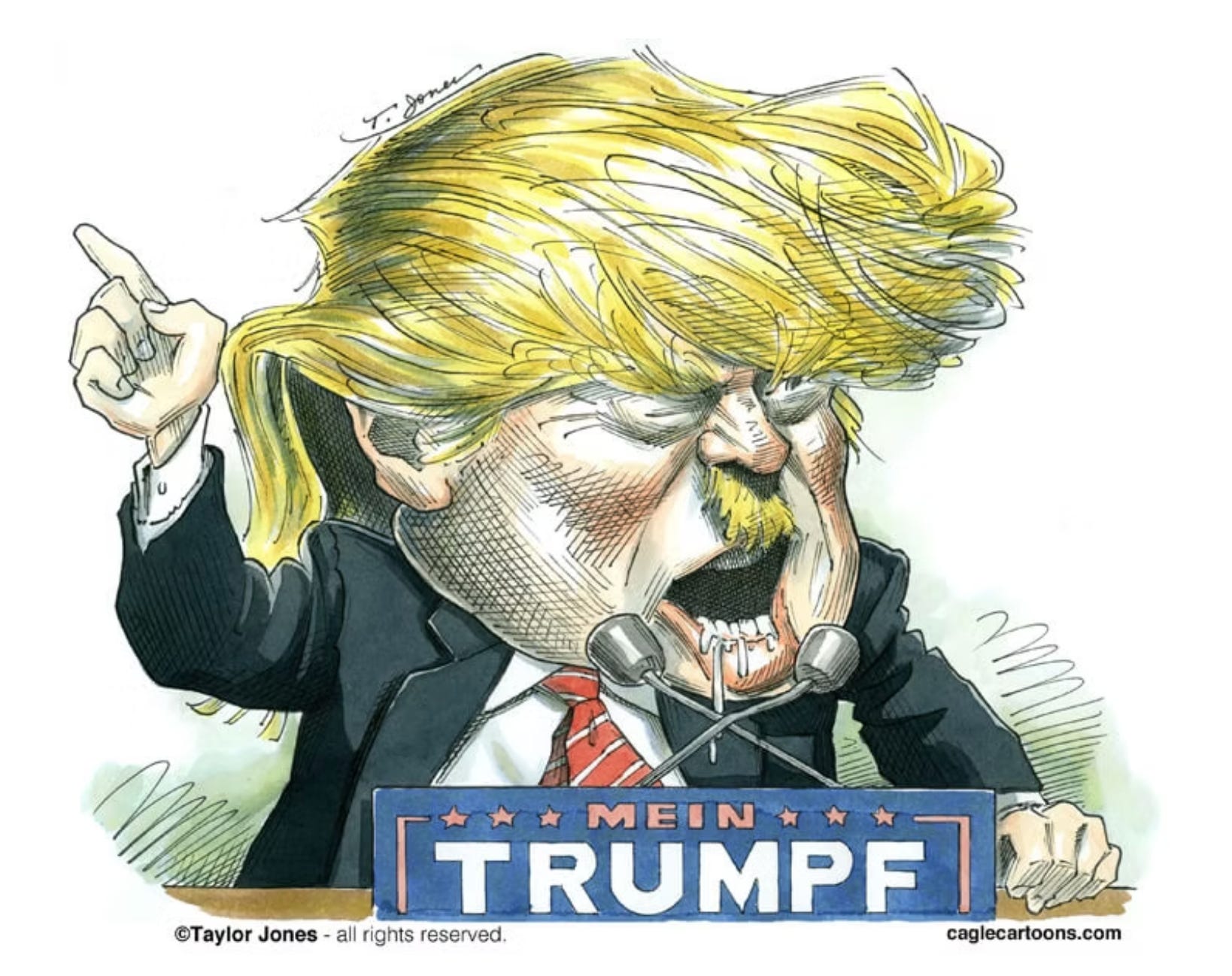
So, is it necessary to say outright that Trump is a “fascist,” a “menace” to democracy, a “corrupt self-enriching demagogue?” Would it be helpful to describe his MAGA adherents as underschooled ignoramuses? Or should The Times and others quote folks saying such things, but in its own words stick to restrained language of the sort an old gray lady might favor?
If The Times used the hard-hitting terms Jacob and other critics might prefer – insisting they are more accurate – would it make any difference to readers, moreover? Surely, The Times doesn’t hope to win over Trumpists with its linguistic neutrality. That would seem to be a pipe dream; Trumpists, I suspect, aren’t reading critical news outlets, but instead they opt for Fox News and its ilk to hear their prejudices affirmed by the likes of Leavitt.
And readers of The Times stick with it, I’m sure, similarly to have their biases echoed and reinforced — no matter how much Healy insists it’s only delivering “straight” news.
In the end, The Times does seem to twist itself in knots to avoid accusing the notoriously dishonest Trump of lying, for instance. Still, terms such as “untethered to reality” do bring a certain elegance to reporting that accurately recounts the man’s venality.
Face it, we all know that Donald J. Trump is a corrupt and incompetent buffoon whose mental stability is at least questionable. But in the news columns do we need such rhetoric to make the point? Don’t the facts alone make that case? And doesn’t every new critical story just drive home the point anew, no matter how understated its headline may be?
The dispassionate, even cool-headed, journalistic approach Bender and his old-school colleagues press for may seem out of step in our overheated times. But perhaps they are still onto something.