Must our system be so skewed?

Life isn’t fair. We all know that. But does it have to be so unfair?
Recently, we watched a couple extraordinary spectacles on TV. One was a snowboard and ski competition in Alaska’s Chilkat Mountains that drew athletes from across the world to plunge down a breathtakingly steep pitch of impressive powder and occasional rocks.
The skill these folks demonstrated was extraordinary. Surely, the expense – since helicopters were involved, along with travel – was also exceptional.
The other event was simply bizarre. Called footgolf, it featured teams from around the world that kick a soccer ball around a golf course, aiming to pop it into oversized holes. More than 60 nations sent teams to Acapulco for this global competition.
Again, one must wonder how much all this extravagance must have cost.
Mind you, we watched all this after coming from a couple days in Snowmass and Aspen, Colorado. Two family members tested their mettle there against a half-marathon length mountain trail run that featured punishing slopes on a course where one could easily twist an ankle or worse.
Happily, both of our runners fared quite well and stayed healthy.
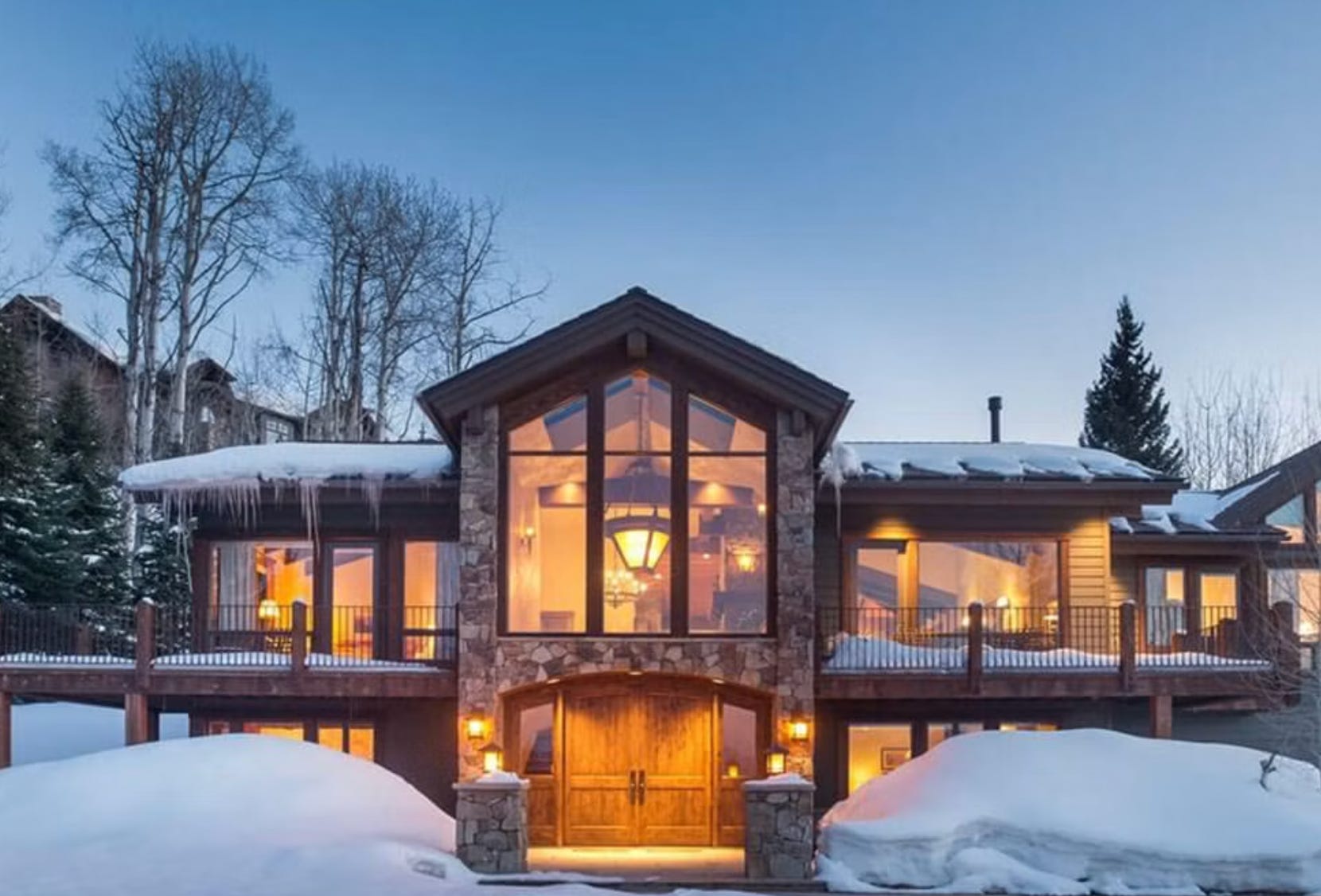
Later, as we enjoyed an Oktoberfest party near the Snowmass ski lifts, we eyed the extraordinary hillside and hilltop mansions that some of the 1 percenters own. Since places in that neighborhood sell for up to $49 million, “exclusive” is a word that does the area no justice.
It would be churlish to begrudge anyone of their athletic choices, no matter which venues they use.
And it’s true that those ski-area homes put a lot of people to work building them while keeping others employed maintaining them. For that matter, most sporting events spread cash around quite liberally. Just think about how many folks feed off the NFL, Major League Baseball, the NBA, etc., as spectators pay extraordinary amounts to attend games.
Still, our society’s leisure is pricey and growing more so. It costs more than $1,650 nowadays to take a family of four to a Denver Broncos game, according to a recent survey. And in some stadiums where other teams play, the tab tops $2,000.
The problem is that with so much money sloshing around, it’s hard to reconcile such indulgences with scenes that we all occasionally see — even in relatively affluent Summit County, Colorado — of people begging on the street. Near us, for instance, a couple takes their three children along as they either plead for cash or sell flowers at intersections near a supermarket on many weekends.
They wave signs that implore drivers to help them support their little ones.
And, of course, as one drives around Denver or any other city, beggars have become commonplace, a sight as ordinary and often as ignored as a park bench. As we drive our grandkids to shops, playgrounds or kid sporting sites, some of us must steel ourselves for the moral quandary such trips can plunge us into – should we give these folks a few dollars? Or, by doing so, do we just help keep them on the streets by making begging financially rewarding for them? Do we perpetuate a cycle with our modest doles?
If their only alternatives were social service agencies and soup kitchens, would such folks just turn to them instead? Or do they need such things, and spare change as well, just to survive? And, for that matter, in these times when helping the poor seems politically toxic, do such people have enough agencies to turn to? If they are mentally ill or drug-addicted, can they get help?
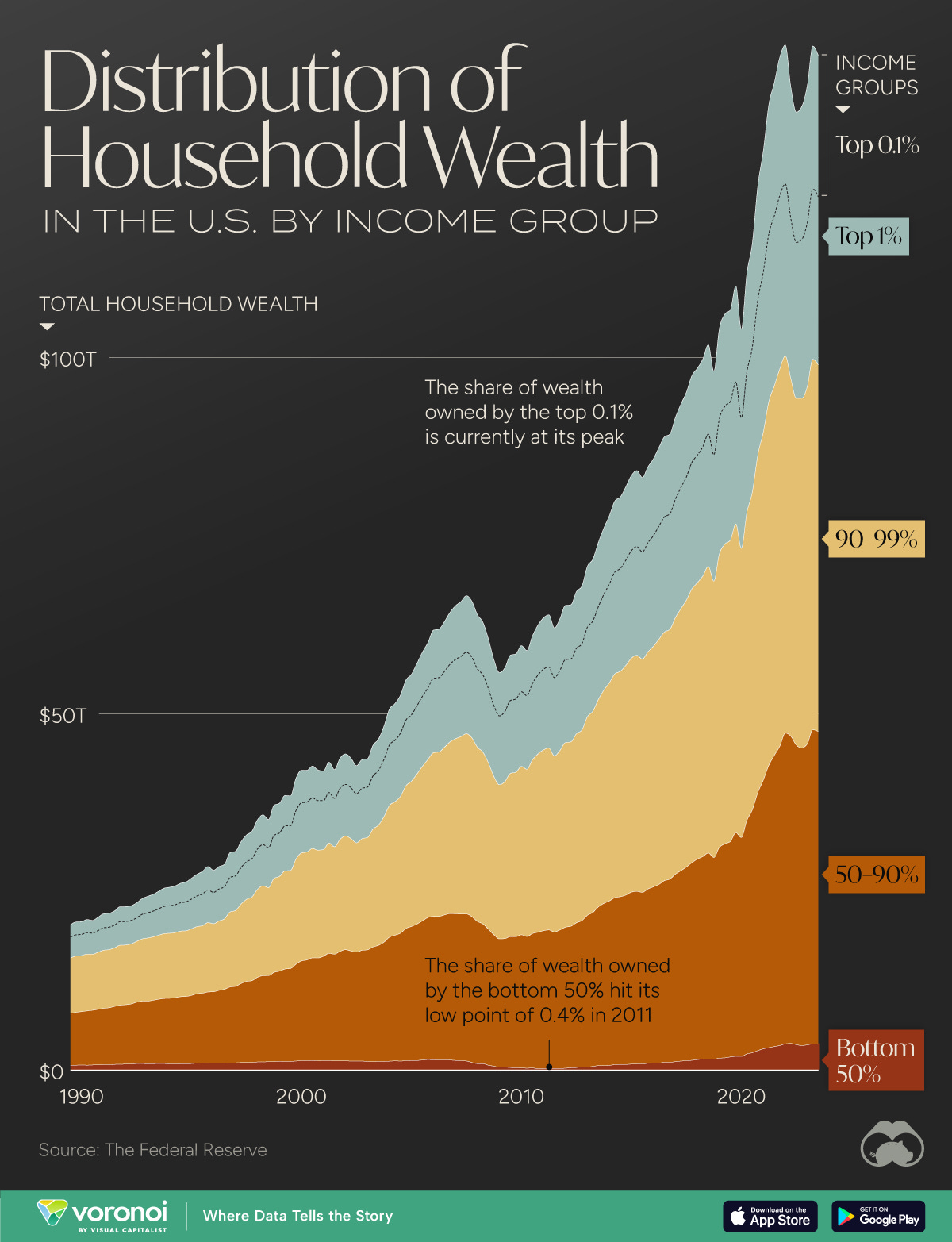
Against this backdrop we have seen the inequality of wealth in the U.S. fly off the charts. “During three consecutive quarters in 2025, the share of total wealth held by the top 0.1 percent and the top 1 percent reached the highest levels on record since the Federal Reserve started tracking these data in 1989, with the latest data from 2026 showing it just below those peaks,” the Center for American Progress reports.
“Since the fourth quarter of 2024, the share of overall wealth held by the top 1 percent has grown from 31 percent to 31.6 percent, while the bottom half’s share has remained at a stagnant 2.5 percent,” CAP adds. “This gap has been driven wider by things such as soaring stock values and tax policy changes in the congressional Republican-passed Big Beautiful Bill that favor the wealthy, as well as persistently high debts for the middle and bottom of the wealth distribution.”
Now, it’s likely not the 1 percenters (or 0.1 percenters) who are jetting off to Alaska or Acapulco (or Snowmass) for unusual athletic challenges. The athletically minded may well predominantly hail from the middle or upper-middle classes, whose wealth levels have also risen in the last half-century (though not by anywhere near as much as those at the top). After all, it takes a certain level of financial comfort to afford such events and the leisure time to train for them.
But how is it that any of us – the megawealthy as well as those in the middle – can morally tolerate begging in our streets? Why do we not elect politicians who, instead of cutting taxes for billionaires, come up with solutions to help the desperate or the simply unlucky among us? When there is so much money in our system, why is it so unevenly distributed?
In a few weeks in Colorado we will vote on a proposition that would replace the state’s current 4.4 percent flat income tax with a graduated system ranging from 3.7 percent to 8.4 percent. Individuals and corporations earning above $500,000 would see their taxes rise.
If the measure passes, the state is expected to reap about $2 billion annually that advocates say would boost funding for K-12 schools, healthcare and early childhood programs. Perhaps some could help those on the streets, as well, if imaginative programs could be tapped to help them?
However, a competing proposal backed mostly by undisclosed donors – presumably including some of the state’s wealthiest folks — would keep the 4.4 percent rate, and its backers note that voters have twice lowered that rate from 4.63 percent in 2020.
To be sure, there are sound economic arguments against dumping that flat rate.
“Colorado’s relatively low 4.4 percent flat income tax has been a major draw for businesses and young professionals,” The Wall Street Journal editorialized in opposing the graduated tax. “It’s one reason the state’s population has surged over the last couple of decades. But now progressives want to make Colorado more like California and the high-tax states that many of its inhabitants left.”
The editorialists note that the change would disadvantage the state, compared with neighbors. “Colorado’s top rate would rank by far the highest in its neighborhood, which includes Wyoming (no income tax), Arizona (2.5 percent), Utah (4.45 percent), Oklahoma (4.5 percent), Nebraska (4.55 percent), Kansas (5.58 percent) and New Mexico (5.9 percent),” the Journal editorialist argues.
And it’s unlikely that most of the inhabitants of the sprawling ski-area homes actually pay income taxes in Colorado. Chances are good that they keep their main residences in low-tax states.
Still, does it not offend common decency that we live in a system where the biggest challenges for some people are putting soccer balls into oversize golf holes while others beg to feed their children? Is the split-screen universe we inhabit now all too reminiscent of the 16th century Jean-Jacques Rousseau’s account of a princess who, when told peasants had no bread to eat, said “Qu’ils mangent de la brioche”? (loosely, “Let them eat cake.”)
Life will always be unfair, but maybe it doesn’t have to be quite so unfair. If we can scale mountains to ski and travel the globe to play odd games, can we not find a way to help the hungry to feed, clothe and house themselves?