
Maybe fiction can help us grasp it
Six years ago, a retired Drake University professor wrote a piece in Psychology Today headlined “Why is Fiction More Believable Than Fact?” Fiction, Patricia Prijatel wrote, “can force us to face our realities far better than any news story.”
Skeptical about that? Well, here are some facts that are scarcely believable:
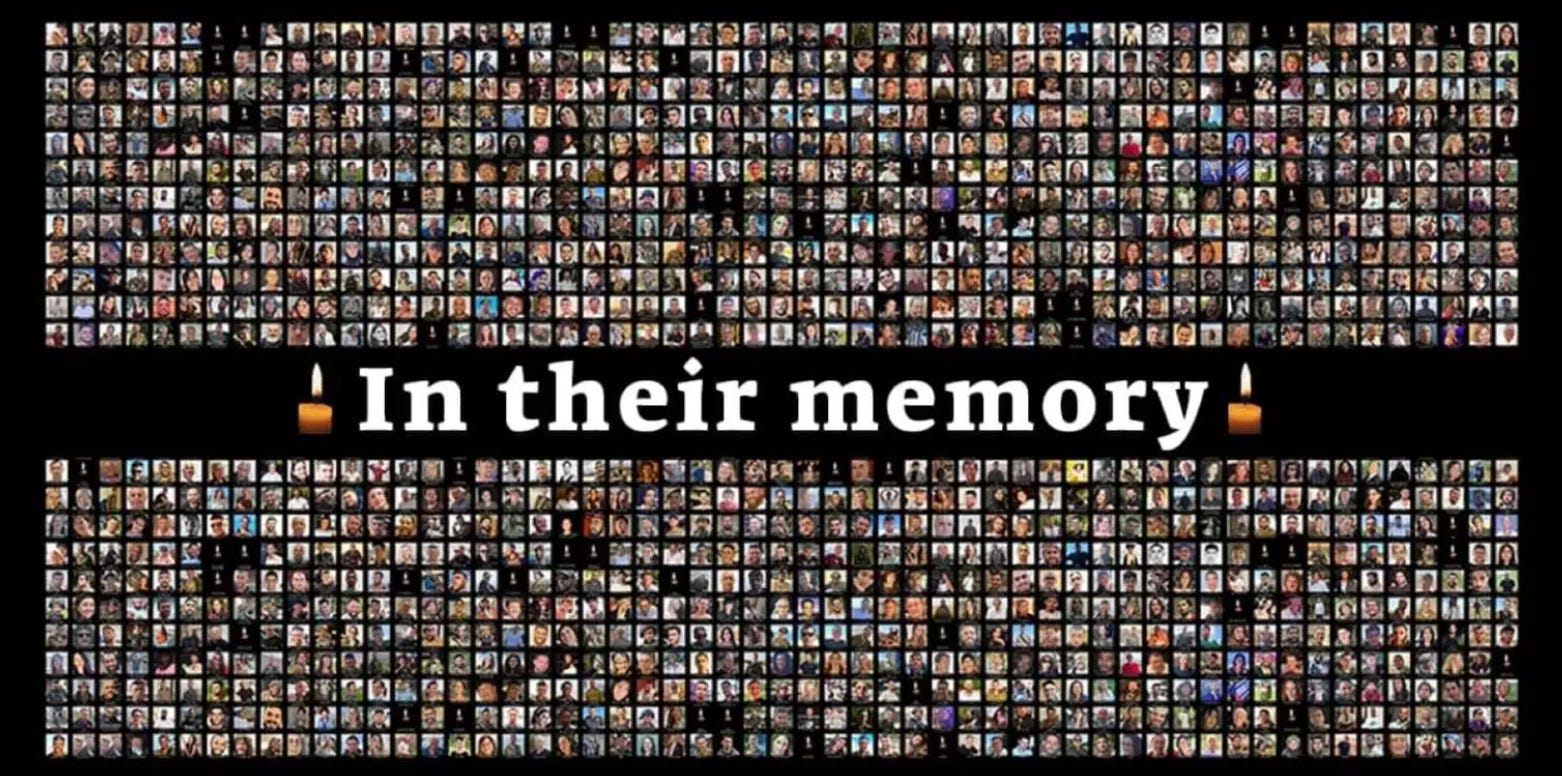
Three years ago, on Oct. 7th, Israel was subjected to the most horrific assault in the nation’s then 75-year history. Some 6,000 terrorists broke through fences in Gaza to massacre 1,200 people in some 20 Israeli communities. They slaughtered more than 350 people at a music festival. They raped and mutilated women. The terrorists wantonly murdered children and took at least 38 kids hostage, among the more than 250 people they carried off into Gaza, triggering an ongoing war that has taken some 70,000 lives so far.
The terrorists did this despite a Muslim tenet, a hadith that orders the faithful to not kill women or children. They even killed fellow Muslims and kidnapped some of them. Their savagery knew no bounds, as they moved from house to house in Israeli kibbutzim, torturing people as they filmed them and setting fire to entire neighborhoods.
So how can we process such horror, such inhumanity by people who invoke Allah as they commit unspeakable acts?
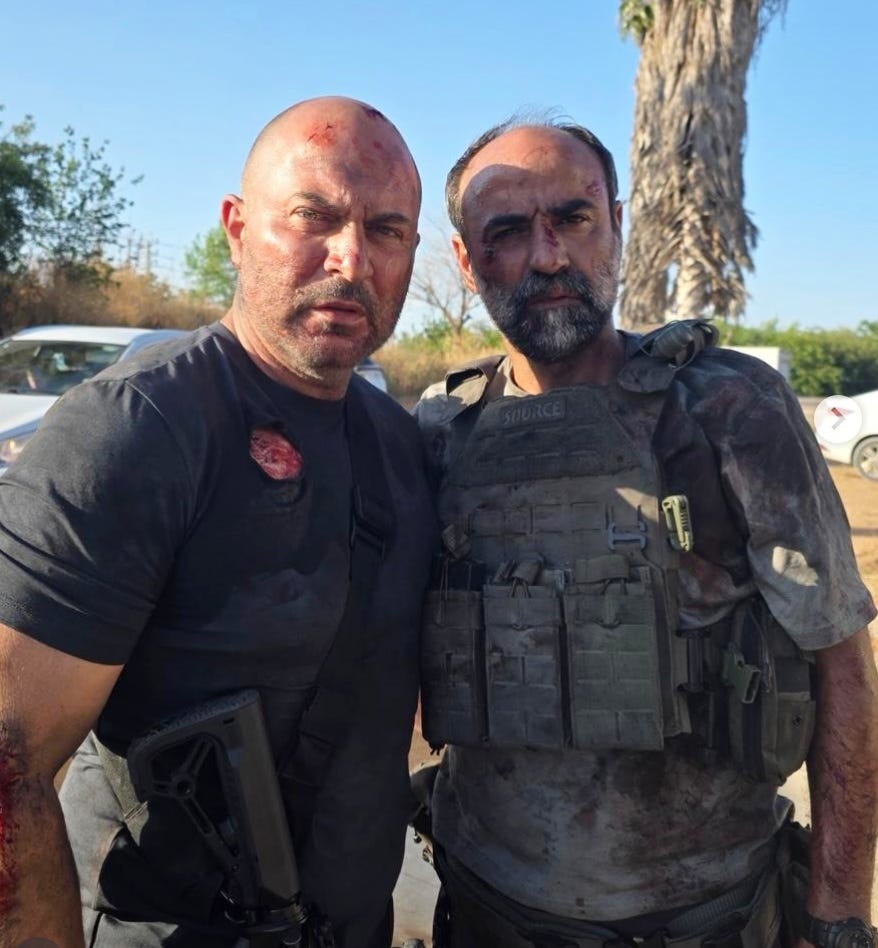
One way, I believe, is through fiction, as Prijatel contended. Recently, I finished watching the fifth season of Fauda, a Netflix show featuring Lior Raz, a former elite Israeli commando who co-created the series. This latest season is all about coming to terms with Oct. 7th.
Two of the 11 episodes recreate some of the atrocities of the Hamas assault. We see the terror through the eyes of a single Israel family trapped and ultimately killed in their home. Perhaps, I should say, we almost experience that fear, as it has haunted me for days.
It is painful to watch. Indeed, Fauda’s producers issued a warning before the release of episodes seven and eight, saying they “include content, sights, and sounds that may be difficult to watch. It’s important for us to say: These episodes return to that terrible day and stand on their own. If watching is too difficult, it’s OK to give up and connect with the season’s plot, which will continue in” subsequent episodes. A disclaimer to that effect precedes each of those powerfully troubling episodes.
To be sure, Fauda gives us some of the big picture, showing bloodied, wounded and murdered people. But it’s a personal and intimate family story that is most haunting, that takes us beyond the bare statistics to make it seem all too real. It is gut-wrenching to see both those who were killed and those who survived them.
“After all, we have all seen dozens of real videos from the attack, many of them filmed by the terrorists themselves, and they were horrifying enough. But this time, the fictional work takes us directly into the horror,” one Brazilian viewer said, as quoted by The Jerusalem Post. The scenes “do not feel like an attempt to imagine the horror. They take us directly into it.”
After October 7th, Raz and his fellow writer, Avi Issacharoff, scrapped the original script idea and recast it to “show to the world this is what happened,” Raz told a Call Me Back podcaster.
For them, it was all very personal. Raz was in Romania, where he was slated to speak, at the time of the assault. He got a phone call from his sister saying she was hiding in a safe room, armed with a knife, and she needed him to save her. He couldn’t then do anything, of course, but he took the first available flight, got his gun and drove to an embattled town, Sderot, where he helped people flee the murderers. His sister, happily, escaped with her sons.
“Each and every one of us is carrying some kind of memory from October 7th,” Issacharoff said.
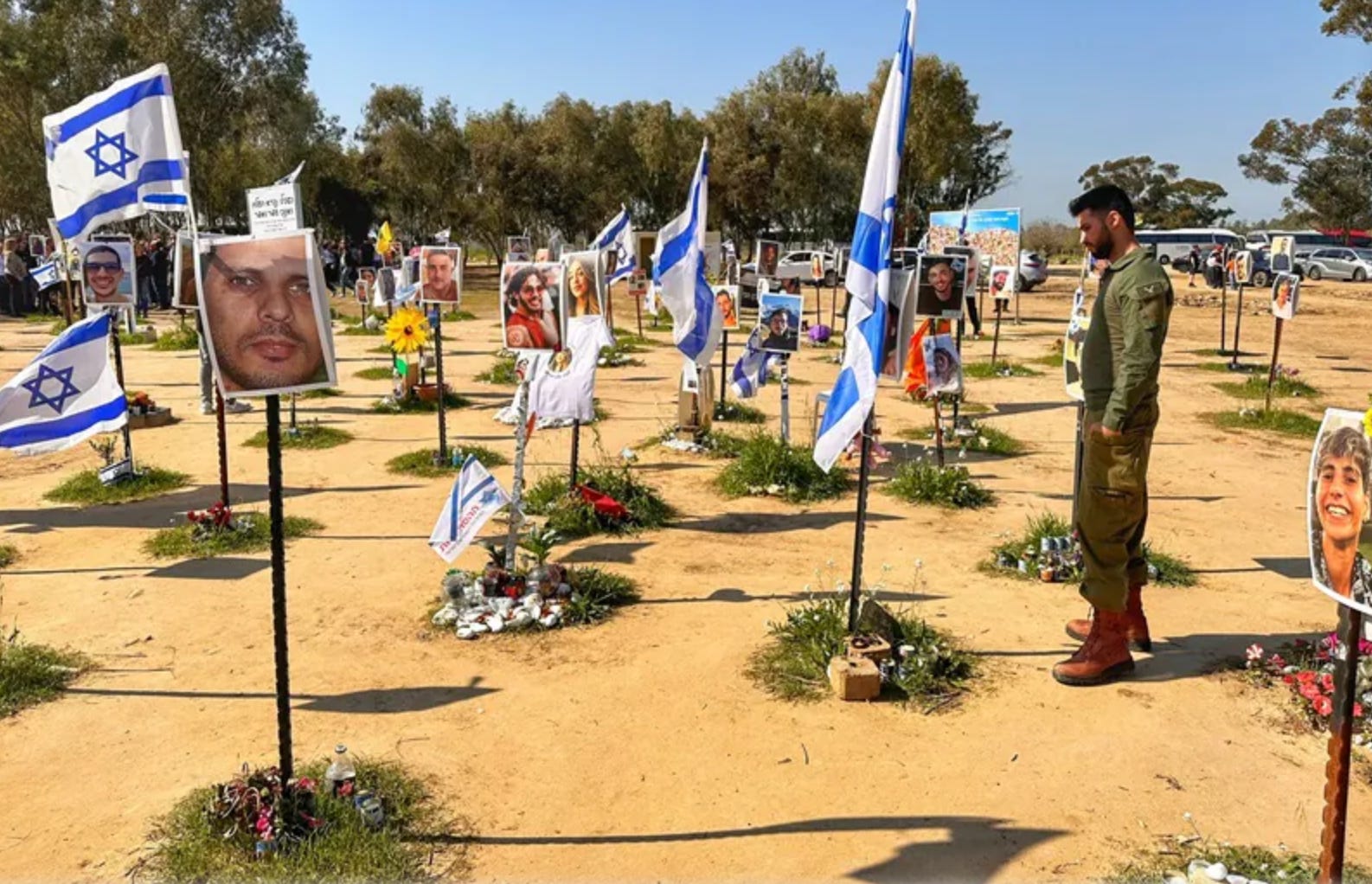
In Fauda’s Oct. 7th episodes, we do see beyond just the single family, such as when Raz’s character tries to help young people fleeing the Nova music festival. The writers used real events, recreating them for the screen. For instance, they show how 20-30 concert-goers fled into a big container to hide and were all killed. In another scene, a character walks by young people’s bodies piled atop one another in a shelter.
The series, and the Oct. 7 episodes in particular, hit many viewers around the world hard. One man, quoted by The Jerusalem Post, wrote: “I could barely keep my eyes open.” A woman wrote: “Yesterday, a friend called me and told me the same thing. She added, ‘Who knows, perhaps this series will help people understand the atrocities committed by Hamas on October 7.’”
A viewer in India wrote: “Sleepless nights. Can someone please erase my memory of this episode?? I can’t stop thinking and worrying. Episode eight of ‘Fauda’ really disturbed me. I don’t understand how there are still Hamas supporters among us. God, please help me get over this series.” Another responded: “I am a huge fan of ‘Fauda’ and of Israel, but I don’t have the courage to watch the fifth season.”
To be sure, the writers struggled with how much to show, how graphic to be. They hint at a rape, for instance, but thankfully don’t depict it.
So, some commenters have said the show didn’t go far enough.
“It spared viewers descriptions of women who were gang raped and burned alive, families who were tied together and whose bodies were dismembered, the killing of pregnant women and children, the sexual desecration of bodies, the mutilation of genitalia, and horrific injuries suffered by children,” one viewer wrote. “Many children were also abducted, including infants as young as nine months old. Kfir Bibas was only nine months old when he was kidnapped; he was later murdered in captivity alongside his four-year-old brother, Ariel. The series did not show fathers who had kerosene poured over them and begged for their lives moments before being set on fire as their attackers laughed.”
Still, the Oct. 7th episodes – and the whole series for that matter – should be mandatory viewing for Hamas sympathizers. The savagery of the terrorists becomes all too real, even without the worst of their monstrosity on display.
Beyond the terrible events of that day, we also get a sense of how Israelis try to come to terms both with them and with what many of them had to do afterward as soldiers. The Raz character, Doron Kabilio, is especially riveting as someone revolted by the violence he sees and – like most Israelis involved in defending their country, one expects – someone who loathes the violence he commits. Both rip him apart.
It’s reminiscent of a famous comment by former Israeli Prime Minister Golda Meir: “When peace comes, we will perhaps in time be able to forgive the Arabs for killing our sons, but it will be harder for us to forgive them for having forced us to kill their sons.”
But when one contemplates the horrors the Hamas terrorists inflicted – with exultation – on innocent Israelis, one can only wonder whether the same sensibility that Raz portrays in Kabilio can possibly exist in those heavily propagandized Palestinians. They are taught to hate Jews from their earliest days. Indeed, the terrorists have used children as suicide bombers.
And there can be little doubt that Hamas knew that Israel would respond with overwhelming force to the events it triggered. The group’s leaders accepted the deaths of their fellow Palestinians as “necessary sacrifices,” in the words of the Hamas military leader Yahya Sinwar, who welcomed high civilian casualties as a tool to generate pressure from the world on Israel. He cynically said, “Israel’s journal in Rafah won’t be a walk in the park.”
Israel’s soldiers killed Sinwar in October 2024 in Rafah.
Meir also famously said that peace will come “when the Arabs will love their children more than they hate us.” Perhaps, however, it will come only when the last Hamas fighter is killed or surrenders. But, thanks to the all-too-real fiction displayed by shows such as Fauda, maybe some in the world who are tempted to excuse the group’s horrors will think twice.