
Trump’s trade battle with Canada will cost us all
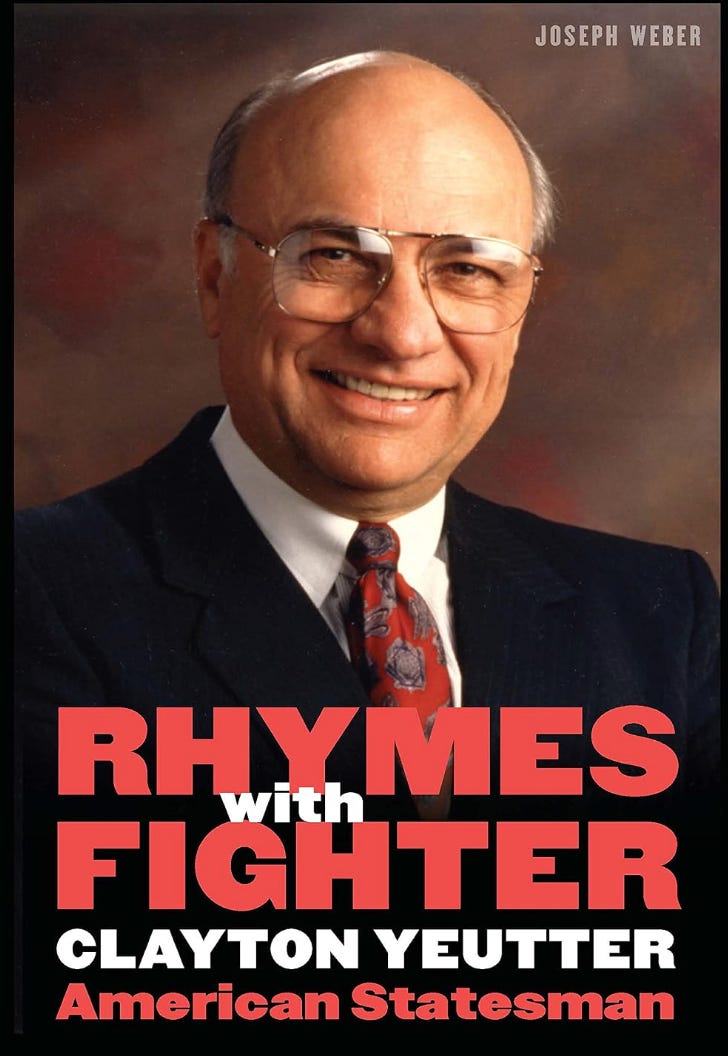
Forty-one years ago, during another sweltering August, Ronald Reagan’s U.S. Trade Representative, Clayton Yeutter, delivered a public address at the Foreign Correspondents Club in Toyko aimed at the overly protective Japanese government. His words could speak loudly today to the trade wars that Donald J. Trump is so fond of having.
“Our trading relationship is not a zero-sum game. For us to win, it is not necessary for you to lose,” the Ph.D. economist and free marketer said. “And for Japan to win, it is not necessary that the U.S. lose. If we handle these issues and disputes properly, we can both win!”
Ah, if only Yeutter (and Reagan) were running things in U.S. trade nowadays.
Instead, we have a president who believes that only one side can win in commerce – or virtually anything else. Worse, he behaves as if he thinks bravado, coercion (and, in tragic instances, bombs), will make him such a victor.
Call it toxic machismo run amuck. It is costing us most visibly in Iran and, less tangibly, in lots of other places.
So, we now have a trade war with Canada, a close long-term ally in commercial and political terms. This battle is, as The Wall Street Journal has repeatedly editorialized, “The Dumbest Trade War.” Not only is Trump damaging American industries, but he is hurting his own party’s fortunes.
“Mr. Trump’s latest round of border taxes will hit an array of consumer goods, construction materials and manufacturing components,” the newspaper warned. “Republicans are already getting pounded on the campaign trail over his tariffs and inflation. One reason for Mr. Trump’s frigid approval rating is that voters believe Mr. Trump is waging blunderbuss wars without a strategy, and on trade they’re right.”
But Trump, who often perversely casts himself and the country as victims, seems to be singing the old South Park song, “Blame Canada.” Recall one key verse: “It seems that everything’s gone wrong/Since Canada came along.” Trump’s less lyrical version, as Time noted, is: “They feel entitled, and yet, we don’t need Canada, they need us!” He repeated his accusation that “Canada has been ripping off the United States of America for years.”
That message came as he announced that U.S. tariffs on all Canadian cars and trucks, automotive parts, and steel will increase to 50 percent starting Jan. 1, 2027. “Build in the U.S. and there are zero tariffs. Canada will be treated like a State no longer! On trade, and in other ways, also, they are among the worst nations in the world to deal with,” he said on social media.
Recall, too, that Trump has long argued that he’d like to annex Canada, making it the U.S.’s 51st state, something that hasn’t played well in a country long bothered by its sometimes vassal-like relationship to the U.S. Canada’s economy in gross domestic product terms is less than one-tenth the size of the U.S.’s and smaller than the economies of Texas and California and about equal to New York’s.
As he has pushed for annexation, Trump has steadily turned up the pressure on Canada in escalating tariffs. Prime Minister Mark Carney, a former Bank of Canada and Bank of England governor, was elected in March 2025 because he stood up to Trump. At the time, he said: “There’s someone who’s trying to weaken our economy,” spurring loud boos at a Liberal party gathering. “He’s attacking Canadian workers, families, and businesses. We can’t let him succeed.”
Trump Administration officials have even fueled a separatist effort in the oil-rich province of Alberta. At secessionist rallies, Politico reported, people have wrapped themselves in Alberta’s flag, waved “we’re done” banners and worn “Trump 2024” and MAGA — Make Alberta Great Again — ball caps.
In January, the news outlet noted, Treasury Secretary Scott Bessent called Alberta a “natural partner for the U.S.,” while referring to the province’s energy resources. “People are talking,” Bessent told conservative podcaster Jack Posobiec, nodding to the separatist movement. “People want sovereignty. They want what the U.S. has got.”
In October, Alberta voters will decide whether to launch the legal process toward a referendum on seceding from Canada.
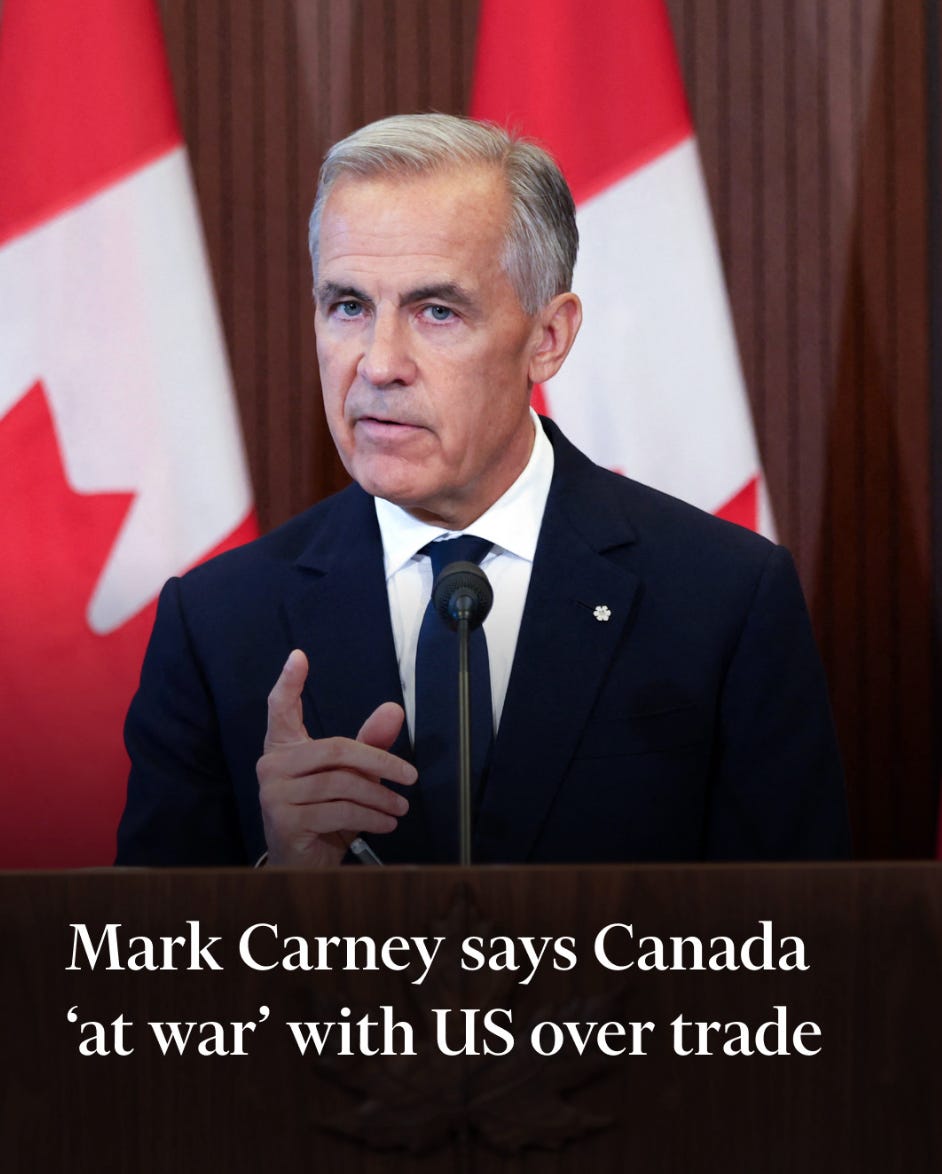
But, as Trump has long been beating the war drums – in trade and political terms — Carney has been having none of it.
“Last spring, I warned that America is trying to break us so they can own us,” the prime minister said in a national address on Aug. 22, when he suspended the latest trade talks with the U.S. “And I promised that that will never, ever happen. We are keeping that promise. Canada is becoming stronger and less dependent on America. We are already giving ourselves more than they can take away. And we are just getting started.”
Accounts of the negotiations have detailed finger-pointing by both sides, saying each was upping the ante on demands.
“U.S. officials blamed Canada for introducing new asks late in the talks, including seeking lower tariffs on heavy trucks, while Canadian leaders — including Prime Minister Mark Carney — pointed the finger at turf wars within the Trump administration over who controlled key pieces of the deal,” Politico reported.
The Wall Street Journal reported that U.S. Trade Representative Jamieson Greer said Canada walked away from the table and had made unspecified new demands. But Carney said Canadian officials worked in good faith on a deal, claiming the U.S. proposed new, unfair terms.
Whatever the case, as a result, tariffs of 50 percent on $20 billion worth of Canadian goods, or about 5 percent of its U.S.-bound exports, went into force after midnight on Aug. 21. And, in retaliation, Canada planned to slap dollar-for-dollar countertariffs on U.S. goods such as steel, dairy and appliances on Sept. 8, the day after Labor Day.
Trump’s move to double the duties charged on Canadian cars and car parts to 50 percent on Jan. 1 will hurt on both sides of the border. As CNN noted, with the war in Iran already driving up energy and transportation costs, at least some of the financial pain will land on American consumers, even as the levies more directly punish Canadians.
“The new U.S. tariffs are designed to hurt and divide us,” Carney told his countrymen. “They’re a miscalculation. They’re a miscalculation because Canadians will always take care of each other. We know we’re stronger together.”
It’s not clear who will cry uncle first in this trade war.
Roughly 87,000 Canadian jobs could be at risk as the 50 per cent tariffs cut sales of Canadian goods to the U.S., according to an analysis by University of Calgary economics professor Trevor Tombe. As Canada’s CTV News reported, he estimated that about 52,000 jobs are directly vulnerable, while indirect effects on Canadian suppliers and service providers could put another 35,000 in danger.
Carney’s government is setting aside $25 billion (Canadian) to protect Canadian workers and businesses hurt by the tariffs. “We’re helping our small and medium-sized businesses respond by investing in equipment, productivity, and supply chain resilience,” he said. “And we’re financing large companies to keep large employers operating and retain their workers.”
The Canadians, moreover, are reaching out to other markets around the world to boost trade – something that also appears to be irking Trump.
“Over the last year we have signed more than 20 trade and security deals across five continents,” Carney said. “We completed our most recent deal, with the UAE, in a record 47 days. Canadian businesses now enjoy tariff-free access to 1.5 billion consumers. Over the next six months, we will double that number through new trade deals from ASEAN to India. This fall, we will begin discussions with the European Union—the world’s second-largest economy—to deepen and strengthen our security and economic partnership.”
Essentially, Canada is declaring its independence from the U.S. just at a time when Trump is trying to make it more compliant with his whims.
As for the impact of the trade war on the U.S., most analysts point to modest job effects – mainly in areas directly related to cross-border trade. But they say Canadian goods will either become less available or more costly.
“The specificity of the tariffs means that different sectors of the economy — and your everyday purchases — will get hit unevenly,” Business Insider reported. “The tariffs affect alcohol, milk, plywood, and more. For consumers craving Canadian whisky or finally getting around to home renovations, that might mean a bigger bite out of their wallets.”
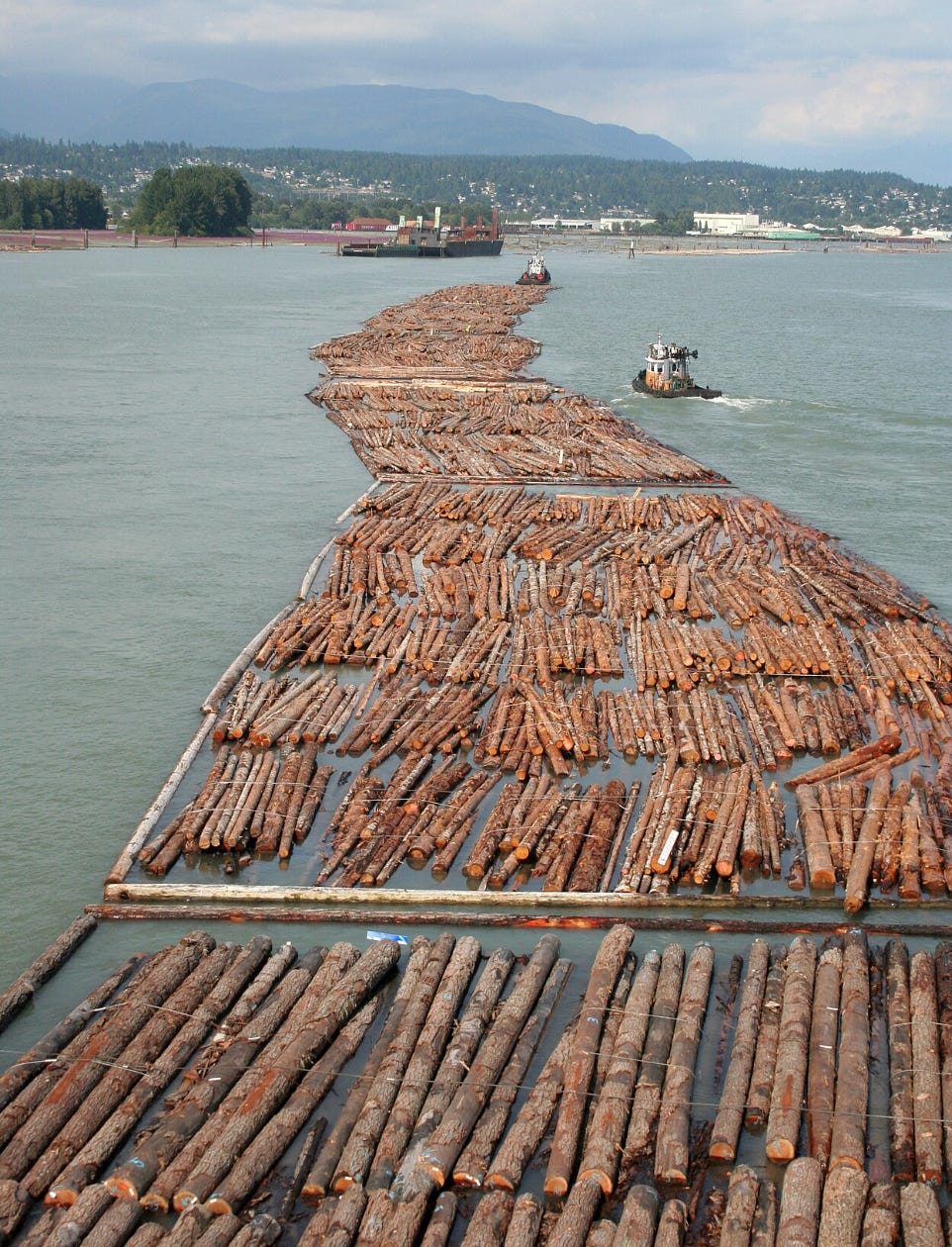
Some areas of the U.S. – such as auto trade-oriented Michigan – and some sectors, such as homebuilding, will especially feel the heat, the outlet noted. “Canada is also a major supplier of lumber, a key material in homebuilding. A tariff impacting lumber prices would increase construction costs for new homes, just as cities like New York, Austin, and Raleigh, North Carolina, double down on policies to boost housing supply.”
Beyond the economic effects, though, Trump’s trade war with our northern neighbor – like his other global trade battles – is having a more pernicious effect. All have cost American credibility dearly.
“We recognized from the start that America has changed,” the Canadian leader told his fellow citizens. “Early last year, in this room, I observed that the decades-long process of steadily increasing integration between our economies was over. Our government understood, before many, that America would transform all of its commercial relationships, that it would put a series of tariffs on its closest allies and use economic integration as a weapon. We recognized that sometimes its signature was written in pencil.”
“Written in pencil.” Indeed.
All of this has been a far cry from when two men whose word meant something were in charge of such things in Washington four decades ago. Philosophically, it’s leagues away from the borderless trade that Yeutter and his president, Reagan, espoused. Both America and the rest of the world are already poorer for it and, sadly, are likely to become more so.