
Why do a couple conservatives want to limit their daughter’s intellectual growth?
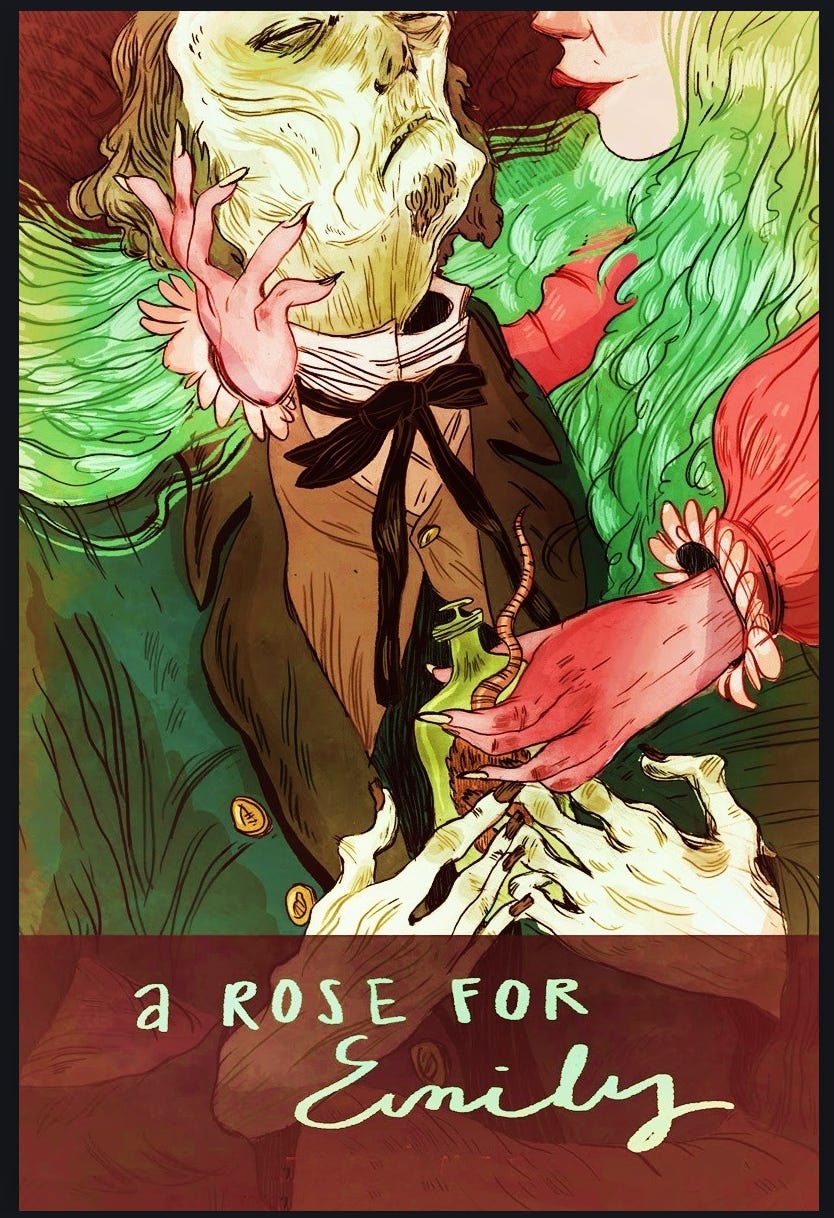
In “A Rose for Emily,” William Faulkner’s Gothic short story, the character Emily Grierson can’t accept the social changes the end of the Civil War brings to her southern town. Once a hopeful and vibrant young girl, she shuts herself off from the outside world, becoming a recluse who clings to dying traditions until she herself dies.
The 1930 story, which ends in a macabre tragedy, makes a bold statement about the heavy costs of rigidity and intellectual and social isolation.
I’m reminded of the tale now because I wonder whether U.S. Secretary of Transportation Sean Duffy and his wife, Fox TV personality Rachel Campos-Duffy, are setting their daughter Paloma up for a similar fate. Certainly, it’s not physical isolation they have in mind, but instead an intellectual and social quarantine.
And it seems their fears speak volumes about the state of Trump-era conservatism.
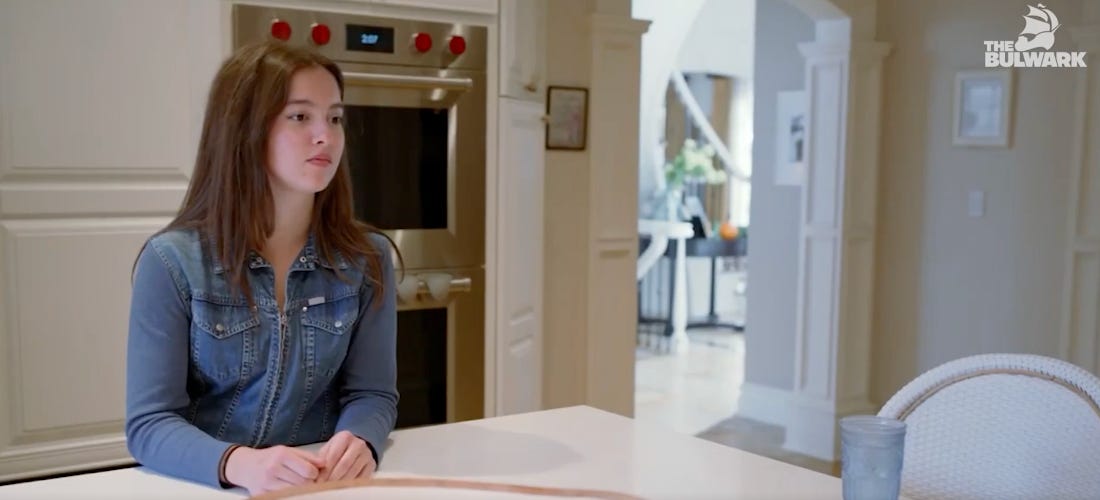
Recall that Duffy and his family have their own reality-TV show, a YouTube series called The Great American Road Trip. One episode has been getting a lot of attention because in it Paloma tells her devoutly Catholic and very conservative folks that she’d like to go to Harvard – much to their dismay. Mom would prefer a small Catholic university, certainly not Harvard.
“If I send you there, I think what happens is they have professionalized figuring out how they can take good young girls like you and, I think, corrupt their minds,” says dad, a graduate of St. Mary’s University of Minnesota and what is now called the Mitchell Hamline School of Law in St. Paul.
As New York Times columnist David French notes, young Paloma offers a “remarkably mature” response.
“But I went to an extremely conservative school in high school,” she says, “and I’m part of an extremely conservative family, and then if I go to a liberal setting, that’s a way more well-rounded education than if I go to a conservative high school and then go to a conservative college.”
Duffy’s retort: “But they’re so good at it. You’ll see young people go to a conservative school with a conservative family, and they get perverted and contorted.”
As French argues, in urging Duffy to let Paloma go to that supposed bastion of radical-liberalism, the experience would be good both for Paloma and Harvard. After attending Lipscomb University in Nashville, the Alabama-born and Kentucky-raised French himself went to Harvard Law School, graduating in 1994.
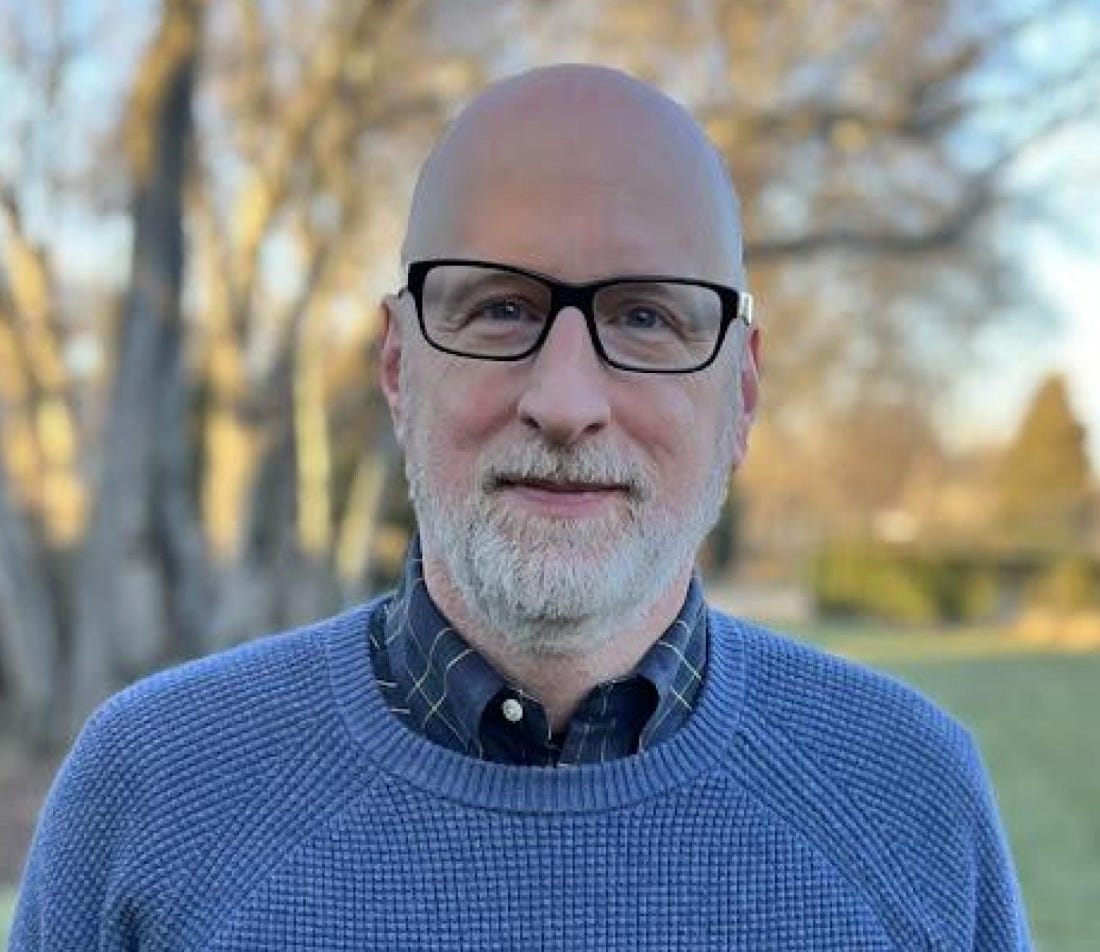
Back then – perhaps like now – French tells us, Harvard was “in the midst of intense ideological battles, in which conservative students were sometimes ruthlessly booed, hissed and heckled, merely for stating their views.” Nonetheless, at such a school, he contends, conservatives “will make liberal friends, including some who last a lifetime. My three years at Harvard were also three of the best years of my life, in part because they were so challenging.”
The writer says his ideas are stronger now because of the arguments he considered back then.
“We learned from one another, and we still learn from one another. There are times when my friends and classmates can even hear the echoes of our longtime debates and disagreements in my columns,” French writes. “I was a conservative and a Christian when I met them. I’m a conservative and a Christian now, but I’m a better Christian and a better conservative because they tested me. In the absence of that testing, I shudder to think what I’d be like today. To see what right-wing bubbles can do to the Christian mind, one need only look at the strident, conspiratorial — and often downright dumb — discourse in so many parts of the religious right today.”
Perhaps the Duffys prefer the “downright dumb” discourse one hears in Trumpworld now?
Certainly, students like Paloma would find their convictions tested and challenged at a school such as Harvard, but if their ideas are sound and they can back them up, would they not find themselves even more sure of those ideas? French argues that “every person — especially those of us who live in the world of ideas — should spend time in a place where he or she is a distinct religious or ideological minority, even when it’s hard. It can be among the most clarifying and rewarding experiences in life.”
I suggest that the very real problem for her parents, however, is that some of those ideas may be unsound. Harvard, it’s likely, would make Paloma reasonably question them.
The clip doesn’t detail what insidious liberal ideas she might be “perverted” by, but one can conjecture. They could involve topics such as personal sexual diversity, traditional women’s roles, minority rights, systemic racism, religious dogma and a basket full of other modern matters whose investigation would mortify Trumpists.
It’s entirely possible that a seemingly sheltered Paloma would bring home a lot of notions that would upset mom and dad. She could come back at Christmas break with arguments that, maybe, the Duffys would be hard-pressed to rebut, given their narrower intellectual upbringings. (Paloma’s mother is a product of Arizona State University and the University of California, San Diego).
To get personal about this, I attended a religious high school in the late 1960s and early 1970s, at a time of social and political upheaval that in some ways was worse than today’s. Occasionally, I also went to evening sessions at Rutgers College in a program called “Liberation High School,” in which my ideas — most of which were received wisdom, of course — were challenged. Everything from abortion and capitalism to military service was up for grabs (recall that this was while the Vietnam War raged).
Somehow, I managed to get through all that. Over time and, perhaps surprisingly, thanks to schooling in a graduate program at a different Ivy League school, Columbia, some of those leftish ideas dissipated for me. Liberal values such as fairness, equity and justice remained, but my sense of how to achieve those changed. (Hint: the DSA is anathema to me).
Of course, society changed a lot in the ‘60s and ‘70s – much as post-Civil War society in Faulkner’s story did. Faulkner’s intellectually isolated Rose couldn’t accept the changes the South wrestled with. Perhaps, she has a lot in common with the Duffy parents in this regard.
To get a bit more personal — and more recent — when I was teaching in the journalism school at the University of Nebraska-Lincoln just a few years ago, I gave a college tour to a high school boy who was considering attending UNL. Like Paloma, he was a student at a conservative religious high school. And, like the Duffy parents in their attitude about Paloma, he was nervous about going to the big university.
He told me he was afraid of having his values and beliefs threatened in the big school. He wondered whether he would be better off going to a small religious college, where his values would be reinforced, not questioned. He didn’t want to have to defend his ideas but rather to simply have them reaffirmed.
The irony was that UNL – perhaps like the schools the Duffy parents attended – was a fairly conservative place. Catholics had a major presence on campus, with lots of supportive organizations. Indeed, I taught students who proudly spoke of attending annual Right to Life antiabortion marches in Washington. And other denominations had churches and youth organizations for the young and faithful. For better or worse, fraternities and sororities made up a big part of campus life.
Though I don’t know what decision that young man made, I suspect he ran away from UNL as fast as the Duffys would like Paloma to flee any notion of Harvard. As it happens, it appears that Paloma could wind up attending the University of Chicago, instead of heading north to Cambridge. We learn in the Duffy reality show that she’s been accepted there.
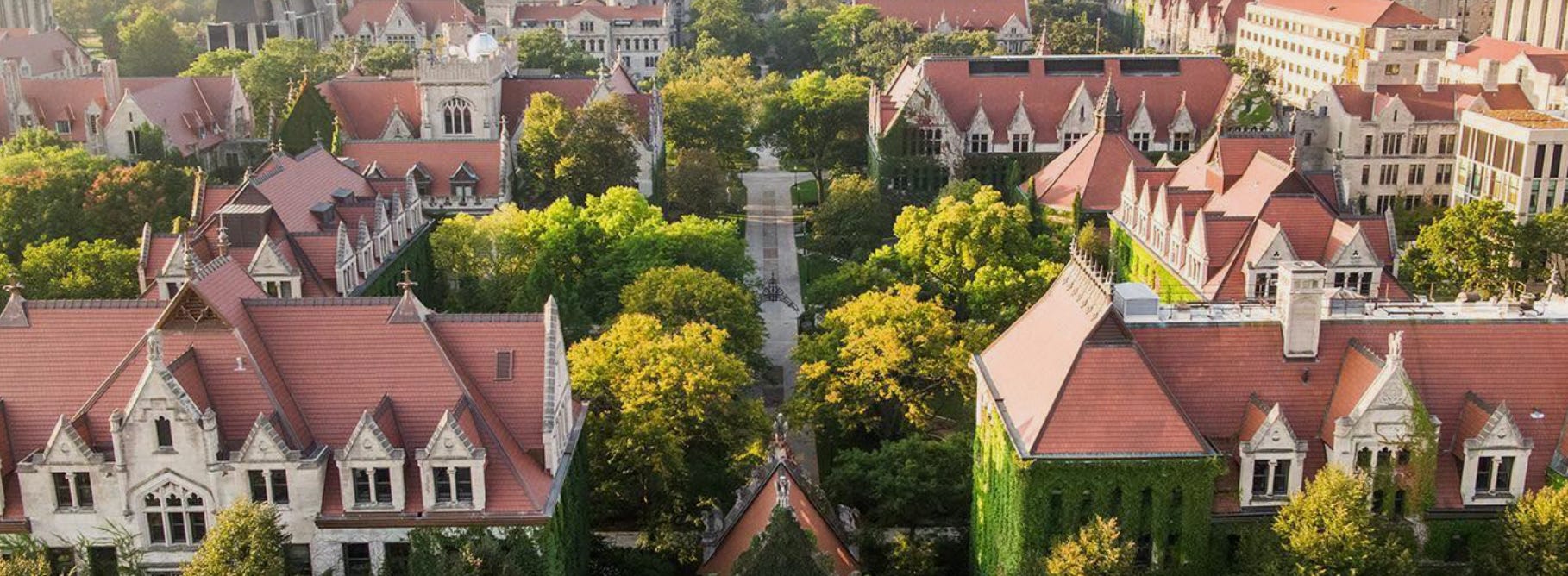
If Paloma does opt for Chicago, though, the Duffys might find themselves just as hard-pressed as if she went to Harvard.
“The curriculum made us appreciate that the best way to contend with an argument was to engage with it rather than denounce it, and that the prerequisite to engagement was close and sympathetic reading,” New York Times columnist and Trump loather Bret Stephens has said. “Chicago taught me… never to be satisfied with a first, second, third, or even a fourth opinion. Learning and thinking and progress take place through a continual process of intellectual challenge.”
Could the Duffys’s Trumpism — and perhaps some of their other views — stand up to such a challenge? Their first post-enrollment Christmas dinner could be a doozy.