
Hegseth’s boot has landed heavily on Stars on Stripes
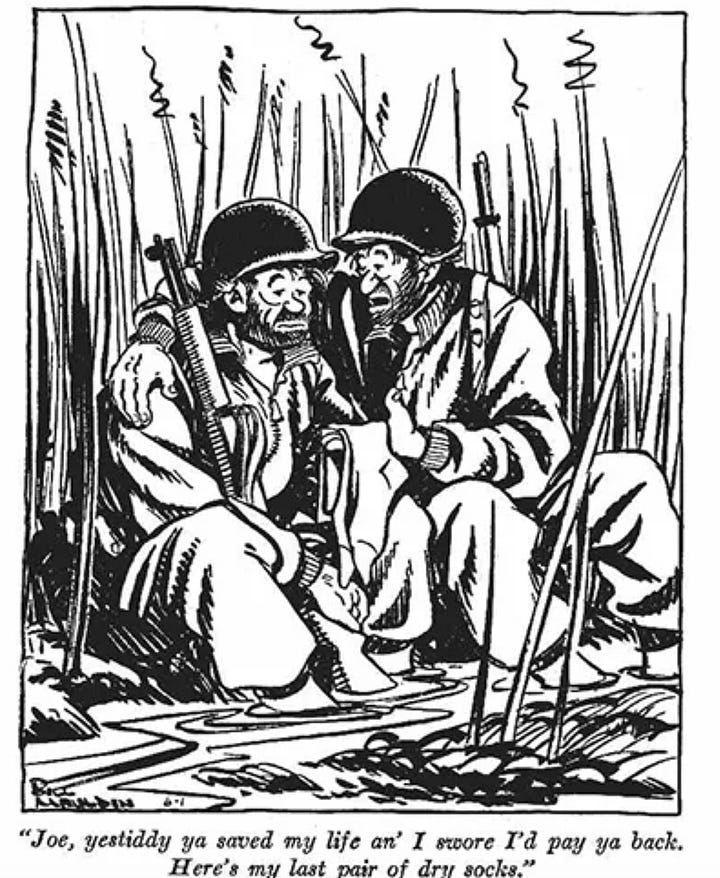
A bit more than 80 years ago, Stars and Stripes cartoonist Bill Mauldin really pissed off General George S. Patton.
The young cartoonist’s signature characters, Willie and Joe, were unshaven, unkempt and thoroughly loved by GIs in World War II. To the spit-and-polish Patton, who ordered front-line fighters to shave daily and even wear ties, the scruffy cartoon GIs looked “like goddamn bums,” were “unsoldierly” and would undermine morale.
Patton threatened to jail Mauldin, a sergeant in the Army, and pushed to get the cartoon banned. But Supreme Commander Dwight D. Eisenhower intervened, seemingly persuaded that if rank-and-file soldiers loved the strip Mauldin was doing something right. Mauldin went on to win a Pulitzer Prize at age 23.
Stars and Stripes, which dates back to the Civil War and has long valued its editorial independence, is again in the middle of a Patton-like fight. Only this time, there’s no Eisenhower to bring some sense to bear. Instead, the self-styled Secretary of War, Pete Hegseth, and his underlings in the Pentagon are determined to squash any degree of autonomy.
As the newspaper itself reported, the Pentagon in March outlined an overhaul effort for Stars and Stripes that barred it from using some news wire services and running comics and other syndicated features. It said content must be consistent with “good order and discipline,” a phrase borrowed from the Uniform Code of Military Justice.
Then, in April, the Pentagon fired its ombudsman, Jacqueline Smith, someone with 40 years of experience in journalism. In her final column, she wrote: “Apparently the Pentagon also doesn’t want you to hear from me anymore about threats to the editorial independence of Stars and Stripes.”
As Smith also wrote, Hegseth killed Sunday comics in the paper, a twist that likely would send Mauldin spinning in his grave at the Arlington National Cemetery. That prompted one reader to write Smith: “As a retired Navy veteran, [I] feel the DOD directive smells like censorship…. We fought for the Constitution and freedom. That includes transparency of our government and freedom of the press. As an American, I have a right to decide what I read.”
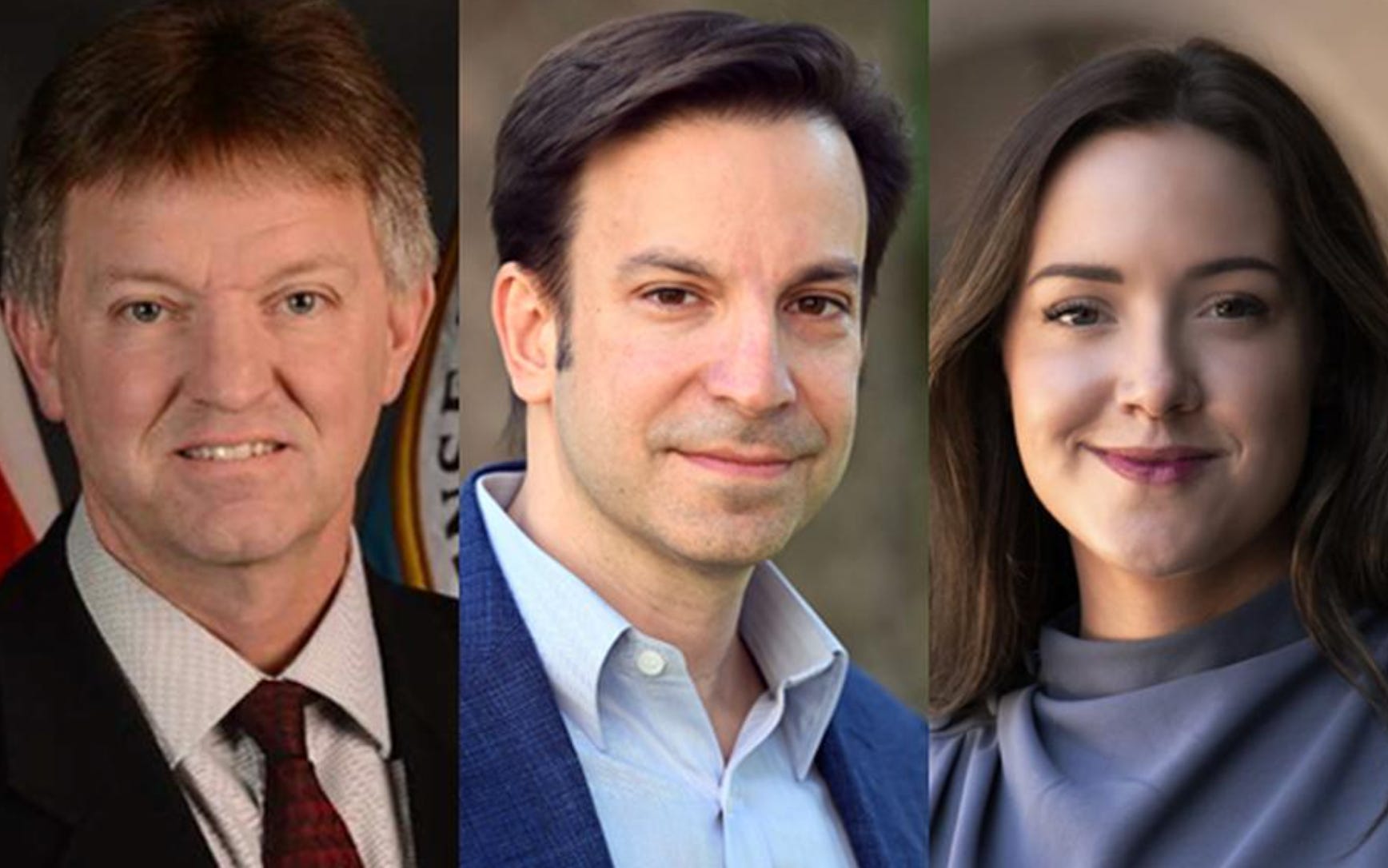
But apparently in Hegseth’s view, only he has the right to decide what soldiers read and see. His Pentagon on Aug. 21 fired Stars and Stripes editor-in-chief Erik Slavin and Middle East reporter Lara Korte after the pair appeared in a CBS interview. In that interview, Slavin said “I stand by the principle that Stars and Stripes must remain editorially independent, as required by law and by the department’s own policies.”
The paper’s longtime publisher, Max Lederer, was also canned, even after he had announced his retirement. As the Associated Press reported, Lederer made his resignation announcement on Aug. 18, shortly after the Pentagon installed a new deputy publisher under him without his prior knowledge. Lederer planned to leave in late September, but felt Hegseth’s boot weeks earlier instead.
To be sure, the brouhaha at the newspaper has been a long time coming. In January, Hegseth’s PR man, Sean Parnell, wrote on X that “Stars and Stripes will be custom tailored to our warfighters… It will focus on warfighting, weapons systems, fitness, lethality, survivability and ALL THINGS MILITARY. No more repurposed DC gossip columns; no more Associated Press reprints.”
But Lederer, who served at the newspaper for 30 years and as the second fulltime civilian publisher since 2007, soon made it obvious that he and Hegseth’s Pentagon were on different pages. He wrote in a staff memo that it had “become clear that my philosophy of leadership, and my understanding of the value and mission of Stars and Stripes, differ in fundamental ways from the direction the leadership of the Department of Defense has for the organization.”
The deputy publisher the Pentagon installed under Lederer, Navy Capt. William Urban, is a PR man, a flack, who bragged that he has been “a spokesman for some of the hardest Public Affairs assignments in the Navy and Department of War for more than 20 years.” As AP noted, he admitted he has “no formal journalism experience.” It’s unclear whether he will rise to publisher.
It is telling, however, that Lederer refers to the Department of Defense by its proper legal name, while Hegseth’s Navy toady calls it the Department of War. Despite an executive order by Donald J. Trump and changes in logos around the Pentagon, the department remains the DoD until Congress replaces the title set in place by statute in 1949.
Urban’s appointment did not sit well with some legislators.
“The placement of an active-duty Public Affairs officer in the senior leadership of an organization whose credibility depends on its independence from the military chain of command raises serious questions,” Democratic Sens. Richard Blumenthal, Elizabeth Warren and Jeanne Shaheen of the Senate Armed Services Committee wrote Hegseth on Aug. 20. “Mr. Lederer’s abrupt departure only heightens those concerns, particularly as the Department determines who will assume leadership of Stars and Stripes. This is particularly troubling in light of the Department’s recent actions affecting Stars and Stripes, including the April firing of independent Ombudsman Jacqueline Smith after she publicly defended the newspaper’s editorial independence and communicated concerns to Congress.”
Thumbing their noses at the senators, Hegseth and his Pentagon minions fired the newspaper’s leaders the day after that.
Perhaps as an Orwellian joke, flack Parnell last April wrote a letter to troubled Congressional lawmakers insisting that “Stripes will remain editorially independent of the U.S. military chain of command, military political affairs activities, or other internal influences, and without censorship and propaganda.” As noted by The Hill, the newspaper has been editorially independent since the 1990s by Congressional mandate.
National Press Club President Mark Schoeff Jr. told AP that Slavin’s firing was “another brazen attempt by the Pentagon to dictate coverage of the military.” He added that “firing a newspaper editor after he publicly defended his newsroom’s editorial independence is deeply troubling, and it should concern every journalist and every member of the U.S. military who depends on independent reporting.”
For some legislators, the recent changes just underscore longstanding fears. “While America is at war, the Trump administration is hellbent on silencing our key military newspaper and attacking service members’ access to the free press. Every American should be concerned about this blatant censorship,” Sen. Warren said in May.
As The New York Times reported with typical understatement, the recent firings “raised questions about the Pentagon’s willingness to ensure the editorial integrity of the publication that has reported extensively on difficulties faced by military communities as the war in Iran has dragged on.”
Really, NYT, it just “raised questions?”

Indeed, the Stars and Stripes trio was fired about 10 days after the paper reported on hardships that Navy sailors were facing on the U.S.S. Abraham Lincoln, the aircraft carrier whose deployment was extended to nine months amid the war.
One can only wonder what will happen to the newspaper’s credibility in the eyes of the military folks who – at least until now – have read it. Somehow, having one DoD flack assure everyone that the paper will be free of propaganda only to have a military flack undermine the place a few months later might strike many as a contradiction.
Gotta wonder what Mauldin would have thought.