“We are not amused”

Trump’s petulance mirrors that of an earlier Mad King
Joseph Weber

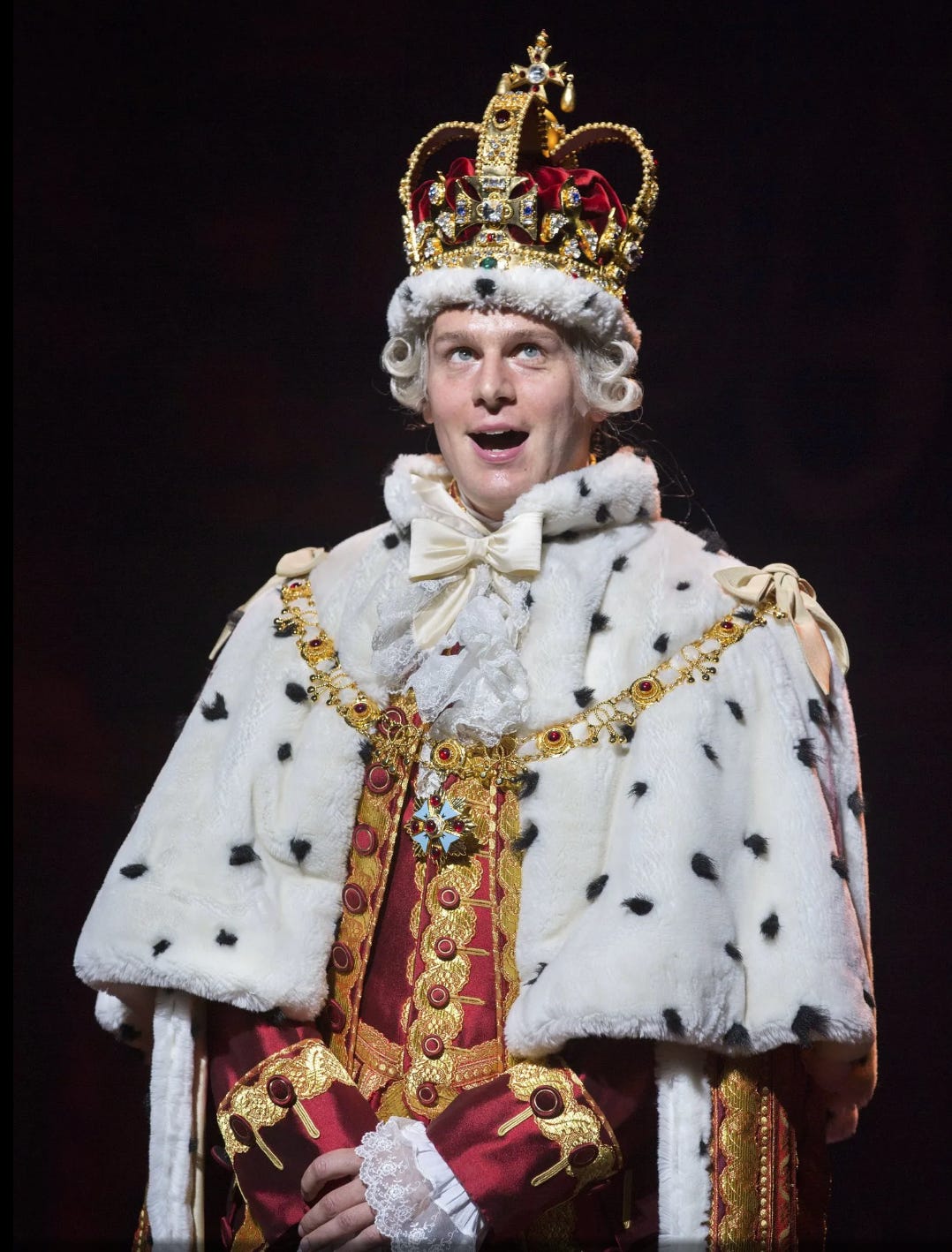
Actor Jonathan Groff portrays George III in “Hamilton,” source: The Seattle Times

When “The Mad King,” George III, was in one of his manic fits in the late 1700s, he was seized by “a desire of talking that he was unable to control.” Often, he would talk for hours until he was hoarse and foaming at the mouth.

On one occasion, during a meal with his son, the Prince of Wales, the king berated him. Then George picked up his son and threw him to the floor.

Are we now hearing echoes in the behavior of a would-be monarch Donald J. Trump? Consider how the president railed against Supreme Court Chief Justice John Roberts and two of the court’s other conservatives, Justices Neil Gorsuch and Amy Coney Barrett, after they on Feb. 20 shot down the centerpiece of Trump’s foreign policy, tariffs.

“They’re just being fools and lapdogs for the RINOs and the radical left Democrats,” Trump said, using the acronym for “Republicans in name only.” Trump called the three justices “disloyal, unpatriotic,” and at one point he launched into a rant about how the court should have invalidated the election results in 2020, which Trump lost to Joe Biden.

Mind you, Gorsuch and Barrett were Trump appointees — so, presumably, he felt they owed him.
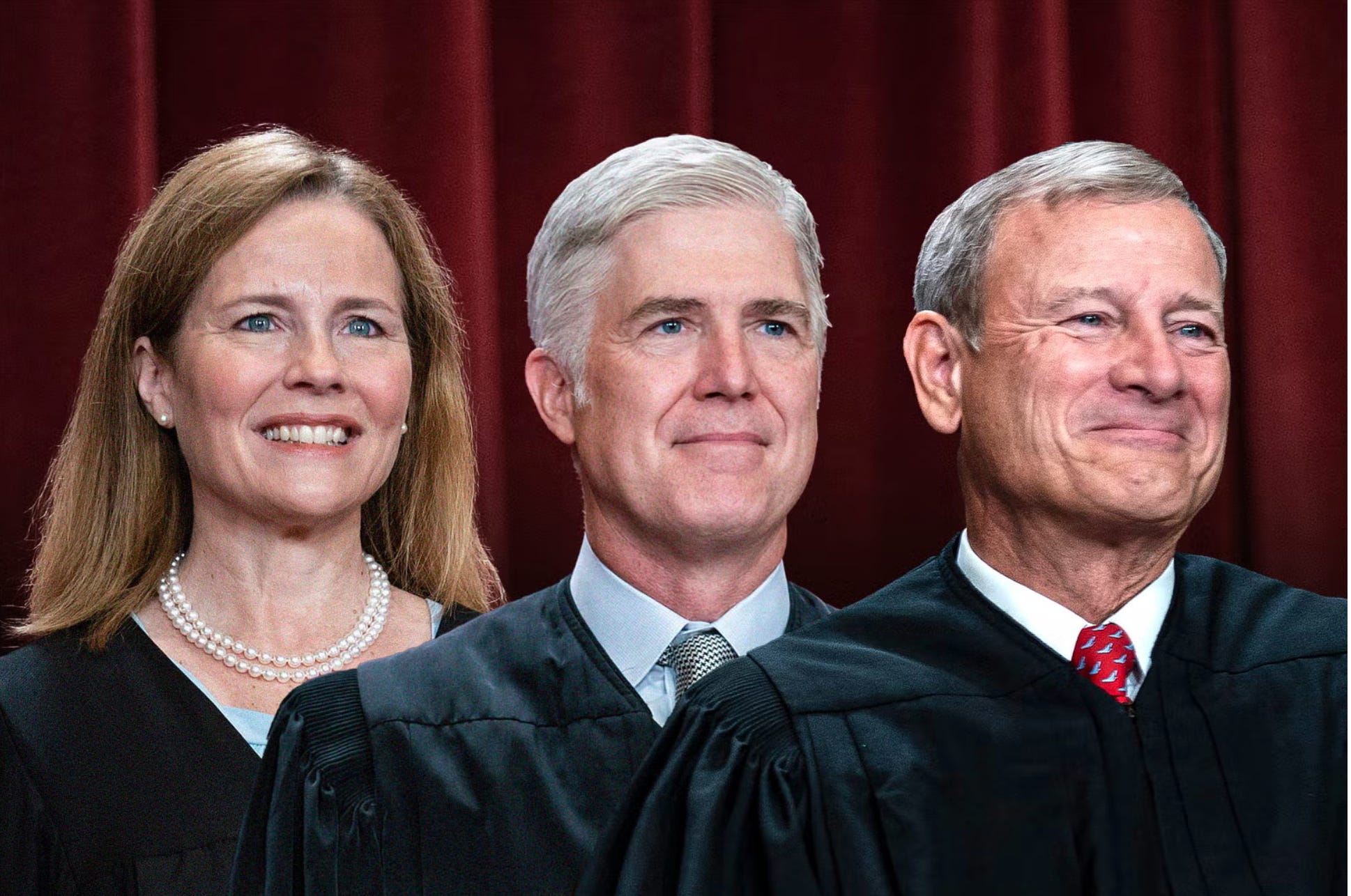
Justices Barrett, Gorsuch and Roberts, source: Slate

The echoes of the reign of George III stretched beyond the president’s tantrum. Justice Roberts invoked that era in writing the anti-tariff opinion for the 6-to-3 majority, saying that the U.S.’s founders for good reason placed the power to impose taxes, including tariffs, with Congress, not with the president. The decision affirmed a lower court’s earlier judgment against Trump’s efforts.

“Recognizing the taxing power’s unique importance, and having just fought a revolution motivated in large part by ‘taxation without representation,’ the Framers gave Congress ‘alone . . . access to the pockets of the people,” Roberts wrote. George III had imposed taxes on the colonists without their consent, so the Constitution explicitly vested such power in Congress, believing it would be more accountable to the people.

Ever-petulant and increasingly George-like, Trump promptly slapped a 10 percent worldwide tariff imports from all countries, on top of any existing tariffs, and then upped the figure to 15 percent. By law, he is allowed to impose a levy of up to 15 percent for 150 days, although his move could face legal challenges and Congress, in the end, will have to either concur or kill his move.

As The Wall Street Journal reported, Trump said his decision to increase the tariff rate was the result of a “thorough, detailed, and complete review of the ridiculous, poorly written, and extraordinarily anti-American” Supreme Court ruling.

And Trump went still further in a move slamming U.S. consumers anew.

The president also killed a longstanding policy that had allowed billions of dollars of low-value imports to enter the United States tax-free. As The New York Times reported, the so-called de minimis exemption had let U.S. importers bring in goods valued at under $800 without the sender paying taxes or completing detailed customs paperwork. The loophole allowed millions of packages to come straight from Chinese factories to American homes duty-free.

First on platforms like eBay and Amazon, and then on apps such as Shein and Temu, exporters funneled Chinese-made goods into the United States via the exemption. Many American businesses also relied on the exemption for goods sold on sites including Etsy and Shopify. The exemption, intended to spare customs officials from spending too much time and money processing goods of relatively little value, existed for almost a century.

Troubled both by the tariffs and by Trump’s hissy fit, the editorialists at The Wall Street Journal, were unambiguous – if maybe a bit precious – in their reaction. “President Trump owes the Supreme Court an apology—to the individual Justices he smeared on Friday and the institution itself,” they wrote. “Mr. Trump doubtless won’t offer one, but his rant in response to his tariff defeat at the Court was arguably the worst moment of his Presidency.”

Well, one might dispute that last claim. The deportation of hundreds of thousands, the murders of Minneapolis protesters by ICE agents, the extrajudicial killings of alleged but unproven “narco-terrorists,” and the arrests and harassment of journalists for doing their jobs might loom a bit larger among worst moments. And we haven’t even yet gotten to the matter of a potential looming war with Iran.
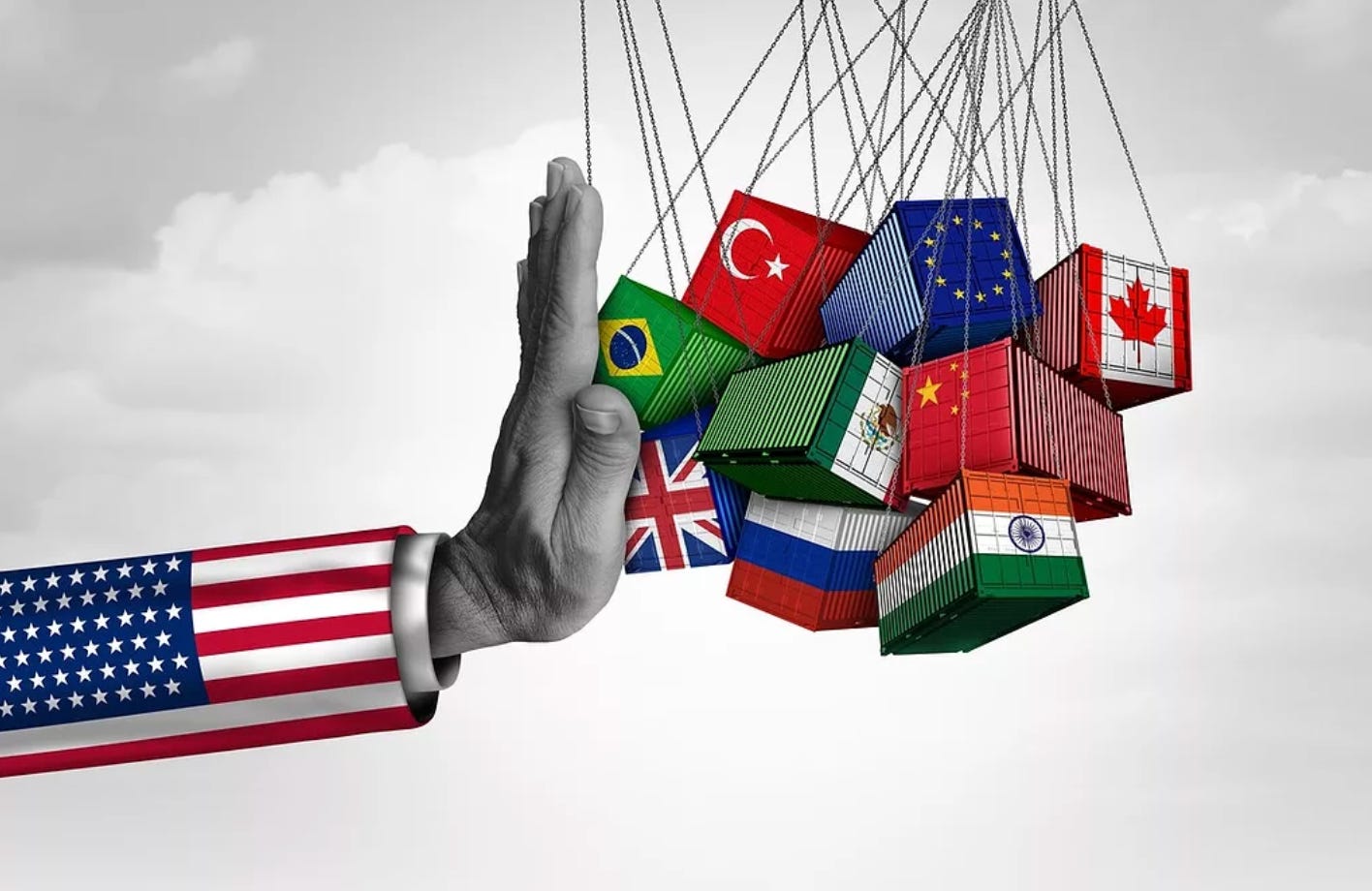
Source: SupplyChainBrain

Still, Trump and his minions are clearly suffering royal pique at those in the courts – and elsewhere – who have the impunity to question the White House dictats. Another example of this recently came from Kevin Hassett, director of the National Economic Council, who said four economists at the Federal Reserve Bank of New York should be “disciplined” for publishing a paper finding that American households and businesses are paying nearly 90 percent of the cost of the Trump tariffs.

Recall that Trump constantly trumpets the absurd claim that foreigners bear the burden of the tariffs – something that the Supreme Court also saw through in ruling that the tariffs were a tax on Americans. Perhaps Trump and Hassett believe the Justices should be “disciplined,” too, one wonders?

As the WSJ has written, “Clearly the White House is worried that voters might conclude this research aligns with their own experience,” adding “The Fed analysis aligns with other research into the distribution of tariff costs from Harvard economists and Germany’s Kiel Institute—and with common sense.”

Common sense has long been lacking in the White House, of course, replaced by greed, vindictiveness and economic and political ignorance. George III lost his American colonies over similar qualities. Perhaps, in due course, they will cost Trump and his party their high-handed — and one might say, mad — governance.
About those foreign oxfords

Will Americans get the chance to buy Chinese-made cars?

Joseph Weber

Source: Los Angeles Times

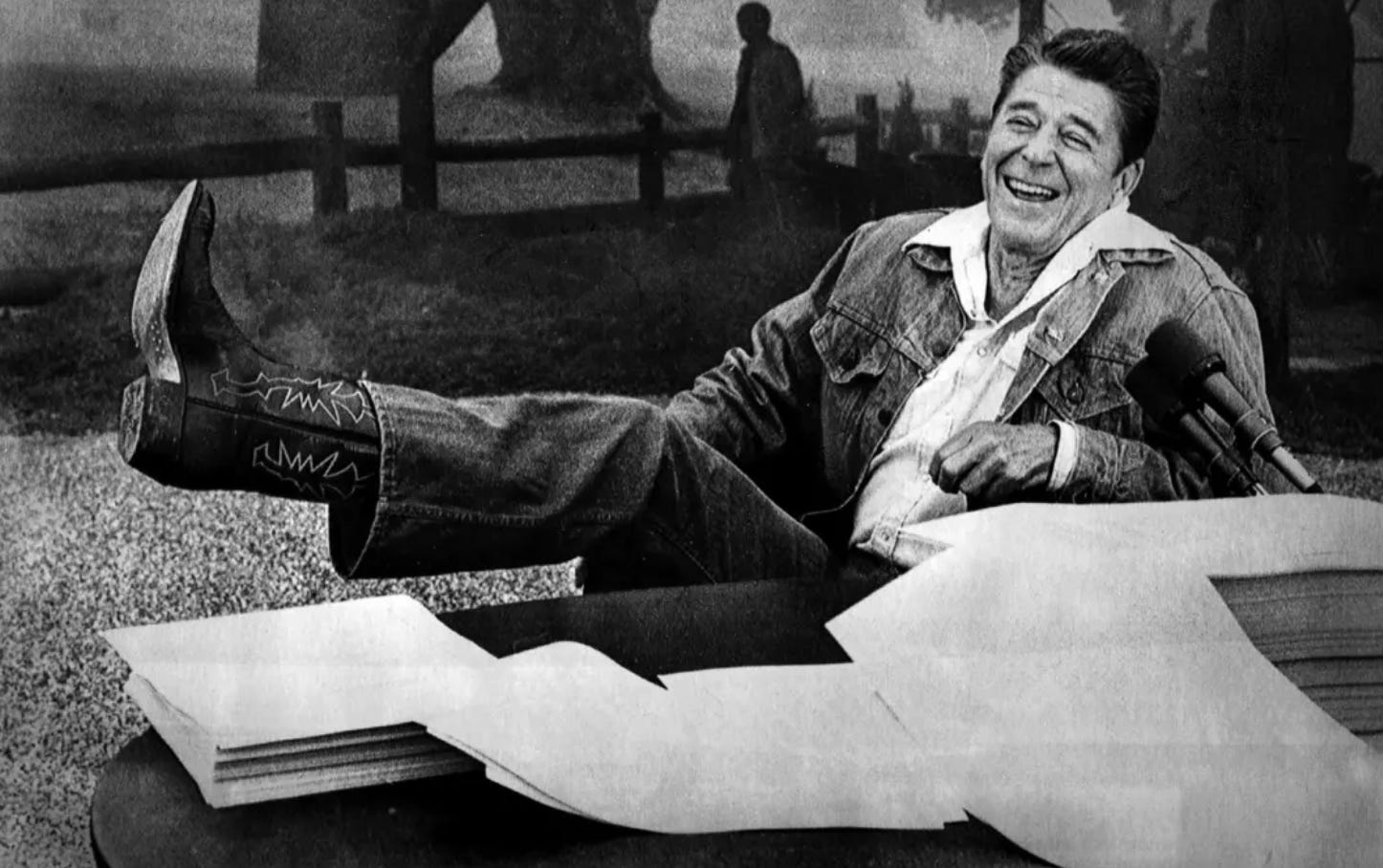
A bit over 40 years ago, American shoemakers asked President Ronald Reagan to limit imports of foreign shoes. Cheaper footwear from abroad, they argued, was hobbling the domestic industry.

Reagan refused. He would not inflict a cost estimated back then at about $3 billion on American consumers by limiting the competition. And, if he did that for shoes, he reasoned, other industries would fast line up for similar shields.

“Protectionism often does more harm than good to those it is designed to help,” Reagan said. “It is a crippling ‘cure,’ far more dangerous than any economic illness.”

For some folks, that free-market move was disastrous: we don’t have much of a shoe industry in the U.S. anymore. Some 99 percent of footwear now comes from overseas, particularly from Asia. And fewer than 2,100 people work in shoemaking in the U.S. now, compared with nearly a quarter-million in the early 1940s, the so-called “Peak Shoe” period.

On the other hand, American consumers today have access to both the priciest and the most affordable shoes one can imagine. The range and availability are stunning. And, presumably, most of the American shoe workers moved on, perhaps to better jobs.

Are we facing a similar situation now in cars, with similar questions?

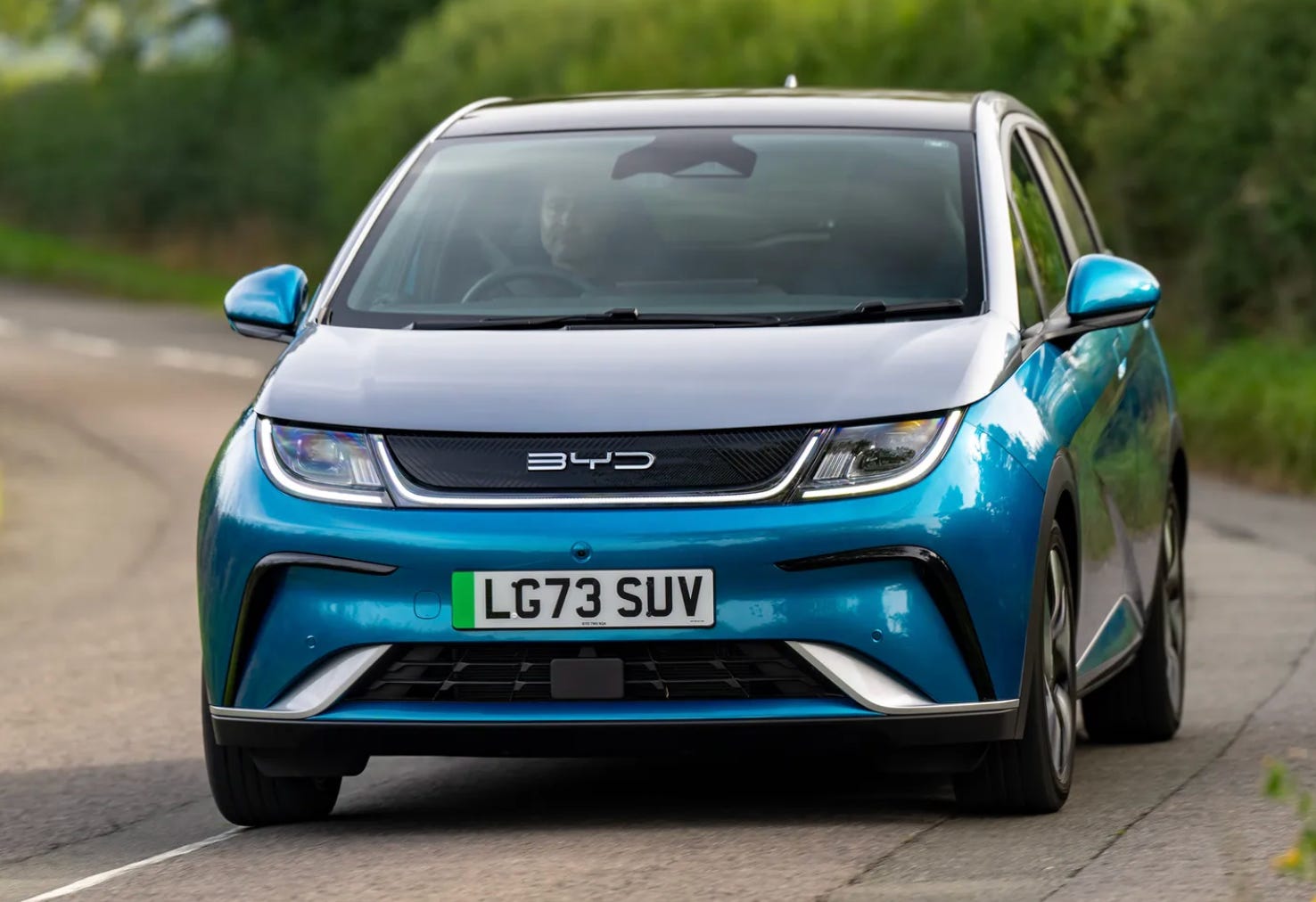
BYD Dolphin

Chinese carmakers, who are selling state-of-the-art electric vehicles at home and in most places overseas, can’t now market those vehicles in the U.S. or — at the moment — in neighboring Canada. Protecting American carmakers and arguing that somehow Chinese cars would transmit sensitive data to Beijing, the Biden Administration imposed 100 percent tariffs, which Canada mimicked.

Restrictions have continued under Donald J. Trump, who also been pushing gas-powered cars, weakening the U.S. EV market.

But cracks are showing up in the North American great wall now. As The Atlantic reported, Donald J. Trump recently struck an enthusiastic note about letting Chinese automakers build cars in the United States. “If they want to come in and build the plant and hire you and hire your friends and your neighbors, that’s great,” he said in a talk at the Detroit Economic Club.

And, since then, Canadian Prime Minister Mark Carney opened the door to the Chinese cars up north, saying he would cut his country’s 100 percent tariff to just 6.1 percent and welcome up to 49,000 Chinese cars in this year. Noting how deeply intertwined the Canadian and U.S. car industry is, Atlantic writer Patrick George mused: “If Chinese imports can gain a foothold in America’s neighbor to the north, then perhaps it is only a matter of time before they do so in the U.S. as well.”

Of course, that could be a very long time. Was Trump serious about the Chinese setting up plants in the U.S., as many Japanese and German companies have? Would a country that Trump sees first and foremost as a business rival be allowed to gain a foothold alongside Volkswagen, Toyota, Hyundai, Volvo and others with U.S. manufacturing facilities? Would future presidents, who might be even cooler to Beijing, acquiesce?

Surely, many consumers might applaud. If they are allowed in, Chinese cars could prove to be far cheaper than many American or European competitors. In 2023, China’s BYD company (for “Build Your Dreams”) launched its Dolphin hatchback EV in Mexico for just $31,000. It competes overseas with the VW I.D. 3, priced at $39,000 to $43,000, but not available in the U.S.

Back at home, the Chinese sell their cars for prices that would set the wheels spinning for Americans. The Dolphin sells for the equivalent of about $16,500 in China. And Canadians, under Carney’s new deal, will get reasonable bargains. By the end of the decade, at least half of the EVs imported would be required to have a price of about $26,000, according to the Wall Street Journal.

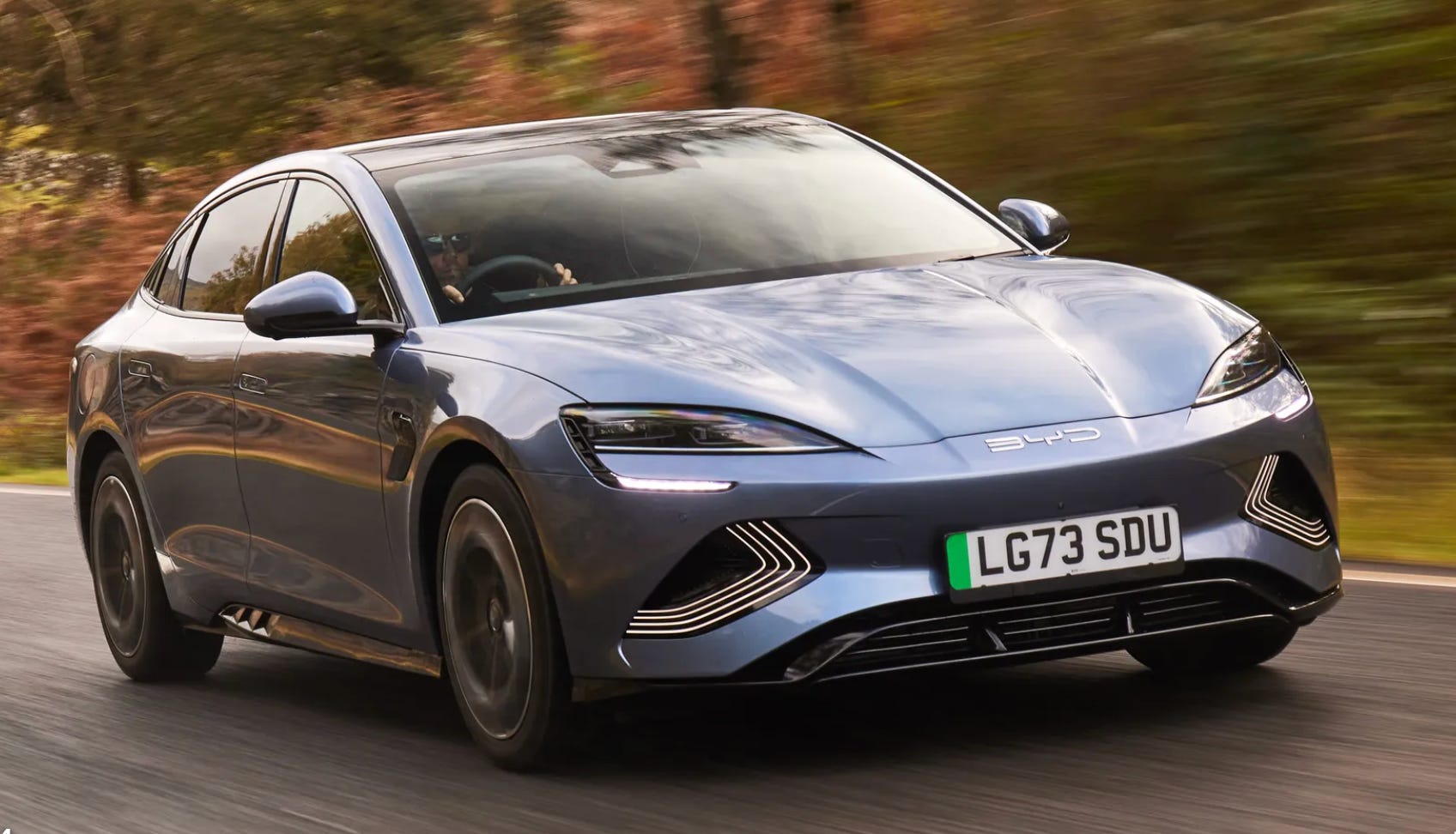
BYD Seal

To be sure, the Canadians will likely fare better than European car buyers. In Germany, BYD gets more than $37,400 for the Dolphin and $48,000 for a fancier car, the Seal. The Seal competes most directly with the Tesla Model 3, which ranges in price in the U.S. up to $56,630.

If the Chinese build plants in the U.S., American labor costs might force the prices in the States higher. Still, the Chinese carmakers would labor mightily to undercut entrenched American brands and popular Asian and Europeans rivals.

Certainly, with EVs in the U.S. now costing about $57,000 and gas-powered models averaging about $48,700, new competition could add a lot of spice to the market — a bit of tang that U.S. carmakers would not welcome.

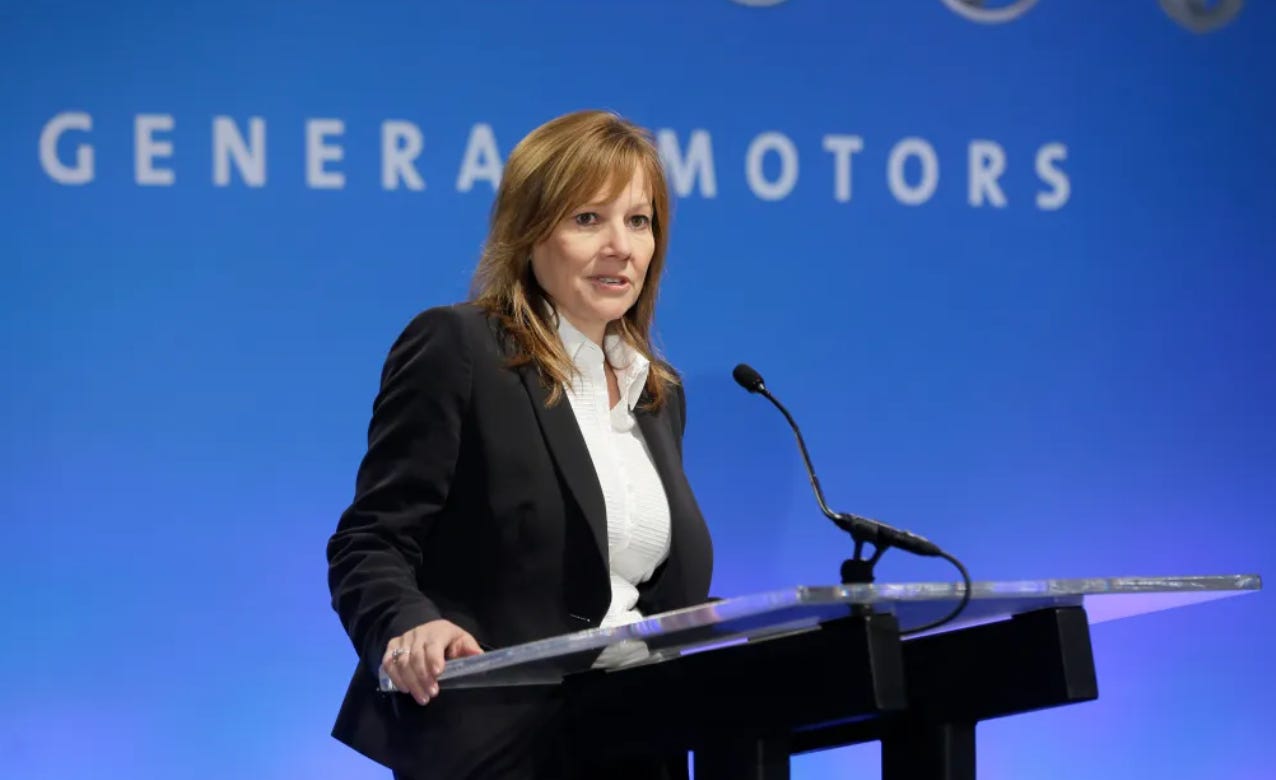
Mary Barra, source: Fortune

Already, U.S. carmakers – like the shoemakers of the mid-1980s — are keen to put the brakes on any Chinese advances. General Motors Chief Executive Mary Barra has warned that the Canadian deal is a risk for North American auto manufacturing, as The Wall Street Journal reported. She said Canada’s China deal, announced earlier this month, is counter to building a strong North American industrial base and to protecting jobs and national security on the continent.

“I can’t explain why the decision was made in Canada,” Barra said during an all-hands meeting with employees, the paper reported. “It becomes a very slippery slope.”

Given Chinese carmaker gains, that slope could be a steep one. Globally, BYD has already replaced Tesla as the world’s biggest EV seller, the WSJ reported. The Shenzhen-based automaker delivered more than a million vehicles outside China in 2025, the company said, more than double the previous year’s total. It surpassed Japan as the world’s No. 1 car exporter in 2023.

Is it surprising the GM executives are nervous? If BYD is ever allowed into the U.S., the homegrown companies will be forced to produce better and cheaper cars. So, too, will the European and Japanese carmakers who churn out their cars in the U.S. Every player will feel the squeeze.

Could the advances of the Chinese spell the end for all those producers, as Asian shoes did for so many American shoemakers? Unless the price disparities are far bigger than they are now, that seems unlikely. BYD and other Chinese brands could amount to just a few more names in an already crowded market. Toyota hasn’t killed GM.

In that sense, this doesn’t seem like a repeat of what was a nightmare for shoemakers.

Still, coming from nowhere, the Chinese have been extraordinary in matching the quality of far more established brands or even relative newcomers that have shaken up the industry (read: Tesla).

When a British car writer took a few spins in the BYD Seal a couple years ago, he was impressed. BYD “has made a car that’s good to drive, doesn’t cost the earth, looks great, and is a truly viable alternative to what’s out there,” Alex Goy wrote. “If your wallet was itching, and it happened to be sold where you live, the BYD Seal would almost certainly be on your list.”

His car review was headlined, in part, “If You Could Buy One, You’d Probably Want To.” Back in Reagan’s day, similar things might once have been said about foreign shoes. And, thanks to that president, we did get to buy them.