Simple meanness seems to abound in America on the brink of her 250th birthday
When the Indiana state legislature was considering whether to bow to a pressure campaign by Donald J. Trump to redistrict the state to disenfranchise its few Democrats, Republican State Sen. Greg Goode pointed to the climate of fear and intimidation the president generated.

“Misinformation. Cruel social media posts. Over the top pressure from inside and outside the statehouse. Threats of primaries. Threats of violence. Acts of violence,” Goode said on the Indiana Senate floor. “Friends, we’re better than this, are we not?”
But are we? Just what is Trump’s America on the brink of the country’s 250th birthday? Is it a country of decent people who treat one another with respect, who live their personal lives trying to do the right things, who open their hearts and wallets to the needy, who help to create opportunity for all regardless of color or creed, who work toward fairness and justice, who live in a land that acts as a moral beacon for the world?
Well, consider the president’s actions in trying to manipulate the nation’s electoral system to entrench his minority party’s power.
As Mother Jones reported, Trump summoned Republican state legislators to the White House and sent Vice President JD Vance to Indiana twice to lobby the legislature to rejigger the electoral map to eliminate the state’s two Democratic congress members. Trump vowed to primary Republicans who opposed his election-rigging redistricting plan, calling out individual state legislators by name. He called the leader of the state Senate, Rodric Bray, a “weak and pathetic RINO” after Bray said the body didn’t have the votes to pass the measure.
In a social media rant, Trump called the Senate leader “either a bad guy, or a very stupid one!” and threatened “a MAGA Primary” against “anybody that votes against Redistricting.” That same night, a Republican member of the state House was the victim of a bomb threat at his home. Another GOP state senator opposed to gerrymandering who received a pipe bomb threat at her home posted on X that it was the “result of the D.C. political pundits for redistricting.”
As the magazine reported, the intimidation efforts, which included warnings of a pipe bomb and fake threats against lawmakers designed to produce a law enforcement response, had ugly echoes. Recall that Trumpist rioters on Jan. 6, 2021, threatened to hang Mike Pence, the former vice president and former Indiana governor, because he wouldn’t go along with the president’s unconstitutional plan to overturn the 2020 election.
But now, instead of overturning an election, Trump wants to rig and predetermine the next one. The new map was designed to eliminate all Democratic representation at the congressional level in Indiana, giving Republicans 100 percent of seats in a state where Trump won 58 percent of the vote in 2024. While Indiana’s current map received an A from the Princeton Gerrymandering Project, the proposed one got an F.
In the end, the Indianans did the right thing. The Republicans among them stood up to their party’s president and shot down the redistricting effort 31-19, with 21 Republicans joining 10 Democrats in opposition. But they did so with worry.
“I fear for this institution,” said Republican state Sen. Greg Walker, chair of the Senate Committee on Elections, in an emotional speech. “I fear for the state of Indiana and I fear for all states if we allow intimidation and threats to become the norm.”
But across the country, are intimidation and threats not becoming the norm now? As Trump exemplifies sheer meanness in his dealings with the press (“Quiet, Piggy”) and others, are we not evolving into a nation dominated by heartlessness, violence and greed? Indeed, while Trump champions such things, is he not both a symptom of as well as the arch-crafter of much that has grown ugly in our country?
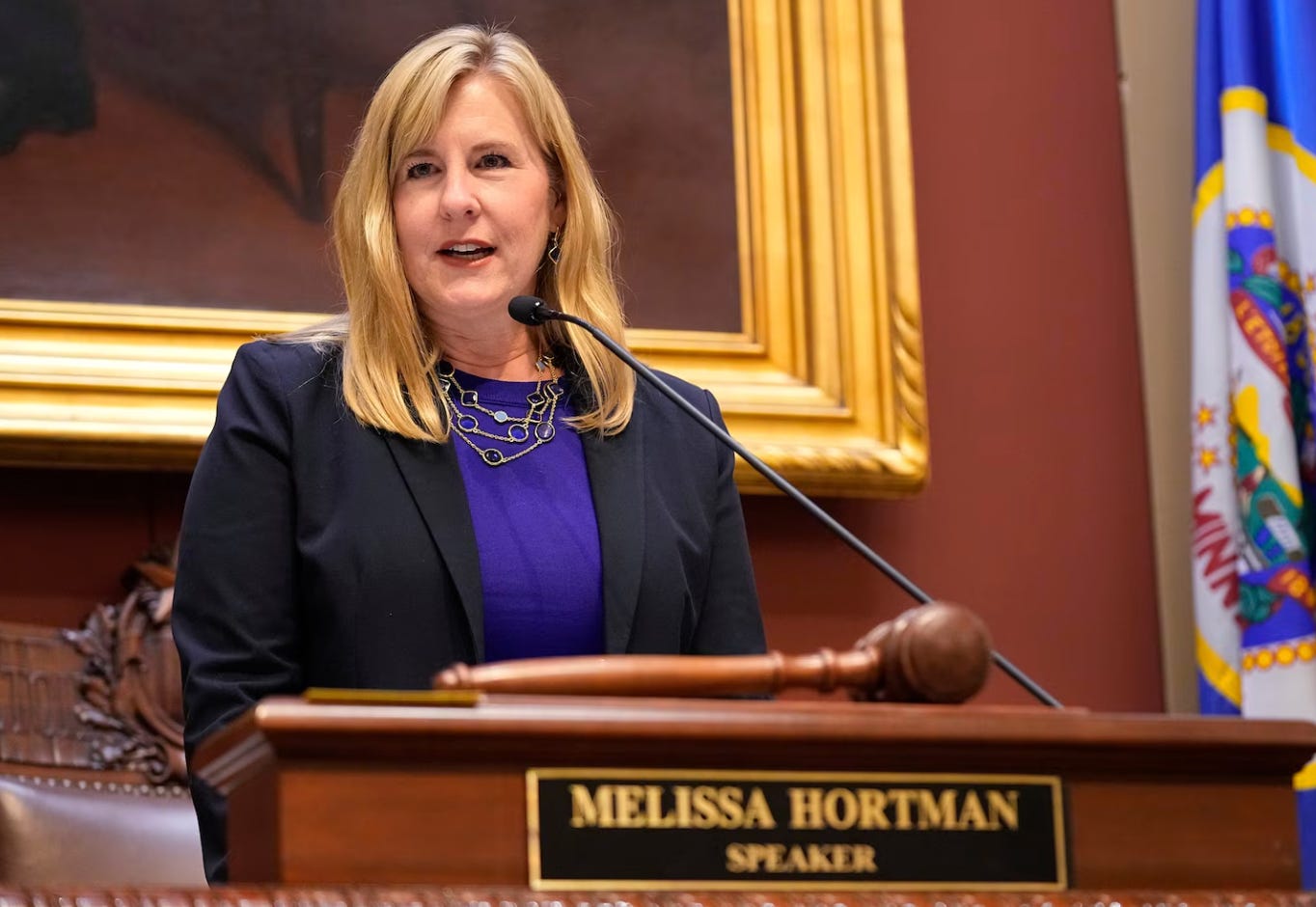
Politicians have a lot to fear nowadays beyond just electoral retaliation. Recall the assassination in June of Minnesota Democratic state Rep. Melissa Hortman and her husband in their home, as well as the shooting of Democratic state Sen. John Hoffman and his wife, Yvette, in their home. The shooter carried a hit list of 45 Democratic elected officials he was gunning for.
Remember, too, the attempt on the life of Pennsylvania Gov. Josh Shapiro, a Democrat. An arsonist invaded and set fire to the governor’s residence in April in an antisemitic attack. More recently, a Utah man was arrested for threatening to shoot Gov. Spencer Cox, a Republican, and other leaders. Shapiro and Cox joined forces at a Dec. 10 meeting at the National Cathedral to condemn political violence.
“We need to begin by saying that all leaders must condemn all political violence — not cherry-pick which violence to condemn and which violence to accept,” Shapiro said, according to The Washington Post. “When you’re a governor, when you’re a president of the United States, you are looked to for that moral clarity. And we have a president of the United States right now that fails that test on a daily basis.”
Of course, Trump himself was the target of two assassination attempts. One killed a Trump supporter in the crowd and wounded two others. Rather than condemn the rising political violence, Trump’s post-shooting immediate response was to suggest that he was spared because he had God on his side. “Nothing will stop me in this mission because our vision is righteous and our cause is pure,” he said at one point.
The national pathology goes beyond the politicians, though.
Trump and his minions exult in the murders of at least 87 people so far – essentially summary executions without trial – in attacks on alleged drug boats. Meanwhile, at home, gun violence continues to take American lives at ghastly rates, with nearly 47,000 such deaths reported in 2023, the latest year for which figures are available (while 58 percent were suicides, 38 percent were murders).
And masked armed men stalk our cities, pursuing immigrants. In their deportation frenzy, ICE agents have rounded up some 220,000 people across the country since Trump took office. More than a third of those grabbed have no criminal records, contradicting the administration claim that is trying to purge the U.S. of dangerous migrants.
By another analysis in The New York Times, less than 30 percent of those seized in major cities had been convicted of a crime, with a far smaller share convicted of violent crime. The most common non-violent convictions were for driving under the influence and other traffic offenses.
In their simple-minded meanness, the ICE agents have assaulted non-migrants and hauled in the wrong people. Consider two incidents in Minneapolis, for instance.

Sue Tincher, a 55-year-old grandmother, was thrown into the snow, handcuffed, hauled off in a van and then detained for five hours with shackles on her legs. Officials cut off her wedding ring. Her offense: she showed up at the scene of an immigration arrest about 10 blocks from her home, asked whether the officials were from ICE, and refused to move on the street when ordered to. Did the 5-foot-4-inch Tincher pose a threat to the agents?
And then there’s the 20-year-old Somali American man who was harassed by ICE. Mubashir, who declined to share his full name for fear of his safety and that of his family, was tackled, arrested and held for about two hours. He had just stepped out onto the sidewalk during his lunch hour when two masked men approached him, followed him into a restaurant, handcuffed him, forced him to his knees in the snow and drove him off to a federal building. Only then did they let him turn on his phone and show him his ID.
“What we saw by these ICE agents that clearly did not know what they were doing was violence and unwillingness to hear the simple truth, which he was repeating again and again, which is, ‘I’m an American citizen,’” said Mayor Jacob Frey.
Modern American meanness takes other forms, too.
Our leaders seem content to let healthcare costs soar both for the neediest and middle-class folks, for instance. Insurance premiums are tripling (or worse). CBS, in reporting on the failure in the Senate of a couple recent health bills, shared the anecdote of a New Jersey woman, earning $72,000 a year, whose monthly insurance cost will rise from about $400 to more than $1,100.
And the Colorado Division of Insurance offered the example of a family of four with an annual income of $128,000. Their health insurance premium will rise some $14,000 for a standard silver plan if they live in the Denver area. If that family of four lives on the Western Slope, Grand Junction, southwest Colorado, the San Luis Valley, or the eastern plains, they will see premium increases of between $16,000 and nearly $21,000.
Where has compassion gone? Yes, healthcare is complicated and an overhaul is long overdue. But don’t politicians owe Americans intelligent efforts to fix the broken system, instead of letting citizens be fleeced or forced to go without coverage? Are we getting sincere efforts at reform?
And don’t they owe their fellow citizens basic fairness in taxes? Instead, the ultrawealthy thrive while others struggle. It’s no wonder that billionaires have lined up to kiss Trump’s, ahem, ring.
Over the next decade, Trump’s Big Beautiful Bill (BBB) will cut taxes for the richest 10 percent of Americans by more than $14,700 per year per household and cut taxes for the richest 1 percent of Americans by more than $50,000 per year, according to estimates from the nonpartisan Congressional Budget Office (CBO) and Joint Committee on Taxation (JCT). Meanwhile, according to the Center for American Progress, tiny tax cuts for the working class will be outpaced by changes that will reduce the incomes of the poorest Americans.
Overall, CAP reported that the BBB cuts taxes by $4.5 trillion over the next decade, primarily with $2.3 trillion of provisions that deliver most of their benefits to the richest 10 percent of Americans by income. It delivers $1 trillion in tax cuts to the top 1 percent while cutting more than $1.1 trillion from the Supplemental Nutrition Assistance Program (SNAP), Medicaid, and other health programs used by the poorest Americans.
Is that in any way fair? Does it reflect the sense of common decency that many of us like to believe animates most Americans?
Decades ago, former President Ronald Reagan repeatedly invoked American virtues and ideals in his talks. “We’re still a nation comprised of good and decent people whose fundamental values of tolerance, compassion, and fair-play guide and direct the decisions of our government,” he said in one 1984 speech in Ireland, for instance.
It’s mind-boggling to think about how far we’ve descended in four decades. But, maybe the courage shown by the good Midwesterners in Indiana is a harbinger of something better. Maybe, starting next November, the America of Ronald Reagan (and Jimmy Carter, Barack Obama, George H.W. Bush and others) will rise again and reclaim the virtues such men exalted.