Brutality, it seems, is the point

Echoes of Italian fascism cannot be accidental for Stephen Miller and Donald Trump
Joseph Weber

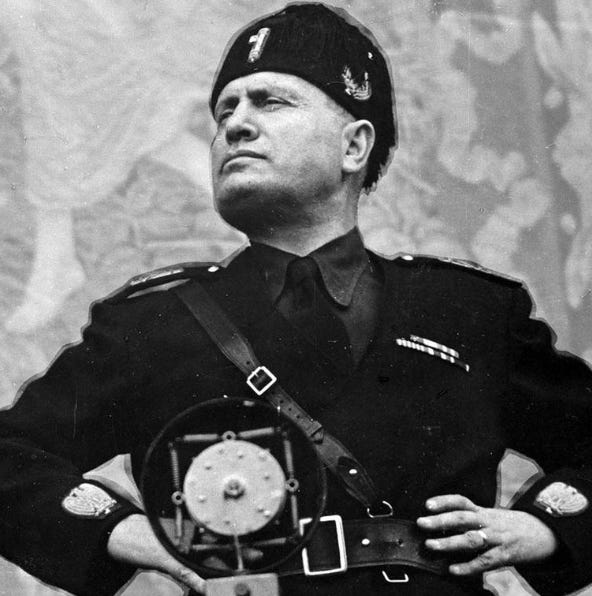
Benito Mussolini, source: PBS

Just over a century ago, in January 1925, Benito Mussolini laid out the vision for his emerging dictatorship to Italy’s Chamber of Deputies. “When two irreducible elements are locked in a struggle, the only solution is force,” he said.

Mussolini, like Donald J. Trump, was long derided as a buffoon before he seized power. But he knew how effective brutality could be.

Mussolini had risen with the help of the “squadristi,” paramilitary outfits also known as Blackshirts, who terrorized cities, such as Bologna, where socialists had been elected. “Town after town was taken over by fascist thugs,” according to the Foundation for the History of Totalitarianism. “Local democratic institutions fell, one by one. Once towns were taken over, control and obedience was maintained through torture and terror.”

Are we seeing a revival of Mussolini’s approach today?
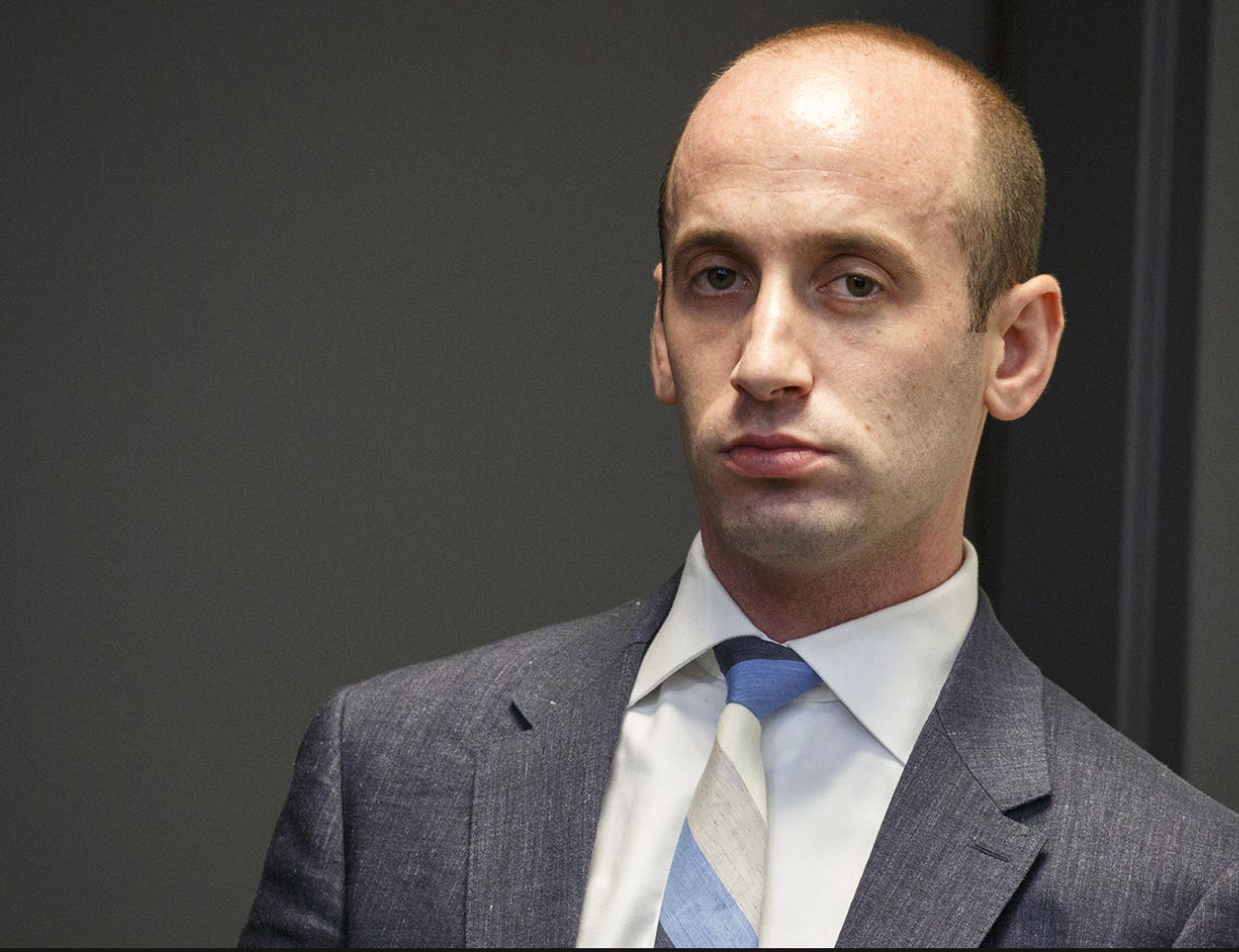
Stephen Miller, source: SPLC

Is it reappearing by way of Stephen Miller, an adviser to Trump who seems to have the president’s ear on everything from anti-immigrant efforts to foreign policy? “But we live in a world, in the real world, Jake, that is governed by strength, that is governed by force, that is governed by power. These are the iron laws of the world,” Miller said in a CNN interview.

It seems hardly accidental that Miller is parroting the long-dead dictator. Certainly, Miller, through his influence on Immigration and Customs Enforcement, is normalizing squadristi-like practices on American streets. Brutality seems to be his point.

Consider this Stateline report:

“Violence in immigration enforcement is on the rise. A federal immigration agent’s killing of Renee Good in Minnesota on Jan. 7 was one of half a dozen shootings since December. An immigrant’s death in a Texas detention facility this month was ruled a homicide. And detention deaths last year totaled at least 31, a two-decade peak and more than the previous four years combined.

“There also have been dozens of cases in the past year of agents using dangerous and federally banned arrest maneuvers, such as chokeholds, that can stop breathing.

“U.S. Immigration and Customs Enforcement agents in masks and tactical vests have been recorded firing pepper spray into the faces of protesters, shattering car windows with little warning, punching and kneeing people pinned face down on the ground, using battering rams on front doors, and questioning people of color about their identities.”

And give some thought to the phrasing in this November ruling by a federal judge in Illinois: “While defendants argue that they used less lethal force as a de-escalation technique to reduce the risk of harm to both agents and the public, plaintiffs have marshaled ample evidence that agents intended to cause protesters harm and that no legitimate governmental interest justified their actions.”

Think, for a moment, about these observations by New York Times columnist Thomas B. Edsall: “In its efforts to triple the number of ICE agents in the field, the administration has adopted recruitment strategies that appear to be designed to appeal to white nationalists and supremacists, including the use of what amounts to an unofficial anthem of theirs, ‘We’ll Have Our Home Again,’ in a recruitment ad.”

“According to numerous reports, the Department of Homeland Security has cut back on new employees’ training about abiding by constraints during potentially hazardous confrontations,” Edsall adds. “In addition, the Trump administration, according to court documents, fails to enforce those rules and regulations in places such as Minneapolis.”
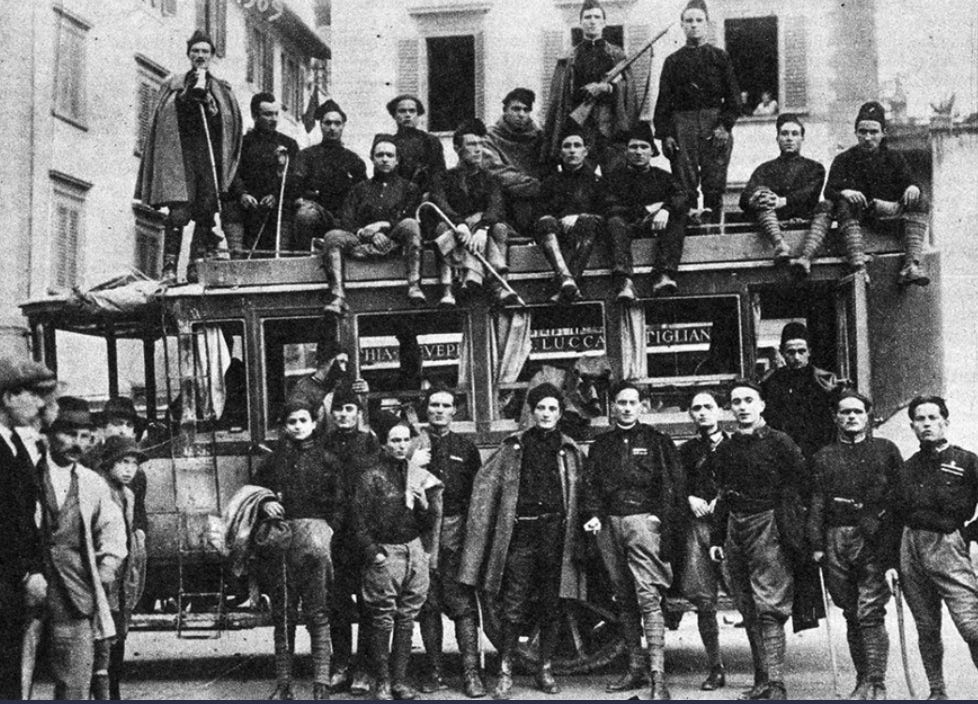
The squadristi, source: FHT

For the squadristi, who celebrated their raids with “alcohol, laughter and song,” and launched them with “[c]heerful photographs transmitting pride and brute-masculinity,” brutality was the point. Is that now the case with the Miller-guided ICE policies?

Certainly, the echoes of Italian Fascism and German Nazism – or at least their appeal to modern white supremacists – are not coincidental.

A writer for Vox, in a mid-January piece titled “The Trump Administration Can’t Stop Winking at White Nationalists,” nailed this.

“The administration opted to associate its immigration agenda with a Nazi slogan: Adolf Hitler’s regime famously advertised its rule with the tagline “​One people, one realm, one leader,” Eric Levitz noted. “Three days after Renee Good’s killing, Trump’s Department of Labor tweeted, ‘One Homeland. One People. One Heritage. Remember who you are, American.’

Under Trump, he reported, the official accounts of federal agencies have repeatedly referred to white nationalist memes and works.

“On Jan. 9, the Department of Homeland Security posted, ‘We’ll have our home again,’ a lyric from an anthem adopted by the neofascist group the Proud Boys and other white nationalist organizations. This was accompanied by a link where one could sign up to join ICE.

Source: X

“Last August, D.H.S. shared an ICE recruitment poster beneath the phrase ‘Which way, American man?’ — an apparent reference to the white supremacist tract, “Which Way, Western Man?’ which argues that “race consciousness, and discrimination on the basis of race, are absolutely essential to any race’s survival. … That is why the Jews are so fiercely for it for themselves … and fiercely against it for us, because we are their intended victim.”

“In October, the U.S. Border Patrol posted a video on its Facebook page of agents loading guns and driving through the desert, as a 13-second clip of Michael Jackson’s song “They Don’t Care About Us” plays — specifically, the lines ‘Jew me, sue me, everybody do me, kick me, k*ke me.’”

By all appearances, Miller’s ICE and Border Patrol agencies want to recruit the most brutal racist low-lifes they can find.

“The Department of Homeland Security has spoken publicly about its fast-tracked effort to significantly increase ICE’s workforce by hiring more than 10,000 new employees, a surge promoted on social media with calls for recruits willing to perform their “sacred duty” and “defend the homeland” by repelling “foreign invaders,” The Washington Post reported. “The agency currently employs more than 20,000 people, according to ICE’s website.”

The type of person DHS wants seems clear, and that is sort who would have fit in well with the squadristi.

Source: X

“On social media, administration accounts have mixed immigration raid footage with memes from action movies and video games to portray ICE’s mission as a fight against the ‘enemies … at the gates,’ the Post reported. ‘Want to deport illegals with your absolute boys?’ one post says. ‘Are you going to cowboy up or just lay there and bleed?’ says another.”

Trump and his aides such as Miller seem to know exactly what they are doing. Trump, a narcissist, craves power and wants more than anything to project “strength.” And Miller – ironically, a Jew – seems to see fascistic approaches as the way to serve his boss best.

Of the two, Miller’s psyche is the more perplexing and, probably, the more dangerous. Someday, perhaps, we’ll fully understand the likely self-hating psychology that animates him.

His hostility to non-white people appears to have begun in high school, but it congealed at Duke University. There, Miller worked with white nationalist classmate Richard Spencer, as members of Duke’s Conservative Union, according to the Southern Poverty Law Center. The two helped bring white nationalist Peter Brimelow to campus in 2007.

Of course, that doesn’t get to the root of Miller’s pathology. But, we also have some insight from Miller’s uncle, retired neuropsychologist David S. Glosser. In a 2018 piece for Politico, he labeled his nephew an “immigration hypocrite,” saying his family would have been wiped out in Europe if Miller’s approaches to immigration had been adopted a century before.

“I have watched with dismay and increasing horror as my nephew, an educated man who is well aware of his heritage, has become the architect of immigration policies that repudiate the very foundation of our family’s life in this country,” Glosser wrote. “Acting for so long in the theater of right-wing politics, Stephen and Trump may have become numb to the resultant human tragedy and blind to the hypocrisy of their policy decisions.”

Sadly, Glosser may have been mistaken on one point. Neither Trump nor Miller seem numb to the brutality. Like Mussolini and the Blackshirts, they seem to exult in it.
About the F word

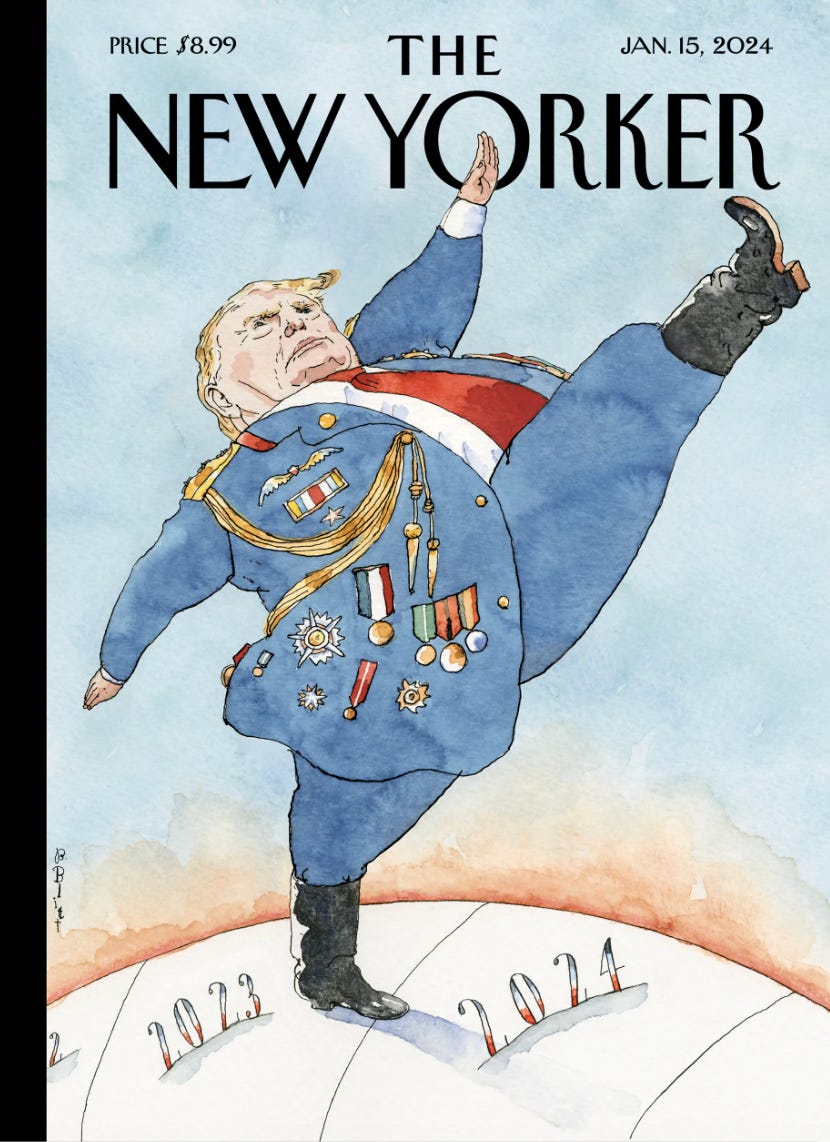
Will the courts save us from Donald Trump’s worst predations?

Source: The New Yorker

The official website of the Supreme Court speaks in lofty terms about that body’s role in the U.S. system.

“First, as the highest court in the land, it is the court of last resort for those looking for justice,” it says. “Second, due to its power of judicial review, it plays an essential role in ensuring that each branch of government recognizes the limits of its own power. Third, it protects civil rights and liberties by striking down laws that violate the Constitution. Finally, it sets appropriate limits on democratic government by ensuring that popular majorities cannot pass laws that harm and/or take undue advantage of unpopular minorities.”

Given the blizzard of executive orders by Donald J. Trump — at least some of which are likely to face tests before the high court — will that court “set appropriate limits” when the time comes? Will it rein in an executive who, like tyrants such as Benito Mussolini, seems to think he has no limits?

The question is reminiscent of a Wall Street Journal editorial that ran shortly before the presidential election. The piece, “The ‘Fascist’ Meme Returns,” argued against the widespread concern that Donald J. Trump would prove to be a “fascist” if he regained the Oval Office. Most Americans, it held, did not see him as a unique threat to democracy, noting that Trump 1.0 “was hemmed in by American checks and balances,” as Trump Redux would be.

“We have confidence that American institutions—the Supreme Court, the military, Congress—would resist any attempt to subvert the Constitution,” the editorial maintained.

But it seems more recently that the folks at the WSJ are having second thoughts. They are the sort of doubts that bring to mind the supine Congress and, by contrast, the actions of various federal courts, including the Supreme Court. The latter at least so far has proved to be something of a bulwark against the worst of Trump’s impulses with its decisions forcing him to face sentencing in his felony conviction case as well as a series of other judgments during and after his first term.

Recall that those WSJ editorial writers helped to get Trump elected – albeit with a slim majority of Americans still voting against him. And note the different tune that the paper’s journalists and some commentators now are singing. While they stop short of using the F word, they are coming close.

“Modern presidents have continually pushed to expand the contours of their power,” noted a piece headlined “Trump Kicks Aside Congress With Sweeping Claims of Presidential Power: With aggressive reading of Constitution, president aims to upend the balance of power in Washington.” The piece reported: “But Trump is proving to be unique, say legal experts, in both the breadth of authority he is asserting and his claims that even if Congress has put its preferences into law, he has the power to chart a different course.”

The story laid out Trump’s extraordinary measures so far. They included unilaterally suspending asylum laws for immigrants, casting them aside as ineffective in light of the “invasion” of border-crossers. Also, Trump fired inspectors general without giving Congress the required notice. He halted spending for a bevy of programs approved by Congress, including those under the landmark infrastructure and renewable-energy laws signed by former President Joe Biden.

Trump delayed enforcement of a law that banned TikTok, a law that had passed with overwhelming House and Senate majorities. In a jaw-dropping bit of self-glorification, he also let his lawyers argue in a December court filing that his status as “one of the most powerful, prolific and influential” social media personalities gave him unique abilities to evaluate the app.

Trevor Morrison, a law professor at New York University, told the WSJ that Trump’s willingness to ignore laws passed by Congress across a range of policy and personnel areas marked him as distinct from prior presidents, as the Journal so drily put it. “Trump is asserting a constitutional prerogative to ignore, disregard or even openly violate laws that are inconsistent with his policy,” Morrison said.

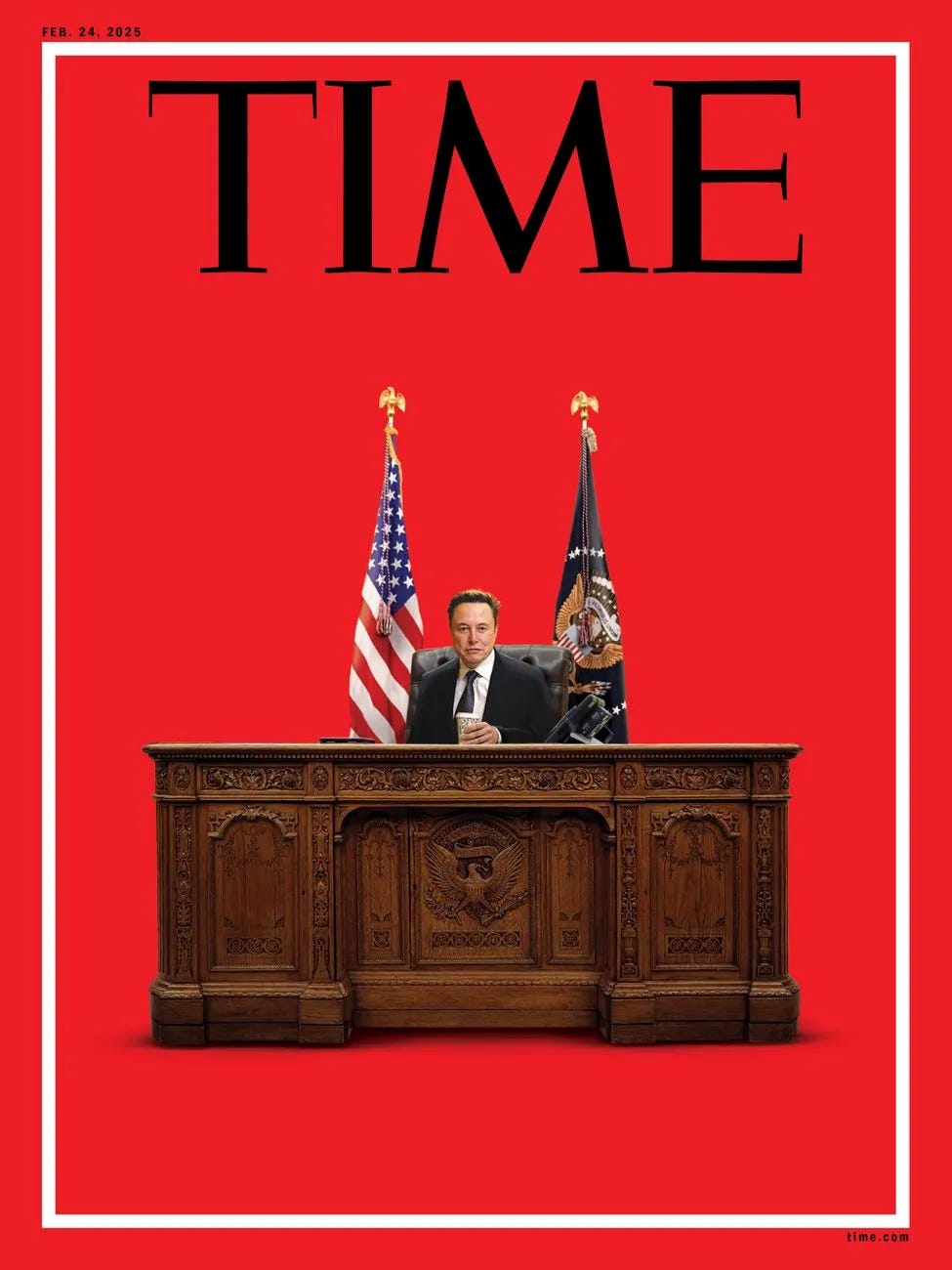
Consider still other overreaches among the president’s early efforts. Trump’s order to invalidate birthright citizenship—the constitutional provision that anyone born in the U.S. is a citizen — may be the most brazen. But we also have Trump’s offer, per Elon Musk’s cost-cutting plans, for two million federal employees to resign and receive eight months of pay. The move would involve an expenditure of money not authorized by Congress.

Moreover, Trump supporters argue that he can impound, or refuse to spend, money for programs he doesn’t like, as he has also sought to do.

“His unelected and unvetted friend Elon Musk swoops into government agencies to decide whether he deems their programs efficient or not, and shuts down one agency entirely,” the WSJ reported in a piece headlined “Will the Other Two Branches Dare to Push Back Against Trump?: The president’s blizzard of executive orders is a bold challenge to the powers of Congress and the courts. The Constitution expects them to check and balance.

Trump is also trying to spread his arms overseas. He aims to coerce Denmark into ceding Greenland to the United States, press Panama into giving the U.S. its canal, despite a treaty that said otherwise, and breathtakingly (but laughably), suggests the U.S. take over Gaza, oust two million people from there and turn it into the “Riviera of the Middle East.”

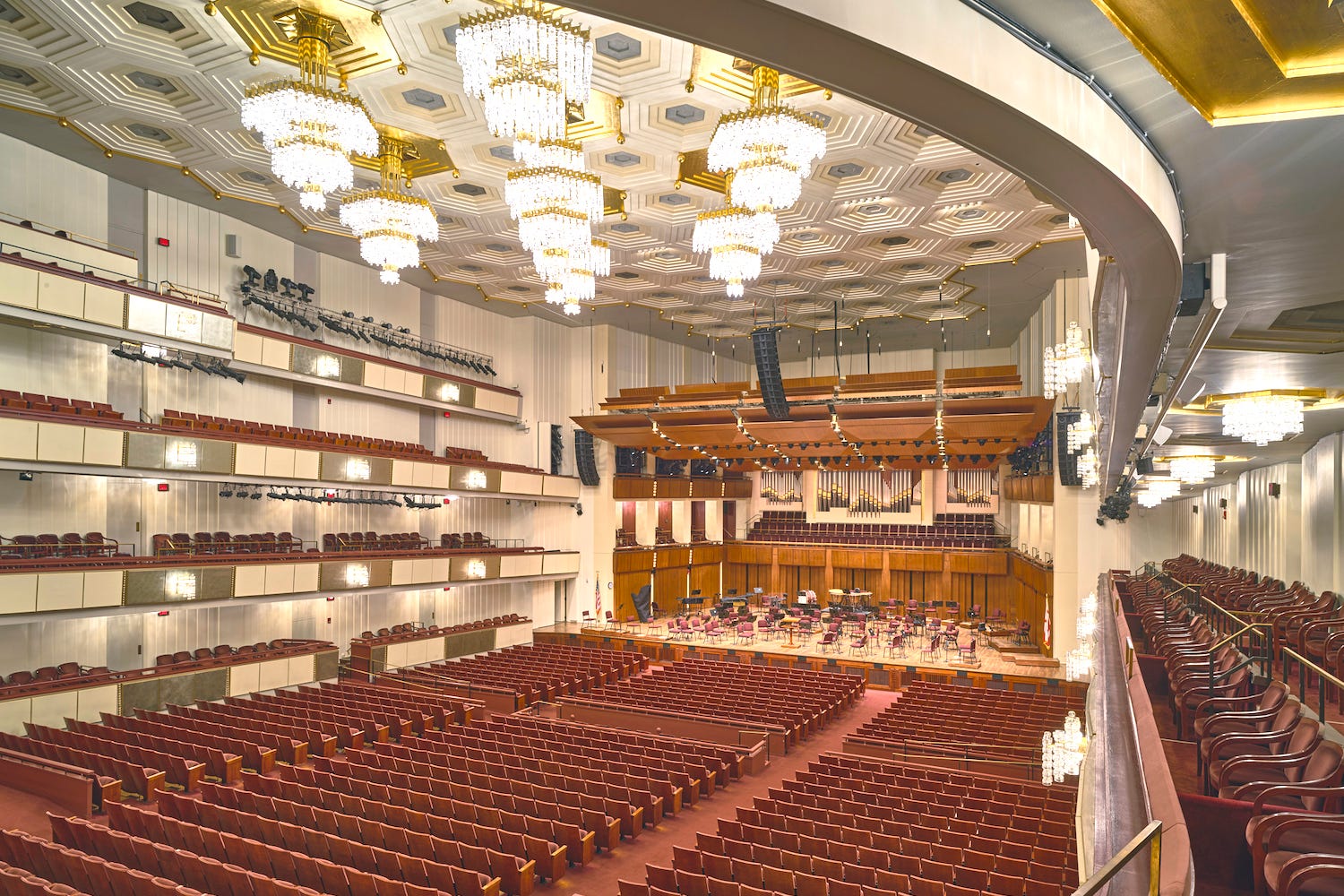
Source: The Kennedy Center

At his regained home in Washington, he is even moving into cultural realms with his plans to fire the Kennedy Center board and name himself its chairman. “At my direction, we are going to make the Kennedy Center in Washington D.C., GREAT AGAIN,” Trump said on his social media site. “I have decided to immediately terminate multiple individuals from the Board of Trustees, including the Chairman, who do not share our Vision for a Golden Age in Arts and Culture. We will soon announce a new Board, with an amazing Chairman, DONALD J. TRUMP!”

A “golden age?” Perhaps we’ll see wrestling competitions in the venue.

Are Trump’s techniques, fantasies and self-adoring efforts akin to those of a Mussolini, the creator of fascism? Do we hear echoes of what Britannica reported about Il Duce: “His attitudes were highly theatrical, his opinions were contradictory, his facts were often wrong, and his attacks were frequently malicious and misdirected; but his words were so dramatic, his metaphors so apt and striking, his vigorous, repetitive gestures so extraordinarily effective, that he rarely failed to impose his mood”?

Beyond that, what of those checks and balances the WSJ editorialists referred to in October? More recently, a writer for the paper mused: “At what point will Congress stand up for itself? And when and where will the nation’s courts draw the line on the aggressive use of presidential power?”

While Congress and the Senate have been acquiescent – and the Senate is likely as soon as this week to bless more unqualified Cabinet members – some courts, thankfully, are bringing a bit of sanity to bear.

Source: Chris Cillizza

A federal judge paused a Trump deadline for federal workers to accept buyouts, while other judges have at least temporarily blocked his birthright-citizenship order and one imposing a broad freeze on federal spending. Still another judge has, for now, stopped Musk’s Department of Government Efficiency from accessing Treasury Department records that contain personal data such as Social Security and bank account numbers for millions of Americans. One more has halted for now Trump’s USAID shutdown. And yet another stopped Trump’s order moving transgender women to men’s prisons and ending their gender-affirming care.

The list of legal challenges Trump and his minions are facing is extraordinary, topping 40 at this point and likely to grow. It will take weeks, if not months, for cases those judges are handling to be resolved. Ultimately, the highest court will surely have to weigh in on the most important ones.

There’s little doubt that this was expected by Trump’s forces, especially those involved with the Project 2025 effort that candidate Trump disavowed but the president has embraced. The tsunami of executive orders — part of a “shock and awe” campaign that Trump minions developed — were certain to draw opposition. But, as the actions lumber through the courts, the ranks of federal workers may decline, the recipients of vital federal services will go unserved and Trump-style chaos will reign.

Still, with our elected leaders failing us, the courts may prove to be the last refuge of justice over time. Perhaps they will short-circuit Trump’s great usurpation. They may prevent what one of the more right-wing WSJ writers suggested in a piece headlined “Trump’s Imperial Presidency?: We may be heading to the outer limits of America’s system of checks and balances.”

Bemoaning Trump’s power grabs, that WSJ writer argued that “Congress is supposed to represent the country’s varied interests, down to 435 separate congressional districts. And they are different. Mr. Trump is displacing that federalism of interests with the simpler idea of a uniform national interest, defined and executed by the president.”

He concluded that Trump’s “instinct, evident this first week, is to be unbound by much of anything. Conservatives, not least his own people, will need to hold the 47th president to account.”

Would it not have been better, however, if the folks at the WSJ last fall had sought to prevent the tests of the checks and balances they fervently suggested would save us? Would we be better off if more Americans had seen the threat that the paper pooh-poohed? Would we have been better served if Trump had been more roundly condemned before Nov. 6?

For now, at least, the courts — with all their delays and flaws — remain the last stumbling blocks in the would-be-tyrant’s way. How reliable will they be? In the end, too, can we count on the highest court to recognize the danger Trump poses and serve democracy better than our servile legislators have? The verdict has yet to come on that.