
A humorless spectacle

Trump’s correspondents’ dinner schtick was a bomb

Joseph Weber

The Lion King, source: the New York Times

Twenty-two years ago, as the Iraq War raged and George W. Bush came under fire for wrongly claiming Iraqi weapons threatened the U.S. and the world, he appeared at the White House Correspondents’ Dinner. He aired images of himself looking under Oval Office furniture and out the windows, while asking “Those weapons of mass destruction have got to be here somewhere.”

Seven years later, as rightists claimed that Barack Obama was born in Kenya, the president told the assembled reporters he was going to clarify it all. “Tonight, for the first time, I am releasing my official birth video,” Obama deadpanned, before showing the opening scene of Disney’s “The Lion King,” when the royal cub Simba is presented on the savanna.

This year was different.

Donald J. Trump made fat jokes about his former acolyte Chris Christie and about Rep. Jerry Nadler and potential presidential contender J.B. Pritzker (”Don’t call him a fat pig, okay? I’m sticking up for him.”) He repeatedly insulted Joe Biden (“So, just remember, before I came along, if you wanted to see someone lose consciousness on the South Lawn of the White House, all you had to do is ask Joe Biden a question.”) He mocked Minnesota Rep. Ihlan Omar, saying she “and her brother are thinking about moving together. Very much in love.”

Trump also took potshots at the July 24 affair at Calif. Gov. Gavin Newsom, Sen. Minority Leader Chuck Schumer, former Vice President Kamala Harris and Sen. Elizabeth Warren and Rep. Alexandria Ocasio-Cortez. He called CNN’s Jake Tapper “Fake Tapper.” After the cable channel’s Kaitlan Collins got an award for excellence in presidential news coverage, Trump slammed her “fake” stories and faulted her for not smiling.
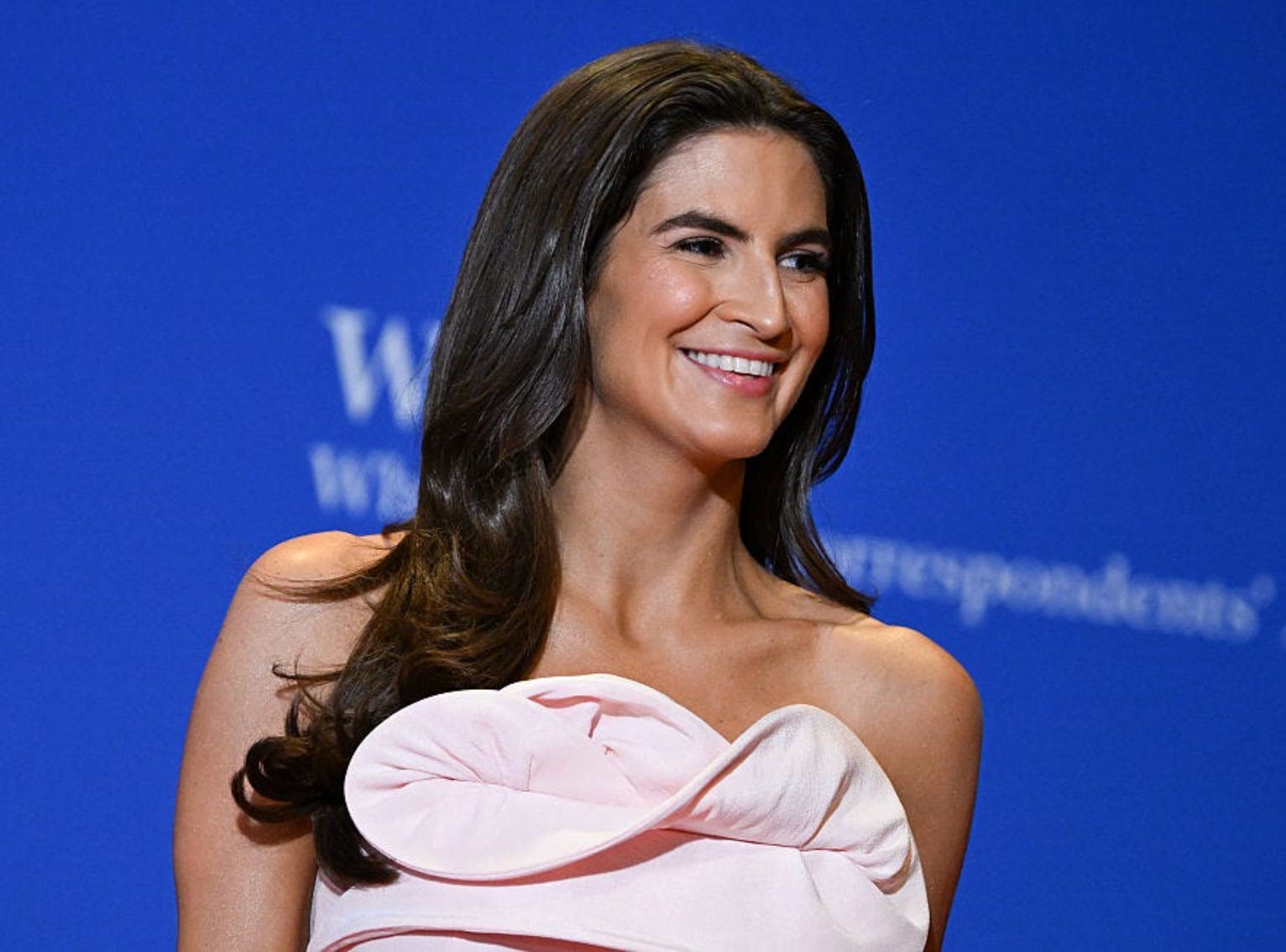
Kaitlan Collins, source: Sullivan’s “American Crisis”

If Trump’s appearance had been a Broadway show, the night would have been its sole performance – maybe even shuttered halfway through. The notices, as the old term goes, were not good.

“Moments of presidential self-deprecation were few and far between,” The New York Times reported. “There was little laughter in the room as the president’s speech took on a harder edge. Not many people chuckled when he compared the ‘really beat-up faces’ of UFC fighters with those of Bette Midler, Jane Fonda and Bruce Springsteen.”

Jem Bartholomew of the Columbia Journalism Review was far less measured:

Calling it a “farcical spectacle,” he wrote: “In our current moment, the dinner feels especially incoherent and misguided—seven hundred journalists, dressed in their finest clothes, agreeing to break bread and drink wine with administration figures who are aggressively and systematically cracking down on journalism and free speech.”

And, likewise, former White House Correspondent Jim Acosta pulled no punches:

“Trump delivered an unhinged, hateful speech that was written for the sole purpose of celebrating his undemocratic assault on news outlets in America and settling scores with his political enemies,” Acosta wrote. “He called people fat. He told racist and anti-gay jokes. He delighted in his oligarch friends taking over the networks. It was thoroughly disgraceful.”

Margaret Sullivan, source: Reason

Similarly, longtime press critic Margaret Sullivan skewered the president. Trump’s “hate-filled rant,” she wrote, “… was aimed at journalists, at his political enemies and at anybody else who has failed to suck up to him at every moment or to support his lawless regime.”

But, as the jokes fell flat, Trump also managed to be something he often derides. CNN’s Brian Stelter suggested that “more than anything, the speech was just … boring.”

Many have long criticized the annual correspondents’ dinner for the seeming hypocrisy of the press schmoozing with the officials they are supposed to cover, usually adversarially. How can tuxedoed and begowned journalists grin and toast people during one glittery night when for the rest of the year they hold those same people to account for professional or policy slipups? It all just has seemed smarmy, insincere and too insidey, all a sort of Inside the Beltway self-promoting boastfulness.

Defenders of the affair say it’s really a celebration of the First Amendment and some note that rubbing shoulders with officials can help journalists build sources. Sharing a drink can lubricate relationships, leading to better coverage – in theory.

But this year marks a new low. While many White Houses have been hostile to the press (think Nixon), Trump is not only as humorless as his dinner speech demonstrated, but vicious.

Just this month, the administration issued subpoenas seeking phone records and grand jury testimony from New York Times journalists who wrote articles revealing security concerns about Air Force One. After a federal judge in Manhattan scolded the Justice Department for its handling of the matter, the government withdrew the subpoenas. At the dinner, one Times reporter who was a subject of the subpoenas, Tyler Pager, accepted an award.
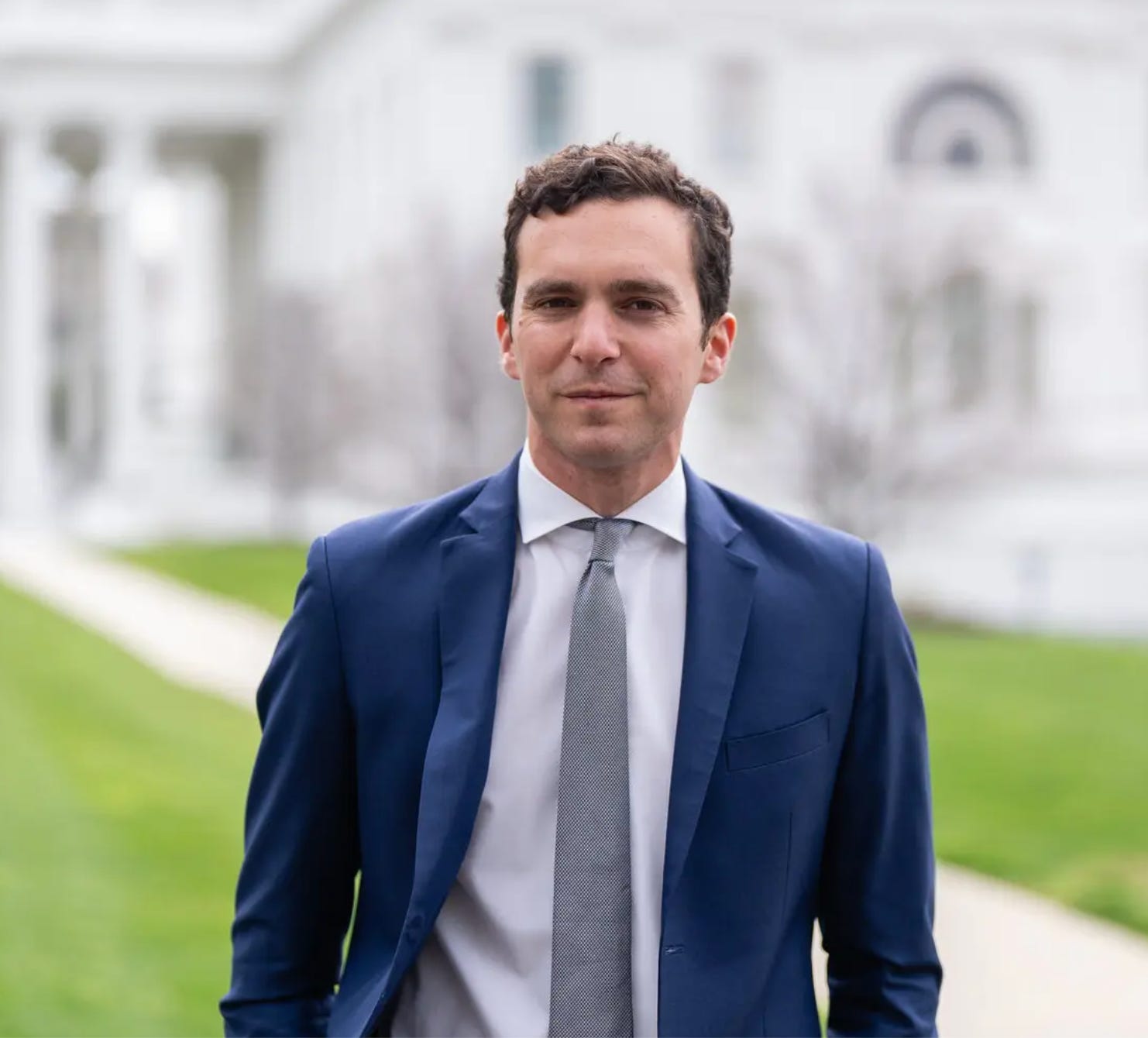
Tyler Pager, source: The New York Times

At another point, CNN’s Wolf Blitzer welcomed reporters from The Wall Street Journal to the stage to accept an award for “courageous reporting on President Trump’s past relationship with financier Jeffrey Epstein” that “triggered the release of the so-called Epstein files.” Blitzer then noted that “Trump quickly filed a $20 billion lawsuit against The Journal, revealing reporter Khadeeja Safdar’s home address. Her family had to be relocated. The Journal was kicked off of Air Force One.”

The dinner reflected how the Washington press – and the media generally – face a seemingly impossible job in covering this administration. As the media report on its many outrages in a fair and balanced way, they risk alienating both readers and viewers who are Trumpers and those who loathe the man. And, as they work to maintain access to officials, they risk being accused of being too chummy.

Moreover, critics often deride “sane-washing” by media outlets that struggle to find reasonable through-lines and news in Trump’s usually rambling speeches. They “render [Trump’s] most bizarre and incoherent statements into cogent English, shearing off the crazy in a misleading manner,” as a writer for The Atlantic put it in 2024.

Such efforts are all part of a process of normalizing a White House that couldn’t be further from normal, say critics. Many would rather the Washington press corps dump their annual fete, at least while Trump is in office.

“It is the very essence of normalizing an extremely abnormal and dangerous president,” wrote Sullivan, adding that the press should have risen in unison and walked out on Trump’s speech. “It’s so far past the time when this normalization should have ended that it seems almost absurd to make the argument once again.”

While such arguments carry a lot of weight, reporters need to keep in mind a few realities. First, 77.3 million Americans voted for Trump in 2024 and, while they shouldn’t get cheerleading coverage for that, the media can’t afford to simply turn them all off by showing disrespect, at least for the office. Second, if journalists behave like the enemies Trump has repeatedly called them, they will just make his case for him.

Report critically, report thoroughly and report fairly. Some will buy it. Others won’t. But the facts on everything from Trump’s grifting to his mismanagement of the war in Iran and mishandling of the economy will be out there.

To be clear, the president’s performance at the dinner was despicable and typical. But, in a way, we should be glad it happened. It’ll go down in the history books in all its ugliness, humorlessness and egomania, representative of so much of this presidency. And, more immediately, it helps sets the stage for the midterm election less than 100 days hence, when – perhaps – some of those 77 million will have second thoughts.
Juiced in it

Does private schooling help or hurt one’s chances in life?

Joseph Weber

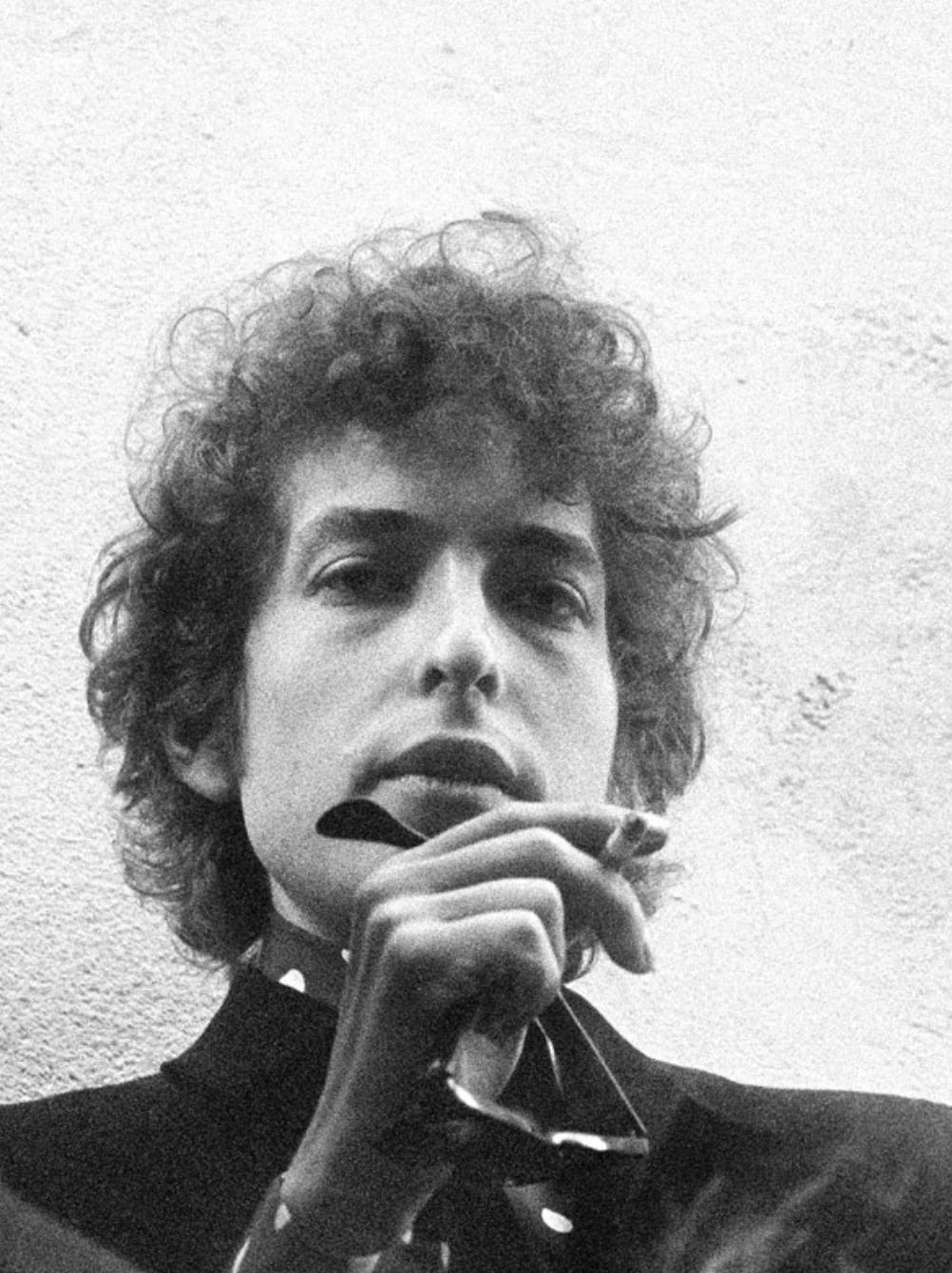
Dylan, source: San Francisco Art Exchange

A bit over a half-century ago, Bob Dylan debuted the extraordinary “Like a Rolling Stone,” a song that helped cement his standing in music and culture. Its scorching lyrics still resound:

Ahh you’ve gone to the finest schools, alright Miss Lonely
But you know you only used to get juiced in it
Nobody’s ever taught you how to live out on the street
And now you’re gonna have to get used to it
You say you never compromise
With the mystery tramp, but now you realize
He’s not selling any alibis
As you stare into the vacuum of his eyes
And say do you want to make a deal?

The song raises the question of whether going to “the finest schools” is really a plus. Do you get the best education – one that lets you deal with all the challenges of life – in elite schools? Or are you better off with a reasonably good public education at, say, Hibbing High School, where Dylan graduated, or the University of Minnesota, where he attended for just a year?

Certainly, Dylan’s modest schooling didn’t hold him back. His work is packed with literary and poetic allusions that seem to have come from either his self-education or dealings with writers such as Allen Ginsberg. It’s also heavily informed by his life as a struggling singer and then as a superstar.

This all occurs to me now as, over several days, my wife and I have dropped grandchildren off at a Department of Defense school on a U.S. military base in Germany. From the outside, the daily routine looks like what critics have dubbed “factory education,” with hundreds of kids filing off some 40 buses on cue to file into their K-12 classrooms.

Those arrivals are reminiscent of workers entering factories in films such as Chaplin’s 1936 classic, Modern Times. or the more troublesome Metropolis, Fritz Lang’s dystopian 1927 view of the future.

To be sure, order is important in such a system and the kids respond. At lunchtime, when a proctor hails them, otherwise lively and loud second-graders go silent, for instance. They raise their hands to count down a few seconds and then remain quiet for a few announcements. And lines are ubiquitous when they enter or leave classrooms.

But, unlike their parents (and differing from some private school systems), the students don’t wear uniforms. And their classrooms are colorful places, alive with lots of the imagery of education, just like most public schools back in the U.S. Yes, there’s regimentation, but there isn’t sterility.

Much as is the case in the U.S., moreover, the schooling the kids get depends a lot on the quality of a particular teacher. A good teacher makes all the difference, my daughter-in-law here – a teacher herself – tells me. Also, because their parents move around every couple years, the military kids often get shifted around among various schools, making continuity a challenge.

Still, as with Dylan, the chances for self-education are extraordinary for these kids. They can visit a bevy of European cities, getting varied cultural experiences their U.S. peers could find only in books. Whether it’s at the Louvre or in the Vatican, they can see first-hand the art that reflects the West. And in hearing the cacophony of languages or tasting so many different foods, they can sample immense variety.

I’m reminded of all this because of a discussion I had with another daughter-in-law in the States. We were debating the merits of private and public schooling.

This daughter-in-law, a neuroscience professor at Princeton, suggested that bright children will succeed whether they are in good public schools or good private ones. The cream rises to the top, she contended. In her view, it’s not necessary – and in some ways may be harmful – for kids to go to often-homogenous private religious day schools or other private academies.

This is a big contrast with the arguments a friend back in the States, a prof at the University of Nebraska-Lincoln, makes for Jewish day school education. Yes, there may be a sameness about the kids, but they also typically are quite bright and their dual-language education gives them a lift, he argues.

This fellow, himself a product of such day schooling, wants his kids to have a richest possible Jewish cultural immersion. He also wants them to get the best secular training available.

Josh Shapiro, Jake Tapper

His kids are getting educations similar to those a couple prominent folks have gotten. Josh Shapiro, the governor of Pennsylvania and a potential presidential candidate, and Jake Tapper, the CNN anchor, both are religious day-school system graduates – including in the high school they both attended.

They both went on to private universities. Shapiro attended the University of Rochester and Georgetown Law. Tapper graduated from Dartmouth.

Is either man poorer or better off for the exclusivity of their schooling, either early or later on? Certainly, the training didn’t hurt their careers. Whether it will help or hurt Shapiro’s chances for the White House is an open question.

Often, such Jewish day-school kids later move onto public high schools. There, my UNL friend argues, they get to experience more diversity among their fellow students than they did in the earlier years. That time, he suggests, makes up for any earlier shortcomings.

By contrast, here in the military system, the racial and cultural diversity among the families plays out in the schools from kindergarten on through. The rainbow of backgrounds gives kids a chance to mingle with others from all across the U.S. and beyond.

My U.S. daughter-in-law’s view in favor of public schools is an intriguing an understandable one. She is a very smart person who excelled in good public schools and later shone at a couple elite private universities, Brown and Harvard. And her view will bear on the education her daughters receive, of course. Her kids will start out at good public schools.

(As a proud grandpa, I must acknowledge that all eight of my second-generation progeny, of course, are brilliant, as well as delightful. They all already excel at everything they do.)

But I wonder about what the best route is for most students.

Throughout their K-12 years, two of our three kids experienced both private and public schooling; one had only public schooling, though very good public schooling. All wound up getting very good private university experiences later on (an interesting challenge for our finances). And all have done well professionally and personally and grew into intellectually and culturally intriguing people.

Was their schooling responsible for that? Were they examples of the cream rising to the top in any system?

Edie Sedgwick, source: Vintage Leisure

Edie Sedgwick, the privileged socialite and Andy Warhol muse who may have inspired “Like a Rolling Stone,” may or may not have been intimately involved with Dylan (he denied reports of an intense relationship). She seems to have been the spark for a couple other Dylan standards, “Just Like a Woman” and “Leopard-Skin Pillbox Hat.”

Sedgwick, who came from a Massachusetts blueblood family, attended exclusive private elementary schools and went on to Radcliffe. Ironically, her acting credits included starring in “Poor Little Rich Girl.” But she had a host of psychological problems and died of a drug overdose at 28.

Certainly, Sedgwick’s exclusive schooling didn’t help her all that much. In the end, perhaps, we’re all responsible for our successes and failures. The training we get may be less important than who we are.