
Does private schooling help or hurt one’s chances in life?
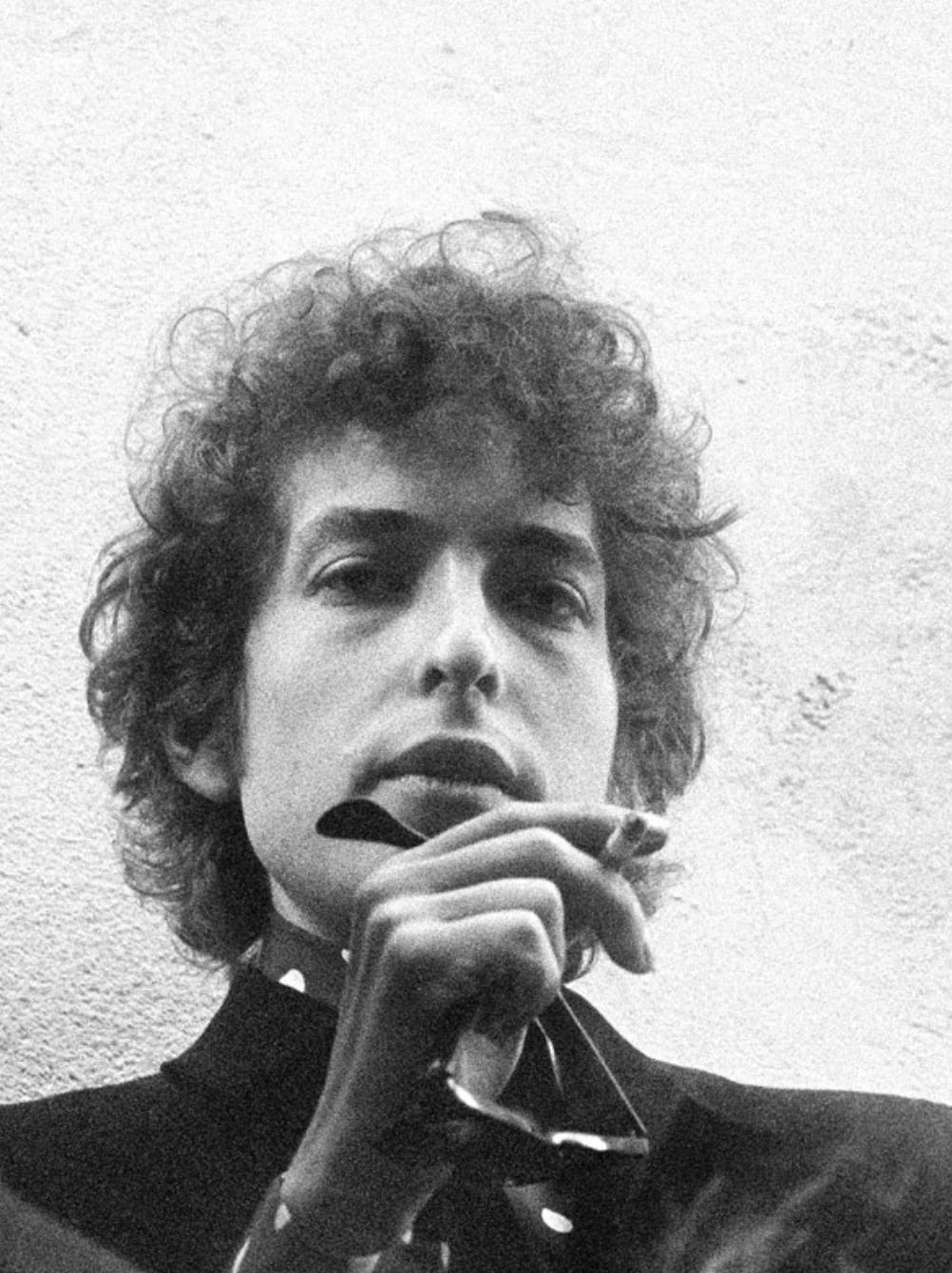
A bit over a half-century ago, Bob Dylan debuted the extraordinary “Like a Rolling Stone,” a song that helped cement his standing in music and culture. Its scorching lyrics still resound:
Ahh you’ve gone to the finest schools, alright Miss Lonely
But you know you only used to get juiced in it
Nobody’s ever taught you how to live out on the street
And now you’re gonna have to get used to it
You say you never compromise
With the mystery tramp, but now you realize
He’s not selling any alibis
As you stare into the vacuum of his eyes
And say do you want to make a deal?
The song raises the question of whether going to “the finest schools” is really a plus. Do you get the best education – one that lets you deal with all the challenges of life – in elite schools? Or are you better off with a reasonably good public education at, say, Hibbing High School, where Dylan graduated, or the University of Minnesota, where he attended for just a year?
Certainly, Dylan’s modest schooling didn’t hold him back. His work is packed with literary and poetic allusions that seem to have come from either his self-education or dealings with writers such as Allen Ginsberg. It’s also heavily informed by his life as a struggling singer and then as a superstar.
This all occurs to me now as, over several days, my wife and I have dropped grandchildren off at a Department of Defense school on a U.S. military base in Germany. From the outside, the daily routine looks like what critics have dubbed “factory education,” with hundreds of kids filing off some 40 buses on cue to file into their K-12 classrooms.
Those arrivals are reminiscent of workers entering factories in films such as Chaplin’s 1936 classic, Modern Times. or the more troublesome Metropolis, Fritz Lang’s dystopian 1927 view of the future.
To be sure, order is important in such a system and the kids respond. At lunchtime, when a proctor hails them, otherwise lively and loud second-graders go silent, for instance. They raise their hands to count down a few seconds and then remain quiet for a few announcements. And lines are ubiquitous when they enter or leave classrooms.
But, unlike their parents (and differing from some private school systems), the students don’t wear uniforms. And their classrooms are colorful places, alive with lots of the imagery of education, just like most public schools back in the U.S. Yes, there’s regimentation, but there isn’t sterility.
Much as is the case in the U.S., moreover, the schooling the kids get depends a lot on the quality of a particular teacher. A good teacher makes all the difference, my daughter-in-law here – a teacher herself – tells me. Also, because their parents move around every couple years, the military kids often get shifted around among various schools, making continuity a challenge.
Still, as with Dylan, the chances for self-education are extraordinary for these kids. They can visit a bevy of European cities, getting varied cultural experiences their U.S. peers could find only in books. Whether it’s at the Louvre or in the Vatican, they can see first-hand the art that reflects the West. And in hearing the cacophony of languages or tasting so many different foods, they can sample immense variety.
I’m reminded of all this because of a discussion I had with another daughter-in-law in the States. We were debating the merits of private and public schooling.
This daughter-in-law, a neuroscience professor at Princeton, suggested that bright children will succeed whether they are in good public schools or good private ones. The cream rises to the top, she contended. In her view, it’s not necessary – and in some ways may be harmful – for kids to go to often-homogenous private religious day schools or other private academies.
This is a big contrast with the arguments a friend back in the States, a prof at the University of Nebraska-Lincoln, makes for Jewish day school education. Yes, there may be a sameness about the kids, but they also typically are quite bright and their dual-language education gives them a lift, he argues.
This fellow, himself a product of such day schooling, wants his kids to have a richest possible Jewish cultural immersion. He also wants them to get the best secular training available.

His kids are getting educations similar to those a couple prominent folks have gotten. Josh Shapiro, the governor of Pennsylvania and a potential presidential candidate, and Jake Tapper, the CNN anchor, both are religious day-school system graduates – including in the high school they both attended.
They both went on to private universities. Shapiro attended the University of Rochester and Georgetown Law. Tapper graduated from Dartmouth.
Is either man poorer or better off for the exclusivity of their schooling, either early or later on? Certainly, the training didn’t hurt their careers. Whether it will help or hurt Shapiro’s chances for the White House is an open question.
Often, such Jewish day-school kids later move onto public high schools. There, my UNL friend argues, they get to experience more diversity among their fellow students than they did in the earlier years. That time, he suggests, makes up for any earlier shortcomings.
By contrast, here in the military system, the racial and cultural diversity among the families plays out in the schools from kindergarten on through. The rainbow of backgrounds gives kids a chance to mingle with others from all across the U.S. and beyond.
My U.S. daughter-in-law’s view in favor of public schools is an intriguing an understandable one. She is a very smart person who excelled in good public schools and later shone at a couple elite private universities, Brown and Harvard. And her view will bear on the education her daughters receive, of course. Her kids will start out at good public schools.
(As a proud grandpa, I must acknowledge that all eight of my second-generation progeny, of course, are brilliant, as well as delightful. They all already excel at everything they do.)
But I wonder about what the best route is for most students.
Throughout their K-12 years, two of our three kids experienced both private and public schooling; one had only public schooling, though very good public schooling. All wound up getting very good private university experiences later on (an interesting challenge for our finances). And all have done well professionally and personally and grew into intellectually and culturally intriguing people.
Was their schooling responsible for that? Were they examples of the cream rising to the top in any system?
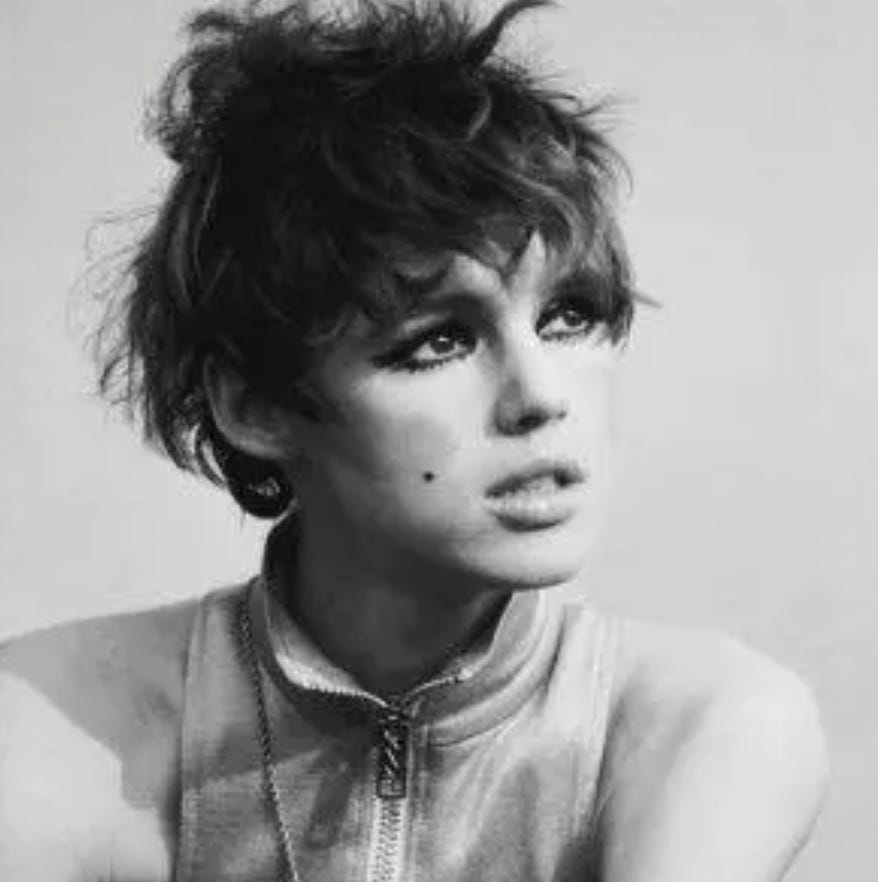
Edie Sedgwick, the privileged socialite and Andy Warhol muse who may have inspired “Like a Rolling Stone,” may or may not have been intimately involved with Dylan (he denied reports of an intense relationship). She seems to have been the spark for a couple other Dylan standards, “Just Like a Woman” and “Leopard-Skin Pillbox Hat.”
Sedgwick, who came from a Massachusetts blueblood family, attended exclusive private elementary schools and went on to Radcliffe. Ironically, her acting credits included starring in “Poor Little Rich Girl.” But she had a host of psychological problems and died of a drug overdose at 28.
Certainly, Sedgwick’s exclusive schooling didn’t help her all that much. In the end, perhaps, we’re all responsible for our successes and failures. The training we get may be less important than who we are.