
Education in the liberal arts is at risk
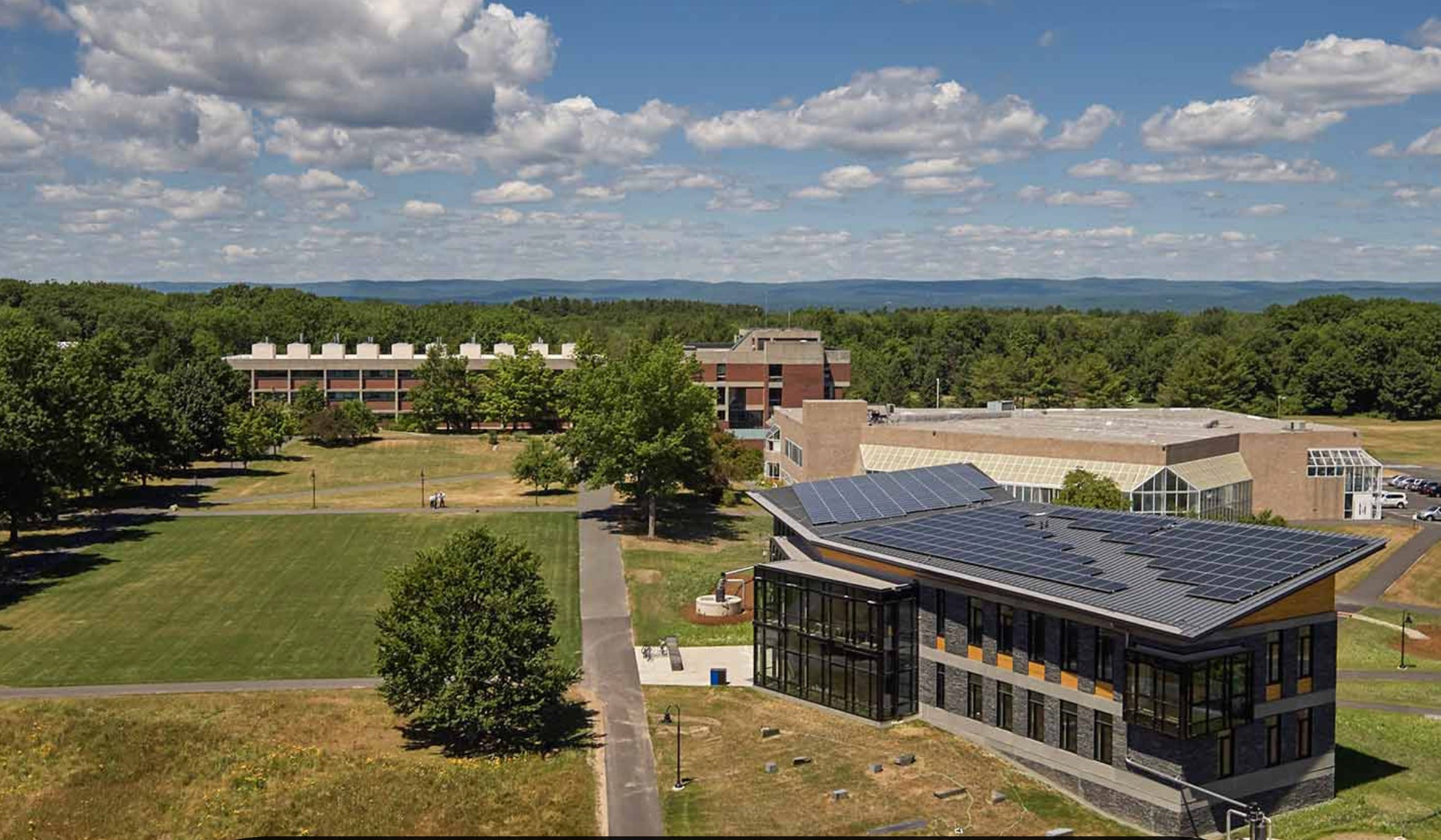
More decades ago than I’d care to count, I was scouting about for colleges to attend. Recall that this was in the spring of 1971 or thereabouts, when the counterculture was still in blossom. One school that crossed my radar was Hampshire College, “an experimental, alternative” institution in Amherst, Mass., that had admitted its first class just a year earlier.
The place seemed like a great blast of fresh air. No grades, but narrative assessments. Self-designed curricula. No required classes. Time described it as a “model of well-planned radicalism.” A dorm even permitted pets.
Little wonder that Hampshire attracted talented folks. Grads include mountaineer and author Jon Krakauer, actor Liev Schreiber (of “Spotlight” fame) and filmmaker Ken Burns. Of course, hanging with such talent wouldn’t have come cheap, with annual all-in tabs now topping $77,000 (though it was likely far less in its early days).
For various reasons, Hampshire fell by the wayside for me and affordable public education proved plenty useful (along with a still-affordable — then — private grad school). The routes I took were eminently practical, even for a dreamy English major infatuated with 18th century writers.
So it was distressing to hear that Hampshire will shut its doors after the fall semester. “It was dedicated to a transformational education, in an era when higher education has been hijacked by the transactional,” Burns told The New York Times.

The documentarian, who made his first movie at the college, has been a prominent donor and a past board member for a school that changed his life. “It was just transforming,” he said. “I literally learned everything there — everything.”
But, as the Times reported, a multiyear effort to refinance debt, raise funds, pursue land development and increase enrollment failed to produce a viable path to saving the 56-year-old college. It will join an epidemic of college closures over the past two decades. More than 300 U.S. colleges and universities closed from 2008 to 2024, according to an analysis by The Hechinger Report.
Many of the schools listed by Hechinger scarcely deserved the title of college. A good number focused on such things as cosmetology, beauty and massage and could well have been examples of for-profit institutions that have long ripped off students.
But the ranks also included Goddard College, whose grads include playwright David Mamet and actor William H. Macy, and such schools as Judson College, a Baptist school for women in Alabama.
From a hard-headed economic standpoint, the shutdowns merely reflect changes in the marketplace for education. As the costs of schooling have soared, perhaps especially at niche-oriented private schools, the pay scales that most grads can expect have not kept anywhere near that pace. So, the risk-reward curve has tilted against such institutions.
Education, after all, is an investment in the future. If it doesn’t pay off in marketable skills, how can it be justified? One might argue that the shutdowns are little more than an example of Schumpeter’s “creative destruction,” with obsolete educational enterprises giving way to those that better serve the modern day.
Hampshire’s enrollment has dipped to just about 625 students, about half the enrollment of the early 2000s. Students, it might be said, have been voting with their feet.
But the problem is that education is more than just training, more than just the honing of practical skills. It’s also designed to teach one how to think and, in many areas, to provide insights – and the ability to develop insights – that just aren’t easily available elsewhere. And, at its best, it provides settings where smart people rub shoulders to share such insights and maybe even change worldviews.
As John Locke argued in 1693, “nine parts of ten” of a person’s character are shaped by education, not nature.
Yes, the practical skills one gets in schools of business, medicine, law and journalism (even in these tough times for the field) are invaluable. Such specialties — especially at the graduate level — are essential both for individuals and society.
And yet, should there not be venues for talents such as Burns, Mamet and so many others to flourish? Should even those who go on to practice medicine, accounting or law, or to establish businesses, not be given opportunities – or perhaps be required – to develop parts of their character and their minds that go beyond the sometimes narrow limits of those fields?
Hampshire’s president, Jennifer Chrisler, told the Times that part of the school’s downfall may relate to “public discussion in this country about the value of a liberal arts education … Some of it is a persistent and ill informed, I think, belief at the federal level that the only value of an education is what you earn four years after your graduation.”
Earnings, of course, are important barometers of the value of schooling. If education doesn’t help one make a living – yielding enough of a payoff to justify the costs – it has failed.
And yet, the value of a liberal arts education is tough, perhaps impossible, to quantify. The ROI may be there, but just be hard to tote up.

In “Immeasurable Outcomes: Teaching Shakespeare in the Age of the Algorithm,” Scripps College Professor Emerita Gayle Greene offers a blistering attack on the language of those who devalue the humanities. “Hyphenated words have a special pizzazz—value added, capacity building, performance-based, high-performance—especially when one of the words is data: data driven, data-based, benchmarked-data,” she writes. “Wait a minute, I thought getting students to understand, feel, learn, appreciate, grasp the significance of, enjoy—was sort of the point.”
Can STEM courses exist alongside Shakespeare (or Locke, Swift, Defoe, Pope and Johnson)? Perhaps their programs should require at least an acquaintance with such folks.
Thankfully, many public universities demand at least a modest blend of humanities in schooling for such things as accounting in order for someone to get a degree. The so-called “gen-eds” required at the school where I taught, the University of Nebraska-Lincoln, include areas such as English courses, for instance.
The loss of entire schools devoted to the less practical realms, such as Hampshire, is to be mourned. But we lose even more if we don’t demand at least a touch of the things such schools teach in all our higher-ed programs, a dash of the atmospheres such institutions foster.
A 10-professor committee at Yale recently released a report on declining trust in higher education. One of its recommendations, particularly focused on Yale but applicable more broadly, notes that the demands of the job market – over the long haul – are difficult to predict. It suggests that the intellectual skills delivered by the liberal arts may well be essential in some areas.
“Yale must recognize the epochal advances in technology and artificial intelligence, and ensure that graduates are prepared to deploy, design, and improve these tools,” the report says. “The evolving nature of the job market is also an argument for the broad, flexible, and time-tested form of education known as the liberal arts.”
The authors contend that a liberal arts education that includes the sciences and social sciences as well as the arts and humanities “equips students with foundational wisdom and critical skills that will serve them throughout their lives.” They urged that Yale – and, by implication, other schools — “work actively to help students translate a liberal arts education into successful professional and civic life.”
Bravo to Yale. And, sadly for Hampshire, RIP.