
“Projection” abounds in the Trump era
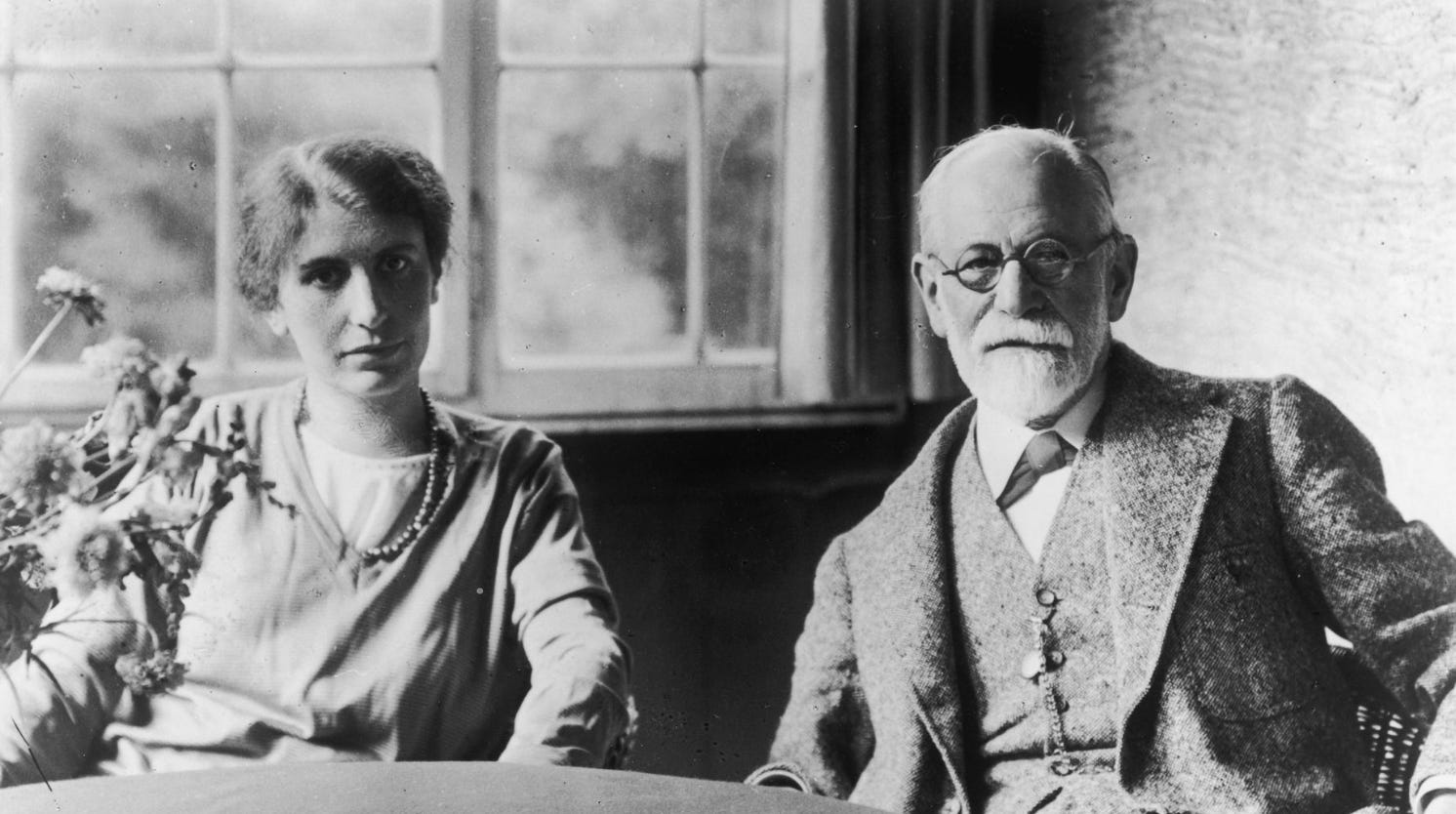
In the mid-1890s, Sigmund Freud pioneered the psychological insight of “projection.” His daughter, Anna, refined the concept in the 1930s. But, with what seems to be the third attempt on Donald J. Trump’s life, their understanding couldn’t be more relevant than ever today.
The Freuds’s notion was that people sometimes defend their own egos by projecting their unacceptable views or urges onto others. For instance, a married man attracted to a female coworker might accuse her of flirting with him. Or a woman wrestling with the urge to steal convinces herself that others are trying to break into her home.
In the Trump era, projection abounds, it seems. It’s not self-dealing by the Trump family that is corrupt, but rather the Joseph Biden “crime family.” The GOP efforts to restrict voting don’t threaten democracy, but rather “mail-in cheating” and other alleged election flaws are at fault.
Nowadays, such projection in Trump’s Washington is so common as to rarely draw comment. But it is disappointing when the phenomenon appears in reputable publications, especially those that often otherwise provide substantial critical reporting about the White House.
Consider, sadly, The Wall Street Journal. Amid the instant analyses of the shootings at the White House Correspondents’ Association dinner, a few comments on the paper’s editorial page stand out. Violent actions and extreme rhetoric by Trump are not at fault in the fever swamp that is the mind of the self-styled “friendly federal assassin,” the paper suggests. Rather, it’s the fault of unnamed politicians and journalists.
Referring to “the poison that too often passes for American political discourse these days,” the Journal takes to task the “life or death terms” in which it suggests politics are miscast now. In such a heated environment, the editorialists hold, “the mentally unstable convince themselves of their own righteous cause.”
And the solution? “We need our political and media classes to stop talking and writing in apocalyptic terms and restore reason to political debates,” the WSJ contends. “We need to revive the traditional moral line that violence is unacceptable.”
No one would argue with the latter sentiment, of course. The attempts on Trump’s life — and this one appears to be the third, even as this shooter’s targets remain murky — are just as reprehensible as earlier assaults on Ronald Reagan and Gerald Ford. They are just as loathsome as the tragically successful assassination of John F. Kennedy and several occupants of the White House long before him — assaults that occurred in eras far less polarized than today.
But is the problem really media overstatement? This at a time when American forces are being deployed abroad ostensibly to forestall nuclear war? When they grab up foreign leaders and kill alleged but unproven drug dealers? When domestic forces murder American protesters while rounding up and warehousing tens of thousands of immigrants?
And who, after all, is responsible for talking in apocalyptic and violent terms? Who, more than anyone, has corrupted our political discourse for the last decade? Who has debased the language of Washington more than any president in recent history?
Just consider a few of Trump’s comments:
“Tuesday will be Power Plant Day, and Bridge Day, all wrapped up in one, in Iran. There will be nothing like it!!!” Trump posted on Truth Social on April 5. “Open the Fuckin’ Strait, you crazy bastards, or you’ll be living in Hell – JUST WATCH! Praise be to Allah.”
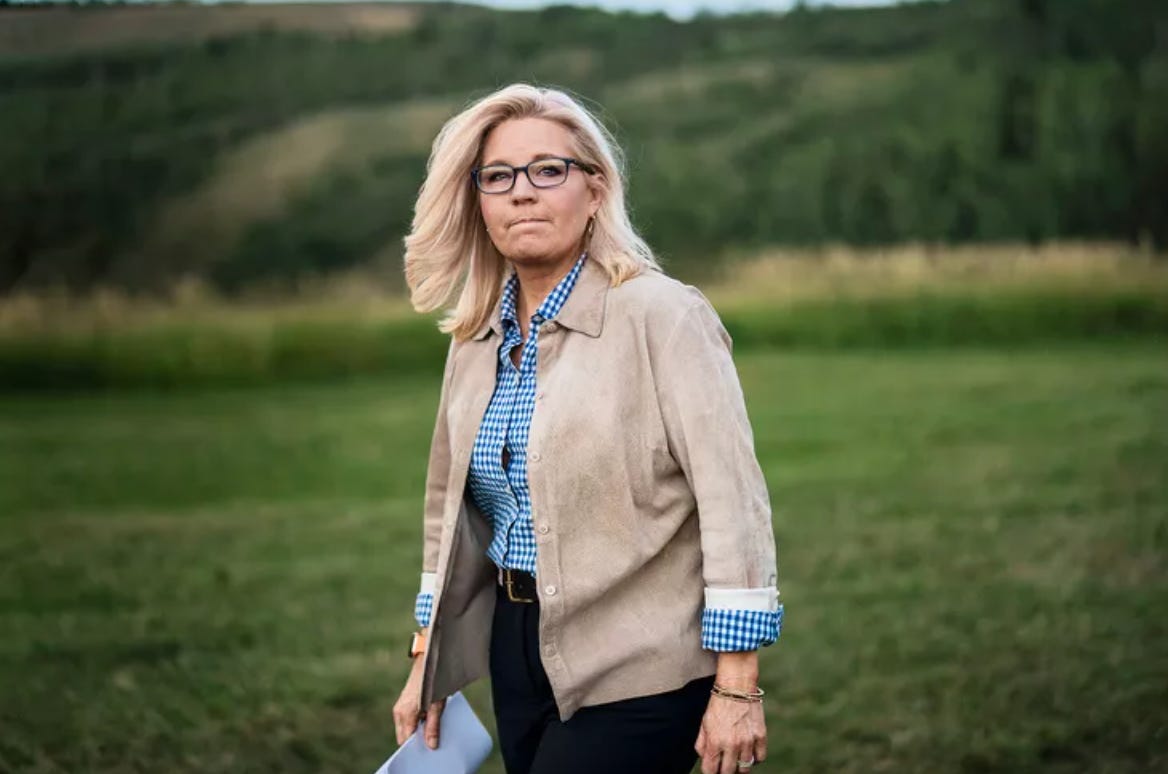
At an October 2024 campaign event, Trump said of former U.S. Representative Liz Cheney, “She’s a radical war hawk. Let’s put her with a rifle standing there with nine barrels shooting at her, okay? Let’s see how she feels about it … when the guns are trained on her face.”
A short time before, at a September rally, he proposed a crackdown by police to deal with crime. “If you had one really violent day … one rough hour—and I mean real rough—the word will get out, and it will end immediately,” he argued.
A bit more than a year earlier, at a March 2023 gathering of the Conservative Political Action Committee, he said: “I am your warrior. I am your justice. And for those who have been wronged and betrayed, I am your retribution.”
In June 2020, with protesters outside the White House, he said: “Can’t you just shoot them? Just shoot them in the legs or something?” This appears in a memoir by former Defense Secretary Mark Esper.
And all those are consistent with other comments by Trump. “I would bring back waterboarding,” he said in a 2016 Republican primary debate. And I’d bring back a hell of a lot worse than waterboarding.” And, when a protester disrupted a Las Vegas rally of his that year, Trump said: “I’d like to punch him in the face.”
As The Atlantic noted in a long 2024 compendium of Trump’s most inflammatory comments, Trump accused his opponents of inspiring the attacks against him with their rhetoric. “The reality, however, is that Trump himself has a long record—singular among American presidents of the modern era—of inciting and threatening violence against his fellow citizens, journalists, and anyone he deems his opposition,” the outlet remarked.
Classic projection, it seems. And, of course, his incendiary comments have had results. Just look at the January 6, 2021, insurrection at the Capitol, something his administration is busily trying to rewrite.
In a 2020 edition of Perspectives on Terrorism, a respected peer-reviewed academic journal, three scholars dissected Trump’s language during his first term. Political discourse in the period “became more hateful and divisive,” they noted.
And they laid the fault at the feet of the president, saying his enemies were those most often victimized.
“Threats and actual violence against groups and individuals singled out and demonized by Trump increased,” the scholars wrote. “The targets of his verbal attacks were most of all racial, ethnic, and religious minorities, the news media collectively and individual journalists, and well-known politicians, mostly Democrats…. We found that contrary to an old children’s rhyme (‘Sticks and stones may break my bones but words will never hurt me’) Trump’s aggressive, divisive, and dehumanizing language was seconded by his followers and inflicted directly or indirectly psychological and physical harm to Trump’s declared enemies.”
Of course, this has continued during Trump II and has moved far beyond language.
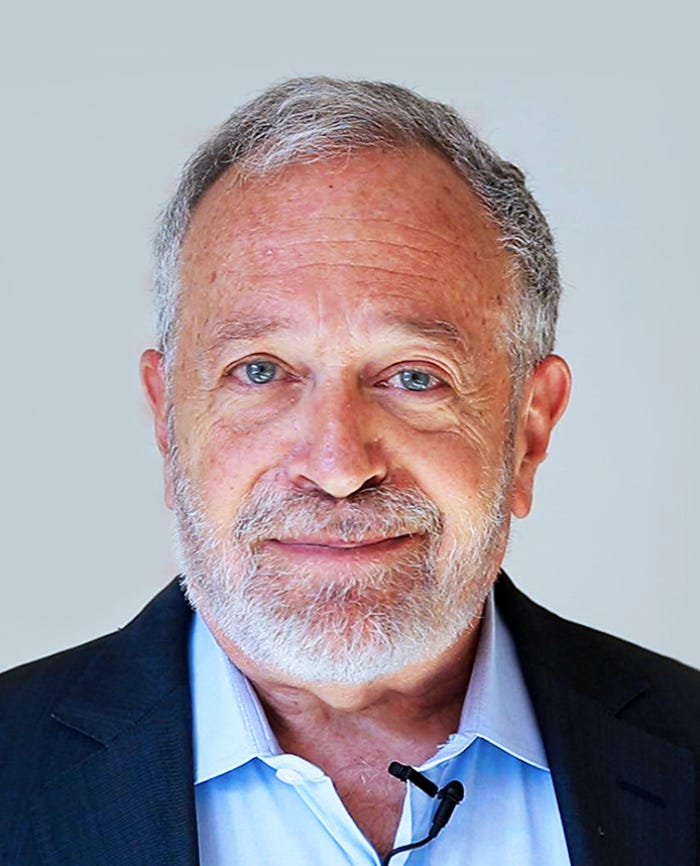
“There is a close relationship between Trump and violence — not just the attempts on his life but also the violence he’s unleashed on the world, the violence his ICE and Border Patrol agents have caused inside America, the violence he has incited among his followers,” Robert Reich, a former official in the administrations of Bill Clinton, Jimmy Carter and Gerald Ford, noted in a Substack. “Trump’s violence has resulted in thousands of deaths and injuries. That is no justification for last night’s attack, of course, but it is part of what he has wrought in America. He has changed the script in Washington.”
Another former government official, David Rothkopf, did not hold back in delivering his own heated language about Trump in his Substack. Like Reich, Rothkopf has bipartisan cred. He served in the Clinton Administration and also worked as a managing director of Kissinger Associates.
Dissecting the president’s press performance after the aborted dinner, Rothkopf argued that “the con man, serial sex abuser, war criminal, racist, misogynist, immoral, most corrupt president in U.S. history became Saint Donald, the MAGA martyr.”
Arguing that no president in modern history has done more the promote division or violence in the U.S. than Trump, he laid the blame for today’s corrosive atmosphere at the president’s feet. “If America has a culture of violence, he is this country’s principle [sic] Apostle of Violence—a promoter of gun culture, hate and lawlessness,” he wrote. “What is more, we all know it. We know it. We can see it. It is woven into the fabric of our daily lives.”
There’s no doubt that the political atmosphere has coarsened and grown superheated ever since Trump descended his escalator in 2015 and defamed immigrants as drug dealers, criminals and rapists. And there’s no question that under Trump’s provocations, critics respond with strident language – one might even say “apocalyptic terms,” per the WSJ.
But put the blame where it belongs. It’s not the media, which serves as Trump’s messenger, albeit however critically. It’s the message.
Moreover, a deranged man who seems to have grown unhinged by Trump’s policies and sexual history is at fault here. Was he motivated by our vile political atmosphere? In time, we may learn more about what drove him and whether the Net-driven nastiness in the zeitgeist contributed.
If we want to change that atmosphere, though, the best place to start may be in the November midterm elections. Following up with a more civil alternative to Trump in the presidential vote two years later could also help.
Certainly, it is long beyond time for the projection practiced by Trump and his minions — and bought by too many in the press and outside — to end.