
A time to laugh, a time to weep

Vanity of vanities, said Koheleth; vanity of vanities, all is vanity/What profit has man in all his toil that he toils under the sun?/A generation goes and a generation comes, but the Earth endures forever./The sun rises and the sun sets, and to its place it yearns and rises there.
So goes the gloomy opening of Kohelet, the well-known Biblical book also called Ecclesiastes, from the Greek. I’m reminded of these words today after meeting a fellow who was struggling with grief and uncertainty.
The man just lost his wife and now is deciding whether to stay in Philadelphia — in our building here, as it happens — or whether to go to a place with what I’ll call fewer contradictions and challenges. He mentioned, for instance, that he misses looking out his window and seeing grass and deer, as he and his wife would in nearby Bucks County. And he noted the sadness one feels while stepping around homeless people lying on the sidewalks outside pricey restaurants and exclusive condo buildings.
It’s as if his grief and misery are reflected in the grievous states he sees among the unfortunates on the streets here. His inner world, it seems, is mirrored by the outside world (as it so often can be for us all).
The words of Kohelet resonate with me because the book — a poem, really — addresses loss, sadness and so many contradictions. It says, for instance: I saw all the deeds that were done under the sun, and behold, everything is vanity and frustration./What is crooked will not be able to be straightened, and what is missing will not be able to be counted.
To be clear, “vanity,” or the Hebrew word huvel in the poem, differs from our modern understanding the term. The word can be translated variously as air, vapor, meaninglessness, vanity, folly, futility, absurdity, or nothingness. For such a little word, it packs quite a punch.
And, as The Seforim Blog explains, huvel is repeated as a motif, describing aspects of human endeavor and life experience. The author, said to be King Solomon, the son of David and a former king of Jerusalem, mourns the inevitable passing that we all face, our disappearances even from memory. He says: [But] there is no remembrance of former [generations], neither will the later ones that will be have any remembrance among those that will be afterwards.
Hardly upbeat. And, throughout the opening, it gets worse, as even wisdom proves ultimately disappointing:
And I applied my heart to know wisdom and to know madness and folly; I know that this too is a frustration./For in much wisdom is much vexation, and he who increases knowledge, increases pain.
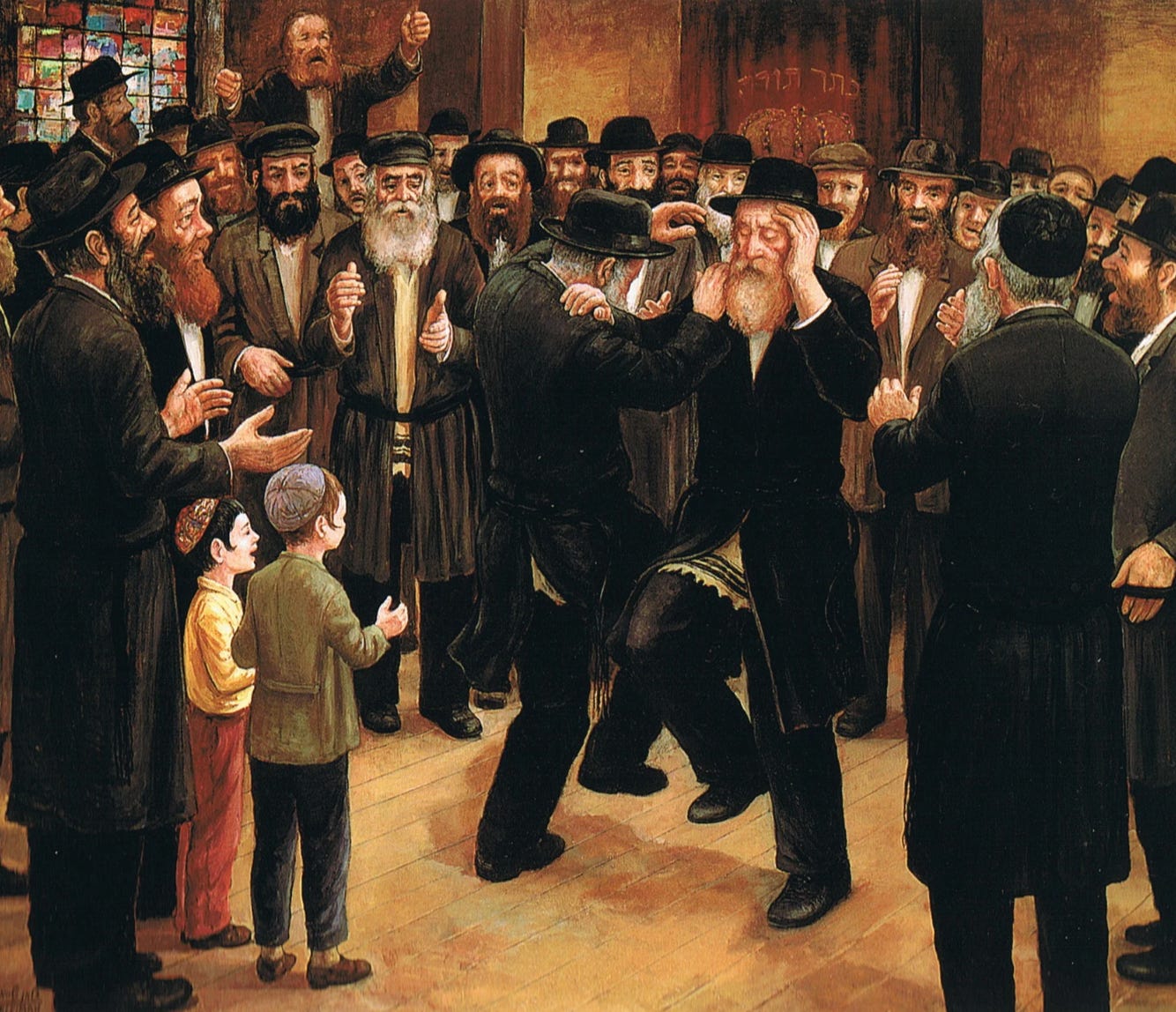
But, as the poem proceeds, the dreariness dissipates. It’s balanced by the verve of life when it’s well and righteously lived:
And I praised joy, for there is nothing better for man under the sun than to eat and to drink and to be merry, and that will accompany him in his toil the days of his life that God gave him under the sun.
The author drives home the point:
Go, eat your bread joyfully and drink your wine with a merry heart, for God has already accepted your deeds./At all times, let your garments be white, and let oil not be wanting on your head./Enjoy life with the wife whom you love all the days of the life of your vanity, whom He has given you under the sun, all the days of your vanity, for that is your portion in life and in your toil that you toil under the sun.
Yes, all is fleeting. But that’s the very reason to enjoy it while one can, the book tells us. Amplifying this, of course, the famous section, earlier on, reminds us of the inevitable turning of time.
Everything has an appointed season, and there is a time for every matter under the heaven./A time to give birth and a time to die; a time to plant and a time to uproot that which is planted./A time to kill and a time to heal; a time to break and a time to build./A time to weep and a time to laugh; a time of wailing and a time of dancing./A time to cast stones and a time to gather stones; a time to embrace and a time to refrain from embracing./A time to seek and a time to lose; a time to keep and a time to cast away./A time to rend and a time to sew; a time to be silent and a time to speak./A time to love and a time to hate; a time for war and a time for peace.

Is there anyone (of a certain age, that is), who isn’t reminded of Pete Seeger’s “Turn, Turn, Turn,” a 1959 tune recorded by Judy Collins, as well as The Byrds and others? Sadly, Seeger’s closing lyric — which became a Vietnam War protest anthem — has long resonated through many wars since then. It speaks to our day yet again.
The Seeger verse goes: A time for love, a time for hate/A time for peace, I swear it’s not too late.
The fellow now in mourning mentioned that he has several grandchildren and a couple sons in Philadelphia. That, of course, may ultimately sway his choices about where to settle for at least much of each year.
He mentioned how the children now proudly introduce him to their teachers at school and how delighted they are in his company. As he noted, there will come a time — all too soon — when they will prefer to hang with their buds rather than a grandparent.
I’m sure that day will come for us and our eight grandkids, all now 8 or younger. That’s part of the reason we spend as much time with them as possible now. We are determined to enjoy their youth and, by helping them do so, to relive our own.
For if a man lives many years, let him rejoice in them all, and let him remember the days of darkness, for they will be many; all that befalls [him] is vanity./Rejoice, O youth, in your childhood, and let your heart bring you cheer in the days of your youth, and go in the ways of your heart, and in the sight of your eyes, but know that for all these God will bring you to judgment./And remove anger from your heart, and take evil away from your flesh, for childhood and youth are vanity.