Trump’s scowling images make him look a bit ayatollahish, but also like a clown
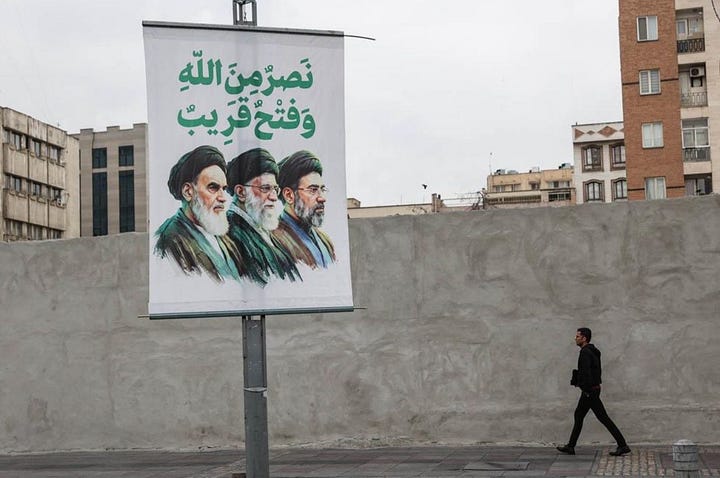
Perhaps Donald J. Trump and the new supreme leader of Iran, Mojtaba Khamenei, have more in common than they think.
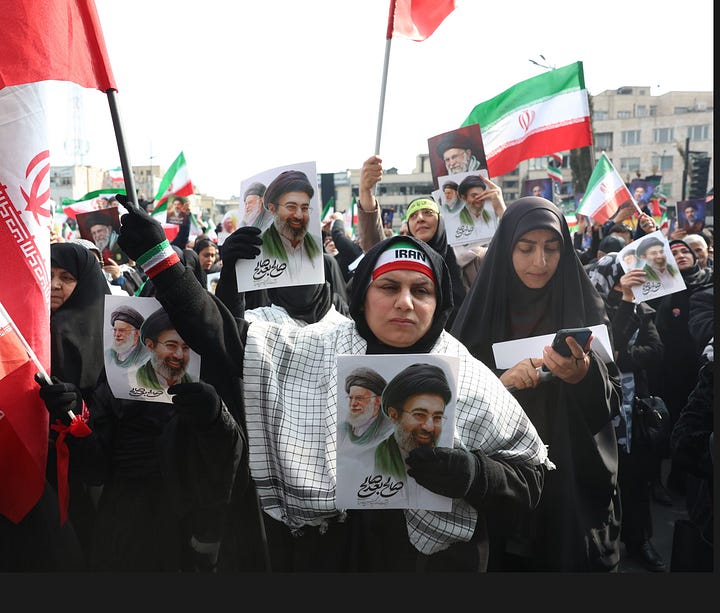
Images of the younger ayatollah started flooding Tehran soon after he was anointed to succeed his assassinated father. Now, they seem to be ubiquitous, appearing in photos carried by demonstrators and on lightpoles. Soon, no doubt, we’ll see them on buildings, much as happened with the earlier two ayatollahs.
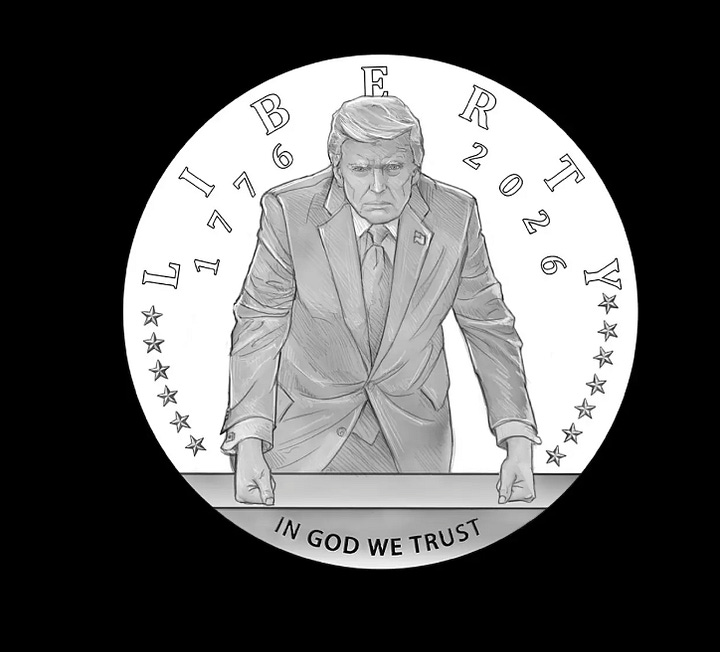
But Trump isn’t to be outdone. Posting his photo on buildings in Washington, D.C., isn’t enough for him. Now, he wants to project his strength and dominance on a commemorative gold coin and a circulating $1 coin.
Isn’t all this dictator cosplay just a bit tiresome?
Apparently not for Trump, whose egomania stretches back decades, perhaps to his damaged youth. Recall that the president’s niece, psychologist Mary Trump, described his upbringing as “malignantly dysfunctional,” calling his father, Fred Trump Sr., a”high-functioning sociopath” who crippled Donald emotionally. She argued Fred Sr. bullied Donald into becoming a “killer” before sending him off to military school at 13. There, instructors struck him if he misbehaved.
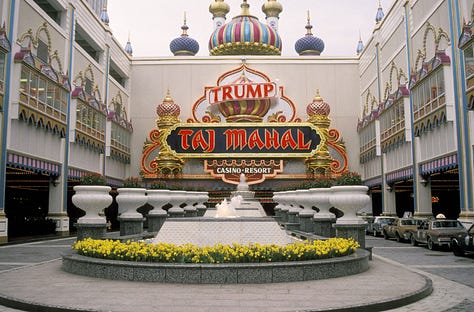
So, perhaps in some desperate bid for adulation, Trump strewed his name over all his businesses. He affixed it to casinos and hotels, even to steaks that his company unsuccessfully marketed (the casinos also went bust).
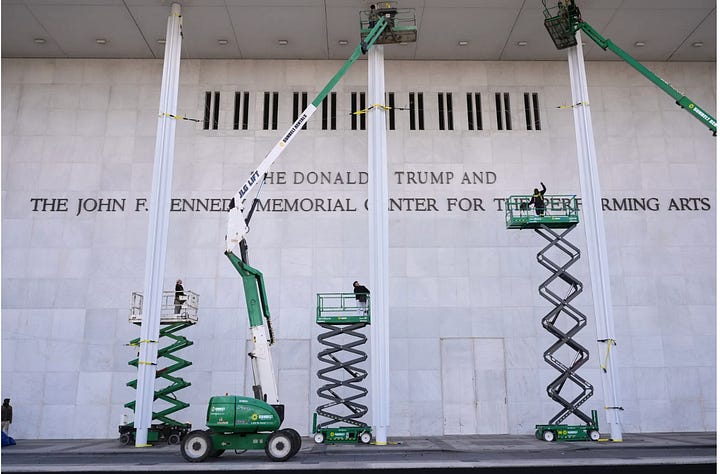
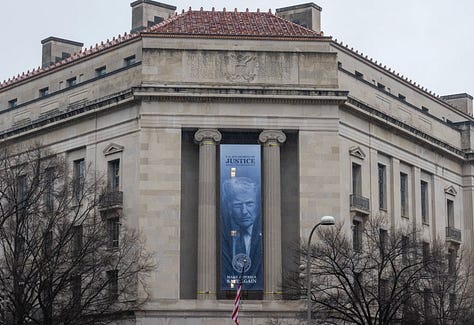
And, since he’s been in the White House — the second time — he has scattered his visage and name all over D.C. There’s the “The Donald J. Trump and The John F. Kennedy Memorial Center for the Performing Arts,” which is closing for a couple years amid defections of performers. We also have the “Donald J. Trump U.S. Institute for Peace,” which seems like an Orwellian joke these days (and which is defunct, with the building now serving mainly as a backdrop for ceremonies with foreign leaders). We also have glowering banners of Trump hanging on the Departments of Labor, Justice and Agriculture, something that the Daily Beast mocked as “Going Full North Korea.”
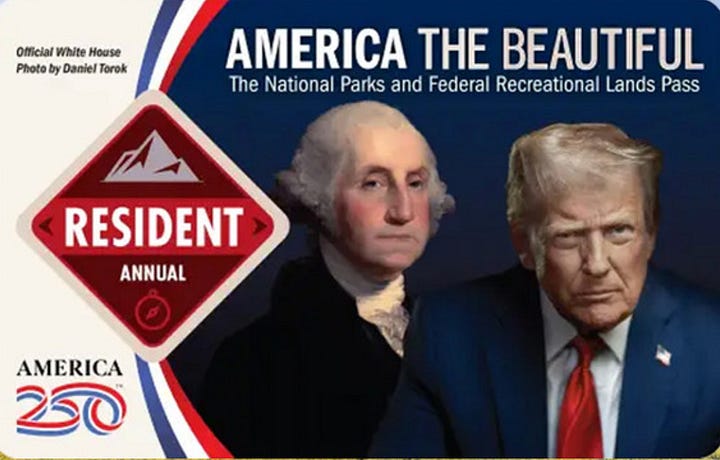
We have Trump’s likeness on National Park Passes, which the National Park Service warns will be voided if visitors paste stickers on Trump’s face. Less tangibly, his name graces TrumpRx, the pharmacy program that he promised would deliver the lowest prices in the world for patients. As The New York Times and three German news outlets found, however, drugs listed on TrumpRx “can cost American patients up to hundreds or thousands of dollars, while a patient walking into a German pharmacy pays next to nothing.”
All this is more than just ego. Whether it’s an Iranian ayatollah, a North Korean dictator or the totalitarians of Germany and the Soviet Union of old, plastering the great leader’s image on buildings, coins and pretty much anywhere where much of the citizenry can’t avoid it is about power. If the leader is everywhere, he must be all-powerful, right?
On the other hand, it also shows how weak the figure might be. Steve Heller, a former art director for The New York Times and author of “Iron Fists: Branding the 20th Century Totalitarian State,” argued that even despots were dependent not only on brute force, but on harnessing popular support (or acquiescence) to preserve their monopolistic hold on power, as a scholar for Florida International University’s Wolfsonian Library has written. They need to stir the masses to keep up the illusion of their unassailable strength
“Consequently, totalitarian regimes created, reproduced, published, and distributed images of ‘the leader’ so ubiquitously as to transform these heads of states into venerated ‘brands,’ the FIU Library scholar wrote. That library holds thousands of items of propaganda from Soviet Russia, Fascist Italy, and Nazi Germany.
Of course, Trump was a brand as much as a person when he first coasted down the escalator into the presidency. His image as a tough guy and demanding boss was forged in his TV days in “The Apprentice.” As he ran for the White House, he added anger to the mix and that now largely defines him.
Consider “Operation Epic Fury,” the name Trump chose for the Iran War. As Peter Baker of The New York Times writes, the term captures much about how Trump seems to see himself and wants to be seen. “Everything Mr. Trump does, at least as he sees it, is epic — the biggest, the most, the first, ‘like we’ve never seen before,’ as he likes to say,” Baker notes. “And much of what he does seems to be driven by fury, a deep and abiding enmity toward the forces arrayed against him or those he blames for what he considers the downfall of the country under other presidents.”
And now, with the severe look he casts in the imagery on his posters and planned coins, he’s driving home this “take no prisoners” style. No grandfatherly smiles for Trump. A scowl is his preferred expression.
As Washington Post Style writer Philip Kennicott writes, the coin imagery reflects “recurring themes of resolution, anger and determination.” This contrasts with earlier displays in Trump’s digital trading cards and elsewhere that projected “vitality, competence, vision and sometimes even humor or irony.”
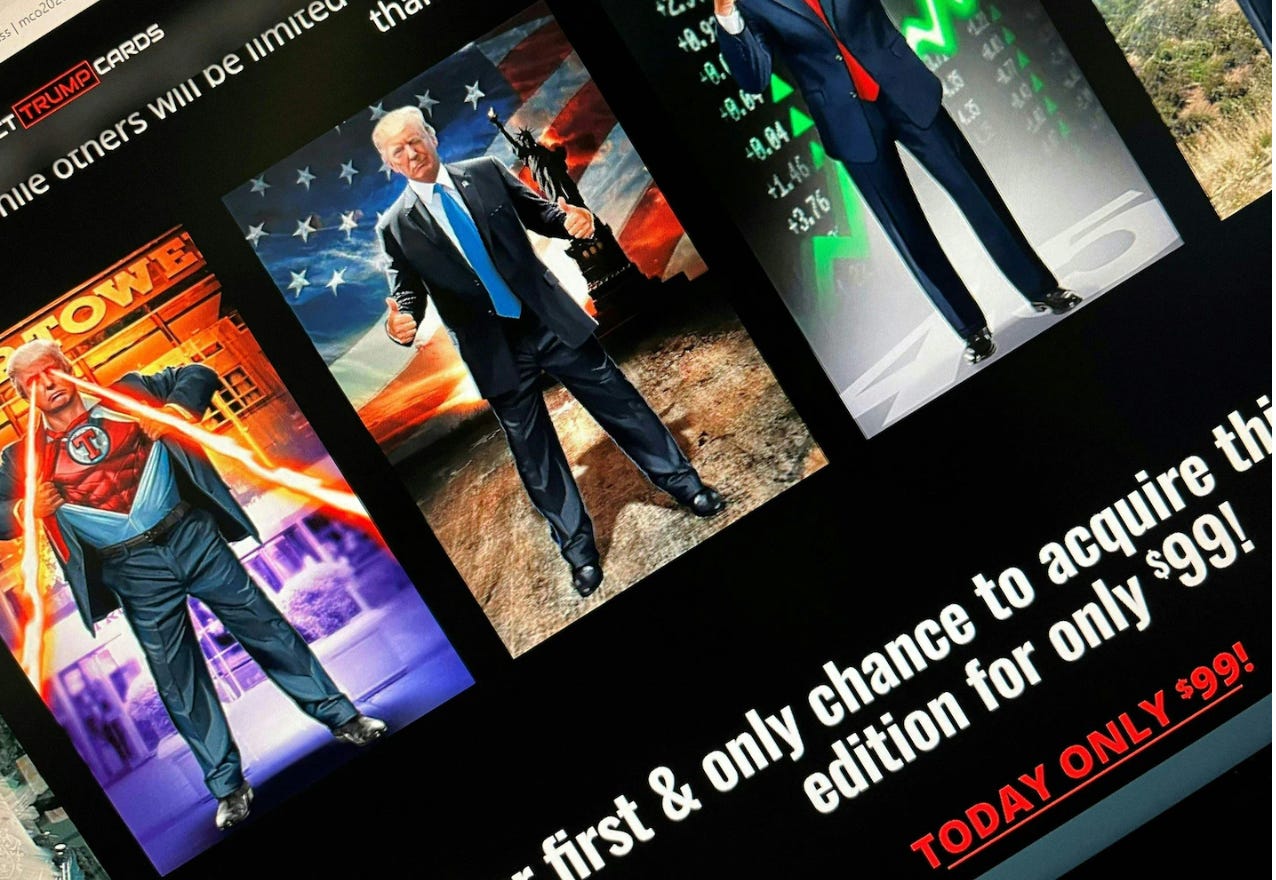
Warrior and man-in-charge Trump has little use for humor, it seems. For the rest of us who are subjected to this cartoonish narcissism, humor may be the healthiest response. Really, all that’s missing from some of the Trump images is a dunce cap — or, perhaps, an ayatollah turban.