
Trump’s war on Iran so far has failed to deliver his expected quick win
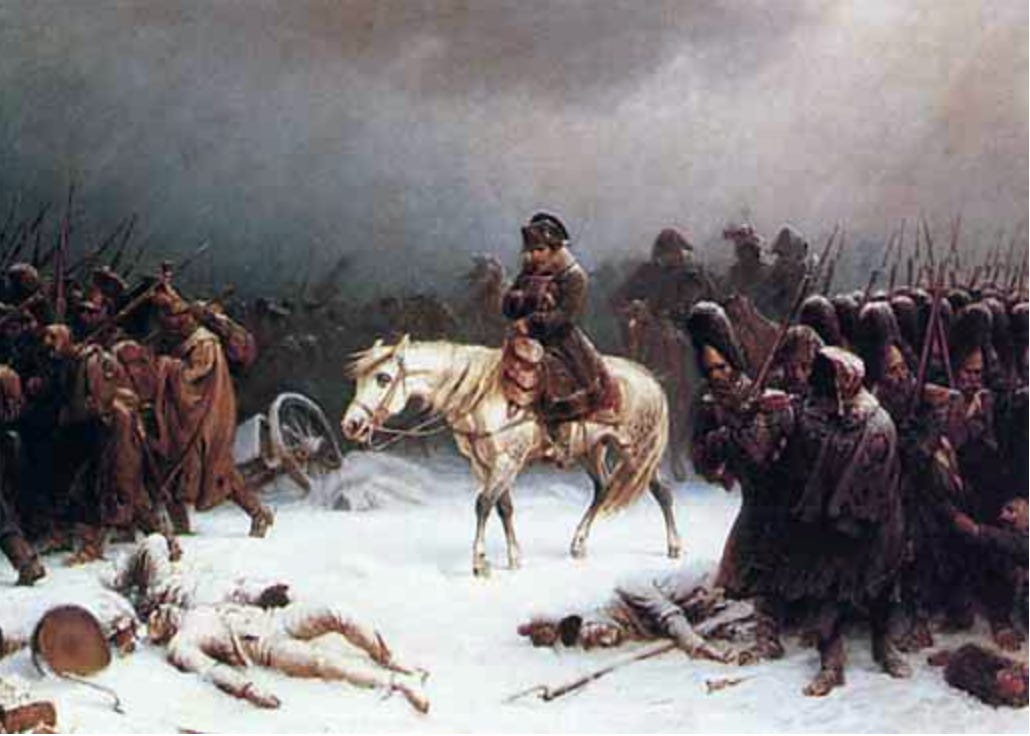
When Napoleon Bonaparte drove his “Grande Armée” – Europe’s most powerful military force – into Russia in 1812, it seemed impossible that the continent’s seemingly invincible leader could fail.
Surely, Russia’s Tsar Alexander I would comply with Bonaparte’s economic blockade of longtime enemy England. Certainly, Russia would give up its designs on Poland. The war, Napoleon bet, would last maybe a month and would leave France towering above all its enemies.
Sound familiar?
Donald J. Trump on March 1 suggested that his war on Iran would last “four to five weeks.” Just under halfway into that timeline, on March 13, the president struck a different tone, saying the war would end “when I feel it, feel it in my bones.” He added that the U.S. has “virtually unlimited ammunition…. We can go forever.”
“Forever?” Is that what he has in mind now?
Bonaparte’s excursion – a term Trump now uses, calling the Iran War a “little excursion” – ultimately led to the loss of much of his army, his abdication and his exile to Elba in 1814. The French leader had leveled much of Moscow, but the Russians in time rebuilt the city and their country. France was humbled.
Such are the miscalculations of hubris.
Nobody knows how Trump’s war on Iran will turn out, of course. Maybe he’ll wind up with a pliable government, à la Venezuela, as he has speculated. But, with the selection of Mojtaba Khamenei, the son of the assassinated Ayatollah Ali Khamenei, as Supreme Leader, that seems unlikely in the short run. Certainly, the “unconditional surrender” Trump demanded hasn’t happened.
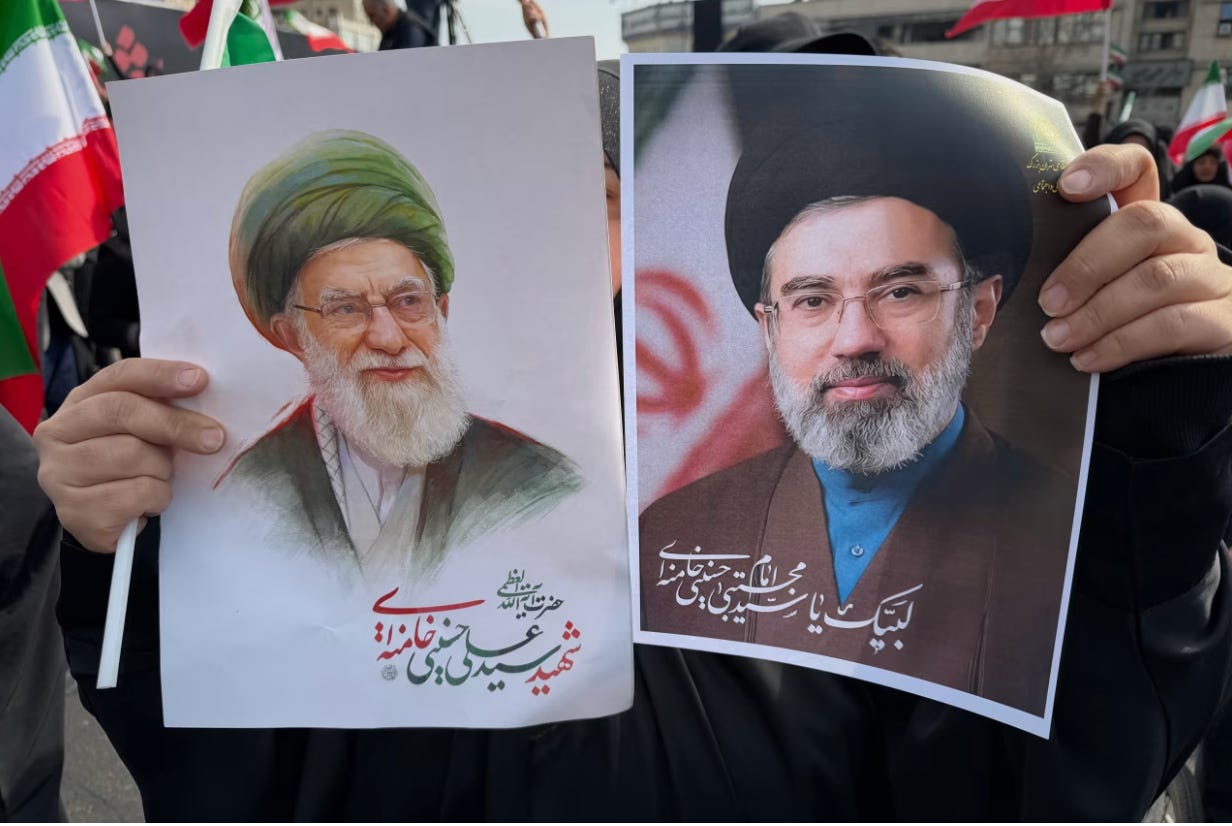
Indeed, as analyst Karim Sadjadpour of the Carnegie Endowment for International Peace has written in The Atlantic, the Iranians are digging in. Trump has “spawned a budding Iranian Kim Jong Un” in the younger Khamenei, creating “a hereditary dictatorship poised to double down on ideology and repression.”
In fact, Sadjadpour argued, this Khamenei may prove more intransigent and bloodthirsty now that Trump and Israeli Prime Minister Benjamin Netanyahu have killed his family. For this new leader and his governing circle, this war will be deeply personal.
Of course, it may be that the Israelis will kill off the new leader, just as they were able to destroy his family. When asked about what actions Israel might take against Ayatollah Mojtaba Khamenei and Hezbollah chief Naim Qassem, Netanyahu issued a not-so-veiled threat, as Reuters reported: “I wouldn’t issue life insurance policies on any of the leaders of the terrorist organization … I don’t intend to provide an exact report here about what we are planning or what we are going to do.”
The reason the younger Khamenei survived the assault on his family by Israeli weapons appears to have been accidental. He was taking a walk in the garden when the bombs and missiles fell, perhaps suffering a leg injury.
It may be that Iran’s leaders, feeling as crippled by the war as Khamenei may be, will ultimately yield to relentless air assaults by the U.S. and Israel. But, so far, they’ve shown no sign of capitulating, denying even any interest in a truce or some sort of “deal,” as Trump has suggested. Trump told NBC News on Saturday that Iran was ready “to make a deal, and I don’t want to make it because the terms aren’t good enough yet.”
But on Sunday, Iranian Foreign Minister Abbas Araghchi denied that. “No, we never asked for a ceasefire, and we have never asked even for negotiation. We are ready to defend ourselves as long as it takes,” Araghchi told CBS News’s Face the Nation.
For both sides in this fight, words are cheap, of course. And bluster is part of the game.
At least for now, though, the Iranian public hasn’t risen up in revolution, as Trump urged in the war’s opening days. And the Iranian military is busy sending missiles across the region, attacking an array of Arab states that are allied with the U.S. Tehran’s leaders also likely greenlighted the Hezbollah attacks on Israel from Lebanon, rocket assaults that have triggered a fierce Israeli response – opening a second front in this war that now includes a ground assault by Israeli soldiers.
What’s more, the Iranians are striking the U.S. and the West economically. Their shutdown of ships carrying oil and natural gas through the Strait of Hormuz has thrust oil markets into a maelstrom, driving up gas prices for Americans and others. Europeans, whom Trump has long scorned and alienated for other reasons, so far have not taken up his call to help unblock the strait. “This is not our war, we have not started it,” German Defense Minister Boris Pistorius told reporters Monday.
So, just how this all will play out is far from clear. Journalist Bret Stephens has suggested that regime change or “modification” isn’t impossible, that a cease-fire could yet be agreed on, or that Iran could descend into a civil war like Syria’s, complete with refugees spread across the region. He has suggested more American force may be needed, perhaps in seizing a critical Iranian asset, Kharg Island, which serves as the terminal for roughly 90 percent of Iran’s oil exports.
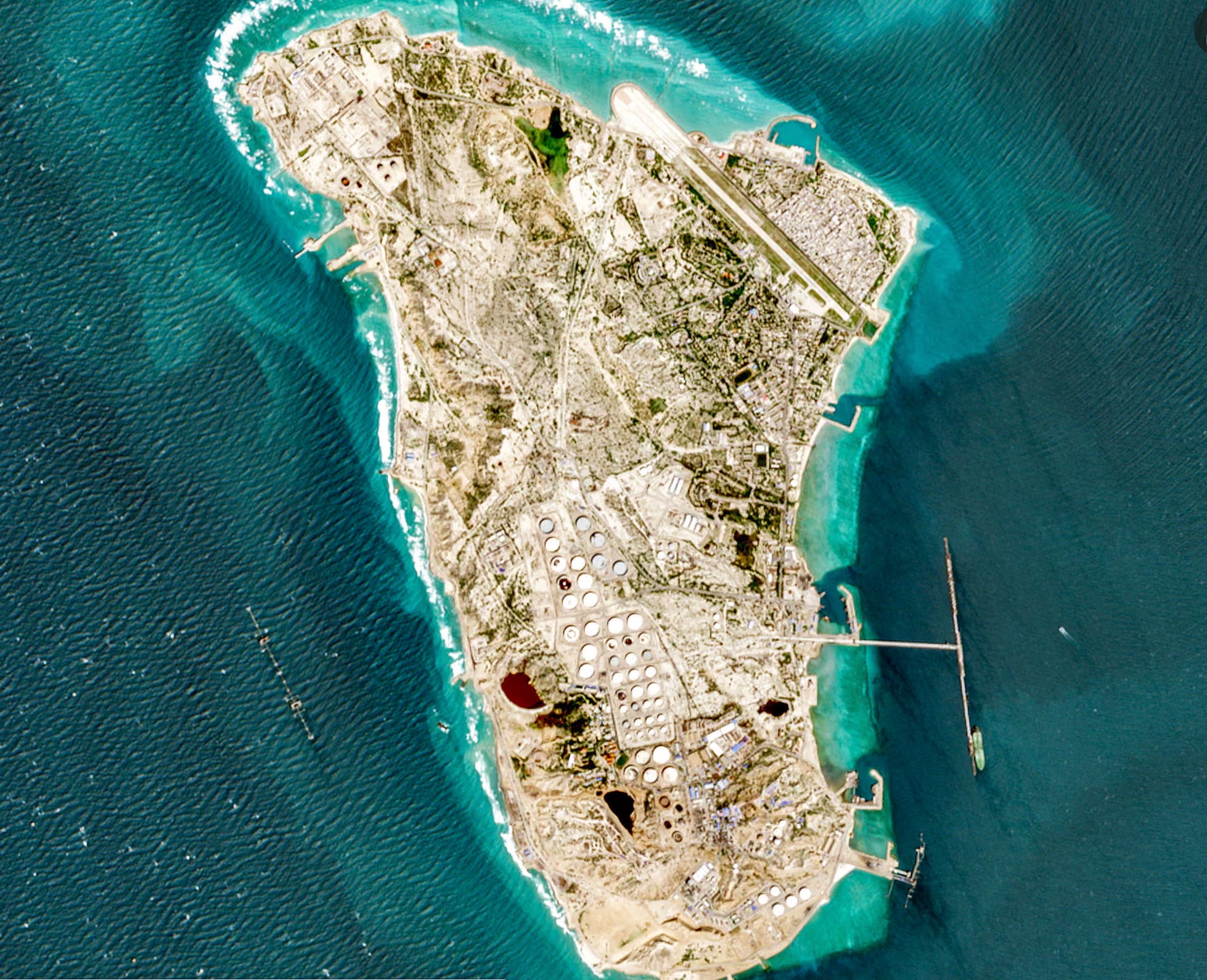
“American control would give the administration the whip hand over most of the regime’s remaining revenues, including its ability to pay salaries for soldiers and civil servants alike,” Stephens has argued. “That could help clarify to even the most hard-line elements in the regime whether it is really worth it to enrich uranium or send more munitions to Hezbollah in Lebanon so they can be destroyed by Israel.”
So far, Trump has resisted sending American forces into Iran. But the Pentagon has deployed as many as 2,500 Marines to the Middle East in what suggests a change in Trump’s approach. They could soon find themselves battling an Iranian military backed by a regime convinced this is an existential fight to stay in power.
Could the Iran War devolve into a quagmire akin to Iraq, which led to a long costly occupation? Or worse, Afghanistan, the failed war that lasted two decades? Or will this “little excursion” of Trump’s end in his hoped-for three weeks or so? Will it end with some sort of stalemate, akin to the Korean War, with a Kim Jong Un clone at the helm of an implacable enemy?
The truth, of course, is that no one has a clue. And perhaps the most clueless of all is Donald J. Trump. Even as he remains sequestered in Washington or Mar-a-Lago, he may find that bluster, bravado and even the most powerful military in the world can’t deliver his expected quick win. Certainly, that’s what the consummately arrogant French leader of long ago found out.