
Trump’s petulance mirrors that of an earlier Mad King
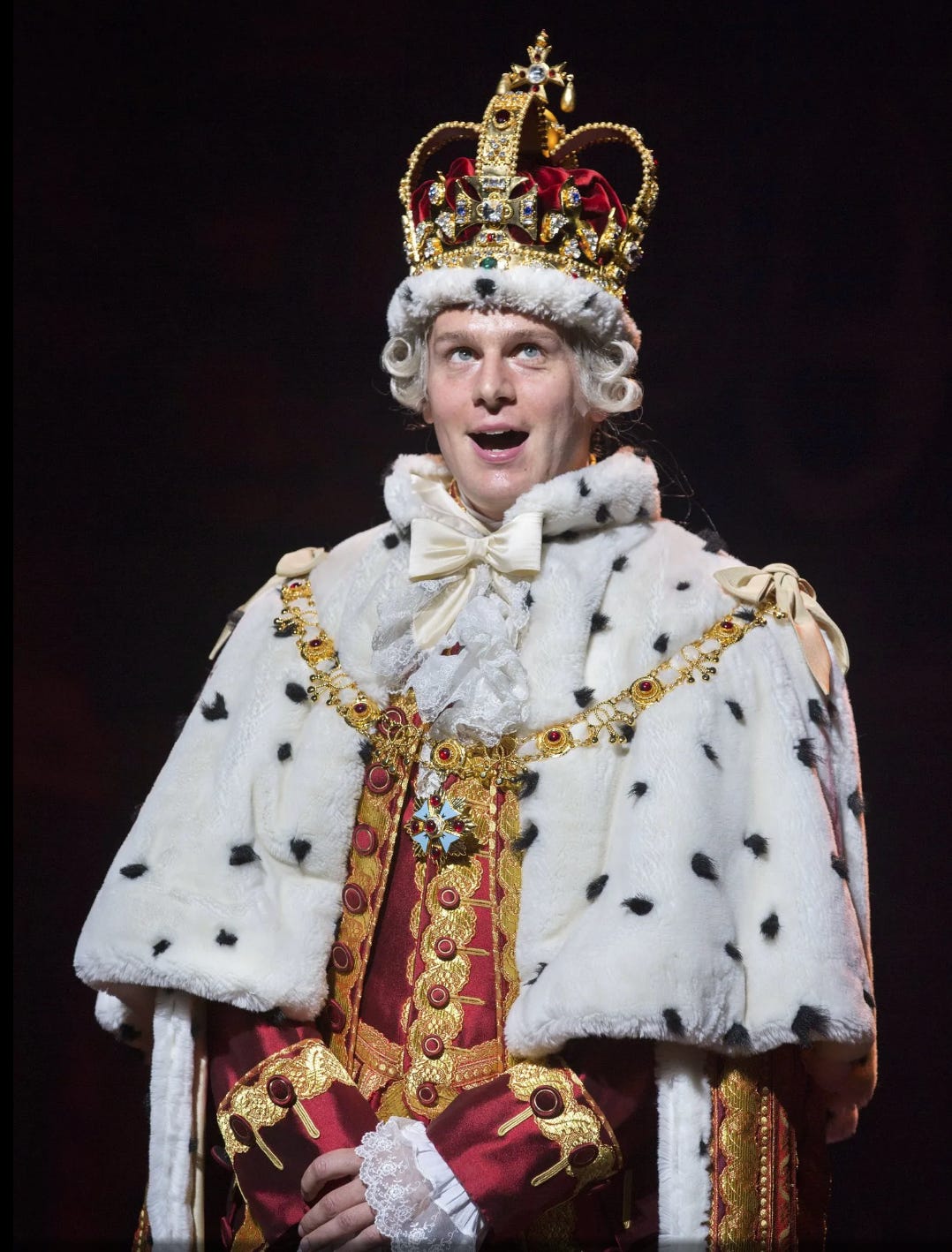
When “The Mad King,” George III, was in one of his manic fits in the late 1700s, he was seized by “a desire of talking that he was unable to control.” Often, he would talk for hours until he was hoarse and foaming at the mouth.
On one occasion, during a meal with his son, the Prince of Wales, the king berated him. Then George picked up his son and threw him to the floor.
Are we now hearing echoes in the behavior of a would-be monarch Donald J. Trump? Consider how the president railed against Supreme Court Chief Justice John Roberts and two of the court’s other conservatives, Justices Neil Gorsuch and Amy Coney Barrett, after they on Feb. 20 shot down the centerpiece of Trump’s foreign policy, tariffs.
“They’re just being fools and lapdogs for the RINOs and the radical left Democrats,” Trump said, using the acronym for “Republicans in name only.” Trump called the three justices “disloyal, unpatriotic,” and at one point he launched into a rant about how the court should have invalidated the election results in 2020, which Trump lost to Joe Biden.
Mind you, Gorsuch and Barrett were Trump appointees — so, presumably, he felt they owed him.
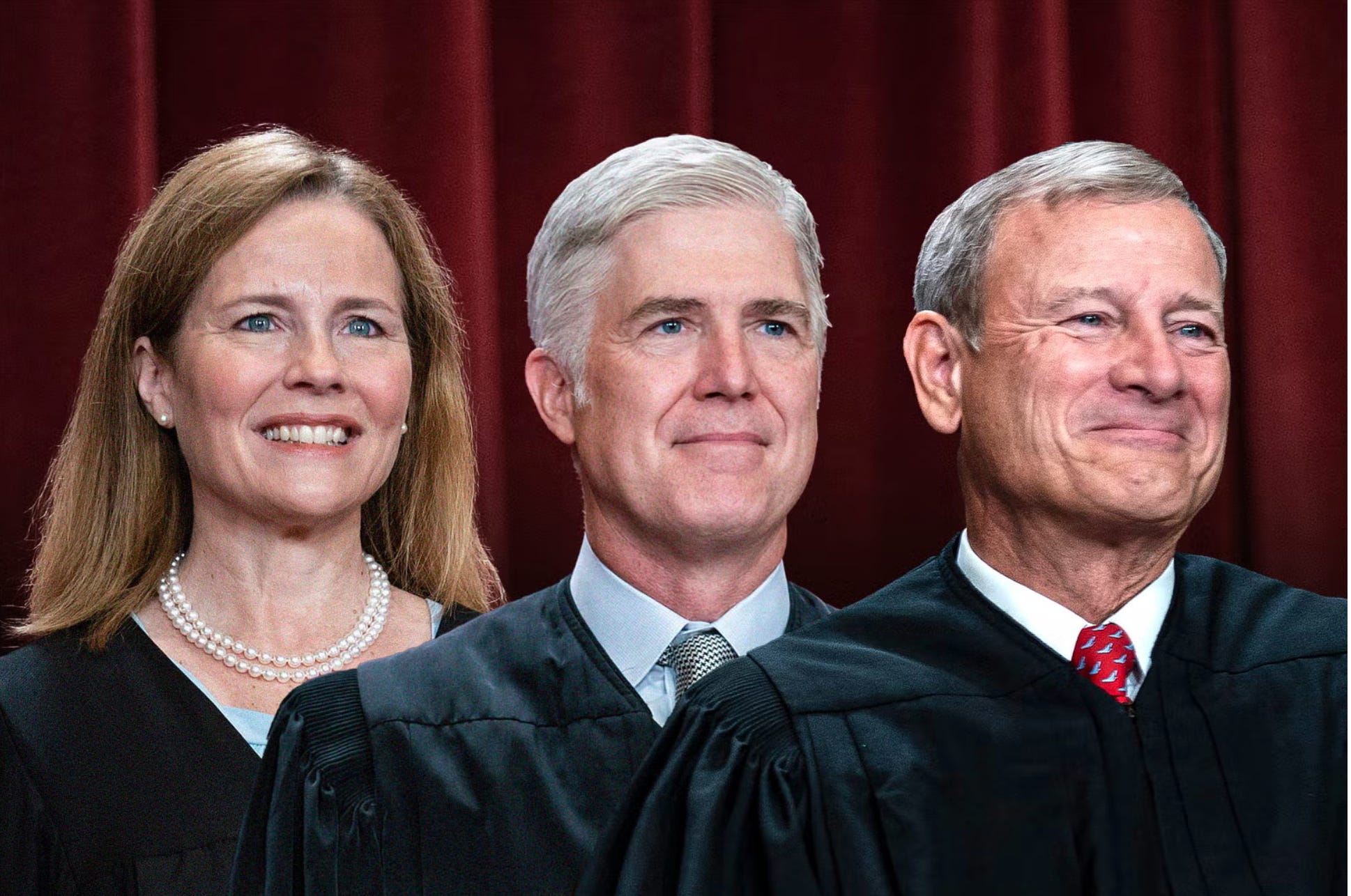
The echoes of the reign of George III stretched beyond the president’s tantrum. Justice Roberts invoked that era in writing the anti-tariff opinion for the 6-to-3 majority, saying that the U.S.’s founders for good reason placed the power to impose taxes, including tariffs, with Congress, not with the president. The decision affirmed a lower court’s earlier judgment against Trump’s efforts.
“Recognizing the taxing power’s unique importance, and having just fought a revolution motivated in large part by ‘taxation without representation,’ the Framers gave Congress ‘alone . . . access to the pockets of the people,” Roberts wrote. George III had imposed taxes on the colonists without their consent, so the Constitution explicitly vested such power in Congress, believing it would be more accountable to the people.
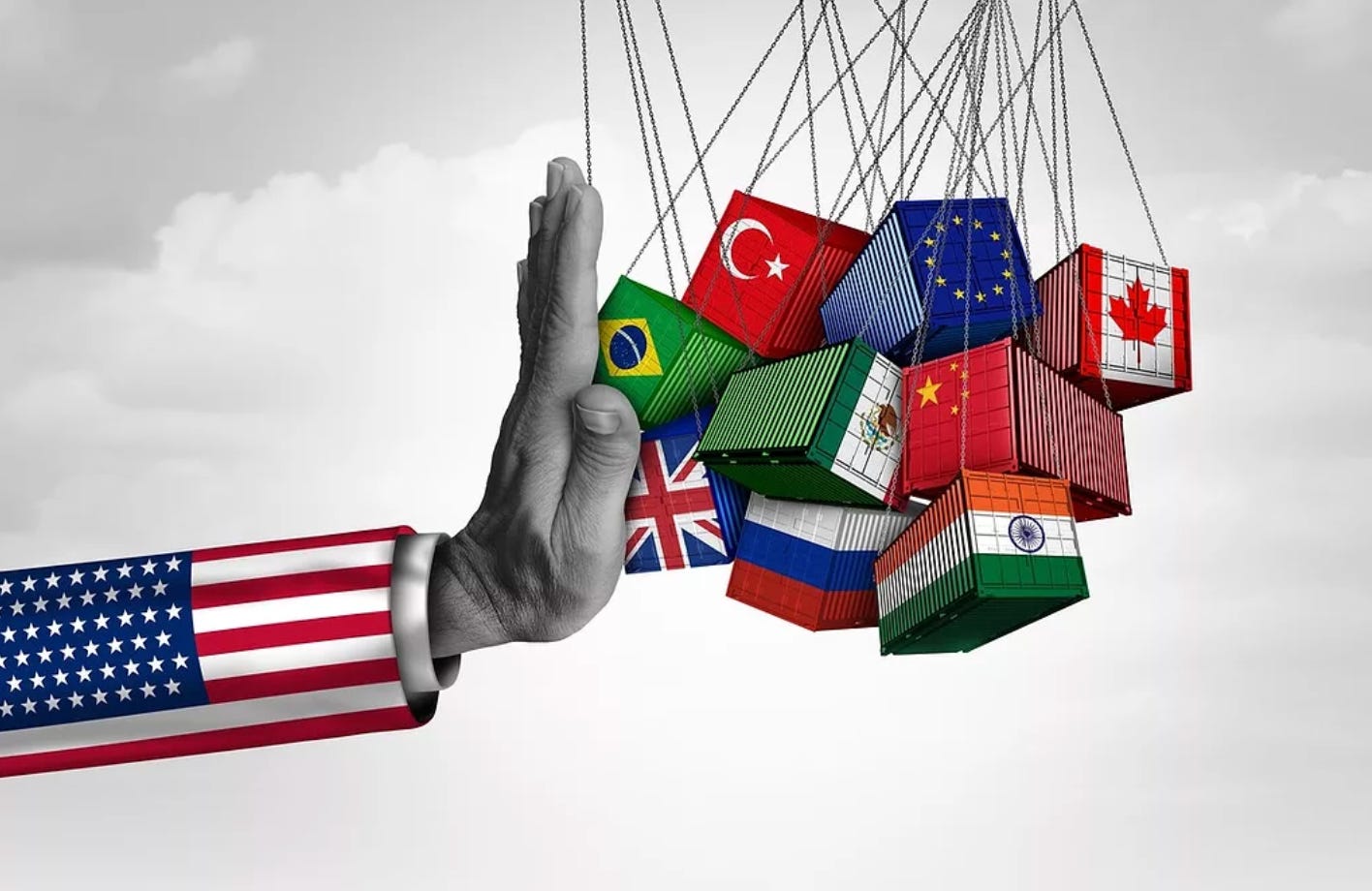
Ever-petulant and increasingly George-like, Trump promptly slapped a 10 percent worldwide tariff imports from all countries, on top of any existing tariffs, and then upped the figure to 15 percent. By law, he is allowed to impose a levy of up to 15 percent for 150 days, although his move could face legal challenges and Congress, in the end, will have to either concur or kill his move.
As The Wall Street Journal reported, Trump said his decision to increase the tariff rate was the result of a “thorough, detailed, and complete review of the ridiculous, poorly written, and extraordinarily anti-American” Supreme Court ruling.
And Trump went still further in a move slamming U.S. consumers anew.
The president also killed a longstanding policy that had allowed billions of dollars of low-value imports to enter the United States tax-free. As The New York Times reported, the so-called de minimis exemption had let U.S. importers bring in goods valued at under $800 without the sender paying taxes or completing detailed customs paperwork. The loophole allowed millions of packages to come straight from Chinese factories to American homes duty-free.
First on platforms like eBay and Amazon, and then on apps such as Shein and Temu, exporters funneled Chinese-made goods into the United States via the exemption. Many American businesses also relied on the exemption for goods sold on sites including Etsy and Shopify. The exemption, intended to spare customs officials from spending too much time and money processing goods of relatively little value, existed for almost a century.
Troubled both by the tariffs and by Trump’s hissy fit, the editorialists at The Wall Street Journal, were unambiguous – if maybe a bit precious – in their reaction. “President Trump owes the Supreme Court an apology—to the individual Justices he smeared on Friday and the institution itself,” they wrote. “Mr. Trump doubtless won’t offer one, but his rant in response to his tariff defeat at the Court was arguably the worst moment of his Presidency.”
Well, one might dispute that last claim. The deportation of hundreds of thousands, the murders of Minneapolis protesters by ICE agents, the extrajudicial killings of alleged but unproven “narco-terrorists,” and the arrests and harassment of journalists for doing their jobs might loom a bit larger among worst moments. And we haven’t even yet gotten to the matter of a potential looming war with Iran.
Still, Trump and his minions are clearly suffering royal pique at those in the courts – and elsewhere – who have the impunity to question the White House dictats. Another example of this recently came from Kevin Hassett, director of the National Economic Council, who said four economists at the Federal Reserve Bank of New York should be “disciplined” for publishing a paper finding that American households and businesses are paying nearly 90 percent of the cost of the Trump tariffs.
Recall that Trump constantly trumpets the absurd claim that foreigners bear the burden of the tariffs – something that the Supreme Court also saw through in ruling that the tariffs were a tax on Americans. Perhaps Trump and Hassett believe the Justices should be “disciplined,” too, one wonders?
As the WSJ has written, “Clearly the White House is worried that voters might conclude this research aligns with their own experience,” adding “The Fed analysis aligns with other research into the distribution of tariff costs from Harvard economists and Germany’s Kiel Institute—and with common sense.”
Common sense has long been lacking in the White House, of course, replaced by greed, vindictiveness and economic and political ignorance. George III lost his American colonies over similar qualities. Perhaps, in due course, they will cost Trump and his party their high-handed — and one might say, mad — governance.