Trump’s empire-building in action
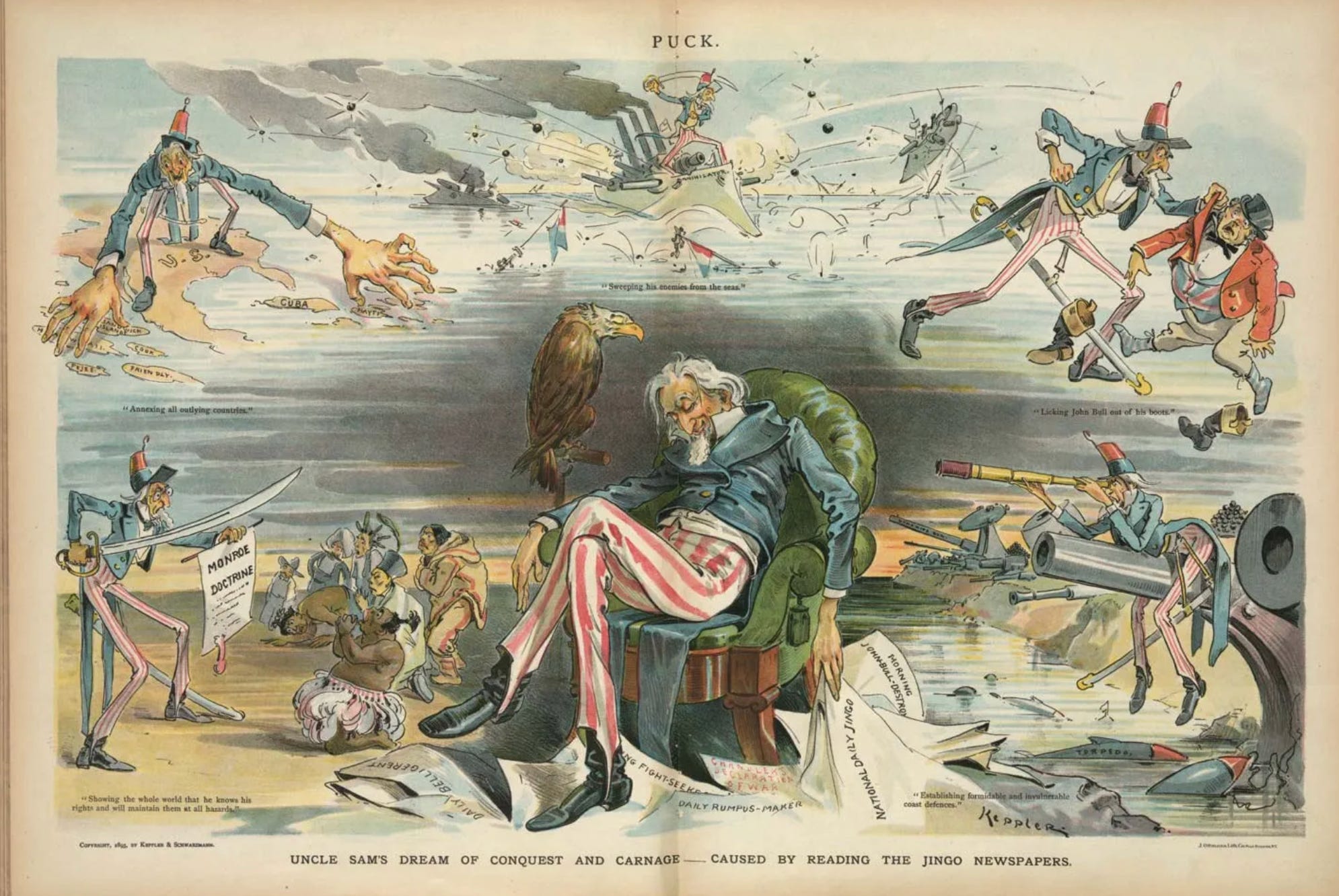
Soon after the turn of the century, in 1803, James Monroe became famous as a special envoy to France for helping arrange the Louisiana Purchase. Sixteen years later, as the nation’s fifth president, he pressed Spain to cede Florida to the U.S. But what he’s most famous for, of course, is the Monroe Doctrine of 1823, setting up the Western Hemisphere as the de facto American realm.
Under that policy and in revisions adopted by Theodore Roosevelt, among others, the U.S. intervened, at times militarily and at times covertly, in Mexico, Santo Domingo, Nicaragua, Haiti, Cuba and Chile.
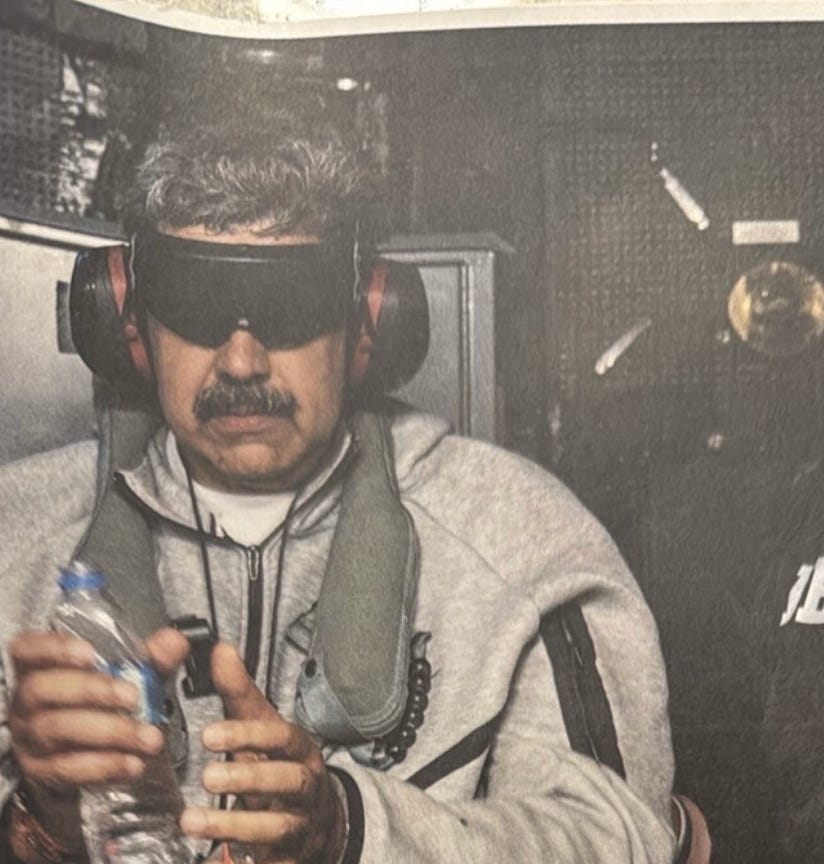
Now, a couple centuries later and under a similarly expansion-minded President Donald J. Trump (Greenland, Canada, Panama Canal), Americans will take over Venezuela. As Trump declared, “We are going to run the country until such time as we can do a safe, proper and judicious transition.”
He mandated that the U.S. military will be on the ground in the country “as it pertains to oil.” And he said that the United States would be selling Venezuelan oil to China and other nations, adding “we’ll be selling large amounts of oil to other countries.” To offer cover for his actions, Trump has argued that Venezuela stole American oil fields.
To be sure, few will mourn the overthrow of Nicolás Maduro, who refused to cede power after losing an election in 2024. He had been indicted for “narco-terrorism” by Trump’s Justice Department in 2020.
But Trump’s imperialistic efforts must give us all pause. The president was explicit about his view in the new National Security Strategy announced in November, which declares “The United States will reassert and enforce the Monroe doctrine to restore American preeminence.” That includes the so-called “Trump Corollary,” a nod to the “Roosevelt Corollary” under which Roosevelt in the early 1900s legitimized Latin American interventions.
Where Monroe’s doctrine was defensive and exclusionary toward Europeans getting involved in the western hemisphere, Roosevelt’s turned U.S. policy into “big stick” hegemony. As The Guardian warned, Trump’s “reckless and regressive behavior is spurring changes that the U.S. … may live to regret.” The newspaper editorialized that the national security strategy of a “potent restoration of American power and priorities” will depend on “enlisting” allies and pressuring others, and on an “adjusted” military presence.
The so-called “Donroe doctrine” includes efforts to prevent mass migration, eliminate drug trafficking, gain trade advantage and access to natural resources “plus a craving for headline-grabbing, ego-bolstering symbols of domination,” The Guardian noted.
Trump’s acquaintance with history is likely pretty skimpy, but recall that first and foremost, he is a real estate mogul. That means acquiring – by whatever means necessary – land and resources.
Regarding Latin America, he has found a philosophical compadre in Secretary of State Marco Rubio, a son of Cuban immigrants who has long wanted to weaken the leaders of Cuba, who have been allied with Maduro. And together they’ve been buttressed by The Heritage Foundation, which has sought to give hemispheric imperialism an intellectual cast, declaring in a 2022 policy document: “U.S. policy toward the Western Hemisphere should focus with greater intensity on such destabilizing regional challenges as transnational crime, illicit tracking networks, corruption that fosters criminality, and the growing influence of external geostrategic adversaries.”
Moreover, Trump seems infatuated with the idea of spheres of influence, allowing the U.S., Russia and China to carve up the world according to their interests. His move on Venezuela underscores this, potentially giving license and justification to Russia’s war on Ukraine and, possibly, rationalizing moves China might make on Taiwan.
“The concept of spheres of influence is entirely familiar to Moscow and Beijing. Vladimir Putin, who claimed his own fantastical premise for invading Ukraine, where he still claims to be waging a ‘denazification’ campaign, wants to control Ukrainian territory and subjugate its government precisely because he believes it forms part of Russia’s historical sphere of influence,” The New Statesman notes. “Xi Jinping used his New Year’s Eve address to repeat his insistence that China’s ‘reunification’ with Taiwan was ‘unstoppable’ after staging major military exercises around the self-ruling democracy in recent weeks. He views Taiwan as an integral part of China’s historical territory – although the Chinese Communist Party has never ruled the island – and the wider region, including the South China Sea, as rightfully belonging to China’s own sphere of influence.”
“What is the difference, Putin’s supporters will ask, between Trump’s actions and Russia intervening to remove an unfriendly government within its own sphere of influence, or even to capture Volodymyr Zelensky and put him on trial in Moscow for his supposed crimes? If Xi views Taiwan’s president, Lai Ching-te, as a dangerous separatist, cultivating a pro-independence movement against Beijing, couldn’t he claim, according to Trump’s new doctrine, justification of acting to protect China’s interests in what he views as his own backyard?”
The publication is raising the alarm, too, about Greenland and Trump’s designs there. “By casting off any pretense of adhering to international law and the so-called rules-based order, Trump is endorsing a dangerous new era of ‘might makes right’ … Trump’s doctrine could have implications far beyond Latin America as well. Denmark – and its Nato allies – should take his claims to Greenland seriously and urgently.”
Perhaps even more than craving real estate, though, Trump loves to exercise power. While that has mostly taken the form of vindictively pursuing anyone who has offended him (Mark Kelly, Letitia James, James Comey), it also has extended to his murderous assaults on alleged drug smugglers and his use of National Guard troops and a beefed-up ICE in the U.S.
As his business and political history shows, Trump is also insatiable and easily bored. So, it’s an open question whether his military adventurism in Venezuela will be his last such effort.
With three years left and his “Donroe Doctrine” just beginning, it’s unclear just how extensive his ambitions will be. But it’s hard to believe that his move on Venezuela will be his last.